
Experiments and Neuroplasticity
This was originally published in my Prime Lenses Newsletter. You can sign-up for a weekly update to your inbox here.
This week at the Winter Olympics, Eileen Gu was asked about her ability to respond to complex ideas quickly when being asked questions at press conferences. A reporter asked her how she’s able to seemingly respond thoughtfully and thoroughly every time she’s asked something and I really liked her response. After thanking the journalist for the compliment she said;
““ …I think overall I’m just a pensive person, like I’m a very introspective, I’m an introspective young woman, like I spend a lot of time in my head and it’s not a bad place to be. I journal a lot. I break down all of my thought processes. I think I apply a very analytical lens to my own thinking and I kind of modify it because it’s so interesting.
You can control what you think. Like you can control how you think and therefore you can control who you are.
And especially as a young person, like I’m 22, so with neuroplasticity on my side, I can literally become exactly who I want to be. How cool is that? Like, how empowering is that? Right? And so, the fact is I get to become every day the kind of person that me at age eight would revere. Like I would be obsessed with me today. Are you kidding? I would love me. And I think that’s the biggest flex of all time that you can have like little younger you be proud of you today. And so I guess for me, it’s like, yes, I spend a lot of time in my own head. Yes, I think a lot, but it’s not really like in an egotistical kind of way. It’s in like a tinkering, like a scientist kind of way. I’m always like trying to modify. I’m trying to think how can I be better? How can I approach my own brain the way that I approach my craft of free skiing so that I can be better.””
I love this response. It perfectly demonstrates what the journalist had noticed, and plays nicely with my own feelings on self improvement through self-inquiry. If the podcast is about anything, and we should never really over think these things, it’s about the way that people make things, the tools that they like to use to make those things, and hopefully over time how their approach changes as more and more of them come back on at a later date. I want to see patterns and trends in guests that feed back into my own creative practice.
A structured approach to improving applies as much to photography and art as anything we try to achieve. My preference for this sort of approach is a hangover from my own work with a former sporting coach in a previous life. I like to try things out, get feedback early and often, and I have been conducting a slightly unplanned experiment this week with a camera that came from an unexpected place.
Maybe three weeks ago now, I noticed that my phone battery was starting to seriously degrade. At one point in a cold location I was losing 1% per minute. As I need my phone now “for my work”, it was time to get a new one. The iPhone 17 would have been perfectly good, but the new Air model really appealed to me because it was so thin and light.
Making its Siren call all the sweeter, were the rumours that it hasn’t been a popular model which has led to heavy discounts by many retailers and it won’t surprise you to learn that the manual Rangefinder shooter who makes this podcast and newsletter loves something under appreciated that’s clever.
Sheer engineering audacity aside, I also thought it would be fun to do it for the plot because, like me, the iPhone Air only has one camera.
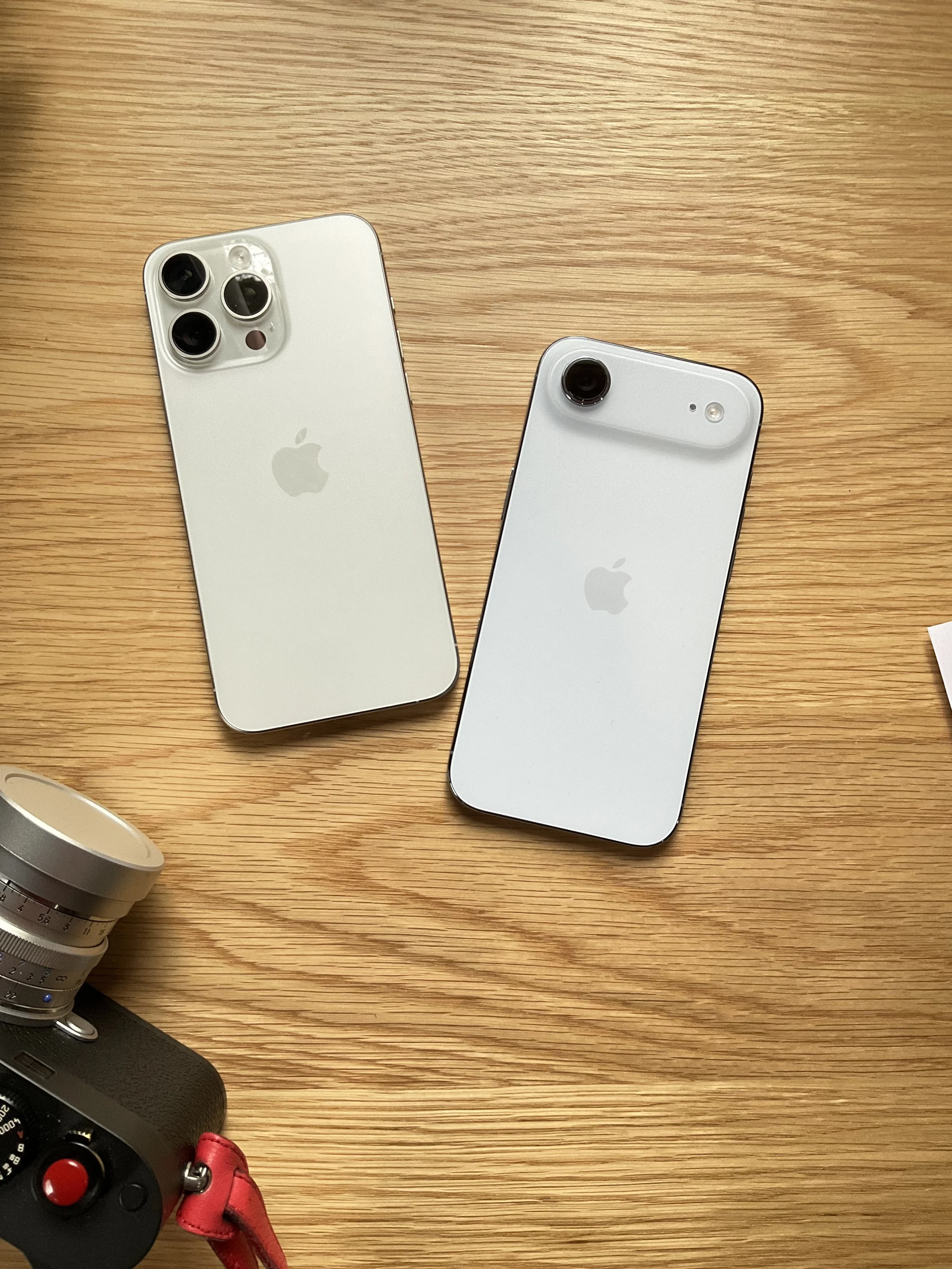
Out with the old …
… and in with the new!
Gatwick Airport was no exception to the discounts and so on my way back from London after, and possibly because, I had consumed a CBD infused decaf coffee and chilli ramen bowl, I threw caution to the wind. If it was going to cost me the same in store as online, why not arrive home with it that night?
I had expected to appreciate the performance boost when exporting social videos and audio assets for the podcast, it’s a fair bit faster than my last phone, and I really do enjoy it being a thinner and lighter device in hand. What I didn’t expect was that I would like the pictures it makes as much as I do.
Obviously, this is still not a proper camera whatever the manufacturers will say to you. The images fall apart fairly quickly if you crop in very much at all and obviously don’t compare this thing to anything with an APS C or larger sensor, but, gosh darn it if the thing doesn’t have a pleasing contrasty vibe and tone without the need to go downloading a separate camera app. When you use the new camera for the first time it asks you about your preferences in terms of style. These are like filters but more subtle and I’ve leaned into a warm rose colouring for a result that I’m really enjoying.
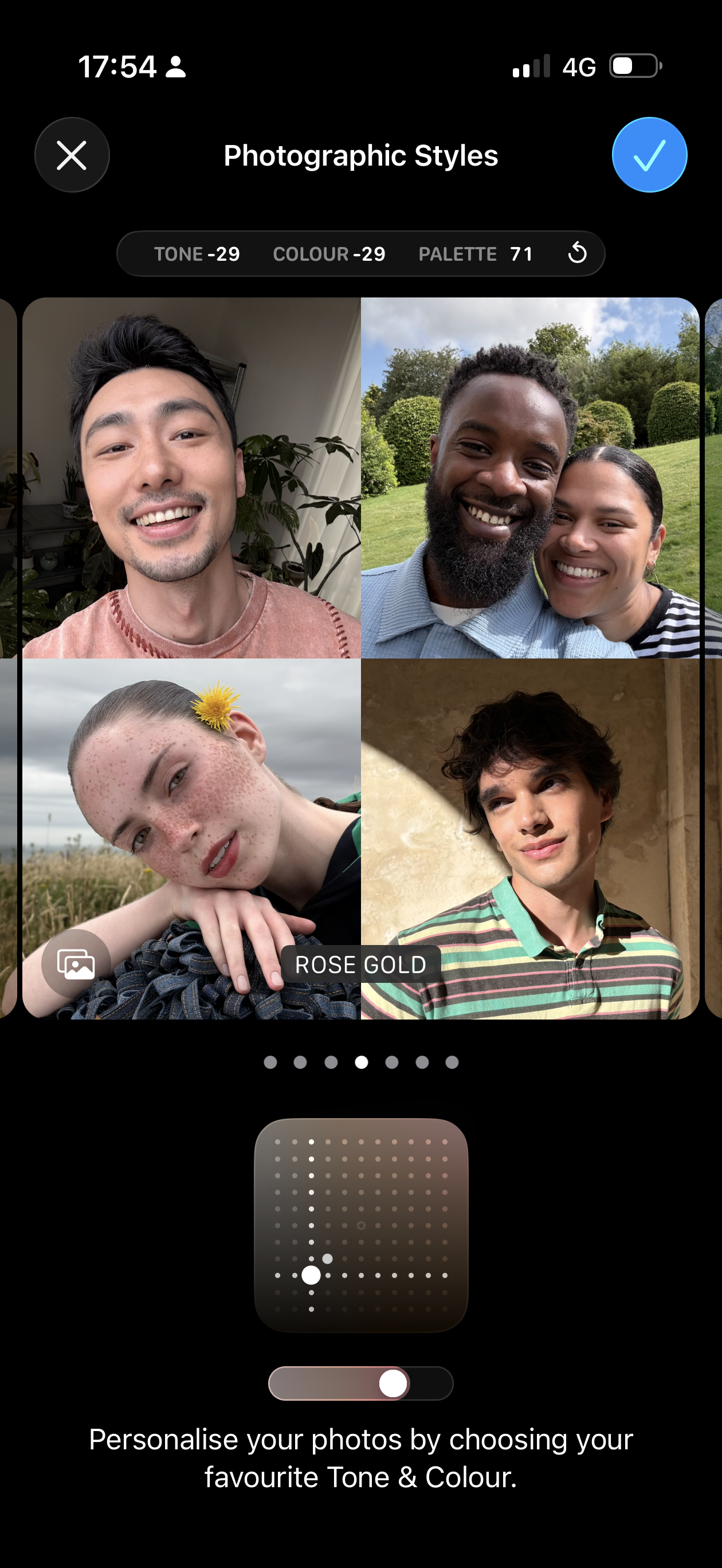
Choose your preferred look or change it later in settings
I decided to write about my phone camera last week and since then the weather has been rubbish with no decent light to speak of so these images are the blandest test photos ever, but some of them are nice, I like them. The put to an end any thoughts of a premium compact like a Ricoh GR III/IV any time soon.
It’s just better enough than my previous phone when capturing stills that I think I could happily use it for every day trips and social posts and not feel like I’m missing out. I even like the performance in low light and in any setting with the flash. I hate flash photography ordinarily, especially in colour, but the images are really nicely exposed. This appears to be the promise of computational photography realised for me for the first time.
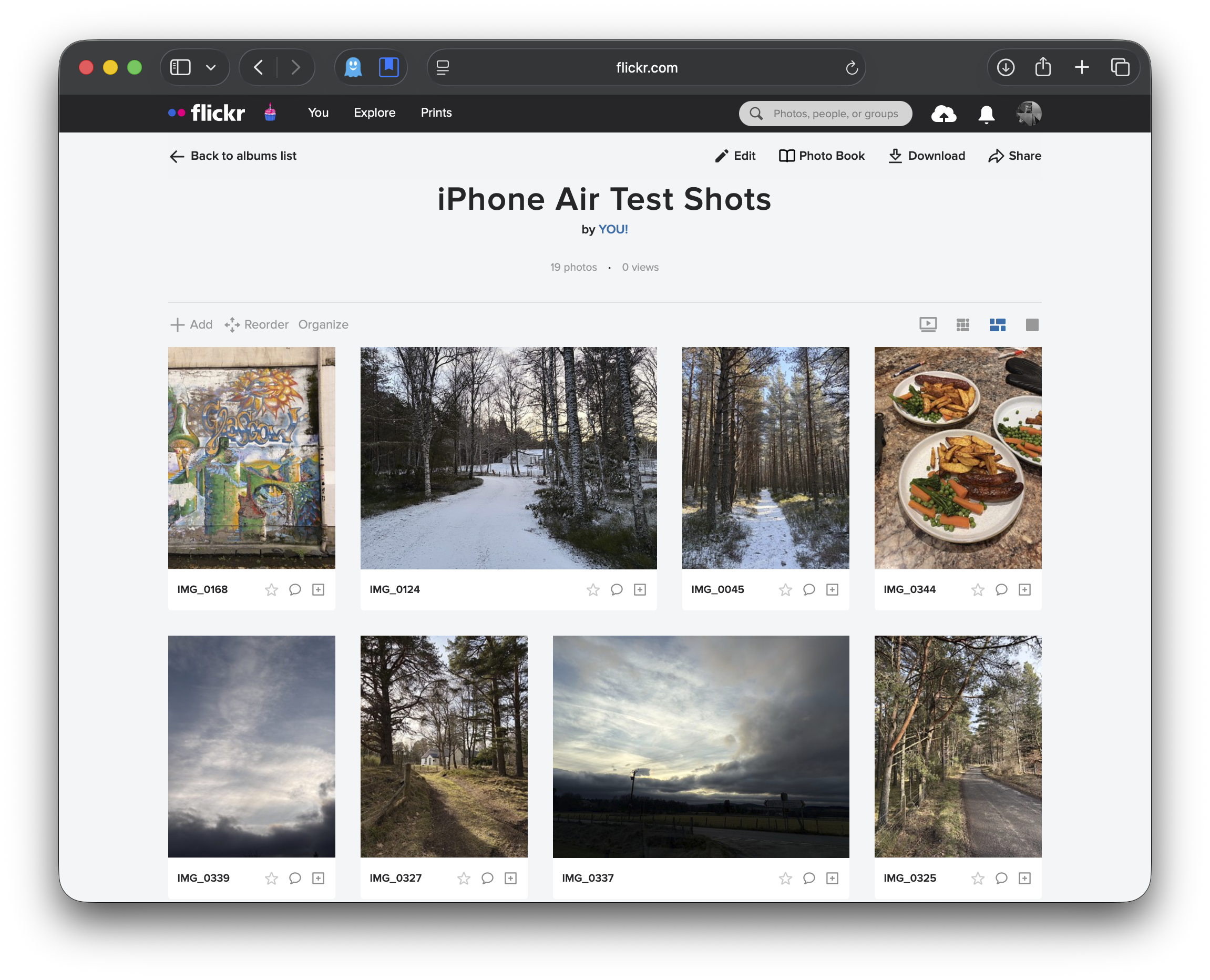
Trying a new camera won’t result in a gold medal for my country, but following a thought, experimenting just a little and consuming CBD infused food before making a buying decision has given me an image making tool I didn’t expect and really enjoy. A new creative tool? Feels a bit like winning something.