Episode 113 - Cal Holland
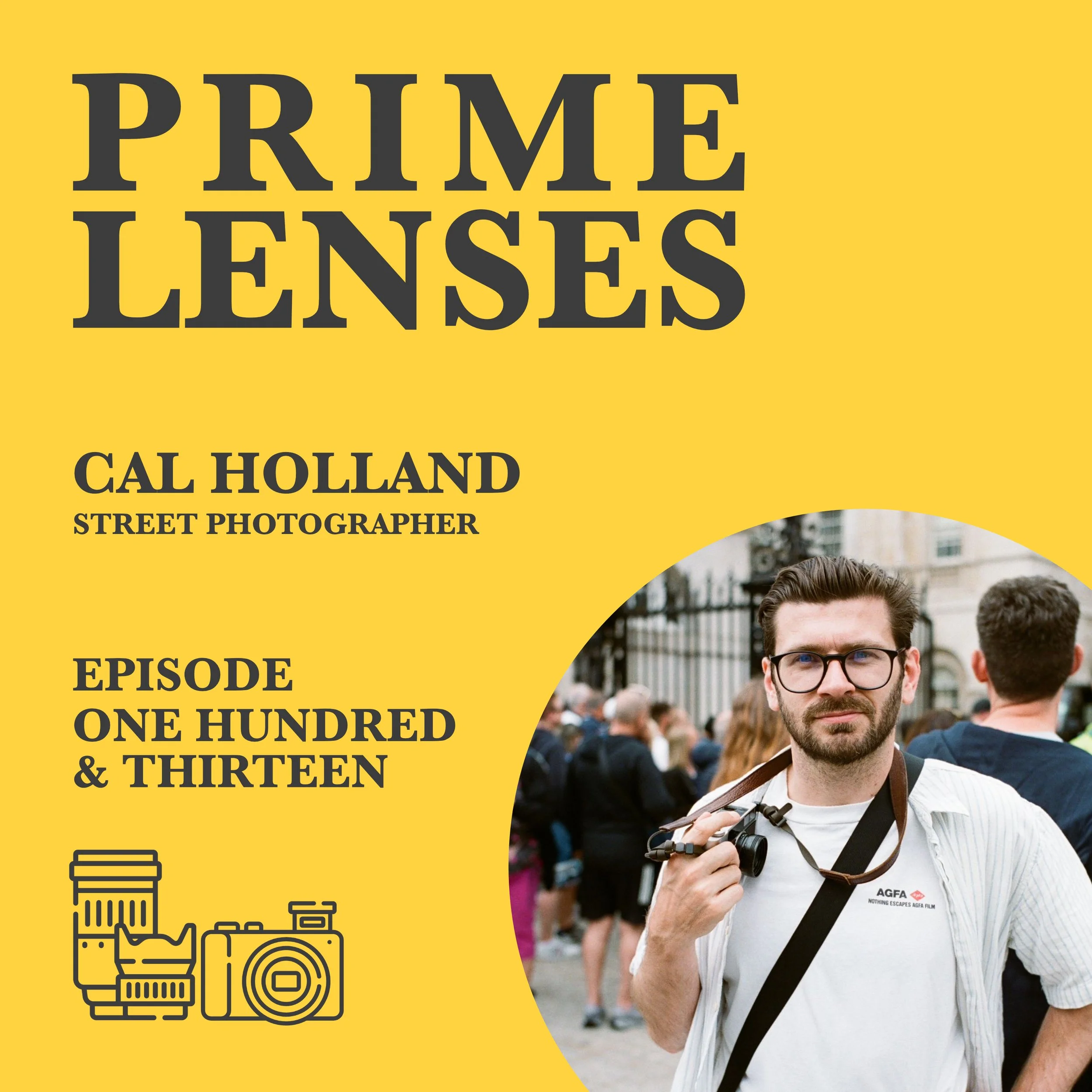


Cal Holland is a UK based street photographer who exclusively shoots film and not on a Leica. I felt like I had to know more and found him to be a great guest. I mention in the show that I was logging photos I was taking using a shortcut. You can download it yourself here, there are instructions for using it in the shortcut. There is a bit of setup needed. I also talk about Lenstagger which is a great Lightroom plugin.
Lastly, we talked about developing film at home with the AGO Film Processor. You can find out more on the 35MMC review.
Sign up to the Prime Lenses newsletter for a mid-week treat.
Support the show on Patreon.
Episode Transcript:
Iain:
Thank you. well it's cow holland it is lovely to see you sir um have you before we get too stuck in have you had a chance to listen to anything do you want me to give you a rundown yeah yeah i was uh listened
Cal Holland:
to a couple episodes of the past few weeks i listened to going with Dan Baker yesterday which put me in a great mood for doing this actually because his just kind of enthusiasm and optimism for photography and just everything in general was is so good to listen to he's such a nice guy uh so yeah i really enjoyed that and then um i was listening to the one with Joel and Maggie and the team behind the documentary that's that was great i went to that um one of the screenings and q a's they did uh in Hampstead and uh Maggie actually references it that one specifically in your conversation because it was she was like talking about how um oh my mind's gone black now it was it was something to do with her attitude toward kind of thing and a specific thing that came up in the q a yes yeah uh and i was like yeah i was there for that it was great oh nice i
Iain:
got ties it all nicely together that's really good they were an absolute delight um i will say people say don't meet your heroes they've got shit heroes sometimes they're just lovely yeah and i thought that movie was Maggie's movie more than in in a bunch of ways really like the fact that Joel is Joel is kind of irrelevant yeah like her kind of relationship to his work and her own work was just
Cal Holland:
so interesting to kind of watch and what like they're so lucky to be making a documentary at that time in their life because it was such a crazy year for them bonkers bonkers oh brilliant
Iain:
well in that case we'll just dive in because that's how i tend to do it lovely to talk to you We have a Ford's connection in common, I think. We do, yeah. In terms of knowing the guys up there. How long have you known the folks up at Ford's?
Cal Holland:
About a month or so. And I don't know any of them personally. I was in the market for a new camera, the lens of which we'll speak about today. And they put me in touch with you or asked if they could put me forward for it. I guess my emails back and forwards with them were linked to my website. And they kind of checked out my work and I came back through that. And a friend of mine, really great photographer, Simon King, he was the one that sent me the link to buy the camera off their website. So he was like, he was like, I've given up on eBay, buy it from somewhere in the UK kind of thing. And it came with a six month warranty for which for an old film camera is like kind of ideal. So, yeah, it worked out.
Iain:
How do you know them? Living in the middle of nowhere up here, Ford's is kind of the closest proper camera shop to me. And that's still over an hour away. But I know that I actually I bumped into Steve that runs a place at the Leica Centennial event last year. So I was very lucky I got to go to that. And when you're only when when you're flying from Inverness Airport and then you're both on the next flight as well. You're like, OK, we must be we must be in the same business somehow. Because like, you know, that's a rare thing. And yeah, he was just chatting. And so I do a little bit with them and I help them out with some stuff. But mostly it's just really lovely. And Alistair there is so great because if photographers come through the store, either on email, either virtually or in real life, if he thinks they'd be a good fit for the show, he lets me know. And he reaches out to them, puts them in touch.
Cal Holland:
It was a nice surprise. And it kind of came around right at the same time that I'd seen Paul Harrison share your conversation with Martin Ellard, wasn't it? Yes. Yeah, yeah. And then so I was listening to that. And then Alistair kind of brought you up over email.
Iain:
Ah, there we go. You see, we're unavoidable. The podcast is inevitable. Yeah, so you're everywhere. Thanos podcast is brilliant. Let's talk then about, we don't normally dive straight into lenses, but I am curious, what were you getting from them?
Cal Holland:
from your list of three because you've done your homework yeah so i was getting a context g2 so i I'd listed the the three lenses i sent you in kind of order of which i bought them and this one i bought in january um so i got that the g2 with the 35 mil lens um kind of with for a trip i was about to go on that i went on in february kind of thing but to maybe replace my main camera um which I haven't done in three and a half years kind of thing. I've shot with the same camera the whole time I've been doing street photography. And I kind of finally got to the point where I was like, I've got some limitations with this one. I want to try out something else. But I'm still in that phase of, is this right for me? And if I want to keep it, I haven't quite decided yet.
Iain:
Well, let's get to the street photography. But I am curious as to like where you started. Because when I look at your work, some people, do you know, there's a Douglas Adams quote about a puddle waking up one day and thinking that the hole was made for it because it fits it perfectly. Sometimes, I love that. I love that idea. It was basically him saying, you know, people are like, well, the world must have been made for us because we fit it perfectly. And he's like, well, a puddle might think that if it woke up tomorrow, but actually that's not what happened. So I think, but when I look at your work, it feels like you are made for street. I don't know how street photography works when it's this good. It's some sort of magic that how do you manage to be at that place at that time? It's like when you look at Joel's images, and I know he's been a big influence on your work, or, you know, just sometimes you just look at street photos, and you just, I cannot fathom how those things came together, and you were there and had the wherewithal with the shutter. But that's not where you started, which I think is so fascinating. Where did you start? Well, thank you for that. That was
Cal Holland:
that was lovely um i i think i could probably refer back to the first lens on the list which is the Zeiss 55 1.8 for a Sony camera which i bought in love that lens in 2019 so that was the first camera i bought so that was what seven years ago yeah seven years ago before i wasn't into photography uh growing up i got it with a Sony camera when i was working in the beer industry as a marketing manager and being a team of one you have to kind of do everything you do social media you do content email web everything like that and so I started taking pictures of cans of beer and then part of the job involved lots of events and going to beer festivals and so I was I'd learned how to use the camera and then I was just documenting those events and nothing is a better I had no idea about the history of photography of street photography at this point kind of thing But like nothing is a better kind of playground to learn how to photograph people than thousands of drunk people at an event because they're just so comfortable in front of the camera. And that's kind of where I very first started taking pictures of people with a 55 on digital. And that was from 2019 up until maybe 2022. I think I stopped doing that for a job. Yeah, so that's kind of the first lens. And then once I bought a film camera at the end of 2020, it still wasn't still wasn't into street photography. I think I had another two years. Yeah, I think summer of 2023 is when I started doing street photography. And I kind of call me and my friends the kind of Paulie B generation, you know, like we started doing it because we saw his videos on YouTube. And that I want to go out and try that. And I say that's when I first did street photography. But I had this kind of background of event photography, beer photography, really. So like putting a camera in people's face wasn't that scary to me. Like it's still scary. I still get scared every single time I do it. But at least I had done it before in some way. I found it quite an easy jump across.
Iain:
What made that switch to film then as well? I'm curious about that because if you've started with digital, the A7 series of cameras are amazing. You've got nice, really fast autofocus. You've got amazing glass on the front. Was there something you were looking for specifically that made you switch?
Cal Holland:
I think it was just that the digital photography felt like work. And then so I bought a film camera at the end of 2020 and I'd use point and shoots as a teenager kind of thing, disposable ones. And I just thought, oh, that's what I associate with doing it for fun with. And then, yeah, just so much of my kind of photography education came from YouTube and the YouTubers I liked shot on film. So just kind of got into that and never even really considered going out and doing it, shooting on digital, like shooting pictures of people in public. They've always been like really separate for me. And it still is like I have a Sony camera that I use Monday to Friday for work and then do not touch it on the weekends.
Iain:
Oh, that's nice. That's nice to have that kind of separation for yourself. It's a very different feel.
Cal Holland:
They feel so differently. And I don't even know how I could swap them around or kind of do it any other way.
Iain:
Is it useful as well to have the film thing as a kind of defense is perhaps the wrong word, but if someone says, can I see that? You can go, well, it's film. I can't. Is that quite a nice thing to have as well?
Cal Holland:
I think that might have happened once a year in the last three years of doing it or something. It's so rare that you have those type of indirect. I think it's also the way that I shoot. I move very quickly. I like being in dense cars with people. I don't mind chatting to people who I take the photo of. But in general, I am more the kind of fly on the wall type photographer, like try not to, I guess, be seen. But nothing, not for out of any purism, like that's the way it has to be. I totally don't agree with that. I think, you know, bruise the scene is the expression, isn't it? Like, I think go ahead and do that and interact with people. But more often than not, I get more enjoyment out of just kind of like take one photo and kind of get out of there.
Iain:
So are you quite a solo agent as well when you're moving around the street?
Cal Holland:
Usually, yeah. I think most people who kind of would know me or see me out on the street would think so. But I mean, I go out every weekend in London and it probably ends up being 50% of the time I'm on my own and 50% of the time I'm walking with someone else. Like the great thing about shooting in London and having done it for a couple of years now is that I can go into town on any weekend and know I'll bump into a friend and walk with them for two or three hours and have a catch up. Like I did it this Saturday. I was out for six, seven hours. And the first the morning was on my own. Just listen to a podcast shooting. And then I bumped into a friend. And then we just walked and went and saw an Elliott Erwitt exhibition that was on and then just shot and got through a couple of rolls and talked. And I think it's good to do both. But, yeah, I guess predominantly shooting on my own.
Iain:
I must admit, I do like that. I get criticized heavily by the family for holding them up when they're out on the walk. And, you know, I'm sometimes not as quick as I could be. But, you know, it's manual focus. It's trees. I'm taking my time. I'm a tourist, right? I can do this. I don't have to worry about doing it for my work. would you ever blur that line in terms of using film for projects I've had a bunch of guests um people who've shot film for work well dan is one actually yeah uh who you know who will shoot on film for work and and and also just product photography with an m11 which I'm always impressed by um wild why not but would you ever do that or do you is that kind of a hard line for you or is
Cal Holland:
it just the projects haven't come up uh i mean my work i work like full-time for one company and it's a restaurant group so it's food photography so it doesn't really work we we visited a farm last year and i brought my 645 medium format camera and just just for myself like if we go on trips outside of London I'll bring a film camera and it's usually none of its relevant kind of thing but we actually ended up using a couple of those photos on the website of like the founders with some farmers and some cows. So there's one example of me using film for work. But other than that, it doesn't work for dark restaurants and strobes and steaks and stuff.
Iain:
So you mentioned there the medium format as well, because I did want to touch on that. Your photos of Como, also beautiful. I think they're just really great stuff. Are you wedded? Because you mentioned as well, you've hinted at it. You've been trying out the contacts, the G2. you're normally shooting with a Konica. Yes. Is that right? Konica Hexar. Which I didn't know before I started researching this for the conversation. It seems like a gem. It's not a common camera.
Cal Holland:
Like, I mean, if I'm out on Tooting in London, pretty much everyone has a Leica, either film or digital kind of thing, or occasional SLRs, but like it's rare that someone will come up and be like, oh, most people, if they recognize the Konica, will be like, I haven't seen that before kind of thing. like first time seeing one in the wild. And like I said, I started with point and shoots at the end of 2020 when I bought my first proper film camera, it was a point shoot. So I had point shoots for two years and this kind of breaches the ground between a point shoot and a range finder. And it's just worked for me. Like there are setbacks to it. The maximum shutter speed is 250th, which is like not very good for walking around kind of thing, which is why I wanted to try out the Konica. But it just works for me kind of thing. And it allows me to not think at all about camera settings. I hate thinking about camera settings. And it's a smart point and shoot, basically.
Iain:
From 1993, for anyone listening who's not seen it, go and have a look at it. It is a very tidy looking little rangefinder style camera. But what's really great, I mean, for me personally, as well as you, 35mm is the one true focal length. So I love that. F2 is nice and quick. So you can pair that with, you don't have to worry about film speed particularly. But it seems like it's got really good autofocus for a camera from the 90s.
Cal Holland:
It's incredible. This is actually my worry about the G2 in that it's been struggling, maybe 5%, 10% of the time, with moving subjects. It just won't grab focus. And I actually need to speak to some other photographers who own them if it's the 35mm lens, because when I borrowed a 28mm lens, it didn't have that problem. And the 35mm is not supposed to be as well-known or as well-regarded,
Iain:
so it might be that, but I'm not sure.
Cal Holland:
But yeah, the Konica autofocus does not miss. Like if it, whatever you point at, and even in pitch black, because it's infrared, it just, it works. And like, I'll shoot from the hip and shoot walking around. And I've had to learn to hold the camera very steady for that shutter speed, but I've never had a problem with the autofocus. And I've had three of them.
Iain:
If that's the trade-off we're making, I agree with you. Like I'll learn to hold it still.
Cal Holland:
Yeah. And the biggest, probably the biggest vantage of it is it's 500 quid. Like it's, yeah, you can get four of them for the price of a Leica body.
Iain:
So, and that lens looks amazing as well. Like you're not compromising on image quality.
Cal Holland:
No, yeah, it's, it's, it's really great. Yeah, I feel like I've shot it and looked at so many photos from it now. I can kind of like, if I see other photos shot on a Conoco by other people, I'm like, I can, in my head, I think I can pick out what they look like because of that lens, but maybe I'm wrong.
Iain:
But, oh, no, that's interesting. That's really interesting. So were your photos when you weren't, because you're an award-winning photographer, course of now as of last year which I like to bring up with people because your response by the way is the correct response you look sort of pleased but vaguely uncomfortable which tells me you're
Cal Holland:
not a monster no and I'm I am no longer the current holder of that award as of this week so yeah the film photography one for AP magazine which was really cool that was a nice thing that
Iain:
happened last year nice to be recognized sort of fairly I mean I say fairly early but you've made tons of progress but you presumably you do still feel fairly early in this kind of yeah I'd say
Cal Holland:
street photography yeah I'm three and a half years in now and then a couple years of point shoots before before that basically i think i don't see myself as kind of super new now I'm into a good kind of workflow and starting to uh try to focus a bit more on working on actual projects and not just that kind of crazy excitement of the first few years kind of thing of shooting everything um but yeah still still early on and that was the first thing I'd ever entered kind of thing and I'd never entered a competition before that one but that one was free which I I'd kind of had a bit of a problem with entering photography competitions that you have to pay for and I trusted the people who were sponsoring it and giving it away like because it was uh run by amateur photography magazine but also sponsored by Kodak, Rico and Analog Wonderland and I heard about it through Analog Wonderland and they were like win a year's worth of film and developing and i was like that's too good of a
Iain:
prize to not try for kind of thing so yeah yeah I'm with you that when something's paid for for entry i understand that you've got to run these things as a business and things like that but if you've never heard like every other ad sometimes on Instagram is a publication you've never heard of yeah saying we're a thing and we publish your images and it's just like well are you going to
Cal Holland:
try and own them we'll get a bunch of those ads after speaking about this i reckon yeah yeah exactly
Iain:
as if our as if our phones need to listen to us they can see what we're looking at the whole time but that that then presumably gives a little bit of confidence a little bit of a boost and then has that fed into the zines and the exhibition work yeah i think so it was it was definitely a
Cal Holland:
confidence boost and then just a i guess having that three years worth of developing and three years worth of film over this last year has that like that just kind of takes that off your plate you don't have to worry about that like i don't what else can i put my time and money into this year so i mean the first zine actually came about just before i won that which was the bump one but then it took about six months in because he has quite a hectic release schedule throughout the year he plans all of them at the end of the previous year and then mine ended up coming out last summer but then I self-published one at the end of uh last year which was working on for about three months and yeah I think if I hadn't won that award I wouldn't have probably had the confidence
Iain:
to do that does your previous life because I mean if you've done the whole marketing design thing you've presumably worked with designers and print designers and things did that experience feed into like right you know how to put this thing together or was it a fairly kind of you know I've worked to be designers in print and things like that for example so I'd have an idea of like proofing and layout and working with the right kind of people but i don't know i I've not tested it right so i wonder whether your previous experience in marketing things like that prepared you for it or whether
Cal Holland:
it was still like yeah I'd done lots of kind of print design i mean restaurant menus and leaflets and things like that but i was comfortable in um adobe and design to do that with and then luckily I designed that one that I published in November with my girlfriend, who's a creative director. And her job is to kind of like manage designers and things like that. So she really kind of helped lead the creative side of that project, which was lovely.
Iain:
Oh, that's really nice to get to work together on something like that.
Cal Holland:
Yeah, yeah, it was cool. It was open to do more of those type projects.
Iain:
So did you kind of do the thing where it's Saturday morning, but you get a cup of coffee on, you treat it like you're working with a client and it's stuff on the walls and laying stuff out
Cal Holland:
and like enjoying enjoying that whole thing yeah yeah we just kind of um i think she kind of i went in with a very set idea of like it's going to be a standard photo photo book with like a picture on the front a title and photos kind of thing i wanted it super simple and she i think she really challenged me to be like how can we design this better how can it be more creative and stuff like that and it was a lot of pulling out photo books off the shelf and looking what we like and uh There's a great Thames and Hudson Vivian Mayer book that I have and I'm looking at at the moment. The inside covers are the Chicago, not street map, they're like tube system kind of thing. So it's all really like just complex, the lines in front. And then that somehow inspired it becoming a print of my handprint. And then all the lines being blown up to be quite abstract on the inside covers of the book. Yeah, so that's kind of how we got from one to the other, which like no one would get when they saw it. But it was like a good way of working out. And I don't I know I wouldn't have come up with that idea on my own.
Iain:
Yeah, that's amazing. So do you think you guys will collaborate on this sort of thing in the past or, you know, is it a good enough experience? You're like, right, I'm here.
Cal Holland:
Yes. Yeah, she helped me last week on actually applied for a grant for photography, a project. And so it's just kind of like a written thing, which I applied fully. No, I'm not going to get kind of thing. But I was talking to another photographer friend and he was like, just do it for the process of working out. And it's so good for refining a project that I might do myself kind of thing later down the line. But to like be forced to write it up, I only decided I was going to apply like two days before the deadline as well. So just like kind of really quickly focus that idea into a written pitch was really helpful.
Iain:
I personally quite like pressure like that. It can be quite good because it just forces you. And, you know, it's my common thread in the podcast is about iteration cycles. And you just have to put something out there. Yeah. And sometimes it works and sometimes it doesn't. And the next one will be better.
Cal Holland:
and you know just go through that yeah that's that's why i did that zine as well it was just to start the process of making something for myself like kind of thing that thing that though like I've been lucky in that some you you have to think that those opportunities aren't just going to land in your lap and in the short time I've been doing this some of them have like the bump one was quite a uh like i sent him some work kind of thing and then six months later he was like oh let's do a zine kind of thing and that one did i feel like it landed in my lap but most of the time that isn't going to happen and you've just got to start doing it yourself really um and there is the goal that i do want to make a book eventually kind of thing so it's like well how do you get there you start making zines and kind of figure out what you like and focusing the work into a project because i don't feel like my work has a i don't know i get it's not set enough it's so broad at the moment the kind of things that i shoot is just everything and everything that's actually something that's
Iain:
interesting because when i when i think about street photography i do and this might be me myself the excuse but to some extent you can't always predict what you're going to find there'll be times of year there'll be events you know cliche things like let's go out on St Patrick's Day you're going to get loads of Irish memorabilia lots of green lots of you know so you can you can look for colors and you can look for themes or maybe you look for things like hands or relationships or whatever but you don't know what you're going to get and so I imagine that does make it quite difficult do you find that you can find themes after the fact are you quite good at having that library tag you can go right you know in future we'll all have a robot assistant and go show me
Cal Holland:
all my pictures of hands and it will just do it yeah that's kind of how I've had to do it like there are plenty of photographers who will kind of preset the idea and be like all right I'm going to visit all of these kind of community events around um different times of the year kind of thing but I'm very much like just shoot anything that interests me and put it all into a bucket and then kind of segment it out afterwards. But I think maybe in the last couple of months, that's starting to change as I've kind of planned solo photography trips and stuff like that. And I'd be like, oh, maybe I'm getting to the point three and a half years in now where I'll actually try and shoot a project with the idea first and then go out and do it. But who knows?
Iain:
Yeah, I mean, I guess the thing we learned from all these big street names as well is that that body of work, that library can take years to put together. I was talking to Judah Passau recently about his photography in Gaza and Palestine that he shot over a 25-year period. But you look at that book, Shattered Dreams, now, and it could be taken, especially this weekend, it could be taken today. In terms of the conflict is still there, the way that people are back. The only thing that gives it away are maybe bits of technology that appear. Someone's holding a phone of a certain type, and you go, well, wow, that's the 90s or early 2000s or whatever. But yeah, I guess you've got these people showing you that you can comfortably build this bodywork over a long period of time. And then, like you say, you're making the zines. That's going to help you whittle stuff down, I suppose, as well. So like one day there'll be an exhibition that just sort of arrives. It's fairly organic, I suppose, as a process.
Cal Holland:
Yeah. And like you're saying, like you might shoot your whole life and get five to ten super memorable images kind of thing. You just kind of have to try and surrender to that and be like, yeah, like longer books. But when you think of most photographers, you think of a handful of images like that earlier exhibition I saw on the weekend. There was 20 photos there. I mean, he has hundreds and hundreds of books. He's probably not the best example of only having five or 10 memorable images because he's got so many great ones. But I do still, as much as I like the kind of getting into the kind of book and sequencing process, I do still like single images a lot. It's probably what I kind of think about more than the kind of project-based work.
Iain:
Yeah.
Cal Holland:
Yeah. I'm not the biggest fan of pairings and the kind of more sequenced, overly sequenced work.
Iain:
Well, I think there's also room to move around, isn't there? Hopefully this is the beginning of a long career. And in that time, who knows, by the end of it, you could be like Ralph Gibson, just photographing really close-up details of cardboard and shadow and just you know like you know even Joel is doing still live stuff yeah you know yeah I've been reading his uh the book of
Cal Holland:
conversations with him the pleasure of seeing at the moment which is a great book that you can just read a couple of pages of at a time like whenever you've got a few minutes and it covers all the the different stages of his life and career and in a lot more detail i think than what most people have seen or heard from him on his workshops and videos and stuff like that and really really been enjoying it and kind of wanting to wanting that kind of variation in career through photography which I have really just been stuck in for personal work like street photography for the last three and a half years but because that's what I love I'm loving at the moment so you don't have an idea
Iain:
of like what's next right now you're just I'm street and I'm trying different weapons to see if that changes my approach to street yeah yeah I'm just obsessed with it like it's just it's i
Cal Holland:
just can't spend enough time doing it like i only i shoot two days a week yeah as many hours i can on the weekends kind of thing but um i could do it seven days a week like and that hasn't that enthusiasm hasn't really gone away since i since i started it's like i just that's all i want to do and it's all the books that i buy and just like all the everything i can kind of absorb about it i
Iain:
just love it yeah yeah no i i feel the same way about making a podcast don't tell anyone secret but yeah well do you see a path to that becoming the full-time gig then or are you just letting
Cal Holland:
this take the time it's going to take interesting question i don't think so i think there's so few people who kind of make that their full career and they're all the kind of great photographers that have books of they still did other things as well like I'm lucky that photography is uh my career and it also afford but it's totally like different to my personal work but that does allow me to travel like um restaurant company they work for we have restaurants in the states so I go there four times a year and I'll add on uh add on days for that for my own personal work and then just yeah plan weekend trips and things like that I'm quite happy in that thing at the moment like there is definitely those downsides of if you make it your whole job you get too stressed out by it like it is just really fun at the moment and yeah I would like more time to do my hobby but I don't know if I'd want to make that my whole career well let's see once you get to New York next time and
Iain:
you're on the street with Paulie B then we'll then we'll see then we'll see what happens when you come back um on the subject of travel I'm always interested in people who travel with film because I've had mixed experiences like the tiny airport, like the one, tiny airports like the one where I live. Inverness are lovely. They always let me hand check film. Even sometimes when they look despondent at 4.30 in the morning if I'm getting an early phone, they're like, oh, for God's sake. But they always do it. They're very kind. But Heathrow can be a real mixed bag and stuff. How do you find it?
Cal Holland:
It's massively changed in the last, I think, 12 months since they brought in the new big scanners. I mean, they're like physically like twice the size and most most people will know now they're the ones so you don't have to take anything out and Heathrow used to be the worst they used to be adamant with the old scanners they're like we don't hand check film and I remember being there for 45 minutes speaking to three different levels of seniority of people being like I was flying to Australia with like 50 rolls a couple years ago and they were like we won't do this like and I was like but in this time you could have hand checked it we've been arguing like discussing this now but now it's all changed They've got new scanners and they all the staff have been briefed. So they know they have to do it if you ask for it. So I've been luckily I fly from Heathrow every time I go to America. So it's been great now. Like it's still it's great in America, like everywhere. So totally fine. They'll hand check your film. It's kind of like in in Europe where they still have the older machines and the training is not quite up to date. Like my family used to live in Spain and a lot of the time my film would just get through the scanner. But I actually haven't had two serious problems with it in the past. I think I've got quite lucky, to be honest.
Iain:
Shipall was bad for me once. This guy, it was Polaroid film that he destroyed. And it came out the other way. I mean, I just had to lean into an aesthetic. And the aesthetic was overexposed and pink. And you just had to get it. And the guy was like, oh, it'll be fine up to 800. I was like, I promise you it's not. I promise you it's not. But he just wasn't having it. And I only had a few shots left. You know, it wasn't a full pack even, but it was that feeling of.
Cal Holland:
I do have one thing that helps me, I think, when you're when you're having to convince someone at security to do hand checks and they say, oh, it's fine to go through. Yeah, they say it's it's 800 or below. I my thing is, I say, oh, I'm getting multiple flights with this film and it might be OK to go through once, but it won't be multiple times. like because the cumulative cumulative effects of the x-rays and that has helped in the past so i
Iain:
don't know if that's a little tip for people yeah no that's good or just standing your ground for 45 minutes and talking to three levels of seniority yeah but that didn't actually work that time they
Cal Holland:
still put it through the x-ray oh man yeah yeah it's it's weird isn't it because it I'm I'm really
Iain:
heartened to hear that like it's getting it's getting better because that's been my big fear with traveling the film and I've got uh by the time this goes out i will have received um a Leica R8 that a friend of mine has that he doesn't want anymore and I've been shooting with a CM which is kind of Minilux adjacent but it's it might have a problem you're talking about nailing focus on your um your Konica the Leica misses a bit and i can't I'm trying to work out at the moment whether it's a problem whether it's a fault or whether it was just never particularly good to begin with so I've got a couple of roles going up to Inverness to the darkroom to get them to develop them and have a look um and see what I've got but I've been keeping meticulous little spreadsheets of every shot of how I made the shot so this is a fun thing actually I'll mention it for listeners and I'll put it on the website but I've been using shortcuts on my phone to make a little basically an automatic form that asks me a bunch of questions every time was it was it manual aperture was it automatic aperture was it manual focus automatic focus and I can publish a link to a shortcut so people can see how it was made so if you've got an iPhone or an Apple device um and then it just chucks it into a spreadsheet and then i can look back at it it also logs because I'm a little bit extra it logs the weather and it logs the location as well at the same time so because sometimes with black and white it can be hard to tell if you've overexposed it or underexposed it or messed up you can't quite this will at least give me some idea maybe of the light conditions or something just be a prompt you know just a reminder that's amazing it makes me think actually
Cal Holland:
in in that Joel Meyerowitz book the pleasure of seeing they're having the conversations with him and he can remember the setting of every the setting and his thought process between behind like every photo he's ever taken and like part of it is because of he was shooting on uh Kodachrome uh which is like 25 ISO uh on the street in New York and like the 70s so he he looks at that photo and he's like, oh, I know what I had to have shot it on, what setting I had to have shot it on then because of the light and the film ISO. So it's likely he does remember because in the book he has all these stories about what he was thinking when he took every iconic photo, which is incredible. It's so cool, it's so insightful. But you've kind of used technology to advance on that really and have like everything for the photo.
Iain:
I think that's because I'm, again, it goes back to being a tourist, right? So like I've got to roll a film. Right now I'm in a bit of a film mode. I'm getting through them and I'm shooting through them. But sometimes I'll put the film camera down for a couple of weeks at a time and not pick it up again. And so to come back to it and go, right, even just a week in between, I couldn't remember how far through a roll I was. And if I'm taking it around, I just want to give myself that chance to, you know, give myself a fighting chance of knowing. Because otherwise you can't check your settings in the EXIF data. You know, this was something I learned when I switched to the M system, actually. because like as mGlass, you don't know what aperture you're at. The camera can't know. It has no way of knowing. So Lightroom estimates it for you in a terribly helpful way, but it's not always accurate. And so I lean on LensTagger. This is a Prime Lens is classic reference. I always reference LensTagger. Shout out to the open source project LensTagger, which is a plugin for Lightroom. And I think it maybe works with Capture One as well, but you can just go in and kind of have presets for your lenses and your film types. and then check that out it will add oh yeah do check out lens tagger it's really good you can run it as like a command line tool on any platform but if you've got uh Lightroom there is a plugin that turns it into a thing and I've just got all my lenses saved and it it does useful things like adds a serial number and things like that as well if you want to so you can just save all that information and then you can come back to and it means you can because that was a big shortcoming to me when i left like the Sony world and moved to Leica that was a thing that i hadn't even given any thought to for years and then suddenly not all your lenses talk to the body and they don't all know what they are and and so you kind of have to guess and there's a i live in a world now with like much more expensive and weird cameras but i have to manually stencil on little patterns on the back of the barrel so that i can get some automatic information onto the back because they all have these little barcodes on the back that's how it talks to the camera it reads a little barcode painted onto the back of the barrel, which I love saying out loud because for people who use like normal, real camera systems, they're like, what are you talking about? We've not thought about this for 20 years.
Cal Holland:
Yeah, it's like a DX code on a film canister.
Iain:
Yeah, yeah, yeah, exactly that. Exactly that. So yeah, that's the other reason I've been making the spreadsheet as well as I've been shooting 50 ISO film in a camera that defaults to 100 as the lowest speed. So I've had to kind of make sure I've set my exposure comp every time and and do that and it forgets the setting in between if you turn it off what was the camera the CM the last yeah so so yeah the r8 should be better at it the r8 when it arrives should be better at right and i think that's where I'll the CM will probably is possibly not long for this world as much as it is wonderful and made of titanium and feels really cool even if i get all these shots back and they're perfect um i miss being able to see what I'm definitely focusing on you know if you don't have uh kind of super accurate Konica style autofocus and I'm shooting with them the whole time so i like manual focus yeah it's that kind of thing you know um but presumably you quite like your autofocus yeah quite happy with yeah cameras are
Cal Holland:
and the the Fuji 645 uh meaning format camera i have is autofocus as well and that actually is one of the cameras that prints the camera settings on the on the film border uh so you can it's like the only one you can get kind of EXIF data for on your photos which i haven't really needed i mean it shows the readout in the viewfinder anyway when you take the photo but um yeah all my regular film cameras are autofocus i just think it's i just want to take as much out of my head like i don't like choice yes i don't like doubt i just want to focus on like be literally standing what i want to I'm standing in the right place and being brave enough to take the picture kind of thing if I'm also doubting what my settings are like I've the Konica is great because I the way a shooter is tricking it into shooting in shutter priority which like no kind of rangefinder cameras have shutter priority so I'm always shooting at the fastest shutter speed which is it jumps between 250 and 200 and my aperture is changing because the light so I know on a sunny day what aperture I'm shooting at but I'm letting the camera make all those decisions because I just I just don't them to be honest I just like I'm much more focused on what I'm seeing than what the camera's doing
Iain:
Joel will come up too many times in this conversation but he's a useful jumping off point so you've enjoyed one book have you ever read A Question of Colour? No I heard you talking about it on another episode yeah yeah yeah oh no it's good because it's a good way to jump into so are you a colour black and white do you I don't think I've seen any images of yours black and white
Cal Holland:
actually yeah yeah I mean all the books I buy but I mean the majority of them the pictures are black It's definitely like kind of what I'm interested in, but I started shooting color and I just feel like I'm in it now. Like I guess now I'm kind of trading my eye to partially be attracted to color when I'm out shooting kind of thing. I was having this conversation with a photographer on Saturday and I've just like, it would be such a small amount of my work if I started shooting on the side kind of thing. I should just put some black and white in a point and shoot because I do love black and white images. But yeah, I might shot two rolls of black and white in the last couple of years, unfortunately.
Iain:
Yeah. I've been playing with the ADOX Stroke Leica black and white film, which is really nice, but it's 50. It's 50 or so. So you need to make sure your camera can talk to it. Otherwise you'll be manually overexposing, which is the thing you don't want to have to think. I don't like thinking about it, let alone anyone else. It's just annoying. It's nice. It's a nice film.
Cal Holland:
Yeah, I haven't tried it out yet. I'm like, if I was shooting black and white, it'd be Tri-X at 1600 kind of thing. I love that kind of super grainy thing. And I don't get to shoot 1600 on the street with colour. Anyway, so that would be the one to use.
Iain:
I'm guessing, I mean, the 1600 could kind of work for a restaurant, but then restaurants want you to see the decor. They don't want you to see moody black and white. Yeah, you've got to see what it actually looks like.
Cal Holland:
Yeah. Man, you're stuck. Yeah, no, I'm thinking there are some really good kitchen photography of like chefs working in black and white, like the book White Heat about Marco Pierre White. It was like really, really famous restaurant photography book. I think that's all black and white. That is kind of the one that pops into my head.
Iain:
I do fantasize about like, you know, when you go to restaurants, you can see inside the kitchen. I'd love to do behind the scenes photography in a kitchen or like a bakery or something like that. Just in that kind of environment be allowed in. I've got a behind the scenes project. I'm trying to get off the ground, but I think I need to kind of walk before I can run. I need to approach some local businesses and go hey can I come in and do this and just cut my teeth
Cal Holland:
a little bit and see people love that if you I'm always just like yeah how can if you want to do in my mind I'm like if I want to do a project you just first think how can I give something to those people for free kind of thing so you're not just taking from them that's probably what about usually about where I get to when I think about a project and then stop and then just go back to shooting on
Iain:
the street but yeah well I mean I think it it seems like I think you should follow that passion you don't need me to say this but like if the heart wants what the heart wants and so follow the thing that is bringing you joy because I think that's the other thing that kind of I like to say it out loud on the show a lot but photography media more broadly is not necessarily your friend in terms of what you actually like doing yeah and if you come to it and put the pressure on yourself i should be making images this way they should be color they should be black and white as well because i read this in a book or whatever you're putting too much pressure on
Cal Holland:
yourself just first and foremost enjoy it yeah i totally agree i had this conversation with another photographer the other day as well but i was talking about how i just got in my head in the last year that my images need to be busier and more complex with multiple things happening uh on them, which are great images for sure. But then it was like, I got really into looking at Robert Frank's The Americans last year, which I like I'd had previously a PDF of like when I first got into photography, but I didn't really quite get it until I bought the physical book. And I was like, those aren't like complex scenes. They are generally quite simple images, but the message and the moment and the feeling of them is so strong. And I was like, that's the images I like taking like my images on that crazy busy. But in the last year, I think that through photography media had just got into my head of like, that's what you need to be a good photographer kind of thing. And yeah, if you kind of, you got to work to push that kind of noise out the way and just get back to doing, taking the photos that you want to take.
Iain:
Yeah, definitely. Like cats on shoulders sometimes. Sometimes you just find the perfect cat.
Cal Holland:
Yeah, I'm actually, we got a kitten about a month ago and I'm training him to sit on my shoulder, but it's going well. He's quite brave, but he has fallen off and just like scratched down my arm like one or two times yeah yeah so I'm hoping that i will be one of the people with cats on
Iain:
their shoulders in a couple months time very nice i like the idea of you being like a photography cat pirate you know that's pretty good you've also captured a lot of people with eye patches which was another theme going through your images maybe you maybe this is your future cal
Cal Holland:
yeah there was a um yeah i think there's like a whole collection of like winogrand works of people injured people and stuff like that and i don't know where that kind of interest in them has come about i don't know if I'll do anything with that work to be honest i think it's just something to look at one of those like kind of easy triggers on the street of like oh you see that you take the photo of it kind of thing yeah no i mean they're very striking it's you know again
Iain:
to like embarrass you on mic and stuff but like it's one of the things that's wonderful about your images i think is that there's just there's a it's all the timing as well you know it's it's not just access it's not just the moment it's the the you know the timing it's the shot through the pane of glass that's missing on a telephone box just as the guy looks you to see what you're up to it's the cat looking at you when the guy isn't it's the people lighting each other cigarettes like all of these sorts of things that i don't know you just you you you have the eye for it and it's it's it's lovely to look at and it's really exciting to hear that like
Cal Holland:
it's all consuming for you right now uh thank you uh yeah i just i can't get enough of it and i think that that kind of stuff comes from the it being like a physical creative thing like um i think before my kind of huge passion of this of photography the last like seven years like through my teenagers it was skateboarding which i think it's been talked about quite a lot of like street photography the journey from uh skateboarder to street photographer like most famously Matt Stuart but like loads of people kind of do that same thing of their like creative acts that you can do on your own but you can do with loads you can do with people socially but they are like physical things and I think that is so linked to my enjoyment of it it's like oh you're going out and you're you're moving you're not sat on the sofa watching tv which I might be doing if I wasn't into those things and I think like those those kind of images that you said there I remember taking like oh the one of the guy looking through the phone box and I like I was walking walking past and I crouched down I like kind of jumped down took the photo and then jumped up out the way kind of thing and like it is that it was like that memory is quite physical for me i think
Iain:
yeah that's really cool and also because skateboarding uh possibly you know like my kids are into one's into swimming one's into tang pseudo i did cross-country running like growing up i think having a physical thing like that but no those things don't have a tradition that connects them with creating as well like so many like movie producers and music video producers and people like that came up through photographing skateboarding and photographing or making skate videos and then that culture around that moving image and stuff do you think that that has
Cal Holland:
you just grew up around knowing that stuff was accessible yeah it's it's that super doy creative thing like weirdly i wasn't into the photography side of skateboarding i was actually much more into the video making side of it i was like the filmer of our crew when we were like 13 14 and And occasionally someone would take a photo of us skating or me skating or something. But I was a big fan of famous skate photographers kind of thing. And yeah, people like Spike Jonze, you know, like Oscar winning director who started making skate videos and stuff like that. It's that thing of I don't really do it anymore, but it stays with you for life. And it gives you such amazing kind of skills to just go out and make things and kind of do it yourself kind of thing. yeah, I owe a lot to skateboarding in my teenage years.
Iain:
Because I came up with video games a little bit and reviewing them just at the time where Tony Hawk was a huge thing on PlayStation and just that being the culture. Others came and went, Thrasher and Skate and stuff, they all tried, but nothing was Tony Hawk's Pro Skater 2 with you could unlock Spider-Man. Nothing else was that.
Cal Holland:
Yeah, and it's influenced my music taste as well. Those Tony Hawk games kind of thing, I still listen to that music from that now.
Iain:
There was a whole period there when video games just had great taste in music, like Wipeout, Gran Turismo, Tony Hawk, just had incredible soundtracks that you would then go out and find these artists. And I think the first time I heard, maybe the first time I really properly listened to the Chemical Brothers, and I wasn't a Manic Street Preachers fan, but the first Gran Turismo has a Chemical Brothers remix of Everything Must Go. And it's still to this day, it's an absolute banger. It's just like, I can't wait to be in an old people's home and there will be like the Chemical Brothers blasting out of rooms, you know?
Cal Holland:
Yeah, yeah. And skate video soundtracks, like not skateboard video games, but actual just like skate movies, incredible as well. That like really, really influenced my music taste.
Iain:
Yeah. I've never really looked at skate photography. I've looked at skate videos. I've never really thought about.
Cal Holland:
There was, I was listening to a podcast with Simon King on Saturday when I was out photographing and he brought it up being like i wasn't a skateboarder but he was like i really like the kind of idea in skate photography that you don't post the photo or put print the photo if they didn't land the trick and it's the same kind of thing in street photography like you don't if there's if it's faked it's not quite like you are trying to capture truth in some way kind of thing you can sure you can move things around you can place people in the subjects but you don't like there has to be some like you have to be able to back it up in a way like this actually happened kind of thing which i really like uh and then also that kind of connected back to shooting on film like the easy thing is for most of us most people i see out shooting in central London a good chunk of them are shooting on film and you know you can always go i have the negative like if someone says i don't believe you like we're all trying to create you know images that uh are more interesting than the thing you photographed but you can still always prove it uh at the end of the day that it was a real life thing that I photographed.
Iain:
And I think there's a nice dialogue then happens between that and between the work of people like Martin Parr, where in some situations he would talk to people. And I think he would, you know, not everything he just stumbled upon or you'd hang around for a bit. And I think that's the problem is there's no rules here. You don't, you don't, there's nothing that says Cal must arrive at the scene as the horse is falling over. And maybe you're like, you can stand on a corner and wait for something to happen. You can stand there and just know that something's coming and know that something's going to happen. And that's also entirely allowed. But I think, you know, where Martin was like making it really clear that this, the colours, the way he shot things, it was hyper real. Like he was going to accentuate everything. That's fine. He can do that. And you don't have to. But you can. You can.
Cal Holland:
Documentary that Lee Chilman made on him was brilliant. I love that. I was at the premiere in London, actually, when it came out. It was fantastic.
Iain:
Yeah, it's a lovely film. I'm hopefully bumping into Lee because he's been on the show. we talked about martin uh and uh he's going to be at the raw photo fest in minorca which the raw festival the raw society sorry are putting on there that's their first photo fest so that's going to be really good i think martin was going to be at it sadly but obviously not anymore but there'll still be a load of his work on display i can't imagine what the people of minorca are going to feel like when hundreds of photographers just descend upon that place for a week yeah I'm
Cal Holland:
mad yeah I've not I've not been to a kind of photo festival yet actually there's definitely something I'd really like to like I've had the uh is it the brussels one i think is super popular and then dublin one as well like they're definitely ones i want to check out yeah it's not quite a
Iain:
photo festival i suppose but like the London photo whatever it is London photo maybe uh it's coming up uh that was quite good i went to that last year for the first time and that was kind of cool uh and then stepped out of it for a moment to get some lunch and there was a pro-Palestinian demonstration happening that was marching through the streets of London and then opposite them was a pro-Israel and they were they were just shouting at each other and so like if you're into street photography it was weird it was like I walked out of this thing into a perfect environment for making photographs it's just two groups of people came together to kind of make their views heard
Cal Holland:
in a very kind of like wow this is just happening it's at somerset house isn't it yes yeah so i
Iain:
also didn't expect to walk out onto the strand to a massive protest you know I'd have thought maybe you know maybe leicester square or something like that you know like other other parts of London would have been that but yeah they'd blocked off the strand and they were just walking from uh like the bfi from the other side of the river across the bridge and just everything ground to a
Cal Holland:
halt whilst just hundreds of people that area of London is great i think one of my favorite kind of calendar uh events is the lord mayor's show that happens every november and it finishes up right around somerset house and all the kind of parade just spills out and everyone has lunch and drinks but still in their costumes kind of thing on all the side streets around it like it's one of the
Iain:
best events of the year i think to photograph that must make London quite an amazing place to have on your doorstep because you can see just about everything in this one place yeah
Cal Holland:
very very lucky so i just got back from new orleans and texas about a week ago kind of thing and I've photographed in New York a lot over the last couple years but because of getting to go there for work and it was like the first time i in a long time I'd gone on a solo photography trip not to not to kind of New York and not shooting in London kind of thing and i was like yeah this is a little bit harder like there's not quite as much energy and i love like big crowds of people and busy intersections and stuff like that so you do have to kind of change your approach a little like kind of chat people and yeah you can't just kind of run and gun as much in those quieter cities
Iain:
yeah which city in texas was it san antonio so i wanted to go okay i wanted to go to a rodeo and
Cal Holland:
that was the rodeo that was happening when i was kind of going because i went to new orleans and mardi gras and so that was one that worked uh with the dates plus the rodeo is within the city and so i could i could easily drive there uh because i don't drive myself and trying to go anywhere else
Iain:
in Texas like without driving your own car would have been impossible no absolute nightmare I visited Austin a couple years ago uh yeah I really wanted to go there as well there's lots more yeah I want to see around there Austin's gorgeous although I was traveling with two vegetarians that was tough there were a lot of restaurants where we walked in the front door looked at the menu and left
Cal Holland:
yeah I mean even as a meat eater trying to eat healthy on that trip was not was not easy at all
Iain:
it's not yeah i mean it's all delicious most of it's fried several times and you just have to accept yeah um yeah not very good but no it's a cool place to go and see though i need to get back over there uh for sure at some point i need to i feel like there's I've had enough guests now from like at least New York that i could go back and revisit a bunch of people you know and do some
Cal Holland:
yeah it's New York's like amazing for it's such a nice community everyone's like so into photography there and like interested in photography from other places as well like you i we I've been with friends and I've been on my own and stuff and we always say like you could go and just stand on street corners and talk to people the whole day like you there are times where i have to be like I'm actually I'm just gonna go because i need to take some photos because I'm only here for a couple days kind of thing but it's like it's really really nice community there i hadn't even thought about
Iain:
like that actually getting in the way because you don't you don't know when you're going to be back and I need to make the most of this. Yeah. Oh, amazing. This is wonderful. So last thing I probably want to ask you, you've made the zines, you're thinking about books and things like that. When you're getting your film back most of the time, be it medium format or whatever, and I love, by the way, learning that it's got the settings in the side. That's amazing. Like in the spool, that's brilliant. But do you print a lot as you're going along and kind of how do you live with your images day to day? Is it mostly digital or are you putting them on walls and having a look at them?
Cal Holland:
I think I am printing them, but just digital printing, not kind of dark green printing. That is really something I want to do, but I haven't quite got there yet. But I'd say it's like it's not regular. It's like every three months or something. I'm like, right, go back, look through Photoshop, print a couple of photos small and maybe one photo big kind of thing. And then obviously when I was doing the zine, I was printing lots there and working on sequencing kind of thing. But yeah, I think day to day week, it's keeping them online kind of thing and just editing them on my laptop. I've got quite a big change coming up in that. So I won a year's worth of free developing with Analog Wonderland and that finishes at the end of March. So I've been using this year of not having to pay for it to invest in all my own setup for developing and scanning of Color Fill. So the scanning system I've kind of got down, I'm pretty comfortable with. I'm not sure how I'm going to handle it at the rate that I shoot. I've been using it for like one-off images, not 10 rolls a week or something. But the developing is going to be totally new to me. So like, and going straight in with color, which everyone keeps saying do black and white first. But I'm like, well, I've got the AGO processor, which now can handle color. So I'm like, I'm just going to go for that. I'm just going to go straight in with that. So that will be more of a kind of physical connection with the work, I think. And hopefully that will lead to more printing down the line. But yeah, still printing kind of digitally every now and again, every couple of months.
Iain:
Is the Ego processor, is that the one where you tell it what process you're using and stuff and it adjusts for the temperature?
Cal Holland:
Correct, yeah. So if the temperature drops during the process, it just adds on more time, which is really cool. like the kind of innovation in kind of hardware for the film developing and scanning in the last couple of years has just been amazing like I've got the valoy 360 um which just attaches onto the end of my lens on my camera i don't even need a stand or tripod or anything you should put it on a table and you can like photograph a 35 mil roll in like two minutes it's amazing yeah yeah I've
Iain:
been experimenting with something similar but the the challenge for me is because i insist on my one camera rule and only having my m you can do this but you need this close focus adapter attached to the lens and then you need all the tubes and you know and it's just I'm I'm coming to the point in my life where I'm like maybe maybe i just admit defeat and buy myself something to do this with
Cal Holland:
doing that on a range like a range finder sounds pretty complicated it's the manual focusing yeah
Iain:
Yeah, no, it's the manual focusing that's the killer because you set it up and then you move anything slightly and then you're out of focus. And also I've been testing it by scanning some of my dad's old film from the 70s. So photos, which is lovely. But you can spend five minutes trying to get the focus right on a negative and not knowing why it's not working, only to then realize that the original image is out of focus. And so I'm using the lettering where it says like Kodak on the edge or whatever. It says Kodagram. I'm using that to focus on and check my focus because if that's right, then actually the image will be good. But yeah, it's a rabbit hole. I love doing it.
Cal Holland:
How many images do you have? Like is it a big, big collection?
Iain:
Yeah. So I've got, I mean, next to me, I've got a suitcase, like a small suitcase full of negatives and prints. And what's interesting actually is having the negatives, a lot of them haven't been stored very well. so we're talking hundreds of images not thousands but they've not been stored brilliantly so the negatives are sometimes a little bit damaged or whatever you know they've aged so there you look at the print and the print is all faded and not actually a very high quality print and then you scan it and it's absurdly high contrast or it's bright orange or and you have to kind of like bring it back but if you bring it back in Lightroom and adjust it and do whatever you it's amazing actually how good quality the image is in the first place really for you know that was captured 40 odd years ago you know in in wherever they were um but yeah I'm learning all I'm having to learn how to do it you know and I'm learning with these old negatives so I'll be quite pleased when i get some of my own negatives back once again I'm doing a refresher up at the light room with someone that Alistair um ford's introduced me to this guy called matt we've got we're lucky up in Inverness We've got the biggest dark room in Scotland up at this place called Wasps. And I can go up there. They'll do a refresher and teach me, like, again, how to do my own black and white. They've got enlargers and everything so I can do actual analog prints, proper prints, which will be really good. They've got about five or six enlargers of different sizes. You can go up to crazy sizes if you want to. So, yeah, I'm quite excited to get into that because, as you say, that's quite having that control over the process. I like the idea of shooting knowing I'm going to develop in a certain way. So shooting, say, black and white in quite a low contrast way so that I can adjust it later and do that sort of thing. But yeah, it's a rabbit hole. Yeah, that sounds great. What a lovely way to start my week as we chat on a Monday morning. For people who don't know you yet, where can they find a bit more Cal?
Cal Holland:
Cal Holland. I think my website is calholland.com and Instagram is cal underscore Holland, I believe. Yeah, all quite simple. Just my name. But yeah, if you're ever down in London, we should go take some photos. I'd love to hang out in person.
Iain:
Yeah, no, that would be really, really good. I will definitely hit you up. This is the good and bad thing about doing this is I'm making friends with people who are very far away. I have to kind of like hit people up when I'm down. But no, I definitely will. I will almost certainly be down again sometime soon.
Cal Holland:
Yeah, awesome. Nice. Brilliant.
Iain:
Well, thanks, man. Have a lovely rest of the day. Yeah, you too. Good chatting to you.
More about this show:
A camera is just a tool but spend enough time with photographers and you’ll see them go misty eyed when they talk about their first camera or a small fast prime that they had in their youth. Prime Lenses is a series of interviews with photographers talking about their photography by way of three lenses that mean a lot to them. These can be interchangeable, attached to a camera, integrated into a gadget, I’m interested in the sometimes complex relationship we have with the tools we choose, why they can mean so much and how they make us feel.