
Episode 112 - Mark Mann
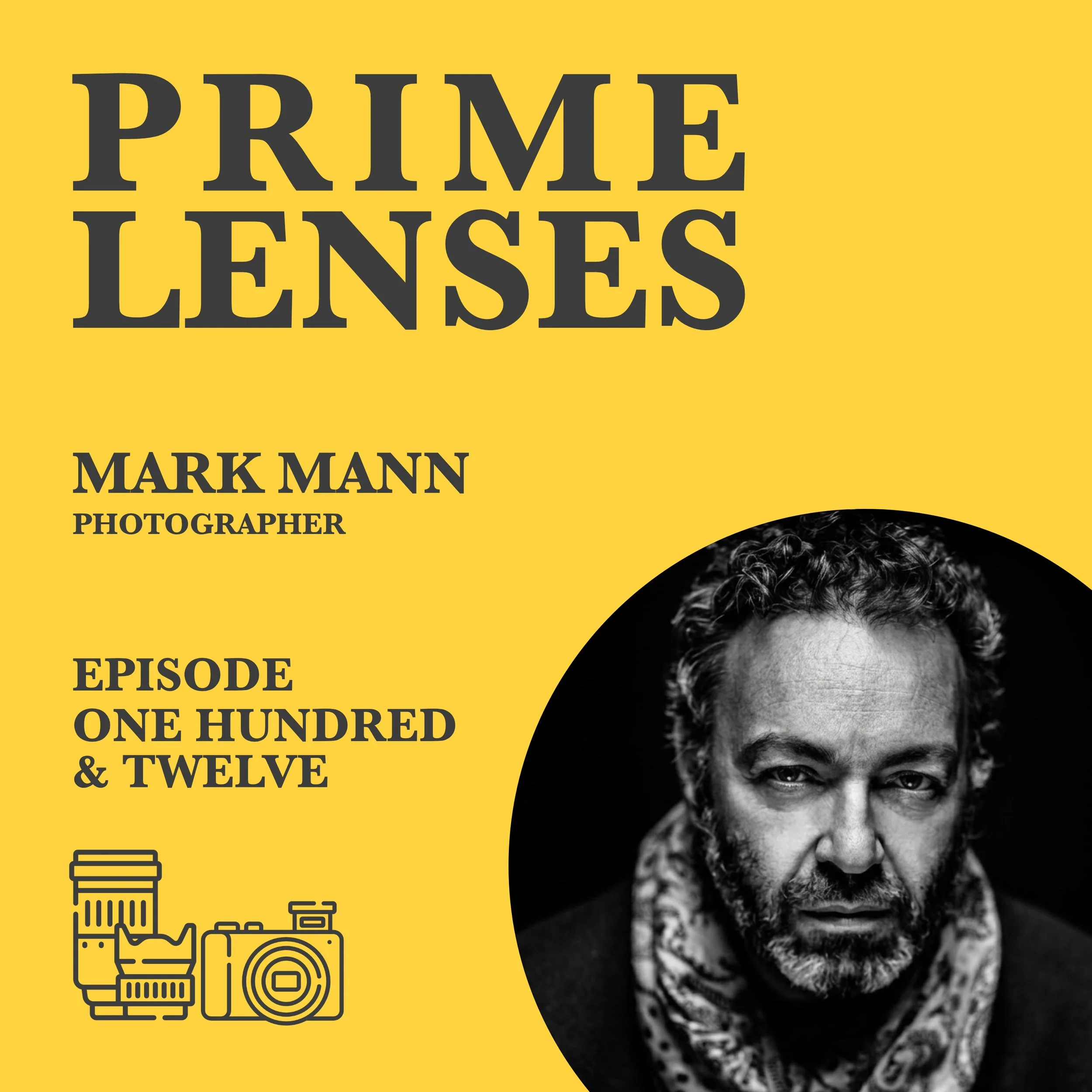


Mark Mann is a portrait photographer based in the US but originally from Scotland and with a Leica connection so that was more than enough excuse for me to invite him onto the show. We get into cameras he enjoys, the changes he sees coming with AI and how you handle running up someone else’s phone bill in the 90s.
Sign up to the Prime Lenses newsletter for a mid-week treat.
Support the show on Patreon.
Episode Transcript:
Iain:
Thank you. it is really lovely to see you thank you I'm very I was very excited to reach out to you and talk to you and then the email exchange we had beforehand made it even more so because I just think there's a there's a little bit of spark and a little bit excitement in in yeah yeah exactly who knows I'm
Mark Mann:
I'm going to talk a little bit about AI, though.
Iain:
I'm going to talk about it. Well, do. I mean, so I'm interested because you've been working for such a long time. I think your origin story is fairly well trod ground, but it'd be good for context for listeners if you can just sort of set out, like, how you arrived at New York from Scotland, how you found yourself a photographer. And then, yes, I'm very interested to talk about where we find ourselves in image making because it is everywhere, that stuff, in the worst possible way.
Mark Mann:
Well, we'll get into it because I have some theories which are good and scary at the same time. But, I mean, we'll get into it.
Iain:
Jump in then. So talk to me about arriving in New York because you've been there a long time. You've got like 30 years in New York now or in America?
Mark Mann:
Yeah, 30 years. You know, it's just so bizarre. It was genuinely, I mean, you know, landing in New York, it was genuinely like my head was kind of set to this two week, three week kind of thing. What was this going to be? How is this going to be? I mean, I was so incredibly green and naive. I mean, I still am green and naive. But back then, man, it was whatever. And it was funny because at that point, I was staying with a friend for a couple of weeks, and I basically picked up the equivalent of a Yellow Pages, looked up photo agencies and assisting and just like, hi, my name is Mark Madd. Good night. Come and see you. I have kind of a portfolio or can I assist you? And, you know, I'll never forget after like a couple of weeks of doing this, my buddy got his phone bill. And at that point you were recharging like 10 cents a call. And I thought of like $130, which is a significant amount of money on these 10 cent phone calls. You know, before cell phones, before pagers, it was just like, hey, and, you know, it just started like out there, like somebody would agree to meet with me and plug along there and, you know, charm them with my Scottish accent. and you know promise of or this and then somebody would say oh you should meet this one and you should meet that and things happen really really fast and after a couple of weeks it was like oh I'm not going home it's fun and my buddy my buddy was like you know what we love you but you gotta find somewhere to live so you know that was kind of next like some couch surfing for a while with people I didn't really know very well. Just a great, just superb. I mean, think back on it, it's super duper rosy and some of the days we're just like, oh, I actually don't know where I'm going to sleep tonight. But just things happen and there was a lot of great people around that really helped me and I'm really really grateful to everyone they just like let me sleep on their couch or introduce me to someone or lent me a camera or you know it was encouraging or just let me run some free film in the lab or you know and that's why I think I've always got this attitude of really genuinely trying to give back and you know trying not to say no to anyone says oh, can I show you pictures or can I come and do this? Yeah, of course. I mean, it's caused nothing. And if I can give back a little bit, I think that's kind of cool. Right. It's my nature. It's my personality. It just is what it is. Listen, there's definitely days where I'm like, I'm not doing this. I don't. I shouldn't have said yes. I wish I hadn't said yes. And, you know, one really, really brilliant piece of advice I got was never say yes to something you're not willing to do right then. because I can assure you when that day comes up that you have to do it. You're not going to want to do it then either. So, you know, definitely something in my working on myself was just like maybe think about this before you just say yes. But I'm feeling miserably at that all the time.
Iain:
Well, there's that old thing, isn't there, as well, about being like if you're working in any creative endeavor, some people will say to you, if you can imagine doing something else, then you should. Because the problem is, like most people, no one wants to be a penniless artist. And it's flipping hard, as someone who's trying to make a podcast that's audio only in 2026 will tell you. No, I'm going to make radio. But I am, and we're doing it.
Mark Mann:
And I'm glad that you are. And to be honest, like, you know, podcasts, I don't watch any video podcasts. I only listen to podcasts. I don't think anyone does.
Iain:
Exactly. It's on in the background. I think it's a con. I think when all this shakes out it's the Queen song radio is still here 30 odd years after they made that song it's still the thing and I think that's the good thing about conversations people take us on walks that's the feedback I get from listeners all the time but yeah, that's cool
Mark Mann:
and this one's good because it works good as a sleeping aid you put this on with Mark Mann you're guaranteed to sleep in 5 minutes better than Ambien
Iain:
there we go that's brilliant um so you arrive in New York you're couch surfing you don't know where you are I can relate to that I had some days like that in Glasgow when I was living there what it's oh it's good times man when you're like do I do this or do I eat food I don't know
Mark Mann:
yeah no I've been there I've been there listen in all honesty I I you know I I say this you know I don't I'm not making up some hardship story I have always been in the position where you know hey mom dad can you wire me 50 bucks I mean my parents are certainly not wealthy but I wasn't like I wasn't ever in a position where you know I'm not not that it's something I abuse but I just just want to make it straight like yeah I definitely had some people out there that like I just need 100 bucks or something so I don't think it was like but yeah there was nights where I was like I'm gonna sell these four david bowie cds because that'll give me 26 and that'll pay for Chinese food and potentially a roll of film for a job that I have tomorrow which I don't have any film for.
Iain:
But then fast forward to now.
Mark Mann:
I'm still trying to borrow money. I'm still trying to borrow but I'm thinking about how I'm going to pay for shit. I mean genuinely it's like
Iain:
what am I going to pay for that? Well the kit doesn't get any cheaper and it feels like the work gets harder. So you might be able to speak to this but when I've spoken to a lot of people for the show one of the things that they kind of It's not lament as such, but they miss some of the old days a little bit where you did the job, you made the photos on the film. If you were a sports photographer or something, you handed your pictures to someone else and went down the pub. Right. And that was your job done. And now as the tools, there's so much more control you can have because you can do stuff with images digitally, which is a good thing in some senses. And this will kind of lead us in the direction, I think, of like where the tools are headed and where we're going. You've got more control in many ways than you ever have, but also the burden of the work is on they're expecting to pay for fewer and fewer people than ever before. And I don't think that leads to great work. I think small teams of people help you do really good creative work because if you're stuck in a room on your own, you can't see what it is. Having people around you, you've presumably seen that change loads over the period that you've been shooting.
Mark Mann:
Yeah, you know, I was in a conversation with a fellow photographer the other day, and we're talking about, you know, how AI is going to, you know, do this, do that. And I'm thinking to myself, and I'm really thinking to myself, I'm on stat with an art director, a model, a makeup artist, a celebrity, whatever. If I could have a dollar. First of all, let's break it down. Any art director takes about 14 hours to decide what coffee they're having in the morning. They have no idea what they want. So let's see the art director sit and prompt something for 14 hours. I mean, it's just, you know, so it's like everyone says, well, you won't need photographers. You go, that's, that's absolute nonsense. Art directors have no idea what they want. They want a photographer to show them what they want and then tell them they don't want it and want something different and then have another idea. And I'm telling you, the amount of circles you have to go around trying to create something in AI in comparison to like, hey, and like me looking in your face as an art director, I've worked with you 10 times. I know where this is going to go. You're going to hate the first four things. The next three things you're going to kind of like. And then we're going to step back to the first thing that you hated because that's actually what was. And this just doesn't happen. And it only happens, as you say, in the team and on set. So, you know, we have that. But the bigger question is that does anybody, does the consumer care, right? So I can say, yeah, I can do this and I can do this faster and I can do this better and I can do this in a way that a machine can't do it. So, yeah, this is what it is. This is what it's going to cost. Bottom line, does the person who's actually buying the product care that Mark Mann cares? You know, and that's, I think, where we're at. And I think the reality is, I think the good thing is we do care. I care about, you know, I watch something and if I'm going to be sold something, I think I want it to be authentic. I think I do want it to be authentic. But the bottom line is who knows if it is and if it isn't. And if it can look so authentic, then, you know, then maybe we should be having a different conversation. Does that make sense?
Iain:
I think it really does. And I think one of the nice things about these conversations is sort of picking up complex things and unpickling them and unraveling them like together. It's not a kind of a one way thing, I hope, which I think makes it interesting. And I think you can tell, like even to put it another way, like even my kids can tell when you put something in front of them that isn't very good. They know it's not good and they're not interested. And I think when you look at a load of... Did you see the video that was doing the rounds recently that some new model had generated and it was Tom Cruise fighting Brad Pitt on a rooftop? It's terrible. Right? And it's... First of all, all they could do was that one sequence that's derivative of kind of every action movie ever. It's just sort of a slop made of every fight sequence you've ever seen. So it's not doing anything interesting. It's just boring. And you just look at it and go, well, it's a clever trick, but it's nothing more than that. And it's not going to create anything new. Now, if the tools that exist there improve the workflow or productivity for someone making something and they see a tangible benefit, then great. But I don't want to, like you're saying, I don't want to watch something that was just prompt generated because it's going to have no substance.
Mark Mann:
A hundred percent. You know, talking about my kid, my kid's 11, right? So he'll watch that, and as you say, he'll go, yeah, fake rubbish. And then we'll watch 15 minutes of a guy, like something shot on a cell phone, of a guy, like in a lecture who decides to make butter chicken. Have you seen the butter chicken guy? I haven't seen the butter chicken. They're like he's in a lecture hall, you know, in a university, and there's a lecture hall, the guy's lecturing, and there's somebody filming him, and he started taking pots and pans out, like in the lecture hall, and making this butter chicken dish. And I think it's brilliant, because it's real and it's authentic, and the tools don't matter there. It's the content. And he loves this. Where I get worried is when he watches something that he thinks is real, and it looks real because it's kind of crappy looking, and it's somebody or somebody he respects saying something that they didn't see or, you know, and that's, I think, the problem. And we all think that we can tell AI from not AI, but we can. I mean, you can. If people don't want you to. I mean, Tom Cruise fighting Brad Pitt, yeah, we can tell that, but I've definitely seen some imagery and some videos that are like, I can't tell you. I've made some that I can't tell you. And that's where they... But then the other thing to think about, Iain, right, is that, you know, we constantly watch fake, right? We watch a movie, somebody gets killed, they're not getting killed, it's fake. Yeah. Right? It's like, oh my God, no, they're not dead, it's fake. We're watching make-believe all the time. And this is just, you know, this is just more make-believe.
Iain:
I think the other worry for me is when you shut down the capability for doing something, spinning it back up again is very hard. And so for me, it's the loss of skills. Like I've mentioned it before on the show, but when Jaguar's last engineers who knew how to make those curved windscreens on E-types retired stroke passed away, that was a skill that was lost. You know, that's just nobody knows how to do that anymore. And learning again, it's not that someone can't take that as a project and learn it again. but it's any time we can replace too many of the people on the team or the idea that you can replace people with a tool no just put the tool in place let them do something else useful that's creative or whatever don't use this as an excuse but the businesses don't do that but that's what
Mark Mann:
I mean I'm thinking about like you know the guy back in the the industrial revolution whose basic job was to like take this hammer and go good boy and this guy was the strongest guy that whatever could do a hundred of these hammers a day could boink and hit it perfectly and he was a man and whatever you know all of a sudden somebody invents a steam hammer that can do three thousand a day or five thousand a day more accurately than he'll have and this guy is like oh what do I do now so it's we've always I think we've always been there and I suppose the bigger question is is this more or you know how's it going to settle out and that I think that's a great unknown but I I think to say that oh we've never been here before is nonsense we've always been here before man oh listen I paid somebody to type my dissertation at college I couldn't I didn't have a typewriter I didn't have a word processor but it's you know here here is my handwritten scroll and I physically paid somebody who made a lot of money by typing out student dissertations what do they do yeah you know yeah and the two two tiny examples of you know well one in in my life and well I'm not quite old enough to remember the industrial revolution but almost but you know just just just just things that are changing um and I just think you know embrace it man go with it learn it try and use it try and work with it don't fight it because you can't fight it but you know try and put your own stamp on it you can't fight this it's not going away but you know ask ask yourself and and here's the question I I've been asking a lot of my friends are photographers I say a lot of my friends are photographers do I actually have any friends that are photographers because most of them are all like you know whatever but people I know that would create whatever are you a better photographer than ai right here's that that's that question so I'm going to put that out there to your audience um are you a better photographer than ai um now my answer to you I'm going to break it down I'm not going to go into detail but we can go to yes of course you are but you got to tell me why and I think that's that and I think when you think it through you you will come up with the answer that is yes but you have to know why you are or else you're here what's the point I'm reminded
Iain:
recently a lot of the um in the old days at IBM you know do you know why think pads are called think pads you know this story there's a guy who ran IBM yeah so it's I'm glad you said that um so this guy at IBM whose name escapes me gave everyone at the team on the team a notepad and on the front it said think and they were known as think pads and they were given out to members of staff and the idea was he was more interested a bit like Edwin Land at Polaroid and a few other people who kind of are successful creatively and in an engineering space as well. They sort of break it down in a very structured way. And it's that thing of, I want people to have space to think. So if something makes someone more productive, or in a creative sense, I talk about it all the time on the show, iteration cycles, right? The more cycles you can go through, the more times you can try something out and learn. As long as you're learning from it, you're getting better every time you try. And I think that's the thing we have to, we need to kind of view all of these tools every time something like this comes along. It's like, what is that letting me do now that I couldn't do before or that would have taken a really, really long time? Because if we can free up space for people to try stuff and to think, I think that's really good. The problem is we're generating slop at a rate of knots and the pace, you know, we've never had tools that could produce utter tripe so quickly and also the companies the companies have no taste like and I I flip-flop every day on whether or not I think it's probably on balance a good thing that Steve Jobs passed away when he did uh it's a bit like JFK being shot when he was like maybe you know like maybe on balance it was a good thing and you're a liberal icon and whatever but the fact remains like we need some people in charge
Mark Mann:
to these places with some taste not just a desire to win they're gonna change man it's always been like that it's just it's the way it's actually well no I it's not always been like that and we can lament and lament and lament about you know when so and we you know when when um grace or was a Vogue magazine and how you know what that made for grace and when grace left it all felt about lament and you know uh Graydon Carter was you know graden was an Esquire or or or he you know these great editors that were like I don't care this is what we're doing yeah um and you know just I don't know I think I think instead of lamenting about you know how it was if we're actually the people creating we have to be the people that the new people know it's like oh we got like yeah we'll be that be the person that you want to be listening and you're doing it man you are doing a radio podcast and as you say it's like radio podcast 2026 but you're doing it because you think it's relevant and if you're right and if it's relevant then that will succeed I I I I really I really believe that and you know um you can bang your head against the wall saying you're right and then you know total failure and okay but if you really think you think it's our responsibility not to lament about the past but to create the future that we wow that was deep oh mark where that come from I like that must have had coffee this morning wow that's the quote that goes on the wow oh go check gpt running in the background what's good this guy what's this guy say something deep mark say something deep um no but I do I do believe that it's like if if you know and that's why I try I tell you not to talk about the good old days and how I know it's the good old days because then make them again you know you're you're the creator make the good old day make what you want to make put it out there but but you are but it is hard because as you say and quite rightly so god we're up against a lot of crap jesus are we up a lot against a lot of crap yeah well the bar seems to have got to floor level so often so often you look because
Iain:
I when I started out 20 22 23 years ago I was in agencies in London right web agency stuff and we were we were jostling and like elbows out to prove that new media could make things that were good and substantive and it wasn't just like crappy websites you know and we were doing brand stuff and we felt like it was important so I kind of have this problem where like the past felt like we had a mission you know like that we were looking forward to something and one of the things I wanted to ask you about was how have you kept it fun for yourself stroke what's the mission now
Mark Mann:
it was a mission listen um a little a little later on today I don't know um I'm gonna do a live demo um a camera store in New York called Adorama and a little shot Adorama with Leica um and I you know one thing well what I'm doing today is like a one light setup right so it's like what can you do what can you do with one light now I'm not a particularly I don't even particularly I'm not a great technical photographer right I mean I've watched some of these demos where it's like watching looking David Blaine with a light you know oh my god you know and he's got a model sitting there and he does the light and there's a flicker take a photo all right here wow it looks great so I know I can't do that but what I can do and what I think to just circle back to why are you better than AI what I can do is I'm going to pull an expression out of that person that's sitting there because I'm not going to use a model which always throws people off I'm going to say hey come and sit up here and I'm going to pull somebody that's if everybody shows up that is I'm going to pull somebody that's sitting down there and I guess hey you sit there and I'm going to set up a light and I'm going to go bang and I'm going to tell them like a funny story or I'm going to provoke a reaction. And you know what? Even if the light's not great, even if I miss focus, which is quite often, even if my exposure is not right on, which is something that happens, I'm going to get an image that is just not something that could be generated. Maybe it could be, but not as quickly and not as effectively as what I'm doing. And even though we're selling, we're selling, I mean, it's free, but even though we're talking about this as a one light setup, the only thing that I want to try and get over is like, if I'm in a one on one conversation with you taking your photograph, I'm hoping that I can do something better than AI. And I know I can. I mean, sometimes, sometimes I don't, but, you know, hopefully that and that that's the lesson. So that excites me. That is still what makes me want to be there. Not sitting in front of a computer all day, but actually having a conversation with somebody. And then for me, the photography is almost a byproduct. The photograph is almost a byproduct. It's like, wow, I got to sit down with this woman or man that I'd never met. I pulled her an audience. I sat her down. And you know what? I learned something about her. And I had a conversation. I had a human interaction. And that's what keeps me going as a photographer, whether this person is a whatever, A-list celebrity, somebody who's come to try and learn how to make better portraits. I don't care. It's about that human interaction and that thing that happens when there's a camera photographer and a subject.
Iain:
It's the best bit. And it's the special thing about photography because it's the last art form where you kind of, you have to be there. You know, there's not, I mean, I know you can generate an image and pretend you were there, but to make the real deal thing, you know, you had to be there. And content credentials and all that noise and nonsense aside, I agree with you.
Mark Mann:
You got to be there. And the photograph, for me, it's like a successful portrait for me is one that actually reminds me of that moment in time. And sometimes what the viewer sees is very different than what I remember. But that doesn't matter. It's just as long as there's something engaging, whether it's just the beginning, whether it's like a little look of curiosity, whether it's like absolute shock at what nonsense I've spoken or whether it's a smile or a laugh or just like disgust, which I get quite often. As long as I look back and go, yeah, I made that happen. We made that happen. I made that happen with this person. I've tried to bring something out in that person which is not normally visible just with their game face. Let's see a little beyond that. It's very easy with A-listers to just accept what they give you oh yeah great great great oh was that a good impersonation of photographer oh my god that's great wow I love that um it's much much harder to literally put yourself on the line and say something that's going to cause a reaction because people aren't used to it people you know why are you talking to me take my photo well I'm talking to you because why not we're both sitting here so you know and I think I think I think that's that's that's that's more where where if you want to be a portrait photographer where you can practice your skill I mean lighting is easy I mean I'm not being a dick when I say that I'm doing lighting you can learn I mean you can go chat gpt and say hey where do I set up a light for a rembrandt look or a butterfly look or a schmutterfly look or whatever these things are where do I put the okay, go practice it for half an hour. You're going to learn that is all you need. That's as much as you're going to need to learn. But having a conversation with a human being and getting them to react and getting them to be with you for that few minutes and to stay with you even while you have your camera in your hand and to capture that, that I think is the skill of a portrait photographer. And that's why I practice every day. well not every day but most days tuesdays on yeah I was gonna say on the good days
Iain:
good day yeah yeah I was gonna ask actually I was gonna ask you about the Obama portrait in particular but actually it probably extends to all of your celeb folks right that like they're all arriving either with either with a particular thing they want to portray a message or an agenda or actually in the worst case presumably they're just fairly apathetic and this is just one of many appointments in their day that they just need to get through.
Mark Mann:
Absolutely. And that's the thing is like at the end of the day, if I've made you laugh, made you smile or made you just remember that five minutes, 10 minutes, one hour, then I've succeeded in my job, even if the photograph doesn't say so. I mean, you know, Obama's great. And I've told this story a few times, but it's a good one. So fast forward, if you've heard it, but basically, you know, going to the White House as an immigrant to America was a very nice experience. And I'm there with, I wanted two photo assistants, but the editor of the magazine wanted to come and the writer wanted to come. We're only allowed four people, so I was down to one photo assistant. you know in retrospect now how I would do this is so definitely I did it then but it's irrelevant um so we're setting up our gear running around setting up our gear um and this Secret Service guy is like watching me the Secret Service in the room and they're watching me excuse me are you the photographer I said yeah I'm mark I'm a photographer he goes okay he's watching me and I'm putting up to the light stand and you're on my camera and he says are you sure you're the photographer? Yeah I'm the photographer, I'm just not I don't know where he's going, I've got like 15 minutes before the president is coming in this room and this guy, you know, I'm like yeah yeah I'm the photographer and then five minutes later he comes over to me and goes you're not the photographer I said what do you mean? He goes well we had a photographer here last week and all she did was sit and at everybody else while sipping coffee and you don't seem to be like that do you know our annie somebody annie somebody oh wow I had been there last the week before I don't get me wrong I love annie but he was just he was just what he you know he was just I think he was genuinely surprised because maybe it was his first time being in the oval or being in you know with a photographer and the impression he was got as a photographer just stands shouts at everybody else um so that was funny so that made me laugh and then you know we're ready we got we were set up where the lights are up everything's up we're ready and then we hear on the Secret Service uh POTUS running late and they say oh well uh president's running late the greek economy's just crashed but he'll be with you in an hour so then you're just like oh yeah and then we're energies all gone sitting around and just sitting around and sitting around and then you know, POTUS traveling right here on this Secret Service radio POTUS traveling and some other people come in the room and then Bo, the dog runs into the room and like, you know, I've watched TV I'm expecting somebody to come in the room and go, ladies and gentlemen the President of the United States of America, Barack Obama but that doesn't happen he's in his own house he just walks in the room right he's in his own house so all of a sudden like I'm literally 12 feet away from the president and I'm thinking somebody tell me what to do here and I'm looking over the editors from Esquire and they're not saying anything right so I walk over and I like some gibberish I don't know he's a bad mark man everybody gibberish, gibberish, gibberish. Could you just stand on that little piece of table and we can stand there, Mr. President. So he stands there and I step back and I start taking photos. I thought, wow, this is so bizarre. Usually I get, like, somebody comes into the studio, I chat with them. How are you doing? What did you have for breakfast? And I don't just, like, snap, snap, snap. It's just what we're talking about. So I thought, okay, I'm going to actually go and say a few words. And I put my camera down. I walk towards him by this eight feet. I can see the Secret Service moving in from the side. And I just, you know, I said the things I wanted to say, like it's such an honor to be at the White House, Mr. President. You know, how are you doing? You had a busy day? What's going on? And I think he's looking at me like, what's going on? But he just goes with it. And I step back and I can't remember what I said to him, but I had him for about four frames. He was with me. He was smiling, and I had him for about four frames. I got these four frames, and then I just literally saw his eyes glaze over, and I could see he was going into his next meeting. You know what I mean? I know he was there, and somebody shouts, have you got it yet? And I was like, no, give me five more minutes or two more minutes and whatever. So it's two minutes. I know all these frames are fine. They're compositionally fine. I know everything's fine, but I know he's gone. So I go, okay, we got it. And he was very, very nice. And he posed for some photos with us. But, yeah, that was just, I mean, it was just bizarre. Bizarre experience. Absolutely bizarre. Yeah. Cool day. I mean, the best. You know, the best thing about that day was, you know, and I think this goes a lot to say about who I am and, you know, why I am who I am. is that I get back in the, I can't remember if we took a train. Oh, no, no, no. Everybody took a train, but I went in the crew van with my team, and we drove home, and we get home. And we go home by 7 p.m., and I get home, and I'm, I mean, I'm high, man, and I'm buzzing from this. I mean, I'm buzzing from this experience. And I open the door, and my wife goes, did you unload the dishwasher? sure I'm like uh no she goes we talked about it you're supposed to and that all of a sudden it's just like thank god for my wife because you know whenever whenever my ego or anything moves a little bit you know she is just there to put me back in place and and and you know I I I I'm sorry if I make your, I mean, she said, listen, I adore it. But I just love this about her. And then I said, no, I'll do it now. She goes, no, no, tell me about your day, but then do it. Okay, go ahead. And, you know, it's just her way of, you know, keeping me in shape, which is really great. But yeah, it's a superb day, superb day.
Iain:
And a reminder, though, that that's what we need. And that's why we need people and human connection. and you know because there's a I've written about this the danger of believing your hot shit like if you make something and you start to get good feedback and people start to you know tell you you're fab and then you start to believe it and you're like oh shit now what you know yeah I
Mark Mann:
just I I have no I mean listen I nobody nobody there's a there's j and it's so important there's like three people whose opinion not not that I care about because I care what I kind of care Everybody thinks, obviously. I mean, I'm an artist. I always care what people think. But there's three people I know are just going to tell me it straight. Certainly one is my agent, Tammy. Number two is my wife, who is brutal. But she's in this industry as well, and she's brutal. So I'll do these photos, which I think are like, I'm not a fashion photographer in any way, shape, or form. But, you know, I remember doing something, which I thought was really cool. And I bring it home. say hey Katie what would you think of this he goes I don't like the scarf I'm like I know I didn't do the styling but what about I can't can't get past the scarf mark and I'm like but but the composition goes don't care but they don't care scarfs bad not good you know but when you have somebody like that as you say and when you have something like that you show them something go yes it's pretty good you're just like wow I really I got it right you know so um that's incredibly important and you know it you know the people that are anybody who thinks are actually good at photography should just go look at irving pay and richard avidon um you know and just like no no no these guys are quite good you're not and and I put myself in that you know category like anytime I'm feeling quite good at I mean, I'll just open up a pen book and go, oh, my God, I haven't even scratched the surface of this. And I genuinely believe that. Genuinely. I mean, sometimes, I mean, I've been lucky. I've made a couple of images that are OK. But, you know, I mean, have I made anything compared to my masters? I don't even close, in my opinion.
Iain:
There's so much noise in the modern world. I think it gets almost every year it gets a little bit harder to make the space to do that stuff because you've got to, you know, you look at people like, I mean, get too much reference, too much credit, but like Vivian Meyer, who just spends their entire life making the work they want to make and has no expectation of this going anywhere. And it's just enjoying the images that they're making and, you know, never saw anything for those images. And, you know, there's some fantastic photography in there and there's a lot to learn from it, especially if you love street imagery. But just never had any expectation of it. I think expectation is the thief of joy. Right. If you don't have to do this as your job, but everyone will tell you you need a new thing and the latest thing. And it's got to be the best one. And if you've not got this, are you using that flash or don't use that flash? That flash means all your photos suck. You know, it's like, oh, just make things.
Mark Mann:
see what happens are you a manchester boy is that manchester no so I well I lived I moved around a
Iain:
lot as a kid so I lived I've lived in yorkshire grew up partly near little lever near bolton so there's a little bit of that in there um but then went to uni in Glasgow it's a great story um which
Mark Mann:
which actually happened when I was at in like 1905 or whatever the hell I was at college feels like 300 years ago but there was um the art I was at manchester and the art gallery manchester gallery of art started to do a loner program where you could borrow paintings and hang them on your wall and you know it was like a library for painting I mean obviously they weren't given out whatever but they were given out paintings you know and there was a guy that the story came out, there was a guy, he was, kid would come in religiously, take a couple of paintings, take them home, bring them back, take another few paintings, take them home, whatever. And then one day he didn't bring the paintings back and left it a week, left it two weeks. He didn't hear from me, he didn't have a phone or he didn't have contact. So a couple of people from the gallery went to his home or his address where they had on file and there was no answer least whatever they open unfortunately he had died sad story he had died and the paintings were there hanging in his house every surface of his house including canvases wooden spoons everything was painted with these incredible paintings that he and and as soon as he finished one he just painted over on top of it painted over on top of it so there was like you know paintings that were an inch thick it's just on top on top and when you talk about and they were beautiful um you know what was there those hundreds there hundreds of canvases and they were beautiful and they were fantastic I gotta look up the name of this guy I'll try and find it um and as you say it's like if you can be at that level where you have no expectation and just do exactly what you want without the commercialism and without you know being told by an art director I think that's pure joy I mean I have that I'm like you know but I I I I'm so far and removed from that that it's almost hard for me to take photos personally without thinking of what's somebody gonna think about this um and not care but I I just think that if you can get there or even even have a part of your life which is just that then I think that brings a lot of joy you know often commercially when we showed of portfolios back in the old I am do you have any personal work it's like well if I had any personal work why would I be showing it to you I remember saying that a couple of times like well it's personal am I coming into your house and going can I just look through your underwear drawer just like if yeah if you know that's going to happen then I'm going to make my underwear drawer look like I want somebody to look look in it so that was always that weird thing about personal work so what was personal work um so what personal work is I think now for me is I I did a book a few years ago um on dance photography and I'd never shot dance before and I did a book and it was a very personal project because I didn't nobody nobody was paying me nobody was telling me what I had to do or what I wanted to do and that that fulfilled this a creative thing for me and that's great and I'm in all honesty put me in a room with a model a client an art director a team a person a thing I'm just as happy making commercial images as I am making any other images because I love the team sport I I love it I love being around the people you know like I haven't seen the makeup artist for a while it's like hey how you doing what's going on I love that vibe I love that team thing and I love making images I get very lonely making images for myself I can't do landscape or and like drive out there and look at it and go I just love people I love being around people and I love capturing their faces so commercial photography works pretty well for me
Iain:
which is great lucky that that aligns but I do worry about what will happen when you retire like the people in the street that you'll just stop on your way to the shops and just to get
Mark Mann:
your hit I do I do it now and it drives everybody around me nuts I'll go into a store and I'll talk to the salesperson and you know or I'll talk to somebody on a on a queue or in a line and you My wife's used to it and she just ignores me and walks away. But my son's like, stop talking to people, Dad. I'm practicing my photography, son. What do you mean? Well, I'm seeing how they react. I'm trying to make their day a little brighter. Make this interaction a bit better. Make them smile, you know. Well, stop it. You're embarrassing me. Sorry, son. But I've noticed you'll do it now, too.
Iain:
Yeah. We're all doomed to become our parents on some level. I think. And that's, you know, like you can just chuckle away to yourself knowing that you've planted that seed. My son already, he's the same age as yours, comes out with the dad jokes already. Oh, absolutely. Loves a pun. Loves a pun. And my wife is just at the dinner table, like ready to kill us both. But it's, you know, the heart wants what the heart wants. The thing he doesn't understand is, well, you're practicing your type five, right? For like what you're saying there, you can use that on a shoot, you know?
Mark Mann:
And, you know, I do. I think what's interesting about the kid thing is that they also are. I think the thing that irritates me most about my child is what irritates everybody who's my friend about me, them about me. It's like he's nailed it. He's nailed how to annoy people and get under their skin so well. It's phenomenal.
Iain:
It's good. It's not about that's a life skill. You're giving him the tools he needs. is he showing any signs of wanting to follow in your footsteps does he love photography or is
Mark Mann:
there too many cameras around and he's not interested he's uh he showed a little bit of work um he's often told me I'm the worst photographer in the world that's his right you're a terrible photographer or you photographed bric ross oh that's cool I mean not cool but I will be cool when I tell my friends but I'm not pretending you photograph lebron james yeah well okay that's that's okay but yeah no I don't know I let him do what he wants to do the other thing that you know concerns me a little bit about that concerns me a little about this that generation is there's I see a lot of positive things in that generation certainly about you know even Gen X or whatever they are about personal time versus work time and I've been quite impressed with like, no, I can't do that. I'm sorry. I've got to the cinema tonight. You're what? We're on a job. Yeah, I know. But I finished at six. I know, but we're on a job. Yeah, but I arranged this weeks ago. So there's something about that, which I'm definitely jealous of. And also I completely shocked by. So I'm really mixed by that. But, you know, you know, this thing about like, yeah, I finished work at six. You're not paying me to be here later. and I made this plan two weeks ago. Wish I could do that. So, you know, if you're like, wow, that generation, I'm like, well, you know, maybe they're right and we were wrong. So, you know, once again, not lamenting back to the good old days, but going to be what's forward. So, you know, so explain to this person, I understand what you're saying and I can't force you to be here, but I'd really like you to be here because the jobs aren't late because the client was late and da-da-da-da-da-da-da. No, I'm sorry. I can't cancel it. Okay.
Iain:
Yeah. Well, yeah, but as you say, maybe it's a better balance. I will tell you, since I quit my proper job and started doing this all the time, the biggest difference is I never really stop working.
Mark Mann:
Right.
Iain:
You know, you do. On the one hand, you can do a bit whenever you like. But on the other hand, last night at half nine, I was putting finishing touches to a newsletter. And that's just a thing that happens. And you're just, you know, but then it's yours. And that's the problem.
Mark Mann:
Yeah. thankfully I've always been like that and so you know work and also work is actually pleasurable what's that love saying do something you love and you'll never work a day in your life
Iain:
it is if you live in Yorkshire that's amazing
Mark Mann:
especially if you live in Yorkshire grand but I kind of feel like that so you know the stuff that's a grind for me is paperwork and invoicing and that's the grind actually having a camera or being in Photoshop or editing or whatever. It's just like joyous. That's the stuff I love. Even if it's not kind of exciting work, it's like, oh, yeah, this is what I love. And I actually pushed myself in the last, I would say, eight years or so. I haven't had any kind of setup that I can really work on. Oh, this is interesting, actually. I haven't had any really setup that I can work on at home. So I go home and I try and be home for a kid, whatever. for the last couple of hours of his day. And then the only thing I can do at home has been invoicing or paperwork or thinking, but I haven't been able to actually retouch or edit because I just don't have a system at home. But exploring this new AI stuff, I have a very powerful laptop. And the last couple of weeks, I've been up to two in the morning you know creating images trying to work out how workflows work and you know local models and it's like wow this is crazy that I can actually do this at home so I better can either stop that or or not because I've just been working way too late um on this but I'm getting I'm getting kind of excited by this you know not to leave it on ai but you know you really go deep and you know it's it's It's amazing that it's just fascinating what it does. And I'm trying to get my head right there.
Iain:
A listener contacted me at the weekend and he wanted to know, because I've done all these episodes, he wanted to know who I was talking to. He couldn't remember the name of the guest, but they talked about creativity and anxiety, right? And I was like, there's over 100 now. You're going to have to narrow it down. I can't, it comes up a lot. And he found it, but I realized we needed like a wiki or something like that. And so I have been making something in the background and using stuff that I can just throw transcripts at and it can generate a website for me really quickly. But that's what it should be. That's the idea, right? Enable something, solve a problem for someone quickly and then move on. This doesn't need me to spend three months trying to spin up a WordPress thing and manually build something that's fragile and whatever. I'll just use the tool to generate thing. And then if listeners get some value out of that, that's great. And we can all get on with our lives and then someone gets something useful out of it. And that I think is what it's for. Like make the thing do your invoices for you. Don't make the thing that tries to take away the job that only a person can do, in my view, or that, you know, that people would enjoy doing. Yeah. What if we did that? Like we've got robots for doing the washing up for the same reason. It's a dishwasher. Yeah.
Mark Mann:
Yeah, no, totally. I wish I could find something to make invoices for me. I wish I had more invoices to make. I wish I could find something to make the work that I could make the invoices for.
Iain:
Yeah, I currently have one monthly one that's a regular one. It's like, yeah, I don't think I need to automate the one I do a month where I just duplicate the document and send it to the same person.
Mark Mann:
It doesn't seem like I need to do that. I'm working with a client right now who I like very much. And they're great. They're a great client. I'm not going to go into details, but there's always at least six to eight problems with the invoice. And they always, the problems are like two days apart. So it's always just like, just bought yourself another 12 days on this. I know you did. Oh, you have to mention that, you know, whatever. Oh, could we add this person's name? Or, you know, yeah, no problem.
Iain:
The eternal cat and mouse.
Mark Mann:
Yeah, checks in the pool.
Iain:
Yeah, yeah, there's somebody near a water cooler in that office going, you've done this again to him. It's like, yeah, I'm just seeing how long we can take it, this one. I've never gone to five. Or it's just our AI is doing it.
Mark Mann:
It's like, find something wrong with this invoice.
Iain:
Yeah, yeah, there's always something. Oh, brilliant. Well, this, I really love this. I feel like I could talk to you for hours, but I know you've got to go to Adorama and do some things. Yeah, I got to do that. yeah yeah do your thing ta-da it's a it's magic magic are you sling sl3ing tonight or m system
Mark Mann:
sl3 sl3ing and uh yeah um yeah sl3ing yeah I was gonna know sl3 sl3 sl3 it's a you know it's a phenomenal camera I love the camera it's a phenomenal phenomenal camera but you know what it's lacking it's technically image quality wise speed no issue but I'm a medium format guy and it just doesn't have that X factor for me
Iain:
right yeah is it a little bit of soul because the lenses are getting so good now as well I don't
Mark Mann:
it's hard to say that I like it as soulless but it's and it's not soulless but there's just I don't know either film or medium format digital medium format digital but there's something about 35mm full frame digital I just I use it and I love it and I've tried all different variations on it and I've tried it I've even tried the Fuji, which the medium format Fuji was great, fantastic. But there's something that I just, like the S system, I know maybe another time we can talk about it, but there was something about the S system. But I'm not willing to compromise on getting lots of shots in focus and the things that the SL3 does. it's the compromise on the end image quality and how I feel when I'm holding it is not worth
Iain:
shooting the s does that make sense it really does because it goes back we go full circle back to when you've made the product and it's it's where it's going there comes a point where you have to be pragmatic of like your needs and your desires can't come at the cost of the thing you've actually
Mark Mann:
you're there to make you've got a job to do at the end of the day or or not or not as the days as quite often.
Iain:
Well, we'll pick up on the or not days and how you handle those next time we speak. But Mark, that was brilliant.
Mark Mann:
Thanks, Iain.
Iain:
For people listening who don't know, where can they find a bit more Markman?
Mark Mann:
Markmanphoto.com or Instagram at Markmanphoto. Or OnlyFans. No, not OnlyFans.
Iain:
Amazing. Announced here.
Mark Mann:
With the way the AI's going, I might be doing an only pass, you know.
Iain:
It's a lot of money out there taking photos of your own feet, Mark.
Mark Mann:
Marcia man.
Iain:
You can be whoever you want to be.
Mark Mann:
That's it. That's it.
Iain:
Yeah. Oh, brilliant, mate. Well, thank you so much. I really enjoyed this. It was lovely to see you.
Mark Mann:
Lovely to see you. Good luck with everything. And thanks for doing a podcast on the radio.
Iain:
Yeah, man. It's how it started. It's how it's got to be. All right, bud. This is the right way. Take care.
Mark Mann:
Take it easy. Bye. Bye. The next step Thank you.
More about this show:
A camera is just a tool but spend enough time with photographers and you’ll see them go misty eyed when they talk about their first camera or a small fast prime that they had in their youth. Prime Lenses is a series of interviews with photographers talking about their photography by way of three lenses that mean a lot to them. These can be interchangeable, attached to a camera, integrated into a gadget, I’m interested in the sometimes complex relationship we have with the tools we choose, why they can mean so much and how they make us feel.