Episode 125 - Irene Yee
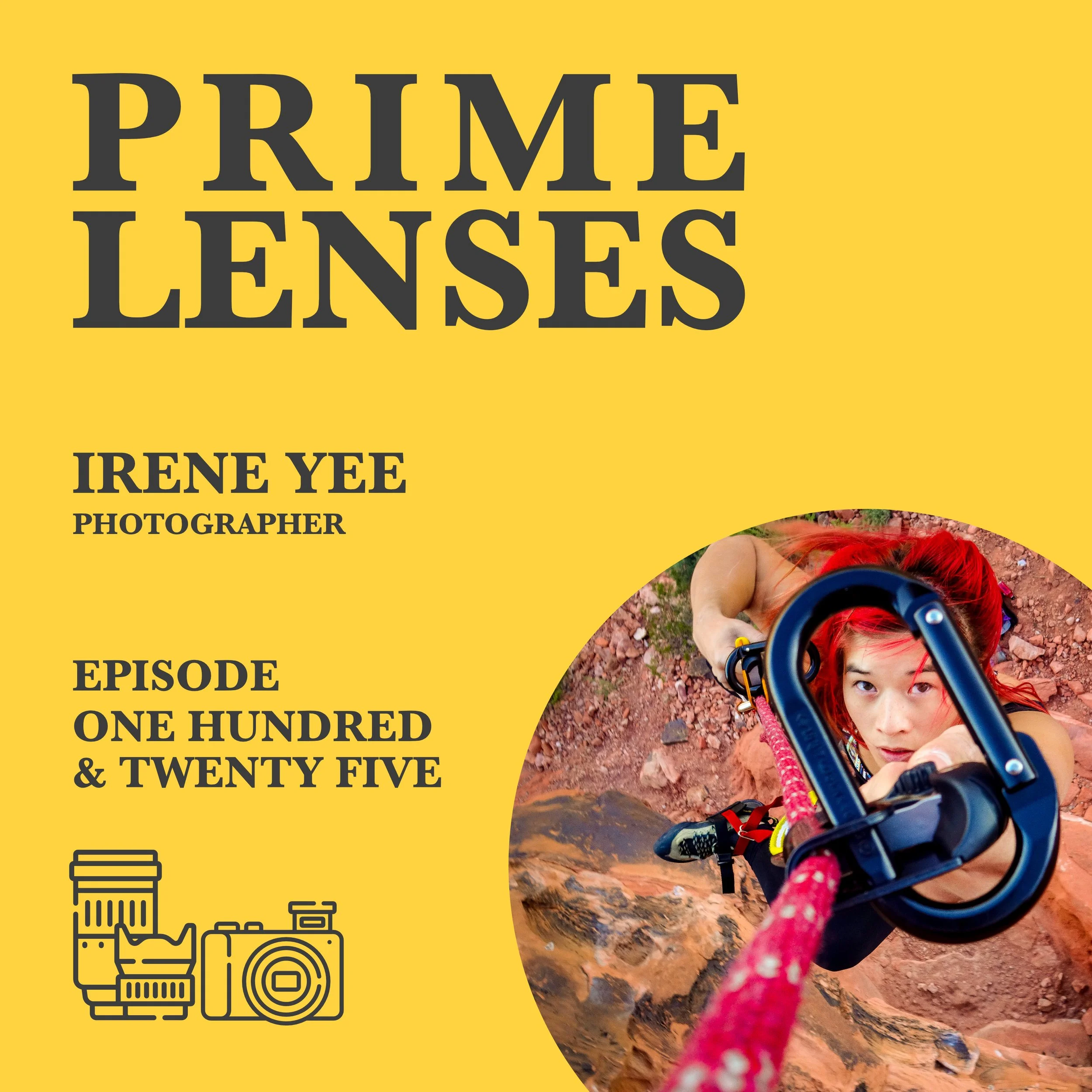


This week, my guest is Irene Yee, a photographer specialising in the outdoors and climbing. She’s a brilliant and open guest who shares a lot of her techniques and ideas for making great creative work.
Support the show on Patreon.
Episode Transcript:
Iain:
How is it going?
Irene:
Good. How are you?
Iain:
Really good. Thank you. It is unreasonably pretty here tonight. and so it's quite nice to kind of in the Highlands where we live it gets dark quite late so the sun is setting my house is surrounded by trees so I'm just watching and there is a kind of like fieldy and golf courses and stuff so I'm watching the tree the the light kind of come through the trees and it's proper it's a proper sunset uh yeah it's brilliant so yeah it's good
Irene:
that's like the best time of day or night or I was I was wondering what time it was because I was
Iain:
worried that it was like early morning where you were no other way around nine o'clock so it's
Irene:
whatever whatever thing that I used was like it's like 5 a.m I'm like okay that was the choice if that's the choice that you're gonna make I mean it seems like there's slush time on my end so but I'm glad it's not 5am.
Iain:
Yeah, no, me too. I will say I got up, Justin Mott was an early guest on the show and he lives in Hanoi. And he, and I did get up about 4.30 for him. Okay. And recorded for an hour. And it's funny because he was like, he was very generous. He was like episode two or three. And you can hear it in the episode that I'm talking and I'm like, so why do you think that? And you can just hear me desperately trying not to wake the rest of the household up while I try and do this thing.
Irene:
It's so early.
Iain:
Yeah, it was nuts. Years later, we were talking about it. He was like, if I'd known, he was like, I'd have done it another time. But, you know, you're kind of desperate for people at that point. And you kind of don't want to kind of push. And you're just like, yeah, great. Okay, we'll talk at 4.30. That's fine.
Irene:
You agree to anything. Yeah. I'll figure it out.
Iain:
Yeah. Yeah. We've all had that moment in our careers. well it's lovely to see you um are you before I get to kind of are you okay just sort of dumping in do you want any questions before we get going yeah that really cool brilliant excellent I don't use the pictures um I don't I will hit record and that's just my backup recording just in case
Irene:
um I don't know no this is like the time where you need to start using the video everybody's got like you have it you might as well put it on YouTube yeah right like I I mean
Iain:
listeners won't see this but if I press a button like yeah suddenly suddenly this becomes what Instagram considers a podcast um if if it's two thumbnails above each other like that it's a tricky thing the whole video thing because I started doing this because I love audio and and it comes from a love of radio and the lack of pictures being a feature not a bug but you're absolutely right that a lot of podcasts have become either two clipped out heads talking to one another or people in a room with a couple of ferns that thing that Zach Galifianakis did for fun is actually the thing now you know just yeah so yeah so I I think I don't know I I'm I'm kind of going back and forth the day that we're recording um the episode's gone out with um Martina Trepczyk who is a Polish photographer and and I cut together a bit of some of her films because she films underwater and it's like with sharks and things like that it's incredible and she you would like her I think actually because she is also interested in representing sometimes the unrepresented so she's done a lot of work with in particular like muslim women who dive with sharks and do research and marine research which is a group of people that you just don't hear about like Jaws is not about them um yeah and so she's made these beautiful films one's called Tiger Eyes it's really worth going and seeing it's available online like as a short and she's trying to make a big film of it but um yeah it is a funny is a funny thing she was saying the same thing because we cut together some of her films but the problem is that from a appearance in a social feed perspective someone might see that and think cool it's about sharks but if they don't have sound on they don't even know that I've overlaid the audio from a podcast over the top So you've got this whole kind of sometimes you just need to have a thumbnail that's like people with headphones.
Irene:
So they know kind of you have to cut back and forth.
Iain:
Yeah. Yeah. You have to do the whole it's like including gear in the stuff. But yeah, we're working. I mean, I'm nearly three years in and I feel like I'm still working this out.
Irene:
You know, I think that's everything, you know. I just got rid of one like video editing software and now I'm trying to learn another and I'm like, oh, it's like starting over again.
Iain:
Yeah. What are you diving in with?
Irene:
So I clearly stopped Adobe Premiere Pro and started with DaVinci Resolve. Because honestly, you know, what I'm doing is I just need to like edit clips and put good audio on top of you know whatever we were recording um but it's all quite complex which is why I'm a
Iain:
photographer and not a videographer DaVinci's amazing I use that for all the trailers that I make and stuff like that it's and it but it but that kind of different parts of the app for
Irene:
different things is a bit of a head it's just like swapping camera bodies you know like you just got to figure out where the things that you want are because they're all in a different place depending
Iain:
on what you're using yeah yeah no a thousand percent yeah um as someone who today with hate in their heart for installed Linux on a bunch of computers because of what Microsoft did last week to the games industry and like now everything's Linux and as Windows is gone and like I I approve of what you're doing I think we're same same energy right bye bye Adobe yeah I was like why am I
Irene:
wasting my money on this when honestly all I want to do like I want to do phone edits right but I want I want to do them on my computer because I need them big because my finger is just too big but all I want to do is like cut a clip splice it up put a photo in somewhere in the middle and then add audio and just move on with my life you know and just be a photographer yes yes as well you
Iain:
should and and I think the tools should afford us that well that's actually quite an interesting point to maybe jump in a little bit because some of this rambly preamble I will put in and that will form the beginnings of an episode and luckily my audience like that I think it's sort of it's like you get to talk to a person before you kind of get into a more interview flow your photography reminded me of a Ginger Rogers quote um so Fred Astaire and Ginger Rogers obviously dance partners Because yeah, Ginger Rogers always said that she did. Everyone talked about Fred Astaire and how wonderful he was. And she did everything he did, but backwards and in high heels. And to some extent, what you're doing when you're photographing climbers is you're doing what they're doing, but backwards and in high heels. Because you're also trying to capture stuff. So I was curious to start a little bit there of when I speak to photographers, photography is a broad church. But what brings you to kind of, I'm going to do one of that, because this is one of the hardest types of photography, I think, that I've probably ever talked to people about.
Irene:
It was really organic. photography for me started as memory, right? Just like for most of us, we have, you know, cameras on our phones because we take pictures and we can remember those pictures or we look through those pictures and we can, you know, here we have an entire album of where your life has been, you know, and we've had better access to that than ever before. And so photography started for me, just like everybody else, memory. And then I was like, okay, this seems really cool. I think I really like this. Let me try to write, when you go from a phone to a camera, right? You're just gaining control, right? And when you go from like automatic to manual settings, you're just gaining control, right? You're just being able to understand and manipulate more things of like what you would like the viewer to see. And so it's just a tool in that way to kind of guide a viewer to the end product. And sometimes they get what you wanted out of it. And sometimes they get what they wanted out of it. And that's kind of your gamble, you know. But yeah, I just I got into it because that was what I was doing. I mean, right. I thought it was cool. And I'm like, I want to photograph something cool. like, I want to be cool. And so I literally I got a camera from a co worker. And I Google the manual online, because lots of photographers like to give you really separate advice that when you don't know anything about photography doesn't make any sense. And so I Google the manual. And I was like, cool, I learned how to use my camera that way. And then I just took it out and practically used it.
Iain:
It's funny, there's a comedian who does stuff on Instagram, and he's done a couple where there's cameras and he's like every photographer talking he's like oh is that the c3 fevon with the flux capacitor and yeah yeah yeah and it's like you know when people just look at you and go with a straight face oh yeah you just need to swap that viewfinder out for a ground glass screen and then you'll be fine you go yeah sure I will oh for sure that was the first time when somebody's like oh I
Irene:
love like aperture priority and I was like fully and like the smile and nod being like great and in my brain, I was like, I have no idea what aperture is. Like, so honestly, that's like not helpful to me. Right? It's like you, I think there's a way to learn the technical elements before learning the technical lingo. Right? I was like, okay, there's this thing on the bottom. And as long as in the middle, it's like properly exposed, right? That's what that thing does. And I'm like, oh, yeah, that's the light meter. But then you learn to be like, well, the light meter tells you what the camera thinks is right, but you don't have to listen to that. You can, I love pushing it and you know, either direction really hard and being like, yeah, it's just giving you information.
Iain:
It's not telling you what to do. Well, it goes back to what you were saying at the beginning about control, doesn't it? It's the, the knowledge also along with everything else, like gives you control and experience gives you control. And that's why one of my, I'm smiling because one of my favorite things on the podcast listeners know is it's about repetition and it's about those cycles of repetition. It's, it's, I've got a background in project delivery, right? So the whole thing of like doing something, looking at the results, adjusting, doing it again, that's what you need more of. And that's why I like to talk about is like, you know, the greats do
Irene:
that too. For sure. I think I spent a lot of time with my work. I, I know this is like, not everybody is, I know a lot of people don't like this. I love editing. I love going through photos, making pics making edits like that's something I really enjoy and I know a lot of photographers don't enjoy that but I think because I enjoyed it in the beginning I was a bad photographer and so I learned how to be a really good editor fixing right a lot of the problems that I would get in the raw material because I was like well you know I'm learning like and oh cool I've learned how to fix what I've kind of messed up and then right like you'll slowly realize that that starts to flip, right? Where you're like, okay, great. I understand now how to take a better picture. So I have to do less on the backend. And then what you don't realize is that it flips a third time to be like, I know how to manipulate an image in a specific way on the front end. So then I can get the exact thing when I add these things on the backend through editing to like make it be what I want. Right. And so that's kind of like the fun part where you really start to become a creative, right. With photography, when you start to photograph, to edit or understand how that kind of push and pull works. And I think that's the fun part is I can like really kind of skew it in whatever direction, other bokeh or with climbing photography, it's all about making gravity look correct. And so in the beginning, you're just trying to figure out how to get that perspective right. And now I understand how to take a photograph. And so when I go into post, I can flip it around 180. And it's exactly what I want it to be. But you don't do that without kind of an extreme angle on the front end of that. Yeah, so that was interesting, because I had read
Iain:
that you loved the editing bit which I think is is is really cool and and as you say not super common do you think that there's then a truth in the scene you mentioned like trying to represent gravity is kind of how it is for you is there a kind of physical real grounded truth that is the kind of foundation for your images in the first place and then everything kind of happens on top
Irene:
of that I mean like what is reality right the beauty about seeing like being a photographer is that you're not seeing what I see in the world. You're seeing what I see through a camera. And I think any photographer can tell you that the world looks very different through a camera than it does in real life. And that's the beauty of it, right? Because you can make it real. You can make it worse. You can make it fantasy, right? That's the beauty of this tool. And you're just getting an insight into the mind of an artist, essentially, right? Like, I think we've all seen that, like even being a documentary photographer, you can crop that image any way you want to say something different. So it's kind of like what is reality? Like, sure, things are actually happening. We're actually up there. People are actually climbing. But right. My goal is to bring the viewer's eye into what I want to see. So like I put light in where there's not light. Right. I take away highlights because, you know, you don't I'm OK with not a lot of choice. Right. A lot of times when you go out during the day, climbers are going to want to climb. And so your choice is 10 a.m. to 2 p.m. And it's not a great choice as a photographer, but that's not going to deter me away from from, you know, being able to do what I want to do that day. And so, like, yeah, you will have to take down some highlights. You know, I live in a desert and the reflected light off the rock is very orange and everybody looks like a pumpkin. And I don't mind going in and like correcting some of that skin tone. So not everybody looks like a jack-o'-lantern, you know? And so I think it's like, it's right. It's when you kind of break people's reality, people have like a really big problem with that. but understanding that I'm not breaking with reality you are just misunderstanding what a camera does and the intention for the person who's using the tool and so I think it's like you can use it however you want and that's the beauty of it but like what is reality really
Iain:
I love it we've got straight to like the the mind fuck phase which is just like you start to think about it enough you're like what is a photograph at the end of the day oh great I can curse that's perfect yeah oh no you totally can I mean yeah I try to like but yeah remember I have had I have had I've told uh we've told stories on here before where we used words that sometimes we thought was a bit too far and I just put a little shutter sound in to cover when you're working then you mentioned that 10 till 2 and you're following climbers and stuff when I speak to some photographers Because sometimes they're working with models or they're working with whatever. And they've got a fair amount of, to an extent, I would say, control. There's a concept and they're telling the talent who's involved, even if that person's Ronaldo or whatever, they're telling them what to do. I'm guessing, and I'd love to know whether it's true, that you're encountering people who like to go. So you just have to be there and they might be off halfway on their way to wherever and you just have to be ready to go. because if you your images a lot of them are from above down yeah which I love because you get that sense especially that photo of you on your website with like through the carabiner it's awesome like that's so cool but presumably you have to kind of try and get control of your subject or at least engage them or something sort of early on like wave hands around or whatever just to get their attention because otherwise they're going to be off doing their own thing and if you're doing something for it's like you say you've got the weather you've got the environment to contend with And then also you've got a fairly motivated person who just wants to go and start going, I assume.
Irene:
Honestly, it depends about how much money y'all are being paid. Right. There's right. There's like a hard difference between a commercial photography project where you have to produce. And there's a huge difference between like, hey, people are going out and I want to photograph. It's a very, you have to really separate these things in your mind. Not only for safety reasons, but right. It's a huge difference when you're on a commercial project, your climbers are there for you. Plain and simple, right? You need to produce, you have to get these images. I'm going to do a lot more scouting, understanding. We're going to have a timeline. We're going to have a timeframe. We're going to be like, you need to be here, there. Here's where I'm going to be. Here's where the light's going to be, right? Very, very controlled because I'm not here to be like, I'm just hopefully you'll make it like when you're paid money. That is not you need to know besides like right. Mother Nature. She's unpredictable. You know, your plan can fall apart. I've been there probably on more than 12 occasions. But right. And then there's people you just kind of let do what they want to do. I'm a person who greatly interferes. Number one, not only commercially do I need to do that, but like creatively, if I have a creative vision, usually I'm choosing people who understand that the creative vision is really, really important. Because I've worked with like a number of people, I've worked with models, I've worked with regular folks. And a lot of the times, regular folks don't understand that what you're trying to do and what you see for your camera. And so a lot of the times, like when people are feeling a little bit stiff, or they're kind of not quite doing what I want them to do, I will show them the pictures and they'll be like, oh my, oh my gosh, I didn't even know that. I'm like, yeah, because that's my job to know that. It's not your job to know that, but I need less friction here because I need you to trust, right? Trust in me that there's a vision that things need to happen in the way that they need to happen for it to look right. And I've definitely encountered a lot of climbers who really have a hard time understanding that, but like, right, they're not a creative behind the camera. They don't understand these things. And so I always say like, let people show them what you're trying to do. To be like, oh, you see how this becomes an arete when I'm here standing on the side? You wouldn't know that when you're on the wall. And then somebody's like, oh, okay, that's why you're telling me to do this awkward thing. I'm like, yeah, yeah, yes, yes. That's why it's awkward, but it'll look great, you know? And so a lot of this is just building trust, right? Trust with your subjects. I don't love photographing people I don't know very well. I think the interaction is less. We're playing this dance of like, can I tell you what to do? Should I just leave you be? And there are some people you just have to leave be. And it's going to be what it's going to be. And so usually if I really have a creative vision, I'm going to go back with somebody who trusts me. So I'm just like, cool. I'm just learning about this is a learning day. I'm learning about what's going on here. And I will come back and I will note it for and bring somebody back who is a little bit easier to kind of understand that there's a creative vision I've got going on here.
Iain:
So when folks approach you for a shoot, do you sometimes kind of go, I actually know a person who'd be really good for that? Or you're kind of like, because you've worked with a bunch of folks at this point, I guess, that you're like, they'd be good for this and they'd understand this and they could do what you're trying to do or what you're pitching. Or are you more often going to people with a pitch than them coming to you?
Irene:
It really depends. Usually I'm going to people. I'm definitely more of a photographer than anything. So I'm always taking note of different things, different textures that look cool. I'm like, okay, this is where I want to photograph it. I'm going to come out, do the legwork on my own to light scout to know like, this is where the light's going to be great here. We want to be morning. We're like, hey, the sun is going to be on the left. So we kind of want to be in the evening. Right. And I do as much legwork as I can possibly do before I start adding in other people so we can just be efficient. I always say it's like you should make the effort 100 percent. You should always make the effort to go in light scout, to go and know how long your hike is, to meet people and know who those people are that you can call on being like, yo, what are you doing tomorrow? making the effort always works out because right. So many people just, there's so many pictures of things and it's like, yeah, everybody comes here and, you know, photographs it whenever, but like just taking that small moment to be like, yeah, but nobody comes out at 5am and 5am is when something magical happens with light here. And so just knowing that, right. Or being like, wow, I came out at 5am and nothing happened. Like that is good information too. And so like making the effort feels like so much work. It feels like so much time. It feels like so much effort, right? But it always works out. Most of the time, there's a reason you do it and it will always help you get great information about a place, about a texture, about a light, about a person. And that is always information that you should have as a photographer.
Iain:
What again, we're reinforcing, I think here is that kind of that repetition, right? and that building up that thing. It's the, I've said it too many times on the show before, but apologies because it's always someone's first episode. But the Picasso story of the woman who met Picasso at a cafe and asked him to draw a bull. And then he said, you know, that's like $3,000. And she went, but it took you 30 seconds. And he went, my dear, it took me 37 years. You know, like, yeah.
Irene:
I mean, it's the same thing, right? As photographers, people are like, oh, you spent four hours out with whoever. And it's like, cool. Like, why do you charge so much money? It's like, yeah, that was four hours with you. then there was like eight hours of other things that I had to do to get you that final product right and I think people rarely if you're not a photographer you just forget that process right it takes time to move an sd card right to dump an sd card onto a drive that takes time you know like I may not be sitting at my desk I'm usually like doing dishes while I'm waiting for it to upload. Well, right. That's time culling that, right. Culling it down. I mean, am I the most efficient? No, but do I like my process? Yes. Is it clear that the process still works for me? Sure. Right. But I think, yeah, photographers do a lot of work because, right. I do a lot of paperwork. I love paperwork. I know it's my superpower. It's not, you know, flying would have been great. Infinite money would have been great. Being able to like not get tired or out of breath while I hike a mountain would have been great. No, I'm really good at paperwork. But right, I'm doing all that pre-leg work of like, here's a map. I already went out for one or two days to light scout. I have hired and emailed all the people that I want to be the subjects here. You know, like I've tried, there's planning. There's the actual photography part, which is always the smallest part. You know, I think that's the part that we all like, which is why I think people really don't like to edit because like the photography part is really the fun part. And then everything else is just paperwork in between. You know, so I think, yeah, it's just there's so photography is like the front and the back end things. Of course, every job has this right. Every job has being like, this is the face to face part, you know, but then like there's all this paperwork I got to do in the background that nobody gets to see. but like you should absolutely be paid for.
Iain:
Yes, it takes that takes the time. I think more and I say this as an old project manager, but I think more of people's work is managing like you've got to be in control of your shit because if you're not, then it is going to go wrong really, really quickly. You can't just wing it. And especially if you're in a dangerous place.
Irene:
It's not being in control. It's also understanding when things get out of control, what you can do to quickly find a solution, right? It's like, cool, this beautiful lighting moment. Well, it rained. So like, what are we going to do? Right. Oh, hey, I did legwork. We can go over to this area that's covered. Right. It's just being able to pivot really quickly when things go wrong. It's great when a plan works out, you know, and that's absolutely happened for me. And it has absolutely fallen apart. And so, right, it's information of not just what you're going to do right now, but what you can do when right now is no longer possible.
Iain:
and I was going to ask you it was funny in my notes and one of them was about like your your split between the work and the preparation because I think the bit that we all enjoy and we're chasing is a kind of vanishingly small part of the job but it doesn't have to mean that it's less satisfying the fact that you really enjoy the edit the fact that you enjoy the scouting and you know you've written a lot about the way you divide up your day into the time you spend prepping and going out and then coming back and making sure I think it's good as a creative person especially if you work for yourself which is why it's good to have these sorts of conversations and talk about them out loud you really are in charge of your own destiny and that means kind of having some structure and segmenting things a little bit and right this is the time to do this and now I have the time to do this and I think that's the bit that there's not as much of a guidebook for a bit like what you were saying about self-learning the camera early on seems like you're a very self-starting kind of like, I've got a problem, I'm going to solve it kind of person.
Irene:
I think I'm a creative, right? When people are like, oh, you know, when I picked up photography, I think the creative part was the easiest part, right? It was just like learning the technical aspects of a camera body. And I think that's why it was so, right? It was one of those times where you're like, oh, you know, like, I just want something to be easy. I just want something to be easy. You know, there's like just skills that other people can pick up really quickly. And I think in any artistic thing, that's where I kind of thrive, right? Because the artistic thought process was already there. And I just needed the technical tools to understand how to actually like get it onto one frame. And I think that's what the easy part for me was, is right. Like anybody can learn how to use a camera, right? Anybody can learn how to ascend a rope and take pictures from the top down. But like what I really honestly cannot teach you is a fundamental understanding of how you artistically see the world. Like that has to come from you. And it's going to be different for every person, which is what's so beautiful about art and photography is that it's can be vastly different. And you can be a great technical photographer, but like I'm not like I'm happy to admit that like I have no formal training. I tend to push things. I love blowing out photos. Nothing is better for me than like a blank white sky. Let me tell you, two page spread content page. You get double the money for that. You know, like I have no problem forcing the camera into like in a direction that people are like, oh, well, that's not good. Or like, that's not how it's supposed to be done. But I was like, that's the beautiful creative part, you know, that I think it's like, well, maybe nobody's ever tried that. Have you like tried laying on the ground, you know, not only is it like comfortable and you can hide from the sun, you know, sometimes it produces like a cool frame that you didn't really anticipate or think about. And it's, it's all about trying it, right? I think it's really easy as a photographer to get stuck into one thing, one mindset, one artistic process. And, and that's great. If it works for you, like I will tell you for rock climbing photography, you want a formula, I got it for you. You want to be three quarters of the way up to the left or the right, whatever side the light is on. That's going to be amazing. Pretty much 95% of the time, you know, but like I've done that now. And as a creative, I'm always looking for more different, which is, I guess, why I'm just like, how can I make it harder? Let's try to make it harder or right. Just being able to do something different. So my spring project this year was, you know, instead of doing something fast and climbing and adventure, I decided to go to photograph wild desert tortoises in my area, which is like the opposite of fast. And like, you know, you get to interact with people and you get to tell them what to do. Like, right. These are threatened species. You cannot you cannot touch them. Right. You cannot disturb them from their normal behavior. So you're just like following around these tortoises, just like letting them do whatever they're going to do in like at like 9 a.m. You know, like you don't get a lot of choice in that matter. And so that was like really good for me to just kind of I beautifully learned so much about it. Like, number one, I got to be like a citizen scientist. I like wrote down my observations and like that was really interesting. And then, you know, I got to slow down. I got to slow way down because you have to find these tortoises to start with. And so when people are like, oh, I've never seen a desert tortoise. I was like, have you ever stopped in the middle of a trail for like 10 minutes? And people are like, no. I'm like, yeah, that's probably why. Like, you know, we're always going from A to B. And it's just like funny when like really the middle between A and B is where you really want to sit doing this. And so that was actually kind of wonderful to do something completely opposite from what I'm used to doing.
Iain:
So was that a hard thing for you to kind of let yourself do to let yourself have? It's very hustle culture out there right now. Do you find it quite easy to kind of not be influenced by that or just disconnect that part of your brain and go, no, I'm just going to give myself some space?
Irene:
No, it's really hard. It's really bad. It's really hard. Right. I think we live in a social media doom scroll world and I love to doom scroll, but I really, the most important thing is recognizing if you're starting to feel negatively about yourself and your own work, that is absolutely the time to stop because that's not helpful to you. It's not helpful to your mental health. It's not helpful to your own creative process. Yeah.
Iain:
It's not going to help those tortoises to get their story out into the world.
Irene:
Yeah. For sure. Right. It's one of those things where everybody says like, oh, you know, what's your next project? Like, what do you have? You know, because they're always looking towards the future. And you're like, I don't know. I'm just trying to survive today. And so it is always good to have ideas. You don't have to implement those ideas, but you should always have three kinds of ideas. One is like a reach idea. Like, I want to go to Sardinia because they have the most beautiful rock formations I've ever seen with like turquoise ocean water. Gorgeous. Right. That's just like, that's just like my reach idea of like, you know, maybe someday somebody would be like, Irene, what do you want to do? You want to take an international trip? And I'm like, sure do. Already got an idea. Right. So the first idea is a reach idea. The second idea is have an idea of like a terrain, you know, really well. Like whatever you can do, whether it's hiking or biking, have an area where you like locally can figure out what you can do because, right, it makes it easier to pivot. It makes it easier to plan. It makes it easier for you to scout because it's like an area that you go to a lot. And then you can, you know, throw in anything that makes you slightly uncomfortable, but at least you're comfortable with the area that you're in to give you some creative grounding instability. So that's the second one. And then the third one is like, have something small, easy, free, local, right? Something that you can do by like photographing the birds in your backyard, right? Photographing an arts district in your city, photographing a park, right? That interests you. For me, it was photographing tortoises, right? That's easy, free, local, right? Things Relatively free is like a loose term because I spent gas money, you know, to drive there every day. But it was pretty, you're right, it was pretty negligible. But like you should always have those three kinds of ideas in the back of your mind. A reach one, a one where you know the terrain really well, and then just an easy, as free as can be local one. Those are always good kinds of ideas because you never know when somebody approaches you or like, you know, you get the dreaded like, oh, what are you photographing next question? you already have them. You know, you have something in your back pocket, doesn't have to be a reality. But at least you can at least show especially to clients that you have ideas going and flowing and that, you know, you have somewhere to go that if they're excited to work with you, you automatically
Iain:
can start making suggestions. I really love that. And it's very well timed, because as we're recording on the 20th, I'm organizing kind of photo walk, virtual photo walk thing. So basically, I hear this a lot from listeners that they haven't picked up their camera in ages or they need to make time to go out.
Irene:
Ah, that's the first tip. Make the effort. Sometimes making the effort is just putting your camera in your bag. Yes. That's your effort for the day.
Iain:
Just have it with you. And so what I'm doing, because I can't reach out of every listener's phone and poke them to remind them to pick up their camera today. But what I can do is release a little podcast episode every day that will ping up on their phone and then they'll see that. And hopefully that will remind them that week. And there's going to be a little chat and we can post images in and support each other and encourage each other. And it's exactly what you're saying. I love the three ideas. That's a brilliant framing. I really like that.
Irene:
Yeah, just have them. You know, you never know because things could come your way or just gives you when you're like creatively stuck. You're like, oh, hey, what are my free local easy ideas? you know there's like lots of hot air balloon fests here in the winter and I'm like sometimes that's you know it's like 40 minutes away it's really fun something is fun happening your subject matter is already strong and so you have like a lot of opportunity to just be creative and have like really strong photograph subject matter on the subject of strong subject matter and kind of
Iain:
visual ideas it seems like you think very visually but you mentioned earlier like you're you're a creative person. So I imagine you're attracted to lots of different areas of the arts and making and things like that. What was your route, I guess? Did you come up through like drawing or music or filmmaking or other? Is there is there other art forms that kind of feed and have fed you up till
Irene:
this point? So I actually have a degree and I went to college for theater design and technology. So through a carpenter prop master welder for a little while. And so I really like working with my hands. I really like working with my hands. I really like creating things. And I think I ultimately fell into the world of prop making because you actually get a project from start to finish when your scenery, you're either, you know, you're divided up into like a carpenter, a technical director, a painter, but with props, because they're much smaller scale, It's mainly like you're given this thing, you have to make it from start to finish and you have a final product. And I think that creatively was a little bit better for me because I got to design, build and paint. And so that's kind of where my creativity started. I started in theatrical lighting and then I was like, wow, most of lighting is just like coiling really heavy cable. And like that sucks. But you know what's fun, like building sets. And so, yes, that's what my degree is. That's what I used for several years. I moved to Las Vegas to get a job with Cirque du Soleil to be a carpenter on their shows. And that's kind of how I rolled into photography because the co-worker who sold me that photo was actually a co-worker from Cirque du Soleil and he was one of the props people. And so that's kind of how I made that connection. Yeah.
Iain:
That's so cool. Every so often when I speak to someone, there is a moment in the conversation where, you know, like there's a blank space in my kind of mental picture of them. and then a huge bit just gets filled in and makes all the sense in the world. And that just, you fit. As soon as you said theater kid, I was like, yes, that makes sense. Also Cirque du Soleil, that's not just, oh yeah, I help out at like a local. That's the big leagues. Yeah. Wow. That's so cool. That's like you just casually tossing in like, oh yeah, I was a carbon meter just on Star Wars. I was just like, yeah.
Irene:
I think you forget, right? But like, you know, I worked for Blue Man Group too. That was super fun. um you know it's like lots of pain less creative because there's like show running and then what we call day shift so day shifters like maintenance and making things and show run is where you like help run the show but I think being a part of that was always so wonderful for me just being a part of a production right you're part of a team member you get to help create this beautiful thing that mainly like you may not be the beauty that people see, but you're the person like making sure that they're able to see that by turning on the lights. You know, I think that's kind of where I really like to thrive kind of as an artist. And I think ultimately I liked photography and I liked a camera because it gave me a reason to be somewhere. Right. When you have a camera in your hands, number one, it gives you something to do with your hands. You have somewhere to put two hands and then like it gives you a little bit when you're like I guess a little bit more awkward socially right it gives you an in it gives you a understanding between the people who are there it's like what what your role is and why you're there and people gives you like an immediate talking point with other folks as well and so I think that's you know camera can be a great socialization tool if you're a little awkward like me and you need a you need a little bit of help in
Iain:
that department. I think you're not alone in that in that regard. That's for sure. And it's
Irene:
healthier than smoking, if not cheaper. Yeah. Oh, I don't know. Have you seen how expensive the camera gear can get? And then you add in a bunch of load of climbing gear like. True. I don't know. It's probably definitely more expensive than smoking.
Iain:
Yeah, you've got next level there for sure. How do you feel about not being as much of a part of an ensemble now because if you I feed off other people's energy right so I really like being in a group and that dynamic you've just described there of having the camera having a job and being allowed to be there and so it's all really good but I I also feel it's part of the reason I started doing this when we moved to the middle of nowhere and didn't really know anyone is I you know I started making friends with people thousands of miles away but do you miss that kind of interaction because if you're a very social person even if kind of there's a social awkwardness that letting that go might have been quite hard. Yeah, I didn't realize that until now. Now that I'm years deep,
Irene:
like I realized that I'm a much better team member. I really like working with other people. And when you're doing your own photography business, it is a very lonely, lonely place to be. Like it's just you. Well, look, if you if you're trying to save and not spend a lot of money, it's just you, Right. Because it's so much easier to do the paperwork on your end than to, you know, kind of outsource it out. And so, yeah, it's a realization that like the things that I'm usually really good at, I think this is the part of business that people don't tell you about is like when you're running your own business, like it's just you. And all the things that I think I was really good at when I worked, which is like being proactive and figuring out things that I can do, having ideas, those things will like not in the beginning. They will slowly start to go down because you realize how much like a team is really helpful when you're like, I am just dragging today and having somebody else there to be like, no problem. Let me just finish up this. You go work on that. Right. But when it's just you, it's you. And the things that I thought made me a really good employee, I find make me kind of a bad business owner because I'm just like, oh, I'm just going to stop. I just I can't. I mean, that's the joy of it. But like, it's not really helpful to your business to be able to just kind of, you know, leave for the day a little bit early.
Iain:
Yeah, no, I find I find I've done this for a year now and full time before that I had a real job. And it's the same thing. there's no one to high five like when I when I finish this recording with you I'll go cool see you later and then I guess I turn the lights off on my own and go to bed like yeah yeah um and I
Irene:
think it's just really you just have to understand that right you have to really understand how you work um it it can be hard to work with co-workers right but sometimes I realize that I actually enjoy that more. And being part of a team is really, it's just a place where I thrive better, which is why like being on larger productions, that's really helpful because like, though I'm doing like, I'm the point person, I still get other people to kind of, you know, field ideas with and have ideas and other people, like once you're exhausted from doing all the prep work, then you're on set with your climbers and they're like, Irene, let's go. And I'm like, yes, Yes. We actually get to do the thing that we've been planning. Thank you. You needed that like little burst of energy to like be like, oh, yeah. Remember, this is like the actual fun part where we actually get to do the things that we just planned for a month.
Iain:
Yes. We get to actually push the button now. So who is supporting you then? Do you do mentorship, have mentors? Is there a kind of like a little group that you can I mean, you've got the tortoises now that you can turn to for support?
Irene:
Yeah, I mean, this is why community is so important. Having friends. And to be honest, you know, I think any outdoor photographer in the outdoor industry right now can tell you that business has been bad. It's been a real struggle. They uplifted, you know, a lot of BIPOC people up a few years ago. And now they have all dropped us. The money machine of social media is now very different because I think it's very clear the quality can be a lot lower than it was before, especially for pushing media out in the way that social media needs it to go out. Why make it quality when it's only going to last for a little bit? And so that's been really challenging. And so for me, it's been like I needed to be an employee again. And so like, right, I could and I definitely felt like I was getting burnt out. Like my creative thoughts of like, right, my three ideas. I was like, I'm not coming up with anything. And like, oh my gosh, what am I going to do? And so I was like, you know what? Look, I can do the grunt work in photography, which I don't particularly like to do. And honestly, I don't think I'm very good at. I could go to weddings. I could go to portraiture. I could do those things. But honestly, that's not where I thrive. And so like being like, what if I did an actual side job where I got to be an employee and use my brain in a completely different way? to just kind of supplement my income has been a game changer for me. And so like now I do work on the side as a professional organizer and I go in and I organize people's homes and I could not get more joy out of it. Like, and honestly, in these past few months that I've done that, I have felt more creative than I have in like two years because I'm just like, you can keep using your brain in this way, but it's like clear it's not thriving in this environment. And like, that sucks. You know, it's so amazing to have your own business and to be an adventure photographer, but also, you know, you got to eat, you have to live. You know, the older you get, your willingness to suffer really does go down. Or your, maybe not your willingness to suffer, I think your just understanding of life and your responsibilities in life really start to get heavy. And so instead of trying to just do people's portraits or do weddings or whatever, I'm just like, yo, let me do this other thing that I get to use my brain in a completely different way, differently creative. I get to help people. I get to work in a team. I have co-workers and I get to have somebody else and help them make their house a home. You know, like that's wonderful. And so that's been really good for me. But like getting to that point and understanding that and giving up it's like photography dream a little bit to kind of like survive that was really kind of mentally challenging for me but I will say you know now that I don't I don't I wouldn't say I'm on the other side of it but now that I'm working my way through that like that's been so good for me mentally to put not put down I'm still doing photography but just to use my brain differently than I've been using it over here by doing paperwork and trying to come up with creative
Iain:
ideas and like clearly I feel like I'm a little a little run dry no sure I mean it's it's I think it's it's valuable to talk about because going right back to the beginning of the conversation there's there's the pushing the button and the making the images is a is a vanishingly small part of the gig anyway most of it is actually working out you know and so I think it's really good to say you need that recovery it's it's like doing leg day versus doing you know arm day bits of you need a rest and I think that part of the the great it must have felt brilliant that first time when you're sitting doing something else and suddenly you have one of those three ideas and you go oh I could yeah and you're inspired yeah have that space for it it's wonderful yeah when you're thinking then about like these future projects and kind of going out and scoping and stuff like that and you're thinking about you know because you've done this work for people like that geo and you've been interviewed and you've done the brand deals and you've done like commercial shoots and you know all these all this sort of stuff is there is there one of those things that does kind of spark more joy than all of the others and if you could do everything I'm hoping it's the tortoises but if there's one is there one of those things where you're like if I could only photograph
Irene:
this forever it would be these kinds of things oh yeah I mean I think I would love to do full-time I think it's just what you realize what that means is like you have to have very little financial responsibility at all in your life you have to really understand if you're a social person it is really hard to keep up any sort of relationships including friendships when you're constantly traveling the wear of travel is real because it's like you not only have to do rock climbing but like you when people are like how do I do this how do I explore you know like how do I I was like, look, do you have expendable time and money? Because a lot of it is you going to these places and finding these things and just knowing what's out there. And if you don't have the privilege to be able to do that, this is incredibly, incredibly hard. I mean, when I think about it, I was like, most of these adventure photographers, let's be clear, are men, right? They have, they're married, they have a second income to write, to like figure it out and to work it out. They have somebody to do childcare, right? Some of these people have like a full-time model because they're dating a climber. Not bad things, right? But just a really privileged place to be. I don't have any of those things, which is why it was not a complaint. It was just an understanding of why this feels so hard sometimes. It's because I have to find these locations, right? I want to find something that's visually appealing to me. I have to now go find two people, which a lot of times you can find one, but finding the second person can be a challenge, right? So that means you have to like go out, you have to socialize, you have to meet people from different places, you have to like know what they can climb and know their abilities. And right, just have that least friction of like, look, I know Irene's telling me to do this thing. I have no idea. It feels weird. But you know what, it's gonna look great. Because I trust, right, that she knows what she's doing. And then just like, you know, the privilege to travel around the country and know where all these people are like it just takes just so much time and it's it's it's very like you said like let me just try the most challenging thing and it's just little things that you don't realize that if you're in one place that that doesn't bode well for ideas and creativity and like where you can go but like I would love that I would love enough income to continue to travel and to continue to like be able to live my life where I can sleep in a bed and have a toilet. Like I don't mind giving up a little while, but like, you know, two months of that is like, it's just such a challenge.
Iain:
Part of these conversations sometimes with photographers who appear to be making their lives very hard for themselves is an intervention where I'm like, just what have you considered photographing spaghetti? Like just to make it.
Irene:
Let's go really close to home. The thing is, you could say that to them, but that's not what's appealing. Right. So like, could they photograph spaghetti for money? Absolutely. But like, is that what they want to do? No.
Iain:
Unless it's on a mountain.
Irene:
That's all the back of a turtle. Yeah, that's like, let's cook it. It's like, oh, yeah. What did you carry up here? Oh, I carried spaghetti.
Iain:
Yeah. Yeah. Carried a watermelon. It's a deep cut. I do want to touch on as we kind of come to the close as well. Your signature style, we briefly glanced past it earlier on, the top down. But I love your images because they are so strikingly you. And I was curious about the process you went through because I'm guessing there wasn't, you know, you didn't have sketches in a book. There wasn't a movie. There wasn't a thing. But it's just I'm interested to know how it felt and what the thought process was as you arrived at, you know, not every one of your images is that. but the ones it feels like you lit up a little bit when we were talking about it earlier.
Irene:
And you're like, the ones you're like, yeah, those are mine.
Iain:
Like, how did you arrive at that?
Irene:
I think that's really funny because I didn't really realize I had a style until my sister, who does not rock climb, is like, oh, yeah, like I saw this book in Barnes & Noble and I could like, this is yours, right? And I was like, oh, yeah, yeah, that is mine. She's like, I could tell. And I was like, oh. And then I realized like, oh, I guess I do have a style. And I think, right, that can only, again, coming from that very inner creative voice. So, right, I've done backstage theater my whole, for most of, not my whole life, for most of my life where I wore black most of the time. I definitely think that I developed socially much later than other people. I definitely was somebody who tried so, so hard to fit in for like most of my life, including into my 20s. And so I think my photography style was just like the opposite of that is right, is like finding out who I was, finding who my voice was. And it was the opposite of like fading into the background and wearing black. Right. And so it ended up being this just like bold, bright style because that's who I was. Right. And so your work should always fundamentally be an extension of who you are. And they're the hardest things to find because it does take a lot of self-reflection and understanding about where you're at and who you are. But like, that's the beauty of art is that you can translate yourself into something that other people can see and understand and perhaps feel right a little bit of that struggle or that joy. Right. And that's like the beauty of art. And what could be better than that when your intention with photography comes across in that way as well. And so I always tell people, I was like, oh, yeah, you see that shirt? If it's blue, was prime mine and I just took it off and put on the climber like oh yeah this was Irene's outfit and then you know lovingly clearly one of my subject matters is my best friend Caitlin and we found each other because we literally have like the same style and so it worked really well she loved to climb I love to photograph super photogenic beautiful human being and like right And so that was like a huge catalyst to be like, oh, yeah, you look good in these photos because you're wearing the same outfit that I am. And so like that's contrasting the rock looks great.
Iain:
That's so cool. Yeah. I hadn't even thought actually you've got to transport all that stuff there as well. Like you've got to use what's what's around you. Right. And that's not just the environment. That's like quick. Put on that jacket. It looks great.
Irene:
Oh, yeah. I always tell people I have a baggie of shirts. You buy three shirts, buy three shirts from the thrift store, three different colors, three different sizes. And so when people show up, look, this is why I tell people, it's like, look, you can wear whatever you want. But honestly, if you blend into the rock, then we just have a beautiful picture of a rock. And this is a rock climbing photo where fundamentally you have to have, right? It doesn't have to be of somebody climbing, but it has to have something to do with climbing, right? And if we can't see you, then I just have a really pretty picture of a rock. So you just have that baggie of shirts ready, right? They're from the thrift store. They're not really that expensive. So you can just give them away at will. People show up, you're like, khaki, great. Here's a red t-shirt. Feel, keep it, you know? And then you're just helping yourself with photography by just being prepared and understanding that nobody knows what you require but you. Nobody's gonna pay attention to the things that need to be paid attention to, except for you. It's just not their job to know that, right? And it's really hard to see the perspective from your perspective. And so sometimes you just got to kind of like, understand those pain points and figure out what you can do to just be prepared when they arise.
Iain:
I have this image of you on location, explaining to someone like, you know, those photos that Ansel Adams took, he already did those. So we're doing something else. So put this shirt on and get up there.
Irene:
Well, it's really, it's understanding who you are as a person, right? The more you understand that, the more your work will be in line with who you are. I did the Arcterics Academy. They had like this photo contest where they like pair photographers with a pro climber and a regular climber. And like, right, some of these pro climbers are like pro athletes. And I'm like, that's not me. And right. I understand that everybody is going to be like the large wall up in Squamish is called the chief. And I was like, all the pro climbers and athletes are going to be up there. But I know that I'm like, that's too much hiking time. I'm going to be too exhausted. But I'm going to go to this other area because I'm interested in this other climb that looks really cool. It is doable for me as a photographer. And it will be a different location there where everybody else is going. Because I know that like I'm not going to make it physically up to where they are. So why am I going to try? I'm going to be exactly who I am, work within my own capabilities and produce work that I know is exactly in line with who I am. I think if there's one like big nugget of tips and information that I'm going to leave you that you like learn from climbing photography is like the more uncomfortable you are, the smaller your creative space gets. If you need to go to the bathroom, if you're hungry, if you're out of breath, if you're exhausted, that makes your creative space so small. You'll just be tapping your shutter button and hoping for the best, right? A little, well, you know, a little spray and pray, right? But if you listen to your own body, you take care of your needs, you understand your own abilities, you are just making that creative space larger and larger and larger. if you work within your own capacity and not, let's say, your subject matters capacity.
Iain:
Yes. Oh, there we go. That is a good one to end on because I think that applies to more than just
Irene:
climbing. For sure. I mean, like, I can't imagine being at a wedding and really have to go to the bathroom. But like, they're about to kiss. You know, but your bladder is like, I have to go now. You know, that's a situation that I hope to never be in and probably won't.
Iain:
It seems to me like you will avoid. I feel like the wedding stuff is simply too pedestrian for you. Like, I'm sure you could execute it perfectly well.
Irene:
But people, that's no shade to wedding photographers. I did not say that. I think when you have a respect for what some people can do, you know that's not where your own personal creative talents lie. I think it's just not something that appeals to me. And that's like a special moment that I don't want to screw up for a couple, you know, whoever they are. And so I'm like respectfully going to be like, I don't do that.
Iain:
Yeah. I think if it was a location wedding, like on the top of a hill or a mountain or something, and like, you know, with climbers, like that might be your wheelhouse. But I think there's not, like you say, there's people who can do that.
Irene:
People have asked me and I've told them, no, that's when I've directed people to other people that are not myself. I mean, I did have an idea once, but I think it's more of like one of those not unrealistic weddings, but like you have to find the right two people for the right scenario.
Iain:
Yeah, it has looked real. I'm reminded of that Maroon 5 video where they go around doing gigs at weddings. Have you seen that one?
Irene:
Yeah. Yeah, it's great.
Iain:
And you can see the weddings that were probably real and the ones that definitely weren't. Because the woman who played the bride, the blonde woman who was the bride in one of them, she was going to act being a bride. Whereas like, you know, I fear like setting up a wedding shoot that's not really a wedding or something is going to look a bit too.
Irene:
It's the same thing. Like, do you interfere? Like there are people who photograph weddings and then there are people, right, who do. I write. Everybody needs to practice, like you said. And so it's like, hey, maybe you get a real couple. Maybe you get two models, but you're going to do a wedding scenario that is like less realistic because right, that takes time. And like, you don't have time to do that in a realistic wedding scenario, which is why taking those elements and putting them in a different scenario is also, you know, can be more useful to you as a photographer, right? In climbing, we have people who are completing a climb we call sending a climb. But I don't want to be there for that because number one, I think that that's an important experience for the climber. Number two, like I don't want to be the reason because I was in the way that they didn't make it to the top. You know, that's really stressful. Right. Really uncomfortable. Personally, small creative space. We call it a photo run. And it's either when they're projecting on a on a day where they're just messing around or they don't really have or like they've already fallen off the climb and they haven't sent it. right that's your photo date because most likely the photo that you want to get you will be right in their way right and for safety purposes it's actually better to tell them to stop because I'm like hey I want to be right here because this is what makes the photograph beautiful but you're not going to be able to climb through me because I'm on all your gear pulling myself over into the correct position and so it's like hey I want you to send this it's real when you do it but I would rather not be there for that so you can have your experience and then I can have my experience of creatively what exactly what we need to do, which we need to separate between the two.
Iain:
Yeah. Yeah. And I love that idea of the creative space, like making space, like there's varying degrees of discomfort and you've got to work out. Oh yeah. Climbing photography is nothing but like
Irene:
just like sitting and uncomfortability. I mean, you're literally cutting off the circulation to your legs and just pushing on your kidneys for like eight hours. So you're just doing everything you can bring up a snack would recommend yeah you've sold it to me I I don't think it's I'm
Iain:
just gonna put a line through it as a potential future career like Irene's got this I don't need
Irene:
to get into interviewing that look but right I also teach this it's like I love teaching clinics when you talked about like what parts of this would I do I would teach all day long yeah because it's it can be really intimidating because there are a lot of parts and there's a lot of things to think about but I was like here's a bunch of photos taken from the ground you don't need any technical gear you need right creative photography this photograph was taken 10 minutes from a parking lot like that doesn't require a lot you know I think it's just like understand where your abilities are at and don't be just like don't think that you can't do something because you don't know to do it yet, or that you don't have the sensibilities already to do something. You just have to figure out how to make it work for you. You don't want to learn the gear. You don't want to go top down. That's totally fine. There are many places where you can look down safely or look from the side safely and photograph rock climbing, no gear necessary. And so like, yes, there are technical aspects you should learn. There's definitely risk assessment, understanding things that like, right. As you increase your risk, you do have to know, but that shouldn't stop you from starting because there are many things that are within people's wheelhouses right now that they can do for any type of photography. You just have to be like understanding of yourself and actually make the effort to go out and take your camera and go and do it.
Iain:
Yes. Yes. There we go. And that's what makes this a banger of a Prime Lenses episode because I'm a bad host who just wants all of his biases confirmed. And so you've
Irene:
unprompted these are the secrets they don't want you to know you can do whatever you want
Iain:
yes no exactly there's no rules and that's yes oh brilliant well Irene thank you so much for coming on and just like being so game and just reinforcing all my biases that I love um for people listening who maybe don't know your work already where can they find more of you online
Irene:
yeah I'm active on Instagram on my account at lady lock off um again it probably won't show it to you because you know the algorithm no longer likes me because I really hate catering to it and sometimes I do it and sometimes I don't and you know what I can't be consistent because I don't sit at home filming everything I do I'm out exploring doing fun things and also taking the time to live my life. And so generally it's active. You can find me there. I do have a website. If you're interested in clinics, I teach rock climbing, rock climbing photography clinics. You need no experience. Contrary to what people think you do, people have taken the clinic with a phone and I'm like happy to show you how to use your phone to take photography. And here's all the gear you need. And if you just want to spend a fun day climbing, that's great because I love
Iain:
teaching people who just want to be there to learn. Amazing. That would be really, really cool. I look forward to seeing some tortoise stuff as well. And this is your beginning of your natural history era.
Irene:
It's in line. It's coming soon.
Iain:
It's going to be so cool. I'm excited. Well, Irene, thank you so much for that. I really
Irene:
enjoyed it. It was lovely to sit down with you. Great to talk to you as well.
Iain:
A really big thank you to Irene for being on the show and being such a lively fun guest and sharing all her tips and tricks do please go and check her stuff out online she's done lots of videos there's been lots of other stuff with her over the years um yeah really really great photographer and person and I I can't wait to find an excuse to get her back on the show at some point in future if you're new don't forget that you can like and subscribe to the show wherever you get your podcasts so that's spotify YouTube music amazon music all those lovely places please do leave us a review please do rate the show my dms are open please do get in touch I say it every week but the best part of making this show is hearing from listeners so get out there take the effort find some tortoises see if there's three things that you can have as projects in your back pocket all times. That's my favourite bit from this conversation. That's the bit I'm taking away, actually. So do that. Have a fantastic week and we'll see you here again next time. Bye for now.