
Episode 114 - Johany Jutras
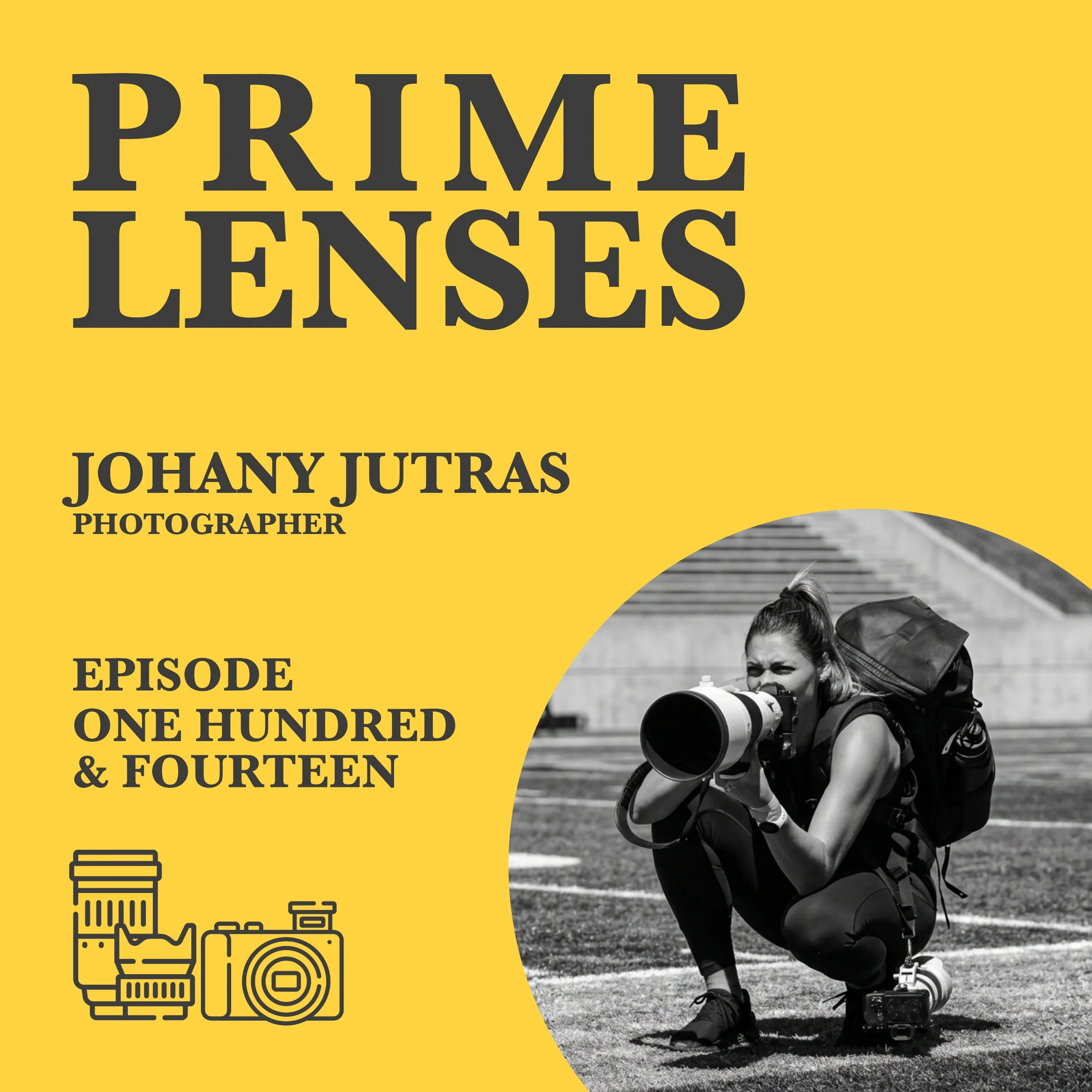


Johany Jutras is a Canadian photographer specialising in making images of Athletes. I found her because she was posting on Substack about finding a new perspective with a fixed lens compact camera, the Leica Q. I found this to be fascinating, taking something that is absolutely not designed with that use case in mind, would require getting up close and would only offer one perspective. As you’ll hear, Johany is not one for taking the easy route. Her story is an amazing one so I hope you enjoy this conversation.
Sign up to the Prime Lenses newsletter for a mid-week treat.
Support the show on Patreon.
Episode Transcript:
Iain:
Hello, welcome to Prime Lenses. I'm Iain. My guest today is Johany Jutras, a Canadian photographer specialising in making images of athletes. I found her from a Substack post, I think it was, where she was posting about finding a new perspective with a fixed lens compact camera in the form of a Leica Q. I thought this was fascinating, someone moving from multiple lens Sony-based systems, which seemed ideal for sports photography, and using something that is absolutely not designed with that use case in mind. Getting up close to people, changing perspective, moving your feet. As you'll hear, Joanie is not one for taking the easy route. Her story is an amazing one and I think you'll really enjoy this conversation with a really interesting photographer.
Johany Jutras:
my those are GSPs really intelligent i guess like Jack Russells but yeah yeah they're um demanding
Iain:
yes and the intelligence comes with a cost it's like that scene in Jurassic Park where he turns and goes, clever girl, you know? Yeah. Yeah. Well, it's lovely to see you. Thank you so much for sitting down and saying that you will do this. How are you? How is Tuesday treating you?
Johany Jutras:
Tuesday is great. It's snowing here in Drummondville, Quebec. Still, the winter isn't leaving. But other than that, it's great.
Iain:
The winter in Scotland has left us at ground level, thankfully, but it has not left the mountains. So it is presenting a problem for the Easter holidays of will people hang out down here or will they go skiing? Because the weather is nice enough to kind of go outdoors and do stuff and get out on bikes and things like that. But the mountains are covered in snow. So it's kind of quite a nice late snow season this year. Yeah, it's pretty good.
Johany Jutras:
Great. Good for you guys.
Iain:
Yeah, exactly. No, it's pretty good. I reached out to you to talk about your photographic career and stuff in part because you're kind of switching gears and things. But I love with people to start at the beginning because I didn't know your work. I do talk to quite a lot of sports photographers and I've had a few people on recently. So I love kind of sports imagery. I'm a big fan of MotoGP and racing and things like that. So I like photography of sports and things like that. But how did you arrive in the sporting world making the photos that you make because when you're a photographer you can go in any direction so I'd love to start with your origin story what put a camera on your hand to start with and you
Johany Jutras:
know go from there yeah that's a good question actually because when you love photography I don't think you really know when you start what you want to become it's kind of an exploration and then then you do something and you you're like oh I think I'm good at that and I think I like that and I want to pursue that so for me it started when I was pretty young like as far as I can remember I wanted to be a photographer so but it really developed with I am the oldest of four and my I have three brothers and they all play football so when I was younger my parents wanted everyone to go watch the games and to me it was so boring to be in the in the stands and you know Like you have two sons, maybe they will play football one day. And when they're young and they play football, it's not as interesting as it is to watch an NFL game. So it was pretty boring for me. And I thought, well, you know, I can just take my camera and try and take pictures, might as well. So it was like a while ago when you didn't have Facebook, you didn't really have social media nor Instagram. And so I just asked the coach if I could take pictures. And they said yes, because, you know, nobody would do it anyway. So how it started for me was super hard. You know, the field was grass. And so if it's synthetic, it reflects the light. But when it's real grass, it actually absorbs the light at night. So it's really dark. So back then, I was shooting with a Canon 20D. You know, the ISO you could go was probably 1600. Other than that, it's ruined like it's a lot of grain. Anyway, trying to make a short story here. But yeah, that's how I started. And I went on to follow them in their career. They all almost played pro. So they all went to the highest level of university. So I, you know, I started to shoot them when they were high school and then college and then university. And I like to say that as a joke, but I am the only one who made it to the pros. Just kidding. But yeah, so that's kind of, I got known in the football world because I, you know, at some point Facebook arrived and I was publishing the pictures of my brothers on Facebook. And then other teams would ask me if I could take pictures of them. And then the local newspaper would ask me if they could buy one picture and on and on. And so that's how I started. And yeah, I guess I liked it. Back then, it was like the thing I enjoyed the most, you know, shooting football. And I wanted to work for the CFL. In Canada, the CFL is like the NFL. So my goal was to be hired by them. But that job didn't really exist. So the only photographers who would shoot for the CFL were Canadian Press. There were no freelance at the time. So yeah, so that's how I started.
Iain:
So you're taking photos, you're there. Presumably you're already photographing. Did you grow up in a household of photographers and grow up around cameras? Is that why you were already shooting?
Johany Jutras:
No, no. I grew up on a farm. My parents were farmers. And yeah, they're not artists. They're exactly as you imagine them, I guess. So no, I don't know where it comes from. I guess it's probably from watching TV or... I was an artist as far as I remember. I was drawing, I was painting. I think I am not... I've never been a great communicator. It's always been something that for me it was hard to speak my truth or all those things. But I could do that through photography. I could express myself and I could tell the story through photographs. Through photographs more than with words. And I guess it was kind of a safe space for me.
Iain:
That's really interesting. Were they encouraging your parents of that? Because if they're not of that background themselves, it might be harder for them to support it potentially.
Johany Jutras:
My parents were, you know, sometimes I wish they would have pushed me to go to school instead. But yeah, they were like, hey, if you're happy, if that makes you happy, just do it. You'll figure it out. And they were right.
Iain:
I figured it out.
Johany Jutras:
But sometimes I wish that I went to school before or especially nowadays. But yeah, no, I come from a different background.
Iain:
That's really cool. That's wonderful to hear because sometimes they're not always supportive. I've spoken to people in the past who are like, you know, had to convince their parents. Bobby Anwar is a photographer in Denmark who I spoke to. And his folks were very nervous about him being a photographer. um so no it's it's I think it can be it's good if they've got if they if they've got your back presumably they just sort of let you get on with it then as well which means that you you're from a fairly early point in your career you're just finding your own way because you don't have that
Johany Jutras:
network to lean on yeah exactly um but it's funny though because I said I wish they would have um pushed me to go to school and then someone the opposite would wish that their parents would have support them um yeah i think it it comes to um purpose and you know you have to do what makes you feel good and that you know only you know so if you're pushed to do something that you're you're not meant to do at some point in your life everything's gonna fall off you know what i mean yeah so if some parents are listening i think they should uh encourage your child to do what makes them happy. And if you do what makes you happy, money comes, usually. I mean, not always, but usually. Well, you know, as two people talking on a podcast,
Iain:
you necessarily didn't put together a business plan for doing what they're doing, but it seems to have kind of worked out. If you want to do it, you can find a way, usually.
Johany Jutras:
Well, yeah, you'll find a way. The thing is that one thing that I know for sure, I mean, is that you don't go into this business to become rich. So if money is important to you, maybe this job isn't going to make you feel very secure about financial stuff. It's always kind of ups and downs, and security isn't what I would call something that's there very often. But if it makes you happy, you'll find a way.
Iain:
And it's yours, I think, is the other thing, which is running. I left my job eight months ago now to do this full time.
Johany Jutras:
Wow, congrats.
Iain:
Thank you. It's not fully paying its way yet, I will say, but it's getting there. But I think the thing is I'm now ruined potentially for working for someone else because I think I realized, you know, I'm 46 now, And I realized through doing this and actually through last week, I was talking to my eldest son's class. They invited people in to talk about their work. And so I went in and we recorded a little podcast. I took some mics and we recorded the thing. And it's really lovely. But it's a funny thing when you're asked questions by children that you very quickly realize because they just cut straight to it. They're not trying to save how you feel about it or anything. And you realize, I realized through talking to them that I probably should have started this sooner. And I think if you hadn't had supportive parents who had pushed you to kind of do a backup college certificate in something, there's a good chance that we're sitting here talking now and you're going, yeah, it took me 15 years to start the thing. But then I did and I love it versus the hard times you had doing it. You know, it's a tricky thing to kind of advise people or guide people.
Johany Jutras:
but it's like no one ever says I wish I'd started later in my view yeah you're right well the thing is that everyone's different so but I think we agree on the same thing is that like you said you should have started earlier and for me let's say I started early I didn't have to wait 15 years and go to university and all that realize that I had to start I went through that struggle through that also doing it instead of going through through that hard times internally i went through it externally into real life so but for example a person with parents that would say hey maybe you could pursue that career after you you went to school then that person is gonna struggle internally for the time that probably I'm assuming but because everyone is different I personally prefer to hustle my way there in real life because that's all I know. Because my parents didn't go to school. They had a farm and they worked their way out of troubles when they had to. And that's how I was raised. So I guess that's all I know. But if someone with a different background, it would be the same kind of path, but internally instead of externally, if that makes any sense. but the the result is the same it's if it's a calling i don't think we're on earth to get a paycheck and pay bills think we're on earth for something and that's something i don't know what that is but for for everyone is different but if you have a calling that keeps calling you should maybe listen to it yeah yeah you know and i remember when i was young i was afraid of of like running out of money when I started. It was really hard. Sometimes it still is, by the way, but it was really hard. And I remember someone told me, you know what? You'll never run out of money. You know, we're afraid of that, especially when you're older, like you and I, we have a mortgage, like you have kids. And like, you know, it's different. We have something to lose now. But when you're 20 years old, you don't have much to lose. You know, if you run out of money, you'll find a way. It's just that sometimes we're scared about what society makes us believe that we should be doing. Or, yeah, but, yeah, I think it's important to listen to your calling.
Iain:
Yeah. Do you kind of, are you able to quiet the opposite voice for me that sometimes gets in the way is the other people's opinions voice? You know, where they've not even necessarily said something. But on the one hand, you've got this one thing you feel, I'm really, I'm compelled to do this. I must do this. And on the other hand, you've got the kind of the voice in the back of your head that goes, yeah, but what does that person think about me doing this? I kind of battle that one.
Johany Jutras:
The thing is, maybe you're mentioning it because on social media, there's a lot of people that think that their opinion matters. And there's a lot of people who give unsolicited opinions. And yeah, that can be good for sensitive people like maybe us. I don't want to assume you are, but I am. And sometimes you post something you're proud about on social media that doesn't require anyone to give their opinion. It's just something you share that you've created, that you're sharing, that you're proud of. And you've got a lot of people that are just destroying it by giving their unsolicited opinions. for me I think it still affects me sometimes but when I when I started everyone almost were like especially when I did my first book I sold everything I had like everything I had I didn't own an house at the time but I sold everything I could get a dollar for to go on a road trip to create my first book. Everyone told me like, you're crazy. And okay, well, but the thing, it was inside me, I knew. And yes, it was crazy. But I know a lot of things that were created out of super crazy ideas too. And what's the worst case? I kept telling myself, okay, well, maybe that's crazy. And if it doesn't work out, then I'll just be a waitress for a little while. I'll just you know I'll find a way I'll figure it out it's like it's not like the end of the world it's not the end of me and it's just I'm just trying something and so I've learned not to listen to my inner voice I've always been louder anyways so when i have an idea if like a lot of people are i i will listen i will listen to actually to people whose feedback um matters to me i will listen but it doesn't mean I will do what they say. Usually I will listen and I will evaluate, analyze and then I'll probably do what I want anyway but more knowing what I'm getting myself into more. But that said, now with a day, it's like this is hard because if you put yourself out there, especially on social media, there's always somebody that's going to ruin your day. And we're not talking about politics. We're not talking about, you know, strong topic. We're usually talking about art and being creative. And there's always someone that thinks that, you know, people are suffering. And, you know, hurt people hurt people. And, yeah, that's not nice. So I think that today we have to sometimes take these for what they are.
Iain:
Just opinions or just, it's just noise. I think it's signal to noise, isn't it? Noise.
Johany Jutras:
Yeah.
Iain:
Was that first book you mentioned there, was that the Our League, Our Country football book? Yes.
Johany Jutras:
Yes. You want to know more about it?
Iain:
Yeah, of course. Yeah, it looks fantastic. So before I started researching and ready to talk to you, I hadn't really fully understood that there was like a Canadian football league, just like there's the NFL. The NFL made a brief trip into the UK about 20 years ago and they had NFL Europe. And so there was a Scottish team and an English team and stuff like that. So I'm kind of aware of the NFL. but I love the clear passion and enthusiasm that you have for the game and showing that in the context because it's not just a book from the looks of it about the athletes. It's a book about the whole and what it means to a country which I just thought was fascinating.
Johany Jutras:
Yeah, thank you. Yes, I'm very proud of this book. Very proud of myself for doing it back in the days. it was before I had a career um quoting mark so I was young and it was like like I said when I joked about my brother not making to the pro making it to the pro it was done so they were at their university career and for me it was the step where um I wanted to be a photographer for the CFL that job didn't exist and I thought how can I create it and I just asked myself what do you really want and i realized that what i really wanted was to travel the country and shoot the cfl for the cf but that job didn't exist so I'm like okay well let's find an idea and i just thought that i was really curious about the league because i i lived in Montreal so i didn't know all the other markets um so i was like okay well i could do a road trip and i could spend like two to three weeks in each city and like try to learn about the culture the vibes uh the fans and put that in the book so that idea started and then i did a crowdfunding um so because i needed money to pay for whole thing so i did the crowdfunding which you could pay already for the book and you would receive it like after a year so my first stop was Montreal of course and the sport channel which is TSN that would air the game they did a an interview with me live during the game like a sideline interview and they asked about my project and they put the link on the tv and that exploded um i was like i think 24 25 years old at the maybe 26 so i was like a young woman french speaking in an english market uh who wanted to travel the country by herself to make a book about football everyone was like very inspired and very like what is that so I sold like that lasted like six months you know the whole book trip and I sold like I think 15 or 1600 books on pre-sales just through that so I financed the whole project with a crowdfunding and for each market then I realized okay well I'm not a writer and i think this book could use some text like pieces that would add to it so i contacted my uh i had a friend who worked at the league office who gave me a list of all the the greatest reporters for each market and so i picked one for each market i contacted them and i asked them if they wanted to write a piece on my book and most of them said yes so i paid them by the way yeah so um they said yes and so that that was the book i went from Montreal to Ottawa Toronto Winnipeg like Saskatchewan and so bc and then back and with a lot of story to tell along the way but always living through like free sales every week like some weeks i had like 60 bucks in my bank account I was like oh my god how am I gonna do that and yeah but it was like the book is about what I discovered so it's more about a fan perspective it's really the CFL in Canada is really about the fans this is what makes this league it's really all about the fans and so that's what each each market is a chapter in my book so each city that has a team is a chapter and it's really from a fan perspective and what the team actually means for for the city and for the people there so for me it was like I've learned a lot from from that trip as a photographer as a
Iain:
human being it's an amazing thing to do when you came then to getting because you've got all those images I assume that you're amassing from this trip how did you like to were you working on kind of curation as you went as you traveled or was it a big get to the end of the trip because you've set yourself quite an aggressive timeline there by saying yeah it's coming out in
Johany Jutras:
a year kind of you're doing it all in one season i assume i wanted to release it so in here the season starts in june actually now i think it's may but back then it was june until end of november end of november is the cup um you know it's the super bowl here it's called the Grey Cup so end of november is the Grey Cup so i wanted the book to be printed and available for sale at Grey Cup because i thought if i want to sell it you know i have to do that um yeah so that's what i did uh but yeah no i was not curating anything i was surviving the whole trip it was really I was really living in my car and uh you know doing my best to go through to the next day and to the next city and basically I was not really speaking good good English back then too so I've learned my English there too I was doing radio interview I remember being so stressed when they called me like okay um I have to speak in English and it was funny but yeah no So I came back after I went to live in my parents' basement for three weeks and I made the book there. Wow. And my good friend, Daryl Davis, was a reporter in Regina, Saskatchewan. And he was my editor. So once I finished, I went back to Regina and he helped me, you know, make a book out of it. Because he had experience doing that. And yeah, so I did the whole book on my own in my parents' basement. Yeah.
Iain:
Wow. That's amazing. I love that. Like just, there needs to be the movie of this. This sounds too good.
Johany Jutras:
Oh, man. It sounds good, but I don't know if I would do that again.
Iain:
Oh, no.
Johany Jutras:
I didn't know what I was getting myself into. And I was very naive, which is a good thing, you know, because that's what led to this book. And the good thing is that, you know, when I was telling you about, you have to listen to your calling, this was my calling. And you know what? After this book, a month after, the CFL called me and they offered me the job that I wanted.
Iain:
Amazing.
Johany Jutras:
So, yeah, I'm like, okay, well, it's important. I mean, it's a great story, but I'm not telling you all the rough patch
Iain:
that I've been through as well.
Johany Jutras:
There are rough patches and side stories that nowadays people are not really willing to, and I put it in quote mark, but they're not willing to suffer. They want everything now and pretty. But human beings, we have to suffer. It's part of life. Suffering is part of life. We will all suffer again. We've suffered. We will all suffer again. and I think that what I've learned also there is that yeah there's a lot of discomfort on on the way to success and you have to learn how to be comfortable and discomfort comfortable in quoting mark too but yeah it's yeah so it sounds like an amazing story and maybe it would make a good book because a good movie because I think there's a lot of people that could relate to that i don't think there's any good story that comes with no sacrifices or or no uh yeah it's not easy yeah but it's worth it yeah yeah i just imagine the scene like if I'm if I'm
Iain:
a friend of yours at that stage you know like say if I'm a parent and I'm seeing you in your early 20s and you're saying as a you know single young woman I'm gonna go and get in my own car I'm gonna live in my car for months and I'm going to go and hang around football fans notoriously a completely calm environment that where nothing mental ever happens and no alcohol is ever consumed you know like just you you'd just be thinking oh my gosh what is she doing but to see you on the other side of it and to see what it's done and selfishly as someone who's really enjoying your work to see the work you produce now like that must feel like that experience must feel quite foundational to your
Johany Jutras:
photography now yeah i look at some pictures i took before and during and after and i can see the growth i think the growth comes a lot from maturity and from our like our souls grows and our work does as well um for me it's been that and when i looked at this book this book is very immature right like there's a lot of you tell in because i made it in in design like I've so there's a lot of graphic design mistakes and there's like sometimes that the fonts are too big or you know that's what i mean by immature but there's something beautiful bit and some of these images i look at and I'm like wow you know i can't believe i i took this photo i was so young you know how it's like I see myself back then very naive and like immature and in the right way like not knowing what I would I was getting myself into but going anyway and not really thinking about the consequences um and so I could see that in my pictures too but then I'm like well I maybe I would I had something then that I maybe I maybe I lost because then you grow up you become a real adult with responsibilities and you lose a little bit of that. But yeah. And my parents, I don't think they realized. When you said that whole thing, I don't think they realized. And we were not talking very often during the trip. So, well, maybe it was better for them this way.
Iain:
Yeah. If they knew. Yeah. But that's in the proud tradition, isn't it? If our parents knew the things we did when we were supposed to be around our friend's house or whatever, that's a rite of passage as well, isn't it? You have to get yourself into the old scrape and then get yourself out of trouble as well on your own from time to time.
Johany Jutras:
Exactly. Exactly. It's part of life. It's important.
Iain:
So presumably the CFL phones up and then the heavens open and you are received and everything's easy and it's all fine from there on? Like what happens next?
Johany Jutras:
I had a nice easy year after that. Not easy, but I had a nice year where I was living the dream. But it was a lot of travel.
Iain:
Yeah.
Johany Jutras:
So that was 2015. So I started to work for the CFL in 2016. So until 2020, I worked for the CFL. And then there's a year that I also worked for a team. Two years. I was the team photographer. I was doing all of their home and away games. Plus, I was working for the CFO. So I would shoot two to three games per weekend. I was taking seven to eight flights a week. Wow. Yeah, barely. I remember being really proud of myself, but I don't think I was actually really living it. I was really just like executing. I was like a robot. I was not sleeping often. I was living in the hotel rooms and airports, and I was drinking a lot. It was my life, you know, so all that stress and pressure. And then at night, I was drinking myself to bed. So living the dream comes with a price, too. And, you know, I understand when young people or photographers are like, oh yeah, traveling is amazing, it's living the dream. Well, it's not really like traveling. You get from the airport to the stadium, to the hotel, to the airport. So yeah, I lived the dream and then all comes with it. I was working a lot. I was producing great images. I was having sponsors. I was not paying my gear. I was making good money. and doing what I love, but I didn't really handle that pressure well within myself internally. It was a lot. Yeah. And it took me COVID to realize that it was too much.
Iain:
A forced reset.
Johany Jutras:
Yeah. A forced, like, yeah. Just like COVID happened, and then the next day I'm out of a job. Yeah. Like all my contracts disappeared within a week. You're like, okay, well, what am I going to do now?
Iain:
Yeah.
Johany Jutras:
Because I was doing sports photography. That's all I would do, sports photography. And sports was shut down. All pro sports were shut down for almost a year. So, yeah.
Iain:
Yeah, that's a wild time, really. Like the very few, I mean, it's funny. As a big MotoGP fan, I was listening to something this morning. they were talking about the 2020 season and how that was like the season that nearly was and then you think back to like the NBA had people living in hotels just to keep people you know so that they could try and keep the thing running but there's an enormous expense and cost comes with that and there's no guarantee that you would be part they would keep that thing as paired back as possible I'm guessing so there's no guarantee photographers would be allowed in because you need just keep it
Johany Jutras:
slimmed down it's a wild time to think that that was six years ago yeah it's crazy yeah when we think back at it we're like oh my god wow yeah so um yeah that's uh and I'm making it like I'm it i had nice moments there if you would talk to me back then you would think i was super happy and and i was to a point it's just that i it for me it was not easy to deal with all that
Iain:
there's a trade i think that people don't often talk about a lot and and I'm really glad that you're talking about it. Crystal Wright, who was a previous guest on the show, she talked about it too, like photographing extreme sports events. And again, living the dream. Suddenly, suddenly people are interested in your work and you're getting sent things and you're getting sent places and you people want to interview you and, you know, all that sort of stuff. But it's an unreasonable amount of pressure to put on any person, I think. I think there comes a point where you're saying to someone for a large portion of the year, get on six, seven planes a week or whatever. Like, That's crazy pressure for anyone. It doesn't matter how ready you are mentally and physically. It's demanding.
Johany Jutras:
It's demanding. I think it's pressure. For me, it was pressure that I put on myself. And coming from a background where you have to hustle your way, like I did when I started for my first book, that's all you know, but you're just doing it. You're just doing it, and then you put a lot of pressure on yourself because you want this to keep coming you don't want this to end you take you don't want this to end and you're afraid you know in our business you never know if there's going to be an ex-client you think you know you hope there will but you never know sometimes you're you're a month without incomes and it's part of it it happens it happens to the best of us so once you're in there and it's rolling you don't want it to stop because you're like hey let's let's keep this rolling and you never want it to end until it ends and it's forced like COVID was like it forced us to stop and for me it was like a revelation where it took me a while like it wasn't like overnight but and then i realized that i was not happy and i couldn't continue this way and you know i i asked myself shooting football is really what I wanted to do anymore. I think I've done it. I did two books about it. I want to break up with a team. I shot probably more than, I don't know, between 1,000 and 5,000. I don't know. A lot of games. I think I've done it. It was a lot of pressure on myself to keep being creative because at some point and that's how i work it if i took the picture before I'm not going to take the same picture twice i always find for a different angle for i push myself to be creative every day every every shoot and this is how i am i cannot do i cannot not do that and i the day i will stop doing that i will know that i have to take a break right you know and so it was a lot pressure for me to keep like doing this at a high level to keep impressing uh with my work and impressing myself to be proud of it at some point i realized that i think I've done the circle a couple times with football and it wasn't really fulfilling me and it's you know what shooting football is really hard because it's very physical the field is big you walk the field and the gear is heavy and the weather is not always nice it's outside in Canada it's most like all of the stadiums except for one are outside and it's Canada it's cold and so you're freezing you're or it's raining and you're walking like 20,000 steps with 30 40 pounds of gear on your back it's draining you know I've done that for many years and it took me COVID to realize that
Iain:
maybe I needed a new challenge and then what was that new challenge and I'd love to lead that on to it sounds like you're challenging yourself again with a different perspective yeah um okay so
Johany Jutras:
let's do a short bridge uh there but so what when COVID happened a year full year where i i didn't really work decided and already started to shoot for CrossFit um i don't know if you're familiar with CrossFit there's a big competition where i rode um so i already started to shoot a couple competitions so i reached out and i continued to shoot there and i got hired by cross hq as a freelancer to shoot many of the competition in Canada and in the US and just for it happened like really almost at the same time maybe 2021 or I don't remember so for me it was my transition I really enjoyed it and and actually I don't say that because I want to promote CrossFit or anything I could say that for any sports, but for me, I started shooting CrossFit. I was not practicing any sport. I was not active. And so shooting CrossFit made me want to start the exercise and have a healthier lifestyle because I was surrounded by healthier people. And I started CrossFit. And for me, it really changed my life because it made me realize I could do hard things. hard I've done hard things when you listen to the story you're like well you know how to do hard days yes and no um you go through the first time you go to a CrossFit class you think you're gonna die it's really really hard and you look at everybody you're like oh my god i can't like they're they're all seem fine and I'm here dying but you're not dying you survive and then people are nice and it's a great community those gyms are great and usually people are like they're they help you scale they help you uh get back on your feet and stuff and it makes you feel like you want to go back and try again and then you go again and you survive again and that stretches your your you know what was hard becomes easier and you can take on more and this for me it's like a discipline that i learned through CrossFit that makes me now it applies to life so CrossFit was really eye-opening for me and it was really you know i started to listen more to myself as well when i mentioned that i was burned out before COVID shooting football you know doing hard things also makes you connect to yourself your true self because you know you can do hard things but you also learn to know your limits and to respect them uh you know when you're doing a CrossFit workout and there's like five rounds of something you have to pace yourself you learn you learn that through CrossFit okay here's my heart rate if i can keep that steady here i can finish but if i go too high i won't be able to finish that applies to life too so CrossFit was really nice for me because you know i went from a burnout then i started to shoot CrossFit and then more the year we're advancing the more i realized that maybe photography was changing and maybe i was changing and as a an artist your soul is in your work and we're talking about i know it sounds like very deep what I'm saying but if you're just studying photography you're you're gonna discover that you're going to discover what what's your true essence and and your work at some point people are going to tell you oh i knew it was your picture i recognized your style and through it um for me where i am in my career right now it was that it was my true essence i was losing it doing and especially in the past two years with everything that's happening in the world the world is changing really fast the pace is really really really really high and fast and you look at social media for me i scroll social i scroll Instagram and almost every picture i see i wonder if it's real or if it's AI or if it's photoshopped everything looks too perfect in every sense everybody's life is apparently perfect and oh my god amazing and you know every photographer or every creators have to film their self showing them working pretending it's amazing and I'm like you know what I'm not gonna film myself no I'm not gonna make reels it's not me I don't like that there's a reason why I'm behind the lens and I don't like to be in front of it so I'm not gonna start filming myself and there's that for me it created something inside me where I was I wonder you know how can I say that I was just wondering if I still belong. Because for me, this is not what I signed up for. I'm not going to create fake stuff. It's not because the client wants everything. We have the power to decide. Creators have the power to decide, hey, you know what? No, I'm not doing that. And it's hard when you need to pay your bills and when you want to still remain relevant in an industry that demands a lot from you now but then at the end of the day what for what for like there's so much content that's created we consume it like this like it's not relevant and I'm like i don't want to create pictures that are not relevant i don't want to do stuff just because i have to pay my bills and I'm saying that because it took me a while like i think for the past two years i realized that most of my jobs were not not all you know there's still clients that i enjoy working with and and but most of the gigs that overcoming my way were gigs that required me to shoot stuff. And those images were used to sell stuff to people that don't need that stuff. You know what I mean? So I was contributing to what I think is destroying us because I needed money to pay the bills. So at the end, you justify your action because you're like, well, I need to pay the bills. so I'm going to do it anyway and then you do that and you keep doing that and at some point I stopped I was really I felt a little depressed and like it actually photography wasn't making me happy I put the camera down for month full month I didn't even want it to touch the camera and I actually I decided that I took a class at university I wanted to have time for myself I sold my car so I have money to not worry about paying the bills so I can really reset and ask myself what's next and what I really want and I realized in that process that the more I kept saying yes to these contracts that were going against my values the more I was attracting those and I'm like okay this has to stop if I don't want to do them anymore at some point I'll have to stop that because I've been doing that for too long so that's when I decided to take a pause reset and that's where I the light glugging came because yeah I was like you know what I'm not happy anymore this is not fulfilling this is not it's not working and i wanted also to maybe switch career i wasn't sure i was like maybe I'm not i don't agree to that so I'm not gonna live in a world where i have to create content to make a living create content to create pictures that will be used by company to sell stuff to people that don't need that stuff to just like feed that thing and I'm not gonna film myself doing stuff do like creating because that's what the algorithm wants me to and yeah you know i don't it's not me not doing that and i know everybody's doing it but not me i prefer to not i prefer to if my career my career ends because of that I'm fine with it because I'm i don't i don't want to do that and i think at the end of the day we all have that power and from that thing when i published my story about the the my life it was too strong in me it was so such a big calling i had to write about it i had to explain myself i had to i think i wanted to see if people would relate but I didn't know I was going to get that big that big answering like if you knew how many people that reached out well to tell me they felt the same way hundreds of photographers that I respect that are employed and they are great pro photographers and even like creators and I'm like okay I'm not alone no we all have that power to stop this and that's now that's what motivates me that's why i decide to do that switch and it's not only why like if i go back my friend a good friend of mine has a Leica Q2 and he loves it and he's not a he he doesn't do photography for a living and so i asked him I'm like hey i have an idea i think i could shoot uh pro sports with like like a q2 like with your camera i want to try it he's like oh i don't know about that and and i spoke to a couple of friends that are photographers for a living and I'm like here's my plan and they all said oh i don't know it's a good i don't think it's a good idea I'm like i know it's not a good idea but I want to try it and you know what maybe it's not going to be the same but maybe it's going to be better and that's what I realized because now our feed are just with so much stuff that looks so perfect that I arrive with that big contrast of oh suddenly I make pictures that look real you shoot with 20 28 and like you can't fake that photo like you can tell it's true there's grit to it there's like so you arrive when you're a pro photographer pro sports photographer and you post that and your feet and people are like oh they notice it you know why because it's so different than what they're used to see and that makes it according mark better because it's real and and it's different and it comes from a place where hey we need authenticity we need real we need more integrity too and and that's all of that were was how do you say that all of what I'm saying was what feeded the idea from the like So long story short, my friend gave me his camera. It's February 14, like Valentine's Day. I go shoot a CrossFit competition just for fun. I just want to see if I can do that. And I come back home that night. I'm like, I don't think I'm going to ever take better pictures than what I did today. Wow. And you know what? I looked at them yesterday and I'm like, wow, these pictures, maybe because of how I felt when I took them. I was so, and that's when I fell in love again with, with my job and with my purpose and with everything. And like, yes, that's what I want. This camera is making me feel so good about what I do. I'm like, I want this camera. So that's when I decided I'm like, okay, well, I can do that. And I have great clients. Um, you know, CrossFit is a great client. They support me and they like, I have great creative freedom with them so I'm like I hope they this pay I hope they like this style and turns out I think they like it they didn't said anything and I shot the CrossFit open for them and I only sent back and white pictures and no one said anything I like yes so cool I was expecting them to ask for color versions they did not uh only the last week I sent a few color version because i didn't want it to push my luck um but yeah so then i was like okay and I'm gonna give myself a challenge where I'm gonna shoot a professional sport for a year with my goal was to have a q3 28 and a q3 43 i cannot afford it yet right um but that's the plan i want to shoot so i still have a Sony and i use my friend's q2 for now I'm gonna buy one soon a q3 um but yeah so but my plan would be to just shoot with these two cameras maybe have sl system if i have like to shoot something that i need a 7200 or you know sometimes you have to but the goal would be to mainly shoot with these two cameras and prove to people that hey you can still do great stuff and and even if it's slower it forces you to be more present forces you to slow down forces you to do things on purpose which is i think what we're lacking right now in the creative world it's again
Iain:
it goes back to noise there's there's so many images being made and a previous guest said it recently actually lucas said that there's a difference between image quality and quality images and we've we've become confused about the two things and i think a correction the other way is necessary so to hear that someone with your experience and with your eye is fired up again and we're not going to lose that from the medium because you could have gone off and done something else if you didn't find that it was sparking joy anymore you know whereas you found something you're loving using i um i shoot with an m and my son took part in a tank pseudo event at the weekend and i photographed martial arts for the first time I've never done it but i love doing it and i hope he keeps doing it so i get to kind of practice and do that I'll send you a couple of pictures afterwards because there are a couple where i was like oh i can i can see how shooting photographing people sports and you're getting the person as well as the sport as well as the activity. I was like, oh yeah, that's good. And I will say as a former CrossFitter, some of your photos, especially of the way that people clearly feel either at the end or partway through, you've got this incredible photo of a woman who's on a mat, either doing a pushup or getting up or something. And she's got a bead of sweat on the end of her nose. And it's just, I've, I've been there. Like, um, I, I, I, there was a friend of mine, Paul shout out to my mate, Paul, we met doing CrossFit. And then we trained together for about seven years. And it was that friendship that was forged because we were, you know, I made us do the extra. Yeah. I made us do the extra lap when everyone else was packing up. I was like, no, we've got this medicine ball. We're going to carry it down there and carry it back. We're going to do the extra. Everyone else had given up. And I was like, no, we're going to finish this. We're two sets away from finishing it and we did and it was yeah that incredible friendship so no you're you're absolutely right
Johany Jutras:
about that's an incredible sport pushing people like that pushing yourself pushing people it's a great community you just set up that's what makes this sports great you know you you're suffering together it's and you're making you're making yourself better through you're making the other person better as well you're like pushing yourself but pushing the other person especially in team once. Yeah. You know, oh man, hope she's not going to go that fast. Damn. Well, I'm going to go faster next time. You'll see. And you know, it's like, this escalate and it's great. Yeah. Yeah.
Iain:
Not one, the, the, the feeling of not wanting to let the other person down makes us able to do things. I think that we thought we never could sometimes. And I think that's, that's good to tap into. Yes. Yes. So great to talk to you. I have loved this. I like to throw a little bit of gear stuff in there just so that like people get a little bit of that but like I'm I'm trying to get people to eat their vegetables the super secret thing of the show is that it's not it's like jaws it's not really about the shark it's not really about the gear it's actually about the conversation and the person and creativity you know we talked about gear we did a little bit we talked about like a little bit and yeah you know inescapable so yeah what's next for you then are you more CrossFit just experimenting with these things and different some different perspectives uh more
Johany Jutras:
CrossFit you know CrossFit opens just finished uh quarterfinals are now then semi-finals then game season so for me it's more CrossFit stuff I'm hoping to shoot um i want to do more running i want to run okay I'm going to tell you this i want to run with with a camera so i don't know if it's possible right now I'm training for a marathon and it's really hard i find it really hard but i wanted to run my marathon with a q2 or q3 but i don't know if i can do that like last week i ran 30k and i barely survived without the camera on me so i don't know if i can run 42 with a camera but that said i want to do more of that i want to like be in the sport like be active with people while I shoot them so in running I could do that I want to do that kind of stuff with trail running as well so I want to experiment that with my like a vision you know with like actual you know when I'm talking about real stuff if you're suffering with them it's even more real you know so I want to experiment that a little bit and that's what's coming up for me I'm working on a book project um but I'm not it's the beginning the early stage of it so probably we'll see how it goes but probably in 2027 late 2027 it's a book about sports and um introspection uh mental health therapy introspection and it's i like the parallel with sports and life and how sports can make you grow, can make you learn more about yourself.
Iain:
Yeah.
Johany Jutras:
And you can apply that in life. So I'm trying to make that parallel in the book.
Iain:
Yeah.
Johany Jutras:
But it's in the process.
Iain:
You still got that editor on Speed Dial?
Johany Jutras:
It's a writing editor. And this book is going to be a full photography book.
Iain:
Oh, okay. Cool. Yes. Yeah. Fab. Brilliant. Well, thank you so much. I've really enjoyed this. And please do keep me in the loop for the book projects and for the running projects. It'd be lovely to have you back and talk about those projects. But for people who don't know your work, where's the best place to find you?
Johany Jutras:
Still on Instagram. Joanie Jutra. So my name is J-O-H-A-N-Y-J-U-T-R-A-S. And that's my handle on Instagram. And I guess that's there. post a lot of dog pictures in my stories too with people like that. I think lots of people like that.
Iain:
I heard a story this week that AI models like it as well. Apparently researchers building Claude Anthropic have, at times they watch what Claude's doing when they give Claude a task to do. And sometimes they'll give the AI model a really big thing to work on. And it will sometimes go off and start doing the work. And then apparently it will go off and look at pictures of animals for a then come back to the job.
Johany Jutras:
Oh my God, that's funny.
Iain:
Yeah, no wonder they think it might be alive. It's just like the AI model sometimes gets bored and goes and looks at pictures of cats and then comes back, apparently. Oh my God, that's funny.
Johany Jutras:
I didn't know that.
Iain:
Yeah, well. Wild. Funny. Thank you. Thank you so much. I really enjoyed that. Yeah, for better or worse, that is now also in your head. So yeah. Well, Joanie, thank you so much. I really enjoyed that. Have a lovely rest of day. Thank you.
Johany Jutras:
You too, thanks. Thank you.
Iain:
Well there we go, thanks once again to Joinee, and I think you'll agree that now we know for certain that androids do indeed dream of electric sheep. Ask your parents. If you enjoyed that and are new, don't forget that you can like and subscribe to the show wherever you get your podcasts. So that's Apple Podcasts, Spotify, YouTube Music, Amazon Music, all those lovely places. Please do track us down, subscribe, give us a review. My DMs are open. It's always lovely to hear from people who are listening to the show. It makes my week. I get a few messages a week. It's just delightful. So please do let me know what you're up to. And you can support the show directly as well on patreon.com and also by visiting the website and purchasing something from our delightful merch store. Right, I think that'll do it. Have a wonderful rest of week, whatever you're doing. Get out there and shoot some cool stuff and we'll see you next time. Bye for now.
More about this show:
A camera is just a tool but spend enough time with photographers and you’ll see them go misty eyed when they talk about their first camera or a small fast prime that they had in their youth. Prime Lenses is a series of interviews with photographers talking about their photography by way of three lenses that mean a lot to them. These can be interchangeable, attached to a camera, integrated into a gadget, I’m interested in the sometimes complex relationship we have with the tools we choose, why they can mean so much and how they make us feel.