
Episode 111 - Jorge Delgado-Ureña
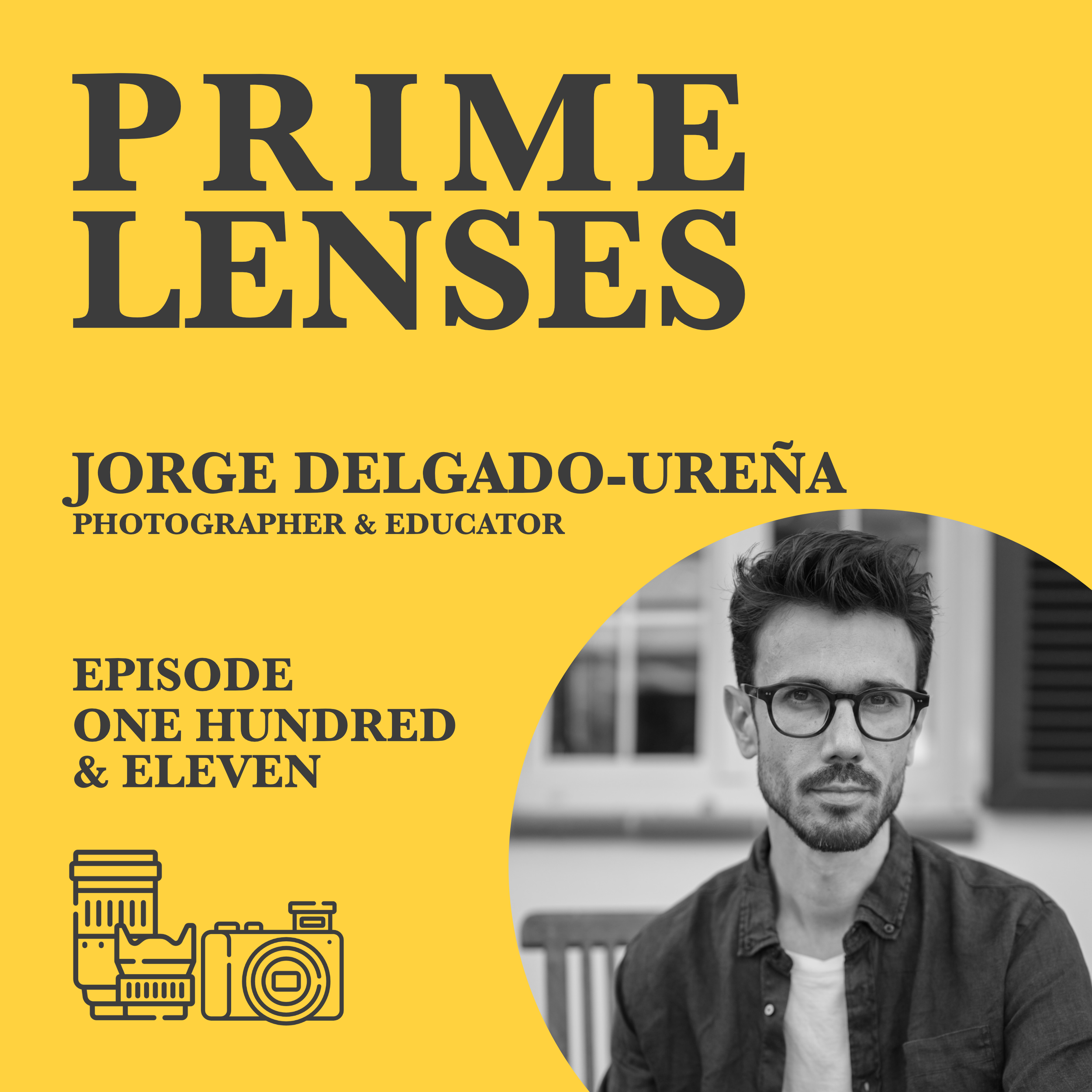


Jorge Delgado-Ureña is half of The RAW Society. Long time listeners will remember my conversation with Christelle, his partner in life and photography from episode 19. Jorge has a long career as a photographer behind him, but members of the RAW Society can also attest to his skill as an educator. We speak as preparations are under way for the first RAW Photo Fest, a 4 day celebration of photography that will take place on the island of Menorca in May.
Sign up to the Prime Lenses newsletter for a mid-week treat.
Support the show on Patreon.
Episode Transcript:
Iain:
Thank you. it's kind of funny I got a message off a listener at the weekend a guy called peter who's in Australia a newsletter he subscribes to that I don't know that I've never included the show as something to listen to yeah with no real context but just just included it and it's like oh it's a nice feeling when the thing you're making grows arms and legs and it becomes other people's as well like the way you you must have had this with the society that like you help to start something
Jorge:
but it's not yours at a certain point you know yeah well it happens with all kinds of communication I think you know the other day was someone that was asking me the other day or last year or whatever it was about, you know, iconic photography and all that stuff. And it got me thinking for a while. And I thought, I think that it becomes when you lose the control about it is when it becomes people, you know, think about it or or or have any kind of body of work or picture for themselves as something that means something for them. And then you lose you lose control about it when it happens, you know, for some people. And I think that we talked with Steve McCurry about it, about the African girl and all that stuff. And he thought, you know, this. It wasn't without my control. It just happened, you know, and this is the audience thing and it becomes theirs. And I think with a podcast, it happens the same thing. And with any kind of communication, when people feel comfortable and, you know, intrigued and interested, it's just become their own thing. And it's cool.
Iain:
Yes, it's the best thing. It definitely is the best thing. Once it stops being yours. Yeah, it's wild. I love it. Thank you so much for coming on. There's so much I want to talk to you about because I think you're a really interesting photographer, educator, you know, mover of things forward. But when I was prepping for this, one of the things that I came back to, I have for years before I spoke to Christelle and you and before joining the Raw Society, watched your videos and then subsequently joined and started watching the things that are available through that. You're obviously a very passionate and really incredible, creative, capable photographer. Did you always think about the nuts and bolts and the way the sausage gets made to the extent that you do? Because I think you're a very natural educator and the way that you communicate concepts and what's important. You don't shy away from a bit of tough love and telling people kind of like, why don't you want to be better at this? that niggles at you and frustrates you. And so I think that probably comes from within. But was it always about understanding how it's made or did it start with an aesthetic and an excitement about just making images?
Jorge:
Yeah, that's a very cool question. I think that no one starts with a heart at the beginning. I don't think. I think that there is a... I come from graphic design and I did fashion and commercial stuff at the beginning, which is going to be almost 20 years ago, which is incredible. But I think that when you-- there is a romantic approach to reportage and documentary stuff, that it's, you know, telling stories is part of it, but I think that the adventure and being in the middle of things is more, you know, interesting at the beginning. And with street photography, which is part of what I do, I think that the aesthetics and the rush of going out there and having these experiences with the real world, is kind of very seductive, if that word exists. And then you start to realize that what you share starts to matter to some people. And with time, I think that is when you want to be more precise and you want to explain stories and fill it with the heart, as Justin Mott said. And I think that it's a journey that happens a little bit the same for everyone. Some people get it a little bit later than before. But yeah, I definitely think that at some point, when you were talking about tough love, I think that when I talk about those things, I'm trying to push the idea that there is a moment in which just doing cool pictures, it's a little bit lazy because you have this talent. You have this way of communicating with people that's powerful. You could use it to say something, right? And there's always this quote from Jim Nachtwey that says, I don't use the world to talk about photography. I use photography to talk about the world. I think it's pretty beautiful. And yeah, I think it's cool to think about it that way.
Iain:
I often land in these sorts of conversations on, I'm trying to unpick, I suppose, what the mission is for people. You know, when I, before I did this and when I worked at companies, companies often talk about having a mission, having a goal, like what's the objective, you know? And I think we as people do well to have that kind of thing. And I'm always interested when I talk to photographers, was there a switching point for you when it became that, you know, that, that the responsibility that you're hinting at there? Was there a moment when you realized, or was it a gradual thing? Or, you know, when did you say, no, I need to do something with this?
Jorge:
Yeah, I think it's a little bit of both, maybe. And, you know, one of the first international assignments that I did was in 2016 in Nepal. There was, you know, a year before there was this earthquake. Lots of people died. And before I, you know, convinced a magazine to let me go. I didn't barely speak English or anything. So it was one of my first, like, BL international things, right? And of course, at the beginning, the idea was more the romantic thing of I'm going to travel to a weird country and trying to have this, you know, this adventure. Of course, I wanted to tell a story. You know, I don't think that it was, you know, a small part of it. I think that it was part of it. But it wasn't during that trip in which I, when you meet the people that are going to be, you know, the subjects of the story and they think that, you know, they believe that they're going to have a voice because you are there. And that kind of stuff starts to happen quite fast, right? When you are, it doesn't need to be, you know, a social problem or anything like that. It can be anywhere. And then you realize that your presence even, not just the work that you are putting out there, it means something for people, right? And where it's going to be about a travel journal that you're not going to a place that is just interesting and good looking and you want to tell that experience or you are talking about something that is a bit more problematic, it means something for people. and that's when you realize, oh, fuck, I have a responsibility here. And you get hooked to that as well, I would say. So it's not really that you feel a responsibility, in my case at least, you feel a responsibility, that it's a pressure. I think that it's a pressure, but it's a beautiful way of having a pressure and say, okay, I need to do it properly, I need to do it well, because this is going to be important for whoever I'm photographing or the location, but also for the people that the readers or the audience is going to be somehow meaningful to them. It might be inspiring, it might be informative, whatever it is. So kind of both at the same time.
Iain:
Just to reference a previous conversation, Judah Passau, I think, talked about something kind of similar. He was photographing in Gaza for 20 years or so. And he would say that people let him in because they felt like in an age pre-socrastin, social media, pre-internet, pre-smartphones, all that sort of stuff, they recognised that somebody with a camera and a press credential was a way of getting a story out or a message out or just communicating with the outside world. And that was validating to them. So, look, we're in the middle of this conflict and we want to be seen. And it doesn't always have to be a conflict. But people feel seen, I think, if they see someone who has that kind of credential. I don't know whether that's changed. Do you think that's changed because now that everyone is almost a citizen journalist?
Jorge:
Yeah, I don't think that it has changed so much. I think that is the approach. So people understand that it's going to be social media and things like that. And it's how you approach a story. I think that once you start to ask questions, you are really interested in what people have to say to you. they understand what's going on, if that makes sense. So, of course, for someone that has a YouTube channel about traveling, it's going to be a fan context, if that makes sense, right? And that's important, too. I think that not every story needs to be a terrible story. I think that there is beauty and fun and awe in going to places. But I think that people understand that there is this difference in context and how you want to gain access to certain things and how they value different aspects. It's very funny, you know, because people, even with more serious stories, we went to the mountains of Iraq to do a short story about the Iranian guerrilla fighters that they are training there and all that stuff. And they wanted to share it in Instagram for themselves. So there's this story that is kind of people with guns and things like that. But then they wanted to take selfies with us and say, you know, we have Westerners trying to tell about our struggle. And for them, it's kind of a thing, the social aspect, the social media aspect of it. And I thought it was quite interesting.
Iain:
Yeah, it's wild. A few years ago, I think the Taliban's email was hacked. And the reporting I saw about it at the time showed an organization that was very annoyed if you didn't do your expenses on time. It was just like every organization. There comes a point where, OK, you need to turn up to meetings on time. You were late for this. And where are your expenses? You know, it's just so funny that everything comes down to even the heavy stories or the heavy kind of aspects comes down to the banal practicalities of human life in 2026, which is an email to someone telling them to do their homework.
Jorge:
yeah it's it's it's super interesting and but it's also part of the beauty you know in in uh in Ukraine we got a speeding ticket and on the highway and it's kind of those things but but if you think about it it it's really people usually don't use this let's call it anecdotes if you want because it feels less extraordinary if that that makes sense but I think that at the end that you know one of my you were talking about the mission I think that my if I have one I would be to you know to break this you know perception reality gap if that you know you there's not such a difference but people might think between a baker in Iraq and a baker in England you know it's I mean it's the nuances that makes beautiful the telling the story but it's you know they want to make money to have food on the table like everybody else. And so in this type of anecdotes in which people talk about the emails of the Taliban or having a speeding ticket, that's a culture or that's people in an extreme situation trying to not, you know, lose control and become a crazy situation and, you know, fall into madness, if that makes sense. Because you are trying to maintain something like Van Halen, as a cop, you know, saying you were speeding in the highway in the middle of a war zone. And I think that it's important to maintain those things and it's important to share them somehow, right? Because it's people trying to be sane somehow.
Iain:
Yeah, yeah. No, I think the loss of everything that's kind of normal heightens everything. Like you need certain things need to be normal. Certain things need to be OK. I've had it in previous roles when someone on a team I've been leading, they have something bad happen. And I would always say to members of the team, like, right, well, the best thing we can do to support them is let them know that we need, you know, they can do whatever they need to do to sort this out. And we can be consistent and we can be their friends, their colleagues, their workplace. That's what they need us to be for them right now, probably. And if they need anything else, they can ask for it and we'll support them and we'll do whatever. But I feel like you do need that some sense of normality, something to anchor you in those situations. Do you find it hard because you get to go in and come out whenever I speak to people who go into conflict zones? Do you get to go in and come away again? Does it stay with you? Are you able to put it down?
Jorge:
Yeah, well, I don't do war photography, you know, to support and to people that, to know that. But it's definitely a weird experience to go in a place that is dangerous and it's so extreme that feels, even being there feels weird. You know, it feels surrealistic being in the middle of a bombing, you know, you're in a shelter and you're here you know building shaking and and you hear the you know the in Ukraine for example you hear the drones and and the machine guns and all that stuff and and even being there is kind of I I don't know if I'm processing this properly because I'm tired I want to go to sleep right yeah and that's a very strange thing to think about um so I think that people that really get into you know in combat and they see you know injured people in a way It's different from what I've experienced, which is I've been in hospitals and I talk with soldiers and things like that. I've seen people, you know, with injuries, but afterwards, right? I haven't seen anyone, you know, being shot by someone else in the face, you know. I think that's a different kind of experience. I think that my type of stories in those places, they stay with me in a larger type of context. less specific about, you know, I saw this thing that is so terrible that I cannot forget about it. I think it makes me learn about what's important and what is not in a sense that it's, you know, personal to me, maybe. Being that, for example, you know, maintaining some sense of normality with things, right, like having speeding tickets and things like that. But yeah, I go, you know, I leave those places reflective. And that's the kind of thing I want to try to share. I try to use myself as the channel, if that makes sense. So I thought, you know, many, three years ago, I decided that the magazine work and the newspaper is too aseptic somehow. And I think that it falls into very opinionated type stuff or too data-driven, if you like. So I thought, okay, with these all new things that you can do, you know, podcasts and sub stack and newsletter and things, you can have your own audience and you can use yourself, maybe not as a story, I think that would be wrong, but you can use yourself as the channel that's going to share that stuff, right? And yeah, I think about those places on those people a lot, you know, but not in a weird sense. I haven't had, you know, like a war photographer that they go into the middle of a shooting, you know, that kind of stuff. It's a little bit different, I would say.
Iain:
Travel in general should, if you have a good experience, I think you come away from it reflective. You've met people, you've experienced a different culture, you've experienced different things. But like you were saying earlier as well, you see that similarity. You see that everyone's just trying to get by. Everyone's just trying to get on and trying to do what they're trying to do. And we're fortunate that we don't live in a place that's undergoing a conflict right now. And even if you're just on the edge of the thing, it's having a huge impact on your life, whereas we get to come away. So I think that reflection comes with travel. It's one of the great things about having and having a camera when you travel as well, because you are taking things in.
Jorge:
It definitely gives you some sense of purpose when you are meeting people. There's this machine that you have that means that you are going to ask questions and people will answer you because there's going to be some type of collaboration in explaining something. I think it's interesting. And, you know, I think a part of what is beautiful about traveling, it's the recognition type experiences or stories in which you were saying, okay, we are lucky not to live in a place that's going to be, you know, in a conflict or has, you know, so many, you know, gigantic dramas. But I think that the way to make, for example, these Peshmerga fighters, you know, I got very interested in one of the kids, you know, Farsim was his name, because he reminded to myself when I was 18, I thought I could be this kid, you know, running away from a government and becoming like a, you know, revolution fighter. If he was, because he reminded me, you know, he was a little bit cocky and super nice and all that stuff and you know and I thought this this guy you know in a different you know universe I I could have been in the same situation would have done the same thing and that's kind of the reflection that I came with and and the same thing happened to me when I got you know to Marrakesh and I talked with some you know a shop owner that that you know is having a baby and they want to they want to travel to New York for vacation and they cannot do it because they don't have access to visas and things like that. So there are different kinds of problems. And I think that sharing those things, it's important and it's beautiful. I agree. I think we're very fortunate to have found
Iain:
this. I don't know how to talk about photography anymore, especially as it increasingly becomes part of my work, because I used to say things like hobby or pastime or things that you enjoy. But it's more than that if you pick up a camera to do the kinds of things that we aspire to do. And I'm definitely not putting myself on a level with someone who does this professionally for their work and goes to places. But you feel that kind of desire to make things with meaning. And I think it's unusual. I don't know whether someone picks up a guitar and feels the same way. I think there's something slightly, unless you're going to play with people and for people, I suppose, I'll get shouted out by musicians. But it is different somehow. It is, like you say, the only art form where you had to be there, right? You remind people of that quite often. And I don't know whether that means it's kind of unique in creativity.
Jorge:
I think it's pretty unique because of that, you know, presence type, you know, argument that you were saying that you have to be there to do it. There's no other way, which is, you know, I think that's what makes it different is that you have to experience that stuff, you know, the weather and the danger or, you know, the uncomfort. I don't know. Yeah, uncomfort.
Iain:
Is that the word?
Jorge:
Discomfort. Yeah, that's right. And the happiness and the joy and everything, right? And somehow be able to translate that. I think in photography, it might be different because it's a form of a language, right, that you learn. and then suddenly you speak this other thing that is not, there are no words to it. And it's very emotional photography. I think it's, you know, touches the memory part of the brain and it's very emotional in that sense. But nevertheless feels a little bit like a language that suddenly you speak and you kind of can communicate with someone that doesn't speak it because we are used to it. But it's not really the same, really. Right. So, you know, the audience, they might read an article or see a body of work and they might feel something. They might want to get, you know, no more or something like that. But that's why lots of photographers, they feel a little bit lonely, right? And there is this weirdness when you talk about your passion and people say, what are you talking about, right? And that's probably it. in between photographers we understand each other we know what it means what you are saying right this this thing that we cannot really put words on it because you know the medium itself it doesn't have any words to to talk about it's just that's powerful imagery and and senses and that's it right which on the other hand is why you get you know cut short sometimes and you have to use you you know, text or sound or whatever it is to complete that.
Iain:
It's a good possible jumping off point to sometimes we talk about lenses. Don't tell them. And I was watching your video at the weekend. I am trying to, because I'm a 35 person, I'm trying to use 50 more. And I was watching your video that you made a while back about 50. 50, I know, is one of your focal lengths. I think your lineup is funny. you messaged me about like a 35, a 50 and an 85. That was my setup for a long time as well, especially when I went full frame for the first time. I had a 35 that basically lived on the front of the camera and then a 50 and an 85. But you mentioned in that video the language and the way of communicating, even down to using a 50 compared to another lens. So I was curious, this is kind of a nice way onto that. How do you think about that lineup that you've got? Because you can do pretty much anything with all three of those. The 85, you might have to stand a bit further back, but there's basically nothing you can't do.
Jorge:
Yeah, that's a great way of thinking about it. I think that those three lenses, if I had to say that the bulk of my work, I would say a 35 or a 50, depending on the story and the type of distances that I can get access to, I think the 85 is when I want to include portraits. And it's more specific, the 85. Something I have and I don't use it a lot, but it's there. And I think that the 50, you know this, I'm going to, sometimes I put my teacher hat and went to talk about quotes of people that had impacted me, you know. And Ed Kashi, he got asked if he would prefer, who would like more, you know, Salgado or Gilles Peress, for example, right? these two titans of black and white photography. And he said something that I think it's very important to think about, which is, he said, I, of course, I'm in awe when I see Gilles Peress's work because it's extraordinarily complex and interesting and dynamic and all that stuff. But I think that Salgado speaks to everyone, right? And I think that that's a little bit what happens with the 50 and the 35 or 50 and a 28 maybe more, right? Is that the 50, it's going to be always simpler, right? It's going to be always more straightforward. It allows you for less dynamics and less complexity. So you get strip of that, you know, artifact, which is, you know, layers and that kind of thing. So if you don't have anything to say or if you don't have a subject that is interesting or something, you lose the impact of the dynamics of the lens. But on the other hand, if you pull it off, I think that you are speaking to everyone. I think that 35, I don't think that it makes such a great difference with 50. I think that you can include a bit more depending on your taste at the end. But that's the beauty of the 50, is that you can develop something a little bit more long form. You start to lose the power of the lines and the distortion if you want, but you can expand on story. You can be a little bit more quiet, but then it forces you to think about it a little bit more because it's less impactful somehow. But if you achieve it is when you say, OK, now we're talking.
Iain:
There is a book called, we read it when I was a kid at school. I think it's called Smith by Leon Garfield. And I will check subsequently. But in it, it describes a character who can't read. And then later in the book, can. And it describes him going back and then trying to remember something that he looked at when he can't read. And it's all just a jumble in his head because he couldn't read at the time. But the way you're describing images there, it's funny, we keep coming back to language and sort of those kind of analogies. You just put something together in saying that when I first started really trying to understand photography, images shot using a 28 and a 35 were harder to look at often, harder to understand. So street photographers didn't make as much sense to me. And then I, you know, I started shooting with it myself. And, you know, I think you start to put things together and you look at other people's work in books and things like that and things start to make sense. And I think it is maybe the difference between reading sort of pulpy fiction and reading something that's more dense. The fact that you can have more in the frame. A friend of mine, Gadjambalan, has recently been shooting a lot with a 21mm. That sounds a lot. Yes, it is. But when it works, every photo feels like the Last Supper. Because when it comes together, especially when he often shoots with it, the images of his that I remember the most, anyway, with this 21, are in India. So he's in the cab of a truck that someone's letting me. And you can see all the kind of the way that they're living inside the truck or the stuff on the street. And there's a guy getting their hair cut and there's someone moving things. And it's making it all come together like that is so hard with that kind of field of view. But when it does, when you know what you're looking for, And I think that's the thing as well. You start to appreciate the craft and the skill. When you're in the company of a skilled operator, then you go, okay, this all makes sense. And you start to see the work coming together. Because I think you're right. I've long time felt that 50 was almost a little bit too easy in that you can stop it down and turn something into a kind of fairly pleasing looking portrait. And I'm working in very low stakes stuff. I'm talking about personal family work. It's not really documentary per se.
Jorge:
Well, I think that's one of the most important things that you can do. You know, this is a message that I don't want to forget to say. I think this is a great platform for photographers listening is that when we talk about stories, a story doesn't need to be a problem. It doesn't need to be a drama. You know, when we saw the fires in California, everybody was running out of their houses with family albums of pictures. This is what I've seen it in Ukraine and in different places. People go out with family pictures. And that means something. So don't disregard that as something that is meaningless. I think it's incredibly meaningful. Just interlude, sorry.
Iain:
Yeah, no, you're absolutely right. I think Dan has said the same thing to people when I've seen him doing reviews with people's work. There was a guy that almost apologized for the fact that his photos were just of his family and he did say that is your job that is part of what you do I do you're right to mention it because I think we I think it comes from talking to to people who do it for reals you know you start to go well I'm not them uh and you start to kind of like maybe underplay the importance within your group it doesn't matter that my work will never get to the national portrait gallery that's not that's not what it's for it's for everyone else um So, yeah. But no, I'm glad anyway that you raised the nifty 50 because I think it's... Yeah. I still love 35 because it's so versatile. And I wish I had a faster one. Yeah. There's nothing you can't... I mean, I know I said there's nothing you can't do with any of them, and that's true. You can just stand further back. But 35, if I could only have one, I think I'd go 35, really.
Jorge:
I think that that's what I would do as well. I think I get super insane with the 15 in the sense of when I fall back into that idea. I really want to synthesize what I want to say. And I want to, because it's easy to, you know, I think that we need to try to understand what's going on in the sense that it's very cool to say, yeah, go explain stories and all that stuff. But also you have to deal with being known and being on social media and you have to, there's a strategy behind it for whoever wants to professionalize somehow, right? It's not so black and white. And I think that, you know, when you get the thing that it's on the trend for the moment, you know, now or last year was, you know, layers or whatever it was. And you get to do that and you have a few more lies and people say, oh, wow, that's interesting. It's seductive.
Iain:
Yeah.
Jorge:
Right. So it happens. I think that we need to understand that we are navigating through those two things. And I think that people at some point, it's important for them to try to explain something with their photography, with their talent and this language that we've been talking about. but also keeping in mind that if you are not out there, who's going to enjoy your stories, right? So there is a balance that you have to achieve. So I wouldn't get super into what we are using. I think that experimenting a bit, it's interesting, and I think that the 50mm lens, it's tough, it's tricky, But it can be beautiful when you are in the moment in which you can have a little bit more room to explain yourself.
Iain:
It's why there's got to be one in a bag, right? And I think as much as the show has a funny name, it's not really about prime lenses. It's about all lenses and what we actually do with them, really. But for me, it's still I don't quite know what to do with zooms in my head. I'm just a primes person. And I think I like fewer options, I think, fundamentally. I think if I can stand in one place and I know that moving my feet is how I'm adjusting the composition of this scene and how it presents and how it looks to me, if I could just stand in one place and just zoom in and zoom out, like without really... And, you know, modern zooms are incredible, so you're not really sacrificing quality or performance at any point. You can stick on these massive long lenses and just go. And I feel like I need to remove one option. So I'm not thinking about it. So there's fewer things. Actually, this is something as a pet theory of mine I can ask you about. When you're working with people who are newer to photography, do you think modern cameras are actually in a lot of ways harder for newcomers? Because they've got a lot of features that in theory help newcomers. But I think maybe it's harder now. Do you think it's in some ways harder to educate people and give them a foundation with newer kit?
Jorge:
I don't think so. I think it's easier to educate people. I think that most of the great photographers that I know, they work in some type of automatic setting. I don't know anyone that goes for my own. I'm sure that there are people that do that, but I don't know. Probably, at the very least, aperture priority, I would say. Most people work in something like that. And I think that the technology is there to use it. The same way that when people change from whatever, speed graphic to like an M3, that's a technology change, you know, because it's a smaller thing, you can, you know, be faster, a little bit more discreet and things like that. That's basically a technology change that people embrace. And I think that now it's the same thing. So maybe, you know, I have to say probably, I started doing photography when, you know, at least here in Spain, digital cameras that were not, you know, super easy to, they were incredibly expensive and they were not, you know, super commonly used. It's of course, I have to say that I was doing, you know, commercial at the time, so it's probably different than reportage. But I wouldn't change to film photography, you know. I think that there's this trend for people that they enjoy the process and I see value there. But having, you know, embracing the technology to center your attention into what it matters most, which is to produce good photography, right? So we can talk about what it is, good photography, which is another kind of question. But if you can have access to something that can help you to do that without thinking too much about, I think that you have to understand what happens when you use certain aperture and things like that or shall we speak? You have to learn that to be effective as a photographer. But at the end, you know, technology is there to use it. I'm not a nostalgic. I think that there's beauty in all of it. But yeah, I think people are, you know, what makes it problematic, if you like, it's the people don't have patience.
Iain:
Right.
Jorge:
You know, people get into a rush. They want to have something the same day.
Iain:
Yeah.
Jorge:
And that's what you don't understand. Whereas if you think about it with film, there was no other option. You would go for a couple of weeks somewhere and that's it. You have to wait. I remember I have a friend here in Spain, Tino Soriano. He's a great National Geographic photographer. And he explained to me that he would send, after an assignment, you send all these roles to Washington and he would wait a year to see his work. Imagine that type of confidence in one hand and patience. So that's quite interesting. And I think that patience is one of the things that people lose with just the digital and just newer cameras. But the rest is great because especially when you're super new, you can see stuff right away.
Iain:
Yeah, I think there's a common thread in the show, right? Those iteration cycles, the more of those you can get through, to a certain point, the quicker you're learning. I think that's very important. One thing then, if we're talking about technology and enabling things, tell me more about where the Raw Society came from and how that fits into, you know, it felt like that's like a next step in, you know. Yeah.
Jorge:
Yeah. You know, I think the Raw Society started kind of at the same time that when I started to do international stories. And, you know, after that assignment in Nepal for, you know, great serendipity situation, Christelle was there as well, you know, for whoever doesn't know Christelle, she was a photographer, my wife and partner with the Raw Society. So she manages everything basically. And I just say, yes, sir. But not because she's really great with all of that. But she was there doing, you know, she left her work in advertising and, you know, started to travel through Southeast Asia. And she happened to be there. And we knew each other from Barcelona. I'm from Barcelona. So after my assignment and her work in an NGO, we decided to travel around together. and we already had this experience of our individual jobs and we spent a month traveling around the country and we fell in love with it, with each other. And with this idea, actually funny enough, that photography actually was not quite enough to explain certain things, right? And we thought, okay, we could get groups of people to come with us for whoever wants to have this type of experience, to learn to tell stories with a camera in different places. And that was the beginning of the Raw Society, really. And organically, it started to evolve in different things. People started to come to the workshops and to different countries. And everybody wanted to keep in touch, right? Because, again, photography can be a lonely thing. So we started to have this community that grew quite organically and that evolved into the membership and to eventually the YouTube channel, which I should pay more attention, and the Substacks, and now, of course, the festival, right? That I think that Christelle was here the other day talking about it. That is going to be a kind of celebration of this incredible community and of the kind of authors that we've been getting the chance to meet for the last 10 years.
Iain:
The festival is going to be amazing. Obviously, regular listeners know we're going to be there as well, which is great. We've booked our accommodation. We've got flights. We're coming out. The kids are coming. We're arriving early. It's going to be so much fun. I can't wait to bother you all in person and be running around with microphones. which is going to be fantastic. But yeah, I think the existence of groups like the Raw Society online and the reason it felt like a good point to bring it up is because something like that can't exist prior. Well, it can't exist outside of the place you live prior to the internet and things. And it feels like you've been, because it's grown quite organically, would you say that you were quite careful and kind of slow to build the thing? Because it feels, what's the word I'm looking for? It feels like it's built with intention.
Jorge:
Yeah. You know, I think that it's kind of the two things at the same time. So it kind of happened in the sense that we kept in touch with people coming to the workshops and we developed this, like, you know, like a Facebook forum, whatever it was, you know, and people, you know, we were hanging out with each other. So people were coming back to different workshops, different places. but also you know we always wanted to do the things in a way that how we would like to experience that so I've never been funny enough I've never been in a workshop myself so I've never been you know I have to go with someone now to see what happens but I thought if I want to you know teach a workshop or I want to you know have a community how I would like to have it right because I had to learn photography you know the the classic way when you're being an assistant for someone else and all that stuff like we used to be like that right and and then as you said meeting people you know in the in the business that would be closer you know in your own city or whatever it was and I always thought it would be great to to do it in a certain way which you know that's how we design everything that we do in the society it's it's how I would like it or how we would like it to happen right that's the intentional aspect of it so being very personal being one-to-one um so people get very uh shy sometimes because we do these first calls with new members uh like zoom calls right and and they don't really know what what's going on I always tell them you know this is just to know a bit because I think that this is meaningful and becomes interesting when I know what you want to do, what you want to achieve in the future. And we put face to each other. Now we can do it. I'm a great believer in technologies, you know, and let's use it to grow together and to be part of something that is nice.
Iain:
I think it's what we need in the world more generally is more contact, less, I realize because we're talking to each other through a screen. But it's building towards something. We know we're going to meet people in person or we do events in person for real. I helped organise a photo walk at the end of last year in a town near where I live, in Inverness. And it was wonderful to sit down with people. We wandered around for a couple of hours, made some pictures, talked, geeked out a little bit about cameras. And, oh, you're shooting that film? Wow, you're shooting medium format. That's so cool. And then sitting down with people afterwards and just having them say, I was really wary about coming or I've never done this before and I was nervous and I've had a really nice time and so we're just waiting for it to warm up over here again so we can do it again didn't feel like doing it in January or February was the right time of year you know like two people huddled around a coffee for 10 minutes in the middle of the frozen highlands but I think you do need that it is good because I think it can like you've said a couple of times it can be a very solitary existence as well. Being a photographer, it's difficult.
Jorge:
It is tricky. And there is a weird balance in between, I think that this happens more to guys, that we geek out a little bit more. So somehow in that sense, it might be easier. But also, when you cross this line in which you say, "I want to start to say stuff, and I want to travel this place or I want to develop whatever also feels weird, you know, because you talk to your girlfriend or to friends and you say, yeah, I want to tell the story. And they say, what are you talking about? And you need someone else that they understand the same doubts that you have. Everybody started at some point and you always, you know, the nature of that idea of you have to be there means that you're going to feel lost, that you don't really know what's going on at the beginning and you need to gain certain experience by trying, right? Just people can tell you whatever they want to tell you at the end without doing it. And I think that sharing that, you know, solitude and those doubts with other people that they understand it, it's pretty strong. And yeah, I'm looking for that balance, right? So you can do a podcast, you can have a community, but also at some point you can meet with people and say, let's do a photo walk and let's have a conversation. Let's have fun. You know, some things, lots of photographers, I think that in general, that we got like talk about projects and stories and things like that. But also, you know, leaving room to have fun, to have friends, to meet people that they share your language somehow and enjoy it with a coffee and a conversation about a 35 or a 50, you know, and whatever it is. And then also that's a framework in which you can say, oh, look, I like how you do your thing. I'm thinking about going to my hometown to do this, all the stuff. What do you think about the sharing ideas and experiences makes people grow at the end?
Iain:
That makes me think actually about your approach to the work you have in projects, because you've been photographing for so long now. You must have so many images. You have such a body of work. consciously constructed stories and editorial type work and then also just things you're you're a visual you're naturally a visual storyteller I'm sure you're snapping photos all the time as you're walking around the world how do you revisit that because this is something I'm starting to think about a little bit more you know how I don't know how to delve into 20 years of photo like I have them on hard drives just like the rest of us but I don't quite know how to revisit things and kind compartmentalize. Do you have a good approach to that?
Jorge:
How I think about it, first of all, to say that my way is not the only way. I tend to be very assertive. Apparently people tell me, "What you say is the truth." No, this is my opinion. Through my experience, I would say that I wouldn't think about it as 20 years of work. I would think about it. I've been visiting. Here's an example. we started to go to Morocco for workshops and and of course what happens is that we are lucky to to repeat places several times right so we've been going to Morocco for for a few years and and of course my way of thinking was I'm going to develop something in Marrakesh because I think it's an interesting city culturally to Spain to me it's it's it's in my lane of type of stories that I like to explore. But two years in, going back and forth to Morocco, we were going to the desert, and I was reading this headline that says something about NASA and the European Space Agency were trying the robbers, specifically the spot where we were going in the desert. And I thought, wow, that's so interesting, right? That they think that it's so close to this Mars planet, right? That it's so hostile for life. But people live here. So I've been coming for a couple of years. And I realized at that point that I might have something in here. Because I've been photographing the desert for two or three years. So I'm going to revisit that. So does that make sense? So it's not 20 years. It's like I'm going to revisit this couple of years of this particular thing. And then I thought, I do have something. This is, I never thought about it, but this is interesting, right? And I think I can develop something about it, which it became, you know, this project that is life on Mars that was published in The Geographic and all that stuff. But at the beginning, it was nothing, right? It was just, you know, these cool pictures I was having in the desert. And with this anecdote, at least, you know, the headline, this whole project, you know, appeared, right? And of course I kept going and I, you know, kept developing, but I already had very good stuff, you know? So I would say, you know, go through location, through, you know, specific periods of time and things like that would be my suggestion.
Iain:
I think that's sound advice. I will add on, for the love of everything, add metadata to your images. as well because that if you can if you can have good tag keyword hygiene that will help you a lot um modern cameras you know with all their geolocation stuff that can be handy too you can click on the map definitely yeah yeah because that's that's the thing for me it's why I still use things like flicker you know like I can that taught me in 2004 I've been tagging images since 2004 that's amazing yeah yeah it felt like a wild thing so you excited about the festival then
Jorge:
in may yeah I'm very excited because this is one of those things that uh like the magazine that we started you know like four years ago yeah it was this gigantic project that suddenly was successful and people like it and enjoy it and all that stuff this is us next level of gigantic right this is you know hundreds of people involved and you know a full town you know people coming traveling from all parts of the world to this thing. Great photographers, I think, and Christelle talked about this. So we have this incredible panel of people exhibiting. And so we'll see. I'm very excited. I kind of, you know, when we're talking about how intentional we develop the society, and I think that sometimes I have these insane ideas. This is not mine. I have to say that the festival is Christelle's thing. But, you know, for the most part, I would say that I have this, let's do a magazine or let's do this or that or whatever. I wouldn't be able to do it. But Christelle can develop this type of stuff. And yet, even if it might be my idea, I'm a skeptic because I always think I couldn't pull this off. And it's just too big. Right. So where the festival happens to me a little bit the same thing at the beginning was like, this is too much. And then we are having, you know, we had Sima Curry working with us here in Menorca, you know, the last summer and people are investing on it and we are having spaces and everything is happening. People are coming. We already have, you know, about 250 people registered that are coming from all parts of the world. And so it's happening, right? And everybody's happy about it and we'll see. But I'm still amazed that she could pull off this thing. But it's going to be pretty cool. I think that that mix of international community meeting in person and learning from each other and learning from this great master and seeing what they can do and the involvement of the people that are helping us out, not just the photographers, but also we are collaborating with Magnum, for example, which is that kind of conversation with you. Ten years ago, you would say, it's insane to say, yeah, we have back and forth emails with Magnum all the time and with Sara Lean and these people. And yeah, it's pretty remarkable. It's pretty cool. So they are who they are, I think. I'm sure that you've had the same impression with these great photographers that you talked to. That they are just great people. That's why they are who they are, maybe. Because they can get involved in so many things. So, yeah, I'm excited.
Iain:
Yeah, I think the greats default to open, right? They default to yes, and then they figure out how later. They see everything as an opportunity. And people who say don't meet your heroes, they have shit heroes. They need better heroes. I agree. Everyone I've met has always been tremendous.
Jorge:
I agree 100% with that. I had the same experience. I met several of my heroes, and now they're friends of mine, which is still funny, to be honest. And they're all fantastic people, and I've learned from them a lot, and they've been generous with us in a way that's incredible. And I've seen them doing the same thing for others. So, yeah, change heroes.
Iain:
Yeah, just find good heroes. Easier said than done. I'm sure. But yeah, no, they're really, really good. Well, this, I'll tell you what, talking to you is brilliant. I love it. I can't wait to bend your ear more when I see you in May. For people listening who don't know you, I can't imagine that anyone, because we've talked about the Raw Society and had you guys on so much, I can't imagine anyone listening doesn't. But in case people don't know, and maybe don't know you, Jorge, where can they find a bit more of you online?
Jorge:
Yeah, that's funny. It's also a good question, because I don't have a website. I preach about it to everyone, but I just decided I didn't want to have more work. But people can find me, of course, in the RawSociety website.org. There's my email and all that stuff. So if anyone needs anything, send me an email. If you want to see a little bit of what I do, I have a sub stack that I started as an experiment, to be honest, to show the members what you can do with it. So I have lots of nonsense in there, but I think it can be funny. And you can see a few dispatches and stories I do and ramblings and and all kinds of things, which is called the Photographer's Journal in Substack. And I think it's a funny peek into my way of thinking about things. And yeah, that's it. Social media and Instagram and those things, of course, as well. Although I have to say that for people that may be sending me DMs, I'm not very good with it. So don't use that to tell me stuff.
Iain:
Yeah, it's keeping up with all the stuff. Adding platforms is just, I've always, I've long held this belief and it goes back to, because I used to work in the web, a bit like Christelle being in advertising. I was sort of on the web development, kind of ad agency adjacent, web agency stuff. And so I'm very comfortable with this notion of hubs and spokes. So the website is the hub and then I go out to all the spokes for the different platforms. And ideally you push the button once and it goes everywhere. In practical terms, it does not. And you have to do a lot of manual posting. And you sit there going, have I posted to everywhere? And it's just so, that fragmentation is, I understand why it's happened. And I understand that it is here to stay. But boy, howdy, is it annoying? Because I'd love to just, you know.
Jorge:
And with podcasts, it must be pretty tricky because there's so many platforms that you have to, you know, put stuff there.
Iain:
Yeah.
Jorge:
And yours is big. It's a big podcast. So probably you have to deal with sponsorships and things in different ways and stuff. I don't really know, but I know that it's not so easy.
Iain:
Yeah, it's a funny thing, actually. No, it's changing. I mean, the publish bit is easy in that you push publish from an RSS feed. And so it just goes. But then all the other stuff, like if you do trailers, like I do little trailers now for episodes. So I take a bit and then I use some imagery and combine the two things. That clip uploading, for example, is different on YouTube as it is on Spotify. And then it's different thumbnail sizes on Substack. And it's different things. And so you just, if you want it to look right, you end up reposting things in multiple ways in multiple places. And can I include links here? I can't include links there. I can put threads is fairly open now. Facebook restricts it. Just honestly, turning everything into a computer, which turns out might not have been the best idea.
Jorge:
It is. Yeah, it's tricky. I think it has its benefits, but, you know, all these things that can be a problem. But, you know, it's what it is. I think that I want to go back to being on the world service.
Iain:
I want to be on the radio. I want to do this. It's a bit like you with film in the old days. Take your photos, give them to someone else, and then they will do with them. You either got it or you didn't. They'll sort it out later. Brilliant. Well, thank you so much, sir. This was fab. I loved sitting down with you.
Jorge:
Thank you so much for having me and always a pleasure.
Iain:
Yeah. And I will see you in person in May.
Jorge:
Absolutely. Looking forward to it.
Iain:
All right, mate. Take care.
Jorge:
See you soon. Bye-bye. Thank you.
More about this show:
A camera is just a tool but spend enough time with photographers and you’ll see them go misty eyed when they talk about their first camera or a small fast prime that they had in their youth. Prime Lenses is a series of interviews with photographers talking about their photography by way of three lenses that mean a lot to them. These can be interchangeable, attached to a camera, integrated into a gadget, I’m interested in the sometimes complex relationship we have with the tools we choose, why they can mean so much and how they make us feel.