
Episode 122 - Martina Trepczyk
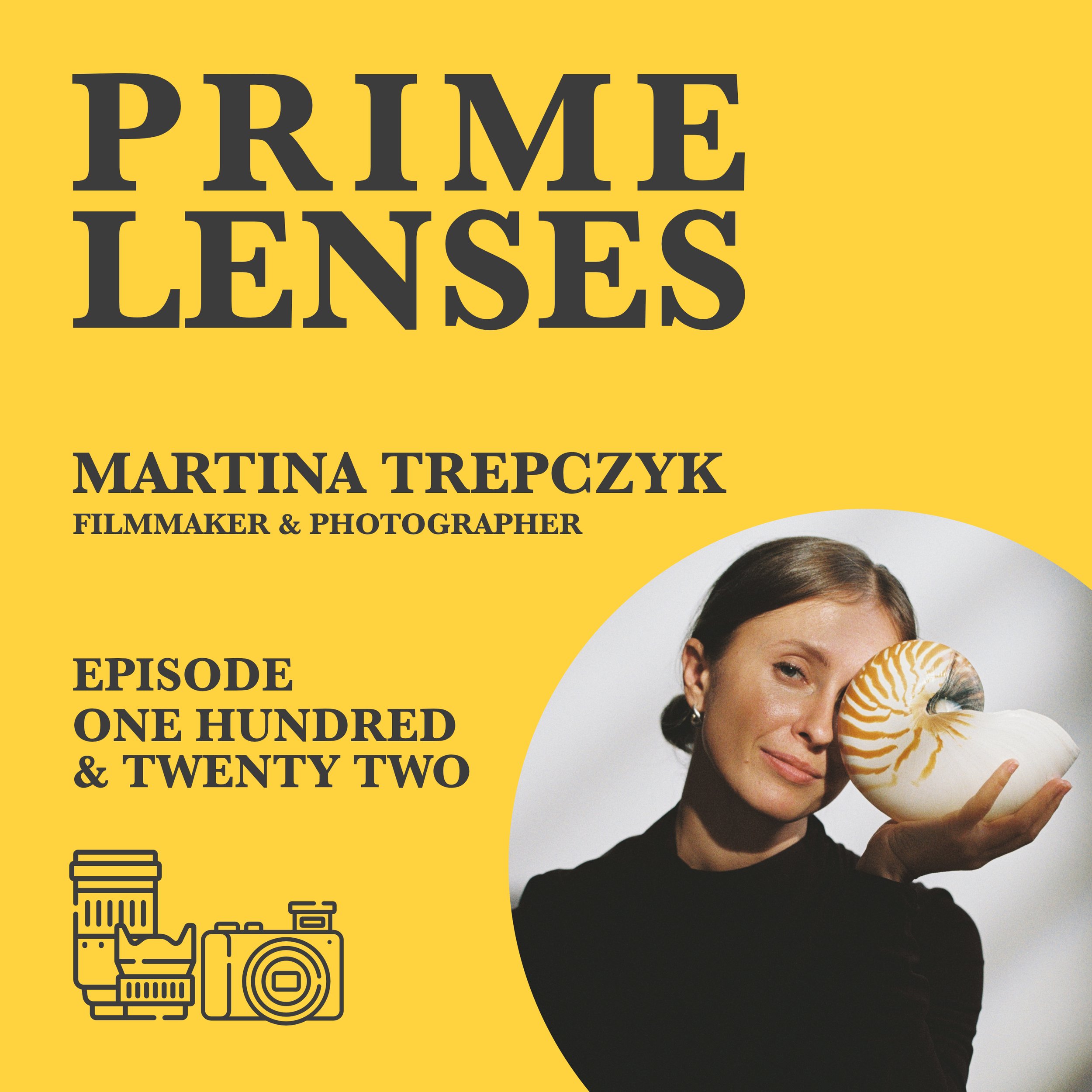


Martina Trepczyk is a filmmaker and photographer who is most at home in the sea. We spoke just as the Leica SL3-P was launching about her own use of the SL system, using bad gear before the best gear and what she wants to make in the future. You can follow everything Martina does on the links below.
Support the show on Patreon.
Episode Transcript:
Iain:
Hello, welcome to Prime Lenses. I'm Iain. My guest today is Martina Trepczyk. She is a Polish photographer who now lives in Portugal and has spent as much time in the water as she has on land. Her beautiful underwater films are incredible and well worth a watch. She has made a name for herself as an award-winning filmmaker and has also been noticed by brands and is a Leica SL ambassador as well. I saw Martina's work and was desperate to talk to her and thankfully she had heard of the show thanks to our mutual friend Misan Harriman and was excited to be a guest. This is a lovely conversation and as she says herself towards the end we get to meander and deep dive a little bit which is the benefit of long form audio chats. So grab a cup of tea or go for a nice long walk and enjoy my chat with Martina.
Martina Trepczyk:
I love talking about technical nerdy shit.
Iain:
Well, here you go. So we'll start with technical nerdy shit. So I've got something cool I've been lent one of these which seems very appropriate so this is the SL3P this is the new one
Martina Trepczyk:
this is the new one I haven't even had my hands on her no so well as we're recording
Iain:
it's super top secret although it seems to have leaked widely um yes so yeah but no it's it's a really I shoot with an M normally but the SL system is your is your standard system it's my home base yes yes I was speaking to another videographer who really likes the idea of the SL3P because I think it's 8k open gate and that's what they want more than anything else is that
Martina Trepczyk:
is there anything as well the SL3S yeah so the SL3S had that right but it was the first ever Leica that they focused on video and and had all these amazing features and you can shoot 120 frames per second And I know this is nothing new for all the Sony users and Nikon and Canon, but for Leica, it was really new and to have a log. And so, yeah, that's why I love her so much. And the P is then combining the open gate and the 8K. Yeah, that hasn't been there before.
Iain:
Do you think you'll switch over because you use the SL system, the SL3S for everything, don't you?
Martina Trepczyk:
I use it for everything, yeah. I'm not sure that I can afford it personally, but if I was given another camera, I'm not going to say no.
Iain:
No, exactly. I think I'm in a similar boat. I'm very much enjoying using it. I'm glad that it's blackout free when I'm shooting stuff at high frame rate. So I can get, you know, like seven FPS was kind of a sweet spot. I'm just photographing the kids on bicycles and wildlife in the garden and stuff, which is great. But so I only need about seven is fine. But yeah, the blackout free is a big deal because I'm used to using an M. So I look at the world when I'm pressing the shutter and nothing goes away. And so with EVFs, I hate the blackout. That fraction of a second, I just, I cannot.
Martina Trepczyk:
You're not used to it, yeah.
Iain:
No, no, it's really jarring. It's ridiculous because it's a tiny fraction of a second, but it feels like forever.
Martina Trepczyk:
Yeah, that sounds like a typical M user.
Iain:
Yes, and it's big. And let's just get that out of the way. Yeah, they're big.
Martina Trepczyk:
And for me, I would say it's generally tiny. For a filmmaker, it's a tiny camera. Because if you ever had a RED Komodo in your hand and you had mounted the monitor and all of that, and if you want to have ND filters, and it's just become this thing. Whereas now I hold this little tiny thing and it's amazing. And I love it. And so many features I still think that are unnecessary. I don't need the monitor to be able to come out. Like I've never used it. It's always stuck there. But for me, it's small.
Iain:
When you're in the water, a lot of your filming is in the ocean and it's people around the ocean. I want to talk about conservation and your mission, if you like. But presumably the weight, a lot of it kind of goes away a bit when you're underwater. Because you're making it even bigger by putting it in a waterproof housing and things like that.
Martina Trepczyk:
That is true. That is true. So actually, I'm using the SL2S for underwater because the brilliant housing creator Seachem, which is funnily enough an Austrian brand, right? And Austria does not have access to the sea. That's why I'm traveling so much because I just crave it. But yeah, so when I put it in the housing, it's buoyancy neutral. So it does not sink and it doesn't float. Well, if I'd let it go and there's a current, of course, it would wash away. But it's perfectly balanced. So if you would mount more light on it, maybe then you would need either more weights or these buoyancy floaty things. But as I am filming and it's just the housing and then it has either a dome port for my wider lenses or if I use the 90, then I can have a flat port. then it's it's it's rather small again compared to to a beast like if you take any RED underwater and you have more to handle but if you take if you take my Leica then it's rather small
Iain:
and there are lenses of course well yes of course and that is actually an interesting thing to kind of get us into conservation and your love for the sea how does someone from a place without access to the sea hear the hear the call of the sea and then go to it how did that how did that come about and then how I guess did photography feature into that um that's a good question but my parents are
Martina Trepczyk:
both from Poland from the coast of the Baltic Sea and I spend every waking minute in the sea and with my grandparents or my parents and because my parents were both working they dropped us off my sister and me for the summer holidays to my grandparents and they went back to work in Austria and so all we did was you know play on the beach in the water um run in the garden so that was that was very idyllic times um in the yeah in the Polish cold uh seaside and the water was you know 17, 18, 19 degrees in summer. So it was freezing, but we loved it anyway. So this is where it comes from. And since I was very small, I preferred nature documentaries to Disney films. And I would always want to watch anything that had panthers and sharks and orcas and whales. So that was always more interesting to me than princesses. So that's where I think it comes from.
Iain:
I'm hoping that I'm kind of doing a similar thing to my children, raising them in the highlands. that I'm hoping that, you know, because they love running around. Where we live in Scotland is, we've got access to coast. We've got access to like wild out. We live in a forest. I'll send you some photos afterwards. It is a literal forest here. So yeah, I'm kind of hopeful that that kind of outdoors place, although I will say, I like to say with the boys that it's kind of safe enough that they can fall off their bike and not immediately get run over. But it is, Martina, it is boring enough that when they are older, they will leave us alone. But that is my hope.
Martina Trepczyk:
I guess any place will eventually become boring to a child until they get older and see what what heaven that was yeah that we crave that back but but that's amazing that you're you're giving this to them I think that's the biggest luxury that we have nowadays access to nature it is
Iain:
yeah it really is and when you were running around on the in the coast and stuff then did your parents were cameras around you as a kid was there image makers in the family actually yes my grandpa
Martina Trepczyk:
he was filming everything on vhs so on old tapes so it was db tapes that were then transferred to vhs tapes and he was he was filming everything and and I haven't thought about this until very recently um that that was my first kind of contact with cameras wow so he was documenting was he the family documentarian yes yes he was um mostly us being you know on horses petting dogs he got us guinea pigs without asking our parents uh he got us birds without asking anyone um and geese we had geese wow so yeah so he yeah he just that was just I think maybe it was our love language now did I think of it um but yeah we spent a lot of time with him unfortunately he passed away when I was younger but uh yeah he was filming all of that and Christmases and and just riding bicycles and all of that boring beautiful childhood stuff that sounds perfect that's great and do you think now
Iain:
when you were saying you've you've only sort of recently reflected on this but looking at that now is that kind of did that give you permission or was there another inciting moment later on in life where you kind of discover film and still image making and go like, oh, this is me, this is for me?
Martina Trepczyk:
I think I'm getting emotional because I've never, I haven't talked about my grandpa in years. And now if I could, I would love to have a conversation with him, you know. But I was always, when I was a child, I called myself an artist. That was never even a question. I never even considered being anything else. So even in kindergarten, I was just called myself an artist. And then I went into this really amazing school. I only applied for one school, and that is in Austria. We have a kind of secondary school that is not only bringing you English, German, math, physics, whatever, all these basics, but it also brings in a whole education system for a job later on. And for me, it was graphic design and communications. and so I learned how to learn from architecture from from paintings composition graphic design and with that came also spending time in the darkroom from age 14 so I learned how to use an analog camera I learned how to be in the darkroom I I and that just I loved it so much because I I generally love drawing by hand and painting. That's what I've done before. But as soon as I held this camera in my hand, I was just mesmerized. And I couldn't put it down since. And the same year I had my first internship in an agency. I mean, that's a bit wild now that I think back. But I was 15 years old. And with the first money I've ever made, I bought my first ever camera that could film an SD. And it was the coolest thing because I could not only take then digital photographs, but I could film and I could then edit in Adobe. And yeah, that was it. Because I felt like filmmaking would combine all the seven arts. Because you can write a piece of music on your own. You can play the guitar on your own. You can take a photograph on your own. You can write a story on your own. But in filmmaking, it's really a collaborative effort and it needs all of the others. and that's what I loved so much that it just opened worlds so that was the inciting moment
Iain:
oh that's amazing when you were when you're making these little films and stuff on SD I'm just curious like I have this image of young Martina running around and coming home and hurriedly plugging the cable into your computer and stuff like that do you ever go back and look at some of those old things and see some of the kind of the maker you are now in some of that early
Martina Trepczyk:
work as well god no I I don't even like my current stuff so no I I I always crave to not compare myself to others but to compare myself to how could I make this better myself to where I was yesterday so I I think I no I don't want to see that I I think now enough time had passed because now I'm 35 so if I shot my first one with 15 that's 20 years yeah that is a long time um so maybe yeah I could look at that again but um usually when I see my own work I'd be like oh god this I could have you know I could have overexposed I overexposed it better or I could I could help the shot longer or something I yeah turn the person a bit more towards the slide to have yeah just I see so much that I could do better I think as long as you're not drowning in that
Iain:
that's probably a yeah a good part you're you're it sounds like you're forward oriented more than
Martina Trepczyk:
backward looking and that's probably good on balance it is an obstacle because I think I'm biggest own like I'm standing in my own way more than anything else because I have terabytes of footage on my hard drives that have never seen the light of day in terms of being published um because I don't know I I also love filming and taking photos just for the sake of taking it and just the process itself I love it so much and I love the process of editing and the process of color grading so much that it doesn't actually need to be published anywhere anywhere for me to enjoy
Iain:
it so I think that's a very good thing to say out loud on a microphone to people who are listening who love photography because I think that's one of the I hear it from listeners that there's the the noise in the world around us quite often is telling someone who isn't a professional that they should behave like one and that if you don't publish and if you don't do this and I've talked about it on the show before like going to I love MotoGP so going to the sports events and and suddenly feeling like right I have to be getting coverage like it's not your job like you don't need a Pelican case full of kit you need to go and enjoy the event and take some photos if you want to but just stand down because you're not there to get coverage just have fun
Martina Trepczyk:
exactly exactly I couldn't agree more and even if you if you look for the viewfinder and you have that moment. And I just, it moved me sometimes so much so that that was it. You know, it doesn't even need to go into my editing software. Of course, it's a different thing when you are being paid for something and you are commissioned to create something. But there was a time where I was burnt out so much that I would never pick up any of my cameras in my own time anymore. And I really, I had to wait a bit until that came back. And now I create so much for myself because that it just comes back to the original passion and why we're doing this. And so that maybe circles back to our initial question. What makes me a photographer, right? Is it the moment when you pick up a camera or when you allow yourself to call or to be called a photographer? And maybe that we need to circle back to the audacity I had as a child when I just call myself an artist without waiting for permission.
Iain:
But I think that that's good because if you can, if you can say admitting what you are and being able and being comfortable with what you are, I think is also a challenge for us throughout our lives. whatever we're doing and whatever we're making and I think that there's a funny joke it was a it was a tv show in the uk uh about some guys working in a phone shop and it was and there's a line in the show where guy says you know a version of if the guy says he's a thing then he's a thing right if someone says they are something that that is a really big barrier and it's in the show as a joke but actually it's one of those situations where if if you know yourself well enough and you go no look I am one of these things another example would be someone like Casey Neistat who was a filmmaker and just said he was a filmmaker at a time when he's got no money no equipment no no job he's just like no I am and then he has a tv show and a really successful career making all sorts of crazy stuff and I don't think he even knows what he is but you state your intent don't you you state your direction of travel and then you go and it sounds like you've done that I I did
Martina Trepczyk:
and retrospectively it also feels like it was inevitable but as I go it feels just natural and just just um yeah I just I just love it so much but I can absolutely relate to situations where you I think it's more important to call yourself that first without having the equipment at hand because now it's you know it's easy to say as a Leica brand ambassador and and having had award-winning films under my belt that yes I'm a filmmaker I'm a photographer but actually that wasn't the case you know 15 years ago I I didn't have any money I I struggled I I don't come from a wealthy family we we migrated to Austria I had my passport just as long as I had my Austrian. I had to create all of that. And also for everyone who is intimidated by all the gear, I bought my first housing for my camera, the one that I could afford, not the one that was best. So I got a surf housing for my Blackmagic that in all caps and with exclamation marks on the website had written everywhere, do not use for scuba, do not use for diving, because it was a surf housing and it is made for the waterline or essentially the first couple of meters up and down. But it was the only thing I could afford and the only thing that fit my camera. So I got that and I took that to below 40 meters. And of course, as my way up and I, And in diving, you have to have certain safety stops because you need your nitrogen levels to dissolve in your tissues. So as I was standing in the water column of five meters and the back plate of the surf housing was transparent. And because of the pressure changes in the water, so as you ascend, the pressure changes and I could see water come in through the transparent back plate. I was just counting in my head, can I afford a new housing, a new camera? What is ruined? And how do I get this to this location? Because I was in a tropical destination. So how do I get it? So in these three minutes where I had to sit there and just wait, I was just calculating in my head. Luckily, my camera was sitting on a battery pack. And although like a big amount of water came in, it was only the battery pack that was destroyed. Not the lens, not the camera, just you could see that the bottom of the camera is completely eroded because of the saltwater. But I kept diving with the same housing for three years, more than 400 dives, because I wanted to spend my money on getting to these destinations. And, going diving is expensive. And I knew exactly because of that incident where the threshold is. So by then I figured out that my not suitable for diving housing exactly held 17.5 meters. So if I'd went below that, water would come in. But if I'd stay 17 meters, it would hold. and I tell this story to everyone because now it's so easy to look at my gear now that is worth a lot of money and it is the top of the top tier and it's you know handmade and beautiful but at that time this is what I had and I create award-winning films with it and I just learned how to make the
Iain:
best of my situation which I think we have to do right that's how you start like I was joking with earlier on about like I'm making films on YouTube and I'm just running around with an Osmo Pocket like yeah you know perfect but that's how you start right you work out how to do this whether you should whether it's the right fit for you and then navigate towards insane gear exactly exactly
Martina Trepczyk:
and also it makes you more creative because if you have to shoot with what you've got you learn its advantages and disadvantages and also um if someone is only used to zoom lenses and never had a prime lens in their hand they don't know that they have to actually walk up to the subject or or swim up or dive up you know it's it's just different so I love I love that
Iain:
that you mentioned they're walking up swimming up when you're preparing for a shoot I've been thinking about this a lot recently in terms of preparing for photo walks and what you're going to take and what you're not going to take. And I'm probably going to do a series of videos and audio things for listeners about that kind of stuff. But you're preparing for something where, you know, the, the, as I understand it, I'm not a diver. The weather below the surface can be just as different as the weather above. And, you know, there can be a lot happening down there. When we're thinking about composing shots, like if you, if you regularly shoot at a location or you shoot at events or weddings there are things that you can anticipate but you and you know you can maybe nudge people in a certain direction you can't have a conversation with a shark about where to be so I'm really curious wouldn't that be amazing yes I would love to have a conversation with a shark
Martina Trepczyk:
I would love to ask him many questions um but yeah absolutely there I think nature photography in general there is so much that you cannot anticipate one and you cannot direct nature you know you can ask a person to turn towards light or away from it but not there and you said correctly like the the conditions underwater can be so different than to the conditions above And so there's a lot of different components playing into underwater. And when I tell you about my previous housing, I mean, the maker of Seacamp just bursted into laughter when I told him this. But my surf housing, I could not access the lens in any way. So I had to make decisions before. Okay, what lens will I use? Okay, that is universal for all of us. Okay, so let's say I chose white lens 21 millimeters. Okay, but then because I can't change anything in that previous housing, I had to think, is it a very sunny, overcast day? Or is it rather cloudy or rainy even? So is it darker? And then am I going to be close to the surface, meaning shallow, or will I be deep? Because if it's a very sunny day and I'm very shallow, That means that it's going to be really bright. So I need to close the aperture to eight or 11. But if it's really rainy and dark or in afternoon, perhaps I need to open it. But that also affects, of course, the focal range, right? So then I had to anticipate, okay, let's say the tiger sharks. Well, that's only about seven meters deep or 10 meters deep. And they will pass me around one meter proximity to me or sometimes closer. So that based on all of this, I set a focal range. But of course, anything that would be further away from me was completely out of focus. So from a one hour dive, I had maybe, if I was lucky, eight to 10 minutes of usable footage, if at all. And from that, a lot was shaky. So that's out if it's too much of a crazy, crazy shake. and then sometimes there was a diver in the background so that was out and sometimes there were scuba bubbles in in the shot so that so from that usable eight minutes I maybe had you know 30 seconds of amazing tiger shark footage so that distilled a lot but now with my amazing housing from Seacam I they had made custom rings for my Leica R lenses so underwater I can change focus and aperture and that changed completely the game for me I think what's really lovely about
Iain:
this is that we talk a lot about constraints being important in creativity but I think also it's what makes you you've trained with one arm behind your back effectively is have you seen the
Martina Trepczyk:
film the princess bride actually no oh the princess bride the princess bride is one of the greatest
Iain:
films ever made um it's a kids movie about uh a little boy who is sick uh played by fred savage and his granddad is columbo and he comes in and reads him a story about a guy who's a pirate and the girl he loves and it's on the face of it's a fairy tale but actually it's a really great story but there is a bit where two characters are sword fighting and they're you know they're kind of fairly well matched and they're doing the thing and then one of the characters says there is something you should know about me. And he says, what's that? He's like, I'm not left-handed. And then suddenly he switches to his right and suddenly he's great. You, it sounds like you, have trained underwater. And then suddenly someone hands you the tools and suddenly you don't have to use your left hand anymore. Suddenly you're like, oh, this is amazing. Presumably that just changed everything. But at the same time, because you've got the skills already, I would guess that you're actually changing things less and it's made you good at, you're more prepared than you might be. if you just started with the right tool right in the beginning?
Martina Trepczyk:
Well, I'm very flattered that you see it that way. I was actually laughed at a lot, you know, on boats. A lot, a lot. I was, I mean, different people on boats, they came up with their big fancy equipment and they couldn't believe what I was bringing. But I agree with you because I knew my gear so inside and out that I was, it was kind of like driving. In the beginning, you're so hyper aware of your stick shift and where you have to look and the mirrors and all of that. But essentially, as you go on, you just drive and you enjoy the scenery and you look at what is on the street. So essentially, I could just focus on the tiger sharks or on the coral reef and not even think about what my hands were doing. And now with the leveled up gear, it was just, it blew my mind. I didn't want to get out of the water. And I kept a lot of my previous, let's say, diving technique because I would just have to learn to be very, very still. I would have to, because my focal length was set, right? So I had to be the one that had to change my body position. If you are filming on four or five, six and in the water and the water column also changes a lot. So there are way more particles in the water. It distorts everything a bit differently. So I had to learn how to just by breathing, going forward or backward and to keeping that focus. And then when there are currents and whatnot. So I still do that. But now if a situation comes up and there is something beautiful and unexpected, like a big rock formation, I can quickly just adjust and have everything in focus instead of just that coral that is in front of me. And that was, yeah, it's just I'm on the azores now and I can't wait to get in the water and hopefully get a lot of mobula rays.
Iain:
Yes, that's amazing. I've never even thought as well about the idea because lenses are developed for use primarily above land. Presumably, does it still, you know, you're shooting with our lenses a lot of the time. Very keen to talk about those. I've got my 100 Apo over here. It's astonishing. Oh, it's such a good lens. I'm selling a bunch of other lenses because of it, because it's so good. I don't need my 90 and I don't need my 135.
Martina Trepczyk:
I was just waiting for you to say, I'm going to sell it. I'm like, what?
Iain:
Oh, no, no, no, no, no. I will be buried with that lens. It just makes everything look incredible. It's just stunning. It's so easy to focus. It's amazing. But are there underwater lenses? Do people develop that maybe take account of the kinds of light refraction and things like that? Or are the challenges basically the same?
Martina Trepczyk:
No, absolutely. There are actually. It's called WRACP, which I can now not explain to you what it means, but it's essentially a wet lens that you take underwater that does not need to go into a lens port so that glass can actually touch water. And I film with that. And it's brilliant. It's amazing. Because, okay, for now, I have to put my lenses into a port. And you try to get the port as close as physically possible to your glass. Because otherwise, your lens films essentially in air and then through another glass and then is in water. So it is still a bit more distorted. But if you can have the WRCP that is already in the water, then you have two layers gone. Right. So that gives you, let's say, as if you have opened apertures. because it's more light sensitive. It distorts less on the edges of the frame. But, you know, I also shot on different digital lenses and it's very comfortable because also what digital lenses bring you is that with the push of a button or half the shutter, they can pull out of focus, right? With my R lenses, I don't have that. I have to either change my distance to it or change the focus. But that also is what makes my footage look so different and special because with a lot of digital lenders, everything looks a lot of the same and everything is sharp. And of course, all the GoPros and all of that that we put in the water, everything is in focus. And I like to have that distinct look and the analog bouquet that is just different. And the way the color breaks on analog glass is just different.
Iain:
Yes. Yeah, which I think is why that R100 that I have makes everything look spectacular when you put it on an SL body or you put it on an M body. It just, there is a different, there is a definite different look. And I think, you know, you've said about the camera being as kind of facilitator of reality and it's helping you to distill what you want to see. And actually with manual focus or autofocus, Alan Schaller, who's a friend of the show and previous guest, talks about preferring manual focus because it's his intention that is driving the creative act. And I wonder whether, yes, autofocus is convenient, but do you feel similarly? Is that why you're leaning towards manual class?
Martina Trepczyk:
Yeah, absolutely. I couldn't have said it better. And I'm sure there's hundreds of valid reasons for autofocus and, you know, even in sports photography or wildlife when you film it very far or photograph it from far away. It can help, but it's just not the style that I make.
Iain:
What was it that attracted you to kind of the conservation work that you're doing? Because you don't, someone does not accidentally fall into wildlife photography. Like if you love the act of creating, the act of filmmaking, far, far easier to go and photograph people at events or weddings or something like that. What is it about the natural world and, you know, the ocean specifically that's kind of pulled you in?
Martina Trepczyk:
OK, one question, many answers. What do I start with? Okay, I'm perhaps going to meander first. Okay, so a lot of people are terrified of sharks, right? I'm going to tell you about my very first shark encounter of a big, big shark. So underwater, you have to wear a mask. And usually the seal is super tight, so you can get by the whole dive without adjusting anything. But on that dive, my mask kept fogging up. And fog means that there is water coming in. So either, you know, there is a leakage and there is a seawater coming in. But it took me a while to realize that I was crying. And it was my tears filling up my mask because I was so moved by seeing a tiger shark for the first time. Because the thing you were feared, you were taught to fear your whole life. is just in front of you and looks you in the eye and you can see her, this massive three and a half meter tiger shark and she is just there and acknowledges you and just looks you in the eye and swims by and that's it. But that encounter, it just, the being acknowledged of something else, something different, of something that has lived through all mass extinctions, of something that has lived longer than dinosaurs were here, longer than trees exist, or the birth of the Northern Star. But sharks are the oldest relics in the sea. And to have been witnessed by that, it's just, that was just different. And then to know that I've seen more dead animals than alive brings everything into perspective because these are the animals that face extinction the most. So a third of all sharks are threatened with extinction and the rate at which they're killed supersedes anything else that we know. So that kind of created the purpose to go into conservation for the love of that animal, for the love of all ocean creatures. But to have met reality and to see how different it is and to see how big the stigma is that surrounds them and the misconceptions. So all of that is just very intriguing as a storyteller because you have that thing that you love. but is feared by so many and so misunderstood so it's just this this really big yeah like like pool of stories that I can pull out and and weave into into shorts and hopefully
Iain:
a feature one day and you've done a lot of work as well working with women in marine conservation and marine biology and things like that presumably a similar thing I guess like untold stories
Martina Trepczyk:
untapped for the most part yes um I I'm sure we can found a quote when we start digging but a lot of our history essentially has been recorded by men through the lens of patriarchy and and has always highlighted you know male stories and male viewpoints and and so much is not accessed by female storytellers. And that means, I think, it's not only who or what the story is about, but also through whom it's told. Because when, as a photographer, I was a filmmaker, and a brilliant teacher of mine told me this, Mike Dipp, who created so many films for the BBC, he said that there is no such thing as the truth. there is a truth and the person who is behind the camera sort of filters it because when I point my camera towards something I decide in that moment what I'll show and then in the editing room again I'll decide and make a ton of decisions what to show and where and in what order so there's a great deal of responsibility tied to that person that filmmaker that photographer and I'm sure when we speak with Misan, right, he would agree that where you show where you turn your camera to, there could be there could be protests, but you could film something else. So by omission, by not showing something, you hold a lot of power. And, and I would never say that women are not there because women are there and in every field, but not necessarily put in the spotlight. So I wanted to purposefully tell a lot of stories centered around women because they are there and they're doing amazing work, but they're not enjoying center stage. And I think through them, it really would be a different place if they had more spotlight on them.
Iain:
Yeah, completely agree. And the footage for people listening, obviously finish listening to the episode. This is a wonderful conversation. But do go to Martina's website afterwards and watch the films because I went down a rabbit hole yesterday afternoon of watching your films. No, it's tremendous. It's one of the reasons my wife came down, I was cooking dinner, and I was just full of excitement about like, oh, Martina's going to be good. I can just tell. You just watch the films and there is a Martina way, I think, of viewing the world and framing things. And also I think you're choosing subjects that are, that will resonate with people because they're not always, they're not always depicted. It's not about you. It's about the things you're encountering. Like it depends, you know, the storytelling can be different. It's not good or bad, but it's like you're, you're choosing things that matter to you, which obviously resonates with me because I'm choosing people I want to talk to that I think are interesting and have an interesting story. So I can see that that's like a powerful creative drive. Is your end goal for this potentially doing a feature and doing some longer films and documentary style work?
Martina Trepczyk:
Oh, my biggest dream since I finished uni is making a feature. I finished my master's degree at age 21 and I said by the time of 30, I have a feature film. Well, now I'm 35 and I'm still on it. But have you seen Tiger Eyes?
Iain:
No. So this is what I was looking at. I've seen bits of it. Yeah, yeah, do, please.
Martina Trepczyk:
Okay, so when you look at it, the story is just so rich. And Hampty, the protagonist, calls the idea of the feature film Big Tiger Eyes. So Big Tiger Eyes has been in the making for some time now. So I've went back and forth to the Maldives on my own time, money, resources to accompany her in very, very important milestones. Because I dream of a feature film, I have found the perfect producer for it. For the documentary world, I'm sure you've heard of the films, Ivergame or Sea of Shadows, Paul Watson. So it's Wolfgang Knopfler and he really, really believes in the film, as do I. But the industry of documentary feature right now has really suffered and changed. And we have tried several funds, but were denied. So the idea has not died. My dream has not died, but it's just right now not the right time. And I'm sure it will come because the story represents so much more than just tiger sharks for everyone who's listening. She is a hijab-wearing female dive instructor and shark guide. And she is just this marvelous persona that ignites everyone when she comes into a room. She's just this bold, outspoken person. And with Tiger Eyes, before its release, We had so much movement or so much, I don't know how to say it, buzz around that film that NGOs jumped on that helped teach women off her island from learning how to swim to learning how to scuba to becoming dive instructors. So all of that happened because we made so much buzz with the film. And I love that more than the response of the film itself because it really changed momentum. It changed lives. It changed how women look at Muslim women in the ocean sphere because it's still very heavily male-dominated, especially people from the global north. It's just still not very accessible to women from the global south because it comes with being very expensive. and yeah and a lot of research you know parachute science is coming so it's it's people from the global north going somewhere very remote and exciting and then doing their research and then abandoning the place so all of this is tied in to their story yeah it's related actually to a
Iain:
recent episode I did with um mattia bidoli who's an italian uh photographer who spent time in like Gaza has taught Muslim women how to use cameras, for example. And some of them...
Martina Trepczyk:
Amazing. I have to look.
Iain:
Oh, yeah. Some of them had to pretend that they were going to English classes because they didn't want their parents to find out that they wanted to learn to use a camera and they were worried about what would happen, you know, because his thing is always very much he arrives, he's sent in by an NGO. And then there's actually plenty of photographers there. But somehow the photography of a European white male photographer is somehow it jumps the queue in some ways and he's he's he's as frustrated by that as someone producing that work as the people whose work doesn't get seen and photographers in the region will say to him no you have to make these photos because if we do it it won't necessarily get seen and so you know that problem has has existed for a long time but it we we need to kind of have a wider array of voices producing work and you know represent because the way you see just to go right back to what you were saying a moment ago what you choose to put in the frame and not in the frame is your choice and would be very different for someone else there and that's why it's so important that we have as much representation because when a film is made just like a book or a magazine or whatever you know issue of nat geo that artifact exists in the world someone will find it and they need to see that they can do that you know future generations hopefully like the the podcast runs for 20 years and hopefully we talk again and I can say oh a guest came on and it was martina who inspired them that's what we want isn't it to inspire future people to pick up cameras so yeah I think super important
Martina Trepczyk:
what a brilliant um yeah uh way I I have to listen to that episode I'm very intrigued by that because I also think that there is so much talent everywhere and still the people who get published is a very, very same of the same selection of people and demographic. And I think that's why a lot of things we see nowadays feel so repetitive. And I think it would enrich all of our lives We hear and see more from and learn. We have so much to learn from other people's perspectives.
Iain:
Well, if I may use perspectives as a way to shamelessly for a minute to talk about some lenses, because I don't want to abandon your choice of equipment, the choice of your perspective. You mentioned when we were talking and preparing for this, that you've got your kind of 21, 35, 90 is your kind of spread. I'm assuming there's not a lot you can't do with that, really. that like that's that actually you've got a wide you've got a kind of in the middle and then you've got a telly effectively talk a little bit about how you landed on those I'm assuming at this point
Martina Trepczyk:
you've tried everything I did I of course in the beginning I loved the 50 I think as as or a lot of people we or yeah I love the 50 um but then I I became a bit bored because it was a bit too constrained so I went just ever so slightly lower and fell in love with the 35 and it's still one of my favorite lenses um and I it was difficult for me to choose three because I also love the 28 so much which is funny because yeah you know between the 21 the 24 and like there are subtle differences but there is a clear reason why I love the 28 and not the 24 but then the 21 again is so brilliant And for me, there are big differences in between those lenses. And I love the 21 so much, especially also underwater. It's just magnificent, but also land for landscapes. It's just beautiful. It's just so poetic. And just recently in Kenya, I shot a whole short film on just these three lenses. That's it. I didn't take more than that. I don't own a single zoom lens. So that's out. And then because we traveled so much, I had to make very deliberate choices of not too much weight. And then also I just wanted a small setup because we were going in very... I wanted to be very respectful and not look like a big voyeur or observer. And so these tiny prime lenses are just brilliant. And then the 90, just like you say about your 100, it's just, everything is so dreamy. So to take that 90 mil and point it at a dead carcass of a shark creates something that I have not seen before. because I'm sure, as you know, or your feet is full with Sea Shepherd and what the work is so important and what they're doing is very important, exposing a lot of what is happening. But a lot of people also get almost desensitized to all that trauma and blood and what we're seeing and that it's almost something that we can just scroll by. But what I tried to, when I filmed Dead Sharks in Kenya, that that thing has lived. This is something that was alive just hours ago and has now been taken from us. So I wanted to create the most poetic work possible with something that resembled carnage. but had this pull towards it because it was so beautiful, but horrific. And that made me look longer at this. And that made me tell the story differently. Because the problem with the killing of sharks is so difficult. It has so many layers to it. It's not something that can be glossed over. So by choosing these three lenses, I was able to tell a very difficult story, I hope in a very poetic way.
Iain:
It's, I think the enormity of what you're trying to take on and how much, how important it is to you is evident. Hear it in your voice. You know, these are important things and important problems that we highlight. Because you're having this experience in the water with these incredibly powerful but gracious creatures that most of the time don't care whether you're there or not. But presumably this is happening because people misunderstand or we're shortcutting something and we're just like, well, it's just easier if they're not here. And so when someone's not looking, people are just, you know, taking them out or making their habitat uninhabitable, just drive them back and drive them back. And the result will be that we will lose these creatures and they're essential to the ecosystem. It's worth pointing out as well.
Martina Trepczyk:
Oh, we couldn't breathe in Scotland or Vienna or here on the Azores without sharks. There is a lot, and rightfully so, in the media happening around rainforest and the Amazon is so important. And it absolutely is. It is the lungs of our planet. But we forget that over 70% of our Earth is covered by ocean. And actually every other breath that we draw is created by the ocean and what is happening there. And if you take out the predators that sit on the very top of the food chain, which is the shark, essentially, you destroy the whole pyramid. And with that comes more acidification. The lower species become the bigger predators that will essentially just kill everything that's underneath them. It's complex and it's very easy. We need sharks and we can't decimate them at the rate that we're killing them. and to a lot of people they think that it's a problem somewhere in Asia right because Asians eat shark fin soup and people do not realize how much racism is tied to that and how much we gloss over this problem and shove it somewhere else and people do not realize that actually the EU is the second largest driver of that trade. And although we do not consume it in Europe, we are, Spain and Portugal are the largest fleets and killing sharks and then exporting them to Asia. So we need to be more aware of that problem. And I hope I'm not hijacking your podcast too much on that, But it's just, it's a huge, huge deal. And we're killing them at a rate that is just insane. I think if estimates are correct, and estimates are made up of numbers of landed catch, meaning counted dead sharks on either vessels or fishing markets, and then, you know, made an average of what is landed per day, per week, per month, per year. And these estimates suggest that we kill between 80 and 150 million sharks a year. And if we believe these numbers to be true, we are killing on average 11,000 sharks per hour. However, these numbers fail to take into account all the unreported but targeted fishing or the accidental bycatch with all these big trawling nets. And most importantly, illegal catch. So sadly, the number of dead sharks is far greater than we can imagine and we'll ever know. And so in Kenya, recently, I was standing knee deep in blood of sharks that have been killed and they will be sold for the liver and fins. And these incredible fishermen were the kindest people you can imagine. And they were so kind to let me film that because they trusted that I will use this footage to some good and not villainize or demonize them. And there is a lot of tropes circling the shark fisherman or fisherman itself. It's demonized. But it's not these people who are responsible for what we're doing. It's the big demand that is driving that. So, yeah, it's something that stays with me or is with me for several years. And I'm creating several projects around this topic because it's so delicate to talk about. because you don't want to point fingers yeah no no and it's complicated sort of socially and
Iain:
economically because these are people who need to make a living so they need to you know they they fish the things that they can sell and if there is demand as you say and we need to we need to I think as people better understand the impact of our choices and the impact that that has further down the line and what is sustainable and what is not sustainable I think we need to get back to where sometimes parts of the year we don't eat certain things or we don't you know like that because we we've gotten very used to I can buy blueberries all year round that's pretty fucked actually we probably shouldn't be able to do stuff like that like to you know and I and so it's it's it's understanding where our food comes from understanding the impact of those choices understanding what we should and you know can eat and not to put all of the burden on the consumer because that doesn't fix anything either. But for us to collectively, I think, take a bit more responsibility and be a bit more thoughtful about where our food comes from.
Martina Trepczyk:
Yeah, absolutely. I think it shouldn't be sitting on the consumer's shoulders either. There should be a more responsible way for the companies that create these products. And a lot of them are very good at hiding and lying and mislabel things so shark has or shark meat has so many different um synonyms that we are not aware that we are feeding our dog shark meat or that it is in vaccinations and that it is in a lot of facial creams in sun creams um so squalene is a product derived from shark oil, shark liver and shark oil. And it is hidden in a lot of our products. So that is terrifying and sad. And so when you want to buy cosmetics that are labeled vegan, it's not only important because they're not tested on sad rabbits and monkeys and dogs, but it also means that there's no shark in it. So if this is the easiest takeaway you can take from a long speech of shock, then perhaps this is something that is in your hands too. And, you know, I'm talking about big companies that we are all aware of and that hair dyeing products and all of that, they have squalene in it.
Iain:
It's increasingly hard to avoid things. You can't make the choices as easily because as you say, you think you're buying from one company that's small. Well, it turns out they got bought by the big company. And actually, you know, like that it's the same with technology. It's the same with it. Like I'm frustrated constantly recently by choices made by big tech companies. It's like, but I still have to use a computer to get this done. Like I still have an iPhone. Like I said, you know, I don't, I have to divorce certain choices from each other. And we're compromising ourselves all the time in a very frustrating way. It's very hard to make things cleanly and ethically in 2026. But we have to do the best we can, I think.
Martina Trepczyk:
I think what I always say with my partner is choose your battles and just like you say I I have had I don't even want to know how much money Apple made with me you know if I had my first laptop 20 years ago yeah and then and then one iPhone fell into the sea and stopped working and then it piles up right and I and the mining that goes into that but I am I am devoting my time and resources into that battle. And I know that other people are taking their time and resources to battle this and hopefully making other parts more equitable or more sustainable. So yeah, I think when we follow our passion and calling, something amazing comes out of it. And I hope that other people are inspired by this and have never heard about this maybe before and are looking into this.
Iain:
It's a joy to be able to share stories like yours and share the work you're doing with an audience and learn something along the way. And I think that's the great privilege and the great pleasure I get to do this. For people listening who maybe don't know your work and want to find out more, where is the best place to find a bit more, Martina?
Martina Trepczyk:
Oh, thank you so much, Iain. I really enjoyed this too, so much. And it's also for me the pleasure to dive into conversations that don't fit into other formats. And here we could just meander and dive a bit deeper. Where you can find me best is on my website and Instagram. But also there is this beautiful platform, Water Bear, that is showing documentary films from 4 minutes to 90 minutes. Everything is in there from talking about fast fashion to glaciers to tropics to sharks. And my film Tiger Eyes is on there as well. it's a platform you can sign up for free um but they're also undergoing a redesign at the moment so not everything is accessible so you have to be a bit patient there but other than that my films are on my website martinatrepczyk.com and some is on YouTube fantastic well martina thank
Iain:
you so much I loved this this was a wonderful one you'll have to come back one day and we can we can geek out more about sls like an sl4 or 5 or something yeah yes please I would love to come
Martina Trepczyk:
back I enjoyed this so much and especially the geeky part we are one kind of of people who love to enjoy this yes Thank you.