
Episode 121 - Philipp Reinhard
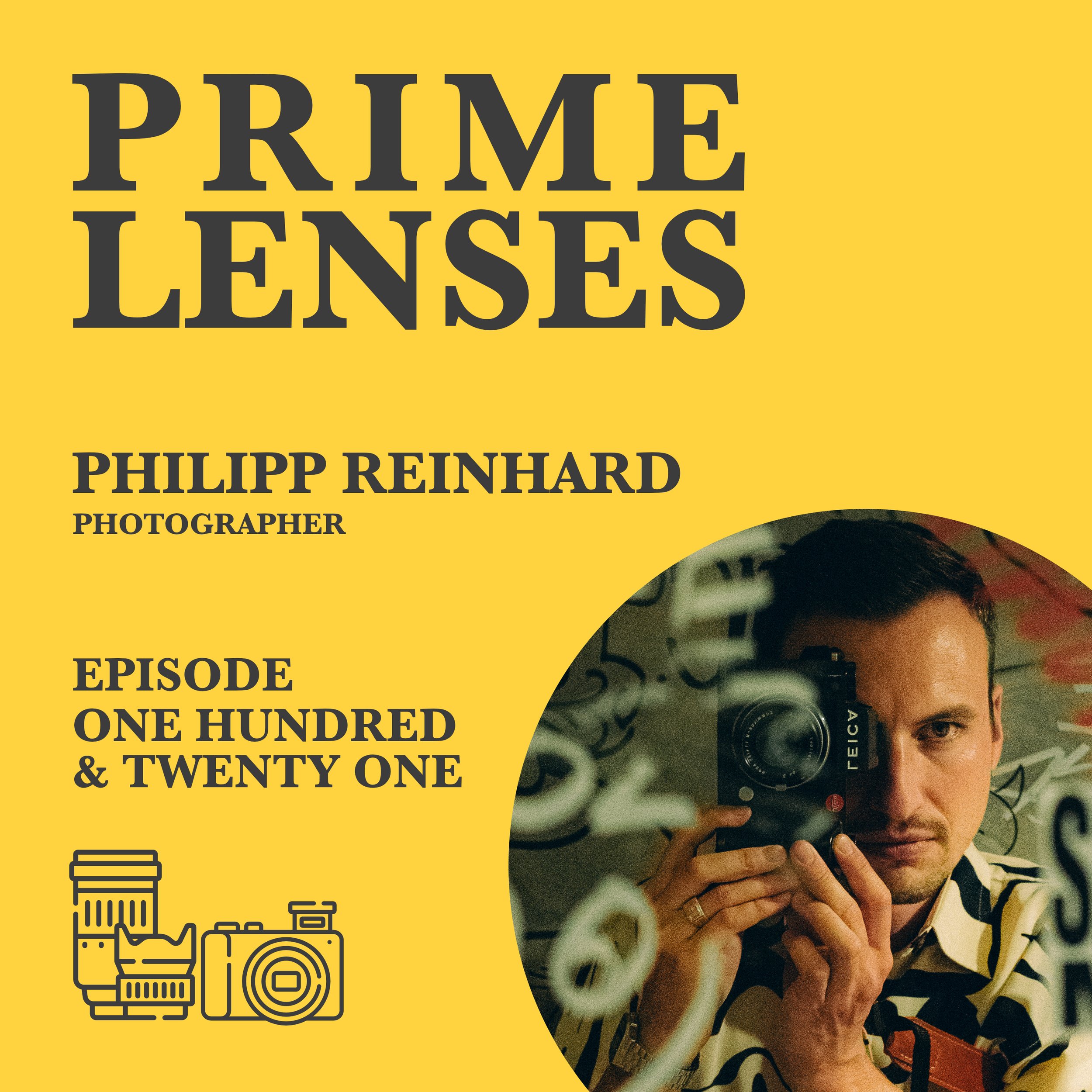


Philipp Reinhard is a German photographer who has spent his career traveling the world making commercial sports and product imagery. Like a lot of my favourite photographers he’s is people powered. He even gets to branch out occasionally to make the accessories he wishes existed already with partners like Oberwerth.
Sign up to the Prime Lenses newsletter for a mid-week treat.
Support the show on Patreon.
Episode Transcript:
Iain:
Hello, welcome to Prime Lenses. I'm Iain. My guest today is Philipp Reinhard. Philipp is a sports and commercial photographer from Germany and I found his work during the Winter Olympics this year where, for reasons best explained by him, he decided to shoot the event in part using a Leica R8 with a digital back. Now for those not in the know the R8 came out over 20 years ago at this point and the digital back was an add-on that they added to this film camera to make it so that you could make digital images with the same camera body and lenses. It's a concept that's kind of back these days as people try and kind of engineer the same solution. It's a 10 megapixel Kodak sensor it's not even full frame uh it's completely wild they didn't have a reputation for being super duper reliable when they were new let alone over 20 years later but his images are stunning and a conversation back and forth with him online and Torsten Overgaard previous guest and friend of the show meant that we decided we should sit down and have a chat he came on the show this is a great conversation I was really looking forward to talking to Philipp and he is a really thoughtful and interesting photographer. So without further ado, here's my conversation with Philipp. I came across your work via the stuff actually that you were shooting at the Winter Olympics, which seems like an age ago now. I'm sure it does for you as well.
Philipp Reinhard:
As well.
Iain:
You appeared to be photographing in a move that is complete madness using an R9 and a Leica digital back, which was never the most reliable piece of hardware, it's fair to say, when it was new, let alone now. So I'm kind of I want to get to some of that sort of stuff. And I want to talk a bit about like a lot of your work seems to be sports related and commercial and you've got a definite look. But I think it's a good starting point. Tell me about the Winter Olympics and why you're using that combination. And then we'll use that as a jumping off.
Philipp Reinhard:
Yeah, okay. Thank you, first of all, for the introduction and also for the invitation. As you said, it was kind of hard to get together. But finally, here we are. It was my fourth Olympics already. So my second Winter Olympics. And stuff is always a little bit complicated over there. usually you can visit lots of different venues and you see lots of different stuff but this time in Italy it was different because the locations were too far away from each other so everyone knew before that they will be or I will be at the same three or four venues for 24 days that was for me the point that I really need to think about doing something different every single day of my journey over there that I start taking different pictures I think with the same gear the same lenses the same venues more or less the same sports you really do well just doing like the same over and over and over again and with different gear you need to start thinking about to show stuff differently so I was always a fan of analog photography but I also knew that analog photography take a while to develop and scan and I knew during the olympics I won't be able to to set up all the scans and get it done and bring it to social media and show it I know it wouldn't take far too long and then I was thinking about a little bit what could be a special gear for me beside the like I am or like a q or dsl bodies and I also brought an m6 but I realized that there is um that there's hidden gem and I yeah I found a couple of guys and I tried to search the internet for the R8 and also R9 and the digital back and I called also somebody at Leica and he told me a little bit about it and then there was the hidden gem and I could get my hands on and it was super hard to get this thing working. The batteries are so old. I had one that was renewed that would take for about 200 shots, I guess. And the other one was straight from the charger already like blinking red. So one battery. And I thought it would be maybe the hard part, but there was more like the SD card. There's like a huge problem. the biggest sd cards the camera takes is about two gigabytes where the hell do you get two gigabytes SD card nowadays so I yeah so there was no problem with the battery anymore because even with like the two gigabyte card you could only record about a hundred pictures so I right I I through a couple of different shopping malls trying to get like to some really cheap shops just try to get like the cheapest hardware and even the guys that like it told me just try to get the cheapest and smallest sd cards you can you can get because um speed doesn't matter because the camera itself will be slower than the the slowest SD card so um I went to a couple of shops I tried to grab a couple of sd cards I take them all with me to Italy none of them worked in Italy I went on Amazon Italy and they had somewhere some really old hammer two gigabyte sd cards I ordered 10 of them wow just to have enough for the future even if I maybe keep the camera for myself and these SD cards were finally working. So I had a working even a workhorse, I would say, because the camera worked perfectly over the three weeks without I think it crashed not even a single time. I think I did not even lost a single file. And it was very nice to get challenged by the camera, by the ISO and all the stuff, because it was from the early 2000s.
Iain:
It's so cool. Former guest of the show, Torsten Overgaard, talked about it when he was on, because Torsten's got, I think, a couple of the digital backs as well. I have an R8, like you, it sounds like. And I love that camera. It's beautiful to use. It's beautiful to handle. And the R lenses, the 100mm Apo is staggering. I have been using that on my M a lot, on my M11, because it just makes everything look incredible. like it's really funny having this small camera system that historically I've loved for being a small camera and then all I want to do at the moment is stick this massive heavy piece of glass on the front of it but it is the image quality is incredible like your images out of the olympics looked stunning for a 10 megapixel file are they RAW as well or are you just no it um I used them
Philipp Reinhard:
RAW and I think that helps quite a lot I think the beauty is the limitation as you said so there's an APS-C crop so like a 50 mil lens will be I don't know 67 68 or something and I also had like a very nice selection of our lenses already because for filmmaking I get a set of I think six different lenses 19 to 135 and I know if I go with the r I want to take also a couple of sports pictures so I also get the 180mm f/2.8 second generation and it is a beautiful piece of glass it is it is very very beautiful with the crop you can get also a little closer even more it is super small it's not too heavy and with the camera it is it was very very nice I really enjoyed shooting with the r series
Iain:
yeah I think for anyone listening if they've not seen it it is worth going and looking up the concept of a film camera that could be converted to digital because there are companies now trying to do the same thing and I think our learning that it's not as easy as it sounds like the the notion of just replacing the back and putting a sensor on is a whole different ball game presumably the batteries because the batteries are old so you had a couple of batteries you had these it had these spare memory cards but then it's giving you as a creator I guess a very different thing to play with because your images to me have a kind of I would say the Philipp look is it's quite it's sharp it's contrasty it's saturated it's got deep reds deep blacks there's a there's a crispness to your images and I love that it's it's sort of a consistent thing across I feel like I can step into a lot of your pictures they're very kind of they are a bit cinematic they're sort of hyper real in that kind of like in a really pleasing way. But the R must have presented you with a slightly different challenge because you can't guarantee you're going to get all the same things as like an SL. Absolutely.
Philipp Reinhard:
I think I felt a little bit more like really a photographer back in the days, in the early 2000s. And I also get a second body for shooting with the R on film. My plan was in my concept piece of paper whatever um I bring a camera I bring it back I also bring like analog film back and I just switch it constantly somebody from Leica told me Philipp don't do it the camera works whenever everything fits perfectly and it's just keep it keep it do not touch it just work with it so I really tried to get in really last minute also an r8 for film photography and then I then I realized that this is like peak analog photography this is one eight thousands of one eight thousand of a second on a shutter that means you can go easily on iso 800 on film box on film stock and also shoot wide open. This is like a great camera. That does also mean that it is also very nice on the digital way to work with the camera. And the limitation makes it so special with this
Iain:
camera. The images are great. I will, I mean, I'll share some in the in the show notes as well, because it links to those because it was just, it was stunning. And as soon as I saw what you were shooting with, I just thought it was so cool. It's great to see that thing out in the world. So the question is, because you said you kept all these memory cards just in case you keep it,
Philipp Reinhard:
did you did you keep the camera or did it go I sent it back to the um luckily the Leica store in Stuttgart told me they have one and it's not sold for quite a while already and they would give me one right and for me it's it was a very nice project and I would love to keep it but it's uh it's a very expensive keep it and there is no repair at the moment this is also like a bad that we may need to mention. And after the Olympics, maybe the camera just got a little hyped. I think there were like three or four, maybe in Europe on sale. And I also looked afterwards, if maybe keep it, how is the price, is a good price, whatever. And they are all gone. Well, I haven't found them at the moment. So I think the three or four cameras got sold, maybe because of some of the pictures. And it's a very, very nice concept. The more cameras, the more you can trial and error, which is very nice. But in my everyday life and work as a photographer, I also need a little bit to focus on the systems I want to work and I want to keep. And for me, I decided myself, I keep the R8 on film and I still shoot a lot with it. I love the sound, the shutter. It's incredible. You can meet her in three different ways, which is incredible. And all in all, it's, I think, the nicest film camera I've never thought I would need, but I will never get rid of it now. So I decided to give it back for now. Maybe I get it someday again, but I decided now to shoot film with it.
Iain:
I used to own a vintage motorcycle. And there comes a point where it just stresses you out. Like having this thing. Yes, they don't make them like that anymore. And yes, it is a wonderful experience to use it when you're using it. But there's also in the back of your mind, there's, well, what if this breaks? And then where do I get it repaired? And what if I'm stranded and I'm doing a job? And I think for people listening like me, who are tourists in photography, who enjoy it, versus someone like you who's got a job to do, you've only got, you know, do a leaper for an afternoon or the German football team. Like you can't mess that up. And so you need that. You need reliability and repeatability. And there's one thing saying, I'm just going to switch to film for two minutes and get some film shots. But you need that backup device and that SL and things. So I think, yeah, it's romantic to think of these things sometimes, but it's probably not practical.
Philipp Reinhard:
What was really outstanding was really the picture quality. From a sensor, 20 years old, maybe a little older already, almost 25 years old. It's a Kodak sensor. Colors, dynamic range, sharpness, like all in all, color rendering, light. It was really, really, really outstanding. I really expected something okay-ish with nice colors, but I really got something. And I think if we would print it on a wall, I think people would not recognize that these pictures are made with a sensor this old. Yeah, it's something I always say to friends
Iain:
when they're buying, you probably occupy the same space with your friends. If they're buying a camera, they say, what, you know, they come to you. And the thing I always remind people is that any camera they're about to buy is probably technically far superior than the one used to make any image they've ever really admired. If you've seen an image in a gallery, if you've seen old photographs, you know, the things that inspire people to pick up a camera often were taken using older gear, they're older photographs. And so it's less, it's much more about the experience and wanting to use something. Because a bit like you were saying about the limitation, that excited you, you know, that got you, you said it yourself about you get the same images otherwise, Whereas you're giving yourself a different tool. You're like, right, okay, what can I do with this?
Philipp Reinhard:
Absolutely. I've never heard somebody say that pictures from Muhammad Ali back in the 70s, 80s, 90s, oh, they're too grainy. Oh, can we have the black and white picture in color? I've never, never heard somebody talking at the exhibition about talking and discussions about this. So I think it's absolutely right what you're saying.
Iain:
So when you started wanting to take photos then, was it the, because I've noticed in your images, there's a lot the people seem like the stars a lot of the time in your photos and you seem very interested in in people was it an interest in people was it an interest in the kind of the the the method I guess of image making what was it that brought you to photography I started taking
Philipp Reinhard:
pictures when I was I think 14 years old so already more than 20 years ago I picked up a camera at we had in school something like renewable energy extra classes and the class took place in the old photo lab so I maybe rented the camera for quite a while now an old review ml and I I just took it home with me. So the lab was not in use anymore. I grabbed a couple of ACFA APX 100 films. I put the film on the camera, I just start playing with it. These days, developing was two euros, scans was I think one euro, and getting all the prints was a euro 50 or something. So for less than five euros, you could get like a film with the whole experience. My love of photography started back then and I realized really early that I was never interested in animals landscapes nature I was always interested and this is still I think my drive and my motivation today about people when I met somebody I'm always and it doesn't matter if he's a sportsman a celebrity or somebody else it doesn't really matter I'm just really interested in the person and in the story and what is this like to do what you're doing? If you're a painter, how's it like to paint? How do you think out of the box? How do you try to create new colors? Just for example. So I really try to get always very deep in details. I'm very interested people. I'm probably too interested in a lot of things, but this is something what keeps me going. what kept me going so um whenever I'm with a sportsman sports girl I'm probably more interested in the story besides sports or what runs you next to sports is it coffee and like all the stuff that going on in your head beside the next game what is what is in between the games what helps you to to get away from the sports and for me there was some kind of progress and honestly I never I never never thought that I could make a living out of photography photography was for me for 12 13 14 years just the nicest thing besides skateboarding I always grabbed the film camera with me I always took a couple of Kodak Gold images when we were on the road taking some skate movies I always was the skate movie guy so I always thought that I would step into cinematography making movies, cutting them maybe some advertising but I never thought that I could be a self employee in taking pictures and maybe this was the small secret because I really never talked with some people deeply about my photography. I always got inspired by skateboarding guys like Greg Hunt, Artus Ali, French Fred, people I love for their way of life, like skateboarding and really going hard on skateboarding and partying and enjoying it. But also like creating something in culture, taking great pictures but without looking left or right just going their own path because in skateboarding you you tried always to do something different something which was not state of the art trying always to be a couple of steps ahead there was a filter too much there was a crop too much there was just things they were over it at the moment but a couple years later like um the style and some things appeared in the mainstream. And this is something I really loved about skateboarding and the culture of skateboarding. And I got so early in touch with different music because of skateboarding music. Like, I think I listened the first time to Pink Floyd when I was 15 or maybe 16. And I wanted to love it. It was too early for me, but I really wanted because like my skateboarding heroes loved the music. So I knew there must be something in it. I just need to listen over and over and over again. And there will be the day that I enjoy Pink Floyd. Today I do. And I think this was the same with photography. That I looked left and right for skateboarding, but not for the photography. I try always to create my own style, my own signature. Taking only pictures of stuff I loved. Not 100. Maybe I'm good with two. Like always the peaky and sneaky way in skateboarding. I try to bring always a little bit in my photography. And I think over the years it just developed and developed. And then I was 23 years old. Somebody wrote me an email if I could get a mood board for two different jobs. I just put some analog black and white portraits of skateboarders in it. I got the job and they asked me if I could take it on on digital. And I said, yeah, sure, I can do. But I never had the digital camera till this day. So there was a cooperation with Leica. They sent me a Leica Q1 first generation and the Leica S back in the days. And we start just keep going the the job and with the job. And there was more passion going on. and I really felt that there's something else in me burning doing it. That was the first time I recognized maybe I could be a self-employee. And I think eight months later, I quit my job.
Iain:
So it was a quick way. That's brilliant. I love that story. And I love that you came up. It was kind of a magic time, really, to be coming up when skate culture became a bit mainstream culture. You know, you had skate videos and the rise of things like Tony Hawk Pro Skate. Like we can't underestimate the impact of PlayStation on that adoption of skate culture and mainstream culture and the soundtracks to those games and things like that. Is there an accessibility? Because what I'm thinking while you're telling that story is if you grow up loving film and you watch Scorsese, Spielberg, you might want to do that. But you've got this understanding that hundreds of people are involved in making that happen. But a skate video, you could go out with your friends and try that. Was that part of it that it was so close and tangible?
Philipp Reinhard:
Definitely, definitely. I think I did not also think about it too much because I was too young. I think I was 17 when we got our first European tour. So somebody from, I was in skate camps in Bilbao. The next time I was in a skate camp in Paris. The year after, I was in a skate camp as a coach. and as coach and also as just somebody who skates I always broke my camera and then I did my first movie and I asked him could I put your logo in the movie and they said like yes it's fine for us so it was free advertising for them and for me it was like man this is my first commercial work look at this and I think this was just something as you said I could do by my own I can go out with my friends I can capture the footage afterwards I can choose the soundtrack and the cut and everything nobody will say please do differently and I think this was for sure a big motivation and I also worked as a skateboarding filmer in my early 20s for like a year because I wanted to study and it did not work in the first time and also not in the second time and so I was 12 months a skateboard filmer I did some corporations with with skate brands and it sounds a little sketchy now but it wasn't so it was it was really a plan and we produced a skate movie and stuff and it was like More or less the same day with structure. Wake up early, capture the movie, capture the stuff from last night, doing some mails, getting some small edits, went out with the guys from one in the midday to, I don't know, midnight for like one year. And we were always different people and we got to know so many different skateboarders. they came to Stuttgart just to take some action, to get some photos, to get some movies, to get some footage. And as you said, this was definitely a motivation to keep that going because you could do it as a one-man army.
Iain:
No, that's really cool. And do you carry that kind of spirit through now into your work when you're making it now? Because now that you're saying this, I can see in some of your images the way that you let the viewer us see some of the background and some of the lights and some of the equipment in the way that you photograph like especially I'm thinking of the footballing photos especially sometimes you you let us see a bit more of of the thing is that kind of that slightly pirate skateboard spirit
Philipp Reinhard:
coming through into your work now maybe maybe but I also think that there is a beauty in not gatekeeping like the bad things and stuff like always people think oh my god you're taking pictures of you just said Dua Lipa Adrian Brody, Gabriel Macht Tony Kroos whatever but there's also like bad days there's also like a hustle days along business business is always not easy there's always like hard things being on the road for the European Championship the last time was 44 days without being at your family, without being home every night at a hotel and stuff. I think this is also, I think, part of my story that I want to be very open to everybody and not saying I live the fullest life and everything is great. I'm just like a fan to be very open, to be honest, to say everything. And maybe it's a little bit of the skateboarding culture, which is still in the pictures but also just to say when they're taking an interview for television it may look spread at the tv but it was super sketchy around they need also to to fix a couple of things last minute and the football players they don't wear shoes anymore they just barfoot or whatever and maybe they they rip the knee or something off they just have some blood whatever they got injured a little bit so I want to showcase a little bit also this and I think that's one of
Iain:
the things I really I like about your images actually is that when they need to be they're polished and refined if it's you know a car or a product or whatever but there is this kind of it's in it's in place it's it's in a real place you're showing it in a real place it's not it's not just a white background unless that's the right thing and the right setup to use and I appreciate there's you know um with a commercial shoot there are things you are being asked to do right they have to the images have to be usable and have to do a certain thing but still there is a I think a in great photographers there's an essence like there's an element there's a there's a Philipp ness to it or there's a you know that photographer brings a bit of themselves I guess whose work do you admire that has that kind of you know the essence of the person in I think one
Philipp Reinhard:
one guy who inspired me for for quite a long and I'm not uh probably the first one who said it is um to myself the guy who took a lot of pictures of muhammad ali I think when you look at his pictures nowadays they don't look old they look like they look very timeless and I think this is something I always try also to to work on doing something which is timeless you know like um editing editing pictures these days feel like after three years the pictures look a little bit old just because like the trend of colors teal and orange and whatever and texture like a lot of grain no grain lots of contrasty and I always try to get a little bit rid of this stuff because when you look at thomas pictures or the pictures of peter lindberg or walter eyes jr which is like a stunning sports and commercial photographer from the USA the pictures they never look old they took pictures of Walter Isaac Jr. of Michael Jordan in the early 90s the colors and everything they don't look old maybe the layout in the photobook looks a little bit outdated but the pictures are just stunning from colors and everything so I always try to keep that a little bit in mind and thomas is somebody from I think his style of working from the different topics he worked on that there's so much inspiration and stuff in it could last forever really this this guy is he did some really great
Iain:
work. Yeah, he did. And I think it's one of those things where these days we are bombarded by images so constantly everywhere we look. You can't, you know, if you just pick up your phone, you know, you and I, part of our life is using things like social media for our work, like promoting work and things like that. And so inevitably you're then exposed to lots and lots of imagery, but it's a recent guest, Lucas talked about this, the difference between image quality and a quality image. And I think we see a lot of high resolution pictures go past our eyeballs every day. But it's not all high quality stuff. And I wonder whether when I talk to people who think about the longevity of their work, like you clearly do, do you try and kind of limit your exposure to too much noise
Philipp Reinhard:
so that you can still find the signal? I would love if I could control that a little bit better, but I'm not too good at it, I need to say. But I think a lot about the longevity of pictures and also my archive and stuff. This is maybe the main reason why I took pictures on film, why I shoot still so much film photography, because I feel that the worth of a negative or a scan is way higher than every digital photo. and for for me it's it's also not so easy when you work in like social media fields and you try to pop out in like different people's phones that they see you work I think nowadays it's not so easy to stay true to yourself because some trends on instagram and stuff going on and you maybe think that's not me but maybe I should do it just to to get some clicks to get some views to get the likes and I always try till today to get a little bit rid of that sure I do a couple of Instagram stuff for sure but only the stuff I think that suits me well that works with me and my style of photography and I think the most important part to understand these days like megapixels are countless you get like a Leica Q3 it's 60 megapixels I think for years nobody else asked me about resolution anymore usually you go on a commercial job people say you need to go on medium format and 50 megapixels whatever these days cameras are so good and with um ai you can uh rescale and enlarge the picture with no problem at almost any size but I think even with old photography like on film nobody nobody just as I said said oh the photo is too grainy I think it's a little bit sharp there's a motion blur we we can't print it and maybe this is the beauty of photography, like imperfection. And this is also something I tried to get into my photography. I make room for imperfection. If there's somebody walking into my frame, I'm not the guy who yells at somebody and says, what are you doing? You are my frame. And this is like everyday life between sports photographers, that somebody yelling at somebody that there are a hundred photographers and somebody just went in somebody's frame. Right. Whatever. For me, I think it just makes the situation true. It makes it real. It gives the viewer some kind of the emotion and the struggle. We had to take the picture at the Olympics, whatever. There are like a hundred photographers. So I love to be like away from everything. I don't need to be the first one at the spot to get like the perfect straight image without nobody in the picture. I think this is really boring. I love that there is some room for errors, some room for people walking into my frame. I do like 90% of my pictures with the cue out of the height of my hip and I don't look through the viewfinder. I'm quick. I got on angles nobody else get. And sure, there are so much room for errors. Sometimes I don't get the pictures. But the pictures I get, they are even more rewarding. And they have, for me, something which is just a little bit more special. You take a couple pictures. Somebody just went into your frame. And you're just thinking, this is very nice. I love it. This is just a little spice and the imperfection I'm always aiming through with digital photography.
Iain:
It's funny you say that because the images of yours, when I think of those images from the Olympics, the ones I really like that come to mind are layered. It's a scene. It's not just a perfectly captured athlete doing something. You can see that there's people watching it. You can see that there's anticipation as someone's coming into the frame or leaving the frame or whatever it is. And I think of those. You mentioned Peter Lindbergh. I saw an exhibition of some of his work a couple of years ago now in Stockholm, and they'd printed some of his images, the height of a large, you know, in museums where they have really big, tall rooms. They'd printed some of the images about like two, three meters tall. They were really, really big. And the thing that stood out when I saw them was just, they're not perfectly tack sharp. They're not, the moment is not necessarily frozen completely. And it doesn't matter in the slightest because the images are just so engaging and you want to know more. Good images, ask questions. You know, they're telling you something, they're communicating something. It's really, really cool. And I think the idea of just shooting like the way you're doing leaves space for the unexpected rather than trying to curate it perfectly?
Philipp Reinhard:
I just can say yes. Absolutely. Yes, there we go. Yes. Now, I think I need this room for the unexpected. And I always try to create the room for the unexpected, even when I'm working on a commercial set. I remember nowadays with AI agencies, They bring like finished pictures to set and say, we need to get Thomas doing exactly this. And it looks like 90% perfect as a photo. And now my start is a little harder because I think I need to recreate the picture. But the beauty in photography and also on the commercial set, which is the poorest of photography when you're just working in a wide room with two or three lights, is to work with the person itself. And you're not finished when you recreate the prompt. Actually, there starts to work, but it's kind of hard to get it in your head that the prompt shouldn't be the goal. And over the years, I think we worked with one client and Thomas maybe eight or maybe 10 times in the studio doing that. And we, I think nine of 10 times, we chose the picture that came after the prompt. So we start working with the product and with this pose. And then we got it. And the client said, we're good to go. And we have a couple of minutes left. And then the nice stuff starts. so I can try to bring my own vision and the stuff I could create with Thomas because there was a good connection and the beauty of photography, the beauty of process. And now we have room for the unexpected. Now we have room to try something else and we just keep it a little bit longer going, a little bit longer going. And if there's a certain trust on the other side of the camera, you just create something which could be more special. None of the guys at the agency thought about this pose or this little blink in his eyes, whatever. But it's about the little things you've been working on because there's nothing else in the studio. And this is really, for me, the beauty of photography, making room for the unexpected.
Iain:
It's nice because it goes back to people and it's about building those relationships. And you've obviously worked with a lot of the same teams. There's a lot of the same sorts of brands and companies and sports teams and things like that. It's also, I think, not accidental that you photograph sport because sport is very often a team. Even if it's an individual sport like tennis, there's a team of people around that athlete. Does that attract you to those sorts of jobs that you like to be in a team? Because being a photographer can be quite a lonely existence.
Philipp Reinhard:
yeah yeah absolutely I think at the olympics this is so big and you're so limited to different spaces that it's really hard to feel to be part of a team I try to to keep the work around the olympics with some photo shoots outside of sports venues a little bit going to get to know some of the athletes which helps because they recognize you at the venue sometimes but it also helps afterwards to jump quickly into their car with the gold medal just to ask for a couple more special pictures and they know okay he's doing good stuff so sometimes you feel a little bit more than as a team member but for me yeah I'm also like somebody who loves to be in a conversation loves to be seen I always try to be invisible but in some moments I just love to be to be seen by the athlete and be trusted and I think trust is the most important part and this is maybe why I love sports as a team photographer but not as a press photographer and I know a lot of guys who said I would love to be in the team but there are hard things they may don't know and I also love the I also know a couple of press photographers who say I couldn't be with the team I just want to have more room I want to have some free time I want to go out every evening on lunch with different people enjoying like the world cup differently and for me it's like I'm with the team 40 days 50 days whatever with the same people but I just love to to grow as a team to achieve something as a group to a victory feels for me more as a victory and losing tournaments over also feels very sad to me so I'm very very into like the team I feel like really somebody who is important for is for for my work from and I'm part of the team so this is also like important for the team people ask for the pictures I know I'm not related to the sports and the success itself but I'm just part of the machine so this is why losing feels very sad and winning very very nice but for me I guess I couldn't be on the side of a press photographer because this is just something which is not I just love people too much I need to see a little bit behind the scene with
Iain:
them yeah I you know what you're reminding me of is like people who work on things with contractors because you come in there can be comfort in that you've got a very specific remit you come in you execute the thing you've been asked to execute and then you go cool thanks see later. But some of us, I would put myself in the same camp as you. I'm invested. I'm invested in the other people. I'm invested in the outcome. If they win, we all win. If they lose, we all lost. And I think that's, it probably is why your work, because photography, when it's singing a lot, you know, is about people and about connection with other human beings. You're, because you're invested I suspect it's better because of it and it sort of certainly feels more satisfying to you would you ever make books of like behind the scenes and things like that of like working through things with the team you know I'm guessing a lot of what you're doing there's a commercial aspect where they need things for socials they need things for stuff but can you ever see yourself creating a body of some of the broader work that's maybe happened around the things that we've seen
Philipp Reinhard:
I think like two years ago with the European Championship we had three exhibitions going on for in Germany more or less over six months but three different exhibitions two only about photography in terms of football and one of them was more like Philipp what's your work in total and this is a big question so going back in 10 years of photography and trying to create something together and select different pictures for one or two rooms is very very interesting I think this is maybe a little harder than doing a book because in a book you can choose more images but I love to print pictures I think every two years I do like a small magazine for friends clients and myself it's not for sale but this is something very important for me just to to get these things on paper seeing the pictures but also having the process of creating something which lasts a little longer than a digital file and with my basketball club I think we did two books and two magazines in the past 10 years with the olympics we are right now at the fourth book and we published the first three which is whenever you get to some new place and you met new people and you just can hand them something of your work I think this is stuff words can't describe when people say hey I looked at the book and I can really feel like stuff you mentioned about my photography some people haven't said to me for quite a long and you just nailed it it's very incredible how you can see pictures and how you worked or how you took the time of my work really stunning just by the way for me doing books is something very very special also we did something with the dfb with the football about the European Championship it was also only an internal book because sometimes it's just there's too much of a struggle to publish it in total but there are couple of concepts of books by my own they maybe take place in the future we maybe need to get a couple more pictures and I think there could be something with mixing like all the different sports together I think you can find so nice pictures of football and tennis for example Just pictures that work great together. They just, they get better together. And find these pairs of photos in a book. This could be something I'm looking forward to do so.
Iain:
I think everyone listening is looking forward to seeing it as well. I think that would be tremendous. Because I think if you, it's one of the common theories of the show, right? Is that people's, the capability people have to make things and participate in things, I think is across the board. I think sometimes we separate things like traditional creative pursuits from things like sport or things like engineering. And I think actually there's a lot in the pursuit of excellence and the pursuit of making things that is very similar across all those things. I love comparing sport with things like work, like photography, because the repetition and the commitment, the thing you were talking about right back at the beginning almost about getting up every morning, looking at what you got the day before, and then going out and shooting more. That iteration cycle is just like someone turning up to a training field every morning and then, right, we're going to drill on this and we're going to practice this. It's the same process that leads to then a good outcome because then you know you can execute and you are creating the space to play to then have unexpected things happen. And it's exactly the same in sport when people discover a new thing. I'm a big MotoGP fan. Sachsenring is in a few weeks' time, in fact. But it's when one rider starts dangling their leg off the bike to shift the weight back and then suddenly everyone's doing it. It's because that person, Valentino Rossi, has put the time in and discovered something. He's gotten good enough at the core. He's like, right, now I'm going to experiment. And it's the same with a lot of things. So, no, I love that. And that book sounds like that would be incredible. What a wonderful piece of work to put together. One thing I would love to ask you about as we kind of like come to the end, because you combine still images with film as well. And that's very natural, I think, coming from the background you came from and like an interest in skate and things like that. Do you kind of enjoy or maybe value one of the other? Because I think of them as very different mediums, but maybe they're not.
Philipp Reinhard:
For me, film photography is way more rewarding. Way more rewarding. So I just have a newborn here. And for me, it was very important to bring the M6 and some analog film stock. So I shot a couple of, I think I put an HP5 Plus black and white film in it on the 35 mil Sumilux on the M6. And I think this will be maybe the most special pictures I've ever did. And I choose black and white for a reason. I also took a couple of pictures with the Leica Q3 for sure and there could be conversion in color it could be conversion in black and white so there are no limitations it's the same we just talked and I think that analog photography is for the process of photography and learning and practice so important to think more about the pictures and not working later on at the RAW file setting up a new crop resharpening stuff whatever a RAW file is very versatile you can do everything with it a scan it's not if it's way too dark it's way too bright it's gone you can't crop this much for me is like film photography always part of the practice and you just said something which is very special and I think this is something people talk to less about it that photography and also working in the culture field we're doing is also like a lot of training like I think not not everyone knows that like all the big painters painted like the pictures a hundred times just to get it better and better and better and better like all the very famous pictures painters we know there are a couple of them because they need to rework it and for me like being with the basketball club I'm in for like already 10 years it's that I just love it. But it's also like practice and practice and practice. Just being in the situations and just working and working and working and seeing things and also like developing my style of photography. I think this is something people don't talk about, but it's so important just to use the camera as much as possible if you have the fun of it and you can enjoy it. For me, it's a lot of enjoyment, But I think the practice in photography, this is something which is very similar to sports.
Iain:
I'm really glad you said that because it's one of my pet theories, but I just made it up in my head. So I'm very glad to have it be reassured that, yes, there is a connection for sure. So what's coming up next for Philippe then? Are you taking a bit of a break from work or do you have some big projects lined up?
Philipp Reinhard:
Yeah, I did a little break now because of the newborn. But later on, I will fly to the World Cup to join the German team again. So it kind of hurts already a little bit to be here, but I also really enjoy it. I would not take the decision differently. Tomorrow I go to a tennis tournament in Germany. The grass season just started. And afterwards for me, I'm coming to Liverpool. Oh, wow. So there's something we do with golfing and Mercedes-Benz. And then it's again football and the basketball season is about to start and a couple of commercial jobs. I can't talk now about it. It's coming up. So I think it will be an interesting year already. And I thought that the weeks around the newborn will be a little bit more chill with stuff and things you could tidy up at home and going. But it's not. So there's a lot of stuff still here. And also like a lot of free projects going on. We just launched my own camera strap with Oberwert. which is one year a hell of a project yeah cannot imagine like it's just a leather strap and you're working one year on two different straps in two different colors two different sizes um it's very small details you've been working on but this is a project I really enjoyed so there's still a couple of things going on in the next weeks that's fantastic when's the strap coming out? Last Friday. Oh, it's out. Fantastic. Yeah. It is out, yeah. I won't do too much advertising for it, but I think it's nothing too special, but it's just very nice to jump out of the field of photography and just doing something you wish for years, just in case it's just two stripes, same design, one is short, one is long, And it's exactly for analog photography, for myself. Because I always wanted to use the M6 every time I go out shooting on commercial jobs. But with too many cameras on the shoulders, it's just hard to move. But with two cameras on your neck, one short, the M6, one long, the Leica Q3, it's just very easy and comfortable to work on. That was the main idea. That's it.
Iain:
I love it. It's really good. I was going to ask you what the concept was, but that sounds fantastic. Well, I'll put a link to that in the show notes as well. That's very, very cool. Well, Philipp, this has been amazing. I was really hoping that it would be a conversation like this. You have been exactly the kind of photographer that I hoped you would be and wanted to catch up with. For folks listening who don't know your work already and haven't seen that stuff, where can they go and find a bit more Philipp?
Philipp Reinhard:
I think the easiest way is to go on Instagram, check out philip1l2p, Reinhardt, only with a soft D in the end. philipreinhardt on Instagram. I think you can get the nicest, the easiest, the quickest, the most charming overview. I think also my website does not look too old at the moment, philipreinhardt.com. I think this is very nice. And there's also like, I really love the tool. It's nothing we generate any money on. It's just because of the law of photography. It's my newsletter, but it's in German. But there's also like then a simple gallery. We share like a couple of pictures and stuff and a little bit things that, yeah, behind the scenes going on and just some, yeah, just some thinking maybe from myself, just some ideas about the past four weeks. Maybe it's also a nice ship to jump on.
Iain:
Yes. Yeah, I do. And I will say, although bits of the website are in German, it's very easy to translate these things these days and, you know, into your native language. I was able to do a lot of reading and poking around on the website very easily. So never let the language be a barrier, especially not in an age of translation through AI. That's one of the things that's kind of actually quite nice about living in the 21st century. Absolutely right. Philipp, thank you so much. That was brilliant.
Philipp Reinhard:
Thank you so much. I really enjoyed it. It was a really nice chat. really appreciate you
Iain:
once again a really big thank you to Philipp for being on the show I loved that conversation and a public service warning to all of you listening do not go and look up the price of digital backs and Leica R8s and R9s I can tell you an R8 is an amazing camera but it is a big unit and the R glass rabbit hole is real my friends steer clear of it I mean don't it's loads of fun but steer clear of it if you enjoyed that and you're new don't forget that you can like and subscribe to the show wherever you get your podcasts that's apple podcast spotify youtube music Amazon music all the usual podcasty places we're on substack you can back the show on patreon if you'd like to support us directly and follow the youtube channel and generally just find me in my DMs and say hello, because talking to all of you is absolutely the best part of doing this. Right, well I think that'll do. Have a wonderful rest of the week, whatever it is you're doing, and I'll see you again next time. Bye for now.