Episode 120 - Mark Forbes
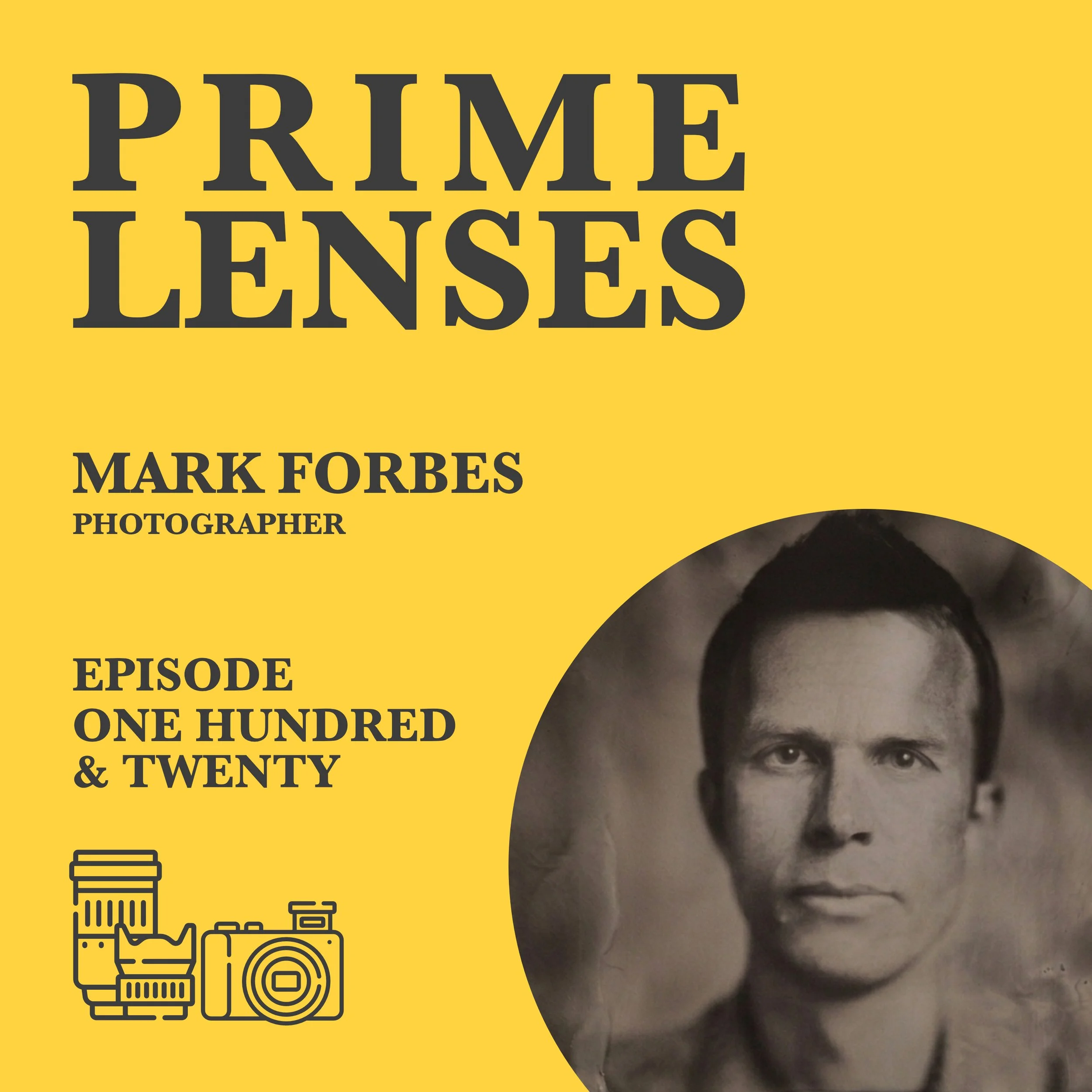


Mark Forbes is a photographer with European roots now based in Australia. I came across his work quite by accident when looking at cool medium format photos and decided to get in touch and see if he’d like to be on the show. Thankfully for me he said yes and you’ll get to hear about his process, his book making adventures and the value that a bit of distance from the moment of capture can make to your relationship to what you’re making. It’s classic Prime Lenses, here’s my chat with Mark.
Sign up to the Prime Lenses newsletter for a mid-week treat.
Support the show on Patreon.
Episode Transcript:
Iain:
Hello, welcome to Prime Lenses. I'm Iain. This week, my guest is Mark Forbes. Mark is a photographer with European roots, but now based in Australia. I came across his work quite by accident when I was looking at cool medium format photos online and decided to get in touch to see if he'd like to be on the show. Thankfully for me and you, he said yes, and you'll get to hear about his process, his adventures in bookmaking, and the value that he feels a bit of distance from the moment of capture can make to your relationship with what you're making. It's classic prime lenses. Here's my chat with Mark. You're a bit of a triple threat on the photographic front in that I think your conceptual kind of stuff like the dance stuff that you've done or the things that you've photographed of kind of evidence of people in in sort of locations is really beautiful but your street work's really good as well and your portraitures so if we can start with a kind of what attracted you to photography in the first place I guess and first puts a camera in your hand and then we'll kind of use that as a
Mark Forbes:
jumping off point to lenses and things yeah thanks for having me on the show I'm looking forward to um so I think the first thing that really attracted me to photography was um just the desire to literally capture something that was happening from a documentary memory point of view um and yeah it was it was really um when I was at school um in Holland and I was leaving Holland to come to Australia at that time. And I was in year nine, so sort of high school, medium high school. And back then, yeah, there was, we weren't allowed to take cameras to school. I mean, it's probably quite similar today. And yeah, it was my last day because I was meeting overseas. So I snuck in a little film point and shoot and took some photos of my friends. And that was my first desire to want to actively take photos for myself was to capture my friends. and a memory that was critically important to me. So that was my first real sort of desire, drive.
Iain:
And do you still have those photos?
Mark Forbes:
I'm sure there's probably somewhere. I wouldn't have the negatives, but there's probably prints somewhere in the house, in some box, in some cupboard. Yes.
Iain:
I found some from when I was in sixth form and similar sort of motivation, I guess. We were coming to the end of school and we were all going off out into the world and doing different things. So I must have been like 17. 18 and the the harsh flash photography like before American Apparel made it cool
Mark Forbes:
I've never been much of a flash user I mean it might have been on auto mode but I suspect from my memory of them the ones outside I don't think had flash but there would have been some taking the corridor that would have been pretty dim and dingy so the auto flash probably kicked
Iain:
in you're probably right and so from there is it kind of education further schooling that kind of attract you to art and media and things like that like you mentioned your parents up top you know
Mark Forbes:
were they supportive of a creative lifestyle were you around art a lot growing up um not so much no um probably yeah more technical education um I think art sort of came in my mid sort of 20s I suppose in terms of just a path that I wanted to um investigate so that was probably just more self-learning and self-motivation to want to create things yeah yeah that's interesting you
Iain:
mentioned like a bit of technical because I have this kind of potted theory that I like in in the podcast which is that traditionally we put creative and kind of engineering type things in different boxes like there's the sort of art and design over here and there's maths and science and engineering kind of over on the other side and I think actually they're all part of the same thing did you have then a technical education was it maths and engineering initially that attracted you yeah
Mark Forbes:
yeah yeah yeah yeah so I have engineering qualification um and I think that looking at the way that I approach compositions um not only technically from that point of view but also visually from an architectural perspective I think that also and I've shot architectural work as well for architects um and I think that when I'm shooting that work I'm also able to take ways of approaching scenes and ways of framing into shooting separate work the more I guess creative work that I enjoy shooting um so I think it all genuinely is a whole sort of melting pot of of how you approach things and I think yeah people were able to take different skills into the ways that that they're able to frame up. And also, I guess, logistically, in terms of if you're doing a portrait shoot and if you need to arrange things. So aside from actually pushing the button, there's various cross-pollinations that you can take from other aspects of your life.
Iain:
Yeah, when you're doing some of that, I noticed with your dance photography, especially, that there's a lot of shots through doorways and through buildings. And there is a very much an architectural and cinematic element to that. Like I thought, you know, evoke things like The Shining, you know, like corridors and people who like just like Stanley Kubrick, like to shoot down things. Are you arriving with that very much in mind with a lot of those kinds of shots or is some of it emerging with the person that you're?
Mark Forbes:
No, no, that's a really good question. So on what you're speaking about there specifically, that series of works with the ballerina. Yeah, I think that's what you're talking about. that was I was actually commissioned to shoot a historic building um that had been uh was coming back to a council in Australia's possession um and had been away from them for 15 years and alone to someone else or another school a school um and then they were getting it back and um so they wanted me to go in and document the building so the brief literally was we want you to go in and document in the building and make three pieces out of it that they were going to then use on these really big like three meter by three meter ish light boxes so that was like the presentation to show that people in the local area this possession was I guess back in um you know local council's hands um so my brief was just open like go and shoot this old amazing rundown building which was like the best brief you could get um and that was why the curator actually engaged me for that um but as I was shooting I was thinking what am I going to do I wanted to do something more than purely architectural shots of the the building I wanted to uh I wanted to work with the ballerina and the ballerina was um yeah it's just uh something that I want to photograph since I was really small I just had this idea of the ballerina for various reasons and it was like um I really appreciate the way that they can that they have to work exceptionally hard and you don't see any of that all you see is the on stage but behind that on stage that five percent there's 95 percent of this exceptional effort and graft that you never get to witness and I just I just really respected that um apart from the fact that you know it's aesthetically beautiful from a choreography and from a poise and from a um I guess a portraiture perspective it was also everything else that was embodied inside that that I wanted to bring into the house so once I had the idea of working with a ballerina the way that I approached the house is I went there on my own and walked around it and figured out what times the lights would be in certain parts of the room during the day um so that I sort of you know was pre-prepared and then worked in there on a different day with with the ballerina and we sort of float around the house and moved around the house to follow the
Iain:
light and where we where I was anticipating would sort of be so it's very much the 95 percent of what you're doing as well versus the five percent push the button right are you a collaborator with that person in constructing those portraits or have you because you've been around are you looking at it and going yeah I want that shot with you at the end yeah yeah so it was it was definitely a bit of
Mark Forbes:
both um so I was I definitely skyped out the areas that I wanted to photograph in the house and the strong the key rooms and the features that I wanted to utilize the light the arches the whichever part of the day that the light was flowing around um and so I was quite um I had those preconceived ideas of how I wanted to frame it but in terms of when we got there in terms of how she was working on a a pose or uh you know a piece of dance that I was trying to capture that was obviously um very interactive with her and seeing you know how she interpreted the space so So it was really lovely to, I'm really, I guess, as you can see from my work that I'm really, I put a lot of weight on a given scene and I guess a view of a given room. So I had those, I brought those ideas and then she came along with the poses and whatever else we worked together. So yeah, that was a really collaborative effort. And I guess that's why you can see that, you know, the doorways and whatever and the specific light feature quite heavily because that's coming from my point of view and then I was working here into the scene in terms of where to put her and then
Iain:
we worked on the poses yeah it's really great work and it speaks I think the reason it fits so nicely in your work and and in contrast to the street stuff a little but there's an inevitability I think to the scenes in your pictures somehow that it's it just sort of arrives fully formed in a really as a viewer it's really satisfying because even if you're just photographing I say just but if it's even if it's things that you appear to have found like evidence of people without the people and things like that your compositions seem very carefully constructed in a way that like seems straightforward and I'm assuming is not do you like to spend like a bit like being in the building
Mark Forbes:
do you like to spend a lot of time in the place before you even do anything I'm uh like, hmm, not, I do like to spend a lot of time in the place, but not from the point of view of trying to, more from the point of view that I like to give myself time to find the right image, but often more often than not. And going back to what you said just before, I'm highly specific and considered in terms of the final frame. Like I spend time to get it right. And I'm OCD about lines and everything else and, you know, height of camera and camera angle and those sort of things and how those things make an impact to the viewer. But going back to what you were saying just then, more often than not, I find that the first gut feeling that I have in terms of a framing and a composition from a camera angle perspective of a scene is often the shot that I come back to when I go, that's the one that's the most interesting. I might walk around a scene and go and evaluate it, but eight times out of 10, it's more that gut feeling drives me towards the first positioning. And I'm like, okay, that's how I want to photograph it. If it's super interesting, I might take a number of different angles. Or if it's an amazing building, I want to spend hours in there and go and investigate everything else. But it's not like I spend a lot of time initially trying to find that. It's more I find that the scene itself and the composition is a gut feeling. It grabs me and that's the way that I want to interpret it.
Iain:
And is a lot of your work personal or commissioned? Because I would assume that, I mean, obviously architectural work is commissioned. And I've been in building projects where you brought a photographer in to work with architects afterwards. And that's really exciting because you get access to a space that no one's actually used yet in a lot of cases. Or, you know, it's just you've got to do it while it's clean. before people come in and start walking mud in or whatever. But for a lot of your stuff that seems very found, is that how you want it to feel and actually it isn't quite as found as that or are you on the lookout for places?
Mark Forbes:
I'd say probably 95% of what you can see, maybe even more, is genuinely found. so I spend a lot of time I do do I definitely if I'm going somewhere specifically if I'm going overseas I will do enough groundwork research that I'm not going to be that I'm getting the best out of my time when I'm there but it's still very much only the the surface scratching the surface level of what you actually find when you get there because you can have no idea so it's making sure you've done enough groundwork if it's something substantial to make the best use of your time but again once you're there it's genuinely just hitting the ground around walking around you know opening doors and heading down alleyways and and you know trying to find your way into buildings and using your worst portuguese that you can to ask a question if they'll let you open a door like it's it's just genuinely being persistent and um yeah and a process of um yeah
Iain:
in being investigative and intuitive I suppose yeah I've definitely struggled with that kind of being a little bit cheeky for want of a better word of going can I just do you know you kind of don't want to or me me personally at least worry about being a burden I've tried to like let go of that because I'm doing this for a living for one thing now like so you need to kind of tease and poke at stuff otherwise it's not an interesting conversation but it's the same photographically like poking at doors but did that come quite naturally to you that you were just like I want
Mark Forbes:
want to see what's behind there or you know yeah I I think yeah I think inquisitive and also I think it it it perpetuates itself because you it's like um you have to sort of push yourself a little bit further each time to get something interesting and I think once you find those interesting scenes it's addictive it's genuinely addictive um and therefore you're like oh I just really feel like there's an amazing scene around here and you feel like you're, you've missed out on your day if you haven't got to see what's there. So it's just, it becomes a drive. And, and as well, I think that a big part of shooting various film cameras is that that becomes an opening to talk to someone because they're like, Oh, he's got a camera. I can see it's for 60 years old. He's not, he's not, he's not about to upload it to some terrorist surveillance website. It's like, it's genuinely an interest. And so I think that becomes a diffuser and a icebreaker in conversations where you're asking people. And like I've been on the other side of the world and can't speak any of the local language, but I pull out the camera, I put it on the desk and I write a few questions in Google translate. And then, you know, nine times out of 10 people, it's super happy to nod and smile and see what you've done. So it becomes an aid in assisting you.
Iain:
Yeah, you have to kind of give yourself the space, don't you? I was in Menorca recently for a photo festival and they had an exhibition around the place and there was a woman there who only spoke Spanish and we just went around this exhibition and she just spoke to me in Spanish for about 10 minutes and I kind of understood bits of it and it was fine, but it was just this nice sharing of things. She was interested to tell me about the traditions that have been photographed and why they were important And, you know, I recorded it and later on could kind of kind of piece it together and went back. But it's yeah, I think we need to give ourselves the space for that. Like there's this idea that like the street photographer is some crazy fast moving Joe Myowitz and that you don't have to be.
Mark Forbes:
No. I mean, if that's your thing, then absolutely. But there's multiple different ways that you can approach straight photography or any kind of photography.
Iain:
here. I liked the set on your website. You've got the photos in Italy. And then I could see the DNA of that, I think, in the one when you photographed in Sydney in 2018. We were in Sydney last year. And so I recognized the beach and the views, like we were there, so I could see all of that stuff. That one felt like you had more of maybe an objective in 2018 than the Italian stuff felt more like you were there. You were in Italy. So of course you were going to photograph it. And around and capture it but I wonder if there's any similarity in the way that you because you're not you don't live in Sydney so whether you could approach that like a tourist almost or like with
Mark Forbes:
with external eyes yeah yes absolutely it's a very good point I think um I live in Melbourne and I think that um I find having said that I do genuinely still try to head out and find interesting scenes in my local in Melbourne but I think it's much easier um to do it when you're not in your local neighborhood because everything is new and fresh and interesting um the I guess the flip side of that is that if you're in your local neighborhood you know where things are and you've got a little bit better um I guess uh your local understanding to help you get around town um but yeah I think everything becomes an adventure when you're not in your local area so I think yeah the photographing of Sydney is from essentially a tourist size from my point of view so I can see why it would be somewhat similar similar to the Italian worker who do you kind of
Iain:
draw inspiration from like the photograph that's behind you is is sort of like a building with with fence and stuff at like either dawn or sunset or lower light feels a very Joel Meyerowitz-y peak um you know the stuff that he did when he went to medium format and stuff but I just wondered who actually inspires you and kind of has fed you photographically yes the photograph behind me
Mark Forbes:
is actually a Todd Harto photograph um so that's from his house hunting book um which I'm sure some of your listeners would um would like um yeah yeah um but in terms of um I didn't actually start really looking heavily at other photographers work until probably sort of five or six years ago um I sort of just operated in my own little bubble but but um more recently I think there's a few photographers that I really like and I've now got a really nice collection of some books um that's my thing now is just spending money on photo books which I think is lovely um but in terms of the photographers on the shelf uh William Eggleston um Heidi Cho um Gregory Crewdson um who else oh Lynne Cohen is a lovely um canadian photographer um you've got some I've got a few books from painters um Stephen Stephen Shore um Fred Herzog Trent Parke um yeah so this there's a few I guess um more classic street photographers I mean Trent Parke's early work is very much in that vein um but then you've also got like the classic americana of you know William Eggleston and crudson is um obviously american um and they tend to be there's obviously portraiture in there from those two but some of the other works I like from Stephen Shore and whatnot I mean they're more environmental and maybe some some of them are less person-based so I think there's yeah various um different kinds of work that I like the photo book habit I think
Iain:
comes for us all I've since starting to do this especially I'm getting because you you end up buying I get attacked on both sides because I end up buying the books of people who have on because they come back on to talk about their book. And so then they go, oh, I've got to get your book. And then also there's, like you said, there's the classics. The really good one I picked up recently was the one of the behind-the-scenes photography of the Dune films. Oh. That's, yeah, that's real. There's some good stuff in there. It's also a beautifully bound thing.
Mark Forbes:
I think it does make it, like aside from the work, obviously giving the book is such a tangible thing, I think, yeah, Having something that is well put together, well thought out, just adds to the experience of the photography, which is what the whole purpose of the book's about, I guess, is presenting it in a way that is interesting, but also respects the work, yeah.
Iain:
So when you're photographing, you mentioned earlier, like when you're photographing film especially, that's a good kind of jumping off point with people. And that's probably a good way into some lenses and a little bit of gear. What do you, like, I found you through medium format work. It was some of your work I saw online, which really I thought was like, wow, love that. But what do you shoot? Are you all medium format all the time? I think you've used an M6 in the past. Yep. What are your kind of daily drivers?
Mark Forbes:
Yes. So I have shot various different cameras and different formats from, yeah, like 35mm panoramics. I was using an X-Pan for a very short period of time. But I find that over time, the two sort of, I guess, aspect ratios that I really appreciate shooting is medium format on the square. So I shoot on a Rolleiflex and I shoot, that's the workhorse, that shoots probably 90%, maybe 95%. And then I also shoot a 6x7 and a Mamiya 7. Yeah, and I recently picked up a medium format digital. So, but most of the work, if it's sort of, I guess, personal work that we're talking about on my website and whatnot, that's, yeah, it was shot on the, sorry, the Rolleiflex or the Mamiya 7. I do also have a Hasselblad, but I just found that to be a bit cumbersome to use. I just found that the form factor and the usability of the Rolleiflex works for me. I know some people can't do it, but some people, and some people much prefer a Hasse, but yeah, I just found it heavier, more cumbersome to use, and it just didn't work for me. But it's fun. I've taken some nice photos with it, but I just, from a usability point of view, the Rolleiflex is much nicer. And I guess the difference between the Rolleiflex versus the Mamiya 7 is, you know, excuse me, inherently where you're framing at. Obviously, the Rolleiflex, you're framing at waist level versus the Mamiya 7, you're at eye level. so that gives you a different compositional element to deal with and then some scenes work better in one than the other but I just tend to find that in terms of the form factor for the rectangle sorry the square and the aspect ratio just makes sense for my eye and how I want to compose and also the composing from waist level I also just seem to find it makes more interesting compositions for me.
Iain:
I've definitely found stuff like that. The angle, I used to shoot a lot with a Ricoh GR3, which was a very, very small camera and very quiet. And because you were shooting on a screen with autofocus, you could kind of move it around and sort of, you know. And then when I switched to using the M, I noticed that my photo started to look the same all the time because I wasn't crouching, you know, old man, wasn't crouching down as much. It wasn't like moving, you know, with a tiny light camera, you just sort of throw it around and you don't even think about it. And it's like, I love using the M, but it is a shortcoming of that very manual. You've really got to be looking through the viewfinder to kind of get any sense of composing anything useful. I mean, unless you're a ninja like Alan Schaller or someone like that, but I'm not. Maybe it's time to get a cue like Jesse Marlow. Yeah, yeah, yeah.
Mark Forbes:
I do have, I mean, they're the main cameras. I do have a little Ricoh GRX, is it? Yeah, the Ricoh. That's a lovely camera. Yeah, it's like a time. takes incredible photos um and but obviously you need to look on the back of it because there's no viewfinder and I've I if if that's all I've got or I need a wider lens and I've only got the other two and it works great but I just find that very disconcerting um in terms of how I compose so yeah it's just it's more of an emergency camera but the best camera is the one you've got on you
Iain:
so or the one that fits the scene that you want so and it's small I do like the idea of an emergency camera you know people talk about everyday carry and this is your emergency carry it's like this
Mark Forbes:
the glove box camera that's right yeah exactly and if it's if it takes up you know a tiny little bit of room in a bag and if you've run out of film it saves the day with a photo then great yeah
Iain:
jasper ford who was on the show once talked about saving a he shoots exclusively film uh because he says digital images look plastic to him like they just don't look right and um he was talking about like saving one for the yeti so when you're on the way back to the car you leave one frame on the roll
Mark Forbes:
just in case yeah I I do appreciate that because more often than not if I'm only out with my film cameras and I've and I'm having a great time and I've only you know I've got so many rolls and I've been through today you will guarantee after you shot that last frame there will be the scene that you want to shoot so yeah I'm very conscious when I get down to my last frames and my last roll of do I need to take this photo or shall I just wait?
Iain:
Just in case. But then you get home and then you've got one you need to finish. You feel like psychologically, you end up with loads of mirror selfies or pictures of a cat.
Mark Forbes:
I don't have a cat and I don't take selfies of myself, but I know something. Oh, there you go. Oh, sorry. I do. I'm taking very occasionally, but yeah, I wouldn't be nice to have a cat to take a picture of. That's for sure.
Iain:
This is why I have kids. For better or worse, they've become the unwitting subjects. And the preteen is starting to get a bit bored of my taking photos of him. Sure. Understandably. The little one is a model in the making. He is very happy to be in front of the camera at all times. But I've got to be careful and get that balance right. So when you were mentioning shooting a bunch of different, there's a bunch of different focal lengths there. But I find it interesting that you've picked the 40mm GR. And from the pictures of yours I've seen, there seems to be a kind of 35, 40, 50-ish natural field of view equivalency. Is that what you're going for with your images?
Mark Forbes:
I guess it – yes. I mean, yes, it is. And it took me a while to get to that point. I think when I was shooting 35mm initially, after a while I settled – And then when I was shooting a more sort of people-based street photography on the M6, I was shooting on a 35mm lens. And that felt nice and it felt perfect for what I was doing. But then as I changed from that to shooting more medium format, it just, I mean, the Rolleiflex has a fixed lens. So you can't do, you get what you get. But it just fits a slightly tighter frame from a lens point of view. And then I found when I was shooting the Mamiya 7, the same sort of 80mm lens, which falls into about a 40mm, so very similar. Yeah, that seems to be my favourite sort of length to work in. So I think, yeah, and then when I decided to get a Ricoh, yeah, that was why I went for the X, was I was like that seemed to be the sort of focal length that made sense from how I want to represent things and how I see.
Iain:
A friend of mine talks about his photos wanting to make them so that you could almost step into them. And I think there's something about that kind of focal length that does make it, you can sort of see it immediately. It's not ultra wide, like a 21 or like a 28 where there's a bit of distortion or something like that. You can just walk into it. Yeah, yeah. Is that part of what you're trying to convey?
Mark Forbes:
I think maybe subconsciously, it's definitely, given it's supposed to be around about the focal length of your eye, I suppose that makes sense. I think with wide angle lenses, and I did used to shoot a little bit of that. Yeah, I think from a viewer's point of view, you feel disconnected because it's not the natural way that you would see. But then conversely, if you think about a telephoto lens, it gives you a lot of compression and therefore the scene doesn't feel natural either. So it doesn't feel like you can step in. So I think, yeah, what you've said there makes sense. And I've had people talk about some of my photos saying that they genuinely feel like they're standing in the photo, on the edge of the photo. And I think if you can do that, It just assists people in connecting with what you're trying to depict to them. So I think it's a nice way to present things.
Iain:
So you're going out for a shoot tomorrow. You're picking up the camera bag. Maybe the emergency geo is in there. I love that. That's going to stick around. But you're picking up the rollie typically, and then Hasey sounds like it stays at home. Is the digital medium format coming as well? I'm assuming it's a Fujifilm.
Mark Forbes:
It was a Fujifilm, but I swapped it over. I actually picked up Hasselblad recently, X2D. Yeah. And, yeah, so I've more recently been bringing that with me. And part of the reason for that is I was on a trip a few years ago in Korea and Japan, and I had with me, I actually had the Fuji at that time, the main format Fuji, and I had that with me at the time, And I wasn't sort of bringing it with me for anything specific. It was like, okay, well, I'll bring it with me. And I ended up breaking both my Rolleiflex and my Mimini 7 on the trip. So that actually legitimately became my main camera after that. And if I'd been away for three weeks and didn't have a camera, and I was shooting stuff that I needed to shoot, like I had a project that I was shooting. So I think, yeah, that sort of opened my eyes to, you really need to have plan B when you're shooting things. So, you know, when I've shot, like, you know, if I'm shooting specific paid work, then, you know, I would always have a digital camera with me and I'd have a backup and whatnot. But I think, you know, this was on a personal project where I was shooting some work and I was like, okay, now I really need to start traveling properly with a suitable backup.
Iain:
I borrowed a Fujifilm GFX medium format recently. It was one of the integrated lens, the 100 RF. So it's a 28 kind of equivalent field of view. which is pretty wide, but it was nice. It was fun to play with. You can get kind of lost in the texture and the detail of those bigger files. And, you know, I have shot a little bit of medium format film and it's the same sort of thing. You spend a lot of time looking. It's like, look at the knitting. It just looks amazing. Yeah, yeah.
Mark Forbes:
I mean, yes. Having shot the medium format digital, Like your ability to zoom in and see details that you shouldn't be able to is actually ridiculous. But having said that, I do, there is something tangible about, I've shot the same scene with both, you know, film and digital. And more often than not, I just enjoy the rendering of the digital, sorry, the film file, the colours straight off the bat. the intangible feeling of the image, which sounds a lot like a lot of waffle, but it's, for me, it genuinely is there. So, yeah, I mean, I think, and you can obviously zoom in and do whatever pixel paint with film scan files, but the whole, one of the reasons why I actually went to shooting medium format in the first place is because I really enjoy printing big. one meter, you know, 1.2 meters by that sort of ratio. Um, and that sort of led me to, um, I guess, try out, um, amongst other reasons, the, the medium format cameras. And, and, um, so that that's part of the reason why I want to use those cameras is so that I can print the images big, because I think, um, there's a whole level of gravity that is different when you view an image at scale versus when you view an image you know six by four or on someone's screen like print shows things in a whole nother depth so I mean that's just um yeah part of my whole process is on certain images knowing that I want to eventually print it that big I think you're
Iain:
absolutely right like the printing stuff I I've said it before on the show but like that's when I notice what I got wrong in a way that I don't quite notice it on the screen I don't know whether or I just don't spend enough time looking at it, or high pixel resolution screens, kind of phone screens make everything look incredible. You know, this is why, this is the Digicam thing, if like people are running around shooting things on old, you know, 10-year-old, 20-year-old Canon digital cameras, and you go, oh, that looks kind of okay. And then I've got one or something, or a friend, and I'll look at the pictures on a screen, and I'll go, these are awful. Well, this is just like, we have definitely made progress. But I don't know, I guess people want fewer choices, which is sort of what you're saying about film as well, right? It's making some decisions like dynamic range and things are sort of taken out of your hands.
Mark Forbes:
Yeah, yeah, absolutely. Yeah, I mean, I think, I mean, I'm not going to try and sit here and sell film, but I think there's multiple reasons why I use it. And one of them is that it forces a set of limitations on you as a photographer. I mean, you cannot change the ISO. Yes, you can push it or pull it, but you make that decision before you shoot your first shot of the roll Or, you know, you change your mind after the end of the roll and all of them get processed in the same way. So you set with your ISO. You're more often than not on some of the cameras, like the Rolleiflex, or if you've only got one lens in the linear, for example, then you're set with a focal length. So that's taken out of the equation. So then what you've got to work with is your aperture, your shutter speed, and your composition. So it makes all of these limitations actually force you to be slightly more, I find creative, And you push yourself to take shots that you otherwise might not have got because you dial up your ISO. And I remember this sort of came home to me when I was shooting the M6 in Japan, like back in like 10 years ago in Tokyo. And it was like nighttime and I've loaded up some, some Tri-X, I think it was. And I was shooting like, you know, one second, two second exposures of, you know, passing taxis and whatever else. Whereas if I'd have had my digital camera with me, I would have dialed it up to 6,400 and got such a different shot. So it genuinely, the limitations force you to work in a different way and get images that you otherwise wouldn't have got. So that part of its limitations actually engages you creatively and it makes it more of a challenge, which is part of the fun of heading out as a photographer, I think, yeah.
Iain:
Yeah, and I think limitations and restrictions, I think, are really good. And as you were saying there, I was thinking, you know, when you've got aperture, shutter speed and composition, that's still three things. That's still quite a lot of things to be thinking about and focusing on. If you add in everything else, I think it's easy to get decision paralysis. It's like having too many cameras or too many lenses.
Mark Forbes:
Without a doubt. And I've been in that situation myself that, you know, I might have gone on a trip and I might take like four cameras or whatever. And you're like, oh, I want to take this camera out of the bag. I want to take that. and the photo is disappearing and, and you're standing there in paralysis over 10 minutes about what focal length you want. But if you go out with one camera in one bag, which I have done a lot of times and one focal length, and you're forced to move your feet to get into the composition, not only do you sort of, I find it more enjoyable, but you're, you seem to be able to engage more in the moment of what you're doing because you're, you're not in decision paralysis. So it enables you to be more present in what you're doing. So I think creatively, it's better to have more limitations than not.
Iain:
When you're then taking those images and you mentioned you were printing and processing and stuff, I know there's a lot of photographers in Melbourne, so I'm assuming there's a fairly good supporting apparatus around photography in Melbourne that you can go to some good places for printing and you've been doing this. Have you got kind of like a few trusted places that you can go to now?
Mark Forbes:
Yeah, yeah. I mean, if you're shooting from a film point of view, in terms of like what do we need to support us? Obviously, you know, if you don't want to do your own deving and scanning, whatever, I mean, some people do, that's great. I don't. So, you know, you need a lab to do your deving. You need someone to do scanning for you. There's plenty of choice in Melbourne. There's a pretty good creative community here. And then from a printing point of view, yes, I think there's sort of three or four printers that I have worked with previously. I know their output. I'm happy with it. But, yeah, so it's pretty good to be able to, yeah, pretty easy to be able to get what you need, I think. Once you've hooked in and find your people and do your tests with them, I think, yeah, it's a pretty good place, yeah.
Iain:
And were they the same people you worked with on the book? Because you produced a book just over a year ago, is that right?
Mark Forbes:
It was about two and a half years ago. Oh, two. No, so the book was printed in Berlin, actually. So, and I guess printing point of view with prints, very different to, you know, four-color CMYK for a book. So, no, very, very distinctly different.
Iain:
Yeah. And were you still back and forth with, did you get to go out and see it printed or did they send you like print proofs?
Mark Forbes:
No, they did some proofs. DHL or FedExed them out to me. And then I reviewed them and I signed off on them and then I posted them back. um and then they did the print run and they yeah they videoed it for me and sent me a little um little uh yeah video of it I would have loved to have been there but um just and just to head across the world for a one-day print job would is a little bit much um but no it was it was um yeah I guess distant distance has challenges but it's um anything can be worked around so yeah but
Iain:
must be a really exciting process that though because you kind of the culmination of a bunch of things it feels like books you know pulling a bunch of work together like that was that when you finally got it in your hand what was that like yeah it was awesome it was I guess there was
Mark Forbes:
nervousness from proofs might be different to print and you know it has it all come out right so there was definitely significant nervousness um but yeah when I opened it and flicked through it it calmed my nerves that was great um but the whole yeah the whole process was a blast like It was really enjoyable. You know, yeah, in the book, it's six, five, six years of photos. So, you know, the process of culling hard to figure out what you really wanted in there, sequencing, making it, trying to feel that the book was cohesive thematically, making sure that the, I guess, the editing process of each image felt cohesive from a from a colors point of view from a light point of view in terms of how did it all sit together as a story like yeah it felt like a significant achievement to pull it all together
Iain:
and yeah the whole process was fun it was it was really enjoyable so for projects like that and your commercial work like I like to ask people who are sort of doing this for reals because a lot I joke I'm a tourist right so I just get to enjoy photography and then talk to photographers but in terms of a lot of a lot of us listening are hobbyist enthusiasts for you what's the split of time between kind of commercial and projects that you want to get off the ground that might become commercial they might become books might come other things are you like a one for them one for me kind of person or do you always have multiple plates on the go yeah um yeah I have multiple um I guess
Mark Forbes:
avenues from a photo point of view um the books and the prints and whatnot I do enjoy spending a bit of time on that um but then yeah there's you know I guess licensing of images um commissions and then you know working with client work is as all important having having said all of that I should say that I don't work full-time as a photographer so I do work part-time as a photographer but another part-time um role outside that and part of the reason that I decided to do that was that if I was working full-time as a photographer I knew that I would be I guess constantly having to shoot things that I was being directed by people and I do do that but I didn't want that to be the majority of my time when I had a camera in my hand so I tended I tend to want to focus on personal projects art projects the books um the prints shooting things for me and then licensing them after the fact um and the the best way that I could do that was by continuing to work part-time outside of photography and that would enable me to focus my time when I am doing photography on 80 of the things that I wanted to do and 20 of the things that other people wanted me to do so it's a bit of a hybrid setup yeah I like that there's a thing casey neistat says about
Iain:
how he worked to make movies didn't make movies to work and he still tries to kind of maintain that mindset so that he's focused on making the things that he wants to make yeah absolutely because then
Mark Forbes:
you can't buy him right yeah that's right yeah I mean if and I think as well that um I do know other full-time photographers and you they can get I guess stuck in a rut with um just constantly shooting work that's directed and not actually shooting any of the things that they want to shoot because it is so all-encompassing to do that sometimes um which I think yeah it would be frustrating I think if there's other things that you want to do if you didn't have projects that you want to do other than directed work great but I think there's probably lots of photographers
Iain:
that do want to shoot things that they want to shoot so yeah yeah I think inevitably you're going to have ideas and you're going to it probably makes it easier to do the commercial thing if it's not going the way and you're not going to win that argument with an art director makes it easier to know that you can go and do anything that you want to do later yeah you've got an avenue for that I sometimes think about that in terms of this like it's quite nice that I get I I'm just in charge of it and I can just talk to people I went to wetzler last year to Leica and spoke to the chairman of like and Andreas Kaufman, I was rushing around because I'm a team of one and I was setting stuff up on my own. And I said, you know, sorry, this is the downside of being a team of one. And he was like, well, there's also an upside. And I was like, okay. That's right. Good point. So for you, kind of what's sort of looming as a project now then? You've got the historical work, you've got a little bit of architecture, you've got a little bit of kind of commercially stuff. Are you kind of cooking the next book or are you just letting the winds take you?
Mark Forbes:
Yeah, I have actually most recently been starting to think about the next book and there's been some new work that I've been shooting in the past few months that I haven't shared anywhere and just seeing how that integrates with some older work because I guess when it came to the process of making the first book, Like it was, yeah, I had to be clear that I wanted the series of images to feel cohesive and feel like its own unique piece of story, I suppose. And as I was going through the process of culling those images down to the files that were in the book, I had to cull some images that on their own individually might have been strong images but didn't fit with the concept of what I was trying to share. So I've got all these other images that I'm sitting on that, yeah, I still want to find a place somewhere for and as a finished piece of work. So I guess, yeah, there's ongoing threads of series that I've been shooting. And, yeah, I guess that's where I'm sort of at now is I'm feeling like, okay, this feels a bit cohesive. So that's pretty much where I've got to at the moment. Yeah, so from a book point of view, that's probably the main thing at the go.
Iain:
I think we need more distance from our work than we often get. I think that that's because it happens both ways. You either come back from something and go, I got nothing and that was dreadful. Or you go, I'm hot shit. And then you plow ahead with something. And then months later, you're looking at it and going, oh, do you know what? I didn't. And so I think kind of it sounds like you do it right. Like you're giving yourself space. It's almost like you've got the photos and then put them in a drawer.
Mark Forbes:
and then you're collecting yeah I I think there's two aspects of that that in terms of how I think about how I shoot so there's a there's an initial buffer aspect to shooting the film in that you shoot and you don't get it back yeah you can you can take it down you can get it the next day but I don't do that um usually it's two or three or four weeks minimum after I've shot it before I see image for the first time so that you know that disconnects you from the initial day of excitement of oh I feel it's good if you know a few weeks later you've forgotten what you've shot some shots not all of them you can't remember some of the others like was that a good one I can't remember I felt good but I don't know you know so there's a bit of a natural short-term dissociation and I think that is helpful um because I think if you're shooting and looking the same day and you're you're editing straight away I think that can also lose some of the enjoyment for you because delaying reviewing your images for the first point can give you something to look forward to and I think having something to look forward to is helpful as a photographer so I think that that's good but then separately from that yes so I do genuinely have a lot of images that haven't shown to anyone I love keeping them for myself for quite a long period of time in some instances some's not but in some instances yeah I love sitting on it for a year before I share an image type thing and I did find when I was going through the process of collating images for the first book that there were some images that originally I felt were b-roll images and there was a different angle from the same scene but in my mind I hadn't really evaluated the other image I sort of seen it I'm like no this is the better shot but when I went to look through them and I go right what else did I see around that day? What did I find? I actually found that some of the images that I originally thought were lesser than the ones that I'd chosen were actually probably the better and stronger image. So I think giving that time of revisiting stuff a year, two years, three years down the fact and letting it sit and coming at it with fresh eyes and reinterpreting it is, can be
Iain:
extremely powerful. And probably gives you confidence in your process a little bit more as well because you can you've got so much distance you're like you trust yourself I feel like this this needs to immediately process and then immediately post online and then immediately get some likes and then if you don't like it it's just the wrong thing for our collective process
Mark Forbes:
yeah yeah I think yeah the immediacy of it immediacy of it all um can make you feel like you're feeding the machine like you're just I think there's and that's again there's another reason why I enjoy shooting film is that the whole thing slowed down forcibly slowed down but that is a good thing and yeah shooting and sharing and shooting and sharing this whole need to grab attention um yeah I don't think it's creatively great um I think it can you know stifle your creativity so um yeah I think keeping things for a time letting them simmer and sit and you know age a bit um and give you time to reinterpret them and obviously also get into you know reviews of it from other people and what do they think work and other people's opinions is critical too when you're culling and trying to find a series that's cohesive but yeah I think um the whole
Iain:
immediacy aspect of social media is um yeah is not good no I think we're working that out now it's sort of I don't want to overstate it but it's like to some extent this generation's smoking of like we're gonna we're gonna view it really differently in about 10 years even five you know you're reviewing slowly I'm really excited that you've got like images you're just sort of keeping I quite like that like I'm not sure I'm uh strong enough for want of a better word to kind of leave things for a year and not put not show it to anyone like I'd at least have to sort of flash it around but you've got that project on the go presumably as well you've got like little commercial things that will come in and then will like feed inspiration into projects as well like as you go
Mark Forbes:
yeah yeah yeah and and some of that's I guess um yeah architecture bits and pieces some of it's portraiture um yeah and I think um and another way that I do work I mentioned before is licensing so I'm getting I get briefs from the agency that I shoot for um there's a london-based agency that shoot for and briefs come in a couple of times a week for various things that they're looking for and it might be hey have you got photos from venice or have you got photos from new zealand or whatever so um you know it's constantly a process of trawling the archive and sending that over to them to fulfill the briefs and you know seeing which of those images fit for the client and then on the flip side of that I'm also also thinking when I go out to shoot and I haven't to be honest I haven't shot a lot with, you know, models and whatnot, but I can see that there's an opportunity there to work with them to get images that I can see, you know, they're looking for from a client point of view. And then, again, from that, if I'm looking at, you know, heading on a trip, where might I go that might be interesting from their point of view so I can shoot images for them as well as shooting images for me at the same time in parallel, which is fantastic. And so that's something that I do. But I guess the really lovely part of working with them is that they access images on my archive that I genuinely didn't shoot for anyone except for myself. And they are images that people end up using. And that's fantastic when that all works out.
Iain:
That, I think, is a nice note to kind of bring us home. It's like if you trust the process, because you weren't shooting that with any expectation. And so consequently, the work is probably better.
Mark Forbes:
Yeah, I don't know if it's better or not, but it definitely was 100% shot from the heart. And if that can be used in a commercial field when it was genuinely imaged, I initially only shot for myself. Yeah, there's joy there for sure.
Iain:
Oh, joy. End on joy. There we go. Perfect way to bring it home. It's like you planned it, Mark. For people listening who don't know your work then and want to find it, where's the best place for them to find a bit of Mark?
Mark Forbes:
Yeah, so my website is www.markforbes.com.au and you can find me on Instagram at underscore markforbes underscore.
Iain:
Nice. There's something very lovely about having a.com.au. It's a bit like having a.co.uk. Very few countries around the world get to enjoy that kind of double, the double extension on.com. So boring.
Mark Forbes:
Yeah, there probably was someone else with a.com, but yeah. but that but you can't get a doc you can't get a.com.au unless you know you've got an australian business number or something so yeah there you go you're in a club um I need to go and
Iain:
check if primelenses.co.uk is available maybe maybe I should get it just in case yeah do something fun with it well brilliant mark this was lovely thank you so much for doing this I really appreciate
Mark Forbes:
it no worries thanks I really appreciate you having on board now much appreciate
Iain:
well there we go a really big thanks to mark for being on the show and for holding the record I think for being the fastest guest to send me a headshot for a thumbnail in history it arrived almost instantly after we uh stopped recording and we started chatting about it and I said it was one things I needed so huge thank you to mark there's a gold star for you if you enjoyed that episode don't forget that you can like and subscribe to the show wherever you get your podcasts that's apple podcast spotify youtube music amazon music all those lovely places please do feel free to leave us a review give us some stars if you're inclined to do so and hit me up on dms or email let me know what you think the great joy of doing this is talking to all of you out there week to week as we bring these episodes through I can't believe it's 120 now where is the time going. That's insane. You can also support the show directly through Patreon and there is a merch store where you can pick up an umbrella or a mug or a pin badge or something fun like that as well. Well, I think that will just about do the trick, you know. Have an amazing week. Get out there, photograph something and then put it in a shoebox and don't look at it for a year. I think we'd all do well to do what Mark does. Have a great week and we'll see you next time. Bye for now.