
Episode 119 - Justin French
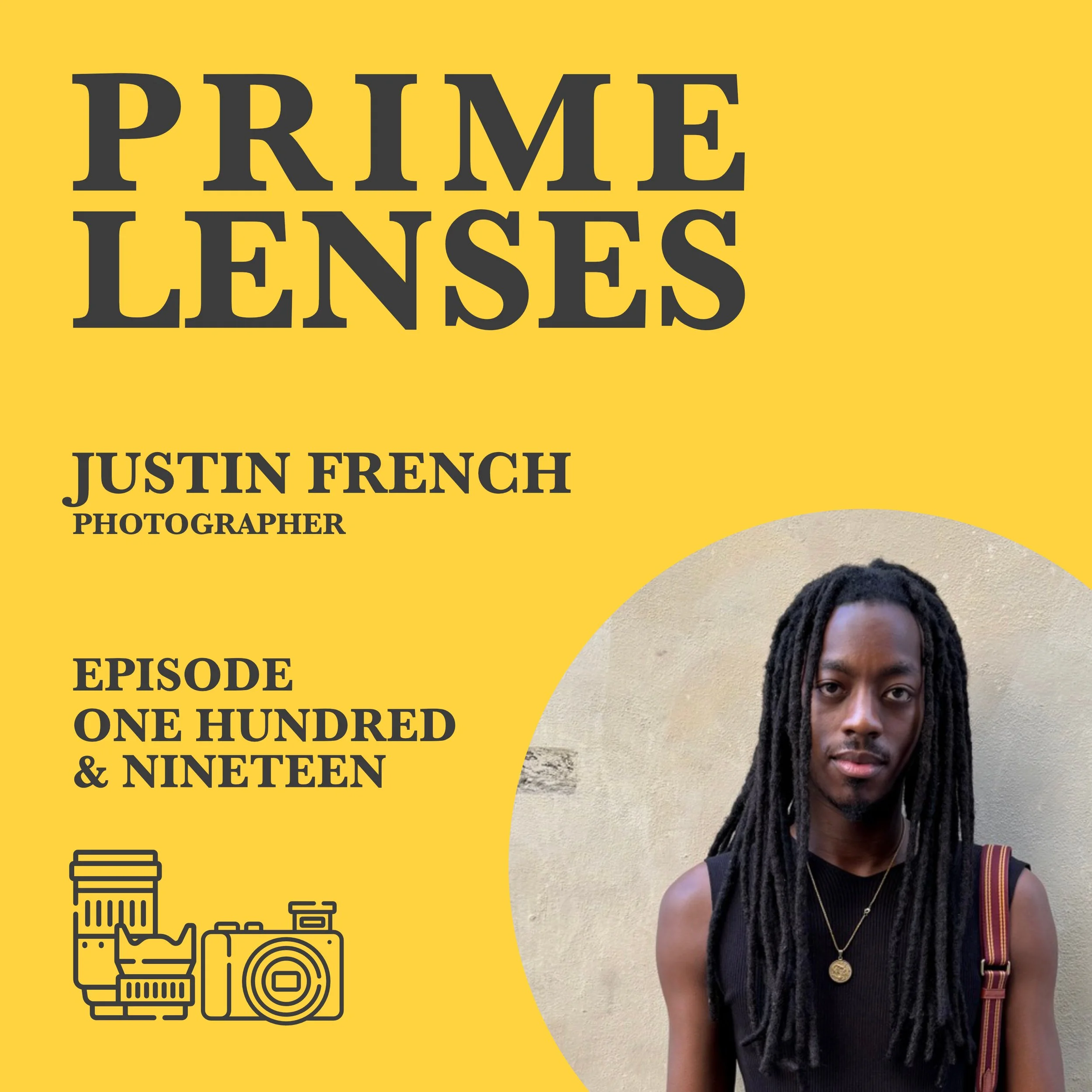


Justin French is a self taught photographer and director who has studied in London and is now based in New York. His work is beautiful, modern and textured with a style that borrows heavily from classical painting and has taken him around the world shooting for the likes of National Geographic, Vogue, Rolling Stone and many more. He’s thoughtful and charming company and I think you’ll enjoy this conversation with Justin.
Sign up to the Prime Lenses newsletter for a mid-week treat.
Support the show on Patreon.
Episode Transcript:
Iain:
it's wonderful to talk to you I came across your work I think originally I saw some of your kind of like portrait fashion work and portrait fashion work and sort of high art like concept work often overlap for me in terms of I love it, but I'm not steeped in that world. My sister used to work in fashion, but it's not like circles I move in. And then when you were doing the stuff with National Geographic, where you seem to travel everywhere around the place, I sort of saw you again. I was like, I need to reach out to this guy. I need to find out what he's up to because he seems to be kind of like blurring distinctions between like documentary and art and fantasy work and things like that. So I guess there's a good place to start, perhaps, where your work seems very obviously aware of other parts of art history. It's very literate. It takes themes, I think, that you see in kind of older paintings, like sort of like in pre-revolutionary and revolutionary America, the way it depicts people of colour and people of different backgrounds is really interesting. It's like you're taking that, reinterpreting it, reclaiming it, perhaps. I was curious to start there as to that seems to come up as a recurring theme in your work. And if that's right, I'd love to hear about where that inspiration comes from, because I think it's what makes your work really stand out.
Justin French:
I think for me, I didn't really have a traditional training in art history, but I was a student of economics and I really did sort of have a lot of friends who were like art history, styling, fashion. I've always been immersed in artistry via my surroundings, but it wasn't necessarily my sort of like direct interest. But I think once I knew I was sort of tasked with image making, I just started to kind of like draw basically on the references of things that I really appreciated. I think as a student, going to like London Metropolitan University and studying international economics. And so being steeped in that sort of economy with a lot of other art students, a lot of their interests were, you know, going to museums, traveling to Paris and going to museums there, going to Italy and like doing all of the tours. So it always spoke to me, a lot of the sort of like paintings and sculptures that we were seeing. I think also from an image making perspective, when I was learning on my own, a lot of the advice that I did receive didn't really come from photographers. It came from painters and sculptors. And so from a portrait perspective, a lot of the sort of like portrait practice that I did was with a friend's clay sculptures. So as he was sculpting, I would navigate the light and he was sort of teaching me how to use light as a tool for sculpting. And so that's kind of, I'm guessing sort of that pathway to some of that was probably just from the sort of like contemporary artisans that I knew helping me understand what should be sort of the focal points for image making.
Iain:
You know, when actors talk about the importance of theater work and stage work, I do feel as a creative person that having that broad access to that broad palette is important. You know, I think I think it kind of makes the work more solid and more real. I think if you if you only make photos, I mean, no one does. Right. But if you only interpret things through that, it's not as simple as just photography, is it?
Justin French:
And it's a thing that I am cognizant of because I think when I'm speaking to anyone who's speaking to me about my work, they do always mention that it's quite statuesque. It's something that I'm not entirely sure is either a compliment or a limitation. And so it's one of those things that it makes me painfully aware that I'm very aware that I started photographing sculptures. And it's like, okay, maybe, I don't know. Sometimes I'm a little bit, I guess, insecure about the idea of the images having that kind of like Spartan austerity where it is quite still and quite. Obviously, a still is a still, but it feels even more statuesque. And so I do think about that quite a bit and wonder if that is a good thing or a bad thing. I'm not sure.
Iain:
Well, I think it stands out. I think that's the thing for me. And I don't think a lot of your images are devoid of motion. I think you've got lots of tug of war kind of work and stuff like that, like fashion work, a lot of it's in motion. So even if you've used a high shutter speed to freeze the motion or even if you've told people to stand still so that you don't have to use as high a shutter speed, whatever the thing is, there is still motion. There's a conflict or there's something happening in the image. When you were growing up, do you grow up in Chicago? Is that right?
Justin French:
Yes. Well, partially Chicago and then Las Vegas. Right.
Iain:
Okay. They couldn't be more different. Because I was going to say, because Chicago is a really creative, like artsy town. So I was wondering if you were exposed to a lot.
Justin French:
I think Chicago was extremely rich in a really rich history. I think what was really great was that it was still that time where education was a bit valued in America. And so we had really... A golden age. It's not just America, mate. Right. It's a global slowdown. But I would say we had really rich literature and English teachers and art teachers. So they would take us to the museums of natural history. And so we would go to the museums quite a bit, the aquariums. And I think those were my favorite days just because it was so funded at the time. So we could really sort of get lost in it. and the professors, the teachers at that time were very dedicated to enriching us and making sure that we had like a very well-rounded sort of understanding of literature, of art history, of Chicago's history, of the history before Chicago was established as like a major metropolis. So it was really nice. I think we had a very strong architecture for the city. I think that many of them were very proud of that. So it was really about, you know, going downtown and like viewing the buildings, viewing all the different museums, viewing like where the battles happened in the past and like how the city had burned down before and sort of the last remaining early Chicago buildings that were still standing. So it was always the best way to describe it. It's not like we were like masters of a specific thing, but they really did make sure that we sort of got a base level understanding of practically everything. And I just remember having so much fun and really enjoying every time we would go like to the heart of the city and just see all the structures, the underground elements, how the river meets the city. It was just always really just inspiring things. And film was always a really major portion of life just because my brother was just really smart, artistic, mathematical musician. And so he would take us to like Piper's Alley where we'd go view like the art house films. So for me, it was sort of like everything around me was sort of like nurturing me in various forms of the arts and mathematics and sciences. And while I didn't fully understand it, it wasn't something that completely just went over my head. It was something that's sort of a delicate imprint. And it helped as I got older in life that I sort of had these small foundational touchstones with different arts and sciences. And so it kind of didn't make it difficult for me to sort of revisit and sort of have an entry point, if that makes sense. Vegas, I would say, was completely different. It was just sort of a almost like cold plunge into the idea of production, finished production. I think when I initially moved there, it was like you see the facade. But then after living there for a little bit of time, I started to realize the sort of behind the scenes lift that went into making what a visitor of Vegas sees. and so it's just a very like eye-opening see behind the scenes kind of experience when people would visit it was really like nice to kind of take them around and show them like the final show but like knowing being able to see and being friends with um different kids whose parents were like part of shows and part of like the flashy Vegas that we see and being able to kind of know what happens behind the scenes which I find very interesting just in terms of like now being a photographer who is part of the production of what people sort of see you know in billboard and magazine and finished products so it's it's really funny how like all life experiences sort of shape and build you into you know the thing that you end up doing um so yeah I'm glad you said
Iain:
that because that's one of the kind of theories of the show that I have which is that a what we call traditionally creative and not you know like engineering and science kind of in one camp and I think they're the same thing I think it's why athletes can move between sports I think it's why I love what you were saying there about like broad um exposure to different things and then you can pick the thing up um and of course we all know Vegas from that documentary Ocean's 11 but the um love that movie but the um the thing about you being broadly exposed to things then is that it feels like there was a there's a sort of table in front of you and things that you can pick up what attracted you to photography because it feels like you could have gone in a bunch of
Justin French:
different directions I did actually I was a student of like international economics so it was really econometrics and like mathematical applications of economics and worked as an analyst I think I just never saw the arts as something that was available to me despite having so much exposure to it all of the women in my family are like seamstresses and designers and our brother was extremely creative um mathematically creative um if that makes sense so the physics major at the time and computer engineering but it also gave him a lot of creativity with music production and sound engineering. He was an amazing drawer, um, sketcher, like just, he was really talented. Um, I just had a lot of things I was okay at. Um, maybe sports. I was good track and field basketball. I ended up studying economics and finished with that worked, um, in marketing for essentially companies like Yahoo and just software as a service companies I just happened to buy a camera out of fun I knew growing up I had a Polaroid which I think my mom sort of in hindsight looks back and says you know you were always very not sneaky but like very like quiet with your polaroids so she was like we always knew we could count on you to get like really good candid images and like she was like you provided the images of the events because I think at the point they just stopped using them um so I was the one who would like take polaroids of everyone and like get really funny shots of people or like really tender shots and so photography I think for me was something that I looked at quite casually um I bought a camera it was like a canonable SL1 um 50mm lens which did not come with it I think it came with a variable lens that I really hated um and so I ended up buying the we called it like the nifty fifty it was like 150 dollars and so I started with that um I was told it was like a very useful lens for someone to learn to sort of get their bearings I understand that now after having used it like it was the lens that required me to do the movement, required me to find my space and find my composition. And then eventually, you know, got a big boy lens, which was like a 24-70mm, which was like part of Canon's like Mark series. I forget exactly what they call it, the L-series, I think at the time. But yeah, it just kind of started out photographing a lot of friends who were musicians and actors and people who sought to be seen publicly, but didn't necessarily have the capital to hire a, what would have been like a professional photographer at the time. And so I kind of filled in that space because they were, you know, we were all in community and I was just practicing. I didn't really anticipate it going anywhere. It was just really fun. And I had access to so many brilliant people. And so I just started practicing doing portraits at the house. I had like a little really large scale window that was like sun facing. And so I would just do portraits in the house and play with light. And I had a friend who taught me about like Rembrandt lighting and all the different types of lighting. So we would try and, you know, emulate things that we saw. I bought like a light kit from Amazon. So for me, it was fun. I had a professional job. So I knew that to some degree I had a career um so this was just a play project that I could do um that helped my friends and like I just got the satisfaction of being able to create things that I visualized it was low stakes I could experiment as much as I wanted and the more I did it the more people would like reach out different musicians like quite early on it did not major projects but like major to me because people were asking me to do like their album covers and like do their submissions for like articles that they would be in and so it gave me like almost immediate exposure in a way um in a very safe way um until I just practiced and then ended up meeting someone who did like beauty marketing and wanted me to start doing like backstage fashion week I think at the time I really had just kind of settled on me doing portraits for friends and not really pursuing it much further. I knew of photography and I respected it. I knew of magazines. I respected it. I think I'd met, I cannot remember the name of the photographer, but he was really active and shooting like Love Magazine at the time, which I thought was so phenomenal. And he just kind of, I spoke to him. It wasn't as though I was like a hopeful photographer, like seeking advice to do what he does, but it was just really nice to meet him. And we just spoke about photography a bit. And he just had some really like kind words about it in general and just like general advice. And so I ended up like doing this backstage fashion week, which I realized how important lighting was because it was so dark. The lighting was terrible. And I was tasked with like shooting the beauty, basically hair and skin while they were like being made up. So I went back there and I'm like next to Vogue and all the other publications who are there shooting. And they've got these massive rigs and setups, early ring lights that were like attached to the camera. Extensive setups. They're getting beautiful imagery. And I'm just there with my SL1 and a 50mm lens, which is great for low light. I didn't realize this until then. And so I realized if I just dialed the settings back, I could still get a clear image. It wouldn't necessarily be nearly as on-camera flash and poppy as theirs, but it would have depth and it would feel artistic. And so that kind of became my way of doing it at the time. And so it was just really getting these like very intimate portraits that sort of felt just a lot more. What would the word be? I don't know. I think in the face of like a lot of like bright flash photography that was all quite sane, mine just felt very bespoke and almost timeless in a way. And so I would do that season to season. Also practicing at home, working with different sculptors. I kind of really got involved in the New York art scene at the time. So a lot of my friends were in school for, you know, painting, sculpting, all sorts of different arts. So it was almost like a, I don't want to say like a cheat sheet, but I was able to kind of like learn a lot from them. I learned a lot from their studies. They would share a lot with me. I had a lot more free time. I think it was like in between jobs at the time. So like I'd had my first job and I was like getting another one. I think I ended up at Burberry at the time doing like digital marketing for the East Coast. So I had a day job, but then at night it was just like I have a secret identity that I have. So I just really, it was a very quiet practice. But I think after like two or three years, I ended up meeting Jimmy Moffatt, who at the time was heading up Red Hook Labs. And he suggested that I apply for their group show. And from there, like, enter the show. And then it just sort of slowly became a more professional thing. I think sort of like month after month, it's like going to meet different magazines and even meeting like agencies. it all happened fairly quickly. In the sense that I was like doing gigs, I ended up doing like a Vogue gig very early on, like a one pager with John David Washington, which I think was the moment I realized like, okay, Justin, like this, what you think is a hobby has actually now become something that you actually really have to consider. You really have to take it seriously. you don't really know studio work. And so you really have to adjust your practice professionally such that you have a team and have a very like viable working studio, you know, positioning. So it really forced me to learn extremely quickly from what was just like free hobby, you know, into, okay, I need to like turn this into a well oil machine. And so I think I did that in a period of like two or three years.
Iain:
That's amazing. What a great, and I like the fact that you landed on something unique, because I think we've landed in magazines, especially back at a flash photography place, which for me is still a little bit too post-American Apparel. Like I don't like it. And about two years ago, the magazine I read a lot called Monocle, and they adopted it when they rebranded. it became the house style for photography that all the photographs all the portraits in the magazine whether they were a more kind of staged portrait a lot of their portraiture is going visiting businesses and photographing the business owners and people that run the place kind of in situ and making people stand up very well finding as I like to call them often civilians right talking to civilians going we're going to take your picture people immediately go very straight they're not used to this like models or people who do it a lot are more much much more used to it and they just sort of you know they have a way of being in front of the camera but a lot of these people you would see small business owners especially in places like Japan where they're just they desperately don't want to offend the photographer so they stand up pencil rod straight and then the photographer has been told to pump out the flash at the highest setting possible so you got really harsh it's shot at like f/16 with really harsh shadows on the wall behind them and I was just looking at it going there's no nuance here there's no whimsy there's no we're not playing with night light we're just pointing the camera at someone and pressing a button and hoping for the best so I love your what sounds like your thing and you were accidentally it sounds like just doing
Justin French:
something different to everyone else I think so and then no for sure I was there was a time when I met what would be like my lighting directors who were looking at the work as we were starting get bigger jobs and you know the only thing I had were my previous references and it was then that I started to learn that you know my images are burned out here you know it's a beautiful structure it's a beautiful concept but you've got to control the lighting more so this is when I started learning about silk screens and scrims and like ways to reduce some of the harsh artifacts that come from natural lighting. And so then I started to really start to hone and craft and meticulously curate the lighting. So I think that's one of the most fun parts is, you know, the shooting is one thing, but sort of the kind of prescriptive lighting beforehand is really a very fun piece. And I just really had gotten myself surrounded around really passionate artisans, gaffers and lighters. I think they're my favorite people. I think what I realize now in photography is what is popular is popular because consumer taste can really, it can be quite volatile. But I've learned to really respect the opinions of those who are steeped in the culture of actually lighting things. So now when I'm shooting, I'm kind of shooting to impress gaffers and lighting directors, which I don't necessarily know if that's the most helpful thing for me publicly and financially or from a work perspective. So I think when I'm shooting, I'm really thinking about classic films like Shanghai Express, the kind of feelings I feel when I see each scene in films like that. That's kind of how I want to feel when I shoot. It's like I want to feel really impressed by the lighting and the structure and the composition. So that's kind of been sort of what I think has really helped me in spite of a lack of professional training or academic training in an art school. So it's been really, you know, how can I be my best self? How can I really make this lighting something that's quite memorable and striking?
Iain:
Do you know the photographer Matthew Bitton?
Justin French:
No, it's a name I feel like I've seen.
Iain:
Yeah, he kind of runs around the world with Dave Chappelle and Lenny Kravitz and people like that. But the reason I mention it is when I spoke to him last year, he's a friend of the show, and he did a book called Paris Blues. And that's because the film Paris Blues is one of his favorite films. It's Sidney Poitier and I think Paul Newman. But that's lit in a really specific way because it's trying to evoke the jazz scene in Paris in like the 30s or something. great movie really worth watching really not what you'd expect from kind of like really big names like that's great movie but it's it's just interesting that you're cine literate and talking about shaping light in that way and it's just like when you're talking about old movies and those you know like you're right to want to impress the gaffers because these are the people who turn up every day and do the work right like you don't want to be you don't want to be austin powers sweeping in with the camera and just sort of taking a picture and then running out again and I think There's a saying, which I've mentioned before too many times on the show already, but that amateurs worry about gear, pros worry about money, and artists worry about light. And I think actually, if you can be a little bit of all three of those things, what you're talking about covers all of those, which is delightful.
Justin French:
Literally, yeah. No, the gaffers, they're the most important. They are the most opinionated, but rightfully so.
Iain:
Well, if you'll get a reputation with people for solving problems, because ultimately the people who are doing these shoots, like, yes, the art director has to choose. Yes, the magazine has to be happy with the person laying out and things like that. But in terms of the people on the day, you won't even get in the door if the people setting the space up for you in the first instance know that you're an arsehole. Like if they're like, oh, just working with him was hard, then you might do that one gig, but you'll never get to go back.
Justin French:
Exactly. And some of them are so good they don't even respond unless it's a recommendation. And so I'm grateful to have reached a point where I've really met some really talented and, you know, amazing ones. Yeah. It took a while, but.
Iain:
It takes a village, whatever you do. Like, it definitely does. Yeah. So is there with your work, you've got kind of, it sounds like you've landed in a place where you've got confidence in your approach and your own vision for something and that it's going to work and you're going to do things. Is there a kind of long-term vision for like the commercial work or the personal work?
Justin French:
Absolutely. I think I've taken enough years. You know, honestly, it's really sad to say, but I've been practicing in public. And so it's really taken me a while to like put the socks on and the boots on. But I think today, as of like last year, I realized it reached the point where I'm like, I think we've tried everything. You know, we've done beauty, we've done portraiture, we've done fashion. I've directed a video myself. I've shot a video myself. I don't particularly love being a DP. I love directing. But I've literally made sure that I've done everything, even from food and landscaping and architecture. I did National Geographic, which was really amazing. It was totally unexpected, I think, in terms of my expectations of things that I would do in my career. It's one of those things that all of us know globally. At some point, we've seen it. At some point, it's the kind of publication none of us hate just because we're all enamored with nature or wonders of the world. And it kind of came as an option. And I just, in my mind, I really didn't think too heavily on it. I knew I wouldn't say no, but I didn't expect it to become as big as it was in terms of the scale of the project. But I think doing that helped me realize that the culmination of all my experiences prepared me to take on that. just because it was a multi-city, multi-country, three to four-month job. And I think it really helped me understand that even commercially, just via the way that I approach work from sort of a research-based project to project, I think commercial was always something I admired just from looking at some of the great art photographers who did infuse their artistry into commerciality. I think just based on the way that I research things and sort of like prescribe lighting, composition, styling. I don't style myself, but I'm pretty active as an art director in terms of building the universe that exists within my shoots. And so commercial, I always felt like would be something I'm not afraid of. We've done jobs like Cash App and Mercedes Benz and Goldman Sachs and some fashion as well. But like, yeah, I think commerciality is something that I'm definitely not afraid of. I think I have the appetite for it. I think I've got enough of a capacity to understand what the goal of commercial work is. understanding how to research the audience and figure out exactly what medium it will be displayed in, in determining sort of what the creative could be. And so I think I have, we're starting to play in that arena. It's just something I've been in art fashion for so long that I think it's just, there's a way that I think from a commercial perspective, there can be a fear of an artist coming in and potentially maybe being too sensitive and not understanding the scope and severity of the project. And it's just a matter of convincing them that you do. And I definitely fully do. So I do want to approach commercial, obviously in a way where it is possible to sort of infuse elements of artistry into it. But yeah, I think it's definitely something that I'd like to pursue a lot further. Obviously directing more film, but also really funneling a lot of time aside from that to re-approach the sort of like museum and gallery space. I think there's some things I would like to say in terms of like furniture design and just new concepts. There's a lot of stuff that I've been sort of thinking about over the years. I think as this happened, and I say that as me being a photographer, it really sort of blew the door open in terms of what I've thought was possible, because I didn't think this was possible at all. So it's really like enriched sort of my desire to express myself in different ways. And so I'm hoping to do quite a bit more in the coming years.
Iain:
So you've got this kind of sounds like a mental compartmentalization of like there's some commercial work that's going to come your way and that's going to lean heavily on the skills that you've acquired now. But it sounds like there's a big growing portfolio of personal things that you'd like to get off the ground that would probably then become something. Do you have a split in your mind right now between like, you know, some people I talk to are like, I only have like 20 percent of my time for personal work if I'm lucky. And some people I talk to are very much it's kind of one for them or one for me.
Justin French:
For me, it's really tricky in the sense that mentally I'm always composing something or thinking of ideas that don't really forget. They're always there. But I do firmly believe that it is very important to live life and enjoy life so that it can help hone some of those ideas and so that you have something substantial to share when you share it. And so in many ways, there were blocks of time where, you know, I was not necessarily actively creating personal work, but sort of infusing some of those personal aesthetics into the commission work that I was getting, which I think helps to account for why some of it is quite powerful or quite unique or quite, you know, I'm sort of infusing myself into finding ways to infuse myself into some of these jobs. But it's all been, for the most part, the purpose of sort of gaining the skill sets that I needed to sort of achieve some of these like disparate ideas that I had, you know, that I was able to do in magazine or do on the job. It was a learning for me to really achieve kind of what I'd like to achieve personally. And I think now it's like I've got a full oiled working machine that now I can actually achieve anything I want. So I think there's going to be an influx of like new personal work for sure. I just needed to take the time and meet some of the artisans that I needed because it's not so much that I do everything alone. They're sort of like, what do you call them? So sorry. Those carpenters and like painters that I need to help build certain visualizations that I can use to populate the world that I want to build. So it's been a lot of time meeting the types of people that I need to help with collaboration. And it is extremely important. So I always make sure to take that time and build relationships. I think everything that I've done has been built off of really close relationships. And so it's important to nurture that and to live and experience things so that I have something quite substantial to bring to a project. So that it feels culturally relevant and honest and with the right subjects who are there because they want to be there and not because they've been tasked to be there. So all those things are very important for me, especially with personal work. I think all of it has been not just the labor of like my initiative. It's been everybody really wanted to be there.
Iain:
Yeah, I think that's very important, especially in a kind of 2026 hustle culture world where like it's very easy. I started doing this full time last year and whenever I'm not doing it, I feel guilty that I'm not doing something that's contributed. And I have to remind myself of that David Lynch thing about you've got to go out and do other stuff. You've got to expose yourself because actually that's when the good ideas come. You know, it's you're watching something else. You're listening to something else. You're reading something completely unrelated. And then you have an idea. Earlier today, I have a love of video games and was watching this new Bond game. Oh, same. Yeah, well, I used to work in games. First Light? Yes. So First Light comes out this week. And I was watching an interview with the guy who's playing Bond, who obviously can't believe his luck because he's playing Bond in a video game that looks fantastic with a theme tune by Lana Del Rey and all this stuff. And there's a bit they just cut casually. They cut to some footage from the game of toys that's laid out for Bond to use. And one of them is a Leica Q. and I'm so I've contacted IO because I'm like how does like why there's a there's got to be there's an interesting reason that I'm curious from a kind of what the story is like you've made up phones you've made up they've made up all sorts of stuff but like it had to be an Aston Martin and it had to be a Leica Q and I'm just curious I'm assuming it's a Greg Williams connection if you know Greg's work.
Justin French:
Let's see.
Iain:
Because Greg did the behind the scenes stuff on Bond for all of Daniel Craig's run and they did a limited edition like a Q, which was a Daniel Craig, Greg Williams, black and gold. So I'm assuming there's something like that. That connection. I'm assuming, but yeah, I don't know. That's really cool. It's fascinating.
Justin French:
And the game looks amazing. I love the sort of situational decision making that you can do. so I'm looking forward to it yeah it does look really yeah I'm also a heavy video game fanatic I need it I think sometimes it helps me escape my mind and sort of dream a little bigger
Iain:
yeah I've had guests on the show because there's a fair few games with like photography modes in and things like that as well and it's I like that that that gets built in and kind of like you can play with the scene and um I've had a lot of fun kind of chopping up video clips of fortnight runs and pausing those and making photos during the pandemic I was taking photos in fortnight um
Justin French:
me and my brother yeah it's good I was recently doing it in Ghost of Tsushima that game they have a really nice photo mode it's really beautiful oh that's brilliant yeah well I was I was sending
Iain:
links to before we were talking I was sending Misan Harriman who's also a former guest of the show I was sending him pictures of, look, because we were chatting earlier today. He's a big games fan as well. So it's always nice when that comes up.
Justin French:
Yeah, for sure. I feel like it's a rare hobby these days, despite it really not being. I think people are just afraid to admit it ultimately.
Iain:
Yeah, it's also getting really expensive as a hobby, which is a problem. The PS5 will now set you back, what, like $700? And it's like, that's quite a lot.
Justin French:
And apparently the new Grand Theft Auto is going to set a new precedent for game prices, which I think will have it somewhere like 90 to 100, which is terrifying.
Iain:
It is. I mean, it's difficult because like as a former shill for the industry, I will say making games has gone up in the last 10 years from about you could make a game, a good game for about like 20 to 30 million 10 years ago, 15 years ago. Now it's 200, right? So like, and the price of the game hasn't gone up. So it's a real problem of they've got to move something. It's a bit like photography where camera prices have just slowly crept. We've been frogs being boiled slowly, right? Like I saw a video at the weekend where this guy was like, Leicas aren't that expensive anymore. Like Sony launch a new camera that's $4,000 for the body.
Justin French:
And it's like, actually, you know, so. It's still pricey. I've seen, do you know what is really funny? It's like I bought the Fuji GFX when it first launched. so the edition that I have was like roughly like ten thousand dollars which was brutal for me but I've noticed that they've actually gone down in price since and I'm just like how was I so unlucky
Iain:
which gfx was it was it the interchangeable or the fixed lens the 50r well okay interchangeable
Justin French:
yeah yeah but yeah it's just it's like a medium format digital but like I ended up getting the most expensive one and then every edition that's come out after has been for the most part way more
Iain:
affordable and stronger yeah so yeah that's me it's the price of being an early adopter my friend
Justin French:
I'm sorry literally yeah but I love that camera I think it's really from a color perspective it's
Iain:
just amazing yeah is that what you shoot a lot of your work on primarily as it's like my personal
Justin French:
camera but for the most part uh I love renting just because I get to test pretty much everything and see what's strong what's good what's good for what so we either write rent like gfx is they have like 100 series now cannons I think the r5 um I'm not really ever been a user of nikon um it looks beautiful but when I did try once I think I just had a lot of difficulty like grading it after it just was too far from what I am comfortable with temperature wise at the time and for whatever reason I just never really yeah picked it back up but so far I've been like pretty devoted to fuji and Canon when I need to I think Canon for speed but fuji for considered I can take my time imagery.
Iain:
I was loaned recently the 100 RF, the fixed lens medium format. That was a load of fun to use. That camera for the quality it sticks out is absurdly small and you can get lost in the resolution. 100 megapixels. It's too much actually. Well, it is.
Justin French:
You end up having to scale it back because if it's like portraits or fashion, It's like there's almost too much detail and it can actually work to your detriment. And so we often scale it back just because it's like you don't need to see that much of anyone's skin or like granularity in the clothing. But they're really powerful.
Iain:
So you mentioned earlier, actually, the 50 that your nifty fifty you were running around with. It sounded like that was one of your lenses.
Justin French:
That was the first.
Iain:
Is that the 1.8 that you had?
Justin French:
I believe it was one point.
Iain:
I've got it here, actually.
Justin French:
Oh, cool. It's been a long time. It says one point. Yeah. Yep, yep, yep, yep.
Iain:
It's the classic starter Canon.
Justin French:
It's amazing.
Iain:
Well, it forces you to move.
Justin French:
It forces you to find the frame. And I think as someone with no experience, it really helped me to sort of learn how to frame, be comfortable moving around, be comfortable directing, because you're not going to zoom or pan back. You've got to find your own shot. So I just used that dedicated for like a year before I even remotely went and got another lens, which was like a variable at the time. But then once I got a variable, I really appreciated the sharpness of a prime lens. And so it really set this almost like negative precedent in my mind about variable lenses that was until like I got into like fuji and realized that like it doesn't mean that they can't be crisp they can be amazing you just have to spend a little bit more money um so I had this really like jaded idea about having to shoot prime and it took like a few other like assistants to be like Justin like that's just not true like you don't have to shoot prime like we'll get you a good variable lens and it'll be sharp it'll be beautiful so I'm very stubborn in the sense that once I find a tool I like I can really just become married to it and try to achieve all things with it as opposed to like you know using something that's built for the thing I want to try so I'm learning how to like not be that stubborn and like try new things
Iain:
it's difficult though because I think I've encountered many humans myself included and we stop when it works and we don't stop to think recently and I wrote about it in the newsletter I I spent a morning and it probably wasn't even a whole morning. It was probably like an hour or so tops. I edit the show using Audacity and I created macros so that once we've had this conversation, I can copy the two WAV files that it makes and I can hit a button and it will paste them in and do all the standard post-processing I do as a starting point for the episode. It does the compression and does all this stuff. And then I go through and edit. And I turned that into a macro. And my life has been just infinitely better since. Pleasant. Yeah. But I could have every time I did it, it was only a couple of minutes every time I did it. But also I do 52 of these a year minimum. Yeah. Automation is key. Yeah. Yeah. Just the stuff. It gets out of your head. And actually, from what you were saying there and from what you said earlier about this started in a state of play where you could just enjoy and freestyle and experiment. Have you had to hold on to that? Or have you just been able to like quite naturally hold on to that?
Justin French:
It's essential. I think it's just sort of built into like the foundations of my practice in general. It's funny how I think because I started out so free and still free to experiment, it's still just at the base of my mind at the start of every project. You know, I think there are times when I speak to other photographers over the years who like, maybe had their start in commercial and have desired artistry and desired like the fashion and I'm always just like oh wow like it's completely different for me because I started there it's not a thing I seek to gain because it's already sort of built in so even if I did commercial I have no fear of losing myself because it's the approach is so different from a base. I don't have to find it. So I think for me, that element of play, experimentation, the idea that something I do can be completely different from something I've done, it doesn't scare me. I think it can be a bit alarming from a commercial perspective to clients when there isn't a sort of like through line across all the work. But to me, it's just, I've got to exercise ideas. I've got to try new things, and I'm not afraid to change it up a bit. I think it just sort of shows a versatility and the capacity to execute across different, not mediums, but sort of styles. So for me, it's just about gaining the experience to have the sort of tools to do whatever it is that comes before me that I want to do. So that's my approach.
Iain:
And then presumably when you then take on something like the National Geographic project, which was multimedia as well as multi-city, multi-month, multi-everything.
Justin French:
It's no fear. Yeah.
Iain:
My thought from when you were describing it as almost like replenishing for you because it's nourishing. It's something completely different. Was it a bit like that?
Justin French:
It also took me into a different space than I've been on most jobs in the sense that we're traveling to people's homes. say with you and McGregor, we like went to Scotland and it's just nice to connect and speak. And we were just kind of like crawling around the woods and like climbing rocks next to waterfalls. So like we shot, yes, but like for those part, we were just walking and talking and just enjoying having coffee and just sort of like preparing for us. It felt much like the earlier days in the sense that there was not a load of production because it does have to be honest photography. So you're not going to have, well, except in India, I would say we weren't meant to have like a 20, 30 person set, but there we had a massive set. Probably the biggest set I've ever been on. I think we had like 40 additional people plus some. but it was unique and different in the sense that for a single project we were placed into so many different conditions you know we went to mumbai scotland the rest of it was primarily well there was also london the rest was like pretty much california and New York um but it was like city to city for each and trying to develop uh you know ideas to expose them to nature even in situations where there wasn't necessarily a lot of uh breathtaking nature around us um so it was a really tricky project in the sense that we're dealing with celebrity and you can't necessarily have them out in the public public but for those who are willing harrison ford and ewan mcgregor and And probably Russell Westbrook and Priyanka Chopra, they were all willing to sort of go into the natural habitat. So we were able to get something that was a bit more dynamic. But that was a really fun project. I mean, it was very difficult in the sense of the timing. I think some of the flights were back-to-back, cross-continents. It was like, I think, New York to India and back from India to New York, straight to Sacramento, from Sacramento to London. And so some of the flights were a bit brutal in the sense that no time was considered for my endurance. But it's fun. I think I don't really worry about the travel. know everyone else kind of really considers at least for my agency they always consider my well-being and I just tell them like I don't care like I'll travel it doesn't hurt me the flight is meant to sleep and yeah I really love shooting so it's like it's not really a difficult consideration for me I'll just do it you know as long as once I get there I can do what I love you know that's
Iain:
all that really matters to me yeah my wife has just arrived in Japan this afternoon for work and she won't get to see much of Tokyo because she's working because she's doing stuff there which is a shame and then she's straight back so it's a flying visit but it's I was saying to her I was like you know we were chatting back and forth and it's like although you're tired and it's a long way there will be a time a couple of decades from now when you'll look back and you won't even really be able to believe you got to do all these things I look at the places I went with games you know we did brutal cross-country trips to the us where we'd land in san francisco and then basically across a week we'd by the end of the week we'd be in New York with stops in between and there's just no good way to do that coming from the uk you either you either go east
Justin French:
to west or you go west to east but it sucks both ways you still I did my first west coast to london I've never done it. I'm so used to the New York four to five hour.
Iain:
Yeah, it's great. Hop.
Justin French:
I hated flying from California. Like it's...
Iain:
Such a long way.
Justin French:
It's too far. And London is so second home for me. It's just like it's too far to basically be going what feels like back home. Yes. Yeah. But honestly, the travel is amazing. Even I don't get enough time in any place that I go. I think just because the nature of the work we're doing somehow you always get these like brief moments to enjoy it like we went to Florence for a job and I've been to Florence before but it was also just like a day trip on foot like in the early late 2000s and so I didn't really have a adult capital to really like navigate the city so it was just like a bus tour and then we walked a little bit but like this last time we went I think we had like two or three days free and like me and my friend sam we just like biked the city which is something we normally don't do but like it's like let's just get bikes and we actually just biked and got to see the city and just like went across the canal and like into all the different districts and like it's very important to at least try and see I think even there we weren't able to get a direct flight back for me so I ended up having to like take the train to Rome and it was just like you have to take those moments to really just like see the environment that you're in see how it differentiates from your home environment, just sort of see, I look for inspiration in those moments to sort of determine like, if I'm working a project somewhere that I'm not from, you know, how can I find these sort of like touchstones that can help those who are from here, like recognize their landscape, appreciate the landscape, and it not feel like I did know what I was doing. So I think when I travel, it's very important for me to really localize myself and speak to people and get an understanding of where they're at culturally and what some of these locations and concepts mean to them so that I can make sure that this isn't something that is too alien or, you know, something that doesn't resonate. So with travel, it's, God, I'd love to go to Tokyo. I've been really trying for the past three years, but I think she's going to enjoy it. At least the food will be amazing.
Iain:
you know yes yes I've been a couple of times always thankfully on someone else's dollar so that was always a great way to get to Japan um but yeah it's Japan's amazing you must go like it's it's a super cool place the people are awesome the food as you say is incredible yeah yeah and they have it's funny it was the um it was the first I think it was the first place like it opened one of their own stores and the store apparently in tokyo has like these incredible hidden cupboards So it's designed with like Japanese styling in mind. So all the cupboards are kind of hidden cupboards. And they didn't just build a German camera shop put in Tokyo. Like they've localised.
Justin French:
In the same way that like the New York store feels very New York and, you know, all that good stuff.
Iain:
So, yeah, it's really fun.
Justin French:
Meticulous attention to detail. It's important.
Iain:
Imagine that in handmade things from Germany. Like who would have thought? So we've touched on a couple of lenses. I am, because I get in trouble from listeners sometimes if I don't get to all of them. So we've done two, it sounds like. Yes.
Justin French:
Yes, it's also, back to my basics. So it actually is a Fujinon 50mm, which isn't actually 50mm. I think it works out to be, I forget the translation from medium format to what would have been like a DSLR.
Iain:
I think it's probably about a 35-ish if it's a 50. Roughly. Yeah.
Justin French:
I've had to, it's, you know, 50 in name and 50 in my mind, but it has required me to really reshape how I shoot with it as well. Yeah. But I love that. And there's a new one that we've been using. It's like a 40 to 100 that, like, I really, I'm practicing because typically it is quite not so much of a wide angle for me. So I'm really expanding things more recently just to sort of like stretch the picture a bit more, fit more information. And I think ideally what my goal is is to have like sort of multiple scenes within a single frame. And so practicing ways on using wide angle in a way that doesn't feel quite typical. So just building more narrative in the story for personal work.
Iain:
thing that immediately pops into my head is kind of last supper sort of style scene where it's like wide exactly wide and there's lots of things going on sort of like just disparate scenes that like
Justin French:
connect in their own way I think with the sort of how we mentioned that rope pulling thing the idea initially was for it to be single frames that connected all the way through but it was just very difficult to pull off and was going to require way more retouch than I'm comfortable with um so we ended up just sort of capping it at like a double page uh pull to pull yeah but yeah the goal is to you know capital is always a difficulty and like sometimes the intention of the shoot is not necessarily the intention of my creativity and so we have to find ways to like bridge those two there are times I'm like okay Justin you're going too far this is not what this is meant to be about So let's scale back and actually give sort of the, you know, attention to the brief that we were actually hired for.
Iain:
This is where you need your alter ego, French gold. And you can say, look, this wasn't me. Do you know how like some people, famous people sometimes have a fake assistant, which is actually just a different email address. You just need, you're like, look, French gold really wants this. I mean, I'll work with you, but like, let's.
Justin French:
I thought that was like a sort of a rumor or photography's legend, but it does exist. I've run into it and like it blew my mind, the aliases. Because it's sort of like a good cop, bad cop thing. The main person was this like really sweet person. And the bad cop was that person's like ability to like get out there, like frustrations and rage. And it was like, oh my.
Iain:
yeah it's very Devil Wears Prada out there I met I was um I was at a photo festival recently and I met a photographer named Ruben, a guy who lives in Glasgow and he said he he was telling a story over lunch one day where he has this thing that he sometimes does when the models arrive at the studio he'll pretend to be an assistant photographer of some sort or he's just there and he'll be like oh have you guys worked with this guy before I've heard he's a bit of a and then and so they'll get ready and then he'll come out and he's a photographer and it's like it's like hey yeah he's just having so much fun with it and you know he's done it for so long he's just like what can I do to keep myself
Justin French:
interested I suppose it's funny like I don't even have to do that I think when I'm on set I don't know if I'm just not like other photographers but like the assumption is that I'm always someone else I think even with National Geographic someone was asking if I were like the art director there and I was like no like I'm the photographer here it's always funny like it's never the expectation that I'm the photographer it's like maybe you're the model maybe the art director maybe this and I'm like no I'm actually the photographer and they're like oh wow that's
Iain:
amazing like it's my gaffe man this is my gig here we go full circle there was a photo of barbara broccoli when the broccoli still owned Bond um there was a photo of Daniel Craig on set talking to Barbara Broccoli and the caption was something like Daniel Craig talks to a woman on set or whatever and it's like someone very annoyed pointed out on social media it's like no Daniel Craig talks to his boss like he he's not in charge of the film he's the talent like he just he turns
Justin French:
up and he stands where they tell him to literally but what I love about set is that if it's done what I would consider properly everyone is sort of on equal footing everyone is equally as you know important and responsible I think we were talking to Harrison and he was actually like before he's was an actor he was like a set designer um which is this is fine so amazing but I love that when we're on set no matter how big the celebrity like it feels like we're all working towards a common goal and so we're all just co-workers in that moment you know instead of like oh this person is a massive star when they're in front of the camera I don't think they have that desire to be a massive star they're part of the team and they want to achieve a common goal and I love that about artistry photography and filmmaking is that you know once everyone is there you're pretty much all equal and you're all sort of a part of the same process, which I love.
Iain:
Oh, I see. That is a perfect note to end on. I love it. Absolutely. For people listening who don't know your work, which is tremendous, where can they find a little bit more of Justin?
Justin French:
Probably Instagram is probably easiest. I also have a website, but the Instagram is at French gold, all one word, no spaces or anything. The website is www.Justin-french.com. I hope that dash is right. Dash isn't the, it's just this way.
Iain:
No, there's slashes, there's backslashes, there's dashes, there's underscores. I think you're a dash. I would need to double check. There will be a link to it in the show notes. Fear not to everyone listening.
Justin French:
But yes. And thank you so much for today. This has been a lovely conversation. I appreciate this.
Iain:
Oh, no, it's a good one. I always know it's a good one when I look at the clock and I go, oh, gosh, it's been an hour. I better give this man his day back. Otherwise, because I can sit and there was an early on the podcast. There was a joke that you knew it was the end of the episode plus 15 because I would say, well, that's a lovely note to end on. And then we'd talk for another 20 minutes or something. Yeah, yeah. It would be video games and stuff like that. But yeah. But yeah. No, thanks, man. I've really enjoyed this. And I hope we find an excuse to talk again sometime soon. Absolutely.
Justin French:
You can be a recurring character. I'd be open to it. All right. Thank you so much. Thank you.