
Episode 123 - Nicklas Pettersson
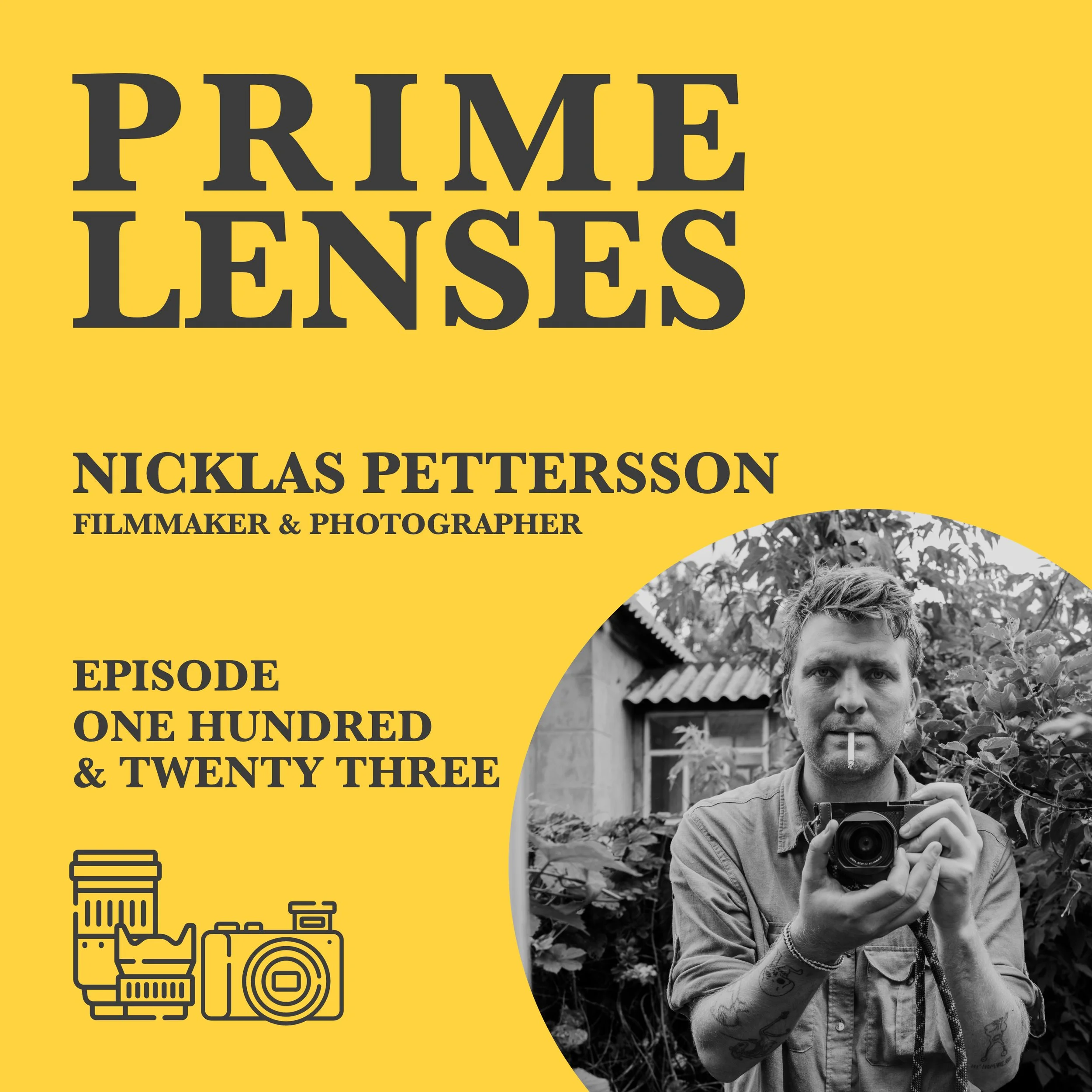


Nicklas Pettersson is a Danish photographer whose work I discovered by way of the Widelux camera he has used to photograph the front lines in Ukraine.
Support the show on Patreon.
Episode Transcript:
[Iain]: Thank you. The next step.
[Iain]: it's a real pleasure it's a treat to talk to you is it your first podcast yeah it is hooray it's wonderful to see you and speak to you i'm very excited to get to sit down and talk to you because you tick a few boxes.
[Nicklas Pettersson]: I think you're, I love to speak to working photographers who are going and doing interesting work in unusual places.
[Nicklas Pettersson]: And you're the second photographer I've spoken to recently, who's going to traveling routinely to conflict areas.
[Nicklas Pettersson]: And I think your work in Ukraine is so interesting and such beautiful work as well.
[Nicklas Pettersson]: So I'm really keen to talk to you about that.
[Nicklas Pettersson]: And then also there's a little bit of a film element, which I find fascinating that you're in these places and you're like oh hang on i'll just load some film
[Nicklas Pettersson]: yeah yeah it's it's really not easy to use film in those places but uh sometimes it's the the better choice because it's it makes the soldiers and the medics and stuff more comfortable with me being there because they think oh you have this expensive digital camera you can send directly to social media or to the enemy or whatever but uh which is a which is a thing to think about but
[Iain]: before we get stuck into that I am interested to know how your journey starts with photography and then we'll get to I think why you're now making the work that you want to work because you could make any kind of work and I think choosing what you've chosen is really interesting but tell me
[Nicklas Pettersson]: first of all how you started making pictures in the first place.
[Nicklas Pettersson]: It was when I was very young my mother has a picture of me with with like a camera when I was four years old or something and And I think I've just, my parents have always been taking pictures and my grandfather had always had a camera at every like family thing we did.
[Nicklas Pettersson]: And I was always just intrigued by what is this?
[Nicklas Pettersson]: And I remember early remembering that, okay, this is, it's going to be fun being older and looking back on my grandfather's stuff he did.
[Nicklas Pettersson]: Because it's family, it's right now, it's present. And so, yeah, I've always taken pictures.
[Nicklas Pettersson]: I remember I always had like a disposable camera with me everywhere I went when I was young.
[Nicklas Pettersson]: And I don't really remember seeing any of the pictures because they were probably not that good.
[Nicklas Pettersson]: But my mom says that she has it in the basement. She has every picture I've taken.
[Nicklas Pettersson]: And then I started early when I was 11 or 12, I started skateboarding.
[Nicklas Pettersson]: And then it just became natural because, you know, and that was actually how it started the whole documentary photography thing.
[Nicklas Pettersson]: just taking pictures of me and my friends just skating and having a good time and then it became more skate slash partying and i still just took pictures of everything and and yeah and then it just took on i was not really good at school so i was just always dreaming about what can i do instead of being in school so uh so yeah that's how that's how it started with me from from very young just always been interested in in pictures and yeah were your family so fairly it sounds like
[Iain]: they were supportive of it because some people i speak to their folks weren't necessarily
[Nicklas Pettersson]: thrilled when they said i want to take on a creative career yeah i think my mom she has more of a little bit of the hippie approach to life you know she's very much everything's gonna be okay and good and i'm sure you will make it my son i'm proud of you and my dad is a little more i think he he would love that i if i'd taken a education and you know done something good making a lot of money and stuff but but
[Nicklas Pettersson]: yeah especially now with the whole what i do now it's difficult to find the the support from from people who don't really understand the necessity of going those places um but i think for most parts they're still pretty supportive um but it's always i mean it's the creative path is i mean it can go both ways you know it can be really successful if you do it right but you can also be miserable and very poor so uh yeah it's hard to navigate in and i i understand how why they were critics in in the
[Iain]: beginning well there's also the difference i think between what you do every day and then what people assume you do when you say you're a photographer.
[Iain]: You know, the reality is there's a lot of admin.
[Nicklas Pettersson]: For sure, yeah. Yeah. But yeah, I love it.
[Nicklas Pettersson]: And that's the important thing, being glad for what you do, so.
[Iain]: Yeah.
[Iain]: Yeah, it's like being a podcaster, right? Like people assume I sit down and just spend all of my time talking to people.
[Iain]: And actually there's a lot of sending emails and a lot of putting things in calendars and then moving them around.
[Nicklas Pettersson]: I could imagine yeah yeah yeah my job is basically being my own project manager
[Iain]: which is good because that's what I used to do so I guess that I guess I've landed in the right place
[Nicklas Pettersson]: in a funny way there you go that's perfect perfect so you mentioned a little bit of it there
[Iain]: the places that you go and choosing to go to the place you go and when I was looking at your work and preparing for this and looking through the website you talked about the responsibility of going back to these places to document especially you know your your Senegal project and Nepal and Italy and things to some extent some of the work you're showing is is kind of the work that you expect a photographer to make right like they're traveling you're seeing ping it seems very much to me like there's a connection with people that's really important to you that matters but then I think additionally to that it seems like you now feel a responsibility to keep documenting what's happening in Ukraine and to come away and go back um Mattia Bidini was on the show recently he's an Italian photographer who's been to Ukraine he's been to gaza and things and and there was a lot of similarity in the way you were writing about it and talking about it i think in the way he does so i'm interested in how did that come about and then when did you know this needs to be work that i must continue to do until this conflict
[Nicklas Pettersson]: resolves um so the whole thing my first like bigger thing where i really jumped out of my comfort zone and just did what I thought would be interesting and and
[Nicklas Pettersson]: and yeah it was my my documentary in Senegal where it was actually from my then girlfriend at the time it was her birthday and I was out eating at a restaurant with her father and her father said oh I know this guy named Sidi and he talked a little bit about this Senegalese Danish guy who moved to to Denmark 43 years ago or something and it's like yeah now he's uh retired in denmark and he decided to go back to his hometown and become a mayor i was like that's amazing that's a crazy story he's
[Nicklas Pettersson]: like yeah yeah he's leaving tomorrow i was like okay okay i'm gonna do this and uh so i just texted him and i bought the the tickets before he even agreed to do it because i was like if he must say yes it's so it's so interesting as i didn't know him i hadn't spoken to him or anything so then i packed my stuff and the next day i i went to the airport and and flew to gambia and uh it was actually first when i landed in gambia that he was like oh yeah sounds
[Nicklas Pettersson]: interesting when are you coming i was like i actually just arrived in gambia do you think there's something he's like yeah for sure i'm coming picking you up and uh yeah so then i stayed with him for a month and documenting his first period of being a mayor because he won with so many more votes than the his opponent and uh yeah it was really an amazing story and that was the first time i felt okay this is really what drives me doing this these stories and you know people live lives even i live here
[Nicklas Pettersson]: but there's so many people just living lives out there in in different environments and and um yeah so that was the first thing i did was uh was covering that doing that documentary in about Sidi in in senegal and it was really it was really an amazing amazing thing because i didn't plan anything i was just following him around and but yeah it was also the first time i really saw um how bad things can be because of no lack of education and i think that's the the the interesting thing about Sidi because he lived
[Nicklas Pettersson]: in denmark and he kept saying i want to make small denmark in senegal right and but we still saw the the voodoo doctors trying to you know to to cure people with mental illnesses and stuff and so yeah it was really interesting yeah wow i mean it complete
[Iain]: culture shock for you as well to just land in it but i'm guessing that the lack of you can't
[Nicklas Pettersson]: overthink it which might be a good thing yeah yeah exactly it's just i don't know what's gonna happen let's let's see and it's it's kind of sometimes the same approach i do in ukraine because you you never know what's what's gonna happen i mean yeah so how do you work out when you're going
[Iain]: are you are you asked to go out by like news organizations or ngos in ukraine i have i'm
[Nicklas Pettersson]: I'm part of an organization in Denmark that delivers medicine and cars to front line units.
[Nicklas Pettersson]: And so we buy the cars in Denmark and then I drive from Copenhagen all the way to the front lines.
[Nicklas Pettersson]: And because we go that way, I mean, we give something back.
[Nicklas Pettersson]: And there's a huge discussion about photographers and photojournalists, if that's the way to do it.
[Nicklas Pettersson]: because you're not really supposed to do, to help in that kind of way if you want to call yourself a photojournalist.
[Nicklas Pettersson]: But yeah, that's how I do it. And then I get pictures and stories, interviews, whatever.
[Nicklas Pettersson]: And then I go back to Denmark and do fundraising so we can keep the flow coming.
[Nicklas Pettersson]: But yeah, sometimes CNN called me once and was like, oh, we're going to Donbas for, I think it was eight days or something.
[Nicklas Pettersson]: Are you available? And I was like, yeah, sure, we can go.
[Iain]: It must be an increasingly small pool of people who've got that kind of experience as well, I'm guessing, where if you need people who can operate, because it's not just a field trip.
[Nicklas Pettersson]: No, no, no, no. It's really, and especially the last year and a half, two years, I guess, would be the drones have really changed the game for everyone, and especially photographers and journalists going around We don't really, you know, we don't, we're not able to shoot down drones or anything.
[Nicklas Pettersson]: So we just really cross our fingers and just hope for the best.
[Nicklas Pettersson]: Do our, we try to do the best we can with the drone detectors and stuff, but you never, you never know what's going to happen.
[Nicklas Pettersson]: It can, it can really go and really quick. Your life can be over.
[Iain]: That conflict in Gaza, the, the kind of the mindless way that it just seems to continue.
[Iain]: Like I, from the outside looking in, and we, I think in the UK, our feeling towards Ukraine is sort of somewhat different in that we have notionally this body of water between us and mainland Europe.
[Iain]: I think it's a lot more real for people living in mainland Europe.
[Iain]: It is a lot closer to you than it is to us, even though we're not that much further away.
[Iain]: It's a lot more real, isn't it?
[Nicklas Pettersson]: Yeah, for sure. Yeah.
[Nicklas Pettersson]: And that's why it takes me two days, maybe three days to, you know, of many hours of driving.
[Nicklas Pettersson]: But then I can be in Izyum. I can be in the at the frontline three days.
[Nicklas Pettersson]: I think it's really crazy. It's a war in Europe and it's so close to Denmark and people just kind of lost interest, even though I think it's really, yeah, it's really amazing and still needs to be covered because the stories are so, so brutal and honest still.
[Iain]: I think for anyone listening, it's worth going and looking at the images because the way that you've captured most of your work is black and white, it seems, especially in that area.
[Iain]: But that means that the few color images you do have really do show there's one of either a sunrise or a sunset over the city with a Ukrainian flag.
[Iain]: And you look at it and you're like, that kind of image embodied for me the piece that we all hope will eventually arrive.
[Iain]: That's an optimistic image. but you're did you choose black and white because you know you seem to shoot a lot in black and white
[Nicklas Pettersson]: so but i'm curious whether it's also a thematic choice as well yeah for sure it's um for me this war in ukraine is really as black and white and and i just felt it it's working and from for me it expressed the the feeling i have when i'm there because everything is a little cold and dark so i I just feel it's black and white really works for me covering this this
[Nicklas Pettersson]: war and and sometimes you end up in a situation where you know I have a lot of pictures that I don't I'm not published um from injured or dead soldiers and stuff and if there's color it just takes away the the whole idea of the picture because all you see is the blood uh I have the picture of a foot that's completely blown to pieces by a butterfly mine.
[Nicklas Pettersson]: And if you saw that picture in color, it would be disgusting and it wouldn't really tell anything.
[Nicklas Pettersson]: Here it's more going really sharp with the 28 Summilux and the lightheads.
[Nicklas Pettersson]: It's really crisp, it's really amazing and you can see the picture differently than if it was red by blood.
[Nicklas Pettersson]: I think it works, the black and white ideas
[Iain]: just works when you go to war zones and it's um interesting that you're you mentioned the cue there as well because it seems to be very commonly seen in like when i see other war photographers and like as a second camera as a you know it's a fairly durable for for all that leica are sometimes seen as like a luxury camera brand or whatever those cues are fairly solid they're
[Nicklas Pettersson]: weather sealed it you know and that lens is magic yeah it's it's amazing it's an amazing lens
[Nicklas Pettersson]: really I don't think it gets much better for me.
[Nicklas Pettersson]: The Leica Q3, it's the perfect camera for me for what I do.
[Iain]: Yeah.
[Iain]: And so you always shot with Leicas?
[Nicklas Pettersson]: No, no, no. Sadly not. No, it's really been a progress.
[Nicklas Pettersson]: I've saved up for a long, long time because my heroes in photography, they used Leicas.
[Nicklas Pettersson]: So I was like, okay, I need to have this, but damn, it's so expensive.
[Nicklas Pettersson]: It's like six trips to Ukraine for one camera. But then I ended up being able to get the camera and it really hasn't disappointed at all.
[Nicklas Pettersson]: It's an amazing camera.
[Iain]: Yeah. I shoot with an M and I was using the SL3P last week, actually.
[Iain]: I had one on loan just before it came out. And it's excellent and I don't like it at all.
[Iain]: Yeah. Right. It's just too big for me. And I imagine for you, size is a big consideration as well.
[Iain]: when you're like you need performance and you need you know yeah but the queue seems like a
[Nicklas Pettersson]: perfect fit for that sort of stuff then exactly yeah it's very compact and it's weather sealed i would say i mean it's survived it's been through a lot of mud and rain and heavy sun and stuff but it still works perfectly even though it's really expensive cameras it's not really something i feel needs to be protected at all it's it really just works and it's crazy yeah i am an early guest
[Iain]: of the show was torsten overgaard who obviously is a big like a guy and fellow brilliant dane um and i think that's the thing with these things is that like they are expensive but what's funny is we're seeing all i mean the price of everything in 2026 is insane um and it's starting to make these things handmade in germany starting to make them look quite reasonable in a funny way like a q3
[Nicklas Pettersson]: with that lens on it suddenly seems like good value really exactly yeah yeah and durable to boot
[Iain]: so you've got your shooting with a q3 tell me about your film
[Iain]: use as well and what you're kind of rocking with as well because it is the q your only digital camera when you're out uh yeah yeah
[Nicklas Pettersson]: and then I have the I don't but I have like the the DJI action cam GoPro thing and yeah exactly but I don't count that because it's all really just more behind the scenes for me um but yeah it's the only digital I used to my first I think seven or eight trips I used the Sony camera a Sony a7 or something I don't remember but it was so it
[Nicklas Pettersson]: really like came to me how I had no attachment to the photos I took with the Sony because it was so easy it was so bland and it was so you know it has had that 24 to 70 something really big and I was like this just doesn't work for me going around with this and it's so much a camera a modern day camera and it just doesn't work if you want to get closer to the soldiers and stuff you they will kind of get scared of you know you come here with this so i
[Nicklas Pettersson]: was just yeah i got the q3 and i was like oh this is perfect and then i used the olympus mu2 also a film you know a small point and shoot really amazing camera too for for what it is and and yeah the last six or seven months i've been using the the Widelux F7 yeah which
[Iain]: i i love that you're taking a clockwork camera into a war zone yeah it's already already been
[Nicklas Pettersson]: really expensive in repairs because every time you go home it gets so filled with the dust if you take pictures in an area where there's been a bump or something right all the dust and everything just get into the camera so quick so it's like ah so buggy now i just spent 400 years getting it fixed and now i have to get it fixed again and yeah it's really but the it's more of the idea of taking those kind of pictures there because it it's not easy to get to the front lines so why should it really be easy to get the pictures you know oh that's interesting it's okay being a little it's it's okay
[Nicklas Pettersson]: it being a little difficult and clunky and you know sometimes the pictures come out it's just not the same as the next something went wrong in the process of it of that panoramic swing and
[Iain]: yeah i love it i really love it i feel like it's also the perfect behind the scenes camera in a lot of ways or documentary camera like um jeff bridges obviously who's launched the campaign to kind of bring them back and stuff his film set photography is amazing because he's he was he was just allowed obviously he's a star right so
[Iain]: he's allowed to be there and so no one's telling him he can't make a picture in a way that even if you and i were there as a photographer i think of people like greg williams when he's done the behind the scenes on bond yeah there will still have been times when someone's gone don't take a photograph of that yeah or we just you know the car people or whatever So I think that those images are so part of the reason Jeff's images work so well is because they're so he's got access and he's got
[Iain]: time and he's got the trust of everyone around him. And they that that wide view of the world.
[Iain]: There's nothing quite like it somehow because it's sort of weird and slightly trippy and distorted, isn't it?
[Nicklas Pettersson]: Yeah, it's amazing pictures. I always try, you know, once in a while I go on eBay and I try, I want to find that book.
[Nicklas Pettersson]: people want insane money for it they do it's like ah okay yeah i'd love those books but i do
[Iain]: i hope that one day i'll find one in a charity shop or something you know like there'll be a
[Nicklas Pettersson]: goodwill somewhere and i'll stumble across it it's the dream it's the dream it's the same idea i've had of a leica for the last 15 years you know stumbling into some charity shop and find a leica and I'm like, ah, this is crazy.
[Nicklas Pettersson]: That's what I did with the Olympus Mju. I found that in a charity shop for two euros or something.
[Iain]: Oh, wow. Yeah, you see, that never happens for me.
[Nicklas Pettersson]: Yeah, it was seven years ago.
[Iain]: Cool camera as well. Yeah. Do you like the Mju? So does that still go with you?
[Iain]: Because I mean, you're limited in, I know you're driving, but you're not driving back, I guess.
[Iain]: Like the cars arrive and then you're coming. So you kind of need to still travel fairly light.
[Nicklas Pettersson]: yeah yeah yeah it comes with me it's just always in my pocket i mean also in denmark it's also the olympus Mju just always in my pocket yeah it's so scratched up from keys and coins and stuff but
[Iain]: it still works and it goes strong yeah no it's a great camera we um i do some stuff with a local camera shop up here and we we got a couple of olympus Mjus in recently secondhand and it is such a great little camera it's got a nice little shape to it it's nice to hold you
[Iain]: know yeah which
[Nicklas Pettersson]: the battle make sure you yeah and it's a 35 it's uh it's just simple it works it's very easy to use and not much thinking it's just click picture maybe it's good maybe it's not we'll see but like like
[Iain]: you were saying compared to the sony it will probably even if it's kind of technically not very good it will mean something to you because you know you got it like um last summer i was at an event and I got a photo of Jamie Cullum was on stage it was a Leica thing
[Iain]: and it was very small number of people I was right I was close to him and I got this photo of him taking a photo of me and it's not quite in focus because it was dark and I was focusing a manual rangefinder in the dark and you know all that sort of stuff but that photo still means something to me and I still think it's great and a friend of mine managed to get a very blurry low-res version of his photo of me so I have seen like the other side his picture of me
[Iain]: was sharper uh he was doing a lot better than i was but but it's that thing of of the moment matters more than the kind of overall image quality i guess yeah do you find that when you're selling the concept and you're trying to kind of encourage people to donate money and stay invested because more than four years in as you alluded to earlier people are starting to kind of forget that this is still the everyday for other people so are you on the hunt a little bit for the kind of the the kinds of
[Iain]: images and the stories that will kind of reignite people's interest and remind them or do you have like a when you go in like an idea in
[Nicklas Pettersson]: mind or are you still very much like receiving what you find i i i want to because the the thing in ukraine is that everything changes even though it's four years and they really held the front line really good stuff just changes the mindset of the soldiers and stuff like that so i i try every time i come go to ukraine to get a current picture what is it
[Nicklas Pettersson]: like now and get some good interviews with the soldiers and and i have a couple of questions i always ask them so i can go back and look okay what's changed now and and what was it back then when we met a couple of months ago and and stuff
[Iain]: like that yeah yeah the long-running relationships you're building that must be the kind of the the the thread that runs through all of this yeah yeah for sure and the more you help them the more they
[Nicklas Pettersson]: want to help me because helping me will help them so
[Nicklas Pettersson]: it's a good thing that the way i've struggled everything together now because going through press officers and stuff it takes so long time it takes forever to get permission to do anything and sometimes it's when i'm there it's just oh maybe this could be interesting it's like yeah write to the press officer it will take you know six to eight weeks and we'll see maybe they say go maybe they say absolutely not so so this way of doing it is really the for me it works good
[Iain]: I used to work with a guy Swedish
[Iain]: games dev person but David was very good at not answering a question if I shouldn't have asked it if I was asking specifically permission or access type questions or whatever he would sort of tactically I think not answer it and then that way I could go oh okay I should just do this and just get on with it if he has to ask
[Nicklas Pettersson]: if he has to go up the chain
[Iain]: then it will die
[Nicklas Pettersson]: yeah exactly yeah and it's the same if you're at a position in ukraine and you ask for the permission to take
[Nicklas Pettersson]: a picture of someone it's i i feel some more more it's they say no then if i just do it and you know laugh and give them a little smile or something it's it's better to there there's the forgiveness than just you know hey can i take your picture and it's just like ah no no no no no so if you just do it and like maybe give them a cigarette after or something it's uh that's that's really a good good way to to do it for sure it is i mean it's a
[Iain]: dangerous phrase
[Iain]: but fake it till you make it is a little bit of that you need to go in with that
[Nicklas Pettersson]: energy don't you yeah yeah yeah even though we we're scared and you can constantly hear the shelling and stuff you're just trying to you know laugh it off and make a little fun thing and i'm here i'm this tall i'm almost two meters and i can't really stand up in the trenches and stuff so But I'm a little quirky when I'm there, but it works good.
[Nicklas Pettersson]: It works for me.
[Iain]: Yeah, I guess I hadn't thought about your height, but I guess you can't hide very easily either.
[Iain]: You're quite big.
[Nicklas Pettersson]: No, no, I can't really. And because of the skateboarding and stuff, my legs are really, my knees and stuff, it's just not what they used to be.
[Nicklas Pettersson]: So running from things with the body armor on and all the cameras and stuff is really heavy, heavy work.
[Iain]: When you were talking before about skateboarding and things like that, Philip Reinhardt was on.
[Iain]: Well, I've recorded with him a couple of weeks ago. It'll be the episode, I think, two before yours.
[Iain]: He also started by doing skate videos and things like that with his friends.
[Nicklas Pettersson]: Yeah.
[Iain]: Now I'm assuming you've got a broader kind of photographic kind of language in your mind.
[Iain]: Like who presumably it was skate photographers and people, you know, making skate movies like Spike Jonze and people like that were inspiring you early on.
[Iain]: who's who now is kind of when you know if you have photo books and you get those down like who are you who's work are you looking to to kind of inspire yours
[Nicklas Pettersson]: i i mean my my hero i don't like to say that work but my the guy i think does the most amazing work in ukraine is eddie van Wessel the dutch photographer his pictures are insane man they're so good and i've had the chance to meet him in ukraine and we actually spent um christmas eve together uh sitting down in in a basement
[Nicklas Pettersson]: eating pizza while the there was incoming shells and stuff so it's yeah but his work is absolutely amazing and he's fearless and yeah really great
[Iain]: work yeah these mad dutchmen you see they run around they're built slightly different the dutch
[Nicklas Pettersson]: For sure, for sure, yeah.
[Nicklas Pettersson]: But he's done it for many, many years covering everything.
[Nicklas Pettersson]: So really, Ukraine is... But he also tells me that Ukraine is different than other wars he's covered.
[Iain]: That's interesting. Is it the kind of the technical... Because from your perspective, I guess, like drones, things like that, these are whole new ways of conducting warfare and the psychological aspect more so or as much as what they are capable of.
[Iain]: These drones, they make an awful noise all the time.
[Nicklas Pettersson]: Yeah, yeah, they really do. Yeah, it's awful.
[Iain]: So you're just sitting there, you can hear this thing happening and you're just, I guess you're on edge the entire time.
[Iain]: You're just waiting.
[Nicklas Pettersson]: Yeah, you're really just waiting and crushing your fingers.
[Nicklas Pettersson]: but it's a weird thing because if you go past you, but you still hear the explosion, or someone might just have lost their legs or lives or something.
[Nicklas Pettersson]: So it's a weird thing to be like, oh, thank God for me, but awful for someone else, maybe.
[Iain]: From an infrastructure perspective, when you're out there and you're staying in certain places, like when I spoke to Mattia, he talked about how there's only certain times of day when they've got things like electricity and water and stuff like that.
[Iain]: I got the impression that Ukraine was maintaining kind of more normal infrastructure, perhaps than somewhere like Gaza is able to.
[Iain]: But I'm guessing even on the front lines, it's probably fairly similar. It's probably things are hard to come by.
[Nicklas Pettersson]: Yeah, actually, I was just two weeks ago, I was in Kramatorsk and I was expecting, you know, no water, no electricity or anything, but it was all working.
[Nicklas Pettersson]: The apartment we rented, everything was working. We could take a shower. We could do everything.
[Nicklas Pettersson]: And if you go to the real front line, they have generators and somehow working water and still.
[Nicklas Pettersson]: So it's really amazing how the Ukrainians just keep this running. And yeah, amazing guys.
[Iain]: Yes, incredible people.
[Iain]: And when you come back, because you've been out there so many times now, how many trips have you done to Ukraine now?
[Nicklas Pettersson]: i actually i have no idea i actually don't know because yeah i don't know many many trips but when
[Iain]: you come back how are you able to kind of because you mentioned there before about um you can hear the explosions you can hear things happening you're like it didn't happen to you it happened to someone else how are you putting the weight of that trip down you know are you able to kind of like take the body armor off and put it down with that and like how are you kind of looking after you
[Nicklas Pettersson]: to your back it's it's it's really difficult i mean when i'm in denmark i feel i have this constant uh dark cloud over my head the first couple of weeks when i arrive back from from ukraine and i'm a little grumpy and i i think ah people are just so blind for how good they have it and and all that stuff but yeah then if i go to a football match or whatever and there's firework I always my heart starts pumping and and now everybody in in Denmark just graduated became a student and they go
[Nicklas Pettersson]: around in a truck on the roads and they loud music and the horn on the truck and fireworks and stuff so the last coming back from my last trip has been really stressful and and I don't think it's a good idea to live in the middle of Copenhagen when noise is a little sensitive for you but uh but yeah i i try to but it's difficult it depends on what you experience in in in ukraine going back home how long it will take for me to to kind of adjust to be
[Iain]: civilized again here do you think that means that these sort this sort of work will have a kind of
[Nicklas Pettersson]: time limit on it for you i hope not because i feel this this really makes me human doing this stuff and meeting the guys there and meeting all those experiences and other lives and stuff.
[Nicklas Pettersson]: So I hope not. I hope I can still deal with it the way I do because I think it's working okay.
[Nicklas Pettersson]: I mean, a lot of guys who do what I do end up alcoholics or drug users and stuff.
[Nicklas Pettersson]: But luckily, I'm good to adjust that. Yeah. Yeah. Yeah.
[Iain]: Well, I think everyone listening and myself, long may it continue, right?
[Iain]: Like I think your work is incredible and you're doing something important.
[Iain]: And I think what you were saying before about seeing people and sharing these stories will prepare you for whatever's next as well.
[Iain]: Because it comes down to what you do for a living and the people I talk to.
[Iain]: The best work is human and connects with people and connects you with people. So you're learning a superpower.
[Iain]: If you can do it there, you can do it anywhere.
[Iain]: like 10 years from now if you're photographing can you should be fine
[Nicklas Pettersson]: should be okay yeah yeah but also depends on what what i what work i do in denmark like i just came back from ukraine and two days after i was shooting a wedding right and it's really really so i was really like oh this is a lot for me to process going to this everybody is happy everything is good and beautiful as the sun is shining and but but i still need to to do the work because i have bills to pay and
[Nicklas Pettersson]: stuff so yeah but nice to kind of i suppose steep
[Iain]: yourself in something that's so much the opposite you know it's almost like taking it taking a hot
[Nicklas Pettersson]: bath emotionally yeah yeah for sure yeah do you have other projects in mind because i guess you've
[Iain]: got a lot of there'll be a lot of sitting around when you're out far away like as much as there's a lot going on all of the time I guess you also have a lot of time sit around do you do you have ideas for projects and things come to you on the long drives and things like that do you know what you
[Nicklas Pettersson]: want to kind of do in future yeah I was actually not supposed to be in Ukraine for my last trip I decided I wanted to go to Lebanon to cover the the refugees coming from Israel and stuff um but then from one day to the next they kind of changed the the rules of how journalists are allowed to work there so you're not allowed to be a freelance you have to get the letter from a big published newspaper and stuff and i was
[Nicklas Pettersson]: not able to get that because um nobody wants to send a freelancer there and they think it's a you know there's a danger of it of me have something having to me and it's oh it's their responsibility and i tried to text them i was like ah i know the the risk and it's not your responsibility but yeah so but i i still want to go i am i want to go back to senegal to do something there and i try to go to i want to go to south sudan so to really do um
[Nicklas Pettersson]: because i think south sudan is the kind kind of the same place a little bit as ukraine i mean it's insane what's going on and just get no coverage i mean south sudan is of course different than ukraine because no one talks about what's happening and it's absolutely awful yeah um but then also you know as as every photographer i i'm working on a book we all say that and i have an exhibition later in copenhagen this year and i already started preparing for that and yeah well that's
[Iain]: cool tell us a bit more about the exhibition if you can yeah it was it's it's going to be pictures
[Nicklas Pettersson]: from ukraine and it's kind of it's going to be like an awareness kind of thing um but then i got the Widelux and i fell absolutely in love with the Widelux so now i want to you know you as an artist you can always you know disagree with yourself and say no no this is better than this idea and this idea is better than this idea but still blah blah blah and so i was had i have all these amazing
[Nicklas Pettersson]: pictures from ukraine and but now i have this idea of maybe i should just you know only do on the Widelux because it's something different it's something people don't really see but it's also i need way more pictures because so many of the pictures from the Widelux end up useless because it's so stupid to use almost it's yeah yeah um but yeah it's gonna be just you know some good pictures from ukraine some awareness and it's going to be a fundraising
[Iain]: for my um organization and stuff yeah that's really cool have you ever worked with editors
[Nicklas Pettersson]: and kind of pulling together stuff like this before no no no i i always just do things on my own and i i think that's better actually because that's how i work good and i i when i was in Donbas with cnn uh the journalist carla she also she told me like okay i can i get what you because i told her how i normally work and stuff and now working with a journalist there and you know i was the cameraman she's like okay i can see what you would just say how
[Nicklas Pettersson]: you work better on your own i was like okay that's not nice of you to say because i think this is a good trip but we get some amazing things it's just like no no it's just you want to just wander out and do your own stuff but we need to be here and interviewing this and you know and it's just not how i work with the with with like the thing i did with cnn because it's almost just like you know kicking the door and asking soldiers questions and i want to be more embedded
[Nicklas Pettersson]: and take my time and not not even take the camera off the first couple of days but just just chilling around getting to know them and they get comfortable with me and then when a great picture is there i'd be like oh actually i have a camera it's okay i take a picture or yeah stuff like that so and then it just becomes natural and you can take whatever you want but you still need to think about what you publish because because it's a technological warfare there's always you know screens everywhere with the drones and
[Nicklas Pettersson]: stuff so you really need to not show ip addresses and locations and stuff like that so it's really something you have to be because you can easily like tell where this position is if you take a picture and the screen shows oh this is the ip address or the gear location or something you can be the reason for people getting killed if you don't if you're not careful yeah that's mad i i
[Iain]: think it's also an interesting challenge you touch on there where if you're a news reporter you have 24-hour news stuff to fill like
[Iain]: they they need to fill that time in a way that you don't i think you can you can you can take the time to build the relationship that's necessary exactly to then do better work i think it's why your images probably feel more substantive and meaningful and Mattia does the same thing he spends a lot of time getting to know people first because he's he's encountered presumably you've encountered this too where people are sort of they're worried that you're just there to take some images and then disappear and they'll never see you again
[Nicklas Pettersson]: yeah yeah
[Nicklas Pettersson]: for sure and that's also when if if you're in the big cities like Harkiv and stuff it's um you know you meet some people who just wants to fight you because you're you're they say oh you're just photographers just here take pictures of us being in a bad place and stuff no no that's absolutely not what i do and yeah like my last trip i was sitting in at a bar with my friend and some guys came up and wanted to fight me just because i was a photographer and i was like but i'm i'm
[Nicklas Pettersson]: way more than a photographer you know i do all this volunteer work i spend so much of my life just driving things to you guys and so yeah when i told them you know when when i told them that it's like ah okay it makes sense makes sense because i i so that was like okay it's good i'm just not a photographer even though sometimes it would be easier to just be
[Iain]: the photographer but uh yeah brave of them to go up to a guy who's two meters tall in a bar
[Nicklas Pettersson]: luckily i was sitting
[Nicklas Pettersson]: down and i think when i stood up they you know that but they're they're soldiers man they're built different they're scallish you know yeah just funny a friend of
[Iain]: mine started a new job this week and i was just saying to him i was like well just go in there and find the biggest guy and hit him like as a joke you know and then then you'll be fine then you've
[Nicklas Pettersson]: established dominance in the workplace i think that's how that works yes uh it's the prison rules
[Iain]: it works for life but it's just not fun
[Iain]: being the biggest guy you know sure yeah no it does make you a target it's a far cry from tivoli gardens and legoland and then suddenly yeah we visited denmark a lot as a kid.
[Iain]: My dad's first wife was Danish and so he always loved Denmark and we went loads.
[Iain]: I have two Legoland driving licenses from two summers. Congratulations. Thank you. I'm very proud. It was amazing.
[Iain]: It was a really cool place to visit. So yeah, I can't wait to get back.
[Iain]: Actually, and I must congratulate your country men and women for making the best James Bond game, which makes me very sad, but it's excellent.
[Iain]: It turns out we needed Danish people to make the best James Bond game ever made.
[Nicklas Pettersson]: Yeah, exactly. Exactly.
[Nicklas Pettersson]: It's like the Hitman games. It's also Danish guys making that.
[Iain]: Yeah, same studio. Yeah, same people.
[Iain]: They've done an absolutely outstanding job. I used to work in games, so I like to chuck in the occasional video game aside.
[Iain]: But yeah, it's unreasonably good, that Bond game. They've done a very, very good job.
[Nicklas Pettersson]: And it has a like a cue in it. Yeah, yeah, yeah. I heard that, yeah.
[Nicklas Pettersson]: I'm not much of a gamer. I only have one game I played since it came out and I still go back to it and that's it.
[Nicklas Pettersson]: It's the only game I play. What's the game? It's Fallout New Vegas.
[Iain]: Oh, now.
[Nicklas Pettersson]: I have so many hours in that game and I have it both on PlayStation 3, on Xbox 360. I have it on a computer.
[Nicklas Pettersson]: I have it on everything and it's the most amazing game.
[Nicklas Pettersson]: And I think that's how it kind of made me in life.
[Nicklas Pettersson]: It's just that being that lone wanderer just doing stuff.
[Iain]: it's really an amazing game there you go you played that and you just took that as like this is this
[Nicklas Pettersson]: is a rule this is a manual yeah this is my life now i'm this this person i'm this courier in
[Iain]: in this game i'm this in life oh nice i used to work on fallout 76 uh and i know a bunch of people working on that game yeah yeah so um it was cool and it's it's exactly that isn't it it's the the sort of fantasy of living in a world and making your own
[Iain]: thing and being able to explore and being able to like you know make your own way and build your character the way you want to be
[Nicklas Pettersson]: yeah that fantasy oh it's really interesting exactly and it's it's the same if you do what i do you know going to ukraine you you need to find your own way of making things possible because you cannot just you know there's no easy way it's always some side quest you have to do and then this side quest knows this guy that can help you and this guy knows this and
[Nicklas Pettersson]: this and this and then
[Iain]: all of a sudden you're at position when you're picking up the camera then and you're doing your kind of things like weddings and stuff like that how do you compartmentalize the work and position the work because presumably someone hiring you for a wedding is not looking at your work and going i'd love for you to shoot this like it's a very different shooting style do you have like separate portfolios, separate ways of presenting the work?
[Nicklas Pettersson]: No, actually, when I do weddings, I mostly just say, and I talked to a guy the other day and he was like, oh, weddings are so difficult to do and stuff.
[Nicklas Pettersson]: And I was like, I agree, but I feel like taking pictures on a front line in the country, it's probably one of the most difficult things you can do and get out of there with great pictures.
[Nicklas Pettersson]: So now I only have my website and I I sent them to the couple that was getting married and it was like, yeah, OK, but are you sure you can do this?
[Nicklas Pettersson]: I'm like, yeah, I know for sure. And there's like, OK, but we don't want black and white.
[Nicklas Pettersson]: I was like, OK, I can do colors and stuff. But then I ended up taking the pictures, editing them.
[Nicklas Pettersson]: And there was like, oh, my God, the black and white pictures are amazing.
[Nicklas Pettersson]: I was like, yeah, because that's what I do. You know, I do black and white pictures.
[Nicklas Pettersson]: So of course, they're great. Not to talk myself up so much.
[Nicklas Pettersson]: It's just I really thought about how they're like, oh, we don't really want black and white.
[Nicklas Pettersson]: And I was like, OK, fine. And then I ended up doing a couple of black and white.
[Nicklas Pettersson]: Oh, we love it. Yeah, because that's what I do. That's what I'm good at.
[Iain]: Well, you are.
[Iain]: But I will say you're some of your work. You photographed like a motorcycle music festival, which is on the website as well.
[Iain]: I love motorbikes and riding bikes and the flat tracking and stuff like that.
[Iain]: Those photos are great, especially the way you captured some of the personalities on the bikes, like the guy with the yellow gloves and the crazy 60s bike helmet with the bubble visor and stuff.
[Iain]: Really, really fun. Talk a bit about shooting an event like that.
[Iain]: Are you there in a professional capacity or are you capturing that event because you like it and it's got interesting visual things in it?
[Nicklas Pettersson]: I was there. I'm always kind of a, I want to help as good as I can everywhere.
[Nicklas Pettersson]: was my friend who had a a clothing shop in in denmark and he he had this event and you know his shop wasn't doing too good and he was like oh maybe you can come and we can take these pictures and i was like yeah for sure and he said oh i don't really have the money to give you anything i was like okay give me free beer and the tickets and i will come the three days and just you know cover the the festival and he's like yeah okay great that's that's how we do
[Nicklas Pettersson]: it yeah and they but then some there was a um a uh i was a motorcycle micas magazine called mctc who ended up uh using my pictures and i ended up making a drone video for them and it was yeah so yeah and that like rocketed into something more and yeah so it's sometimes just doing you know something for the good of it, will end up paying off somehow anyway.
[Iain]: Yes, I think you're completely right. It's very much how I approach life as well, is that you make something and then that will naturally lead on to the next thing.
[Iain]: Having too much of a plan is potentially dangerous because then you're anticipating and then, as you know, things don't go exactly, even when you're planning something and you're in, quote-unquote, control of things.
[Iain]: They don't go the way you expect. having too much of a plan is a bad idea because then it will go off the rails immediately
[Nicklas Pettersson]: yeah it's awful it's all being you know plan your life it will end up shit i think it's uh it's just not it's better to just you know take a step and see what's gonna happen and it's and that's really how i do stuff and it works out sometimes sometimes it's it puts me in a shitty situation but for the most part i you know i've survived and i have a
[Nicklas Pettersson]: good good place to stay and everything so it works out eventually.
[Iain]: I think it's a difference between having a plan and being prepared. And those are slightly different things.
[Iain]: Like you're ready for what's there, but you don't have to have a prescriptive step-by-step.
[Nicklas Pettersson]: Yeah. Yeah.
[Nicklas Pettersson]: And that's really my thing in Ukraine. So you never know what's going to happen, man.
[Nicklas Pettersson]: It's the last trip I visited Kramatorsk in Sloviansk. And then when we came back to Kharkiv, I was sitting at a restaurant eating a burger.
[Nicklas Pettersson]: And then all of a sudden there was Shahed just hitting right on the other side of the road.
[Nicklas Pettersson]: So, of course, I ran over there and started taking pictures and stuff.
[Nicklas Pettersson]: But then the Russians, they did a double tap, you know.
[Nicklas Pettersson]: So it's like, okay, I did not expect this to happen. But then they do it again.
[Nicklas Pettersson]: It's like, okay, I did not expect this to happen in this unexpected situation.
[Nicklas Pettersson]: So you never really know what's going to happen at all.
[Nicklas Pettersson]: And you cannot plan everything, but you can be prepared for it.
[Nicklas Pettersson]: And that's really my approach to doing the stuff I do. And it works out.
[Iain]: Yeah. Well, good.
[Iain]: I'm very glad to hear it. And I do increasingly feel like playing Fallout was your training, was your preparation for time.
[Iain]: Yeah, yeah, yeah.
[Nicklas Pettersson]: You never know. You never know.
[Nicklas Pettersson]: Some strange encounter can end up being a good thing, but it can also be really, really bad.
[Iain]: I will also say your thing about New Vegas being like the Fallout is the thing that Bethesda both love and hate.
[Iain]: They are sick of hearing about that game.
[Nicklas Pettersson]: Yeah, now we're all just waiting for a remastered version.
[Nicklas Pettersson]: Maybe it'll come up someday.
[Iain]: Yeah, well, I worked with the guys at Obsidian as well, and they were very proud of that game.
[Iain]: The fallout that everyone talks about is the one they made. Like, it wasn't made by the game.
[Nicklas Pettersson]: I saw a documentary about it. The time span they have to make that game was absolutely insane.
[Iain]: Yeah. The guys at Obsidian are proper gangsters. They are brilliant. They're absolutely brilliant.
[Iain]: They know exactly what they're doing. And they have this really interesting idea, which I think listeners will find is indulgence on my part.
[Iain]: But they have this idea that they want their studio to last 100 years.
[Iain]: And I think the idea, it speaks to a little bit what you were talking about, about responsibility and about what you're here to do and what you're trying to achieve.
[Iain]: They feel a responsibility to what they're making, that they should build something that's sustainable.
[Iain]: And what does sustainability look like? Sustainability looks like a studio that could last 100 years.
[Iain]: And I think that's quite rare in their industry to try and make something with that kind of impact.
[Iain]: But what you're doing every day and the work you're doing to support people's lives, to get cars to people who need transportation, need working vehicles and things, that will have potentially like a 100-year knock-on.
[Iain]: Like what you do now impacts people, which then impacts their children, which impacts potentially onto their grandkids.
[Iain]: So I think it's worth us all thinking about the small things that we all do every day, whether it's making work for people, those photos of that couple for that wedding, those are their wedding photos for life now.
[Nicklas Pettersson]: Yeah, which is actually more scary than sometimes going to the front line because like, okay, you have one shot at this and they have to turn out perfect.
[Nicklas Pettersson]: You know, a not perfect picture on the front line, it's also a story, but a not perfect picture at a wedding is just a bad picture.
[Iain]: Yeah. Yeah, we skimped on our wedding photos and we still talk about it to this day.
[Iain]: We just didn't make a big deal of it. And so we got the photos we got and it's fine.
[Iain]: But yeah, we didn't do enough and we didn't and on the day in the moment you're not thinking about it and so yeah so it's you're right we weren't prepared fundamentally no but it's also weird you know i have all now i have all
[Nicklas Pettersson]: these beautiful pictures from a wedding but they don't really fit in on my website so it's like what what can i what can i personally gain from this it's it's nothing more than a little bit of experience and a little bit of money you know because i i it just it just
[Nicklas Pettersson]: doesn't work putting that stuff on your website too when you have all this you know pictures from ukraine and all that stuff so it's yeah so it's not really something maybe i should make a second website which is stuff like
[Iain]: that just you wouldn't be the first yeah you wouldn't be the first i mean it did that was kind of why i was asking right it was like how do you compartment do you have different brands like you you could be n petterson does the uh the wedding stuff and then you know like you have
[Iain]: a different whole you know like authors who have different uh they have a secret pen name for
[Nicklas Pettersson]: certain things yeah maybe i should look look into that a little bit and doing that maybe might be a
[Iain]: good idea yeah and then your your tiktok persona of nicky p or something oh yeah yeah yeah but my
[Nicklas Pettersson]: my social media game is awful i only have instagram and a linkedin i don't have facebook i don't snapchat i have nothing because it's just stressing me out yeah i i mean as someone who now uses that
[Iain]: stuff as part of their work right like i'll have to tell you like it's not satisfying i'm just doing it because it's kind of the best way to be seen and be found you know yeah um but yeah it's not it's not the best i don't know it it doesn't feel substantive it just feels like i'm just sort of pasting adverts on the wall of a tube station it's that's what we're doing exactly yeah and
[Nicklas Pettersson]: especially the pictures i i take in ukraine it's i mean they lack so much feeling and and stuff when i just posted on
[Nicklas Pettersson]: instagram it's like oh now the picture is this small and and there's yeah you know there's not really much detail even though i have shot on this expensive beautiful camera so it's like yeah it's instagram is but i also want to to show my work of course if i'd done something beautiful so so it's a weird weird place to want to do both but just not being if there was a social media where you could upload your pngs and stuff it would be it would be amazing
[Iain]: yeah well i mean i will say former guest of the show alan shaller and uh his friend tim and a few is kind of that.
[Iain]: It's sort of Flickr for now, I guess. And it's higher resolution files and stuff like that.
[Iain]: So I would say to anyone listening, if you want a photo community of photographers, Iris Photo is a good place to go.
[Iain]: There's also Photo with an F. I've had Michael on the show in the past as well.
[Iain]: So there are people trying to do this and those communities are kind of smaller by design and the quality, they're photographic communities first.
[Iain]: It's not just posting pictures sky or threads where like you get your picture but um yeah exactly yeah okay amazing yeah i need to check that out yeah yeah cool well on the subject of shameless promotion which is a nice note to end on nicholas where can people find more of you online if they don't know your work already
[Nicklas Pettersson]: yes as we just talked about um my instagram uh and i don't know do we put a link or something
[Iain]: for the i'll put you in the show notes for sure yeah if instagram is the best place but then also
[Nicklas Pettersson]: my my website now i've done my website on my own it was actually just i didn't have one like a year ago or something i was like okay i want to make this but then i made it on my own i just used i don't remember what it's called squarespace or something which works actually pretty good it's really easy for something who doesn't know how to you know program a website or anything and I was like okay now I have this but how are people going to see this so it's actually
[Nicklas Pettersson]: more just now ended up being a kind of a personal blog where I post my pictures and stuff and sometimes you know if people if I send to an editor or something I will send my website but but I kind of just done it how I do it and want wanted to look but I know there's so many pictures from Ukraine you can just keep scrolling keep scrolling it so I need to do something better and I haven't updated in a while.
[Nicklas Pettersson]: So I also want to, to, to update with new pictures and stuff, but man, it's just, everything takes time.
[Nicklas Pettersson]: So yeah, Instagram on my website, that would probably be, and then on my YouTube, I have the documentary about Sidi Baji.
[Nicklas Pettersson]: The mayor.
[Iain]: Yeah. Really good. Which is worth a watch. People should go and see that.
[Iain]: I think a follow-up, a follow-up with him would be good at some point.
[Nicklas Pettersson]: Yeah.
[Nicklas Pettersson]: I really want to do that. Yeah. Yeah. It would be amazing to do that.
[Nicklas Pettersson]: I need to, I need to do that, But I want to do that since I came home from that trip.
[Nicklas Pettersson]: I was like, damn, I want to go back. It's the same feeling when you go to a place where people are just nice.
[Nicklas Pettersson]: It's like Ukraine. The Ukrainian people are absolutely amazing. And they really like us Danes and Europeans for the most part.
[Nicklas Pettersson]: We sit there and chat for a long time. And we eat the Borscht, the local soup.
[Nicklas Pettersson]: Yeah, I really love Ukraine. every time i come home i miss it by my heart man i miss my new friends old friends all that stuff yeah yeah and i will keep keep going back to to show how it how it is and hopefully the war will end at some point but they have a long there's a long way to getting that country back to normal
[Iain]: man it's yeah yeah it's really it's really awful yeah the day the thing ends is not the end it's then all the rebuilding and all that stuff happens yeah and
[Iain]: who knows what's what their
[Nicklas Pettersson]: neighbor country will do again at some point maybe you know it's yeah it's that constant fear of being in ukraine and everybody in ukraine it's yeah awful best wishes to you sir for doing
[Iain]: the amazing work and thank you for coming on and talking about stuff and if you're up for it let's chat again around about the time of the exhibition because then we can i do wednesday episodes when when people have books coming out or exhibitions and things like that so this is main sunday episode wednesdays i kind of
[Iain]: do something a bit more commercial often so it's not every week but when someone has a book or a thing to talk about i get them back on and we do a shorter kind of yeah amazing yeah absolutely absolutely i'd love to send people your way cool all right thank you Nicholas, I really appreciate that.
[Nicklas Pettersson]: Thank you. Thank you.