

139. The Art of Paying Attention
Paul Sanders on leaving The Times, finding his pictures again, and why the kit should be invisible.
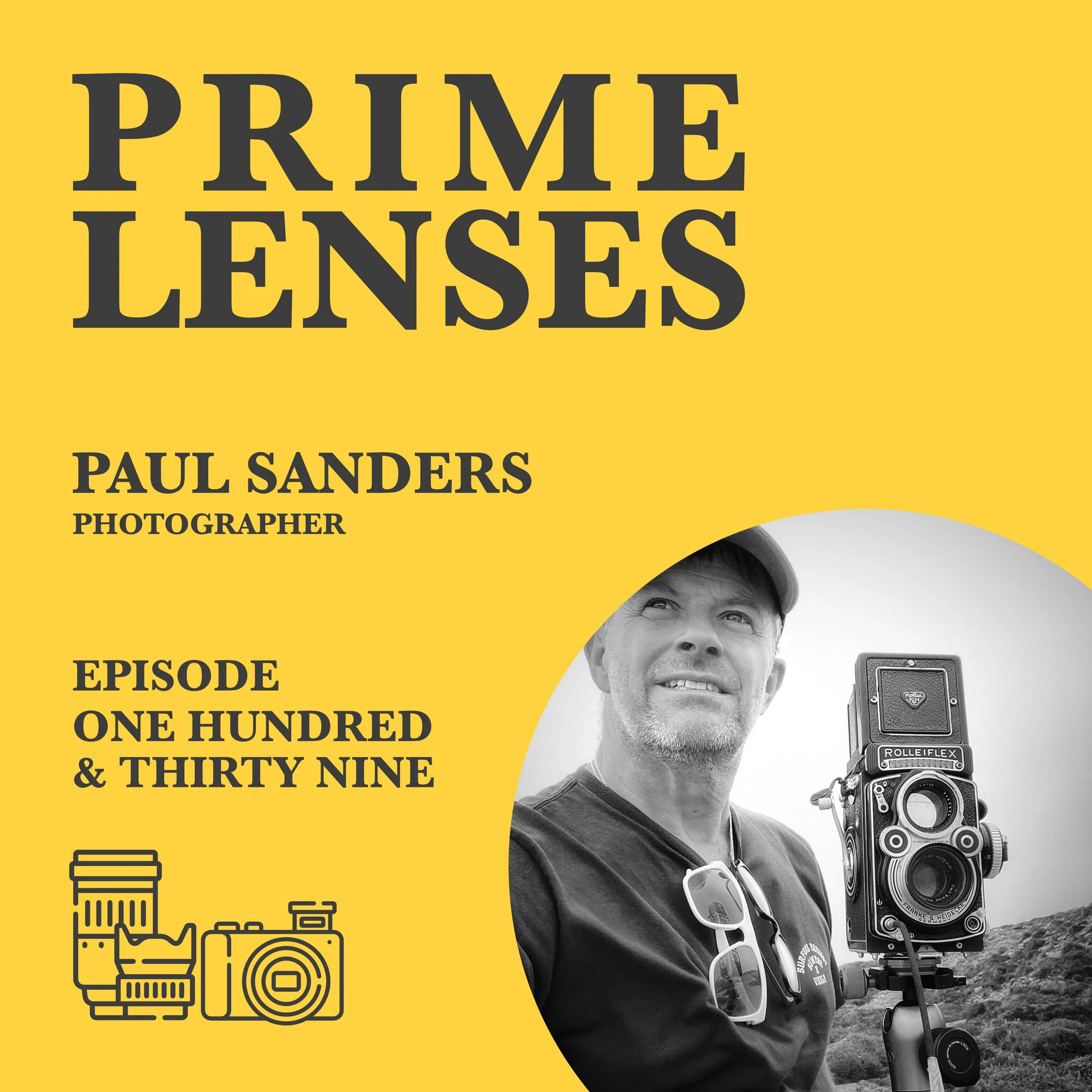
Guest: Paul Sanders, fine-art photographer, former Picture Editor of The Times and author of Still | discoverstill.com
Content note: this conversation includes open discussion of mental health, addiction and recovery.
In this episode
Paul Sanders spent years looking at 20,000 pictures a day as Picture Editor of The Times, and somewhere along the way he stopped enjoying making his own. In 2011 he walked out, and it took a therapist and a notebook to work out what sort of photographer he actually was. This is a densely packed conversation about what came after: why communicating beats perfection, why chasing validation is a trap, why you should keep your mistakes, and why the camera should disappear so you can pay attention to the world. We compare notes on toy cameras, darkrooms, Leicas and the lost art of someone looking over your contact sheet. There is also a surprising amount of talk about orange, and about USB-C cables. Paul’s new book, Still, came out in February.
Highlights
Early: Why the best news pictures often aren’t the best photographs. They’re the ones that communicate, even when they’re blurry, which is the case for Robert Capa’s D-Day frames.
Early: Paul explains cropping to the Times sub-editors as taking the commas and full stops out of a story.
About a quarter in: Leaving The Times at the end of 2011, and being a lost child on Oxford Street at Christmas with no idea what he wanted to photograph.
About a quarter in: The therapist who looked at his pictures and said they were all him, and the journal that connected mood to image.
A third in: Validation as poison: what are you without the award, the followers and the sponsors?
Around the middle: Carry your camera always, and notice without it. Toy cameras, thermal-printer scrapbooks, and the case for pictures that are allowed to be rubbish.
Around the middle: A Hasselblad 503 that got too heavy for Cornwall, and a Leica borrowed from Ffordes that Paul couldn’t give back.
Second half: Keep your mistakes. The deleted frames tell the story of your day, and humility is the point.
Final third: Orange Chubby Cables as a daily practice of noticing, and photography as a gratitude journal.
Chapters (approximate positions, no timestamps in the source)
Start Cold open and intro
~3% Pre-chat: The Princess Bride
~5% From a paid-for weekly to the Nationals, and a list of ambitions
~10% Communicating beats being the best photographer
~14% Cropping as punctuation, and becoming Picture Editor of The Times
~17% The pressure, the exit, and getting his life back
~25% Lost as a photographer; therapy, journaling, photography as recovery
~32% Taking the ego out; validation is poisonous
~36% Noticing small things; Ian Bogost; toy cameras and the Sofort
~44% The kit should be invisible; Hasselblad to Leica; the joy of prints
~51% Keeping your mistakes; film, darkrooms and the gap between capture and edit
~60% Sharing knowledge, contact sheets, and camera club talks
~69% Daily seeing, gratitude, and the Chubby Cable
~76% Connection, community, and Krowji
~80% Photographing for one person, newsletters over Instagram
~86% Vivian Maier and the ethics of being discovered
~90% Orange, red straps and the Nikon Zf
~93% Where to find Paul
~97% Outro, Black Friday merch, next week: Platon
Mentioned in this episode
People
Paul Sanders — guest; studio at Krowji in Cornwall | discoverstill.com
Paul on Instagram | @discover_still
Ian Bogost — professor and author of The Small Stuff, discussed as a book about noticing | bogost.com
Vivian Maier — street photographer whose archive was found after her death | vivianmaier.com
Joe Cornish — landscape photographer, one of the conventional greats Paul measured himself against | joecornishphotographer.com
Platon — portrait photographer, next week’s guest | platonphoto.com
Books
Still: A Mindful Practice for Photographers — Paul Sanders (Ilex/Octopus, February 2026) | Apple Books UK
The Small Stuff — Ian Bogost | Penguin UK
Tools and products
Chubby Cable — the bendy silicone USB-C cables, in orange | chubbycable.com (not sponsored)
Companies, places and community
Ffordes Photographic — used and new kit near Inverness, where Paul’s Leica came from | ffordes.com
Krowji — Cornwall’s largest creative hub in Redruth, home to Paul’s studio | krowji.org.uk
The Inverness Darkroom — community darkroom in Inverness | theinvernessdarkroom.org.uk
Quotes
“They don’t have to be better, they have to communicate better.”
— Paul Sanders, Early
“It’s like we want to be great before we’re curious.”
— Paul Sanders, Around the middle
“Buy it because the fingers fall in the right places.”
— Paul Sanders, Close
Mentioned but not linked
• Mark Littlejohn, Charlie Waite and David Noton (the landscape names Paul says he can’t be) — Joe Cornish is linked above.
• Robert Capa’s D-Day pictures (~10%)
• The Hasselblad 503 (~44%), Leica M11, Fujifilm GFX and Nikon Zf
• Leica Sofort (transcript: “sofa”) (~36%)
• The thermal-printer toy camera Paul describes (~37%)
• The Harris Tweed camera strap made in Aviemore (~91%)
• The Leica store in San Francisco, and Wayne (~90%)
Credits
Host: Iain Farrell. Guest: Paul Sanders. Subscribe to Prime Lenses wherever you get podcasts, including Apple Podcasts. Sign up for emails at primelensespodcast.com to hear about the Black Friday merch discount. Not sponsored by Chubby Cable.
Episode Transcript
Prime Lenses
Episode 139: Paul Sanders — Transcript
Cleaned transcript. Speaker 1 = Paul Sanders, Speaker 2 = Iain. No timestamps in the source.
Paul Sanders
There's nothing special about going out to make pictures. It's just a part of the day. And if you notice something, give yourself permission to stop and stand still and admire what you've noticed.
And make a picture if you've got your camera. But if not, still stop and appreciate it. Because the more we practice looking, the more we notice.
Photography is the art of paying attention. You know, it's that simple. The more you pay attention, the more photographs you will see.
Iain
Welcome to Prime Lenses, I'm Iain. Photography saved Paul Sanders' life. Literally.
After years of working a really high-pressured job in the city, he realised not only was he falling out of love with making images, which was the thing that had got him that high-powered job in the first place, but was also falling out of love with himself. So he quit, addressed the things in his life that weren't working, which was no small task, and now lives on the South Coast teaching and practising a very purposeful form of seeing, and photography. This is a densely packed conversation with an insightful and wonderful photographer who has excellent taste in cables and colours.
So, here's my chat with Paul. There was a cold open with you saying something winning at the start. Then that goes into me going, Paul Sanders is fab and I'm going to talk to him.
And then we go and then the conversation kind of picks up. You needn't laugh that hard. You know how this works.
Every conversation is potentially interesting.
Paul Sanders
Paul Sanders is fab. Yeah. That's a first.
Iain
Won't be the last.
Paul Sanders
But I'll take it.
Iain
There you go. I introduced it on the subject of saying kind of like silly things are winning or whatever. But I introduced my two boys to The Princess Bride last night. Oh.
Paul Sanders
Now that's a great film.
Iain
Yes. It's stunning. My wife doesn't like it at all.
And she's away. So I can show them. I can culturally educate them while she's gone.
And we watched it last night. And I messaged her while she was trapped on a delayed hotel stay over and stuff going, we've watched The Princess Bride. Unfortunately, they love it. And she was like, Derek!
I said, I think you mean inconceivable. It is lovely to see you, sir, and to sit down and sort of get to say hello. I think I've followed you for a little while. You've been on the list for a while. And then when Alistair said, oh, we know Paul, I was like, oh, brilliant.
And so it was a good excuse because it's always nice to email someone with a name rather than just cold. But it would be good, I think, for folks listening to start maybe by talking a little bit about your photo origin story, because you didn't. Just come through photography you were in journal I speak to a lot of journalistic photographers but you were also on the receiving end of imagery and kind of working with photographers so I'd be curious as to how your love of photography got you into that position working at the times and then how that spoilers I know how it ended because I did some reading you're smiling as you're saying as I'm saying about
Paul Sanders
Yeah. I mean, I've loved photography since I was a teenager. And it was all I ever wanted to do. So that that for me was, I think, I wanted to be a photographer and I had high hopes of working in the cool glamour fashion and the photography.
So you've got to bear in mind, I got into photography in the 80s. So glamour and fashion was quite a cool thing to be part of then. Now, not so much. And weirdly, although I made good money doing, I mean, when I was 18, I was shooting calendars in Spain.
So I made really good money. But being 18 years old, 19 years old and being paid a good heap of cash, I spent it. And I mean, I spent it having a really good time.
And I don't regret, I say that I don't regret, do I regret? No, I don't regret spending all of my money. And I got into newspapers because I needed a proper job.
And a proper job for me was a job in photography, not working in a shop or a factory or doing anything else. Not that we have factories anymore either. And I got a job at a local newspaper and I absolutely loved it.
There's a, as a photographer, I don't think there's anything better than seeing somebody you don't know look at your work. And being paid to take pictures for me was, I'd made it. But the Daventry Express, where I started, was a paid-for weekly paper.
So it was only one step up above the free sheets that we used to get. And it wasn't enough. It wasn't enough for me. I wanted my work in the Nationals.
And I knew what I wanted to be. And I wrote a list of the things that I wanted to do. You know, I wanted to get my pictures in every National newspaper.
I wanted to work on a national newspaper. I wanted to be picture editor of the Times. All of these things I wrote down on a little list right at the beginning of my journalistic career because I just thought that's the only thing.
And now when I look back, I sort of think, yeah, you need to be very careful what you wish for. My partner's into manifesting and she said, you know, from a very young age, you manifested your entire career, which probably explains why I had massive implications. I still swear to this day I probably wasn't the right person for the job at the time although I did enjoy it and I was I was successful at it so um so getting into the times I mean honestly it was right place right time I'm not a great news photographer what I understand is the story and this is one of the things I talk about now is you've got to understand why you're making the pictures it's not about whether you're the best photographer It's about whether you can communicate what is happening in front of you in the simplest way.
And photographers often get lost in this idea that their pictures have got to be better than everybody else's. They don't have to be better, they have to communicate better. You know, I mean, sometimes, you know, as picture editors of the time, sitting there watching sort of 20,000 pictures stream in every day, I would say a lot of the time the best photographs never make the press. What is happening the best. And they might be a little bit out of focus.
They might be poorly composed. They might be taken by somebody with a phone. You know, when you've got somebody with 30 years newspaper experience there, it might be a passerby who's caught the moment something happened.
And it might be blurry. It might be shaky. It might be kind of on the wonk.
But that all adds to the communication of the, you know, you look at Robert Capa's D-Day landing pictures. They're out of focus. There's camera shake.
They're all over the place. And yet they communicate what is happening to such a visceral level that you are moved by them. And that's what you're looking for as a photographer is to understand what is happening and how to communicate that best.
And that might not mean that you've got the greatest light or the colours all in the right way or the focus is in exactly the right place, but you've got the moment. You've got to understand the story. And I was lucky.
They say you make your own luck. I was able to understand the stories that I was working on and photograph the right people at the right time rather than focusing on something that was a side story. I always went for the main story.
And I got into picture editing because I could put photographers in the right place because I understood stories. I could send photographers into to the right place with the right brief. And that's a skill in itself.
So being a photographer come picture editor, you're all of a sudden, you know, you've gone from being poacher to gamekeeper. But I understood what photographers needed. And because I had been on the road as a photographer, I also understood what was possible.
And it's very easy to sit in an office in London saying, I want a picture of of this, the guy running down the street with a light from behind him, you know, and it's raining. It just doesn't happen. You know, and the photographers are going, well, they want this picture and it isn't happening. What am I going to do? Well, you just do the best you can.
You know, so you take away the fantasy picture editing and the fantasy editing from the executives and you become a real person telling photographers ideally what you'd like if it's possible, but you'll take whatever they can get. And you're looking for something different. As well and I was just very lucky and then the times went compact from broadsheet and I was able to work on the development the secret issue of the compact 12 people locked in a room for two weeks and there were no adverts in it so picture editing was actually very easy because it was a case of show us how good pictures can look and I had to educate them about the importance of cropping you know cropping is like you know to to a sub editor or or a journalist, they don't think about the narrative of a story. They just think, oh, it doesn't fit in the hole, so we'll chop this bit off.
And I was explaining to them that cropping a picture is like taking all of the commas and apostrophes and full stops and capitals out of your story. If you crop a picture badly, it doesn't read. And then once they got that, we were flying. And I was offered the job as picture editor of the Times on April the 1st, before lunchtime.
Iain
There was a moment where you were looking around for the cameras.
Paul Sanders
I was thinking it was a joke because we did have a picture editor and the editor said to me, yeah, we do. It's you. And I advise you to go home because the picture editor who's there today won't be there tomorrow.
And he said to me, this is not a job for life. He said, this is a job for as long as your face fits. He said, so no job in newspapers is forever.
He said, there are people who hang around forever. He said, but make your own decision when you leave. I was like, oh, interesting.
He's telling me that I'm leaving before I've actually started the job. And actually, that was really good advice because as it went on and there were cuts in budget and financial pressures and agencies like Getty took over the entire world, There was less space to be individualistic as a picture editor. And the stress was enormous.
And, you know, I've said it many times before, that stress eventually got the better of me. I am quite a sensitive person. I'm quite shy.
I suffer with a lack of confidence. And everything just built up to a point where I just broke. It's okay to say that.
It's not a sign of weakness. I mean, I kept going when others would have stopped. And I wouldn't wish it on anybody.
But weirdly, looking back on it, it was one of the best experiences of my life because it let me find out where the lines are. And they were behind me. I'd crossed the lines quite a long way.
But I now know that I can push myself further than I am. I never imagined. I'm never going to do it again.
Iain
No, no, but at least you know.
Paul Sanders
Just does not. And I don't need to. I don't need to prove anything to myself anymore.
You know, I did the job that I wanted. I realized after, you know, a good number of years that I hated it because I wasn't making pictures. And it's the images I love.
It's making pictures that I absolutely love. It's not news. Frankly, I find news, you know, interesting. But not that fascinating that I want to make pictures of it every day. A lot of the people involved in it are only in it for themselves. They want to be famous, like a lot of people.
And I don't want to be famous. I have no desire to have that side of all of my skeletons exposed. And I don't want to be a kind of a household name.
I'm quite happy pootling along in my little house in Cornwall, walking the dog on the beach. Getting my life back after leaving the Times was the most successful thing I've ever done leaving the Times. And yet people regard it as a failure.
Iain
But I think that's one of the great things that comes with you and I both have some free highlights. We're both in our mid-20s.
Paul Sanders
I need to get mine done more like yours.
Iain
Well, certainly from a skincare and health perspective. We're both fine specimens. Listeners will be sad that this is not a video podcast.
But the thing that comes with time, isn't it? The comfort with yourself, the comfort with your decisions. Similarly, I left games, listeners will know, like a year ago.
And since then, I'm sitting in my highland fortress of solitude in the middle of the woods in Scotland. And I hang out with the guys at Ffordes a little bit and stuff. But mostly I'm podcasting and full-time dadding, right? And that's actually been one of the best things I've ever done is that you have opportunities on the table. There in front of you and there's a fork in the road where you're like well I can continue to do this and I'll ship some more games and I'll do some things whatever or thankfully I think I didn't hit a wall like you did it sounds like you had to stop otherwise you could have potentially done yourself some harm.
Paul Sanders
Had I not stopped we wouldn't be having this conversation today you know it was it was that bad and I you know I've made no secret of the of the sort of the I tried to take my life on three occasions. Thankfully, now I can look back and say unsuccessfully. But I was drinking far too much.
As a recovering alcoholic, I've now been sober for nine years. That's one of my proudest achievements because I never ever thought that I would be able to go through a day without drinking myself into oblivion by the end of it. And I was a high-functioning alcoholic.
So I could actually do work and be drunk. And people didn't know. When I told people that I had a drink problem, they were surprised.
It was a little bit like when I told the people at the Times that I'd got severe depression. They were like, we'd never have known. I'm really, really good at masking.
Iain
I should perhaps have been an actor maybe I'd certainly made more money maybe maybe not we know what you were like with money in the early days it sounds like as there's no guarantees yeah I'd have just blown it you know I think we all would in our 20s drinking drugs it all it would have all gone um but the making the decisions that that you need to make and not shying away from them I think is is one of the most important things
Paul Sanders
Because you do what's expected or you do what's right for you. And had I done what's expected, I would have toughed it out at the times. I would probably have lasted another 18 months before they decided either they were going to get rid of me in some kind of weird reshuffle or I'd have just, you know, I would have just ended it. Looking at it and saying, I actually hate what I do on a daily basis. I love photography. I love images.
I enjoyed most of the people that I worked with, like the photographers I worked with. I enjoyed working with them, but I hated what I did. And when you, you know, I had some, when I had my three months off to get better from depression, it's nice.
They gave you three months off. It's actually taken me, um, what, 15 years to come off antidepressants.
Iain
But they gave me three months. They gave me three months this morning. That'll do it.
Yeah. Yeah. Oh yeah.
Paul Sanders
That's three months. You'll be fine. And then come back four days a week and you'll be okay.
And I sat there in the conference room and I just thought, what the hell am I doing? I don't recognize these people as humans. I have no interest in what they've got to say in the world and I just don't want to do it.
So that was it. I just, I went upstairs and I said I want to leave and I'll leave at the end of the year and that was it and on the at the end of 2011 I walked out and as the door closed behind me I just thought you know what I actually feel lighter already yeah but rather than getting better straight away it just I mean my life fell off a cliff you know and it was only through it falling off a cliff that I was able to get back into things using using my photography because I didn't know what sort of photographer I was. I didn't even know if I could be a photographer. Because when you work for other people as a photographer, magazines, calendars, newspapers, you're working with editors and briefs.
So all the time you're photographing to really what somebody else wants and you're just interpreting it. And this is not knocking that industry. It's a fact.
If an editor says I need an upright picture of this, you've got to photograph an upright picture. You do a landscape-shaped picture because the page might change. But if they say we need an upright three-quarter thing, you do it.
And a lot of newspapers have a formula for the pictures that work in them. So you know that for the Daily Mail, a lot of the time when I was working in the agencies, you know, a sort of an upright 85 mil backlit picture. Would 90% of the time make because that was the kind of picture they looked for.
And those things stick with you. So when I stopped and I got off that train, all of a sudden I was completely lost as a photographer because I thought I have no idea what I want to photograph, what I enjoy photographing, who even am I? By the job.
And all of a sudden, I was like a lost child in Oxford Street at Christmas. It was like the world was going, sort of streaming past me at this hellish rate. And I just didn't know what to do.
And at that point, didn't really care either, to be honest. I was in full-on self-destruct, which was fine. Well, it wasn't fine, but it was where I was at.
And it was only through working with a therapist that I was able to discover the sort of pictures that made me tick. And they weren't pictures that were pretty or commercial. They were pictures that told a story of who I was, where I was, how I felt, what I hoped for.
And they were imperfect. They were sometimes a bit messy, sometimes very minimal. But the therapist said, you know, all of these pictures are you.
You know, when you talk about the pictures, I can see you in the pictures. Sitting with my work, I was able to identify exactly what moods I had when I was making the pictures. And I'd started keeping a little journal.
And it was interesting looking at the images and looking at the notes and making the link. And all of a sudden I realized that photography was my recovery. And that was an incredible moment.
But I thought, how am I ever going to make a picture? As a photographer, photographing broken leaves, sticks in the sea, you know, all of this stuff, when there are so many great photographers out there doing the most beautiful landscape work. And none of that appealed to me. I tried really hard to fit into the conventional to the point that it actually became a stick that I would beat myself with, you know, because I'm not, I'm not a Mark Littlejohn or a Joe Cornish or a Charlie Waite or a David Noton.
I just can't do that kind of photography. So I just thought, you know what, I'm just going to go down this path and see what happens. And weirdly, it's sort of come together. Out there who feel a bit lost with their photography. Who find the judgment on photographs either in social media or camera clubs or anything like that, you know, personally damaging. And I've been able to work with photographers who see the world in the same way that I do. You know, their pictures might not be perfect, but they're beautiful. Because they're not perfect. And that's a true reflection of humanity. You know, each of us is different.
We're not the same. We're not all, you know, beautiful or amazing. We all have our flaws and failings.
But that's what makes us unique. That's what makes us human. And that's why I can photograph something and it means something to me.
And you can photograph something. It means something to you. We can put the two pictures together and you can't compare them as good or bad.
Because they're taken by completely different people with completely different backgrounds, conditioning, all the rest of it. And we're both responding to things that resonate with us personally. If you take all of the ego out of photography and stop worrying about whether people are going to like your photographs or whether you're going to make any money or whether you're going to be an influencer or whatever, you're going to get a sponsorship deal from a company.
Your photography changes. It becomes vulnerable. It becomes authentic. It becomes flawed. It becomes real.
So many people strive for the validation of external sources of their work when actually we don't need it. In fact, I would go as far to say almost that validation is poisonous. Because you become trapped in this world of, oh, my followers, my audience, my sponsors don't like me to do that.
They only like this sort of work. Or this is the only sort of work that gets traction. Or I won an award with this last year, so I better repeat it to see if I can do. Because what am I without the award?
What am I without all the plaudits, without all the noise around me, without the lights and the trocades? Well, without it all, you're more you than you are with it all. And that's what I think we lose sight of.
And I think it's hard for photographers who are in the top echelons to keep being in the top echelons. That pressure stifles creativity. Some people thrive on it.
But the more pressure you put on your yourself to be creative the less creative you become you know it's like and I say this in a lot of camera club talks when you go out looking for a picture you don't find it when you go out without your camera you see pictures left right and center because you've got no pressure on you yeah you know so the the the key is carry your camera always make it part of your everyday experience so that there's nothing special about going out to make pictures a part of the day. And if you notice something, give yourself permission to stop and stand still and admire what you've noticed. And make a picture if you've got your camera. But if not, still stop and appreciate it.
Because the more we practice looking, the more we notice. And photography is the art of paying attention. You know, it's that simple.
The more you pay attention, the more photographs you will see.
Iain
You're absolutely right. And actually something to plug a previous episode that was a little, I do smaller episodes with people sort of sometimes photography adjacent. Ian Bogost is a professor in the US.
He's written a book about noticing and appreciating the small things in your life. Because if you wait for the big moments, the promotion, the child being born, the graduation, the whatever it is, they come along fairly infrequently. And speaking a little bit to what you've been talking about, the pressure then that is on that event to feel, Incredible. You get on with your life but it's it's a your noticing example is the same I've recently been shooting a lot it's out of reach but I have a little Sofort too like oh yeah instax printer built into it that is a five megapixel digital camera it's dreadful yeah just by by every measure but when I run around like when we were we went to a photo festival earlier this year or if I just run around the woods when the sun's out and stuff you capture little moments little things and it's like having a little um a graphic scrapbook where there's no pressure on me to make great imagery with that thing because it's impossible so every time you get something that's half decent you just look at it and go oh wow it's delightful yeah and then that gives you you go back later yeah so I've got um I've got uh they call them toy cameras um with the I've got them is it like a little holder or something like the the no the t oh with the yes that's till roll Yes, thermal printers built in. Yeah, yeah, yeah.
Paul Sanders
And it's dreadful. It's dreadful. It doesn't do square. It does 16 by 9.
The contrast is unbelievably high. The definition is awful. But I really enjoy using it because it's just, it's like, like you say, like, it's like scrapbooking photography.
And I make little pictures with it. I stick them in my journal. And I've done the Instax thing and I've done Polaroids and this is great fun.
It's pennies. So you don't really feel like you're, you know, it's costing you an arm and a leg to do. And again, takes the pressure off and you appreciate the little things.
You know, this morning I was standing outside the gym that I go to and the lady who does my training said, what are you looking at? And I said, I actually didn't bring my camera this morning. I literally ran out of the house and went straight there.
I said, but I'm just appreciating them. I said, as if I was making a picture. And she went, what a beautiful way to start the day.
And then she got into me lifting weights, which was not a beautiful way to start the day. But the idea of being able to look at something and not be disappointed because you're not making a picture. Yeah, but you've got it up here.
You've got the experience. Photography is about the experience of life. Yeah, and we all put so much pressure, you know, desire, ambition, all of this goes on to our, goes on to our, our photography where we want our pictures to kind of go viral or we want somebody to pick them up and turn them into an album or a book or a poster or somebody to say wow that's amazing I'm going to put it on every cruise ship in the land or on the sea um and photography is purely an expression of each person's life it's not about greatness it's about great experiences within your everyday within the mundane Parts of your day, the getting out of bed in the morning, looking at the light on the way the duvet crinkles, throwing open the curtain and looking out of the window that you look out of every day and seeing it with fresh eyes.
When you get up every day, if you get up at the same time, noticing the subtle shift in the way the light comes into your house or the way it filters through the trees or the way the shadows are on. The buildings opposite. It's all those tiny moments that are celebrations of being alive.
You know, it doesn't matter how good your pictures are now. We don't now decide who are the great photographers. That's decided in a couple of generations' time.
You know, I'm sure that when Ansel Adams was alive and well and making pictures, he wasn't thinking about being a great photographer. He was just enjoying the process of photography, exploring his creativity and technical skill in a bid to raise awareness to the vulnerability of the national parks in America. Again, Edward Weston, Minor White, Cartier-Bresson, all of these people, they weren't trying to be great photographers.
They were photographing things that resonated with them, things they found interesting, things that they were curious about. And we as photographers, these days, we put that out of the window. It's like we want to be great before we're curious.
We've got the horse and cart the wrong way around. We need to be curious. We need to be excited. We need to be in love with our lives.
And out of that, in future generations, maybe greatness will come, but that should be the last thing on your mind. You know, it's like the whole gear talk. I had an open studio event over the weekend and somebody walked around the studio and they looked at the pictures and they went oh I bet you've got a lovely camera what do you photograph on and I'd actually got the little toy camera in front of me and I said well often I use this or my phone are these done on your phone I was like well one of them is I said the rest are done on a Hasselblad or a Leica and I knew you'd have a good camera said all good photographers have a good camera I was like no they don't they absolutely don't they have the camera they can afford.
And, you know, yeah, I use a Hasselblad and I use a Leica. I used to use a Fuji GFX, Fuji film, I should say, because they hate it when you say Fuji. And the GFX is an amazing camera.
And, you know, like you said right at the very beginning, it is a bit like a spaceship. It does so much. And I don't need a camera to do all that. I want a camera that will make a picture when I press the button that I feel, fully in control of.
Iain
Yes.
Paul Sanders
And, you know, my Hasselblad 503, which has now just gone back to Alistair at Ffordes. Am I allowed to say Alistair at Ffordes?
Iain
Of course. I think a shout out to Alistair at Ffordes. Yeah, I think we should.
Paul Sanders
Because for me, it got too heavy. And in Cornwall, it's either up or down. There's very little flat.
Iain
Yeah.
Paul Sanders
And I found that when I was going out, I was struggling. I'm quite fit. The weight of the kit was just too much.
So I wasn't enjoying being out making pictures. So I wasn't making pictures. I was using my phone to do little sketches or using the toy camera.
And I thought, well, actually, you're almost not being a photographer. And then I said to Alistair, I need something light, good file size, lightweight. I said, but I want lenses that have got personality.
And that's when he said, try the Leica. And very kindly let me borrow it for I mean to be honest I thought he can let me borrow it forever but he did ask for it back and I thought actually I can't part with it um and it's finding kit that works for you you know I don't want my kit to be hyper perfect I like lenses that have personality I like a camera body that has a few quirks um and And for me, the joy is in receiving the images. It's not in taking the picture. The camera takes the picture.
I receive the image. And the camera just stores it. It's largely a massive memory card these days.
And you plug it into your computer and you process the life out of it, if that's your sort of thing. And then you just leave it there. But actually printing your picture onto some paper that you can feel the texture between your fingers.
That you can smell. That's where photographs come back to life because they've been alive. We kill them in the camera and on the computer.
And then we give them a rebirth by printing them. Turning them into books or cards or whatever, you know, or sharing them with people by giving them to to people or you know or luckily you know somebody may be giving you some money to take one away which is which is lovely even though yeah um the the joy is not in the kit the kit should be invisible the kit gets in the way the kit is a necessary evil I think um you know that's where people who paint and draw I think have got slight edge on photographers because they can work with their feeling much more. The way they apply the paint or the charcoal or whatever, they can really evoke an emotion.
In photography, that's much harder. You have to work really hard as a photographer. Everybody out there now is a photographer. They've all got their phone and they all think photography is easy because they just point their phone at something, apply a filter, and it gets a thousand likes.
But true photography, noticing, making the The ordinary bits of your life, extraordinary. That's hard. That's hard work.
And you've got to do the hard yards. You've got to practice every day. You can't be a photographer if you don't practice photography.
You don't pick up your camera once a year and be brilliant. You do pictures every day. You make mistakes.
You get it wrong. Even now, you get it wrong. And there's a joy in getting it wrong.
There's a joy in not knowing everything. There's a joy in the mistakes. And I get really frustrated with people who delete all of their images.
You know, while they're out in the field, they're like, oh, delete, delete, delete, delete, delete. And they come back with like eight great photos.
Iain
Yeah.
Paul Sanders
But all the pictures they've deleted tell the story of their day, their frustration, and they're not getting it right. They're changing the development, the work. Around the story of that subject.
They're all really important. And people go, oh, delete, delete, delete. It makes me look like I don't know what I'm doing.
Yes. That's the celebration of photography. To look like you don't know what you're doing, to be humble enough to say, you know what?
I don't get it right. I get it wrong more often than I get it right. And sometimes I get it wrong because I'm rushing or I take for granted the stuff that I know.
And I think once we become complacent, we stop being photographers and we start churning out dross. Keeping your mistakes keeps you humble.
Iain
Well, it's also really useful. So I've been shooting a lot of film recently again and learning to develop at home and there's a community darkroom up in Inverness. Yeah.
Run by a mate, Matt and stuff. And so starting to do that process because A, there is a, there is a, is a distance between you and the capture a little bit. Even if you are developing at home and it's just minutes if you want it to be. I can finish a roll of film. I can have the chemicals already warming in a bath if I want to.
And I could develop them straight away. It would be almost as quick as a Polaroid. But the usefulness is having a little bit of a gap between when I captured the image and then seeing it again.
Because you don't self-edit in the same way. And because I've said a lot of times on the show, is the thief of joy. And actually, if you feel like you got it on the back of the camera, the reason I have my screen turned off on the back of my camera is because I don't want to be distracted by looking at the back of the camera. I want to stay looking at the world around me.
And again, that's why I like my rangefinder, because it has a literal physical hole in the side of it. And I'm seeing light and real life. I'm not seeing a screen. I'm not seeing a histogram.
I'm not seeing numbers, really. I'm seeing what's in front of me. And it sort of keeps you there.
But then the other thing is when you're, as I have done recently, I've experimented with scanning them using a camera and an adapter. And I'm trying to scan using an M. So I'm trying to scan using a manual, which is a pain. So in the end, I just got a desktop scanner.
And it's the best thing I've ever done, Paul, because this scanner sits on my desk. It's much slower than using it. But it means if I'm editing an episode, I'm listening to that, I can just like occasionally press the button and move it along to scan the next one. And what that means is, as you see the previews, you come in quite it's like old-fashioned internet like when images used to load slowly in front of you like drawing line by line the picture comes in and you have a moment to look at it and I've had a few guests recently who came up through film photography and then into digital and have talked about sort of missing the time in between so when you would do a pre-shoot send a roll off to the lab check that everything in the studio was coming through the way you wanted it to before you took the studio down yeah there'd be time to sit around and talk about it with other creatives and talk about the process.
Maybe do some experiments. Maybe futz around with Polaroids, whatever. And I feel like by streamlining and speeding up the process so much, like my M11 has this great feature where I can be out taking some photos with family or whatever.
If there are a couple that I like, I can wirelessly have them appear on my phone. Or we did it recently. The school did a charity color run.
All the kids covered in colored paint. So I had my Sofort and I had my M and we charged people for prints. Because nobody does prints anymore.
So having a little instant camera there, taking the digital file, turning it into a print and charging people some money for the school was a great way to kind of like give people a little thing to keep on their fridge and to take away. But that's really useful in that one application. But actually it can be very detrimental to me photographically because if I've done my walk and I already feel like I've seen the quote unquote bangers, then you actually maybe don't want to. Put the memory card in your computer you don't sit down you don't spend some time so the part of the thing that's satisfying about film is yes it has a feel to it and has a quality to it and I enjoy there's a kind of meditative process to kind of turning chemicals around in a thing and warming a bath of liquid and doing all that and I'm quite enjoying that but mainly from a from a making the images perspective I'm showing myself my working in a more thorough way it's forcing me to actually look at the mistakes and I'm doing a bit more processing of them and thinking about them through that process. I think I'll probably learn more. Like the photo you was mentioning cobwebs.
I got a photo on one of my film cameras the other day of a spider in a cobweb with the sun behind it. I nearly blinded myself making that picture because the sun showed... When you look through a digital camera at bright sunlight, it's on a screen.
So you're not looking at the sun. It was actual sunlight bouncing off a mirror into my eyes. And I had, no joke, I had pain in my optic nerve on the right side of my head for about two days afterwards because like a twat, I looked at a spider in a cobweb with the sun behind it to try and get this perfectly silhouetted autumn spider. I nearly blinded myself.
But you learn something and then you see the image when you process it and you go, ah, it came out quite good. Yeah. So yeah, but it's all meaningful to me.
Yeah.
Paul Sanders
But I mean, the other, I think, I mean, I'm digital again at the moment. I flip between when it's sort of affordable and sort of when I feel like it but the one of the things about working as a photographer using film was I learned so much from other photographers looking at my pictures as they came out of the darkroom so they'd come out of the darkroom there'd be you know a sheet of negatives and I'd put them on the light box and one of the more experienced photographers would come over and go That one. I'll tell you why it's that one.
And they would go through a whole set of reasons. And actually, if you tried X, you might. There's this whole conversation that was around the editing of your photos.
That rarely happens now because we edit privately. Because we don't often want people to see what our pictures look like when they come out of the camera. And we don't want people to realize how much we do.
And it's so easy to adjust your image using AI and things, but people still want to be seen as authentic. So we've lost that conversation around, oh yeah, here's your pictures, Paul. I've had a look and they do a contact sheet and you think, oh my goodness, they're awful.
And then you see the prints. And because of the way you can work with an individual negative, you can bring so much out of it. And I spent a lot of time working in dark rooms where people who had been in dark rooms 30 years would say, just bring that up a little bit, just a fraction.
Okay. Tiny, tiny adjustments. And those conversations, I still hear those voices. In my head when I'm looking at the pictures that I've made. And I think we're very, you know, very, I feel very, very lucky to have been able to work through photography when it went from film all the time into digital, because I was able to have those conversations, you know, and understand why those conversations were important and why senior photographers, shared their knowledge so willingly with young photographers. Now everybody's like this, it's mine, go away, you know, I'm not telling you my location, I'm not telling you my process, I'm not sharing anything.
And, you know, I'm happy to share everything. Because it doesn't matter. If I shared all of my techniques with you, you would never be me, and I would never be you.
But we would both learn something from the sharing process. And you might go, do you know what, Paul, 90% of what you said, I disagree with. And I'd say, well, Ian, I feel the same.
But that 10% is the magic dust that makes your pictures move on a level.
Iain
Yeah, you need that. I think you need that community, right? It's about it's it that's the thing we actually lack is. Yeah, I think that's the thing I've been very fortunate.
You may have found this when you were doing a podcast as well, like hearing from an audience of people, whatever size it is, is just the best. Yeah. Because sometimes you get to the end of a conversation, you're like, I'm not sure this one works, or I'm not sure, you know, whatever.
And then actually, you're feeling in a low moment because you're comparing yourself to a Kardashian. Yeah. I can't believe I don't have millions of followers.
What am I doing it for? And it's like, well, actually, this person here really enjoyed it.
Paul Sanders
Yeah.
Iain
And if you met them in person, what a great feeling. You must get that from workshops and things like that because you're giving people a toolkit, effectively. Yeah,
Paul Sanders
And you're giving them permission to experiment without judgment, and you're giving them permission to have a conversation and to be themselves. And I think the, you know, I've always said, if I, I do a lot of camera club talks, and you can see when you look around, there are some people going, he's talking out of his backside. And then there's that one person at the end who comes up and just says, Every word of that struck home, thank you.
That's why I do it. It's not to please all the people in the room. It's to kind of help one person understand that they're not the lone voice.
You know, that they're not lost. They're not no good. That what they're doing is good, is good enough.
And the way they see the world is also a way that other people are doing. See it's not it's not all about the big win or the 10 points or whatever it is or the the number of letters that you have after your name you know and and I I take nothing away from the people that have got the distinctions from all of the photographic bodies but it doesn't mean you're a good photographer it means yeah you can meet a set of criteria to have some images passed by a a panel of people that you probably won't ever meet again. And that's good because the process of doing that is a discipline and that's important.
But that doesn't make you a good photographer. What makes you a good photographer is just paying attention to your everyday life and not being afraid to photograph it and not looking at your life and going, do you know what's not worth photographing? Because all you're doing is running your own life into the ground and then you live in disappointment.
Iain
Yeah,
Paul Sanders
Absolutely. And being a photographer who's always disappointed.
Iain
And it happens a lot, right?
Paul Sanders
Oh, yeah. Yeah. And, you know, we all go through it. I mean, you know, I don't live life in permanent joy.
You know, I mean, there's a lot of things, you know, there's a lot of things that happen in life that that knock you sideways that you wish didn't happen or stuff gets in the way. But if you can see some beauty in those little moments where things go wrong, then you're making something good from it. You're enriching your life experience by finding the beauty in even the worst moments, if you can. And it's hard. It is hard.
But it might just be that one morning, you wake up and you're feeling pants and you notice that the light has reflected through the window of your bedroom and there's a little rainbow on the wall photograph it it's a nothing photograph you're not going to win any awards nobody's going to say this is brilliant here's a million likes or you know fuji film aren't going to come to you or sony or coda or canon or nikon are going to say here's a ton of kit be an ambassador for us because of your rainbow it's not going to happen
Iain
No. That cuts both ways.
Paul Sanders
Yeah. You found a nugget of beauty in your day. And those little bits of beauty, they're like a gratitude meditation.
And if you've ever kept a gratitude journal, it's like find just three things in the day that you're grateful for. Well, you can do that photographically. Three things. That gave you joy or made you smile or that you're grateful for. And it can be anything. But we overlook the fact that a beautiful piece of art on the top of coffee can give you joy. So why not photograph it?
Let it be one of your practices of daily seeing. But we're like, oh, art on a coffee. It's a bit cliche to photograph the top of my coffee.
You know, perhaps it's the way your cable... I have to say this. I've got a broken cable off my LaCie hard drive.
It doesn't work anymore. And I've just bought some. I saw them advertised on the internet.
Chubby cables, they're called. And they're really bendy. They come in orange, which is my favourite colour, which is why I like your jumper today as well.
And I'm in love with them. I keep photographing my chubby cables because they roll up and you can get magnetic ones. I'm like, I don't need to order any more chubby cables. I've got no more USB 2 slot, USB-C slots rather for them to go in. I have no idea what to do, but I'm addicted to them. They're absolutely beautiful.
And I look at it every day at the moment and I just smile and I make a little picture of the way it's curled, the way the light's catching it or the shadows. And I'm thinking, what the hell am I going to do with these pictures? I have no idea.
I'll probably work them into a talk. At some point, but it's the little, it's the naff bits. It's the kind of bits that seem almost inconsequential that we need to pay attention to.
And finding the thing that caught your eye, the thing that made you go, ooh, the thing that made you smile, the thing that lifted your heart, whatever it is, photograph it. You know, find joy in the simplest of things. And then when you go somewhere where the landscape is amazing or the subjects are amazing, actually the seeing is so easy.
Because you've spent a lot of time seeing the beauty in your own normal everyday. Which means that when you go somewhere that you're not familiar with, all of a sudden you're assaulted by so many visual opportunities. You get so much more out of it. And you kind of run around with your hair on fire, but you're so excited. You're visually uplifted. You come back on another level.
But then the trick is to not go, oh, goodness, my life is so dull. It's just, you know, it's then elevating that and saying, right, now I go on. Now I push on and find more beauty in my days.
Iain
Yeah. As a fellow owner of two orange chubby cables, I can say they are amazing. We love them.
Paul Sanders
We should be ambassadors for chubby cable.
Iain
Yes, yes. Shout out chubby cable. But no, it's funny.
Alice is away at the moment and I've sent her away with one. And the great thing about giving her one to take away when she's traveling for business is they're also bright orange and big. So you don't forget to take them out of a room or whatever.
And we have a massive long one in the sitting room, which is handy for just, you know, Inevitably, when children forget to charge things, they can still sit on the Sofort and be entertained while I'm cooking dinner. I'm totally with you. They're a revelation, those things.
But I think you're absolutely right about the noticing and the power for all of us that it can provide because it reminds us you're taking away pressure. You're also giving yourself a little creative expression. Not every day is a day when you get to sit down and do stuff. I think that's the other thing that comes out of these sorts of conversations is, to us, everything around us seems really mundane.
But actually, it's not uninteresting to someone who lives in India or Australia or America or just somewhere else in the world, like where you live that you see every day is actually visually quite interesting. And they want to see the latte art in your local little cafe because it's different to where they are. And I think building those sorts of things into our lives reminds us that what's around us is interesting.
You can get a little bit of that interaction with someone a little bit randomly because that does sometimes feel good and I think the interesting thing about what you're saying there about making things and getting a little bit of feedback it's why social media has done such a number on us as a species because we do seek connection we're built we're hardwired to kind of connect with people and we're looking for that all the time and the modern world kind of interacting with things through through screens and not necessarily through you know especially if people work from home like through just sort of talking you don't quite have that same no contact so unless you're going out to a gym first thing in the day or have a school run to go on or something. You don't necessarily see people. You might come downstairs in the morning, eat breakfast, start work and just be in front of a webcam all day.
And you don't necessarily have that. So to find a bit of expression, a bit of connection, I can understand why people crave it and why they get kind of hooked on that feeling of, I hope someone looks at my thing and likes it because otherwise I might not talk to a person today. It's very real.
Paul Sanders
It's a shame. I mean, I think in a way that's where photography groups and clubs and societies come in because they, the social side of that network is fantastic. Where you get a group of people who share a passion for something, collaborating on ideas or projects.
It gives people purpose. And I think if you, if, even if you join an online photographic community, There's a bond. And a lot of us are starved of proper human connection these days.
And I think it's probably only going to get worse until we rebel against it and start saying, do you fancy meeting for a little photo walk? And actually it just becomes a walk because you end up having a really great conversation. And the idea of meeting people and just sharing a little bit of your day, even if it's only 20 minutes, you know, or five minutes because we're so busy, you know, is amazing. I mean, where my studio is at Krowji in Redruth Cornwall, there's about 80 artist studios here.
The sense of community is incredible. And if I wasn't talking to you this morning, I'd be out with a sketch. And laughing and drinking coffee and eating cake.
That sense of community is fantastic. People come and they pop in and they talk to you and it's really lovely. Just to have that human connection rather than, like you say, all being through a screen.
You feel often like when you're through the screen you're always either being sold something And then there are hardcore photographers and artists on there who just want people to acknowledge their work. And again, there's nothing wrong with wanting feedback on your work. It's just there's now a sense of desperation creeping in, you know, where people hold their picture and they say, I'm going to show you my work until I reach 10,000 followers.
It's like, I'd much rather show my work until I reach the one person who actually connects to my work. With it. Yeah. Who gets it? Not the 10,000.
It's easy to get, you know, 10,000 people who don't care about what you do. But finding one person who cares about what you do is quite lovely. And you get that from being you.
By just being who you are and sharing how you see the world in the way that fits your work. You don't need to shout from the rooftops or blow trumpets or have flashing lights around you. You can quietly go about it and gradually people will find you.
You know, they will. There's enough people in the world that we can all have one person who likes our work. You know, and but the most important person to like your work has got to be you.
Iain
Yes.
Paul Sanders
You're the person who creates it. You're the person who had the experience. So you've got to be the most important person in the photograph.
Or not in the photograph, but you are in the photograph. You know, the idea that we're photographing for others, you know, I've never understood that. I photograph for myself.
Always. If other people like it, it's a bonus. If people buy it, it's a massive bonus.
But I photograph myself. And, you know, like I've just said, if other people get it, that's great. I put it on Instagram these days because I feel I have to as a photographer.
But I get more feedback from my newsletters, you know, where I can, where I feel a bit more in control of who sees it because I've got an email list. I know that they can then choose to read it either when it's put out or come back to it later or ignore it altogether. And I don't feel that I'm in competition with 60 billion other people.
And I think that's important. It's finding how do the people who like your work want to be communicated with? Do they want it on email?
Do they want it via Instagram? Do they want to come to your studio and look at it? They want to go to an exhibition.
Maybe they want to buy a greetings card with one of your pictures. Perhaps it's a print. Maybe it's a frame print.
It's finding the ways into people. And it's also allowing them to have their own relationship with your work and not forcing them to have the same relationship you did. Because I think it's really important that when you put your work out there, it'll resonate with different people in different ways.
And if somebody says, oh, wow, I saw this in that, you don't then come in as the artist going, no, that's not what it's about. It's about this, because you're instantly damning that person and making them feel insecure. I think, you know, when people say to me, I saw this, I'll say to them, I never saw it like that.
But that's fascinating. Talk to me about that, because then you've got a conversation. Then they feel you're approachable and then they're not frightened to come back and say ask you questions because you're you're you're being open and accepting and and I think the the key thing these days is to be a lot more open and they're open to receive images open to uh thoughts from other people open to constructive criticism um and open to joy and gratitude You know, not disappointment and regret and bitterness because, you know, Joe Bloggs has won another photographic event and you came nowhere.
Celebrate their wins. Be pleased for people that you know if they do well. Because we can't all win.
No. And if you, you know, So if you're all about the winning, then you're constantly going to be a loser. I mean, it's a funny thing that if you just want to win with your pictures, you're actually losing the experience of being beautifully alive and beautifully in touch with the world in which you inhabit because you're judging 90% of it as not good enough.
Iain
It makes me think of Vivian Maier when you're talking about that because there's a person who in their entire life had no expectation of their imagery. Yeah. He's clearly spectacularly talented photographer. We will never know how they felt about their work, what they wanted for it. I suspect they probably wouldn't have wanted this.
Paul Sanders
No, I think you're right.
Iain
Because you don't keep that body of work to yourself. I have a very conflicted relationship with that work because you look at it. And I love seeing it. And I feel it's a real treat to be able to see those people on the streets.
But I've no idea how they would feel about being, quote unquote, discovered in this way and having their life poured over. And I just don't think they would have wanted that. I think it would almost have been better if when those images were found, it had been like Banksy.
And we don't really know where it comes from. It just comes from and it arrives when it arrives. And that's it.
Because the it sort of taints it a little bit. I feel I shouldn't be allowed to. It's like stuff when it comes out from leaks or when you find out about the next whatever.
And again, my previous life in games, when stuff leaks, you're like, well, that's just a shame that I know that's coming now. And now I sort of wish I didn't. I would like to have the surprise or that scene in The Simpsons where people are queuing up for Empire Strikes Back and Homer walks out and goes, I can't believe Darth Vader was his dad. What's the point?
So I think you're right. I think you kind of, there is enough room for everyone to make things that they enjoy making. And then for you to just get your gratitude and joy for making it. And if it turns out to be a professional endeavor, or you can monetize it in some way, and that's what you want to do, that's brilliant.
But start from a position of making. I think I'm loving this conversation because these are kind of like tentpole themes of the show coming up again independently. You weren't briefed at like,
Paul Sanders
I didn't even know you liked orange
Iain
Well we've just we're two men with exceptional taste now that you're in the prime lenses extended universe like hopefully you'll be a recurring character you see I love our shared love of orange and cameras with red dots on them yeah that's it yes I know
Paul Sanders
I mean it's uh it's a worry but the cable release I use for mine even matches the color of the I mean, I'm obsessed with that detail.
Iain
Yeah, well, again, my M is not directly in front of me, which is a rarity, but it has a red strap. And I remember when I went to San Francisco and I wanted a strap for the camera and Wayne, who runs the San Francisco Leica store, I'd bought a cheap strap that broke on that trip. And so I walked into the store and was like, well, have you got a red one?
And he was he was so disappointed in me in that moment. I could see it. He was like, no, I don't have a red one.
You can have a black one like a grown up. And within six months, I'd got a red strap because I couldn't. I was just like, sorry, my cameras have red straps. It's just a thing that they have, except for the Harris Tweed one that I have, which is pink.
Paul Sanders
That's nice. I like that idea.
Iain
It's made by a guy in Aviemore. I was going to a wedding and I had a pale blue suit and pink tie and pink handkerchief and pink Converse to go with the suit because I was dressing it down slightly. And then I got a pink Harris Tweed strap for the camera because you're going to be at a wedding and you're going to take photos.
Paul Sanders
Yeah, and it's got to kind of match it with the outfit.
Iain
Yes, I felt like that. It's very responsible. This has been a cracking conversation because it's reinforced all my biases in my favorite possible way, and I've loved it. So for people listening, Paul, who don't know you and want a little bit more Paul, where can they come and find you?
Paul Sanders
They can't. I hide.
Iain
I'm good at pictures. I'm terrible at business. Yeah,
Paul Sanders
I am the world's worst businessman. So I have a studio at an arts hub in Cornwall, Krowji, which they can visit by appointment if they want to. But my website, discoverstill.com, they can get in touch with me there or sign up for the newsletter. And then my book, Still, A Mindful Practice for Photographers, was released in February and at present has sold over 4,000 copies.
Iain
Woohoo!
Paul Sanders
Minor celebration. And has received some very nice reviews because it sort of reflects very much what we've spoken about today with a few little largely pointless exercises to get people to practice seeing in it. But yeah, or discover underscore still on Instagram.
I am the world's slowest responder to messages and emails. You know, I don't live my life glued to messages. In the hope that people talk to me.
So, yeah, but I'll happily respond to people if they do get in touch as long as they're patient.
Iain
Excellent. I think that sounds very healthy. Like, look, I'm going to get to it, man. Yeah, well, you know,
Paul Sanders
It's like I used to have hundreds of emails every day when I was at The Times and now I still get quite a lot of emails and I just prioritize them. So if you message me every day wanting a response, you'll get one eventually. But the more hassle you give me, the less likely you are to get a response quickly.
Iain
That's noted as someone who probably wants to stay in touch now. That's okay. That way I won't freak out.
Paul Sanders
You've got an orange pass.
Iain
Excellent. Brilliant. Paul, this has been fab. Thank you so much, sir. I've really enjoyed it.
Paul Sanders
It's been an absolute pleasure. I'm really grateful to you for having me on and to Alistair for putting us in touch. It's so lovely to talk to somebody who has a very similar view and it not be all about the kit.
Let's face it, we've got to have a good camera. If only they did cameras in orange. There's a gap in the market there.
Iain
So between you, me and the fence post, I am terrified to even go near the Nikon Zf because they do leather different colored wraps on that one. And you can get one that is orange. It's more tan maybe than orange.
Paul Sanders
Yeah, it's got to be the right orange. It's kind of cool looking.
Iain
It's kind of cool looking and it appeals. And I'm just like a friend of mine, Andy, has one. And I won't touch that thing because if I like it, I'm in trouble. I have to stick with my M.
Paul Sanders
Yeah, don't go down the rabbit hole of buying kit just because you can have it in the right colour.
Iain
Yeah, no.
Paul Sanders
Buy it because the fingers fall in the right places.
Iain
Yes. Oh, there we go. There's the quote.
Paul Sanders
Oh, fantastic. Thank you so much. I've genuinely enjoyed this. It's been a real breath of fresh air.
Oh, good. So hopefully we can have another conversation in the future.
Iain
Yes, definitely. There we go. What a charming fellow with excellent taste as promised in cables.
You should try out Chubby Cable. We're not sponsored by them at all but they're brilliant. They're really really cool cables. Got a nice long one in the sitting room now that you can just like you know sitting on the Sofort using a laptop or a phone is about to run out. You can just plug it in. It's brilliant and it tidies away all nicely doesn't tangle up.
They're great to travel with. Anyway I digress. If you enjoyed the conversation with Paul, look him up and then make sure that you're subscribed to the show. So you can follow Prime Lenses wherever you get podcasts.
That's Apple Podcasts, Spotify, YouTube Music, Amazon Music, all those amazing places. Please do leave a review. Feel free to hit me up. My DMs are open.
And as I say a lot, the reason I do this and the best part of doing this is hearing from all of you and suggestions for guests and all sorts of good stuff like that. Also, it would be remiss of me not to say this close to Black Friday, which apparently we've all decided is the time when we discount things and sell more things that we sell things. There is a merch store for the podcast.
Umbrellas, cups, pin badges all are for sale and there will be a discount so if you want to know more about that sign up on the website. The Black Friday discount stuff will be going out towards the end of the month. All of this is linked in the show notes and you can find out more by signing up for emails.
So yeah I think that'll probably do. That's enough Chamber of Commerce stuff for one day isn't it? Have an amazing week.
Get out, some things, maybe take some pictures if you're feeling so inclined. And we'll do this again next week. Do you know next week's Platon?
Yeah, I know, that Platon. So yeah, go and do your homework, kids. Have an amazing week, and I'll see you next time.
Bye for now.