
Episode 106 - Alan Schaller
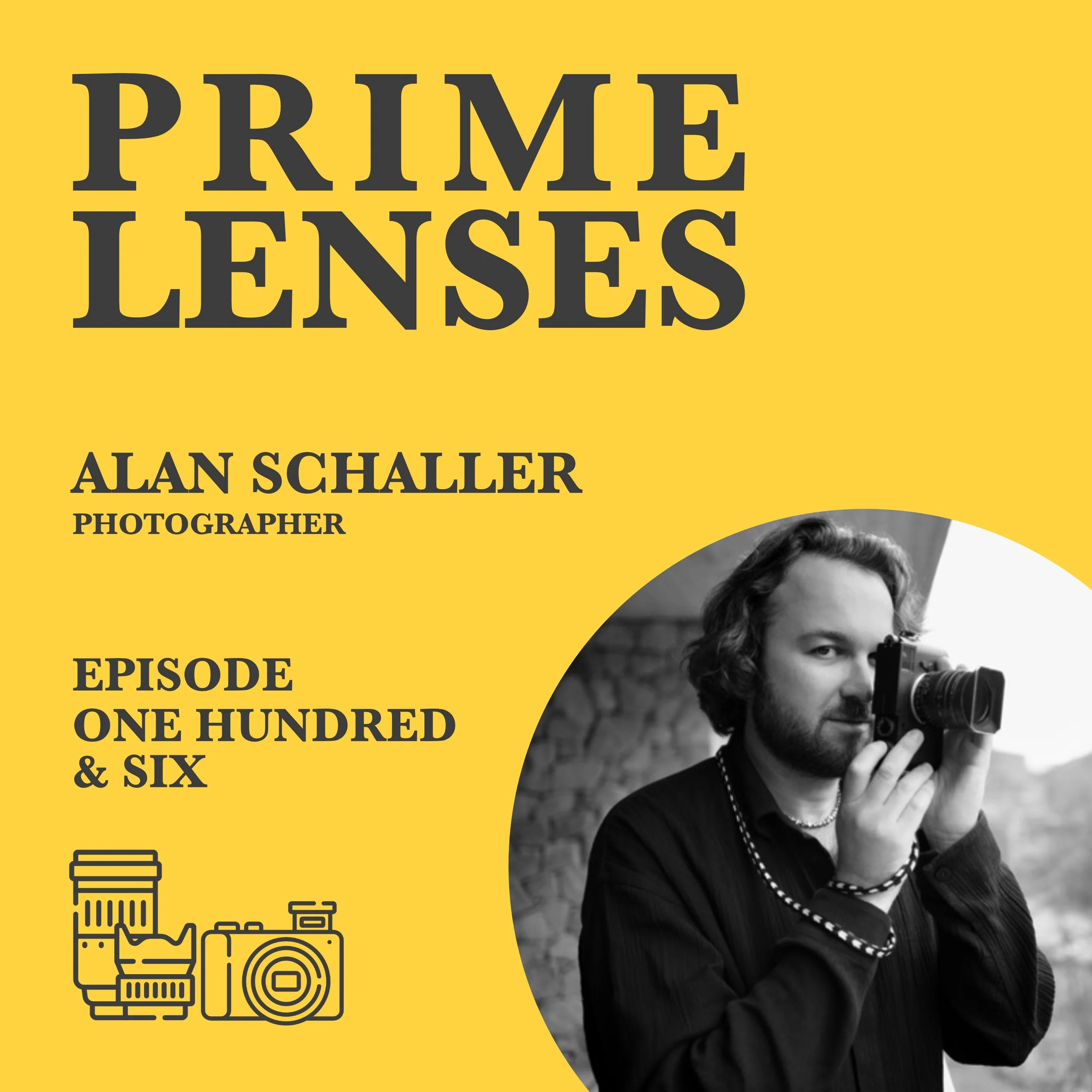


Alan Schaller is a musician turned street photographer based in the UK. His stunning images have won him global recognition, a book deal and legions of fans turn out for his YouTube videos, but Alan also wants to make the world of photography and publishing better and to that end has founded Irys to help create a more sustainable and artist friendly ecosystem.
Sign up to the Prime Lenses newsletter for a mid-week treat.
Support the show on Patreon.
Episode Transcript:
Iain:
Hello, welcome to Prime Lenses. I'm Iain. This week, my guest is Alan Shaller, a street photographer based in London who comes from a background in music and confirms my own personal theory that creative people are good at creative things, be that photography, music, engineering, science, whatever it is. We had a fantastic conversation when we met last year in Germany, just before he announced that he was starting his business Iris, which involves a publishing platform similar to other publishing platforms for publishing images online, but that's very photography centric. And also his aspiration to start to publish books in a way that provides a more reasonable income to the artist and person making them rather than, gosh darn it, aren't you lucky that we're making a book with you. Alan is fantastic company. He is my favourite kind of creative person in that he is strongly opinionated and wants to do great things for people across the industry. I loved sitting down and chatting with him for this conversation. We were trying to do it in person, but timings didn't line up. But I am confident that this is not the only time that I will bring you a conversation with Alan Shaller. So without further ado, and don't worry, there's a it's your boy Ali Shally!
Alan Schaller:
indeed it's his eye
Iain:
do you ever say something in a YouTube video and then instantly regret it oh no it's going to follow me around
Alan Schaller:
we usually plan the intros before we go over a few of them I like to do, I've said something like sometimes it's based on what I'm wearing so I'll say it's Ali Shally aka and then the beige blaster because I was wearing all beige one day and then yeah I can't remember the other ones off the top of my head but we try and do a different one per episode
Iain:
what you need you'll know you've made it when someone has made like a wiki of things and there'll be like a list somewhere of the things and you can just yeah also known as yeah the book the next book can just be alan shaller aka
Alan Schaller:
you know and just it's funny actually because they're yeah they're sometimes people uh in the street will just shout ali shally oh god this happened amazing um yeah it's it's funny I don't know I think I improvised the ali shally thing just one day and then we people started commenting it on the video yeah that's good so we decided to keep it oh so you wanted me to bring some lenses right well so yes here's the
Iain:
thing about the show the show is like jaws it's not really about the shark however what I've landed on is a way of tricking people into listening because they like because people like gear and so if there's a promise of gear it's like that bit in south park the movie where carmen says you know tell people there'll be pie more people will come if they think there's going to be pie and so it's just that kind of little thing of but what I quite like doing is playing with the format so sometimes people have some lenses and I suspect you do because you've been tipped off Dan Baker brought three 35 Leica lenses, two of which were different versions of the Summicron, right? So like some people play with the format, some people bring it, some people don't want to talk about it at all. And so that's kind of like what's fun is that every week it can be, it can be a different thing because you have them.
Alan Schaller:
I tend to stay away from gear stuff on my YouTube just because it causes the most arguments. Yeah. People, like anything to do with low, I did a video on the EV1 when we were filming in Japan, and Leica didn't ask me to do it. I just did it because it was a new camera, and I thought I'd say something about it. And yeah, that was like, it's just, a lot of people just hate Leica. Yes. Just no matter what they do, they're like, it's too expensive or whatever it is. So I just made the YouTube about, actually shooting what what a concept yeah what who who's doing that really like there are many channels it's mainly about equipment and yeah which is great you know one you know I watch those things myself sometimes but um yeah I like just showing what I can do with the equipment and how to make use of it there will be an intro later where I embarrass you and say how wonderful
Iain:
I think you are and how I like your street photos are flipping awesome and how how pleased I am actually because in the preparation for this I was going back and I was watching the videos some of the videos made watch the one about printing metropolis so good to see proper black ink being employed too many black and white books are printed color digital and then come out a little
Alan Schaller:
bit purple that's right and there's none of that with yours it's beautiful yeah yeah yeah the EBS the people who printed it who are in Verona, shout out to them. They take it very seriously. It was amazing the amount of detail that you go into. You prepare each image as you would for printing normally, but then they go further and actually map out the contrast levels per page and um you know to kind of make two photos sit even better together and um yeah it was it was quite fun actually going through that and they've got the machines on the actual printer itself like there's this this kind of control panel where you can like dial in the contrast it was quite fun so so cool and you've got shallows gray as well it was crazy doing that um yeah going into the room where they keep all of they don't do it for everyone which um I guess because my my work has got a is quite it's higher contrast I suppose in average than than the general books they would they would publish so they said they wanted to really nail that tone and um that was a surprise just turning up and they said they formulated it and yeah uh they have the room full of the inks and some very very um yeah very humbling actually to see my my ink in there with them I just thought wow it's pretty it was top five moment in my photography career for sure just being in that ink room and just going wow like opening the salgado genesis ink and being like yeah a bit lighter than my one ironic for his work really because you kind of like with his work you
Iain:
sort of expect you know it was such high contrast and like really textured but maybe you know they're loading the paper differently it's different paper as well I guess yeah all of that yeah there's a
Alan Schaller:
lot that goes into it and um yeah just just just very fun experience and I'm very lucky to have been in the position to do a book like that and have it produced there so it was it was great
Iain:
amazing thing to do I guess so winding all the way back then because you're now Alan Schaller of Irys and all the publishing stuff that you're trying to do there and like you and I met in Wetzlar last year and you talked about the the you know the ideas you've got the things you want to do with iris and the change you want to bring about which I think I said to you at the time I was like that's the most optimistic and positive thing I've heard in the days that I was there it was brilliant like it was it was at the big event it was wonderful but winding all the way back because your background is you played guitar is that right you were a musician yeah yeah I still play a lot but I was a musician
Alan Schaller:
a working musician I was writing or songwriting and doing pieces for for television and for advertising and occasionally did sound mixing and things like that so I was working kind of studio work as well so I actually I play a bit of uh keys and I played bass and I know how to program drums and all those things so I ended up doing full productions and these days with logic and pro tools and programs like that with all the plugins similar to the photography one you could just you know you've got like orchestral modeling stuff and amp modeling and so many things so it's I I was kind of at the beginning of that bedroom producery era um I was you know around 18 when that started happening and for the first time it was possible to to record pretty professionally just at home with a pair of headphones and um yeah it was it was fun and I was doing that for a while and I took up photography as a hobby and that soon became a a passion and then I realized uh that I might have an opportunity to actually change my career path completely and and go into the world of photography which I I never really planned to do I I was just working on on making images that I would be happy with and to be honest that's still my mo today is to uh just produce stuff I find exciting and um yeah when I started getting sent to different countries to do work uh and getting paid to see the world I was in rwanda uh in 2016 I think it was and I just thought this is bloody awesome that someone's you know trusting me with their brand to do this kind of thing visually but you know with a music assignment you just sit in a studio and write the music for that I got to have this huge adventure and meet lots of nice people along the way and it just felt it felt I don't know people don't think about it at school you know when people go what would be your dream career people might go oh I want to be a police officer I want to be a astronaut or I want to be a lawyer or I want to be a but a traveling photographer is actually a really cool experience and you know the the rise of social media and self-publishing allowed it's like a convergence of lots of different things which allowed someone like me to actually build up and uh a following and organically you know and so you not so reliant on magazines or agencies or things like that so it was possible to do and I saw it and I thought if I'm gonna do this whole thing I'm gonna take it seriously and and um but it's been a lot of fun the past 10 years I'm 37 now so I'm I've been doing it since I think this is my yeah 11th year now wow I'm very happy yeah continuing going forward with it yeah iris and everything is has been born out of being in the industry myself and just being you know I've been through enough things in terms of I've done shows I've done commercial shoots I've done a book I've been in plenty of magazines and things like that so I kind of have an understanding of how it all works and absorbed it and just started to think it all could be a bit better for the artist if it was run by someone whose objective was to work for the artist rather than try and squeeze everything out of an artist it's like a subtle subtly different thing but um I realized that it wasn't I wasn't going to get where where I wanted to be unless I did it myself with a lot of things. And, you know, book publishers are great, but they often are based on, or they've been a company for quite a long time. And as happens throughout history, the world has changed and bookstores and things like this are closing down, unfortunately, which I hate to see. And having lots of overheads and buildings and staff internationally, that doesn't really align with what's going on in the market. So, and having an online shop, which links to a big social media account, that's a much more cost-effective way of selling books, I think. And so, yeah, I just thought, you're still not going to get a great deal out of these publishers. I think it's important, you know, it's like, There's this kind of feeling in the industry that if you're doing a book, you're lucky to be there. And if you're on a shoot, you're lucky to be there. And if you're with an agency, you're so lucky to have them. And, you know, it's just – it's not just the photography industry. It's the art, the music world, you know, getting a record contract that in no way serves your interests and having to sign it because someone else will do it. We'll go with the ocean of people who are waiting. That's the narrative. And I don't think it's true. I think if they want to make a book with you, it's for a reason.
Iain:
Yes. Yeah. Imagine that.
Alan Schaller:
Yeah. It's like, all right, go. But I have got nothing against what they're doing and it's clearly just how their business has to operate. And I really enjoyed producing my book and all of this, but it's a free world, supposed to be a free world. And I thought, well, I could start my own publishing and print in the same kind of places and maintain more of the book because ultimately the artists these days are producing the work over years that goes into these books. They are often marketing it themselves through their social media accounts. And you only really get book deals these days if you have a lot of people that you can sell to, otherwise they won't talk to you at all. So the number of people that you have following you, that's the main thing, more than the work.
Iain:
Yes.
Alan Schaller:
And you see a lot of people who shouldn't really be associated with photography getting promoted by massive brands because they're famous. And you see a lot of photographers who have a huge amount of talent and are telling very interesting stories with their cameras, but they don't get... And I understand that. It's got to make commercial sense, but I think if a book publishing company was run by photographers who want to get people's, you know, work with photographers for the right reasons and actually give them a fair share. It's actually not that hard to do, having run the numbers. And I was very disappointed when I got my calculator out and calculated it and just thought, you know, it's crazy that photographers are paying for their books and I didn't have to pay for mine, but often you do. And then you get given 5% or something. But again, it's like, well, you're lucky to be here. Yeah.
Iain:
I think hearing you saying that sort of stuff, what's really interesting, it kind of leans into my kind of, I probably have like three or four kind of theories of the show, which I test when I speak with people. One of them is around kind of transference of creativity, right? And the fact that you came from music and then applied similar rigor process approach successfully to another area and been really successful there that leans on that so I love confirmation bias in that way but the way you're talking about publishing and the businesses involved and things like that it reminds me a little bit of the way that in my arena because I overlap with photography because I love it but I like to say to people I'm a tourist right I'm not burdened by it being my job my job is talking to people about it and being excited and enthused and bringing it to an audience but Netflix making podcasts or what they're calling podcasts is precisely another example of that thing of like, I understand why they have arrived at this point where they feel like they're making podcast or they need to expand into something new and they need to go, look, we're doing this other thing. But the reality is they're just making cheap television. And I know the press release would be much less successful if they said Netflix identifies new way to make cheap content. But it's like what you were saying about you're lucky to be here. They will go to people on the tier below the ones that are costing them tens of millions and go and maybe at the at the high end they might spend a million but they can get 10 for the price of 15 minutes of ryan reynolds or you know whatever so it's like it's this running a business in a way that is just oh no we're just at the mercy of this massive thing that we've created and needs to be fed and that what I like about you is that and the opinionated approach to your work then sounds like it's bleeding over into like you've got an opinion-oriented way in the way that you want to run things and you want to build this thing a certain way and I think we need more of that in
Alan Schaller:
the world generally not less you know like some some values that underpin this thing yeah and I think things are shifting this way anyway um you know the the whole subscription model concept has totally changed the world completely you know when I was growing up I used to buy an album once a month or something or once every couple of months. And now for the less than the price of that album, you get all of the music in the world. And so, you know, so much has shifted and people have to adapt to it. But I still think that if a business is set up around a certain industry and it's not being fair to that industry, then it shouldn't really be there. And I know that's very idealist, but people will go, oh, you know, but I'm actually trying to do something about it. And I guess this is the only way of doing something is to commit to it and actually see if it works. So that's what we've been doing. And so far, the response, like from the publishing side of things, for example, has been very positive. And, you know, who wouldn't want to receive vastly more royalties than they've normally got?
Iain:
It does increase the likelihood you'll get more books out of them as well like if they can afford to be an artist and not have to go and do something else or you know do 700 workshops a year just to keep afloat well you
Alan Schaller:
know if I don't know that many photographers or that many musicians who like rave about how happy they are on their deal so um it's normally the opposite actually and I would I just thought wouldn't it be nice if people were like yeah we loved working with iris uh it was a great you know it's not easy producing a book and there's a lot of back and forth and all that but you know I think it would feel a lot you'd want to be there doing all of that if you felt like you were an equal partner in in that project yeah so you know it's just it's just crazy to um for me to start something like this uh and adopt the same model that's been running for years and yeah genuinely we want to you know we have to start off sensibly and we have you know we're not immune to overheads and things like this but if we if we produce a few books that do really well then we will then have the war chest to allow us to produce books for people who never normally have a chance at that and then it ties in with the whole idea of the app and the marketplace where you know we're building an audience that is directly interested in everything that we're doing potentially and um so you know I my vision for it is why not find someone just because they've got 5 000 followers on whatever it is if they've produced a really great series that people would love and that we feel like it's a great book full stop yeah doesn't matter then we'll we'll produce and see if people value photography over status. We'll see. And I think, I believe that they will. I think if we become a trusted source of, you know, if we publish someone, it's because they're good, not because of X or something completely separate to that. That should be the only real thing, like defining thing. And like in the 60s, 70s, 80s, record labels used to take risks with bands and put money behind them before they're big and actually promote them and do their job. And now it's just like you should be really well connected and really big in your own right before we even talk to you. And it's just lazy.
Iain:
Well, it also I don't think helps them in the long term because you get people turn up. I mean, silly, extreme examples, but like your Taylor Swift's or your um uh what's his name did multiply and divide and things like that ed sheeran ed sheeran thank you they come into it like very switched on to the market and how it works which means also means that like they you know ed sheeran was talking about touring being the only way to make money as streaming took off before loads of other artists were he was just like yeah and then they
Alan Schaller:
control them their whole thing much more much more you know yeah absolutely and um you know I wouldn't the position I'm in today had I not built my audience and forged relationships with certain people and you know obviously the work is is a huge part of it the photography itself but as many people know that's not and that's never been enough in the whole of history just being good at something and not showing anyone doesn't doesn't allow you to do anything with it and honestly I didn't start to I think I did it like accidentally in the right way where I was just for passion but taking it very seriously just for myself genuinely no intention of ever uh doing anything with it professionally I didn't think I had no reference either I wasn't for the first year or two I'd you know it was just like the people around me who who saw them occasionally and they weren't photography experts most of them they just go okay cool I remember showing my dad metropolis uh when I first started it and he was like I don't get it just really dark pictures and yeah what he's like what why why would anyone be interested in what random people are doing and and you know that's not he but now I think he understands like when he saw the whole thing finally put together and saw the the narrative around it and why I'm you know and all that um but you know what those people who have nothing to do with photography people who are civilians, as I call them, they, impressing them or making them engaged with your work is a greater sign of its potential, I think, than, you know, an art curator who's like, oh, yeah, that reminds me of this from 1858. You know, they have a predisposition to want to get involved with it and they might, you know. I always reference Pixar and the Beatles. Pixar make films where the grandchildren and the grandparents can enjoy it for different reasons simultaneously. And the Beatles, kids can dance to that music, but art historians can also write about it for centuries. And I think that is quite impressive, to produce something that's honest and has integrity, but also can speak to a lot of people. I think that's really cool.
Iain:
you're gonna make the thing you want to make I think that's that's the thing for me is like make the thing you go it's like I always say with with um hiring creative people but it's like you got to use the tool the way it wants to be used like no one no one in a marketing agency if they were like using uh like some sort of panel to architect wally would say it'll be a silent movie for the first 20 minutes right like just no one's and the first five is just a robot going around an abandoned earth for like the whole time it's like you wouldn't you wouldn't do it but they they stick to their guns now they were lucky because they had a bit of success and by that point they can do whatever they like but there's so many decisions it shouldn't take which is why these sorts of conversations are so good because I like to sort of remind the audience like make the thing you want to make it doesn't matter whether your dad doesn't get it or like in my case my wife constantly goes aren't you going to run out of people to talk to like no I don't think so because there's all the
Alan Schaller:
Well, there's so many different ways of approaching a subject as well. And yeah, that's the advice I try and give people is all you can do is, you know, if you're trying to emulate other people, that's great to begin with. But you have to end up producing something that actually means something to you. And I find that the easiest way of being unique is just to follow only what it is that you find interesting because your combination of experiences and things in life will ultimately produce something different and will make you stand at a slightly different angle or pick a slightly different person to be in that frame or whatever it is. And if you can just keep doing that and then refining all the best pictures down from that, that's the only way to do it really and yeah that's how you get from she loves you yeah yeah
Iain:
to hey jude in nine years seven that's right whatever it was that's how you do that yeah
Alan Schaller:
that's true yeah it's just um wax on wax off yeah and um and you just gotta love it and I find you know the best work uh is the stuff that the photographer you know that you can tell the difference between a commercial photographer and an artist who's doing it one of them is usually more jaded and like oh bloody oh you know and then the other one is you know enjoying the whole process but hasn't got a consistent income stream let's say perhaps which is the problem with that but and it is quite hard obviously to artistically to get people interested in your work just on how it looks and what it is that you produce that is I'd say the hard road but it's also something that anyone can do in their spare time, it's something that you can constantly work on and no one's telling you to put it out you can show it when you feel it's ready or you can just do it for fun, just for yourself You know, photography brings so much to my life that separate from the work stuff. And I just truly enjoy it. And I think people can see that in the work. So, yeah, that's the important thing. You do seem to be having fun, which is good. Yeah, I am having fun with it. And, you know, the online world, it's interesting, actually. I just try and shoot things that I find appealing to me. And I am the way I am publicly, like in these videos and things like this. It's just an honest, you know, I don't try and present the YouTube stuff. I just, it is pretty much how I am normally. And, you know, I think there's a bit of luck involved in all of this that people find, you know, there are quite, there are some people who find it, Usually Americans comment that I'm like goofing around too much. Just like give it, you know, it's like they'd probably prefer it if my videos are just bullet points of information. But the whole point of doing photography is that I do it because it's fun.
Iain:
Yeah.
Alan Schaller:
And I tend to hang out with some photographers who also enjoy it in that way and who find it fun. And, yeah, I mean, if you're not doing photography or the arts to have fun, then you might as well work in accountancy or law or something.
Iain:
Yeah.
Alan Schaller:
There are other jobs that are way more stable. Yes.
Iain:
Let me tell you about making a podcast from the Highlands, my friend. I'm not doing this to be rich. I'm telling you that for now.
Alan Schaller:
Yeah. Well, no, I get it. And, you know, that's ultimate. And I swear I would have been very happy staying in music and just doing the old photography thing once in a while. I was surrendered to that direction because I consciously made those choices. And you cannot control whether or not you're going to be popular or whether people will, apart from, well, I say that, you can control it. You can ameliorate your chances by being consistent with posting stuff and trying to have your own visual language and being a nice person online, not ignoring people, trying to actually respond to people and be genuinely grateful for people supporting you and all this kind of stuff. I think that's the stuff you can actively choose to do. But it's a lot of effort. and I think some people expect that the work should find them and that's the worst assumption of all time.
Iain:
Yeah, do you know the Bernard Shaw quote, the splendid torch, the poem? I think it was a poem or an end of a story or something but it's basically that like him viewing his life as not a candle but a splendid torch that he gets to hold on to briefly and that the idea is to commit yourself to being used and useful. and then passing that on and I feel like that's that's a much healthier way for us all to look at what we're doing so whatever we're doing you're doing it in service of others and hopefully you can
Alan Schaller:
help people out and hopefully it helps you out too yeah yeah exactly and honestly that's been a big part of um of what I've been trying to do since I started photography is uh you know I figured stuff out a bit for myself and then uh with some uh friends of mine we co-founded spi and that was a simple response of like no one was doing that at the time there was no page well there were a couple but they were very not very large like they they you know there are a few collectives and things like this but we just thought why don't we actively say like you know just start posting people who are good but who aren't necessarily well known and it might give them some enthusiasm to carry on and to tell their friends about it and to for the right reasons yeah and to uh because they're not they weren't getting published anywhere else and nor was I at the time it was you know submitting to the usual suspects and getting no responses which you know can be very tough on people who when you're putting effort into a project and you feel like you know you get your hopes up and all this and um I just thought I was looking at the judges and I was thinking I don't know I don't know why this person is judging you know what why why have they been given the final vote uh over what's good and and you know you then you realize you know what if they've had a bad morning and what if they're not being paid enough to look at it and they're just skimming yeah is probably what it is and uh so I just thought you know what instead of putting all this effort into um I mean to be honest I never really put much effort into sending off to any I don't think I'd I think I sent off to like a couple of photo competitions in my life but uh I just thought it'd be a lot better use of time considering that instagram is free if you discount time as a currency and effort but financially it didn't cost us anything to start it and to come up with the idea of um you know themes and posting a couple of times a day making sure that the photographers aren't well known that they are like you know amateur photographers or whatever and yeah it went from I think we gained a few thousand followers in the in the first six months and then it exploded and by the end of the year we're at half a million already and and that was a real validation of like yeah doing if you do something just on your own it's a lot harder to get people to um to you know buy into whatever it is that you're doing there's probably a nicer phrase than that but I can't think of it uh but you know if you're like this is what I do but also I'm doing this which is not just about me it's actually really useful and as you said before um you know sure it has a benefit for us and has allowed a lot of things to happen that wouldn't have had we not done it but it's actually done a lot for other people and at one point we were getting uh something like 30 000 submissions a day whoa which is like a cool feeling because you're like wow people care about this and then getting featured has became a almost like a you know we became the thing I was trying to submit to yeah beginning or like that people were but for a whole different set of reasons. Iris as a project in general takes that concept and I want to just expand on it in different ways and started with the idea for an app. As I was saying earlier, you know, with publishing and why not have a look at publishing? Well, this is where I'm maybe slightly mad is that I decided to do an overhaul of like try and approach every element of the industry slightly well not slightly a lot more focused on what benefits the artist not not just what benefits us yeah and I think that you know spi taught me that that really works and I think if we actually build a service that serves people and does good for them then they'll want to be there yes and that's I think the only way that you can stand up to um these big companies who dictate the narrative of everything of how we post you know like oh you got to do videos now everyone you got to add music to it now you got to be in four by five crop now you got it you know and people like you see photographers like learning how to become video content creators and I just think it's all a bit you know I don't think elliot had to worry about that he just cracked up with making great imagery because that's what he's good at but now you've got to be an audio expert video expert editing you've got to have yeah you've got to learn how to be funny if you're not funny you know yeah it's awkward watching people try to be engaging on videos when you can just tell that they're you know like they've read somewhere and and it's true you've got to like hook someone in in the first three seconds otherwise you know so people now just have these elaborate videos where they're like not wearing clothes or they're doing this or they're doing you know it's just I was I was like I've had a bit of it enough of this and you know similar to spi it was just it's time and effort and well in this case it's taken funding as well um but yeah I I still think that if we can build something and where the people on it or the photographers we publish say wow I actually for once I'm really really happy with what happened and um I think that would be a big win and it's a much nicer experience I'll tell you that for
Iain:
nothing like that's it's just far more relaxing and enjoyable consuming photos on iris than on
Alan Schaller:
instagram when you know next to an ad for a bag yeah and and you know you can't really blame instagram for doing for making the decisions they've made a lot of people in the photography world um are just like they don't really get it they just think why can't you know it's like they're making these decisions based on 2.6 billion people but they you know in the photography community is actually a very small part of that in comparison it's still big it's still a big industry for sure but it's not their main focus by any means and expecting them to want to do something for us is is foolish and yeah I I got to that point where I was like this isn't going to happen um and some of the companies who are you know some of the photo app companies from the past they don't really seem to they didn't seem to be updating or wanting to push it for whatever reason often they get bought by another big company who whose priority isn't about photographers so I thought you know what I care about photography I care about the industry I know I know photographers I know that I know some brands and um maybe something could work and I was delighted that the people who wanted to invest in Iris at the beginning, they understood it and I explained it to them similar to what I'm explaining now. Just that, you know, it's not going to be billions of people, but there are tens of millions of people out there who love art and photography and that's the target, is to try and build this thing over time to become a real resource for photographers and for brands as well. who can discover talent much easier like this because it's very hard to find. It's like on YouTube trying to find a great cinematographer. It's just a bit, it's like, it's way too much stuff happening now. And so, yeah, and it's going to plan so far. So we're going to try and keep it up.
Iain:
Good. I hope so, because the incentive structures for everyone else are kind of all over the shop. And I think it's not to downplay the amount of effort and work that has gone to get you to this point. But I think it's easier for us to create the environment in which we want to work than we think sometimes. A bit like you were saying about having made your piece with staying in music and photography being the side hustle. I spoke to someone this morning. I'm doing a bunch of stuff for my grandmother who's 94 and she's got Alzheimer's. Listeners to the show know this story because I've talked about it before. So a through line for them. But I was talking to someone even just at the bank this morning, registering power of attorney and all that sort of stuff. And they were saying, oh, yeah, I love baking. I used to do it as my job. And now I do the bank because the pandemic and the hours are good and the money's good and it's regular. But I know I could still do the baking thing and I love it. And it was just that was so painful. I was like, do the baking if you can. Like just maybe have a go at the baking again, maybe on the side and just start doing things. Because it's like no one ever says I wish I'd started that later. That's for sure.
Alan Schaller:
No, I agree. I agree. And sometimes I say this kind of stuff and people go, well, it's all right for you. But I'm like, well, I was literally in your position. I didn't get given loads of money and it's like go off and travel the world for five years. I had to fit it around my life. And I was working six days a week. And if you want something bad enough, I think you can do it. And one of my favorite guitar players, He's become internationally renowned now. He's quite a young guy. He's about 25 years old. And he started off in a very small village in the middle of, I think it's Argentina. Wow. And no one, there's no music industry there. There's no labels. And he's now touring the world. So, you know, he, and he, I presume, was working a normal job or whatever you want to call it, you know, a non-creative job. he was working a different different thing and and then you have to try and figure it out and and be realistic and you know like for me street photography began in london because I live here and I was working on the underground because I realized that going I was spending um at least six hours a week on the train yeah just going to work so that's six hours for free essentially of time to shoot and I built up my series waiting for the train on the train on the way back and then on my day off I would go and do other things and I felt I figured out a way of of making it well I mean to be honest I didn't even I wasn't thinking like I need to try and do this and I was just doing it because I wanted to take loads of pictures and I wanted to work on series and that underground series was the first thing that got me noticed and got me my first actual work as a photographer so it can happen it's just about wax on wax off and being dedicated to it and you know a lot of people talk about oh you know I can't do it because of this or because this and you can if you you know I've I've been doing campaigns on phones recently for some camera brands phone brands mobile brands and those cameras are more than good enough yeah you know so like if you can get a phone which most people have and if you have your health uh that's a big one um you know I think with what you can do these days with publishing yourself it's it's possible to build something that might not necessarily be be the end you know the end game for you but it might get you open a door it might open that first door yeah and then it's about seeing that door open and choosing to go through it and I remember I had this a day where I I was just sitting there thinking oh my god I think I could actually have a career in photography if I really if I decide now to cut some of my music days out and and that was a big decision because I took a pay cut uh on purpose because I thought and I and I bought a leica which was insane at the time um which you know when I when you're not earning a lot of money in something, investing in a camera system like that felt almost like complete madness to me. But I did it anyway. And I remember when I bought my first Leica, it was in a box and I could return it within a week if I didn't use it. And I opened it on the sixth day. Wow. Okay. Because I was really like, do I, am I going to be able to do this? Or, and then I remember someone going oh lycas don't depreciate that much you know it's not that big it's not as big a risk as you think you can always sell it but um I still have that camera and I'm very I'm very very happy that I I took that decision because um that was it really that decision that it was was a big one in my life to to really pursue it and try and understand not just how to improve as a photographer but but how to get my work out there and how to engage people and try and offer something different um that was the
Iain:
the the late night ponderings yeah I'll bet especially I just have this image of you in your in your flat staring at the box like you sort of drink in hand like it's there yeah yeah yeah
Alan Schaller:
it was pretty much it was on my kitchen table right and I wake up and like have my cereal or whatever and look at it oh what have I done we uh what have I done and um but you know and I'm not just saying you know like I haven't told me to say anything here today but um I'm you know I was a genuine fan of the brand before I worked with them in any capacity and um now I'm you know doing lots of projects with them and they've been amazing and they they backed me and I remember Andrea Pacella who's now VP marketing for the Leica he's very important guy at Leica now he he called me to Milan to do some work and that was one of my first ever paid trips as a photographer and this was really early on like before I'd kind of gained attraction online or things like this and he was just like you're you're you've got something with your photography and you've got to keep an eye on you kind of thing and if you want to do some workshops and things like that you know come to milan and and it was great and it just like do actually take interest in photographers who yeah it's nice and I think they're one of the few camera companies actually listen to feedback and I'd like I've been asked I I made a comment about the the metering system like locking and they actually did it uh they implemented it into the you know so so they do listen and yeah it's cool yeah it is well I when I was at the thing last year in in vetsla like um
Iain:
johannes uh on the marketing team there I went up because I got to speak to dr kaufman I got like 15 minutes with dr k very cool because like you know like you're talking about like I've been doing this that long and they invited me to the thing and you get to go and whatever and as I sat down he's like oh I've been listening to the show and I really like it and and I'd like this episode and it's like you expect people at that level to go oh you know the show sounds cool or whatever like the fact that he had actually doesn't have to sit and listen to it like especially in
Alan Schaller:
preparation for that week like you've got a ton on no he's actually very very engaged with the company hands-on wise and he's very um yeah he's not just uh you know a kind of treating it like a business like purely and I mean I'm sure there's a lot of that that goes on of course but he he is very much you know he doesn't he's not like from the luxury world and he's just observing and like looking at the numbers once a week and going good or bad he you know so I think that's really important in companies and and you know same with iris it's like I want to make the team like our coo us you know everyone cfo everyone has worked in the in the photography industry and That's something else that I think has gone wrong in the world. It's people getting jobs. Well, it's because of giant corporations who are buying everyone. And then that mentality kind of drips down into each company because it's what they want to see. And so, yeah, there's got to be some people who are, you know, I can't be a complete lunatic and just, you know, publish like 20 books of people. who were going to sell 100 books each. We can't do that. But we, yeah, I think a bit more of the focus should be on what benefits the people that we're actually trying to work with and make something for. Yeah. And incorporate them from the beginning and make sure that we understand every corner of what we're doing because everyone's got experience in it. And that just seems to make total sense to me. but it doesn't seem to be the case with a lot of businesses that I've encountered people just dare because they are good at marketing but they aren't necessarily that interested in selling watches or whatever
Iain:
and sometimes that's seen as a good thing which baffles me I want everyone I'm dealing with to love the thing you don't want to go up to someone and you go what about this what do you think about this lens is I and you know you don't want to go I don't know not really bothered you know and it's like that would be tragic because you're spending your for them as individuals as much as anything else spending your life dealing with something you don't fundamentally
Alan Schaller:
care about right this is one thing I've been I love about japan is that everybody in that country culturally has to take deep pride in what they do and interest and really you know you won't get you won't go into a cafe anywhere in japan and someone be like what do you want yeah and then they bring you it cold yeah and and then oh you know that that whole thing doesn't exist there no I mean I'm generalizing but massively it's hugely noticeable how like I was there for four months of last year roughly and coming back to london it's just like culture shock just like wow everything's so expensive and no one cares yeah uh do you know craig mod the writer and
Iain:
photographer I tried in fact no I tried to put you in touch with him I didn't hear see the other side of the thing you'd love craig because craig's done long walks he's been on the show he's done these long walks through japan where he goes to different uh cafes I think they're called kisa they're like cafe stroke shops that they're sort of dying out as a thing and he does these walks like he'll walk for a month and every day he'll walk like six seven hours and then stay somewhere and then carry on he's lived he's lived there like 20 years he's american born um hopefully he replied to the email and I was just off the copy but who knows but I don't know him well but um you'd love his stuff because he's he's been out there for so long and he you know he shoots with an m as well he's done some really lovely print loves photography loves bookmaking I've met a few people out in japan
Alan Schaller:
photographers who have moved out there. Yeah. And it makes total sense.
Iain:
Yeah. Well, we might use that as a jumping off point then to do just a smattering, just a little bit of gear. I am curious as to what your first M was. And I also wanted to ask about what you thought about going out there with the gang and doing the MEV1 stuff that you did with like Phil, who's a friend of the show, Phil Penman and Jason and all that sort of gang. Because that looked like a really good coming, you're bringing together of different creative I could just like just threw you all in a pot and see what happens.
Alan Schaller:
Yeah. So my first camera was a M8.2. Oh, lovely. Because it was the most affordable one. Yep. And I think I had a 50, which on that camera acted more like a 75 because of the center. But I knew I was going to try and save up at that point. I knew I was already, I had a plan. I was like I'm gonna learn get good with it and then get the m9 yeah I eventually got the m9m because I was already converting all my work into black and white and the m8 was actually really good for black and white um very small sensor I remember it was but that's the thing we're spoiled these days 60 megapixel you don't really need to learn how to frame you you know I think if I hadn't spent all that time learning how to shoot properly, that's why film can be great for that. It forces you to, especially these days when you're paying a pound a shot, roughly, when you take into account all the developing costs and everything. Yeah, so I love that camera. And these days I shoot with the M11M mostly and the 24, Sumer Lux. And I think the 24, after a couple of years of doing photography, or three years, I think it was, I realized I needed a wider lens because I was always at the back of things. I wanted to be closer to people naturally, and I was frustrated with, I think I had a 35mm at that point. I never really got on with 35mm. I still don't. But, you know, that's, it's no, I would never buy a lens because someone else uses it I know a lot of people have bought 24s because because I use a few yeah they do they've certainly plenty of messages about it but like don mccullen used a 135 millimeter because he was in trenches and in jungles getting shot at so he didn't want to get close and then a lot of his later work carried on using that because he got used to it but if anyone's tried the 135 it's not the most user-friendly lens of all time but you know um 24 is quite a challenge I think for some photographers there's a saying I often hear people go it's too wide for me there's too much that can go wrong in the frame so which I I respond yeah but there's also a lot that could go right then there's more yeah and um I just got really hooked on the on on the 24 1.4 I started off with the elmer the 28 2.8 which is a fantastic little lens. I still have that. I use that on days when it's like super sunny and I know I'm going to be outside all day. But other than that, the 24 lux is the go-to because it's just so versatile. You know, it could do portraits really well. It can give you that shallow depth of field look at 0.7. Its distortion is remarkably well corrected. So if you take a portrait at 0.7 meters at 1.4 and at 24, it looks roughly to me like a 35 at f2 from a meter or 1.2 meters back. You could trick someone into thinking if this was a 35 mil shot. So you can do that through to the whole geometric stuff that I love using it for. And yeah, the other lenses. You wanted me to talk about the EV1 a little bit.
Iain:
Well, yeah, I was curious because the 24 obviously is wider than your frame lines. And I know you've used it so much, I guess you don't need frame lines at this point.
Alan Schaller:
Yeah, I used to have an external viewfinder on the top of the camera for a while when I was learning the framing. But I've just, yeah, I can't tell you how many pictures I've done with a 24 now. It must be in hundreds of thousands. I was looking at my Lightroom catalog on my laptop. I've had this laptop for a couple of years, and it's now 250,000 images in here. So I'm shooting a hell of a lot. And a lot of that over the past eight years has been 24 mil. So you can add it all up as a lot of images. And so I just know the thing now. I know very close. People don't believe me often. They think I'm just, you know, like how could you, you know, it's easy enough to frame someone in the middle, I mean, it's hard to hip shoot properly, but I can place people in wherever I want on the frame. I almost can... Yeah, so that was just a skill I developed and I still work on it all the time. It's something you have to do every day, otherwise it starts to leave you. And again, it's just a lot of time and effort that has brought that about, but it's a really useful skill to be able to hip shoot. It allows you access to a lot more pictures than someone who has to put it to their eye. And when you put it to your eye as well, you always get that same look of like either that head to, it's kind of how we see things, which some photographers do very well. Don't get me wrong. It's just for me, I don't find it that interesting. The EV1 is really lovely because it takes that, any lens and gives you the, you know, if I am going to look through the viewfinder, I would like to be able to see what it's doing. So for me, it's a welcome change. And there have been a lot of people online who've said, oh, it's just a Fuji. Like, Fuji, we've been doing this for 100 years. And yeah, you know what? Fine. But using an M with an M lens is... Even the SL doesn't take M lenses as well as the M's. No. With the adapter. It's like those lenses on that mount is what it's all about. Yeah. and I like the form factor of an M I love how they look it's a great people always talk about you know and it started so many conversations for me but yeah I mean I my favourite camera is still the M11M because of that sensor and how it interacts with the lenses and I like knowing that I'm shooting in black and white and it because on the EV the EV one's fun for me but at some point but I've I really enjoyed that uh using using it like for for shooting with a 75 or a or a 50 noctilux or a sick of tri-almar it's really useful to have yeah yeah see exactly what
Iain:
it says I've actually I've successfully pitched for a project which won't be done by the time this goes out but I'll seed it anyway which is motor gp stuff so I I've shot with my trusty m with R-mount stuff adapted. So I've got an adapted 560 and 400mm lens, which is absurd. I'll send you a picture after this. It's brilliant. And you use it like a gun. Like, it's so stupid. But I want to take it to the MotoGP because I'm a big bike fan. Yeah, me too. Yeah, there you go. So like Silverstone, right? Take that lens adapted to, don't need a Visiflex, just use it straight from, you know, in the camera with the adapter on and photograph motorsports with an M, manual focus and do some weird stuff because I think that, and I've also elbowed them in the ribs to lend me that 35 Nocti as well because 35 is my focal length. I really love it. And so that's the first one of those that's really appealed to me. And I think 1.2 is kind of this sweet spot where, you know, when lenses go down to like 0.95 and you get like the tip of an eyelash in focus and then someone's nose isn't. I'm like, that's too much. Like it's like for very specific use cases maybe, but I'm not sure that that's doing anything for you other than like well done it was a clever problem to solve so the 35 is also in that sweet spot where I think I think that's probably the most usable one of those in the most situations that they've ever made in this line stuff so I'm going to do that you know because I agree with you that like taking away a barrier to just using different glass what does a 90 look like what's a 135 like like you I focus my 135 with a rangefinder patch and it's pretty hard right you just can be yeah
Alan Schaller:
well if if it's not perfectly calibrated yeah um and but you know um it's just a different tool I I I could see myself very much I mean I'm about I'm doing a shoot next week where I'm literally going to do this what I'm about to say um I'm going to have my m11m with my 24 on it uh well probably maybe like a 50 or a 24 and then I can have my extreme my super wide and my 90s dedicated to on the ev one yeah and I can just like I think that's going to be really nice having having both and um yeah I I a lot of people hate on like stuff without even trying it it's funny
Iain:
it's like it's like come on guys we're not all mad there is a reason we're all using yeah I mean
Alan Schaller:
I mean all of the well so many of the greatest photographers of all time have used these things for a reason I think yeah and it's like okay you know sit at home and grumble about it but you just look at the facts uh the people who really know about these things tend to keep using lika lenses for a reason so uh you know yes they are expensive they're made with in a different way completely to mass production in japan and yeah or china or wherever it's just it's like you know We live in a great... You don't need a Leica to make a great image, but they certainly help the process for me. And I love using them, and I love having everything available at your fingertips rather than in menu systems. So I just love that way of working. And if you don't love it, great. You've saved yourself a lot of money.
Iain:
Yeah, you can put that money into lenses.
Alan Schaller:
And the whole rabbit hole. I mean, I've got the 280mm f4 Apo R lens. I've also got the 62.8 macro and 24 superangular lens. So I've got a few cool – a 21, sorry, superangular. That thing's amazing. It can focus to like that far. And it's so awesome with the Leica's distortion control and being able to go close. It's really unique look, actually. And, yeah, the 35 Nocti, I tried it a little while ago. uh when I was in germany yeah and yeah if people are into 35 I was concerned that the form factor was going to be enormous and that would kind of ruin the the feel of a 35 but I think they nailed it yeah no they really right it's not too heavy it's it's got its own rendering and um yeah for sure it's it's going to be a big seller for them I think they said they're preparing to be like two years backlogged on it which isn't so great but um you know if they rushed these things it probably wouldn't be the company that it is and make such great stuff so yeah um yeah and yeah my other lenses I use um where is it hang on a minute this is the close focus 50. oh lovely it's seen a bit of use good uh it's not a uh what do they call them garage princesses yeah don't do that that never get on the road yeah I I pretty much use my like gear quite a lot and I think they look a lot cooler when they've been used as well um and yeah the optics are sound it's just the um the barrel it's pretty pretty beat up uh but yeah the 50 lux peter carver has said it a few times that it's his favorite design that he's worked on in his career and I can see why it's it's pretty much the uh if you want to show someone what a good leica lens is and why they yeah why they're so renowned you just give them that for a minute and they're like oh okay um and then I wanted to talk about another lens hang on a second um well this is here it is where is it I got it very recently in milan at the recommendation of uh andrea pachella and uh we went to an old uh a shop that was like a like a dealer in milan it's been there for a long time and andrea knew the owner for years and he introduced me to everyone and we were looking they got the most insane collection, like collections of vintage Leicas. I mean, literally like briefcase, like these kind of flight cases with like 20 vintage M, black paint M, it was insane. But then I tried this lens, which is a screw mount lens with an adapter so it can fit onto any M. It's a 73 1.9. It's called the 7.3cm. That's when you know their old lenses. Yeah, yeah. When it says centimetre on it instead of millimetre. So this is a 7.3cm hectare. And it's uncoated. So for people who don't know what that means, the lens elements haven't got any kind of protective layers on or anti-glare or chromatic, you know, apochromatic aberration, correction, all that stuff. I almost sounded like I knew about lens production there. But it's just like, I think this is from 1931, this one. Wow. And 95 years old is looking a lot better than my... Yes. A lot newer than that, which is two years old. but I will see how long that lasts um but yeah this this lens is just magic and you've got to respect leica for keeping their mount pretty much the same for 95 years yes uh and that's the magic of it is that you can you can buy a lens and the and the vintage like a vintage like a glass is is usually apart from certain rare pieces you know you can buy uh like one of these it's one of my favorite lenses ever is um the rigid simicron yes uh f2 you can buy one for around a thousand dollars in good condition I got this in kitamura camera in in tokyo and this has got all the you know when people think of leica lenses they think oh I'm gonna have to spend five grand on it or 7000 or whatever but the vintage stuff is super good and you know this lens just gives you such a crazy vibe that you cannot achieve through editing and very interesting putting these old lenses uh on 60 megapixel sensors yeah and I find that there's just stunning the results so you know buy if anyone's listening to this and they're thinking about buying a leica I would suggest getting like a M10 second hand or fifth hand, depending on how many hands is passed through and get one of these. And you can find $3,000 or $3,500 isn't a small amount of money at all, but it's similar to what you'd be paying for a Canon with a couple of lenses anyway. So I would say it's a different option. you know one of the reasons that made me want to go towards leica and trying these lenses was the sheer fact of how many of the photographers I admired when I was getting into photography who I found out used an m yeah that was the big decision it was like okay he you know she's she used one he used one oh they used one or you know so god I used the r system brisson obviously um used used leica and uh yeah I mean a huge number of elliot yeah um just all of those great photographers and I thought if I buy one I know that I can't complain about the gear it's on me now yeah this is this exact same thing that these people had in their hands so So, and I just loved the rendering. I found it quite arresting the way that the 50 Lux, the first version, which I had, I just fell in love with it, looking at the images when I was trying them. I just thought, what a cool thing, and it's quite small. I started shooting with Canon, and so the lenses I had were quite big. And I remember selling all of my camera gear and then putting money on top to get the lens and the camera. that m8 uh felt a bit crazy but yeah again I'm very happy that I took that decision and uh
Iain:
went into the world of photography yeah well hopefully someone listening now in 10 years will be talking to me about how they were really inspired by alan and it was the fact that alan
Alan Schaller:
shallowshot with an m that is making them do that that would be nice I mean I I've I it's very it's It's one of the best things you can hear, actually, is when someone... And I've been very lucky. A lot of people have said to me, you know, your photography or watching your YouTube or seeing your work has inspired me to take it up again or, you know, to... I haven't done it in years and you seem to be having fun with it. And, you know... And the whole point of street photography is that it's accessible and that it's just you and your time and yeah, that's all you need. And a phone these days. That's all you need to get involved with it. And so yeah, spreading that message I think is a good thing. And yeah, it's just really nice when people say that they started black and white because they saw your pictures or whatever. And what's crazy is that the younger photographers haven't heard of Cartier-Bresson.
Iain:
Yeah.
Alan Schaller:
Some of them. And they're like, your work's amazing and I discovered black and white through you and I'm like, well, there's a whole... Have you heard of Elliot Erwitt? They're like, no. I'm like, right, shit. Yeah. Yeah. Crazy, you should know them as well. You're probably more so.
Iain:
But they're not on YouTube, man. Like, you know, that's...
Alan Schaller:
Well, that's how it goes. And I made a point of talking about Fan Ho a lot because he was pretty much unknown when I discovered him. at least in in the west um well I say I know people weren't talking about him as one of the founding fathers of of high contrast photography he is the guy yeah and he was doing stuff while magnum photographers were he was so far ahead and and he just I don't know why he never
Iain:
it's probably because he was from hong kong I was gonna say we know exactly why really like there may not have been malicious intent but that doesn't change the fact does it
Alan Schaller:
yeah like he I remember seeing anyone listening to this Fanho F-A-N-H-O as his surname he just complete and utter visionary of photography and was doing all of that on film obviously so really awesome and I discovered him halfway through doing my Metropolis book and it was just a comment on Instagram someone saying your work reminds me of Fan Ho and I was like okay so I googled him and I was like oh my god he's done this whole thing already yeah turns out he did it 60 years ago which was quite cool because yeah I could see in his work I could understand from my experience like some of the shots and how he must have been feeling when he took them and what he was thinking and same use of light positioning and all this stuff. I thought, and I never got to meet him because he died. He died quite recently though, relatively. He lived in San Francisco. Not too far from a buddy of mine who lives there. He was like, I didn't know he lived right around the corner from me. But yeah, I don't know what camera he shot with. I might Google that quickly. he used roller flex wow nice there you go yeah crazy yeah there you go never shot my roller
Iain:
flex before I haven't I've done some medium format I've uh pentax six and five but I've never um most of it most of my film stuff's 35 mil or actually because I'm fundamentally impatient
Alan Schaller:
it's polaroid and instax love yeah I've got the polaroid i2 yes it's good isn't it I did a project with that. And the new film. Yeah. The new 600 speed. That was really crazy, that camera,
Iain:
what it can do. Yes. The new black and white formulation is great as well, isn't it?
Alan Schaller:
Absolutely. That's what I mean. And with that lens, I don't know what the lens is. It looks like it's made of plastic. Yeah, it is. But it's crazy what it can do. I was scanning some of my polaroids that I did on it and you could totally do a big print like detailed looking off it it's um it's a very cool machine it really is yeah there's for listeners there's a great video
Iain:
actually about the making of the i2 and they go back they hired former I want to say like pentax and olympus lens design people to help them with the lens manufacturer and it was it's like you were saying about like craft and old things you know we go full circle but they went back to these
Alan Schaller:
guys yeah exactly and and I think it's interesting the the younger generations are certainly valuing things like you know vintage watches came back a big way and yeah I think um I see a lot more people reading books again yeah it was kindle for a long time and now it's back to books and you know vinyl's been collected in a you know it's had a resurgence as has film photography so yeah it's clear that there must be it's just like pushback to like analog stuff whereas yeah I think people are oversaturated to um fast convenience they want to actually engage with something and learn it yes for sure I'm with things which I'm all I'm all for that
Iain:
well speaking of time with things you've been very generous with yours so I will let you get on with the rest of your day but for people listening who maybe don't know alan where can they find a bit
Alan Schaller:
more alan challer where can they find me um coming to a city near you um I'm uh you can find me on I've got a website I've got a youtube channel I've got an instagram account which is just my name alan challer people who spell my name with two l's in the alan part I don't like that at all it's just and um I am the founder of an app for photographers a social media platform called iris which you can find me and my work on there in actual high resolution instead of terrible yeah yeah so yeah that's that's uh that's where you can find me I think there's other things that if you're listening in china I'm on weibo um and I don't know what else I do have some chinese listeners so yeah good uh yeah and um if I'm doing an exhibition you can google google my name and exhibition and they usually pop up the ones that are on as well if you want to see the work as it should be i.e. printed yes instead of just one third of a already small screen yes
Iain:
definitely and you might see alan on the streets of london and if you do shout oi alice charlie
Alan Schaller:
that's right yeah and I will and I will not confused yeah the other day unless I'm on a phone call because my hair hides the uh the earphones so if I'm if you say hi to me and I do this that's the reason. Sometimes I think they think I've gone mad
Iain:
You just hold your hair out to the side.
Alan Schaller:
I love talking to people and yeah very happy to say hi if you see me around somewhere
Iain:
Brilliant. I love this. Thank you so much Alan. It was really good to talk to you mate
Alan Schaller:
Yeah and you. Good to see you again and maybe see you in Wetzlar again soon. I hope so
Iain:
Alright mate. Have a good one. Cheers you too a massive thank you once again to alan for being on the show and to everyone at iris and tim and people like that for helping to set that conversation up if you enjoyed it don't forget that you can like and subscribe to the podcast wherever you get your podcasts so that's apple podcast spotify youtube music amazon music all those lovely places please do subscribe leave us a review, hit us up with some stars, all of that stuff helps people to find the show. You can also support us directly on patreon.com and also via the merch store which is on primelensespodcast.com and fear not dear listener, links to all of those lovely things are in the show notes. Right, well I think that will probably do for now. Have an amazing rest of week, whatever you're doing, and we'll see you next time. Bye for now.
More about this show:
A camera is just a tool but spend enough time with photographers and you’ll see them go misty eyed when they talk about their first camera or a small fast prime that they had in their youth. Prime Lenses is a series of interviews with photographers talking about their photography by way of three lenses that mean a lot to them. These can be interchangeable, attached to a camera, integrated into a gadget, I’m interested in the sometimes complex relationship we have with the tools we choose, why they can mean so much and how they make us feel.