
Episode 101 - Bobby Anwar
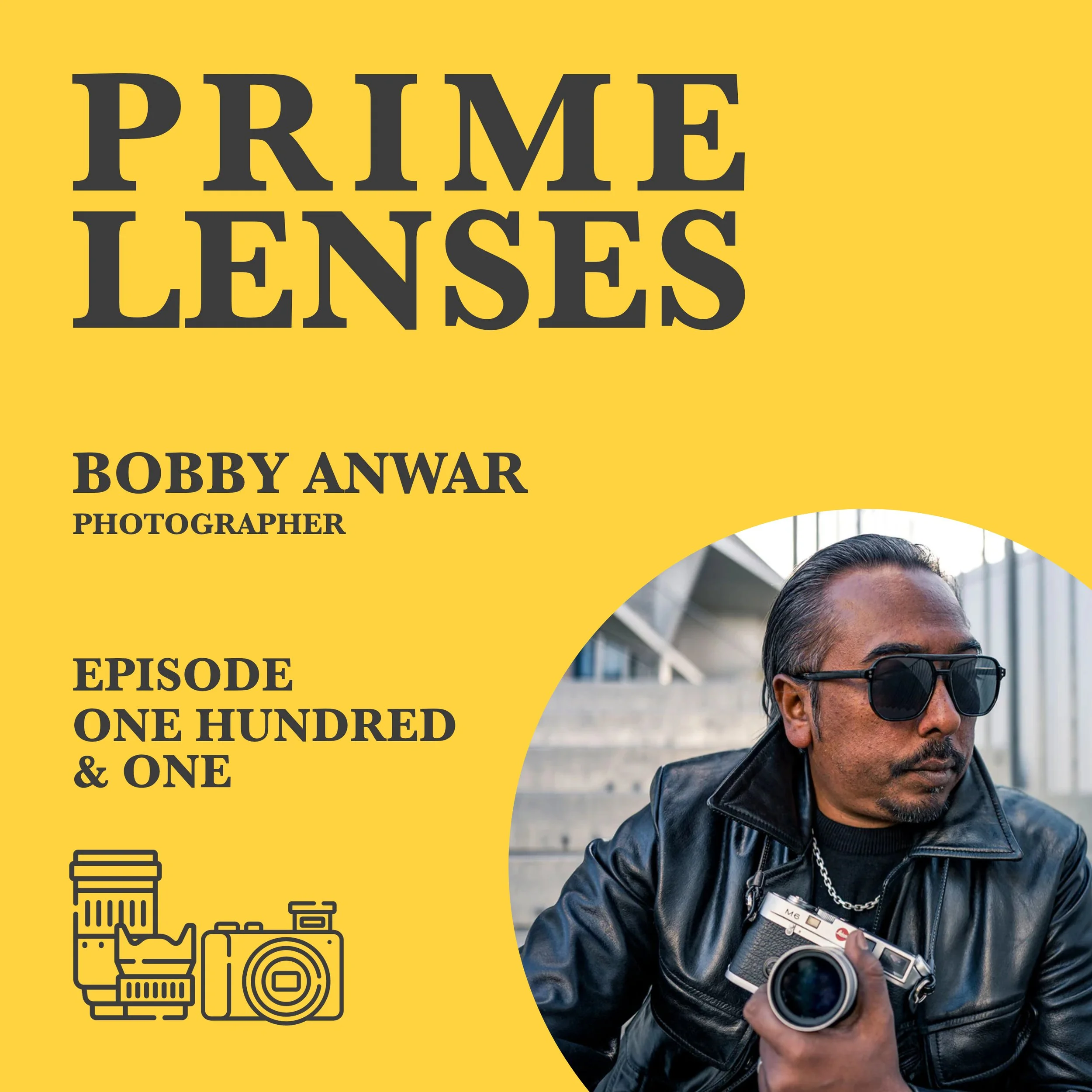


Bobby Anwar is a street photographer based in Copenhagen, Denmark. We spoke in December fittingly while he was on the street making pictures and taking in a time of year which is much quieter for him. We discussed his work with Oberworth, his start in photography and where he wants to go next. I loved chatting to him and hope you enjoy our conversation.
Sign up to the Prime Lenses newsletter for a mid-week treat.
Support the show on Patreon.
Episode Transcript:
Iain
Hello, welcome to Prime Lenses. I'm Iain. This week, my guest is Bobby Anwar. Bobby is a street photographer based in Copenhagen in Denmark. We spoke in December, fittingly whilst he was on the street making pictures. At a quiet time of year for him, and so snuck in an extra conversation, he was one of my last recordings of the year. We discussed his work with Oberwerth, his start in photography and where he wants to go next. I loved chatting with Bobby, he's a great hang and I think you'll really enjoy this conversation. So without further ado, live from the streets of Copenhagen, here's Bobby.
Bobby Anwar
How's copenhagen today uh copenhagen is uh super cold on the sunny side but um yeah pretty cold
Iain
Yeah yeah similar up here to be honest we are because I think latitudinally we're kind of at the same sort of level I think you're maybe slightly further north but there's not there's
Bobby Anwar
Not a lot in it uh no no so but yeah it's good yeah it was cold uh I went out this morning to take some photos and uh quickly had to go back again and put on a mostly coat so yeah no it's
Iain
The time of it's the time of year for that I think you this is when people find out whether they're really a street photographer or not you know they fight like this is this is the weather
Bobby Anwar
No I mean the worst time I ever went out was actually new york it was in january yeah uh 2019 and uh it was freezing I mean and I I couldn't I couldn't actually hold the camera I had to go back to the hotel and just chill for a couple of hours because I wasn't even I was wearing gloves and And it just didn't happen. I couldn't. It was too cold. Yeah.
Iain
If we choose, those of us who choose cameras that are made of brass, unlike cold to hold, it's not the best thing for the cold weather. That's for sure.
Bobby Anwar
No. I'm just going to actually move into my car. Okay, sure. Because it's so cold. I thought I could sit outside and enjoy a little bit of sunshine, but that's not going to happen.
Iain
But you're like, no, 30 seconds in, this is too cold.
Bobby Anwar
And also the sound is better.
Iain
I did once have a guest who spoke to me from their car. And it was actually, they were very worried about the sound quality. And actually it was one of the best sounding episodes we did because actually the car was isolated. Yeah, yeah, exactly.
Bobby Anwar
They say it's really nice because obviously cars are made with stand wind and weather. yeah this is kind of like being in a sound booth yes yeah recording but it must be nice for you to
Iain
Kind of be I guess this time of year for you must be unusual because you were talking about how like this is a time of year for you where like everyone else is doing something celebrating you're presumably you're quite quiet do you get to catch up on the stuff that you've wanted to catch up on
Bobby Anwar
At this time yeah I mean I don't celebrate christmas so for me it's just like hanging out with my family and you know just like everybody else but I mean for me it's more like yeah catching up on and getting ready for the next year yeah uh kind of thing so I really appreciate this downtime because because it's uh usually when you're on the grind every day just like caught up in everything so when everything is closed the schools are closed and businesses are closed so you can really get down and clean up on some stuff that you just been neglecting all all year so I think that's
Iain
That's really good yeah well the natural thing for you I would have thought now as well because you've had a pretty crazy year really oh yeah I do you know like there's the there was the leica 100 event there was all those people that we were hanging out like there's one minute you and I are chatting to greg outside like the leica museum and just like oh yeah christ you're greg williams And then the next minute there's the Oberworth stuff and you're shooting EV1s running around with like Canon 135s. Do you get to the end of this year and just feel like, what the hell?
Bobby Anwar
Yeah, I mean, definitely. I mean, I feel deeply appreciative of all the opportunities, especially from Leica's side. because it's kind of like I was having this conversation with a friend of mine the other day that what really matters is when you use a brand and you invest in a brand, especially a brand like Leica, that's not too, yeah, let's see, easy on your pocket. It's really, really nice that a brand sees you and see, I mean, acknowledge your existence, so to speak, and kind of give back and be invited to the 100 years. I mean, there are a lot of people, but again, it feels privileged to be one of the people that was allowed to be there and be part of that celebration. And on top of that, being selected to be part of the MEV1 rollout, you know, that was amazing. I mean, I never thought that would happen. So I'm really appreciative of that.
Iain
Now they've been hugely supportive, I think, of all their artists. I think that's the bit that they seem to really understand is supporting artists and bringing people in. Totally, yeah. And they seem to be finding, you know, like putting people to the forefront and picking out people like you and like Gadgen and Davide in Italy. And like, there seems to be a nice mix of folks coming in. There's someone in Scotland called, I think it's Nina, who I want to speak to is French, but lives in Scotland. And just a bunch of folks.
Bobby Anwar
And I love this kind of lifting up of new people. Yeah, I just saw her video.
Iain
Yeah, it's really good, isn't it? Yeah.
Bobby Anwar
And again, Leica is really like one of those brands that really, really concentrate themselves around storytelling. and I think it's so important because we're so many people doing so many different things but at the end of the day we're still using that piece of equipment that how can I put it, like promotes that or refines that storytelling that we want to tell the world or share with the world so that's really really nice so yeah and not even talking about obo with as well another brand that's really, I really appreciate, you know, and all the opportunities and to be able to like put out a camera strap, even though it's a small thing, it's just, it's meaningful, you know. Yes. It's, again, the same thing, a brand that's investing back in you. So that I really appreciate, yeah.
Iain
So to kind of have arrived at this point, because I did want to talk about the strap as well, because it's such a cool thing. Yeah. Like seeing your name on a box just must be a really great feeling. It's insane.
Bobby Anwar
They're bags because I love the quality. I love the note to like the old school way of creating these accessories. You know, I remember a bag that my dad has. He had for his old, I think it was an Olympus camera. And it was made out of leather. It was just boxy, just straight to the point. You can just put it in your camera and an extra lens or whatever you want. But it was so practical and it was so easy. There was no extra gimmicks or gadgets or something. And even though Oberworth, they're committed to creating accessories for you and your cameras where you can have everything. I don't think they have one bag that doesn't fit anything. So that was obviously the start. And then I actually don't know how I got in contact with them. But we just started working together. They sent me these cool bags, and I promoted them on my channels. And they have this affiliate program and use that. And all of a sudden, it just exploded. And I started making YouTube four years ago. And it's not growing, but I'm not consistent either. So it's also my own fault. But the sort of man, these videos about that as well, it's very important for me that I'm upfront and honest about the brands that I'm working with that I can stay 100% behind. It's really important for me. So I don't want to bullshit people. I don't want to sell them something that I wouldn't go out and buy myself. So one of my key points with Hogwarts was that, yeah, sure, the bags are expensive but you're buying a you're buying a camera that costs maybe eight nine thousand euros so I mean don't you want to protect that you know don't you want to have the best accessories to protect protect that so that's kind of the way our relationship started um because I could really honestly stay behind them you know so then it's just evolved and And I was speaking to them that I have some ideas about a strap that I wanted to be shorter. And they were like, can you do some rough sketches and send us and we'll figure it out. And then this has been going on for the last year. And so it's finally came out this year. So it's really amazing. Yeah.
Iain
Yeah.
Bobby Anwar
So that's kind of how it started. Yeah.
Iain
Yeah. I've got a wish list. I'm going to draw it on the back of a napkin. I'll send it to you after this. Yeah. It'll be really good. and you know you're absolutely right on protecting your gear because when I got my first m I bought a cheap strap off amazon it was I think 7.99 or something it was a cord strap and it wasn't leather at the ends it was like a fake leather and I was in I was on a work trip and I was in san francisco and I got back I'd been out all day and I've been working and then that evening I was out taking photos and I got back to my hotel and I opened my hotel door and suddenly it went ping and the strap broke and it was only because the strap shout out to Wayne in San Francisco who got me to wear my camera under my jacket because I was wearing it under my jacket and the strap kind of caught on my jacket it didn't fall on the ground and smash but it definitely would have and your point is absolutely right like you don't have to buy the most expensive one but for god's sake please spend some money on a decent strap because I don't know I don't know if you
Bobby Anwar
Heard that saying that if you buy cheap I don't know what is it yeah oh we we have in uk we have
Iain
Buy nice or buy twice yeah exactly we have something similar here my always my dad always say
Bobby Anwar
If you buy cheap I mean you're gonna be keep buying it you know yeah and if you buy once you buy you know a quality item that's gonna be with you it's kind of like leicas you know there's some like M6s and all these old phone cameras that are still
Iain
Being used
Bobby Anwar
Today and they're like some of them are 50, 60 years old I mean it's insane Yeah the amount of M3s running around still and stuff like that I mean that's what in the end you want, you want something that can stay with you I mean preferably a lifetime so
Iain
Ideally that would be nice you've mentioned that a couple of times was he part of your kind of photographic beginnings like did he take photos or yeah I mean I remember my dad always taking photos of us uh all our family
Bobby Anwar
Pictures on videos and he was always into that buying cameras and buying video cameras and and never really thought about it before I started taking photos myself and yeah obviously he's been a huge inspiration. He's not a photo artist or anything else to a photographer. He was just for family and portraits and stuff. But I really appreciate that he spent time on it and documented us because we have a lot of photos and especially losing my brother. I lost my brother 70 years ago. So being able to have all that documentation has been really, really important.
Iain
Yeah my dad was big into photography he was he's gone now but he was um he's a salesman as well and so consequently he was very easy to sell too and so he he often had um he often had like newer cameras and all sorts of different stuff but it's really funny he was one of those people who you know like the old sunny 16 thing that was on the back of the kodak stuff and it was like you know you have the sun behind you your subjects are in the sun you know all that all those sorts of things so consequently my childhood like you probably is filled there's tons of photography of when we were kids but we're all squinting blinded by the sun because dad was absolutely adamant that the sun always had to be behind you or you had a flash and so there's all these photos of us but we all look really like dazzled yeah to that face it's very funny but it's funny the influence that those sorts of things have like when you go back to them you know yeah I actually I
Bobby Anwar
Actually ended up doing a exhibition about my father because my father migrated from from pakistan to to denmark and um I had an exhibition at the like historical manhagen last year yeah um called my father's soil I think some of the description is still on like his website but it was it was just really nice it was a way for me to like kind of give back to how can you say it if it wasn't for him I wouldn't be here and I might not have gotten into taking photos or getting into photography maybe I would be selling bananas in Pakistan I don't know not because there's anything wrong with that it's just he changed the course of my family's life and that's a big thing and So I wanted to tell some of his story or his background. So I did that. Lucan from the Copenhagen store, the store manager, he's really nice. And he was just like, we love your street photography, but I want some more meat.
Iain
Oh, nice.
Bobby Anwar
So, yeah. So I was just like, I have this thing. And he was just like, okay, let's do this. Yeah. So, yeah, it was really, really awesome. Yeah.
Iain
Were your folks comfortable with you being an artist? because I've got friends who've got Asian background. Yeah, Asian parents have a reputation for not wanting their kids to take a risky path like that.
Bobby Anwar
No, they want their kids to be doctors and lawyers and captains. I mean, of course, every parent wants their child to be successful and have a good life and all that. But Asian parents are just insane. I mean, of course, in the beginning, it was really, really tough for them to understand what I was doing. And because it takes time, I mean, it took me a good two, three years before I was even getting my first jobs and even getting paid for photography and video, especially because, like, in the beginning, I was more into video than I was in photography. So that's really what I started with. So, and slowly it just pans into everything got mixed. And, but where they really, really started, stopped like saying to me that I should find another job is when I really got started getting paid for some really awesome gigs that I had. And I got some amazing setups where I was traveling the world. There was one year that I wasn't home at all. And I shot campaigns from Mercedes. I worked a lot with Huawei and Xiaomi and a lot of big brands. And when they started seeing these opportunities, they kind of realized, okay, this is what it is meant to do. So they got off my back.
Iain
Well, it's when they can stop worrying, isn't it? It's the worry. As a dad, I can relate. Mine are only little, but you're here.
Bobby Anwar
In the beginning, I invested a lot. I wanted the best, so obviously I invested a lot in equipment. But then when the brand started working with me and I started getting gear, I had so much freaking gear. It was insane. And my dad, he was just like, so what's going on with this? And I was just like, I'm getting it. It's for free. and he was just like, why the hell have they given it to you for free? Nothing in life is for free. And I was just like, yeah, I know, but I'm getting it. And it was kind of like a turning point. And they realized, okay, this is what he wants to do the rest of his life. And obviously, I mean, it's not that you're always 100% successful. There are times where everything's flowing, everything's insane. and then there's times where everything is just slow and nothing is happening, and then that's where you have to be ready for that element. And I learned that as well because there was periods where, let's say I've been from a point in life where I didn't know if I was getting food tomorrow to a point where I was just flying in hotels and VIP rooms and all that. So it gives you perspective in the sense
Iain
That you're appreciative of the moments yeah so yeah were the points where you were just gonna like this is this isn't gonna happen this is too much like hard work or was there enough up and down that you kind of felt no I mean I think my passion for street photography has kept me going
Bobby Anwar
Through everything you know because even when there was down periods I always I always like to walk I always like to like get fresh here and just walk from a to b or just walk without knowing where I'm going and so having a camera with me and taking photos on those journeys or walks has always kept me you know afloat and because I found I find it interesting to capture moments on the streets you know the fleeting moments like I always say it's like it doesn't come back you know that split second you capture and then my love for cinematics uh I always try to like capture a single frame you know make it like a cinematic frame or just a bite out of something a movie or something that's that's my inner yeah you know working you know so I think that keeps me afloat that I I can always grab my camera and go out and shoot something you know the cinematic stuff actually makes a lot of
Iain
With your images now that I think about it. Like the street, the nighttime street stuff. Yeah, it's very moody. Yeah, well, it's very Blade Runner, right? Like you love an umbrella, you know? Even the stuff you posted from New York that I think was 2018.
Bobby Anwar
Lots of umbrellas, lots of reflected wet pavements with reflected lights.
Iain
Yeah, steam.
Bobby Anwar
Yeah, that's my, I mean, that's also why I love New York. I mean, that's one of my biggest inspirational cities to go to and I've been there 30, 40 times and it's basically, I mean, it's I wouldn't say cheating, but it's so easy that you can almost just like stand in a corner and make a book, you know? Yeah. You know what I mean? Yeah. Yeah, so you will have enough content to today produce a sign or a smaller book or whatever, you know? So, yeah, definitely. So, and it's also super cinematic. I mean, we got these tall skyscrapers and interesting people and yeah it's just beautiful man yeah plus the people in new
Iain
York don't seem that fussed like they they are just on the move london's similar to some extent
Bobby Anwar
Yeah yeah same yeah and I always call london mini new york because it has some of that same you know neon neon city rainy vibe you know yeah so I love that yeah so whenever it's not possible to go to New York I try to see if I can get to London
Iain
So how's Copenhagen fall in between there because if you've had those experiences I mean
Bobby Anwar
It's always it's always I mean I say like where you grew up as a child or you you have your everyday life I think it always becomes a little bland in in comparison to one of those cities the big cities especially like a street photographer like me I love I love big cities. So I think for me, I'm in a place where I feel like I shot everything I could in Copenhagen. Copenhagen is not that big. But like every day you go out, it's not the same. The light is not the same. The people are not the same. So it depends. But I try to capture some of that same, yes, neon vibe, those, that night. I mean, cinematic feel in Copenhagen as well. And try to shift focus sometimes. Sometimes I shoot longer lenses. And sometimes I try to create something else that I usually do. So that's what I always say. It's like when it's bad weather, people, they run inside, I run out, you know. Yeah. So, yeah.
Iain
I'm doing the same thing at the moment. I'm out. When the light is low and there's not much light at all, that's that's black and white landscape time and like you put a 135 on and get photos of mist and
Bobby Anwar
Trees and texture and it's just compression man the compression it gives you that cinematic feel you know it gives you I mean 50 is my favorite and I mean I think the older the older I'm getting the more I want to even get further away, you know, or get a harder compression, if I can say it like that, you know. So, yeah, definitely, yeah.
Iain
And I guess having, I mean, it was interesting, the EV1 coming along, because for people like you who shoot with long lenses but on an M system, like I have a Visiflex, I have to remember to carry in my bag, Or I just cheat and I go for landscape stuff and I set it to F11 and infinity and just go. But you're presumably getting quite a lot. You're kind of target audience for that kind of integrated experience.
Bobby Anwar
Yeah, I would say I was really happy and I've been waiting for a camera like this because honestly, I mean, that's also about your eyesight. I mean, I'm getting older and my eyesight is not what it used to be. So it's difficult for me to focus, to be honest, with a rangefinder. And when the EV1 came along and it has the same awesome quality, like the SL system, that you can actually put on everything. There's not an adapter that's not invented yet, and there's not a lens that you can't put on it. You know what I mean? So it opens up the doors. The system is opening it up for doors like that. You can use almost anything on it. I'm not a fan of wide-angle lenses, but occasionally I'll try to see if I can shoot a 28 or a 21 or something. I mean, 35 maybe. But for longer lenses, this is perfect. I have a 90mm that I've been collecting dust. And after that, the EV1, I've been putting that on, using that. I have a Canon FD, old FD 135 lens that has this magical, you know, analog feel, you know. So I like to put that on the EV1 and shoot at night and day, again, because of the compression. And I even want to experiment with even longer lenses, you know, maybe a 200 or something. Yeah. I would love to shoot something like the 75 Nazi Lux on this one or any longer Nazi Lux lens, you know, because now you can really take advantage of that super shallow depth of field, you know, that I love to shoot. So it's an individual style. I like it, especially with night photos because it just gives it that, again, cinematic feel. Yeah.
Iain
No, it's very glowy, that one.
Bobby Anwar
Yeah, yeah, yeah, definitely. So, yeah. But it's just my Canon 135 is a song, a 2.8. Yeah. So if I could, I'm looking for a 135 that might be a 2.0 at least, you know. So let's see.
Iain
The separation would be madness. Have you ever tried, because if you're a 50 person, there is the Zeiss 50 1.5 which is quite small and it's quite light and the fall off from it is just insane and it's very Zeiss-y I heard about it, I haven't tried it
Bobby Anwar
When I first got into photography I bought a Canon 5D Mark II and what I'll do first that I bought was actually a car size 50 so it might have been that or another one yeah um so I was into yeah uh manual focus already back then so yeah that's pretty cool so 5d makes sense though
Iain
Because if you were videoing as well sticking cool manual glass but that was the thing I mean everybody was running around with that and I had the the car size uh car size 50 millimeter and then
Bobby Anwar
And I returned it and I got the Canon 1.2, you know, the monster 50 millimeter. And that was my kit for the next three or four years, the first years I started shooting because I could do anything with it. I could do video portraits. I could do photography, you know, so it was great. I mean, it was also an expensive setup.
Iain
Yes. Not light either.
Bobby Anwar
No, but I mean, that's how I am. Just like if I'm getting into something, I want the best. I want the best that I can possibly get, you know. And that's why we're here now, you know, talking about Lancashire. Because, I mean, for me and the type of work I do, for me personally, this is the best. I mean, I've tried every brand, every shot with almost anything that's usable. And I ended up here because that has a direct line to what I want to showcase or express.
Iain
So who was it on the street side who really drew you in? Because you've done all this different work, right? You've done commercial work. I love talking to photographers who work as real photographers. I think there's a tendency in the modern world for folks to think that you have to specialize, especially in some of that photography. you're like, all I shoot is, you know, perfume bottles or all I shoot is this. And I think the reality is you shoot whatever you can get paid to shoot. And then over time you work out what you are.
Bobby Anwar
It depends on how you, which niche you want to go to. I mean, when I started, I just wanted to do this because I find it interesting. I use it as experiments, you know. So whenever somebody came over to me and said, hey, we have an event. Can you document that? And I was like, yeah. Of course, we have something. Somebody had a music video. Can you shoot that? Yeah, of course. You know, I think I rarely said no because I took everything as an experiment and then getting paid on top of that was just my extra bonus, you know, because then I could buy more of you. So for me, it was just I wasn't very picky. I always knew what I wanted to do. I want to make videos. I want to make movies. I haven't got to that point yet, but maybe let's see. I like to write and I like to storytell like we talked about before, but I haven't got to that point yet. But maybe that's also a question of maturity, and I think I'm there now. when I think I'm less on the streets now that I was like, let's just say 10 years ago or five years ago, you know? So right now it's more like in a zone where I'm looking back at work that I already produced or maybe like re-editing or re-positioning those photography elements and looking at where I want to go in the future because my future is definitely in in a more direct role and that's what I'm doing right now I'm I'm converting so to speak yeah so yeah um because that was my first love it was not photography it was it was cinematics it was uh movies it was you know color grading it was like all of that stuff like how the hell did they come up with this scene or or how did they set up this beautiful light that's coming in and yeah so when I were watching movies my friends always got annoyed
Iain
So yeah but I think that's amazing and I think that's one of the things like you and I share that love of wanting to understand how it got made and yeah and I think also an appreciation I've talked to gadgin about this in the past as well he says hello by the way um yeah shout out
Bobby Anwar
To me too yeah yeah it was so nice to meet him finally face to face in the in that slot
Iain
Yeah he's all right let's not get carried away he's fine yeah um but no I love gadget to bits he's he's lovely and I need to get all of you over to scotland like I need to I need to invent some sort of scottish photographic festival to get you all
Bobby Anwar
Yeah why not that would be awesome wouldn't that be amazing that's that's on my on my go-to list
Iain
Yeah yeah well when you make your transition to video and you get involved with the sls they've
Bobby Anwar
Done some sl stuff up in the highlands no I I shot with the sls I shot with um the first sl I bought it right away when it came so um but I don't have it right now and now I want to um I'm probably gonna loan it from the the store because I want to try out the sl 3s um yeah because now they it's like with the open gate and all the just like with the software they just released I mean they they are making these cameras beasts yes so I'm no for sure I love the form factor of the sl2s it in the beginning I felt it was too bulky but as soon as you get used to it it's a it's amazing tool and um yeah autofocus but I mean again if you're using cinema lenses or you're using manual focus it doesn't matter you know and and the the the stabilization is insane yeah you know I mean I think it's even better than sony's you know so uh uh yeah plus you can adapt everything you can
Iain
Adapt everything to an l yeah again adapters exist for everything so you can just yeah you can get exactly whatever look stick whatever art lens you want on the front of it exactly yeah and also like
Bobby Anwar
I mean, companies like Typoch making cinema lenses and a lot of tons of others that are making now the anamorphic lenses with autofocus. I mean, come on. What's not to love?
Iain
Well, I will say as well, the other good thing, and it's really just an excuse to talk about another previous episode, but the guys who made the documentary about Joel Myowitz and his wife Maggie Barrett shot the whole thing on SL2s, I think. And again, it allowed them to set the camera up in another room for the documentary and then just leave it. And then that way it's a very small setup. It's not intruding. And eventually your subject forgets that it's there and they just behave naturally. You get this really lovely natural footage, you know?
Bobby Anwar
Yeah. Yeah. Basically, man, it's just like whenever I can get an opportunity to go out and shoot, if it's photo or video, it doesn't really matter anymore. Yeah. For me creating, when being out, like, producing, I was just out yesterday, Sunday, a friend of mine, whose friend had his family come over, and he asked me, would you please come over and just take some family portraits of us, and then go out with me and my brother and take some photos of us, and I was just like, yeah, you know, because it's, again, it's about that human connection, and it was so nice. I remember when I was growing up my dad he actually took us to a professional photographer in a studio and he got taken like family portraits and I hate that we don't do that anymore it's like we should do that even though I'm a photographer myself it's just something else it's happening, it's a thing and you have this great set up or some cheesy background or whatever but at least you get these amazing portraits taken.
Iain
Yeah.
Bobby Anwar
It's a moment for everyone as well.
Iain
It's nice to get together because I feel like, I don't know what it's like for you, but when my kids come home from school with the pictures that have been taken at school, I'm the worst person to try and sell those pictures to because I look at it and I just feel like it's phoned in. It's not, often it's not very good. And I once contacted a photography firm who did some photos at my kids' school, and they were terrible. They'd photographed everyone separately and then cut them out and put them on backgrounds, and they'd not finished. So it was a white background to kind of put everyone together. But because they'd shot everyone, they were all kind of higgledy-piggledy different sizes, and they hadn't finished kind of rubbing out the background in spots. And I basically sent them, I wasn't mean, but I was like, this just doesn't look finished. And they never even replied. And I was like, well, that stinks. because you're right there's some of the shine has been taken off that somehow it feels like well because everyone's got a phone camera and it's like well no sometimes it can be an event
Bobby Anwar
But I see for for kids for talk I understand the struggle you have so many kids and kids are the worst I mean I have kids myself so I mean they're they're the worst to like sit yeah and just to concentrate just for a split second, you know. So I understand the struggle. But again, when you do this kind of stuff, that's your job, man. That's your job. Make it happen. Yes. Yeah.
Iain
And also, you've got, that's a captive audience. If you are the person who gets to go to that school and you know you're going to shift 100 pictures, like just please, to the love of God, just make sure they're great. My complaint was they looked really low quality. They just looked like really low resolution and really badly printed. And I was like, come on, guy. Like, you're charging like six pounds of print.
Bobby Anwar
That's where you get pissed, man. Yeah. That's where you get pissed. You're like, what the hell am I paying you for, man? Yeah. They should rock, you know?
Iain
Yeah. And they're not as nice as they were when we were kids on film. Like, it should definitely be better, you know? Yeah. Yeah. Even think about that, man. They were shooting on film. Yeah. Come on. Yeah. We've done a bit of looking back, I suppose. You start out, you're doing all this commercial work. How are you thinking about the future and how are you thinking about the next stages in the project? Are you one of these people who sits down and goes, I want to go there, and you're kind of laser-focused on that, or are you allowing stuff to kind of come to you and being a bit more organic about it?
Bobby Anwar
I think a little bit of both. I have this mantra, and the mantra is actually you can't lose anything that you don't have to start with. And with that mantra, it actually keeps me free. Like sometimes I pitch something and sometimes stuff just happens. So it's kind of like a give and take element. And it's really, I think in the age we are now, It's maybe not so easy for up-and-coming photographers to come into a new world. You really have to stand out. You really have to be special to be able to be in the eye of a brand that just thinks you're amazing. So a friend of mine just won a competition on Iris, and he's a fantastic photographer, but he just hasn't been in the eye yet, so to speak. So for him to win this competition and become in the eye, I think that's amazing because that's how you get discovered. Sometimes that's how it changes your life or your profession that one moment just separates the rest of the moment. But no, back to your question. I mean, obviously, you're always planning. You're always thinking about what the future brings. And especially when you're in a place where you have a family, you have kids, and you always have to think about how can I bring in something that I can live off, but also gives me creative satisfaction, so to speak. So I'm trying, let's say, I mean, right now it's the worst period for work-wise because everybody's on holiday mindset. So that's why I'm reframing towards next year already from January. So I have some ideas and some plans here that I am hopefully landing soon. So when that happens, let's see what the next step is going to be. But like I told you before, I'm stepping more into, or I would say back to more of the director role and thinking about how I can transform or move into that role to be directing videos or cinematic pieces, so to speak, because that's really what I enjoy. And I'm also starting putting myself more in front of the camera. I just did like this thing, Ultralab, another company that's making amazing stuff like lenses. They just started making watches. And they sent me one of these watches and it's really, really amazing. And again, just like morphing into like maybe, I don't know. I think there's a huge difference between being behind the camera and in front of the camera. It's really hard to explain. I think a lot of people think that we're naturals because we work with this media. But it's not natural. It's not natural for me to be in front of the camera than it is to be behind the camera. Especially just like now that we're having a conversation. That's much easier for me. you know even though I mean we're talking and we're talking about passion and all that stuff it's much easier for me to have a conversation about my passion with you than it would be that I was sitting solo and I was recording myself for youtube or for a reel or for something even more it's much harder for me I I fuck up like maybe 60 percent of the time you know because I have to retaken or or I think I sound stupid or yeah you know all these things so yeah I mean going forward I'm I'm just trying to like teaching myself to be better for for that you know because these opportunities are coming and people want to do interviews or they they want to speak to you or put you in front of something you know so I have to be better better at that as well well I think
Iain
Because people want to hear from you I mean in a small way I've found this with the show that you make something that people interact with and like and then they they want to know how you did it and hear from you and and that can feel I'm only just I'm nearly two years into doing this and I'm only just really comfortable when someone says how much they like it and you go because because you feel like a fraud to begin with you sort of like oh well you know I'm just pretending what is I'm
Bobby Anwar
Gonna yeah I'm I'm just I just got allowed in I understand that point and and I think in the beginning it's really really tough because you're always your your own worst critic you know you you always criticize your work a million times before you even put it out and obviously there are people that are confident in their work they just put it out and they're they're good with that but I practice the way I practice is, is I reach a certain point. And when I start questioning like little things or whatever, then I let it go. Then I just put it on the table and let it go or, or post it on Instagram. Then I'm out. You know, every time I post on Instagram, I'm not lingering. I'm not standing there. I just move on because then it's out. It's out in the system. And then maybe an hour after, or maybe a couple of hours after, or maybe the day after I go in and analyze and say, okay, maybe it wasn't as good. But it really, it's really about, like, being in the moment again. It's like when you're sitting at work, it's like when you're out shooting on the street, you know, when you're taking that banger, you got that one shot that you just know, it was fucking, that was insane, you know. And you feel it, you feel it in your bones, you feel it in your core, you know. So I think it's kind of the same with taking compliments. In the beginning, it's really, really tough because you kind of get like, are you sure? You know, and all that stuff. But I think the further you get into it, you know, you know, okay, there's a reason why these people like this picture because you already liked it. You took it, you made it, and you selected it, curated it to your stream, you know. So obviously you have an opinion about it. And if people align with that, then you obviously you're grateful. But you also know. You reach a point where you actually know, okay, I did abandon.
Iain
Although I do sometimes find that the things I put out into the world that I think are really, really good are not always the ones that people agree or that people message you about. People enjoy it, but they look at it and they just go, oh, that's one of those. It's great. And then actually it's the unexpected sometimes.
Bobby Anwar
But that's the beautiful element about this. That's the most beautiful element about social media and sharing because you never know. Maybe you think that's one picture that's the best you ever created and then you put it on and it gets like 10 likes and you're like, what the hell happens? And nobody is reacting. And then another picture that you only use like a second on, You know, it's just like, because you never know what speaks to the audience, you know. And that's the beauty of especially street photography, is you can never know. You can never be sure. And that's one of the winning aspects. It's kind of like having to put in a role in a camera, you know, and shoot 36 exposures, and you can't remember half of them when you come home. Then you get the film role back, developed, and it's kind of like a surprise, you know. So I feel it the same way with this.
Iain
Has that been your experience going back to the older stuff, like the New York stuff as well? Because that must be nice, have a bit of distance.
Bobby Anwar
No, I mean, I went back to especially, for me, my trip in 2016 was really one of my personal bests from New York. And I can tell you, it's not only because of that, but it was shot on the Leica MP, the M-P, you know, the digital version. And that was my dream camera at that moment. And I had it, and it was the first time I've been in New York with a Leica camera. And I was lucky I was there. Obviously, I planned it so it was in the winter months because I wanted to capture the steam. And still going back to some of those images, I just recently posted a set. It is honestly some of my personal favorites because it hits that area of what I wanted them to be. And I have tons more. No, I have a lot more that I might or might not post. But just saying that sometimes even going back, You can find good work in some of your old archives. What I wanted to do with this, I actually wanted to go back and find a piece of collections that I can re-edit and re-interpret today because that's also healthy. It's also healthy to go back and maybe you do another cropping. Maybe you do a re-edit. Maybe you see something that you didn't see when you took it. you know so that's the beauty of having these files available uh I lost a lot of files as well because I had a hard disk stolen but yeah but and the ones you have yeah you can still take and reuse you know for some different purposes yeah I think going back super important and
Iain
Actually that leads on nicely I was going to ask are you thinking about books and printing as well I know you want to make more video, but is kind of books and printing in your future?
Bobby Anwar
I would love to make books. It's a dream to, as a photographer, to have a book or at least a collection that's out there in the world. So, yeah, let's see what happens.
Iain
I feel like it's in your future. I feel like there's a fairly good chance. You've got a body of work there. Yeah, fingers crossed, man.
Bobby Anwar
Yeah, I've got tons of work, man. But I mean, I'm also thinking that maybe I also, I can tell you this, Iain, I had started unconsciously, started making a book that was called Steam. And it was actually a whole collection of Steam images from New York. So, but I mean, maybe it's too narrow of a project for book publishers or whatever. But I haven't seen anything like that before. So for me, it was kind of like,
Iain
Unique idea but yeah well I guess that's where things like blurb come in and you can self yeah self public you can fairly quickly make something you only print them I already did yeah I experiment
Bobby Anwar
Over that but it's just like the quality is not it's not the same as you know being involved with I also talked to alan chela about it in westlaw as well and he was also talking about the cuts that the the the you know the publishing companies take and they want to change that as well so I don't know what they're gonna do in the future but let's see I mean hopefully they're gonna they're gonna involve themselves in printing or whatever but he because he wanted to like he wanted to have like the share to be like 50 50 for the the publishing house and and and the artist you know and right right now it's just like you get maybe 10 15 per book or 20 or I don't know how little it is But, I mean, that's not really cool, I think.
Iain
No, I agree. I think Alan's on a mission, and I think he's right that the publishers are taking the mic. And it's meant that it's a bit like musicians only make money from touring. The labels have messed things up in such a way that the artist just has to go, right, well, I'm just going to cut you out effectively and do my own thing so I can make any money at all.
Bobby Anwar
Yeah. But, I mean, that's also coming back to this business, man. That's also one of the biggest struggles are the budgets. Everybody is a photographer now. So if you're a little pricey or you value your work a little higher than normal, then people will just move on and they will get the guy who just got an iPhone 17 Pro. I mean, just be blunt. I mean, that's how I feel. I feel how work-wise it's going because everybody's a constant creator. Everybody's on social. Everybody's, you know, creating every day. So it's really, really difficult to compete against. I mean, the only thing that really sets us apart is to, if you can really see the difference in the quality that you produce, you know.
Iain
And it goes back to what you were saying about the reason people don't bother going to a photographer for family portraits because they feel like what they get is enough. but it is qualitatively different. It's like eating junk food. Like if you're hungry, you can go to McDonald's. But if you're hungry and you eat a nice home-cooked meal, you'll feel better and you'll have people around. It's sort of...
Bobby Anwar
If you want a quality meal. Yeah, yeah.
Iain
I think these things go in cycles because I feel like the AI bubble is about to burst. I think we've sort of started to hit the limits of what LLMs can do. And there's lots that we can do with them. And I love a generative fill in Lightroom, don't get me wrong.
Bobby Anwar
Yeah, same.
Iain
But it's not digital God and it's not going to actually take away, you can't actually replace everyone's job. It's all this firing of people.
Bobby Anwar
Yeah, you can make a prompt and make me this and this and that, but it's not authentic. It's not the same as like we talked about before standing in a corner on New York like five in the morning and freezing your ass off and you know just to get that one shot you know you can't replicate that yeah you know it's about a feeling and that's that's also a reason why the younger generations are getting into analog photography and all of that stuff because
Iain
It's authentic you know it's something you can feel yeah yeah same with film same with also and
Bobby Anwar
And also, yeah, and the same goes as well to looking at your screen all day instead of getting prints of your photos, which is another mission. I'm just talking about like we did with these pictures and stuff. I'm in the midst of setting up maybe a shop where I'm going to be printing posters and selling them because that's something I also want to do. Obviously, I was to make money as well, but I also liked the printing process. And now, finally, right here where I live, there's a guy who actually prints photography. He's a photographer himself. And I was just having conversations with him, and I just wanted to have that feeling again. I want to print out pictures and smell the ink and see how the paper absorbs the colors and experiment with that. Also, just to see if there's actually a market for me to sell pictures. My biggest problem is always selecting. Yes. It's a challenge. Yeah, I have a folder of 50 pictures or something right now and I have to cut it down to 5 or 10. Let's see what happens.
Iain
Yeah. I find that for me, I'm not because I'm not a professional photographer and I'm not out shooting all the time. So my progress, I guess, is slower. But just even when I just print out images, like I've been taking these landscapes, these black and white ones. And I have them. I've been doing before I do some bigger prints. I've done some smaller ones. Yeah, exactly. That's the best way to do it. Yeah, and even just seeing them printed out, it's only when you see them kind of like physically in front of you, you sort of go, oh, actually, that one doesn't work. But you kind of don't know it until you see it as a 4x6, you know?
Bobby Anwar
But that's what people did back in the day. That's what all the big photographers did back then. They printed out the photos, and then they figure out what works, what doesn't work, you know? Yeah. Because sometimes you can't, I mean, I also printed some, We were doing the exhibition. Yeah. And then some of the pictures, they came back and they were like, yeah, these pictures really have to re-edit some more. We're going to take them out. Yeah. And I was like, take them out. Because maybe I went too dark, you know. Yeah. Yeah.
Iain
No, same, same. Well, listen, I'll let you get on with having a smoke in the street and maybe taking some photos. But thank you so much for being on, Bobby. I loved sitting there with you, man.
Bobby Anwar
You're welcome, man. Yeah.
Iain
Yeah if you want the honest truth just call Bob yeah there we go there's a title for the episode if you want the honest truth just call Bob yes oh amazing
Bobby Anwar
That's how it is man I'm not going to be getting anything else than honesty from here man oh it's been a pleasure man
Iain
I love it thank you so much for taking the time I really really and I hope I bump into you again in 2026 because it was a joy yeah we didn't even did we talk later well a little bit You covered your 50 is kind of your go-to. I'm a 35 person, so I appreciate the love for one perspective a lot of the time. But having a mix is...
Bobby Anwar
Yeah, I mean, I've actually bought a 50 just to change it up. I bought a Summichron at one point. And it was really, really cool on the M's hand. I really loved it. But as soon as I put it on the M fix, I hated it. So it was good for the Intel, not final log for me. And I don't know, there's just something I didn't like. And then, yeah, for me, it was like 15, 90, 135, even higher. That's my go-to. Yeah.
Iain
You see, you're a sniper. That's the thing. You're just like picking people off at range. Yep, yep, yep, yep.
Bobby Anwar
But I like that. Although it's also a way for me to not close into the action. Because I want to catch people when they don't notice it, you know? Yeah. Yeah. Well, yeah, those are definitely my go-tos. Yeah.
Iain
Oh, cool, man. Well, have a wonderful end to 2025. Have a great 26. And thank you so much. I will speak to you again.
Bobby Anwar
Let's talk printing and books and stuff of course all right take care take care see you soon bye bye
Iain
A massive thank you once again to bobby for taking the time and braving the cold streets to have a chat to us I really enjoyed that I like I like the on location stuff there's more of that coming if you enjoyed that don't forget that you can like and subscribe to the show wherever you get your podcast so that's apple podcast spotify youtube music amazon music all those lovely places don't forget that you can leave us a review as well my dms are always open and if you'd like to support the show you can do on patreon and also go and buy things from our merch store links to all of these things are on primelensespodcast.com come join the fun we'd love to have you we've got pin badges we've got cups we've got umbrellas that work as photo reflectors It sounds impossible. It kind of is impossible. No, it's not. It sort of works. It's fun anyway. Please do come and have a look and let us know what you think. Right. I need to go and get out on the street. I've got a film camera. I've got some rolls of film back. I need to continue to test this CM and understand it. You have a wonderful week and I will see you next time.
More about this show:
A camera is just a tool but spend enough time with photographers and you’ll see them go misty eyed when they talk about their first camera or a small fast prime that they had in their youth. Prime Lenses is a series of interviews with photographers talking about their photography by way of three lenses that mean a lot to them. These can be interchangeable, attached to a camera, integrated into a gadget, I’m interested in the sometimes complex relationship we have with the tools we choose, why they can mean so much and how they make us feel.