
Episode 109 - Cliff Mautner
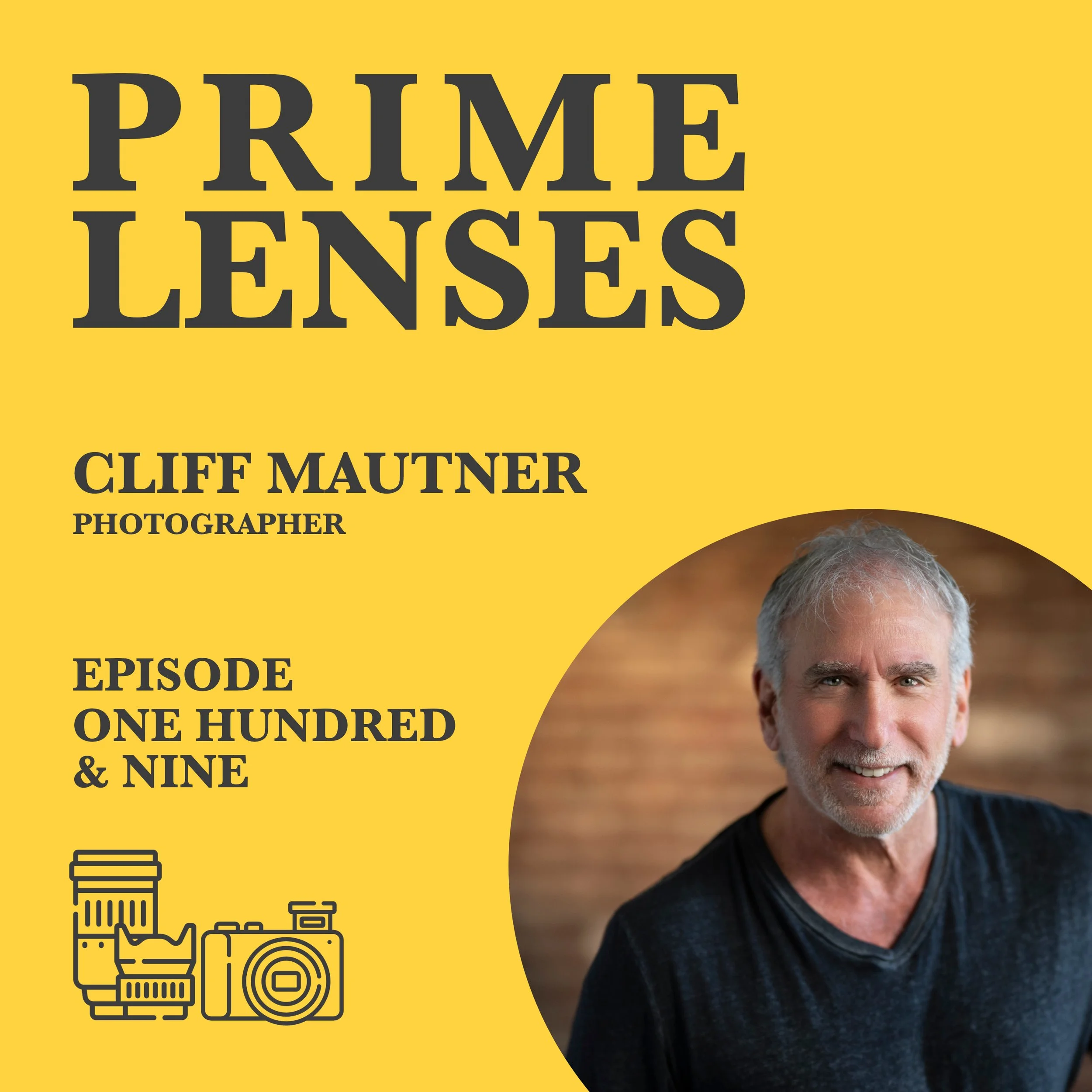


Cliff Mautner joins me to talk about his 43-year career as a Nikon photographer shooting everything from weddings to the stuff that was in front of him during COVID. I learned about his work via an open letter he wrote earlier this year that I felt contained interesting conversational fodder and invited him to take part in the show. I was delighted when he said yes.
Sign up to the Prime Lenses newsletter for a mid-week treat.
Support the show on Patreon.
Episode Transcript:
Iain:
Hello, welcome to Prime Lenses. I'm Iain. This week on the show, Cliff Mautner joins me to talk about his 43-year career as a Nikon photographer shooting everything from weddings to the stuff that was in front of him during COVID. I learned about Cliff's work through an open letter that he penned on Facebook a while back, which gained a bit of traction in the photography community because of the level, I think, of directness, honesty, evident frustration in his voice from the way that he thinks things are right now. And I thought he'd be an interesting person to talk to because I think he's, as you'll hear from the conversation, an extremely thoughtful, grateful person, grateful for the career that he has had being able to work as a photographer and artist for so long, but also worried and fearful for the future. And true to my instinct, Cliff was fantastic to talk to, and I really enjoyed this conversation with him. It's great when you speak to people latterly in their careers, because they have had so much time to think about what's going on and to look at the state of things now. So I really enjoyed this chat. I hope that you will too. And without further ado, here is Cliff.
Cliff Mautner:
I've got my yeti right here oh there we go that's the good stuff although it may have
Iain:
just cut out by moving it but yes it's just cut out I had exactly this problem with a guest yesterday I moved my microphone and then learned never to
Cliff Mautner:
move it again there you go how about now yeah perfect okay good I won't touch it yeah touch
Iain:
nothing but the lamp my friend there we go look at that phew brilliant that's bizarre
Cliff Mautner:
I got my airpods in I got the yeti uh and and actually the yeti is probably better anyway
Iain:
yes it's very good we live in a really interesting time audio is going through a similar thing to kind of computational photography from a couple of years ago where the new AirPods Pro especially the sound quality is astonishing for the for what they are it's remarkably good like it it's not because before they still sounded a little bit tinny and they still sounded like a Bluetooth microphone but whatever they're doing whatever post-processing they're doing makes people sound great like it's remarkable it's we won't have proper microphones for very
Cliff Mautner:
much longer you just won't need them it's bad is it as good as the yeti right now probably right
Iain:
um so it's what it does is it makes everyone sound a little bit more like they're in a studio because it's processing out any background now I like personally being being a child of the 80s and radio and growing up you know in britain with the bbc and everything I like a little bit of texture and a little bit of sound in the background um so I like it to sound like someone is in a space rather than they're just in a kind of perfect studio environment. I don't like it to sound too Howard Stern, but that is a sound. That is a, you know, that is, it has a signature. Baba Booey. Yeah, exactly, exactly. My UK listeners will have no idea what we're talking about. No, of course not. He's never really translated. The film came over and that was about it. He never really made it.
Cliff Mautner:
You know, he's gone through such a transition. you know he was a lewd crude he was a shock jock wasn't he really well yeah that was the word for him and then he you know then he evolved into a brilliant interviewer and now personally I know he's not listening although he is a photography fan yes I'm tired of hearing about you know Ronnie and all this nonsense. It just, he's still a phenomenal interviewer and I still enjoy him, but not the way I used to a few years ago.
Iain:
The one thing we can say is like, you know, great art comes from people with a point of view and a perspective. And boy, howdy, has he got a point of view? He did.
Cliff Mautner:
And he does. Yeah. He does. Yeah.
Iain:
Yeah. No, it's fun. Well, it's really good to see you, Cliff. Thank you so much for coming on. Your open letter that you wrote earlier in the year, and I wanted to bring it up if you were happy to talk about it, Because I think it's an interesting...
Cliff Mautner:
I'm happy to talk about anything. So if there's anything you should know about me, it's that I'm not afraid to talk about anything. And I'm proud of the reputation I've developed. I'm never afraid to give people a real answer. You know, I come from the East Coast of the United States, Northeast. So I've sort of been known as this very direct, almost brash, brutally honest. You know, I think that when people hear me speak, especially in my workshops that I did for a very long time, there was an air of authenticity because I was never afraid to give it to people straight. You know, the no bullshit sort of no bullshit approach, I think, tends to work best with photographers, especially in a world where everyone loves to dance around the truth and they never want to ruffle feathers and they don't want to. You know, it's almost like politics. We live in a world where they're if people don't want to raise any crap, they homogenize themselves. and you know in the political climate that we have especially if you're a photographer and especially if you're looking for followers and workshop attendees and all this nonsense it's almost like you don't want to ruffle any feathers so you sort of dance that that middle line when in fact you might just piss people off dancing that line because they're going to call you a fraud oh yeah yeah do you know what I mean and so you know if someone's going to ask me a question I'm going to give them a straight answer so um now that that might not always be good for
Iain:
a career but well I think the thing is careers are long right hopefully for us all and it's about it's it should be if you're consistent like I think I think you know I'm come from a project delivery background so unsurprisingly I value consistency right and I've just shipped my hundredth numbered episode of the show. Consistency matters. Thank you. Consistency matters and being who you really are matters. And I think if you believe something and you think something is being done right or something's done wrong, just say. And also having a mind, there's no point having a mind unless you can also sometimes change it. And I think if you can sometimes later go, yeah, actually I've reconsidered that or that was, you know, or double down, you know, but at least
Cliff Mautner:
have an opinion well I've got opinions I've been doing this long enough where I've you know developed very strong opinions about a lot of different subjects and frankly ian I'll I'll go wherever you want to go cool you know there's an old and by the way profanity is okay correct yes yes yes okay so the old expression I have fewer fucks to give yes we don't have time I think is fundamentally the thing is it's it's it's way way way past the point of um filters and uh and just nonsense because I mean let's face it I think people can see through that anyway so and if you know me it's you know somebody asked me a question I'll get a straight answer so
Iain:
bobby anwar is um this weekend's coming guest who's a danish photographer who I spoke to I met him last year and spoke to him at the end of last year actually he was it was great speaking to a street photographer who was talking to me like from his car like from the street he'd been out photographing that day and it was a bit too cold and so he had this idea he was going to talk to me from the street but he's the same he's like you know you come to me you'll get you'll get what I think about it which I think is is what you want especially if you want to engage with someone's work and then understand them from like you know maybe you want to learn from them or whatever so
Cliff Mautner:
I think I'd rather that I've got a lot to say about a lot with this industry because I've been doing it for such a long time. So I'm not afraid to go anywhere you want to go. In my thinking in
Iain:
preparation for this, I was thinking we would sort of come to the state of photography now, where you think it's at. But what I like to do, because I do like to talk to folks from different backgrounds on the show. So I've had a real range of different types of photography and photographers and people who've done different stuff. And wedding photography seems like one of the hardest gigs. There's this kind of romantic notion, I think, sometimes when people pick up a camera, they're like, I can do weddings. And then if I shoot weddings, that's an extraordinarily tough gig, I think. I had Kevin Fickling on as one of the early guests for the show. And so the way that the work you've been posting recently, being at that show and photographing people's proposals and things like that, I think is a wonderfully privileged place to live. And I wondered if we could start by talking about how you landed doing that sort of work and how you feel about it.
Cliff Mautner:
I don't think privilege has anything to do with it. I think, you know, the evolution, or I should, maybe the de-evolution of wedding photography. You know, my entrance and foray into the field was a little roundabout in that I was a photojournalist with the Philadelphia Inquirer for 15 years. I worked two years with a weekly newspaper prior to that. So I was in photojournalism for 17 years. And then in 1998, the Philadelphia Inquirer, you know, dumped a boatload of photographers because their excuse was, you know, the cost of newsprint, the cost of, you know, losing advertisers to the internet, classified sections were no longer a thing. So they laid off, I don't know, probably 25 of us from different bureaus. And at first, I mean, I was devastated. I had infant twins. But I was, you know, the Philadelphia Inquirer and my working for them also allowed me to have contacts in the commercial world. So when you do these assignments, you meet people and you give them a card. And, you know, so I was doing a ton of work for the Comcast Corporation, Subaru, hospital health care systems, all kinds of public relation work, advertising work. So I was busy along with my full time gig with the Philadelphia Inquirer. And I want to make it very clear. I was, you know, my contract with the Philadelphia Inquirer, you know, allowed me to do that. So if there was a direct conflict of interest, then then I would speak up. But so ethics did play a role. But there were, you know, I was like a second tier photographer on that, you know, with the Philadelphia Inquirer. You had a staff of amazing, many Pulitzer Prize winning photographers. Then you had the Suburban Bureau photographers. So we were, you know, I was a pissant, okay? Or as my dear friend from England, Jeff Ascoff. I don't know if you ever heard of Jeff. I was a Muppet, basically, just kind of plugging away in the suburbs, doing shitty assignments and doing the best I could with them. So I was very low level, never sniffed the glory of being a staffer going around the world. But I've done my share of travel, but that was after I left the Inquirer in 98. So when I got my notice and my completely gutless, ballless, former director of photography contacted me, he laid off all these people by phone. Okay. After 15 years of my life there, he laid me off by phone. And, you know, I was devastated. But I was already into the commercial world. And I had shot a wedding or two with a friend of mine who was shooting weddings. And I thought to myself, you know, those that can do what I do, we do what we do. And those who can't, they shoot weddings. And so at that point, I said, OK, fuck it. It's time to start shooting weddings. And so I started doing some. And very quickly, back in that era, the photojournalism approach was in vogue. and I got in, Iain, I got in at the right time. So right place, right time, right guy. And, you know, within three years, my business exploded. And I was busier, you know, as they say, busier than a one-armed paper hanger or whatever you want to say. And I was doing, you know, 60 weddings a year for several years. And that's how I got into it. And it was more out of need than it was want or desire. And then, you know, that's when I became a better photographer. Because when you're shooting weddings, and I don't know, and I don't know where the disrespect for wedding photography comes from, but there is plenty out there. But when you think of it, there's so many things that you have to be prominent at. Your skills need to be sufficient in all areas. Even if you don't excel in any, you damn well better understand lighting, how to make a woman look beautiful. I didn't know how to do that. I started shooting weddings. So that was a big part of my growth. I didn't know how to use external lighting. Our idea of intricate lighting was putting a piece of white cardboard on the back of a Vivitar 283. You know, you would see that at every press conference. That was our lighting. Otherwise, we'd try to get away with, you know, available light with, you know, ISO 400 film. But not to reminisce, I got lucky. Right place, right time, right skill set, right personality. And again, there's no secret into how I succeeded. again, there was a little luck involved. So I busted my butt. I had pretty good people skills. And most of all, I think I did very good work and I kept growing and kept getting better. And then I got involved with WPPI. And then in 2004, I began my affiliation with the Nikon Corporation, even though I've always been a Nikon user. In 2004, I met people in Melville at Nikon USA, and they were very open-minded, and it wasn't this good old boy network. They were looking for new blood, and they let me in. And my relationship with them, it's probably the thing that I'm most proud of in my career is my relationship with the Nikon Corporation. So they've been really good to me.
Iain:
My first proper camera was a D40. It's all Ken Rockwell's fault because he sat down and wrote a piece about it when it came out where he just went basically, he's like, for the size and weight of this thing, it's unreasonably good. I'm picking it up more than other cameras. I love it. And I had that thing. I loved it. And actually, I had it for 18 months. And then it made one frame and then a slight burning smell and the motor inside just gave out. and I just went out and bought another one straight away. It was the only time I've done that. It was lovely.
Cliff Mautner:
My dad bought me a Nikon FE in 1978. Wow. And that was my first Nikon. And then I haven't gone elsewhere since.
Iain:
I was talking to someone today about the FE.
Cliff Mautner:
Oh, yeah, yeah, yeah. Yeah, I remember the FE. I tried one off-brand lens in probably around 1986 or 7, and it lasted three months. It just fell apart. I won't say the brand, but it fit on Nikons, and I couldn't afford anything else. At that point on, I never used another brand of lens, camera, name it. invest in in the gear and and it will it'll save your ass more than more times than you can count
Iain:
so yeah buy nice or buy twice is that that's a great way in the uk like yeah is is you know because especially well especially if you're using it for your work and one of the things I was part why I was grinning a lot through your story and kind of like setting up your like the context for your career I guess is because it feeds into one of my theories of the show that I've developed through talking to people which is that the people whose images I look at and go oh yeah they've got something, they've often come up through a photojournalist kind of training because you've had to, you've been exposed, if you'll pardon the pun, to so many different things so quickly because when you come up as a grunt, you're just thrown into situations. You're told to go here. It's not always good news. It's not always just photograph these people outside City Hall. It's like terrible accident. Something's happened. Politician, maybe someone you don't like. Maybe someone who's got no time for you doesn't like you. All these things happen. And I guess that that prepares you then because the same thing happens I guess every week at a wedding you know you don't know who you're going to encounter you don't know what's gone well you don't know what's not gone well you can't control the weather it's a very varied like environment to be thrown into
Cliff Mautner:
you mentioned the word time and that that's uh that's really the most pertinent uh noun here and I'll tell you why one of the assignments that I had uh I had six of these a week and they were called Neighbors in the News. And it was basically, it was a weekly column in a subsection of the newspaper. And it was the grunt work for the grunts. And nobody else wanted it. And I said, I'll do it. And it paid $25 an assignment, but plus mileage, which that can add up, right? So six assignments a week, 25 bucks a pop. Think about 150 bucks for six assignments, breaking my ass. But I did this for three or four years straight. And what this allowed you to do, you would, you'd, I'd go back to back to back to back to back if I could and go from one spot to the other and spend a few minutes with each person. When you have that type of time constraint, when you go there and you know that you have to another assignment you have to make a picture an environmental portrait of someone that quickly you damn well better make something out of nothing real fast otherwise you're going to piss off the next person because you're late so I became pretty good at um capturing the essence of someone very very quickly in an environment that was you know the compositionally hostile Okay. And, and there was no light. So you go in, you create something quickly. And for the, I'd say for the first year and a half, I failed miserably because these were terrible pictures. And then I became, you know, became a little bit more adept at, at, at finding, making something out of nothing, making Shinola from shit. And that in itself, that, those three years and, you know, do the math. That enabled me to go into a situation, assess it quickly, and then pull something out of my ass very quickly when there really wasn't much to capture. So what it allowed me to do, and this is how I sort of sold my work, when I would speak to a client, a potential client, they asked me about myself and my approach. And I would say, well, I like to help set the stage for moments to take place without staging your moments, because they're your moments. And that's really exactly what I would do. I might, you know, if I'm shooting wedding prep, I'd turn some overhead lights off, I'd close some blinds, get a little less light, the more I get some directional light, and do things in that realm and have people do their thing in the light that I've already appropriated for them. And that's sort of how I developed my style of, you know, obtaining texture and dimension and mood because it was It's all about the direction of the light. So that goes all the way back to my roots as a photojournalist, as coming full circle with your question. Being able to create something from nothing, work quickly, find out who these people are quickly. And, you know, that was all from assignments that no one else wanted to do.
Iain:
But I think also it speaks to something is I love this because it's one of my other key things about iteration cycles and consistency. Right. So you need to get to do the stuff. So someone who's doing five or six guaranteed gigs a week, irrespective of the 25 bucks plus mileage that you were getting. But there was a time in both our careers when that was, you know, you felt pretty good on a Friday night. Needed. Well, needed, but I think that consistency of being able to go out time and time again and knowing that you're not getting it, I think, is the other thing, the self-awareness. You're looking at your contact sheets at the end of the week going, okay, I mean, it'll do for Neighbors in the News, but you know you've not got it yet, so you get back out there on Monday morning, you do it again and again.
Cliff Mautner:
We used to call them nerds in the news. Our photo editor would, you know, label it as that. But Iain, it was a critical time in my career. And I didn't know, I didn't appreciate it at the time. How could you? But again, that enabled me later on to work so quickly where, you know, if I didn't have that, I would be like many photographers in weddings where they're scratching their head. All right, what do I do with these people now? Yeah. And I, you know, I have videographer friends who, you know, they can't believe how quickly the pace is at, you know, how I'm working and how I'm capturing different scenarios that quickly so that I can give as much diversity to the take on a wedding day portrait session as possible. instead of just one scenario getting spending 15 20 minutes there it's two minutes here two minutes here two minutes here by the time the video guy has you know basically raised their camera to their face we're moved on to the next situation yeah which frustrated many videographers not I I apologize to any videographers that I've worked with that are listening to this in that you know I wasn't always that accommodating but I've become a much kinder gentler person to work with over the last 10 or 15 years so um there you go live and learn yeah but I I think what you're saying
Iain:
there is exactly right because I think there's if you if people haven't photographed in those kind of environments that are quite dynamic and you've got to come in and out quite quickly there's an assumption that people are coming in and going oh well you just find things in front of you and then you take photos of them and actually you've got to create the environment in which you want to work like you've got to have that confidence having you to go in and go right I I shape light for a living I don't just hope for the best and bounce a flash off a ceiling.
Cliff Mautner:
Yeah, but now you're coming to the real crux, which I don't think you wanted to get to yet. And I apologize, but I think that's gone.
Iain:
Yeah.
Cliff Mautner:
I don't think people, I shouldn't, I'm not going to generalize. Many of these wedding photographers today don't have a fucking clue where the light's coming from, why they're doing what they're doing. And, you know, we'll get to the open letter right now, which is mirrorless cameras have allowed people to expose in real time, looking through a viewfinder or looking through an LCD, okay? The camera basically exposes for you, and it certainly focuses on the eye for you. And that gives a sense of security that you're making a solid photograph when in actuality, that's only the beginning. It's only a precursor to, you know, creating a dynamic photograph. And attention is not made, for the most part, to the direction of light, to composition, to focal length, to anything involving the creative process to make dynamic images. You know, it's getting close to game over for the level of work to be respected anymore because good enough used to be okay. Now good enough is great because people can't tell the difference. So they think that if it's in focus and if it's exposed properly, people just assume it's good and professional. That's the problem. That's really what I was trying to say in that open letter. And, you know, and I also stated and I, by the way, it took me two weeks to write that.
Iain:
Oh, wow. Really?
Cliff Mautner:
Yeah, because I didn't want to piss people off. I wrote it. I wrote it. I deleted it. I wrote something, deleted it, wrote something, kept it there and changed it and changed it and softened it.
Iain:
Okay.
Cliff Mautner:
And softened it and softened it. And, you know, I just, I needed to strike the right chord without sounding like an embittered old coot. And I'm not embittered. I'm grateful for the career that I've had. It's given to me everything. And I mourn for it. You know, photography itself, it's healthy. It's never been more accessible for people. But on the professional level, fee structures have never been more disrespected. It's never been more difficult to make a living, a good living in this field. And I'm glad that I'm not 15 years younger because I'd have to figure out something else to do, I think.
Iain:
Yeah. Yeah. I think that's why when I read it, it resonated so much and why I wanted to get in touch and see if you'd be up for being on the show. Because the phrase you said about like sounding like you in the letter about like you don't want to sound like an old man sort of shouting at the sky and stuff. I bemoan the lack of quality in a bunch of things. Last week's newsletter, as we're recording, was me complaining, really, which is not it's out of character for me, but complaining about Netflix saying they're making podcasts. They're not making podcasts. They're making cheap TV because they've, you know, the Conan O'Briens of this world either don't want to do it anymore or rather than spend 50 million on one guy, we'll spend a million pounds 50 times and then we'll just create moving wallpaper. And it will be like Joe Rogan on Spotify. They'll pay through the nose for exclusivity. Two years from now, the exclusivity will lapse. They'll go, oh, that was an experiment. And they'll have done damage to a medium. In my case, I love radio and I love audio. And that's why this is what it is. Because I don't think the lack of pictures is a bug. It's a feature. And so for people to just come in and go, we're making podcasts, would be like me wandering into a wedding with an iPhone and going, I'm a wedding photographer.
Cliff Mautner:
Well, actually, you have that now. You have content creators, okay, that are paid a few hundred dollars. that literally go there with their iPhone on some type of iPhone Steadicam. All right. And, you know, like a little iPhone gimbal. And they're running around in the way with their fucking iPhone.
Iain:
What are we doing?
Cliff Mautner:
And the worst part is some of these people, some of the guests think they're with me. And I, you know, and I am a much softer touch than I used to be. And I would just say to them, listen, I understand and appreciate why you're here. Okay. But please do me a favor. Keep your distance. Just don't get in my way. Don't get in my frame. And we're going to have a really nice day. Enjoy yourself. And that's all I say. I, you know, it, does it burn my ass that they're there? Sure. It does. But, you know, it's, we're working for the same client. So I have to make the client happy. And I also just want to say, Iain, I've got a lot more weddings behind me than I do in front I am semi-retired. I don't like using that word, but I'll take what comes my way. I'm not out there marketing my ass every day and busting my butt trying to get work. I'm okay. I've invested. I'm fine. I'm good. But I'm sad for my friends and colleagues who haven't. I'm sad for the people that have been doing it a long time and now all of a sudden the well has dried up it's not the glory days of the mid-2000s anymore where you know people were banging down your daughter for you to shoot a wedding I mean it was you know I was booked every single weekend without effort other than the effort of of shooting the event and and you know taking care of people I busted my butt in an effort to make the best pictures and take care of my clients and customer service which is a whole nother facet that people don't really talk about um because that was just as important as the photos themselves but today you know if you ask any wedding photographer are they busy if they tell you oh I bet you it's busier than ever a either they're very inexpensive or they're lying yeah
Iain:
yeah it does seem like it's just a tough time to start any creative endeavor like I don't know how anyone gets paid anymore because rates are so low for everything ad rates are getting like that's
Cliff Mautner:
what I'm talking about and and it's always been it's always been less in europe for some reason um it you know my my european counterparts would you know even back in the mid-2000s you know they might you know if they got 2500 pounds for a wedding that was that was high end so you know a little different than that here fortunately it just seems like to me going back
Iain:
to what you were saying about buying properly you want someone skilled in the art and experienced enough to create the thing that you know you're not going to get another shot at this you know it's
Cliff Mautner:
I I just thought of something maybe the reason that um that the rates were much less there maybe Americans are just that much more materialistic. And so they put more of an emphasis. They're more narcissistic. So I got to have the best pictures of myself. So I'm spending on this guy. He'll make me look good. So I don't know. I don't want to bash my country. We deserve some bashing right now. I can tell you that.
Iain:
Yeah. It doesn't look good. Look, we're not covering ourselves in glory this week either. so my prime minister's having a rough a rough time of it at the minute so he's it's trade you well oh gosh no don't get me wrong don't get me wrong it's no you can hold on to him for a little while longer but only please only three more years if it's got to be on the subject of photography though because it's nice to talk about it that vanity fair piece last year holy smokes that was an advert for really great photography and really considered like you know I thought that was amazing striking work and a real artist's kind of kicking back and pushing back well you hope that there's uh
Cliff Mautner:
look I I I need to preface all of this by saying um the tools that we have at our disposal are allowing all creatives to make amazing imagery beautiful imagery it's there's there's great photography going on I the the industry is by no means dead no okay um I just think you know with wedding photography it's never been more difficult to make a living but that doesn't mean that it's dead. And, you know, I still look at these people that I admire so much. You know, I'm going to mention, you know, the Joe McNally's of the world and my colleague, Brian Scary, who is an icon ambassador and a geographic explorer. You know, it's too many to mention. We have someone as an ambassador in this country, Dixie Dixon, who's an unbelievable fashion photographer and killing it every week I see that she's busy and thriving and so you know there's different genres that are just thriving uh like never before and hats off to them yeah um so you know the tools that we've been provided with are astounding I'm just I'm just wondering if it's been made a little bit too easy. And these tools of the trade have obliterated the bar for entry to the point where people just don't know what's good anymore.
Iain:
So I wonder with that, this is one of the things I wanted to pick up on because you mentioned the bar to entry when you were writing. I wonder whether it's the tools getting so good because I think about starting to use a camera now. If you hand a modern camera to someone with lots of settings turned on, automatic stuff that in theory is helping you out, then actually what you're giving someone is a tool with auto white balance and auto focus and auto ISO and all this stuff that's changing that might, when you're starting out, make it quite hard for you to know what you've changed. And that actually the solution that you what you really need is a good teacher and a good introduction to photography. You know, someone who will walk you through it and go, what about this person here? What about that person there? Have you seen this kind of work? Because I think otherwise you only consume photography through a social media feed and everything's hyper eleventy, stupid, high contrast, whatever. And you think that's photography. And actually, I feel like we've got too much access to it and we're just bombarded constantly. So you can't know what good is because you're just seeing stuff all the time.
Cliff Mautner:
I'm going to be more cynical than that. I think those that are beginning are not concerned with getting better because they don't really believe that they have that much more to learn. I have never seen, and I said this in my letter, I've never seen more people with such little skill and know-how have more confidence than you can possibly imagine. So if you are someone that has a boatload of confidence and think you know everything, why would you need to learn anything since you know everything? And, you know, I was watching and just for shits and giggles, you know, in my Facebook feed on my reels or Instagram, whatever it is, you know, I see that I'm bombarded with these photographers. and the other day I came across one where she was trying to explain depth of field and she was absolutely and she was stunned at the fact that if she moved farther back from a subject she would increase the depth of field oh my goodness what a fucking revelation and she's it's like she discovered gold and this and and the comments are also gold by the way oh wow this is unbelievable oh what camera settings are you using you know it's just so the it's it's an eye roll it's just a big eye roll and so you know you have on one hand the technology allowing us to do so much and create so much beauty. And, you know, there's this other end where, you know, the commercial aspect of it is just being pissed away by people that, that are diluting it, you know, right before our very eyes. And I'm sorry if I'm a little jaded and frustrated with it. Yeah. It's just, I just am. And I just, you know, I was fortunate enough to do my workshops in my studio for 15 years. And, you know, I kept track. I had 952 students come through my studio from 42 different countries. And it was a privilege. It was a joy. Sure, it was profitable, but it was a real in-person, tangible, touching experience to be able to work with a photography student and have them take a picture and then critique it and tell them what's going on. You know, see someone holding a camera the wrong way and then explain to them why that it's not the most stable, the most secure way to hold a camera. And now I see these people and I know this is audio, but holding the camera in front of them, you know, who knows what shutter speed they're shooting at? I don't know, but they just I understand that that holding the camera in front of you and looking through the LCD can sometimes give you a perspective that you can't get through the viewfinder. But for God's sakes, it's not a stable way to hold a camera. So I had that privilege for a long time. And those people had the desire to learn. They accepted critique. They accepted, you know, real constructive criticism. And what I'm getting at is I don't think these people even believe that they have anything to learn. That's the problem.
Iain:
Yeah. I think if you set yourself up, it's one of the reasons why someone asked me the other day why my episodes, I always have a guest. And it's like, because I definitely don't feel qualified to just sit and talk and say something particularly profound or that someone should take. Like the learning, the joy of this comes from hearing from someone else, right? And that interaction. And for me, I feel like it would be good for us all to do more photo walks, workshops, whatever they are. But with people whose work you rate and understand why you like it and why it's good, because that's, I think, the gap. I mean, one of the things I was wanting to ask you, actually, was how do you check in with yourself and how have you brought that through when you've taught people over the years? Like, how do you kind of because it's very easy to believe your own hype. I've done it sometimes with the show where you walk away and you record an episode. Yeah, that was great. I'm an edgy motherfucker. Like, actually, you just recorded another one. Like, calm down. You've got to do another one next week.
Cliff Mautner:
Listen, I have been humbled more times than I can count. So, you know, I'm sure I might have edginess, but I've never believed hype. Okay. Because as much as you might want to believe hype, there's always someone else with more hype.
Iain:
Yes.
Cliff Mautner:
Okay. and um I I've never I've never been one to uh to need to seek that that hype status I was kind of busy making pictures and keeping a business going and uh you know teaching those workshops and really my reward was um someone from new zealand taking the time out of their lives to come and visit me in my studio in Haddonfield, New Jersey. That was my hype. That was my reward. Or the, you know, the woman from Saudi Arabia that came over here with her husband to learn how to make pictures. And, you know, I was so clueless that I, you know, I didn't know, I'm like, she brought her husband to my workshop. Well, if you idiot, Cliff, she can't leave the country without her husband. So, you know, so those 15 years were my gift. And they were also they were very humbling in the stories that these people had. So I believe that I kept grounded because of those 952 people that came through my workshop and hearing their stories and asking them why they want to learn photography, why they either want to be professionals or not. And You know, those stories were what really kept me grounded. That and a couple of twin daughters. So, yeah, I don't know. I think I'm more self-deprecating than I am boastful, frankly. And I don't know. Maybe that comes from my golf buddies who break my balls 24 hours a day. But listen, I'm a photographer. And while it's a huge part of who I am, it isn't exactly who I am. It's how I've made my living for 43 years. That's my reward, man. I don't need anything more than that. I don't need to go on the internet and tell everybody how wonderful I am. I barely have a social media presence. I think I've got 25,000 Instagram followers. That's very modest in today's world. So I don't seek that. I've got my rewards through those students. I've gotten my rewards financially. And I've never done anything else in my life other than make a living with a camera. What more reward do I need? I don't need the pomp and circumstance. I've gotten the awards and all that nonsense, but the awards and the rewards were those people that came to me.
Iain:
Yes.
Cliff Mautner:
That was cool. And we will never see that again. We will never see that again. These international in-person workshops. WPPI is happening in a couple weeks. They're just trying to maintain the same numbers that they did the year before. That's a win for them. Okay. Because why come to Las Vegas when you can just learn from a know-it-all online?
Iain:
Yeah. Yeah. And the reason is, as you say, to meet people and see people in person. I was lucky enough to go to a bunch of events last year. And it's so important. You see, you spend time with people. You all talk about the analogy I like to use on the show is that, you know, people think artists get together and talk about art. It's like they don't. They talk about where to get cheap paint. Right. And it's nice to get together and have these kinds of conversations where you all go like, oh, this is hard, isn't it? But this is really cool. But have you seen that 85? Holy smokes, that's amazing. And you remind yourself, I guess, why you love it and what you love about it.
Cliff Mautner:
And the friends that you make at these things, you know, some of the last things you talk about is photography. You talk about, you know, life and family and just joke. And it's just a, you know, I'm not going this year for the first time in many years. But, you know, those things, I've made dear friends internationally from these international conventions. You know, I've been going, I was going for 20-something years. It was great. Yeah. And I think that, I think the internet and YouTube and online learning has sort of destroyed some of that. But, you know, progress, things go on. And I think there's some really good YouTube instructors out there. I'm not saying that there aren't. I think there's some wonderful information. And when someone says to me, hey, I'd love some, you know, to learn a little bit more about photography, I'll say, Google it.
Iain:
Yeah.
Cliff Mautner:
You know, I won't be really doing, I don't think I'll be doing any major workshops anymore. It's just, you know, the stress of booking them. I'm not going to lie. The stress of booking them, it's enormous. My biggest worry when I used to do them was, was I going to get decent weather to show these people how to shoot in harsh sunlight, which was one of the things I was known for. And if it rained, well, you punt, you do some different things. But they would sell out without issue. Now, the marketing involved and the social media involved, And, you know, some of my dear friends that still do this, marketing is they have somebody else do it because it's too difficult.
Iain:
Yeah.
Cliff Mautner:
You know, the spam that you get every single day in your inbox and the sponsor posts on Facebook and everything else, this is really hard to do, to maintain. And it's, you know, I don't have the energy for it anymore.
Iain:
No, I hear you, man. Like, I've only been doing this two years and full-time since last year. and I received it I get the emails all the time promising me services and things like that which quite fun I got on recently now bear in mind for two years I've made a photography podcast I've never deviated from that it didn't start as like a something else podcast and get into photography like it's always been that and for some reason a lawyer named Tad keeps emailing me to ask if my listeners want to hear stories about divorce and how you can come out the other side intact and I'm like my friend like I've not I've not replied I don't know what to say you know like but like if I'm getting that like someone who's been around the block of me a few times just multiply it by whatever you know just the spam that comes in constantly but I admired him for trying do your listeners want stories about you know surviving gnarly divorces and I was like no
Cliff Mautner:
no they don't it's so weird that's that's that's uh that is unusual yeah very unusual what I mean so what are you doing with your work are you shooting a lot or is just something that you enjoy is it it's it's not your living correct no not yet but here's the thing so when I started the
Iain:
show I did it I had another gig and long-time listeners to the show will know I always used to say to photographers I spoke to like I'm a tourist right I shoot with my beloved M and my mostly my 35mm because I love it. And, you know, I love photography and I think I'm reasonable, but I've never entertained the notion that I'm doing it for my job. Speaking to photographers and kind of extracting a little bit of knowledge, wisdom, interest, education and sharing that with people. Like I see that as that communication as part of my job because I grew up around the BBC and it had a mission of like to educate and entertain. And so I sort of internalize some of that. And that's, this is my happy place and I love doing this. But as happens when you speak with someone who, with people who do things, eventually projects come up. So I've got a couple of projects that I'm trying to get off the ground that are documentary style. So if you know the work of Doug Menway, who did a bunch of stuff. So he's US born photographer, lives now in Portugal. I've had him on the show. And he photographed Next and HP and Adobe and these companies. He, like you, came from a photojournalist background. He'd been away to Africa, seen some heinous shit, came home and his mates were like, you need to do something that will help settle you and be happy again, I think. And so he went off to Next and photographed Steve Jobs' next company and just got these really great photos of the beginnings of these companies that now dominate our industry and politics, as it turns out, in Jeff Bezos' case. That's very cool. Yeah, it's great. So I come from a bit of a video game background and want to do that in video games. And so I'm trying to find a way into this extremely secretive industry and to say, I want to run around with a camera because there's no tradition of documentary photography in video games at all. It's not that there's not very much. There's just none. So we're just losing this history. It's a closed box. And yet it's a cultural, you know, it's a massive part of the culture.
Cliff Mautner:
Well, it's interesting you bring that up because, you know, for me right now, after 43 years, I still can't believe it. Literally, 1983 was when I first started professionally. I'm at a point in my life, in my career, where a lot of the commercial success is behind me. And I've allowed myself the privilege to think about what I need to do to find purpose. And, you know, again, I used to work for years. It was seven days a week, you know, between, you know, I might have, for example, October, I'd have two workshops. I'd have a conference in Manhattan and I'd have seven, eight or nine weddings to shoot in just that single month. so there were you know year after year after year after year there's days I was you know seven days a week and now that things are you know not like that for sure I wake up empty creatively empty and thinking to myself what can I do with this call that I have to pick up a camera and do something positive. And so I've been exploring different ideas. And I even used ChatGPT. Like, what are our issues of the day? And I came across just going back and forth with my good buddy, ChatGPT. And so I started working for something called the Ronald McDonald House of Southern New Jersey. And basically, they support sick children. These kids don't have to pay a dime for health care. And they come in for these major procedures. And many of them are life-threatening. Ronald McDonald House is amazing. So I'm doing some volunteer work for them. Just this past week, I came across, I had a meeting with the director of a free clinic, a free health care clinic that serves our area. And I think that's a story that needs to be told about the people in this country that are caught in between not having health care. And, for example, there was a story, there was a person that I was informed about that made $11 a year too much to be eligible for Medicaid, which is health care in this country. dollars which meant they couldn't afford to purchase health care so they're going without health care because they can't afford it you know they're you know so much in debt they can't even think about going to the doctor yeah and you know these are the these are the stories that need to be told I feel in this country so people can uh you know they need a voice so I'm trying to find things that I can, that I can tell stories about with my, with my camera that, you know, and I no longer need the commercial viability. Uh, I just want to donate my time. So I'm, I'm searching hard for things that I can sink my teeth into visually and tell visual stories. Um, now that, like I said, I don't need the money. So I really want to do some good with my camera. And that's work in itself, just trying to think of what you can do, what stories to be told. And, you know, so I'm struggling in that area. So it's, you know, I'm going through a very openly going through a little existential crisis of my own to try to find things I can do with the work that I'm able to do. So, you know, the creative process, you know, it never dies. I'm yearning to make pictures. And sometimes you just don't know what the hell to shoot.
Iain:
Yeah, it's got to start with an idea. There's a quote, again, I reference too often on the show, but I like. John Cleese, years ago, talking about creativity. And he said, it's not inspiration striking. It's a way of operating. You turn up every day and you do it. And what you've done, it sounds like, is over a 43-year career. you've trained yourself consciously or not to be in that mode. And so now you're not having to get up and do it every day suddenly. But the impulse is there. I imagine it's like being an athlete. You know, they don't stop training the day that they're no longer on the squad. Like you've got to come down from that slowly. You'll still get up at 6 a.m. and do however many laps of the pool, right?
Cliff Mautner:
Well, that's, you know, during COVID, I mean, I crashed hard.
Iain:
Yeah.
Cliff Mautner:
Because, you know, it was still a busy time. And then, again, when you're going 90 miles an hour with your hair on fire and you come to a complete stop instantaneously, you know, it's not just me. I think everybody experienced that, whatever career you were in. But, you know, when you're making pictures and you're around people and you're telling stories and you're, you know, forget the financial aspects of it. You know, the creative aspects just came to a halt. I mean, you know, I was going out taking pictures of, you know, of just about anything at that point in time. So, yeah. Just got to get your fix. Yeah. Yeah. And I need it now. And I'm just not sure, you know, and this isn't going to take up enough of my time. It's not a project that I'm going to do every day, but I need more. And I'm fighting for those ideas. Yeah. And I think it's coming up with those ideas. You know, I'll pivot for a second and say, you know, it's coming up with those ideas that makes some of these unbelievable photographers unbelievable. Because when you see some of the images that some of these people make, it's not just the fact that they're great photographers. It's that they come up with these unbelievable enterprise ideas. Enterprise art is basically ideas that a photographer comes up with to create on their own and on their own time and then maybe sell it afterwards. That's what we used to call enterprise. And I look at someone like Carol Guzy, who is a fellow Nikon ambassador and friend and unbelievable all-around human. She's documenting the immigrant crisis that we have here and some of these images. know she's got four Pulitzer prizes yeah and she's doing some unbelievable work right now and it's on her own time Wow it just you know I I'm assuming she's I think she's working for Zuma but it can't be terribly financially rewarding and but the body of work that she's creating is unreal yeah so my admiration right now is is really uh um it's it's it's towards those people that are coming up with great ideas to tell stories not just the great pictures you know telling those stories coming up with the ideas is it's half the battle yeah oh yeah I mean probably more than but um did you see as part of
Iain:
winter olympics there's a photographer uh called matthew I think his name's forget forgot um he photographed winter olympics athletes but in in unusual settings like a hotel and things so you've got people kind of with their skis reclining on the bed a snowboarder doing a like a spin over a pool like before they're going to fall in just have a look after it's incredible stuff um people they had a like a I think it was the luge you know the big thing that you get in and go down with a team and they had them they had them they photographed them using a flash so they're frozen in mid-air like they're moving but it's a completely static shot or someone taking a shot taking um doing the the shooting something like there's a glass at the end of the bar and they've got the gun set up and then she's lying on the bar to take I mean just stuff like that where you go brilliant it's so great because once you have that idea of I'm gonna take these people but completely shift their context stuff like that then you get to a setting and a location and then you can do a bit of kind of we go full circle but you can do what you do in weddings where you're like, right, I need to move this a little bit over here and shape this like this, but then I can get this kind of. It's such a great concept. So cool.
Cliff Mautner:
You know, first, two things about that. That is what's so fantastic about the gear that we've been provided with these days in these camera companies, is that the ability to make some of those pictures have been provided to us by this great technology that we have. And there is still great photography going on with great ideas. And I think those that you mentioned are really amazing. The coverage of the Olympics with the technology that is out there right now, the drone coverage, holy crap, it is absolutely mind-boggling just how good this coverage is. I remember when drones first were here, it just didn't have the kind of resolution to be able to do something like that. And now, you know, even just the drone operator themselves, how skilled these people are to have this drone follow those, the luge at 72 miles an hour through this, you know, this track that it and the skiing coverage. Yes. With these drones. It is fascinating. So completely off track, but wow. Yeah. It's, it's, uh, it's really fascinating, but you know, again, great ideas. Yes. Accompanied with great skill. Um, you know, I, I wish that a lot of these, uh, these younger social influencer photographers, um, would, would understand that it's not all about followers. that, you know, get some great ideas, get some skills. You know, and you mentioned, you know, wedding photography, wedding photography, wedding photography. I'm a photographer.
Iain:
Right.
Cliff Mautner:
I'm not a wedding photographer. I just happen to apply my skill set in the wedding industry to make a living. and you know it's it's almost like you know why do people rob banks yeah because that's where the money is well that's where the money used to be yeah and weddings yeah but I was also shooting you know ad campaigns and doing commercial work for corporations and things like that that I never really talked about right um but you know wedding photography is how I made my name and then when people came to me from my workshops um only half of them shot weddings yeah you know a lot of the others they were you know uh very well to do people that just loved photography that wanted to learn or they were you know looking to leave their job and go into wedding photography and you know so um you know photography is so much broader and so much more than just wedding photography and um I think I've been hit with the stigma a little bit. Even Nikon, I say to them when they say, well, we've got this, blah, blah, blah, got any weddings that you can use? I'm like, can I do something else besides a wedding, please? So I've sort of been pigeonholed in that arena.
Iain:
Yeah.
Cliff Mautner:
Not that I mind, but it's just, I bring a little more versatility than just the wedding facet. But I'm not bitter. No.
Iain:
look I think that you have been the right level of of opinionated and outspoken I think that's the that's the thing you want to you want to speak to people who've got a bit of a perspective on something and I never want guests who just won't say boo to a goose right because I think that's
Cliff Mautner:
that's not where you get an interesting conversation no no but again I you know the the one thing I want to, in case this is close to an end here, I just want to talk about gratitude, you know, and how grateful I am to this craft. And, you know, I mentioned the word humility. I mean, my God, you know, I see images all the time that just humble me. I, you know, there are fellow Nikon ambassadors that just, I am humbled to be in their presence. And, you know, I just, I guess I wish these content creators, and a friend of mine on that thread, someone said, we need more photographers and less content creators. Yes, yes, yes. I love that.
Iain:
Yep.
Cliff Mautner:
Okay. But I just wish they would find a little bit of humility because the way they speak and the way they project themselves, it's as if they have nothing more to learn. And let me tell you, there's a lot to learn yeah you know there's a lot more to be done there's a lot more hopefully you know I've got a lot more to shoot might not be weddings yeah but who knows I don't know what direction I'm going to go in now as I move towards the end of my commercial career yeah it's where
Iain:
the interesting stuff happens I mean you look at like you go really extreme your ralph gibson's and your joel myowitz's and stuff like that they're doing still life now practically like they're just they're just off did like they've because what have they got left to prove like ralph gibson's taking close-up photos of texture and shadow on cardboard he's like that's his he's distilling the art form down it seems like to just like take away take away take away what's left to keep to you know that's exciting to see but he's got to you've got to I guess get to that point almost well there's
Cliff Mautner:
a a fellow uh Nikon ambassador in the united states and and friend of mine Joey Terrill he'd be an interesting person for you to speak to. He's made a living in photojournalism. He's done a lot of, you know, environmental portraits and celebrity portraits. And he's, I mean, he's, but what's happened, he was not able to get licensing and permission to be using those images for the Nikon Corporation. You can't get permission sometimes. And no one really knows this, but I'll say this, the legal ramifications and the releases that we have to get signed for Nikon to use the images that we photograph, okay, sometimes like Andrew Hancock who photographs athletes and Matthew Jordan Smith who photographs celebrities, you can't get permission. So what he did, Joey pivoted to macro work. So if anybody wants to see examples of macro photography, I don't think there's anybody better in this world right now than Joey Terrill. He is astounding. So he's sort of pivoted into that world because he wasn't able to share the images that he was shooting commercially. So he has this macro studio in his house that is state of the art. And he's one of the most brilliant teachers I have ever encountered. so you know there's it's again he I guess he kind of fell into it because he he had to uh you know he wants to share images and those are the only ones he can share yeah so he takes mundane objects and makes them unbelievable yeah so you know finding niches and again it goes back in goes back to ideas yeah you know and I wish I had more of them and and and lastly you know humility I don't think I'm a great artist I think I was a great technician right I think I was I had the ability to shape light I think I had the ability to you know compose on the fly but as you know Art? I don't know. I shrug my shoulders. I don't know. That's not for me to decide. But the technical aspects were just so innate that it enabled me to do things very quickly on the fly and maybe a little differently in my eyes and use light differently, which is sort of what I was known for. But I don't know, you know, artist. I don't know. I look at, you know, the great impressionists for me. I mean, Caravaggio and Rembrandt, for me, you know, they're the greatest in my eyes that have, you know, ever touched the face of the earth. So using light in those ways, that's sort of how I've tried to emulate the direction of light. But there's great photography going on out there. And I just wish, you know, and the reason you found me was that open letter. I wish some of these people that I spoke about would just for one second stop trying to scream so loudly from the mountaintop to be noticed that they would look at the path that was laid for them by some great photographers and great artists and come up with ideas. instead of just holding their camera in front of them and running after a couple and saying how great they are. That's all I'm trying to say.
Iain:
Yeah. No, it's brilliant. I think I would always rather talk to someone who is an extremely skillful practitioner of something and will let the world decide whether it's art or whether it's something else. Ultimately, your images sing. It's why it's also... A Facebook post is not enough to reach out to someone and have them on the show. Looking at your images and going, yeah, the colors and the way that you frame things. And I can see that you're shooting with a Nikon because the colors and it has a look, right? You know, again, opinionated tools. I think it's great. So, no, this has been great.
Cliff Mautner:
I wouldn't know because I haven't shot with anything else. Honest to goodness. I just, people, you know, I just, it's just something that I've always relied upon and never really conscious of it. But, yeah, you know, just to reiterate, you know, what Nikon has done for me. they've been they've been much more important to me than I've been to them I can tell you that
Iain:
yeah oh wonderful well cliff thank you so much for doing this this was great I loved times flown by it's brilliant it was a pleasure my pleasure for people listening who maybe don't know you cliff
Cliff Mautner:
where can they find a bit more cliff uh they can find me uh uh when the weather's proper uh on a local golf course um I play a lot of golf but otherwise it's uh cmphotography.com my instagram is cliff at cliff mountner uh they can find me on facebook and it's m-a-u-t-n-e-r cliff mountner um you know I'm I'm not uh I'm not this huge social media presence and I just I never was and never will be but um you know uh again uh 43 years and that's what I'm most proud of yeah that's what I'm most you know there's not that many people can say I've never done anything else a paycheck in 43 years. So, you know, that was what I'm most proud of, quite frankly, along with,
Iain:
you know, raising my daughters. This was tremendous. Thank you so much for being on the show.
Cliff Mautner:
Thanks for reaching out. You're a joy. Yeah, thank you.
Iain:
Once again, a big thank you to Cliff for being on the show and a big thank you to you for listening. If you enjoyed it, don't forget that you can like and subscribe to the show wherever you get your podcasts. That's Apple Podcasts, Spotify, YouTube Music, Amazon Music. We're even on Substack now. And if you'd like to support the show because you're enjoying it so much you don't want it to go away, then you can. You can head over to patreon.com slash primelenses or go to primelensespodcast.com and have a look at the merch store. We've got brollies. We've got cups. We've got pin badges. All those things are guaranteed, in fact, to make you a more interesting person and more attractive to your chosen demographic. Not only that, I learned recently this podcast has a horse for a fan. Do other podcasts have horses that listen? I don't think so. Shout out to Wren. How you doing, bud? Stay strong out there. OK, so messages to horses aside, podcast merch shilling done. Have an amazing week, whatever you're up to. I hope you capture some beautiful images and I'll see you this time next week. Thanks a lot. Bye for now.
More about this show:
A camera is just a tool but spend enough time with photographers and you’ll see them go misty eyed when they talk about their first camera or a small fast prime that they had in their youth. Prime Lenses is a series of interviews with photographers talking about their photography by way of three lenses that mean a lot to them. These can be interchangeable, attached to a camera, integrated into a gadget, I’m interested in the sometimes complex relationship we have with the tools we choose, why they can mean so much and how they make us feel.