
Leitz Phone with Rob Taylor of Leica
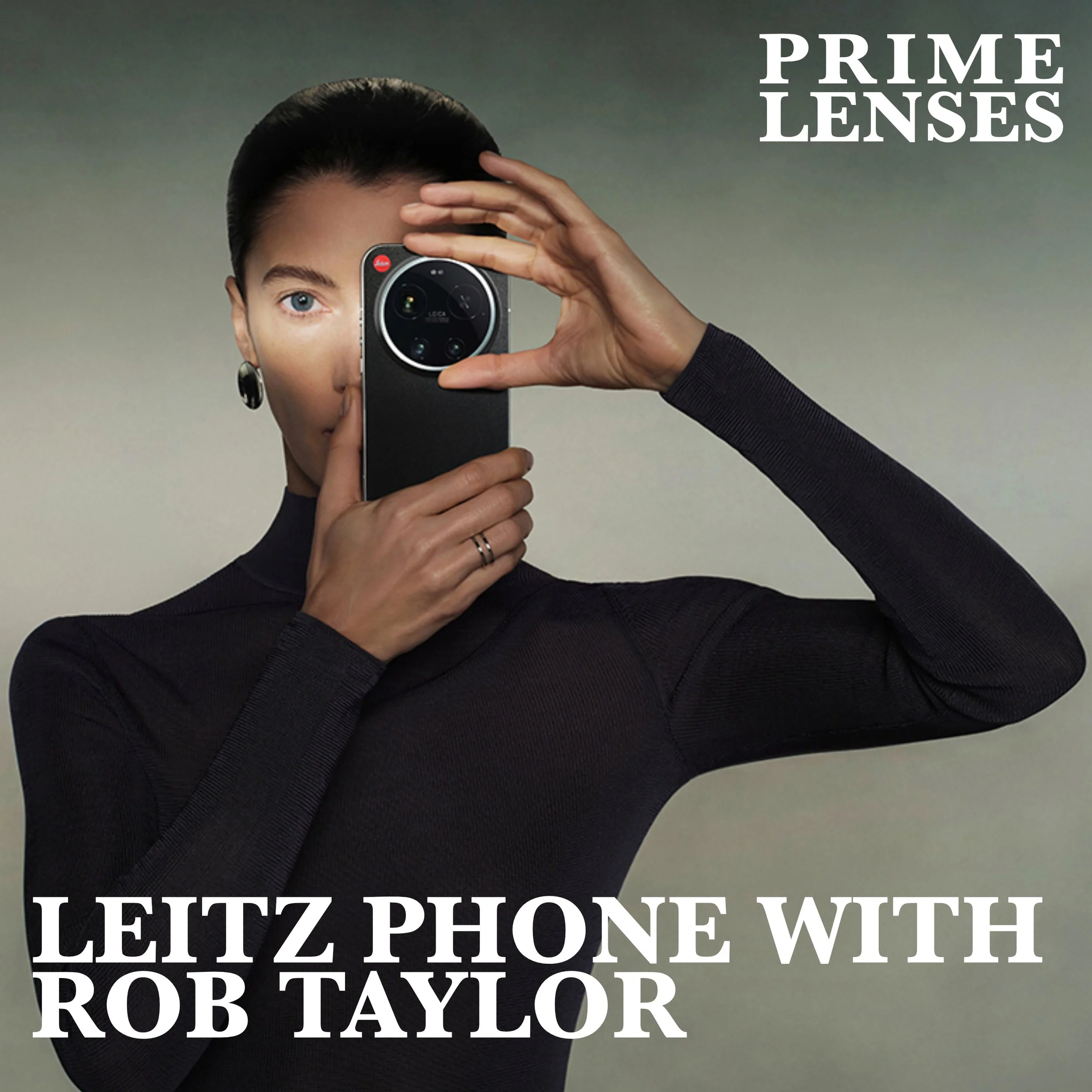


Welcome back to another midweek episode. This week I spoke to Rob Taylor of Leica about the Leitz Phone launch, how Leica think about a collaboration like this and what they wanted to achieve. I hope you enjoy it!
Sign up to the Prime Lenses newsletter for a mid-week treat.
Support the show on Patreon.
Episode Transcript:
Iain:
It's lovely to see you, Rob. How are you?
Rob Taylor:
Yes, great, thank you. Yeah, the sun is shining. Feels like winter is finally uh coming to an end, which is uh Which is nice, I would say.
Iain:
Yeah, well I thought that too, but the snow is falling as we speak and the kids have built a small snowman. So it we could be about to go back into winter which Uh who knows? That that is Scotland. It's yeah, it's keeping us on our toes. I've been really excited to sit down and talk to you. I'm really interested to hear a bit about the Leitz Phone. a bit about the work that you've done with Jamie on that and to you know to get this product out into the world. But it's probably good for people listening. Um long-term listeners will have heard the conversation I had with Mark Shipman last year uh at at the mothership talking about the team and how some of that stuff works. Can you tell us briefly a little bit about you and your background and kind of where you fit into that team?
Rob Taylor:
Yeah, so I've I've been at Leica now specifically for almost five years uh working in the team here with as you say with Mark and the others. We're only a small team uh based in Munich Um but it's but it works really well. You know, we have a team that work really well together. I think when you have a small team that's really important and I think if you get that right, then it can be a very powerful thing. And um As we're responsible for pretty much everything that Leica creates on the design side, um we have to work well together because there's lots of things happening, lots of new things are happening, and uh Um so far so good, I have to say. Um I think background-wise, I've been industrial designer now for I think uh Yeah, coming up to 20 years, so quite a long time and and and worked on lots of lots of different things uh from consumer electronics and and transportation and and things like this. So I think it's So one thing I love about design is that once you have a good process and you have a good understanding for what uh good experiences are, then I think you can you can apply that to many different topics. Keeps everything very interesting and and everything's it's never you never have a boring day, let's put it like this.
Iain:
I think one of the lovely things about speaking with designers is that you have the remit to start from first principles every time. So to go right back to unlearn you know, the the saying unlearn what you have learned. That's kind of what you what your job is, isn't it, is to start right f almost as if there's no existing knowledge, pre-existing knowledge with every project.
Rob Taylor:
Yeah, that's always where we start. For Leica, you know, Leica is uh as we say, like is a very big brand, but we're still a relatively small company. So, you know, we There are sometimes limitations to what we can uh in the end achieve, but our goal always starts in the same way. We we you know we we start with the big picture. Uh I think photography and cameras is a really interesting area because it's a it's kind of a market, maybe more than many others, which has a very You know, it has a very fixed legacy and I think there's always a very fixed understanding of what a camera is or what a camera should be. And I think too to take your mind out of that understanding and that expectation and to think about it fresh and to try and understand, okay, you know, that is how it is today, but is it how it should be tomorrow? And you know uh not to make it different necessarily, but to make it better. I think that's always the the the question. Because to make something new and to make something different is easy. But making it different and making it better is not necessarily so easy. So that's uh That's that's part of the fun I would say of the process.
Iain:
I suppose you've got to carry in your back pocket the memory of a some guy named Oscar who decided to put thirty five millimeter film into a small body and see what happened.
Rob Taylor:
Correct, yeah, correct. And I think the legacy of Leica or the heritage of Leica is is is I mean it's a blessing and a and a curse at the same time sometimes because you know it it is a big part of why life is so successful even today. But that expectation of what Leica was and what Leica is Uh I think to reshape that for the better sometimes is is is difficult or or at least challenging. Yeah.
Iain:
That's a really good point because I wanted to ask you about a little bit being the person in the camera company who is working on the phone project. How is is that tricky to navigate? Because presumably there's a little bit of like, well, I'm I'm working on a real camera. You know whatever and you know people can be a bit funny about phone cameras sometimes, and I don't think that's what you've made here
Rob Taylor:
Well I think the beauty of um at least our design team, I think one thing that's really we're very proud of in our design team is that we we really work hand in hand with all areas of Leica. So Uh I'm not just working on the phones, I'm also working on the cameras, I'm also working on the binoculars, I'm also working on the laser TV. You know, and because we have such a small team that we don't have the resources or the opportunity that we really put one person on one thing. We all are basically in it together. We all set in the same room. You know, we we're very much uh in the office together. So we see it or we try to see it as much as we can as one big picture. Yeah and how these things fit together, um, you know, consistency for us is really a big topic. Uh the you know the the wish really is the When we look at the mobile stuff, you know, we see it as a as an integrated part of photography in the same way the camera is and we hope that Uh the people that are using the Leitz Phone are also now or in the future also using a camera from Leica. You know, we see that as a natural progression, or that's at least the hope. And what we really want to make sure is is that when people switch from one to the other, that it feels consistent and that you you feel that it's all coming from the same place.
Iain:
Yeah, I think there's real power in that consistency, and that's something I've noticed even um with I have a SOFOT 2 and an M11 and the way that they link with the Photos app, which is a minor marvel, by the way, just as a piece of software. It's just fantastic. I I love using that piece of software. It is unreasonably good as someone who has dabbled in software his entire life and his career. Um, hats off, it's splendid. I really love it. But the yeah, you're right about that consistency of experience. I think that's really key. So talk to me a little bit about what you wanted to change in this project, what are the things that you you know if you're you're you're looking at a phone, you know all almost all phones are rectangular slabs with cameras integrated into them in some way And with lots of you can almost do anything in software, but I'm interested in what you knew you could do in software, what you what what were kind of the things you wanted to do with the hardware, how did you want to manipulate the shape of the device and the feel and why and can you talk a little bit about that?
Rob Taylor:
Yeah, I think the honest answer to to start with is that you know to develop a to develop a smartphone is I it's no easy task. Yeah and especially for a for a smaller company it's it's it's really a big task. So you know we're very grateful to have Xiaomi is a a very open and willing partner to do this project with us because um on a technology level uh and just uh uh a general production level, uh they're really outstanding. Yeah, we've been really, really amazed about how how they work, uh how amazing the quality of stuff is that they produce, and I think that gave us such a solid let's say foundation to create a phone that we believe is a like a phone. Um and of course that comes with some restrictions, you know, uh how we how we can change the the overall hardware and the the underlying structure of the phone. You know, there is you know there's not a there's not a spare millimeter in there it's all about maximizing battery and maximizing camera and all of this so that you know you have to respect a little bit of this but Like we do with anything, whether we build it uh in Wetzlar or we build it with with Xiaomi, you know, again, it's all about the experience. And we We didn't want to change anything for the sake of changing it. We wanted to only change the things that we felt made it as much of a l an authentic Leica photography experience as possible because it only makes sense to make the the photography side of things better. You know, it should be ultimately the best photography experience you can have on a smartphone. I think if it's not, then, you know, we've definitely got that wrong. And therefore, you know, we we didn't we didn't go our way to kind of make any gimmicks. You know, I think we wanted to Yeah, to really just try and refine it in in the best way possible. And on the hardware side, that was largely about trying to make sure the you know, the materials kind of met the the right kind of quality feeling that we expected. Getting obviously the colours uh right that it felt uh quite traditionally like her for now, you know, and it's the first it's not the first Leitz Phone, but I think the cooperation with with Xiaomi definitely is maybe the most impactful. I think that's that's probably fair to say. Um the phones we did previous previously with Sharp were also Very good phones, but I think we didn't quite have the reach at that point, uh, to really to get it out there the way we really dreamed Um and then for example the addition of the the zoom ring you know around the around the camera module this for us was just a nice touch to say okay we believe in this idea of haptics and this idea of physical interactions and For us that all pays in towards this idea of, you know, not necessarily feeling more like a camera, but feeling more like a photography experience. And the same on the software side. You know, again, the the underlying software from Xiaomi there is is very strong and it wasn't uh it was a very, very solid starting point, but again, it's about the experience. How do we How do we finesse that to make it really feel like when you open up the camera app, you're immersed in that moment as much as you can be, you know Uh we always say licha photography is is much more about intentionality than anything else. It's about when you're actually using that product uh at that moment, you should be thinking about nothing else than taking that photo Yeah, that's that's our kind of goal and that's our dream. And that was that's that's why the the the photography experience experience on the on the Leitz Phone is exactly like it is It's the same way that we treat the Lux app on the iPhone in combination with the grip that we created. You know, we had the whole discussion around the grip about Should it be thin that you slide it into your pocket or is it is it slightly bigger? And again it was like no, we make it slightly more big and slightly more kind of generous because again, if you're using that grip with the app at that time We want you to really feel like now I'm taking pictures. You know, uh it's not a it's not a quick snap and away. It's like I'm really in my Camera my my picture taking mode. Yeah.
Iain:
Were there any experiences from things like D-Lux or M or Q range or other cameras that you you know, that you you brought over from from a maybe from a tactile experience or that you wanted to kind of put a bit of that DNA into the product?
Rob Taylor:
So a materiality is of course is something we always try to align. So we wanted of course the phone to feel like in the hand as nice as possible in comparison to the others. And I think again the starting point from Xiaomi was already pretty good there That's why we, for example, we added the knurling on the frame. You know, it does make it a little bit easier to hold and it does have that kind of tactile feeling that we believe a like a product should have. And You know, when you put them side by side, the the hope is that they feel that they come from the same place. And I think I think we're pretty confident that it feels that way. Um and Same on the software side, you know, we want to feel again this idea of consistency that if I if I put down my Leitz Phone and I pick up my D-Lux or I pick up my M. that I should instinctively kind of know where I am and what I'm doing. Yeah, that I don't need to ideally I don't need to think about, you know, where I find one setting on this and one setting on this. It should feel quite natural. So that's That's always at least the goal.
Iain:
With the ring, you mentioned the haptics. For people listening who don't know, can you describe what you've added there? Because I think that's a really interesting thing to have to have added.
Rob Taylor:
We have a round uh camera uh say um bump on the back of the of the phone, uh which where all the camera modules are are housed. inside and we added for the Leitz Phone essentially a ring uh a physical ring that goes around this camera module and it's um It uses haptics, so kind of uh let's say simulated haptics to give you that kind of clicking feeling, um, but it's actually very successful the way that it's been implemented And it allows you basically to use that ring for various functionality, whether it's zooming or adjusting settings. And it just gives you that little bit of a an alternative way to interact with the with the phone that doesn't always then involve the screen, which I think is uh for us always a very It's an important element to try and maintain that mechanical physicality of products and not migrate everything to the digital side.
Iain:
Not least because software moves around and it can be you know gloves are a problem and things like having physical buttons on things is actually is a really nice thing and it's the gift of using a real camera. Yes, the reason I love my M is I can dial in settings very quickly even if I'm wearing gloves and just twiddle a thing. Right. And it it it does what you're expecting it to do. It's it's ruined me for other cameras because I pick them up and I'm like, well where's the aperture? Where's it the the there's a lot of buttons on the back of this thing and none of them seem to do anything that I want them to. It's just I have physically recoiled When being handed other people's cameras before and I'm like, No, it's good. You can have it back. Yeah. That's mental. Yeah When you're integrating things then like the looks, because that's come about in the last few years, like some of the more modern cameras have like a looks baked in. Um I really love brass. That's my I I think that's a lovely starting point for some images and things like that. Is that that consistency of touch point that you're talking about? That ideally if someone has that first contact point, say with a phone or the Lux app that then when they come to use a Q or an SL or something later down the line, that they're finding some of those things and they've got that kind of that consistency of of look if they've found something they like like brass.
Rob Taylor:
Yeah, correct. I think that's exactly the point. We try to align this as best as we can. You know, again, it's uh it's the challenge. The challenge of consistency and simplicity is is is one of the biggest because you're you know, you're working with so many different sources to create so many different products. You know, it's it's just natural that not everything comes from the same place or from the same people, you know, even internally that just and to to to to align the dots there is is a big challenge But to get that right really makes a difference because if you do have a particular look that you really like on the Lux app or on the on the on the Leitz Phone. And you decide then to use it later on the Q or the SL, the expectation of course should be that they are they are consistent. Of course you will see differences in the the optical quality and the resolution and all of the things that make a camera still superior to a phone. Um but in terms of the overall feeling and the kind of the emotion that it gives you, that should be consistent.
Iain:
One thing as well I wanted to get a little bit nerdy on because you mentioned there about like the customization the consistency My son recently for his birthday, he's only eight, but we got him an old uh used uh Lumix with a Leica lens, and he was very excited because he opened this camera on his birthday and he was like, I've got a Leica like you, Dad And it was it was a big deal. He was excited, you know, because he recognized that that's something that I value and he's like, Oh wow, that must mean something. Talk to me a little bit about the the work you get to do with lenses and the camera because it's In the world of smartphones, there's generally this thing of, oh, has it got a big sensor or a small sensor? And this kind of notion that computational photography will fix everything. And I think what's nice in the last few years, don't get me wrong, like people have done incredible work with computational photography and small sensors. They've achieved incredible results for the hardware that they started with. But I think there is this realization that actually if you want to really move the needle, it's gotta be a big sensor, it's gotta be big lenses, and sometimes those lenses have to move around for the different things. So can you talk a little bit about the lens system that's packed into 'cause I think it's absurd that it's packed into something of that size.
Rob Taylor:
Yeah, I mean I can't talk about it in too much detail. That's That's unfortunately not my sort of area of expertise. I think there I'd have to point you towards um some of my colleagues there in Wetzlar. Um but they do a lot of work here on supporting Xiaomi on on the optical design and the optical um uh treatment and obviously the color science and all of this stuff. So I think there is a there is a genuine like a touch there. It's the same as if you uh You know, the the whole co-engineered uh business that we've had with Xiaomi in the past, which was kind of the the basis for this whole um relationship in the first place. You know, the question was always like, ah, do they just put Leica on the camera there and it's just a bit of a marketing s uh spiel? The truth is no, you know, a lot of work is done by our uh optical experts there to really refine and and make that as good as it can be, you know. Uh technically, of course, as I said before, you know, we really rely on on Xiaomi to a certain point with regards to the the mechanical side of things, you know, to create this stuff at such a small size is I mean it's it's just incredible uh how this stuff is developed. But you know, we we do we do bring enough uh to this from the Leica side that we we do genuinely believe that it it makes a Let's say a a difference in the way that it feels much more authentically like her than if we didn't do that work on top.
Iain:
That I kinda look out for and kind of like tech things when something delights someone and I think you've you've achieved the giggle with this one.
Rob Taylor:
Yeah, that's always a bit of I mean that's the thing. I mean it's all for us You know, I uh I it's a bit of a cliche to use the word experience too often, but you know, it is all about the experience and it it's about the joy of the experience. And it you know, photography for most people should be fun. You know, if it's if it's not your job um or let's say professional career to be a photographer, there's no reason why you should ever feel anything other than joy when you're taking a picture. You know, that should be your your hobby. Whether it's not your hobby and you just like to take pictures of your kids, you know, it should still be fun. And that's that's really central to everything that we do. And if we do something that makes it less fun, then we don't do it You know, it's the same reason why we try to make everything kind of as simple as we can. It's not just because we like to reduce complexity and and make it looking simpler. You know, the idea is that If you can take that complexity away for the person who's using that camera or that phone or whatever it is, you just get quicker and easier to the the fun bit. And uh you focus more on the bit that should be making it fun and not complicated or stressful or or or you know difficult to use because I think When an experience is difficult to use or or not fun to use, then you just put it down and you never touch it again. And I think that's the biggest sort of Yeah, that's the biggest shame really when when so much effort goes into creating something.
Iain:
So this is not I mean this is not the first phone integration partnership. Probably won't be the last. Do you see this one as like this is a box product? There is a I think of this as a kind of a little bit of a hybrid product because on the one hand there is the photography element of it and then there's the phone bit. And as you say, these things are never entirely clean. You know, the phone needs to be supported, it will get updates and things like that. But I'm assuming that from a photography and camera and kind of like a perspective This is a you know almost a bit like an M9, an M10, and M it's a boxed version. This was a marker. And then presumably any future things, you're not looking at this as like six months from now, we're going to uh do a press release and and bring out a ton of new features like this is the this is the thing and then if there's a future ones then that will be another that will be a version two, three or whatever product.
Rob Taylor:
Yeah, we'll have to see. I mean the beauty of the beauty of these things that anything that's software driven, of course, it has that flexibility and the potential that we can always make it better. And I think it's uh Yeah, uh the smartphone business for us is also uh uh I guess a tricky conversation on the side of things that that like has always been very Uh you know, when we talk about the idea of sustainability, like has always been naturally very sustainable because the products that we create and sell, they last a long time and people use them for a long time and they they resell them and and that's really You know, other than not making anything in the first place, keeping a product running for a long time is kind of as sustainable as you can be. And Uh, you know, we're hoping that that also applies a little bit on the the the mobile side that that people will feel confident to keep these things for For a for a longer period of time, you know, the the smartphone market moves very fast, so that's it's tricky to know how that will progress, but Yeah, we'll see. I think uh I don't think we need necessarily feel that we need to save anything massive for the whole new uh release of whatever comes next year. Um but but we'll just have to see how that goes. You know, we're we're quite confident at the moment that what what you get at the moment with the Leitz Phone is you know, is is more than you really need again to go out and have fun and take great pictures and And I think that's the main thing. And um it's the same we talk about consistency again, you know, if if if we decide to to bring certain looks or anything to to the camera, you know, the the goal at least would be that These things also roll out across the the Leica Fotos app and the Leitz Phone. But again, you feel that wherever you are within the Leica product sort of ecosystem, you can at least have the same experience
Iain:
I think the mobile industry would like you to think that the phone industry moves very quickly. I think given that their best ideas in the last few years are making them really thin or making them bendy. I think tells you that actually we've we've plateaued. And so I think it's a good time if you're gonna buy if you're gonna buy a smartphone, like now's not a bad time to get it, 'cause kind of they do everything th like you say, they they exceed what you need really. I don't think I don't think there's a better idea coming. I think unfortunately for the world, we've we've kind of it's like laptops. We solved it and now that's just that's just what they'll probably be. Um I don't know if you read The Verge at all, but David uh Pierce over at The Verge has spent two months trying every shape and type of phone. uh that he could get his hands on as a former phone reviewer and after like three months of testing has just gone out and bought an iPhone. Because he was like it turns out. And it's like and I think there's a there's an element of that. I think this is why this product you've worked on is so interesting because it It's the familiar form factor, it's not gonna scare anyone away. You're not saying it's got fifteen add-ons or modules, which is all cool stuff and interesting, but fundamentally gets in the way. I think of of actually doing the thing you want to do, which is make pictures and have fun and also take the occasional phone call, although that's vanishingly few for me. I don't know about you, but I don't get to take many phone calls on my phone anymore It's it's a portal.
Rob Taylor:
you know, it would be wrong of us also to just uh you know to to turn this thing into a into into more of a camera than a phone because that's not really suiting anybody's real needs. You know, that would be um uh that would be kind of looking at the the challenge a little bit wrong. You know, I think we we still respect the fact that it's a phone and you need it to do the things that a phone does wherever you choose to buy your phone from But we hope that if you see a phone also as a as a as a camera for for um you know, a certain period of of your day or your week or whatever it is, that it should be the the natural choice to say, well, this is the best Kind of phone that does that thing when I need it to be that thing.
Iain:
Brilliant. Well, I could probably talk to you all day, uh, but you have a life to get on with. But for people listening, if they want to experience the Leitz Phone in person What's the best way to go and get their hands on one and find one and try it out?
Rob Taylor:
Uh well uh I mean the best place I would always send someone to a Leica store, uh find the the closest uh Leica store to where you are and go there. I mean you you you get the best feeling for what Leica is there, uh not just for the phone, but for the cameras also. And I think like any Leica product, you've got to you've got to experience it in the hand. Yeah. I think um It's it's it's really amazing to see people's faces when they when they pick these things up for the first time 'cause I think it always has a it's a magic moment, you know. Um And the phone is no different. And I think to experience it in the context of what Leica is and and what Leica is in all of the different areas of what Leica does, um, you get a proper feeling for what the brand is about. So I think uh yeah Please find a life store and uh and go in and go that way.
Iain:
And they're always lovely folks. And if you uh if you're really lucky, they'll make you a coffee.
Rob Taylor:
That's true.
Iain:
Yeah, that's very true. Rob, thank you so much for taking some time. I really appreciate it. It looks like a fab product.
Rob Taylor:
You're welcome. Thank you
More about this show:
A camera is just a tool but spend enough time with photographers and you’ll see them go misty eyed when they talk about their first camera or a small fast prime that they had in their youth. Prime Lenses is a series of interviews with photographers talking about their photography by way of three lenses that mean a lot to them. These can be interchangeable, attached to a camera, integrated into a gadget, I’m interested in the sometimes complex relationship we have with the tools we choose, why they can mean so much and how they make us feel.