
Episode 108 - Tori Ferenc
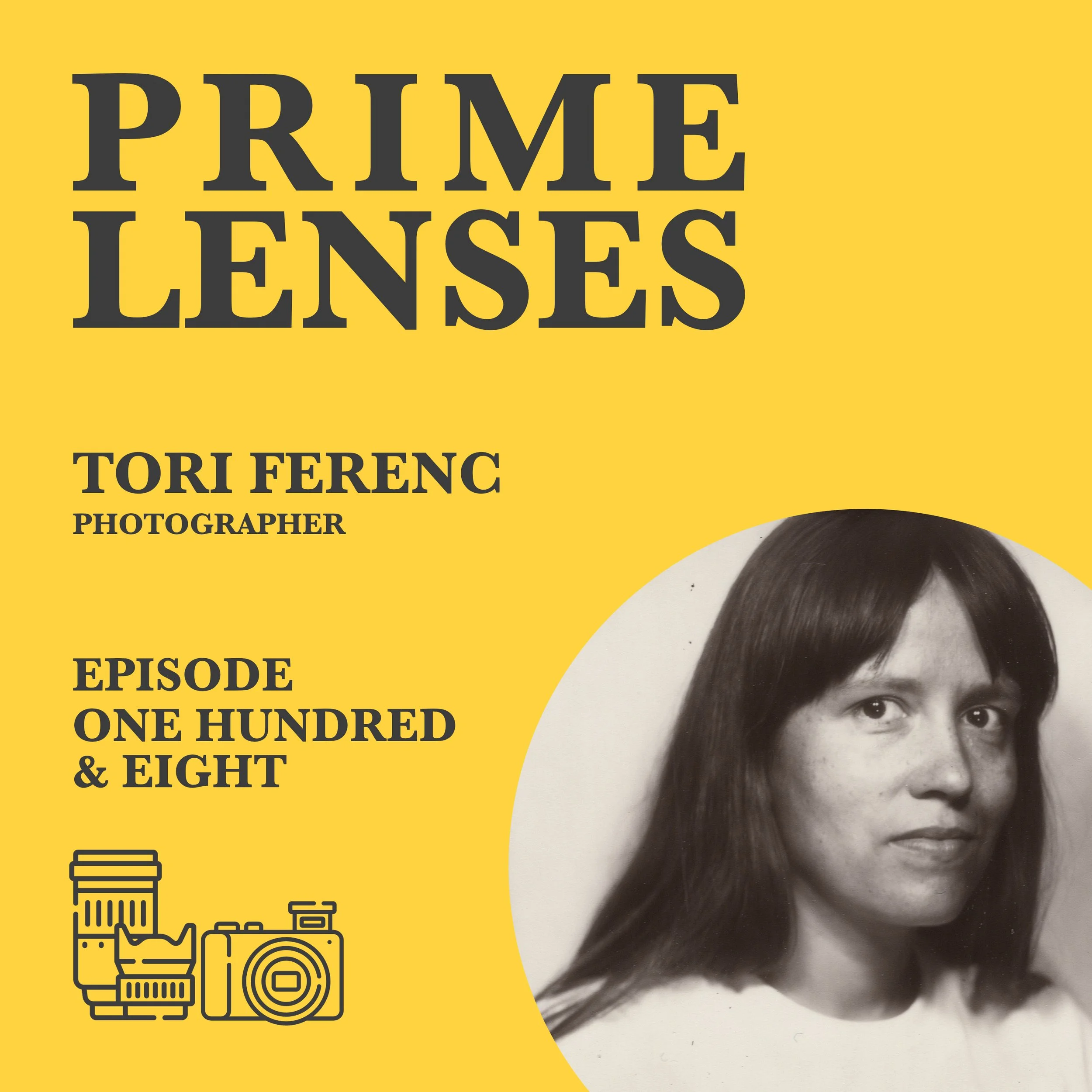


Tori Ferenc is a Polish photographer now based in the UK. We met at an event Leica were kind enough to invite me to last year and she agreed to speak to me for the show. I love her work, I think I can spot her images because of her distinctive style and although this is her first podcast, I hope it won’t be her last.
Sign up to the Prime Lenses newsletter for a mid-week treat.
Support the show on Patreon.
Episode Transcript:
Iain:
Hello, welcome to Prime Lenses. I'm Iain. This week, my guest is Tori Ferenc. Tori is a Polish photographer now based in London, who loves to shoot street, but also shoots commercial work for all sorts of publications around the world. And to my eye, has a real Tori look to her images, whether she's shooting film or digital there's a palette that she's chosen that I think is very specific and I ask her about that when we're speaking I think she wears her influences on her sleeve and I think she makes beautiful thoughtful images that have a real emotional connection to them when you look at them I met her at an exhibition of her work in London at the end of last year and she was kind enough to chat to me for a few minutes and then agreed to come on to the show. This is her first podcast, but I think you'll agree that she is excellent and it definitely shouldn't be her last. One thing before we get going, I've left in this conversation a bit where I ask Tori whether or not she's had a chance to listen to any episodes and whether she needs a briefing beforehand. Her answer was so interesting because she'd listened to a bunch of episodes and really enjoyed those guests. And as every episode of the podcast can be potentially someone's first, I thought hearing from a guest about guests that they'd enjoyed would be a nice thing for people to hear. So it's not just shameless self-promotion. I have left that in for a reason. I hope you enjoy this conversation between me and Tori. I met a listener yesterday while I was in London. Oh, yeah. a chap called peter he's from australia so he was over so it's it's always worth catching people especially if they're over you know they're not normally here and um he was asking me it's a really interesting thing which might be a good kind of jumping off point for you but he was asking how much time it takes to make an episode which which for the first time forced me to add up all the steps involved in making something I've never really done that have you ever sat down
Tori Ferenc:
and thought about like time per image almost uh well I guess maybe I yeah maybe I did a little bit with with the project I was doing in Poland yes it it was a lot of planning involved in that um because you know I'm based here so obviously um yes obviously I have to plan ahead it's not like I can show up somewhere and just start taking pictures usually so it would take a lot of time and in the end yeah like the images uh you know I would sometimes go away for like four days and maybe I would get like one image from that for the final project so yeah it would take a lot of time
Iain:
yeah once I think once you exceed 72 hours per keeper then you know you know you're kind of this is the real work this is is serious business yeah yeah basically yeah well before I get too stuck in Do you, have you had a chance to listen to the show at all? Do you know what the structure of things, shall I give you a briefing?
Tori Ferenc:
cha.
Iain:
Yeah, yeah, yeah.
Tori Ferenc:
Yeah, so I really liked that. And Pete Souza as well. And I listened to one with a really lovely street photographer from, I want to say from Australia.
Iain:
Yeah.
Tori Ferenc:
A female street photographer.
Iain:
Oh, yeah, Julia, yeah.
Tori Ferenc:
Yeah, her work also. I wasn't familiar with her work. It's incredible.
Iain:
Isn't it? I really love this.
Tori Ferenc:
Yeah, it's like so close.
Iain:
Yep.
Tori Ferenc:
I was like, I felt like, oh my God, like I'm in the pictures, basically. It must be so cool to see them printed really big as well, just to be able to see all the details and everything. Because obviously when you're looking at the computer or phone, it doesn't have same impact. But wow, incredible, incredible work. So yeah, I listened to a couple. Yeah, yeah, yeah.
Iain:
The nice thing about Julia is, I think anyway, she and Jesse Marlow are two Aussie photographers that spring to mind. And a friend of mine who's Australian, who's also been on the show, a woman named Mel McVeigh, she talked to me when I first spoke with her about the light in Australia is so harsh. And I didn't fully appreciate that until I went there. And Australia is the first place I've ever been to where I really felt like the sun wanted to kill me. In a very real way. Like it's different. You know, you go to different countries and the light is different and the quality of light is different. You go to parts of the south of France and the shadows really are a bit more purple. And you don't really understand why. But yeah.
Tori Ferenc:
I know. Yeah, I know what you mean. I think I had that a couple of times when I went to Spain, for example, the light there is so intense. I usually even go out of season. So not even in, you know, like July, August where it's really intense. But even in like May, April, it is so, so strong. You're really kind of like fighting against it.
Iain:
Yeah.
Tori Ferenc:
100%.
Iain:
Well, I think with those photographers particularly, what it does is it means that they photograph things in a very different way. Like the colors are really bright. And it doesn't necessarily need a flash. It's very graphic, angular shadows. You know, like they just lean into it. It's really cool.
Tori Ferenc:
Yeah. It's interesting how it impacts like the technical side of it as well because you can see the apertures really on the max there. Whereas here, everyone's like, oh, it's beautiful and soft and very sort of romantic. But there it's like, you know, right in your face.
Iain:
In your face. It's funny, we do this, we kid ourselves in Europe and stuff where we like photo, oh, I like to shoot with natural light. And all my Australian friends are like, no, mate, you need a flash because otherwise everyone's in shadow all of the time. And you need, it's like, you basically need to photograph like you're Martin Parr.
Tori Ferenc:
Yeah, you're right. But to be fair, I do love natural light. Especially now thinking about Australian photographers, Lisa Sorghini is one of my favorite photographers when it comes to family and motherhood.
Iain:
She's really so incredible.
Tori Ferenc:
Yeah, I love her work. She's top, top, top there. And I feel like she, it's easy to fall into the trap with like motherhood photography and she doesn't fall into that trap. Like her work is just gorgeous, very raw, gorgeous, incredible. So yeah, you can see that she shoots with like natural available light. There's a lot of shadows, a lot of lights there. But I think now she relocated to Italy recently. But she was based in Australia for most of her life, but she relocated to Italy for a while.
Iain:
Oh, that sounds dreadful. What a terrible thing to relocate from an island continent paradise to Italy. I feel so terrible for you. Says the man sitting in the woods in Scotland.
Tori Ferenc:
All that pasta and pizza and all the incredible foods.
Iain:
Yeah. No, it's good. And a culture that kind of quite enjoys people having a go at their language. Right. Like because some countries are more welcoming linguistically and stuff than others. I've always found the Italians find it funny and kind of they welcome you in a bit more when you if you try some Italian, you know.
Tori Ferenc:
yeah I think you're right but to be fair don't you think it's the case with a lot of countries like I think in Poland because Polish is such a difficult language right I think we appreciate anyone any effort yeah yeah honestly honestly I think it's I think a lot of people do have that they're like oh you're really making an effort here you're really trying so yeah yeah no it's
Iain:
nice I love traveling I love going around I was down in London yesterday and even just oh yeah Even just going down to the big city for a day is exciting and, you know, get to see some stuff.
Tori Ferenc:
Yeah, I think it's nice to have a change of scenery. I find it, like, always more inspiring to take photos somewhere that I don't normally reside. Yeah, because you see different things to people who are there most of the time.
Iain:
Yeah.
Tori Ferenc:
You see it with, like, your fresh eyes, basically.
Iain:
Well, it's funny. So when I was reading about your background and the stuff that you like, and you mentioned photographers like Elliot Erwitt, like Joel Meyerowitz, a lot of their photography is the unexpected and stumbling upon things and putting themselves in situations where things happen in front of them and they're ready. Was part of that what attracted you to photography in the first place?
Tori Ferenc:
I think, yeah, I think so. Yeah. I would say that it's something that attracted me to doing photography in London specifically when I moved here. Because I moved here, it's been now over 10 years that I've been living in London. So moving here definitely changed my approach to photography. Because I guess originally I was setting out to do more fashion, which now seems so, so, so, so different to who I am. But I guess maybe I was like this idealistic kid who thought, oh, if I want to make it in photography, I want to make a living out of it, I have to do fashion. So I moved here and I started assisting other photographers. And then one of them suggested that maybe I should try street photography. and suddenly and also he suggested maybe I should try and shoot on film so I bought myself this twin lens roly flex and I set out to the streets of London and suddenly I was so hooked yeah 100% I would like just walk like any day that I wasn't working I wasn't assisting I would just go out and you know walk the streets and try to photograph the scenes that are unfolding in front of me so So yeah, it's definitely changed the way that I worked and really sort of formed me as a photographer.
Iain:
Do you find the Rolies quite a good street tool for that as well? Because you're kind of looking down and it's at waist height.
Tori Ferenc:
Yes, I think in a lot of ways it's like a great street camera, street photography camera. Yes, first of all, because people just assume you're looking at something else.
Iain:
Right.
Tori Ferenc:
And then also when they notice you, I think it's a nice sort of like conversation starter too, that they see all this, like there's this like weird looking camera that maybe they haven't seen. And they're like, what is that? Is that even working? Are you even taking photos with this? So yeah, I think definitely it's a great little camera. I love it.
Iain:
Yeah, because I'm too, I've said it before on the show, but I'm a bit too much of a coward, I think, for street photography.
Tori Ferenc:
Yeah, to be fair, so when I started out, I really liked it, but then I noticed that I think I like the conversation a lot. And I do like to have people involved in the pictures that I'm taking. So that's when I kind of like diverted from my original street photography, trying to be the second Vivian Meyer thing. And yeah, and just it became more of a portrait, more of a conversation and a collaboration between the two. But yeah, I also maybe some of my experiences with trying to do street photography in London made me more of a coward as well. I remember I was, it was in Soho somewhere and I was passing this gentleman and I really liked, he was like holding an umbrella and crossing the street. And I was like, oh my God, that's the shot. And then he turned around and he smashed me with an umbrella. I was like, don't take photos of me. I mean, to be fair, I managed to dodge it very quickly. But yeah. Wow. So you have to be very vigilant when you're trying to take street pictures in London, for sure.
Iain:
Yeah, you do. You're taking your life into your own hands.
Tori Ferenc:
Wow. Yeah, basically.
Iain:
When I was doing the research, I was in the kitchen and Alice came through whilst I was looking at things this morning. And when I was reading back over notes and sort of Joe Meyerowitz, your colours, I think, actually are very Meyerowitz inflected. And well, to my eye at least, because there's definitely a Torrey photo in terms of look. And I think for me, it's more tonal than compositional, actually. It's a palette that I think you lean towards. And I think this might be, I'm interested to know, I guess, whether this is something you think about a lot or whether it's just something you very organically arrived at.
Tori Ferenc:
I think it's probably the latter. I think because I used to originally shoot everything on film. I always enjoyed that sort of warm film tones. That was like my favourite thing. I remember when the film prices started to increase and they reintroduced Portra Gold. Everyone was sort of like not really enjoying the Portra Gold.
Iain:
And I was like, no, this is like the best film stock.
Tori Ferenc:
So, yeah, so definitely it's, yeah, it's with my now digital photography. It's something that I, I guess, think about consciously when I'm editing the pictures that this is the look that I'm going for. But, yeah, I just find it so pleasing to the eye. But yeah, it's just my favorite portrait gold for life.
Iain:
No, absolutely. On a similar thing, because I'm just getting back to shooting film, but I'm starting with black and white. Oh, yeah. So I can develop at home. Actually, near us, up in Inverness, there's a really big dark room. I think it's the biggest dark room in Scotland. And so I'm going to do a refresher there because I haven't developed film for a while. But I'm doing that and I'm shooting on my little Leica point and shoot. But on the film styles front, the modern Leicas and the Photos app have this kind of different color profiles built in. And one of them is called Brass. Have you tried that one?
Tori Ferenc:
No.
Iain:
My phone has rose gold as one of the presets, which I've kind of lent towards. Because it's slightly pink and slightly gold. And I think it's speaking to what you're talking about. It's nice to be able to bake something in as your starting point, which I think is one of the great things about film, isn't it?
Tori Ferenc:
Yeah. I know. Oh God. Yeah. No, that's incredible. But like Jesus, those cameras. Oh, so good. Like I, I remember when I, when I had my hands on, on the digital, like I was just so in love. Cause it's like, in the end, you don't really have to edit much. It's just as it, as it looks like you're like, this is perfect. This is what I need. Oh yeah. No, but we, we film, I used to, it's funny you mentioned that you started developing cause that's what I did as well when I first started out just because it was so much cheaper and also with black and white that's when I when I first moved here and I started shooting it was only black and white and then I remember I went to like a meeting with with one of the picture editors and she suggested that maybe I should consider a film just because it's like easier to commission when you're thinking about work so that's what made me because I really I loved shooting film like did a black and white film um but yeah but basically in the end I was like okay maybe that makes sense and then suddenly I realized oh actually color even better even more expressive there's like obviously different qualities to it but yeah I oh gosh yeah uh and I did develop color as well at home um wow it's a bit more temperamental uh but yeah I yeah I did it for like a couple of years and recently just because I have been shooting on digital for such a long time now and also when I even when I shoot on film I don't shoot as much as I used to so when I have to develop I just go to the lab so I had to get rid of my film developing kit yeah but yeah it felt like a really like a you know change a massive life change so yeah yeah you know ending one chapter yeah um but yeah it's exciting sad but exciting you know there are really cool machines now it's obviously there's going to be
Iain:
an australian theme and I was just looking there I can't put my hands I can't put my hands on the name of it but there's a company in australia that make a really good uh at home auto developing machine that it's got temperature sensors in it so you know you can get auto like the auto rotate your container and stuff like that to slosh the chemicals around this is that but it also has a tiny screen on it and a little menu so you can choose you tell it what process you're using and what chemicals you're using and what it does is it it uses a temperature sensor in the device so if your if your if your water or whatever isn't quite or your chemicals aren't quite at the right temperature it will adjust the developing time accordingly and it shows you it's adding two minutes because you were slightly too cool or it's reducing time because you were a bit too hot it's really good my friend a friend of the show dan uh rubin uses it and he really likes it it's
Tori Ferenc:
apparently very very good oh that's incredible because yeah with oh gosh yeah that's one of the things that would always give me so much anxiety when developing because you you have to readjust it constantly and I will always think that I'm definitely over the over the temperature that I was supposed to be but yeah gosh that's so cool that's incredible so you can use it at home yeah
Iain:
so it's basically a little machine and you pull the chemicals in and then tip it out and pull them in and it just it step by step guides you through the process so even if even if you do this a lot anyway and you always do the same stuff just the fact that you can it's pre-programmed with a bunch of different processes and you just say I'm using this but maybe I want to do this or maybe I want to do that and you can just calibrate it and then it will it will just help you yeah help you not
Tori Ferenc:
get it wrong basically or not miss a step you know but then I think it's like it's uh it's fun to to have that bit of a surprise in the end you know like I kind of like enjoy like and definitely with I would notice that the more because obviously with color chemicals you can reuse them yes but then ever so slightly it changes how the next row looks like so I kind of like always enjoy that there's a bit of like a washed out uh color to it in the end right um and then the element of
Iain:
surprise you're like I wonder what I'm gonna get today yeah yeah well actually that washed out that process it feels then like it informed your look very directly of your digital photos
Tori Ferenc:
yes by by mistakenly developing images that's great I guess yeah yeah and definitely it's interesting because even these days it seems that I managed to confuse people and a lot of people are surprised when I tell them that I don't really shoot on film anymore that it's all digital yeah yeah everyone seems to be like oh really because they don't look like digital images well you went
Iain:
back to the source I think that's the key thing is that you've learned it's it's good to go back
Tori Ferenc:
and have the kind of the challenge isn't it yeah yeah 100% and I think you know I learned the craft on on film so I think also it it makes it easier later on to edit images because I tend not to shoot as much as I would normally probably shoot on digital camera because you know you know there is a one keeper there you don't have to shoot a hundred you know you have to be yeah you do and
Iain:
but I think the sorry getting excited talking uh across you but the um the thing for me is the consistency actually if you hand someone a digital camera these days and it's set to auto there are more things changing than they maybe realize things like auto white balance auto iso shutter and things like that whereas film at least from a like a maybe a white balance and a sensitivity perspective removes a couple of variables and are the the cameras that people are most likely exposed to first these days are phones which are just computation you know they're changing everything without you knowing and that's yeah that's fine for us because we understand we can see what it's doing and we can understand the trade-offs but for someone starting out completely fresh it actually is is more of a hindrance a modern tool I think yeah no it's 100 100 and I um
Tori Ferenc:
yeah if it's like all automated where's the creativity to it you know like I think like you you enjoy like you can enjoy so many accidental discoveries when you're when you're just you know experimenting with with your camera um yeah that yeah you can you can discover things that you normally wouldn't have if you just used automatic 100 percent um my one of my first cameras was this uh old soviet Zenith have you are you familiar with those yeah I've never used one but I have seen them oh yeah yeah no it's uh yeah it's a really cool story actually because I started taking pictures around the time where there was the switch to digital. So we did have this lovely digital Olympus at home that I really liked using. I would take it out with my friends to the fields and do some romantic pictures, whatnot. But then my dad, he's an actor, a theater actor, and there was this one director that was visiting. So she used to travel between Poland and Croatia. So she lived when it was still Yugoslavia. I think she also was based in Sarajevo at some point. So my dad came back home one day with this old Zenith with him that apparently she, because obviously during the war she had to escape at some point to be safe. And she left her camera wrapped in like an old tent somewhere in the building. And then when the war ended, she managed to come back and find it. But the tent, you know, it completely disappeared over the years. It just became organic matter that then was ingrained into the camera. And then also there was like, because the camera was kept in a lot of like moist environment, a lot of damp environment, then it would have a lot of mold and fungi over the lens, the mirror, and everything. So that would obviously affect the pictures. It was so interesting to see the images coming out of it with all these weird sort of vein-like structures. So that was my first introduction to film photography, and I really loved it. I would go to this family-run studio back in my hometown to get it developed, and just be so excited waiting, waiting for the images to come back. Yeah. So yeah, it's, yeah, it's really cool. It's a cool camera. It's a, I think it can withstand anything. And apparently people used to, you know, dub use the, use the lenses of this camera, doubling as shot glasses. Cause apparently it's like a perfect, perfect sort of, you know, the 50 something lens. I think it's like, It manages to fill in like a shot of vodka. So people used to do that, apparently.
Iain:
That is necessity is the mother of invention, isn't it?
Tori Ferenc:
And you clean, you know, you clean the camera with it as well. It's like, you know, alcohol.
Iain:
Of course.
Tori Ferenc:
It's to keep the lens working well.
Iain:
Yeah, yeah, yeah. All you're doing there is you're cleaning the camera and then you're just disposing of the excess chemicals responsibly. Exactly. Sounds fine to me. That's amazing. When you were growing up then, was there much of a culture of photography, you know, nationally, like in the country? Did people often have cameras with them or was it very much reserved?
Tori Ferenc:
Yeah, I would say so. I mean, my dad was definitely really into photography. And I love going through because, you know, back then everything was shot on film. So you have physical images. So I love going through like the family archive and like pictures that he took before. Me and my sister were born. So definitely I could see the love of photography in him. And, you know, with his theater acting background, there were like a lot of very creative photos as well. So it was like fun to look at these. And then also in my, like for my mother's side as well, my great-grandfather was a photographer and a printmaker. So there is definitely like a theme running for the family for sure. And yeah, I would say, yeah, like I think a lot of people would be really into photography, but maybe not in like documentarian sort of sense. It was just from like more, you know, like kind of like democratic sort of use of photography, documenting your own family and all that. So yeah, but then of course there is like a big, you know, massive, massive archive from Poland with Tadeusz Rolke, for example, an incredible Polish documentarian and Zofia Rydet, whom I love. She's incredible. She's such an inspiration as well with her like starting her like massive project when she was, you know, in sort of like the late stages of her life. So yeah, she's incredible. Have you seen that? Have you seen the exhibition? no no I'd love to yeah it's so good like her images are so so lovely um yeah there is like still I think there is still a uh an exhibition going on at photographers gallery of her work um and Boris Mikhailov I think is his name uh and ukrainian photographer but he's more sort of like experimental artistic um photographer she's a 100 documentarian social documentarian yeah incredible incredible work did you know of her work when you were
Iain:
because some of your assignments lean in the same direction you know like people immigrants in support you know stuff like that like in um I can't remember the name of the project now but it was one of your projects was for the washington post I think it was it was different backgrounds working
Tori Ferenc:
in like health care and oh yes yes yes yes yeah like that was yeah I photographed that last year yeah it was I oh gosh Washington Post as well oh my god what's been happening there now yeah it is really like I've been I've been working for them for quite some time and it was one of their picture editors incredible Chloe Coleman who first trusted me with you know with like doing these assignments and she would like really lean into my sort of like creative side of things and yeah yeah I I photographed that story last year. It was about now, you know, unfortunate sort of like changes in the approach to immigration in the UK, which affects, you know, social care, for example, where most of the staff is from abroad. So yeah, I think I've always been interested. I think in that sense, I've always been interested in the social side of photography and trying to give, you know, voice to the voiceless. Yeah. In a way, I hope that doesn't sound too cliche or anything. But yeah, I always was interested in trying to share these stories that I think are worth sharing.
Iain:
I'm always interested with that sort of thing, because I, you know, I joke that I'm a tourist, but I would love photography to be my job. And I think there's this kind of, there's a stage between making photographs and being proficient as a photographer, and then finding stories or successfully pitching were you approaching publications or were you focused on building a portfolio and being managed and found that way I I think I originally uh I just wanted to create
Tori Ferenc:
images and stories that would interest me first and foremost so for example like one of my first sort of like long-term projects was this um this shoot that I did every single year for a day in Stamford Hill photographing Hasidic community during Purim holidays where kids dress up in really sort of fantastic costumes everyone drinks it's a massive street party incredible so I would set out and photograph it because I would be excited to see it and to document it and then from there I would like maybe start pitching that to publications or just share stories with them and just to kind of like show them what I'm what I'm doing basically and from there it would like slowly to uh some magazines being interested in publishing these image images as a you know sort of article and then that would like in that way I would build my portfolio and be able to share it with a wider wider audience and then be able to get some commissions from from that so um yeah like I think what sort of kick-started my relationship with the washington post was this really sort of like very small project that I did about a community of dancing seniors. There were like dancing clubs in North London that I would attend and photograph the community there. And I shared it in a couple of competitions. I wouldn't win, but one of the judges was Chloe, Chloe from the Washington Post. So she saw that and she really liked my work. So when I reached out to her with a wider portfolio she you know knew already who I was and and then commissioned me to to photograph brixton ahead of the royal wedding uh with megan markle and prince harry so that's
Iain:
what yeah that's how it started with me and washington post and it sounds like you like to be embedded with communities as well because when the the work you were talking about when we met last year in london at the at the gallery and then subsequent things that I've looked into you quite like to sort of embed yourself I think it seems like it with a with a group of people for
Tori Ferenc:
a period of time yeah yeah I think I'm naturally an introvert but the camera allows me to become an extrovert so I'm a I'm a tourist extrovert and yeah I think it's a great it's a great sort of tool to be able to find out more about people, more about their community. So it's like a starting point, starting point of the conversation to then be able to listen to their stories and their experiences. Yeah, definitely that project. I did this project over the course of 2024 in Poland, photographing Polish borderlands, and it was slightly different to how I would normally approach. Because yes, I like to invite myself in the community, but I guess beforehand it would be a bit more rapid. So I would, for example, visit horse fairs in England and Ireland, but I would just go there for like a day or two. Whereas with this project, because again, logistically, I had to plan it ahead. I had to be in touch with people that I wanted to photograph before. So yeah, it would definitely take more time and it would allow me to immerse myself a bit more into their stories. and um and in the end images were sort of in in a way secondary to to talking to them doing those like interviews that would then inform my work and you know the writing around it and everything um so yeah so definitely I yeah I do enjoy that I think weirdly I have a bit of a journalistic side of me that I love to explore with with work like this and again I you know I'm I guess I'm a bit of a socialist so I always like I'm interested in like um listening to the stories of a more sort of like vulnerable sides of society and and sharing sharing their their point of view
Iain:
so yeah I have in the past needed almost to see something before I knew I could be it yeah and I wonder whether the you know being around people and talking to people do you naturally like you know if you're at a bus stop do you naturally start chatting to people around it sounds like maybe not but you've maybe learned to do this to follow the story if you're interested
Tori Ferenc:
in yes definitely it's a muscle that I had to exercise it's not something again that comes very naturally to me uh but I think if I'm I make that sort of sacrifice when I'm working on the story that if I if I if I find the story interesting I will then go out go out of my way to kind of like combat my natural shyness, so to speak. So yeah, definitely. It's something that I learned while on the job. But I think also it's maybe slightly easier being a female photographer that people are more interested in talking to me. Like they don't feel, I don't know how to explain it, but I feel like with a lot of work that I do, yeah people find it easier to maybe open up to to a woman and to be vulnerable with a a female
Iain:
photographer rather than male I think you're I think you're right I think it's an interesting thing because I I am known in the village where we live as the guy who's always got the camera on especially around the school with the kids and stuff like that and people so people know who I am yes but you have to build up to that you can't like you know a bloke with a camera can't just walk into a school it's not it's not a good idea especially especially in 2026 like that's that's a bad move but you have to kind of like be understood and be known as who you know people have to know oh that's that's it he's just photographing this or whatever and because it I agree I think people just your expectations are maybe different or your concerns are different
Tori Ferenc:
depending on who's holding the camera yeah it's just yeah which is like a little heartbreak I think I find like a little heartbreaking that there is an assumption of some sort of, you know, evil, malicious intentions. Where, of course, you know, from the sort of rationalistic point of view, sure, like you have to be vigilant. But yeah, just to kind of assume everyone's got like malicious intentions. Yeah, it's a bit heartbreaking.
Iain:
It is funny, though, isn't it? Because we as photographers find it harder to be seen with a camera somewhere. someone assumes you're doing something depending on what camera it is people assume they're making money for me it's why the guy hit you with your with his umbrella I guess it could be that could
Tori Ferenc:
be that but you know what it's interesting because I really I don't have that when I'm in england but I definitely had that that sense of uh oh I'm I kind of felt that I'm doing something wrong when I was in poland and I would take out my camera in public I do feel that yeah there is like a sense of maybe people will be, you know, like they might be feeling suspicious of me or something. Weirdly. I don't know what that is. But I think maybe it's like, I think in here, most of it, like I ate out of 10 times. If someone, if you're asking someone like a stranger in the street, if you can take a photo of them, usually they would be like flattered and would be, you know, like, oh, yeah, sure. Or maybe I would ask you why, but like they would be, they would be flattered more than suspicious. And I think that's the opposite in Poland, really. I think maybe, but I was thinking about it and I think maybe it comes from the history that in Poland used to be, it wasn't a part of USSR, but it was very much under the influence of it. It was a communist state. And maybe people still have that embedded in their sort of unconscious that, oh, like if there's a stranger with a camera, they're trying to do something shady, basically.
Iain:
Yeah, reporting or something. Do you think it's different for younger generations as things are changing?
Tori Ferenc:
Yeah, a little bit. But I also, I wonder, maybe it depends where you are. Maybe in a bigger city it is different, but maybe in a community that's smaller, that's a bit more closed off, it still might be a stranger danger type of approach. I once travelled to Romania.
Iain:
This is probably about 15, more than 15 years ago now. And in some of the smaller towns, we would encounter folks, you know, and it was myself and my friend who was a couple of friends who are Canadian and American. And so the four of us are all traveling together, a bunch of different ethnicities and backgrounds. So we all look different as well, which we all stood out and we arrived in one town. And we're trying to we're excited. We're traveling. We're exploring. And some of these people sort of similar age to us just looked at them, why are you here? Like they couldn't wait to get out. And here we were. And we're like, yeah, we live in London. We've just come to visit and stuff in these towns like Brasov. And they're just like, what are you doing? You know, like, how did you end up here? And we're like, well, you know, we're just exploring. But yeah, they were almost.
Tori Ferenc:
Yeah. How are they when you were like, did you like try and basically take some portraits of the community or just that sort of like general?
Iain:
Yeah, no, this was full holiday snap mode. Oh, yeah. Okay. So it was fine. But we did find ourselves in some funny situations. At one point, we drove through a town because we had a rental car. So we stopped. There's a guy stops us. We wind the window down. He starts speaking to us in Romanian. And we said, no, sorry, we only speak English. And he said, oh, okay. And he goes, in the next town, there is a virus. And we were like, right. And then he goes, don't stop. Wind up your windows. And we drove through the town. The town was deserted and we drove out the town. There was a guy with a gun and they sprayed the car down and we just drove away. I assume, and this is the thing, is that your upbringing in the 20th century in the West and horror movies is not doing you any favours. In my mind, we survived Resident Evil. In practice, it was probably foot and mouth. But it's funny because everywhere we went in Romania, loads of people just sat outside doing whatever. And lots of community, lots of people sitting around talking to one another. And this town was just deserted. And so presumably they were just staying out of the way. I don't know.
Tori Ferenc:
Wow.
Iain:
Oh, my gosh.
Tori Ferenc:
What a story.
Iain:
In the next town, there is a virus. And we're just like, oh, no.
Tori Ferenc:
I recently, funny you mentioned that because I recently traveled there. I traveled to Romania for a job. it was really uh really cool really interesting I haven't been there before so uh yeah definitely it was an experience uh yeah definitely it's I would say it's so so much different from like even poland like I I really liked it but it and it feels like interestingly there is more that's what I noticed because I think poland used to be a bit more of a rural country there There used to be a lot of people living in the villages and smaller towns, whereas now everyone kind of gravitates towards bigger cities. Whereas there, it feels like there is still so much life in the village in Romania. We would pass through, like we were in a very sort of like mountainous side of the country. And we would pass through places that felt so out of the way. And yet there were so many people there. I found it incredible that there is still this like life built around the, you know, the community and the villages. Yeah, I really liked it. Yeah, it was really good. And the food there is incredible.
Iain:
We really enjoyed it. It was good. It was not on my list of places I'd never even thought of going. And it was my friend actually said, let's go there. Like, let's explore. and back then there was one main road out to the coast yeah that's practically straight for the entire way except for some sort of kink which presumably was something they couldn't bulldoze or go around but apart from that it's basically a dead straight and it's really weird driving on dead straight roads because we just don't have dead straight roads you know yeah it
Tori Ferenc:
must be like driving in the states or something yeah it was like driving in a video game you were
Iain:
just on this straight road for hours and hours and hours it was really crazy wow incredible so you
Tori Ferenc:
went to the is it black sea right that's uh yes yeah yeah um so we finished there it was amazing yeah I really want to go there we went to a region called buzau uh where they have those incredible mud volcanoes so I went there to photograph to document that with a group of scientists it was incredible it was like one of I think it was like one of my favorite assignments last year and I really cannot wait until they publish it it still hasn't been completely out but yeah it was really cool but I think I really would love to go go back there and go to the go to the Black Sea and photograph there because they do those mud baths as well so I would yeah I would love to document that it sounds like a such a nice sort of like quirky story and I love those well I when when I was there thinking about it it was actually
Iain:
probably closer to 20 years ago at this point um what is time but when I was texting my friends from the beach because it was the sky was so clear there was so little light pollution 20 years ago and I was I came back to the UK and a bunch of my friends went were you high by the water I was like no why I just loved it I just was seeing stars and it was incredible and they went just because you were texting us about how the stars were beautiful
Tori Ferenc:
and I was like yeah I just it was amazing just down by the beach I think it's you know only the photographers understand like the importance of light yeah I definitely I have this whenever I travel somewhere and I'm like oh my god the light here is so gorgeous I think only fellow fellow
Iain:
photographers will will get that yeah 100 yeah that's that should be my tiktok channel like things only photographers understand yes the difference between these two pictures and the light in them or you know the warmth or the tonality or whatever so are you are you on tiktok then are you are you gosh no I'm I'm 46 I can't get into like I think it's it's completely the antithesis actually of what the kind of the mission of this is right is that and and no shade like find the medium that works for you but I just enjoy sitting with someone for a bit and talking about making things in a in a longer form way I would absolutely potentially use it to advertise the show and things like that but I think it's it's hard because you know sort of go back to where we started the the the use of short form to promote a longer form thing is is tricky you know because you're looking for a soundbite or you're looking for exactly you know and when you're when you're actively trying to avoid making sensationalist imagery or podcasts or whatever like you like your work is thoughtful and emotive and what I like is that some brands have understood that and even even with like stuff that you've done for drinks and things it's family and it's connection and it's it's people and they're they're they're borrowing some of that warmth and naturalness rather than you know your commercial work some some people I speak to their commercial work is very different to their to their own work and it's nice that yours has a thread
Tori Ferenc:
it's still a tori image yeah yeah 100 I think that's like my my agent really understands that that you know and in the end the other clients when they they book you they they want yeah they want your visual language to express their you know sort of idea so I think yeah I think it's I I like the fact that so far I've been lucky enough that my work my commercial work isn't that much different to my personal work. And I don't feel like, oh, I should hide this part of me. I think it's good to be able to do that, to be able to combine these two. But yeah, it's interesting. When it comes to the socials, I'm only on Instagram. And even with Instagram, I find it sometimes overwhelming. I try to stay of it as much as possible. Also because I think I can see different trends in portrait photography that I love and I can see they're popular, but then I'm like, that's not exactly me. So maybe I should just stay my course and not try to be influenced like that by others. So yeah. And it's just like the attention span decreases so much when you're on these channels. yeah gosh it's best to stay away or just to use it to your own yeah commercial sort of use
Iain:
yeah it's the same what you were saying there about not being not being too influenced by it it's the same reason I don't listen to a lot of photography podcasts now as well because I'm fearful of us all just sounding the same and just you know I know what you mean yeah sure sure
Tori Ferenc:
I get it I get it yeah it's interesting so yeah I have the same thing with yeah with other photographers I appreciate their work and everything but then in the end I'm like well you know I'm I'm me and and they're they're them you know so and it's good to be not all the same
Iain:
um you nearly quoted the beatles then you're about to say I am the walrus in the end I'd put a clip in if I didn't think I would immediately get sued out of existence by by the people who manage the Beatles music.
Tori Ferenc:
Oh, imagine.
Iain:
Yeah, right. But yeah, no, it's nice. It's funny because Instagram has this power to be a portfolio in your pocket all the time. So you can show people your images. But then phones are that too. But have you, I worked at Moo.com way, way back when, the business card printing company. And the thing that was unique about the business cards and the mini cards that we made was that you could have 100 cards and each one could have a different picture on it. oh cool okay that's really cool so for photographers you can still do it you can go to moo.com and pick them up um I wish I had an affiliate link um but the um the that idea of having images in your pocket with you at all times and I wonder actually whether having a physical thing appeals to you more given that you come from film you've printed you know just that
Tori Ferenc:
100% yeah I always kind of I try to always make my collection of photography books bigger and bigger to my to my husband's you know chagrin yeah I always like whatever I have to I don't have to I want to buy something I kind of like keep it away from him because he's there to buy another book so yeah I do love the yeah the physical the physical side of things uh for sure and yeah I think it's important to have a printed portfolio just like I guess it kind of shows you really care and like you're you know you you made this effort when you're like meeting up with people and showing them your work I think they appreciate it more when you have a printed you know beautifully printed images yeah I mean it's it's also like obviously it's useful to have stuff on your computer and digital and sometimes you cannot really show your printed images when you're like pitching to someone from the states but yeah I think yeah I appreciate the the physicality of of
Iain:
it yeah I love printing yeah I've recently gone back to pen and ink you know from oh no you know It's all notebooks and fountain pens. And it feels really nice to use.
Tori Ferenc:
Yeah, I love that too. Whenever I've been going to jobs, if there is a commission, an assignment for a magazine, I usually like to write things down in a notebook as well. Because I find it weirdly easier than just trying to type it on the phone. And yeah, I love notebooks. Same and the same. But I have a printer at home too. um because yeah with my agent she you know they always need the printed portfolio as well so I I recently invested in a a really lovely epson epson printer but it's I mean when you get it right it's it's it's amazing but it's oh gosh that trying to nail the colors completely like completely correctly it's impossible sometimes it's yeah I'm like ripping my hair out trying to figure it out but yeah but it's good it's I guess it's in a way it's similar to developing your
Iain:
images you know I was just gonna say that's the modern version of your happy accidents from film
Tori Ferenc:
I suppose yeah yeah yeah 100 uh 100 I like it it's very meditative and yeah I love I love doing that
Iain:
yeah I think the only downside I suppose because because film and analog processes using chemicals and things I suppose we go into it in a more forgiving mindset whereas the computer tricks us into assuming that everything is accurate specific yes you know like so it's more frustrating
Tori Ferenc:
when it goes wrong oh yeah yeah yeah I'm looking forward to this and with computers like oh my gosh I just wasted another yeah expensive paper and it doesn't look right and I have to start all over again so yeah but I don't know I I I do like I think I like like to be involved in in these processes uh I don't think it's not like the any sort of like control sort of issues or anything I obviously would love to have someone else do it for me sometimes but I I like the I like to be involved in in the in the process so yeah yeah it's funny how we can be more forgiving of a polaroid
Iain:
than of a printer you know like the polaroid is delightful and weird whereas the printer is like this is bullshit and you failed me again and yes 100% failed me for the last time but yeah do you ever shoot with instant stuff at all I you know what yeah I used to a little bit I haven't I haven't
Tori Ferenc:
shot uh I I my sister gave me an in um Polaroid camera it was actually probably not instax uh for for my wedding and I loved it and I used it and I when my daughter was born I would take some nice sort of you know those like memory pieces uh with it but I haven't shot in it in a while again because I think uh with you know the fact that the KORAC prices have been increasing so much over the years I just became sort of disillusioned with shooting on film unfortunately just because it's it's so expensive like in the end when you're especially when you're working a lot and um you have to like go through all of the all of this process to to end up with your images um you end up spending like thousands every year just for film and developing and so yeah in the end I just I just thought you know maybe it's it's time to move on a little bit but like I still have my I still haven't given up on film and I still have my film cameras uh still with me um but yeah I also I I enjoy I enjoy the quickness of digital um yes for sure suddenly I'm like oh it is slightly easier even though then you end up like financing your you know your editing um in the computer but it is so much easier.
Iain:
You can have that total control, I think, is the thing that maybe, you know, where I remember seeing years ago, it must have been over a decade ago, there was the photographer Platon, who's based in New York and stuff. He's going to be on the show later this year. He's got a book coming out. He's done a photo project in Greece for over a decade, and the book is coming out this year. So he's going to chat. But I remember seeing some early stuff. he was on a netflix did a series of episodes of programs following different artists doing in different media and he was one of them and there was one where he was looking at contact sheets of portrait session he'd done and someone on his team was going to help him adjust you know to make it a platon image right the the the very contrasty really detailed bigger than life kind of portrait that he does and and I feel like that's wouldn't it be wonderful if we all got to that point where we can have someone in our lives where we can kind of scribble on the contact sheet with a pen and then it just comes back and it's exactly what we wanted I mean yeah it would
Tori Ferenc:
be wonderful wouldn't it yeah but I think these days are gone for most of us unfortunately I think there's still like maybe a tiny group of photographers that might have that like one of my friends um she's been assisting david bailey who's like she's been with his team for I want to say 10 years now so I think yeah he's one of those names and one of those photographers who still uses those traditional techniques like apparently there is a a guy somewhere in north london that does retouching for him but it's like retouching on the print itself wow yeah so he's one of those yeah one of the very last um sort of like retouchers that do stuff on you know paint stuff on on prints um so I know he yeah he uses he uses those and would yeah that would be the dream
Iain:
yeah someday someday that's real skill that is I know right and it looks incredible like you
Tori Ferenc:
cannot really tell it looks incredible so yeah yeah I'm looking forward to learning to print
Iain:
I've never done that and it's part of the the place I'm going to learn and refresh my my dark room skills I'm also going to learn to enlarge and print they've got enlarges and everything and photographic paper and that's going to be a moment I think the first time that I take something from
Tori Ferenc:
from negative all the way through to being a print which is going to be yeah wow it's a use what sort
Iain:
of uh you have a leica right so I I shoot with a digital m that's my one camera um however last year I allowed well I did that because I'm very I'm very lucky I was able to buy one like when I did and so if you're going to own a camera that for a lot of people is a dream camera if I was to sit here every week and go oh yeah it's one of five like I think I don't feel good that doesn't feel right to me like if I'm going to own this thing I want to use it and I want to prove that it's an it's a proper tool but last year I did allow myself to get a film camera because then I've got one of each and then I had a few listeners reach out to me when they when I was tying myself in knots over my one camera rule and they went films allowed so I picked up hang I'll grab it. Yes. And we'll do nice sounds on the podcast from turning it on because it's good. Oh, yeah, ASMR. Yeah, so I've got – it's a Leica CM. So it's a really unusual camera. It's made of titanium. It's a fixed lens point and shoot. It was the last point and shoot. It's 20 years old this year. Oh. And it's this 40 millimeter 2.4, f2.4. It's really sharp, but it's got its characterful sharp in the way that Leicas sometimes are. And it shoots a lot like a Minilux, their point and shoot camera. But here's the thing. On the top, so it's C for compact. And it's M because it has some of the rangefinder cleverness. So this dial up here is dual function. And it can change aperture manually just by flicking this little dial around the top, which makes a great noise. And then you can also adjust your focus manually as well by dialing that in.
Tori Ferenc:
So it does have a lot of manual aspects.
Iain:
Yeah, and you can do exposure compensation on the back as well. So currently I've got some ISO 50 film and the lowest it goes down to is 100. So I'm compensating for that by doubling my exposure comp on it. And it's got some black and white film in it at the moment. So yeah, it's a fascinating little camera. But I'm just currently working out whether it's got a fault or not. Oh, no. It might.
Tori Ferenc:
We'll find out.
Iain:
Yeah, it might be back focusing. So what I've done is, because I'm a huge nerd, I've got a little spreadsheet that I'm tracking each shot in and saying what I photographed and what settings I used. Yes, yes, yes. So I can just do it, you know.
Tori Ferenc:
No, that makes sense. Gosh, yeah. That's the thing with film cameras. kind of yeah I mean it can be fun but then again it can be frustrating sometimes like I uh my my husband I because I used to shoot on Rolleiflex and then Mamiya rz but Mamiya is such a massive beast yes uh my my husband very kindly as a gift gave me a Pentax um Pentax is it six seven you know medium format um I think it's Pentax 67 yeah so it's a wonderful camera but I remember I couldn't figure out what was wrong with it and then it turns out I had to take it to this really lovely guy who's in southwest london it was like a whole sort of like day trip to go there and try to get it try to get it fixed but um yeah it turned out that there was some sort of a back um focusing issue there so yeah you never know in the end with yeah with these cameras even though they're wonderful like it's yeah I mean I I love I still love shooting on film but it's yeah uh maybe this year maybe I'll I'll focus more on trying to go back to my my uh film you know film
Iain:
roots beauty is pain uh I think if you can find a way to get a commissioning editor to help you fund the cost of some film right like and get that done I mean to be fair for most uh for most
Tori Ferenc:
clients it's not an issue usually they're kind of like fine with uh yeah with sort of like um expensing expensing that but I think these days a lot of times when I'm shooting editorial the clients the magazines wanted you know quite passed yeah so you know and when I was doing developing at home sure it's not an issue like I can I can do it in a couple of hours and you know send it off um but yeah now that I don't do it anymore it would be a bit of a bit of a problem so yeah so yeah but yeah there are definitely like a lot of uh some magazines I remember I think it was actually washington post when I was photographing um Simone Rocha she's a designer fashion designer I want to say rosa I think that's how you pronounce her name um so I was photographing her and the and the picture editor actually asked me if I can take photos on film so that was really lovely that yeah yeah that they're like you know people who appreciate it and don't mind the extra cost of it so yeah yeah it's wonderful no if they're bought in that's great but yeah but I know what you mean when you said about like kind of in the sort of like the sharpness of it that gosh that's how I when I was shooting the project in poland on a leica uh it was um because I don't really shoot on a rangefinder. And so what I got instead was their LS.
Iain:
Oh, the SL. Yes.
Tori Ferenc:
Yes, SL, sorry. Yeah, it was so wonderful. And the sharp, it was sharp, but it was sort of sharp in this organic way. I don't know how to explain it better, but it just felt just gorgeous and weirdly analog. Yes. Yeah, their glass is just incredible.
Iain:
Yeah, that for me is the problem. And I tried their new Noctilux when I was in London, the 35. And similarly, it's modern without being clinical and overly sharp. It's just, it's beautiful. And you just look at it and go, oh, dang it. But no one makes them. No one makes them like them. I've been to the factory a couple of times and seen them that you can do factory tours. Like it's, it's well worth a trip. Yeah. So if you go to Wetzlar to where they're based, um, you can go around, you can book a factory tour and they'll show you. And they have, they have a room where when, when they construct the lenses, there are people whose job it is to just twist them back and forth to get the friction right. And it's because the tolerances, if you make the tolerances too good, then I think it wears down over time. So they basically make it so it's a bit tighter than they actually want. And then it's manually finished by a person who is like Steve, the lens guy, his hands are the calibration. Right. In terms of how it feels. And I'm sure they have stuff to check it and all the rest of it. But there's a real manual component to everything that they're making. I love that and also they'll give you a little bit of lens to take away because they have a lot of rejects so I've got on my shelf I've got a couple of bits of lens from Leica lenses that didn't pass QA and then you can take one home
Tori Ferenc:
but they're still incredible probably 100% perfect oh my god that's so good I love the fact there is a human element behind it that it's not just like machines, everything. You need a human to be able to adjust these things.
Iain:
It feels right to a person, yeah.
Tori Ferenc:
Someone was telling me the other day, I think it might have been Lou from the Leica Gallery, that apparently the recipe for the lens is secret. It's like top secret. So basically no one knows how exactly they make them, that they're so incredible. Obviously it makes sense. but yeah they're amazing I would love to shoot on that again but these days I work on medium format Fuji which is really lovely it's a really nice camera but it's pretty it is there it's a big it's a big sort of instrument to have it's nice to have something slightly less in your face
Iain:
you must be using a big camera if an SL feels smaller to you that's how you know
Tori Ferenc:
as I said you know with a mamiya yeah it can't really get bigger than that unless you're shooting on like a large format that would be so cool I mean I think that's one of the things that I would love to try at some point doing because that would be I love the aspect of film that slows you down but that is you know to the sort of infinity level yes um yeah I love that yeah it'd be great I have a friend in
Iain:
the u.s who shoots eight by ten polaroids uh on large format yeah yeah that's really that's a cool process to see that happen and then take that out and you see it develop in front of you you know
Tori Ferenc:
yes yeah one of my friends uh kasia wozniak she's incredible she she shoots on large format as well but she does mostly wet collion so yeah it's gorgeous I had a I had been incredibly lucky to assist her a couple of times back in the day and yeah just to be able to witness the magic happening it's just incredible and her work is amazing because I think with large format sometimes you You can sort of, you know, like the form overtakes the subject because it's such a, you know, strong look of the image with Wet Collodion. But she sort of makes it so incredible and her own that it doesn't feel like a gimmick that sometimes might feel with Wet Collodion. And it doesn't feel like that with her. She's really, you know, super creative and incredible. And yeah, her work is, yeah, I would say recommend.
Iain:
I'll have a look and I'll do you in exchange. I'll swap you another wet plate photographer.
Tori Ferenc:
Yes.
Iain:
Do you know Nitrate Fox?
Tori Ferenc:
Oh.
Iain:
She does roller blade stuff. She was on the show. So she's in my previous guest list.
Tori Ferenc:
Okay. Yeah. That's what I thought. I was like, oh, it rings a bell, the name.
Iain:
And I was like, where did I?
Tori Ferenc:
Yeah. Okay. Okay. Cool. Cool. I'll have a look. Yeah.
Iain:
Yeah. She's super cool. Her book was called Jamnesia and it was roller derby people in the US. On? on wet holiday yeah yeah and she went around around the country photographing teams and individuals and just the coolest images they're so they it's so cool seeing that old process applied to a very modern subject okay yeah I'll have a look yeah I love that it's like a bit of
Tori Ferenc:
juxtaposition there as well yeah so who's your sort of like uh photographer that you're following now
Iain:
like you're sort of who do I like who do I like um in the back of my mind there's always andre wagner because I find him really interesting but I think he's a bit of an enigma and I think he's
Tori Ferenc:
is that the street photographer that's based in the in new york right yes yeah yeah yeah okay yeah
Iain:
yes and I I don't think he's done any books and I don't think his studio email address works because every time I reach out every I mean it definitely does right but every time I reach out I don't hear anything back um but I like Andre's work a lot and I think he a bit like you always goes full circle but he's he's interested in people he's embedded in himself in in a community they know who he is he's you know he's documented people coming up um another friend and former guest of the show uh Stephen K Schuster has done some really great stuff he's shot 20 years ago he's shot in New York kids running around he did all that on film with like contacts cameras he started with medium format and then I think it all got a bit big and he switched to 35 mil um he did a set called city uh a project called city kids that's really really good um who else am I looking at enjoying at the moment gosh yeah they they stick in my mind as recent ones yeah I'm like obsessed
Tori Ferenc:
with uh a lot of documentary photographers who manage to like they're kind of like photo journalists but they managed to make their work look like um sort of fine art so there is uh there is uh nana heitman who's like one of my top favorites um she's incredible she's in magnum um she she's uh like german russian and she's been doing a lot of work about russia and and it's it's incredible really beautiful stuff and then there is emil duck who is he's a again I think he's german photographer and he's been doing a lot of incredible work about the war in ukraine and he also recently did stories in greenland and in svalbard okay so there's a lot of just so many incredible documentarians who also you know like they you know a lot of times they're their risk, their safety with work like this. There's, oh my God, there's this incredible Polish photographer, Jędrzej Nowicki, who also has been doing a lot of work in Ukraine. And it's like, of course, the subject matter is, you know, moving and strong, but it's also their approach to photography that really elevates the work to next level. It's really good. So yeah, I think that's my, and I, I would love to do more, more, more sort of like involved work like that. Um, yeah, that's sort of like what I aspire to, but yeah, it's, it's tricky.
Iain:
I think it's coming. I think I can see, I, I, I'm, I'm very not always confident I'll get to speak to other people again. Like it depends, but I'm hopeful that like, it sounds like you've got a plan and you know, I'll be able to get you back on at some point and talk about the book or talk
Tori Ferenc:
about the whatever you know who knows who knows we've great brilliant well Tori thank you so much
Iain:
for being on this is this has been lovely it's been exactly the kind of prime lenses episode I you know I always hope it will be and you were very gracious chatting to me at your exhibition when everybody wanted to come and talk to you that evening I think so it was lovely to to chat to you for people listening who don't know and haven't had the pleasure of meeting you in person where whereabouts can people find a bit more of you?
Tori Ferenc:
So they can find my work on my website. So it's ToriFerenc.com or on Instagram @ToriFerenc. So that's mainly where you can find me. Or you can find me in London. Yes, just roaming the streets. Roaming the streets with my camera.
Iain:
Yeah, wonderful.
Tori Ferenc:
Cool. Thank you so much. It was super fun. It was actually first time I ever recorded a podcast. So I hope I did well.
Iain:
Brilliant. You're a natural. It was really, really good.
Tori Ferenc:
Yeah, thank you. It was really good. I enjoyed it. So thank you.
Iain:
Cool. Alright. Well, have a lovely rest of day.
Tori Ferenc:
Well, you too. Speak hopefully soon.
Iain:
Well, there we go. A big thank you once again to Tori for being on the show. It was a good one, wasn't it? That was a really fun conversation. I like it when they flow like that. if you enjoyed it don't forget that you can like and subscribe to the show wherever you like to listen to podcasts so that's youtube spotify apple podcasts amazon music all those lovely places we're now on substack and you can support the show directly via patreon.com and also by buying merch from the website that's on primalensespodcast.com and links to all of this stuff of course are in the show notes. Now get out there, take some photos, and I'll see you again same time next week. Thanks for listening. Bye for now.
More about this show:
A camera is just a tool but spend enough time with photographers and you’ll see them go misty eyed when they talk about their first camera or a small fast prime that they had in their youth. Prime Lenses is a series of interviews with photographers talking about their photography by way of three lenses that mean a lot to them. These can be interchangeable, attached to a camera, integrated into a gadget, I’m interested in the sometimes complex relationship we have with the tools we choose, why they can mean so much and how they make us feel.