Episode 127 - Dave Herring Returns
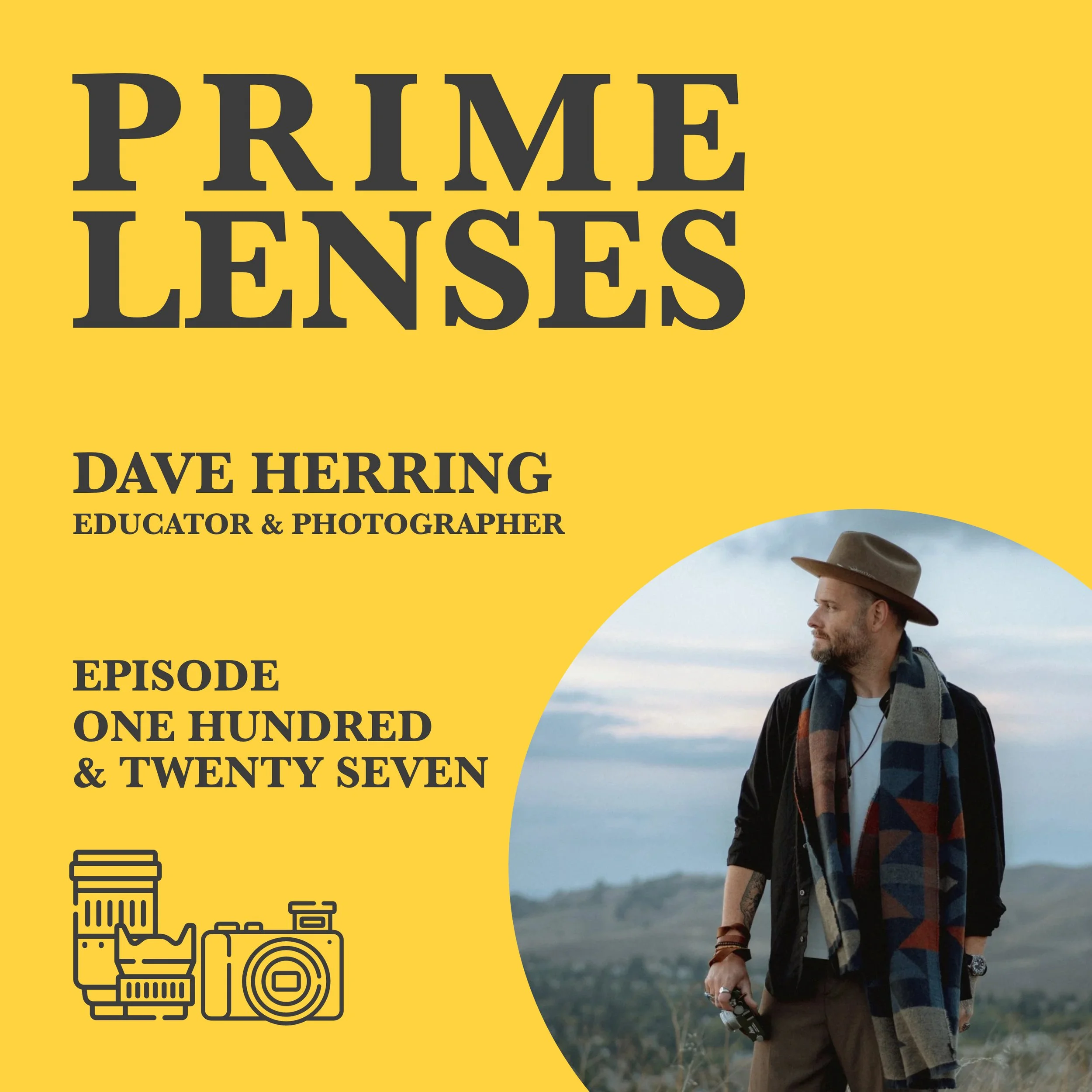


Dave Herring returns to the show this week to talk about his remit to educate and entertain. He’s a lovely guest with excellent taste in 35mm lenses :) Oh and at one point I reference Rathergood.com, some lovely OLD internet which I feel I should link to.
Support the show on Patreon.
Episode Transcript:
Iain Farrell
Hello, welcome to Prime Lenses. I'm Iain. This week on the show, my guest is Dave Herring, returning 120 episodes later after his initial appearance, when I think it's fair to say we both feel like we were creator babies in a lot of ways. And that's not to say that a couple of years in, I've got it all figured out. I definitely do not. And a theme that I think emerges in the conversation is that, Dave feels like he doesn't either. So a lovely conversation that covers some ground from art and creativity to what you call yourself when you make things for a living in 2026. It is a characteristically lovely chat with an enthusiastic and authentic creative voice and I hope you enjoy my conversation with Dave Herring.
Dave Herring is back, everyone. Hello, sir. What's up, man? It's really, really good to see you. It has been a minute. Yeah, you too, man. It's been a minute, dude. I think we are totally different than we were when we did this last time. So here's the thing, and it is, I will confess, whilst it looks brilliant, it is completely accidental. It is 120 episodes since your last episode.
No way. Yep. No way. This will go out this weekend. 127. 100 episodes. Wow. I mean, quite why you said yes to episode seven, God only knows. Dude, I was like on YouTube episode seven when you reached out. So we both, I thought we both got started around the same time. Yeah. No, I think we really did. And the funny thing is that we spoke, we'll just indulge ourselves. Yeah, of course. We spoke like on Instagram originally.
Because Ali put us in touch. Because I was in San Francisco and looking to walk around and make photos and not get mugged. Yeah. You were like, don't go here with your camera. Yeah. That was wild. Yeah. That was the trip I met Wayne as well. Oh, nice. Yeah. We got in touch. I guess that, what was that? Early 23? Yes. Yes, it would have been. Yeah. Yeah. Because, yeah, your podcast was fairly new. I was pretty new to making YouTube videos. And then, yeah, here we are three years later, still hustling this thing.
Well, that was going to be one of the things I was going to ask you about. I remember way back then, you were very much talking about yourself like you were a jobbing photographer more than anything else. And this is back when doing corporate gigs and taking in Instax to give people prints and things like that. And I think your life has changed quite dramatically because of YouTube and because of creativity. So I did want to ask you as one of the things, what
Dave Herring
Do you call yourself now? Like my notes say what is date? That is a great question. I struggle with that. It depends on the context. Like if I'm meeting people for the first time and they say or we're talking about what we do, if I say I'm a photographer, that is so up to interpretation. Like they're like, oh, do you do school photos? Oh, or do you do weddings? Oh, do you, you know, do you, are you, do you family? Do you do, you know what I mean? Just like it, that, that phrase leaves more questions and answers. So I don't really use that phrase anymore. I call myself an educator. Oh, nice. Oh, I'm an educator in the photography space. That's kind of how I, what I say. And then if they like want more information, then I also share maybe about Very Good Co, like I own a company that creates color grades. And again, it kind of just depends on like the person I'm talking, if I'm talking to people that are like a little bit in the creative field, I might talk about Very Good Co and like the you know creating assets for photographers if it's just random people I'm an educator um but yeah I try to I still wrestle with that answer myself like what do I do now
Iain Farrell
Because it's been easier for me in a lot of ways because I'm just a tourist so I've always been able to go well I I love photography but I get to talk to photographers and so that's kind of been a nice easy thing mine hasn't needed to kind of change I mean I say change very much yet who knows when we do for episode 207. Who knows? Yeah.
That'll be awesome. There'll be, I'll have a, an AI robot sidekick. Yeah.
Yeah. This is M. He's my robot sidekick. Oh my gosh.
I should write that down. That's quick. But yeah, I will confess as well.
I'm coming in a little bit hot. It's the end of the summer holidays. Yeah.
Like we've got one week of the kids at home. I'm, I'm climbing the walls, trying to keep them entertained. And trying to get a disco.
Dave Herring
So yeah, have you got little ones running around? I do. You'll probably see them appear on the stairs behind me at some point. But yeah, you know, we homeschool, so summers don't really affect us too much. We kind of live the same life year round. But we don't do school in the summer. The kids have a lot more free time, but our kids are very busy with activities and those activities go all year long, like ballet. Ballet doesn't take a summer break. Piano lessons don't take a summer break. You know what I mean? So we still have kind of the normal normal rhythm and routine.
Yes. Even when the school year is not happening. So yeah.
So we're not feeling the summer too much.
Iain Farrell
Yeah. We are lacking structure. We're just getting back into some structure now.
The eldest has got swim camp in the mornings. Nice. So there's just a little bit more kind of, it's really good, but you probably have a similar thing in your household.
But like as the person without proper job, I do the ferrying around and stuff. And so it does mean that kind of making things and fitting in time for creativity. That presumably was the biggest shift for you when you move to what you do now.
Dave Herring
I tell everybody we're just constantly spinning plates. We're just trying to figure out how to get through the week. Obviously, I don't have a proper job, as you said, the 9 to 5.
But I haven't in a long time doing different types of work prior to YouTube, just never having a ton of consistency. The last time I had any consistency was before the pandemic. That's pretty far now.
So, um, but then my wife is a tattoo artist and has her own schedule with her own clients and has her own shop. So, you know, between like the, just in the household as, you know, homeschooling plus, um, having our own businesses, schedules, it's all just like a huge grid and we just have to solve that, you know, week to week and try to survive it. Yeah. Yeah. Yeah. No, we, we have similar problems sometimes, but the,
Iain Farrell
Fallback is always it defaults to me and then because Alice has has has people depending on her more so yeah it's one of those right right but yeah well last time we spoke face to face we were on a live stream talking about that GFX and that's right sort of yeah monkeying around with that with medium format and then you made a video with you and Benj and and just making you running around the desert and playing with that thing now that you've had a little bit of time to reflect. Are you still... Because when, you know, again, when we last spoke, you were like, died in the wall. I'm an M shooter till I die. You've since played with all sorts of stuff with some OM System things and with some GFX things. Has that broadened the palette for you? Or do you still go back to trusty and small? No, I still use the M. That's still like my... That's my main system. But I do... I have other cameras and I do use them for different things. But I don't have jobs.
Dave Herring
Like that's I think the biggest difference is like it's not like I can't I can't say this is the right camera for the job anymore because I don't have the job. Like I'm not doing that kind of thing. So I more or less have like projects vision ideas concepts. And so but I have 100% just choose the camera that is feeling the most like inspiring to use for what I'm doing. And that changes a lot. Like everyday stuff is always the M. But is it digital or film?
There's different use case scenarios for that for me. Medium format cameras. I've got three film medium format cameras. I'm sorry. Yeah, three film ones and then I've got the Hasselblad as well. So I've got different things I might grab in different seasons for different reasons. And so the M is still the camera. When it comes to digital stuff, it's the M. And then recently the SL has come into my life. Totally unexpected, but I have the whole SL kit now. And then the Hasselblad is well. And I've got someone else on the way right now from Hasselblad. So it's good times around here.
Iain Farrell
So it sounds like part of your educational remit is becoming knowing what tools for what job and letting yourself just feel creatively inspired.
Dave Herring
I think, yeah, it's a good way of saying it. And also like the educator part is important, right? So I teach workshops throughout the year and like the fall is my big workshop season, typically like the big workshops I do in the fall.
So when I did last fall, um, was in, was in Jackson Hole. I'm doing another one there this year, but 10 people, I do 10 person workshops on location in these epic places, but everybody that came to the workshop, they all had M's Q's and Hasselblad X2Ds. So it's like, those are the cameras that are, I'm the, the people that are coming to my workshops typically use. So like, I need to know how to operate these cameras and also like when I would use one and when I would use another one. To help add more value to their lives, too. So it's like, you know, granted, I have a brand like collaboration with Hasselblad. Like I was part of the X2D2 release and they're sending me they sent me some lenses. They've got I've got the 907 on the way right now. So they I work with the brand. So I've never once bought anything from Hasselblad. But the value there for me has also been like as an educator in the space teaching workshops is like, when would I use this? And when would I grab the M? And here's this is a scenario we're going to shoot and what we're going to do this is why I would use this camera so so like different cameras for different jobs for sure but also the educate the educator in me likes to be able to like know the systems that the people that are showing up are using yeah yeah that makes a lot of sense do you cut yourself off from making much work as well when you're workshopping are you very focused on the participants yeah I'm focused on I'm focused on them and for that reason I don't go to new places for me for workshops I go to places I'm very familiar with so like I'm not I'm not I know like it's really tempting and I've seen other people do it I'm not gonna you know name names or somebody wants to take an epic trip somewhere so they pay for it by having a workshop and it's like that's not you know that's not how I'm gonna roll this thing I only do workshops in places I've been to at least five times but again I've I feel like I've almost I've almost exhausted it for me so to the point where I like I can efficiently do the workshop there and and help people really connect with it rather than have people fund a trip for me you know what I mean yeah yeah no that's
Iain Farrell
That makes a ton of sense. When Mike, a previous guest of the show, Mike Chudley, who was on quite recently, when he came out to see you, was that last year now? No, that was last winter. It was in February. Oh, wow. Yeah, so earlier. Presumably also when you have folks to visit, this is an opportunity for you to try some stuff out as well, like a control test person, because you can take them places and then get the feedback afterwards and go, right, how did you find this? What did you think? Yeah, Mike came out and I took him, like we timed it this way, but I do an annual meetup.
Dave Herring
In the desert. It is not a workshop. It is completely free.
This year was the second year I've done it. The first year we had 12 people show up. This past year we had over 50 people show up. Which you got to understand like where we go is in the middle of nowhere. Five hours from the nearest big city. People fly in from around the country to go to this thing. Again, it's just a hangout. It's a hangout in the desert around photography for three days. So Mike came over and went to that with me.
And it was such a blast having him there and actually taking him to see the desert. He'd never seen that before, obviously. It's from the UK. Why would he have seen the desert? So like being able to like look at that, I was able to see those places through his eyes, you know, that gave me a ton of life to be able to experience that. It was fun seeing it and getting to know Mike and, you know, the run up to the, to the conversations where like he obviously got a lot out of it. I think when he was on, we talked a lot about the projects he's working on, like the, the coast project that he's working on, which is really, really good. Yeah. From your perspective,
Iain Farrell
I know you've done a bunch of projects like abandoned towns and things like that in the past it's an interesting thing for me recently talking to guests is how you know when it's time to roll one of those up or when it's time to actually take one down off the shelf again like do you have plans you've talked in the past about printing about making books about turning things into video combining stills and videography as well so I'm curious as to where you're at with your projects at the moment and do you do you have kind of strict timelines for them or are you just letting them come to you?
Dave Herring
Yeah, my projects are more open-ended in the sense that I just feel like I'll just know when I'm done. It's not that I've checked enough boxes because by that regard, you'll never check all the boxes to be done. It's more just a gut and a heart feeling. I know that sounds really almost spiritual to say, but I have no end date on the projects that I'm doing. I just feel like I'll just know when it's done.
And like one of those projects is like almost like a photography documentary of the Northern Plains in the U.S. I've got a pretty big extensive body of work on that but it's not done. And I know it's not done because there's some things I want that I don't have represented in that book yet. And so when I get those things then I feel like it'll be done at that point and then we'll see what can happen with it regarding print, gallery, book or whatever. In the same way like I love the ghost towns of California and Nevada, like in the desert in general, the mining, the old mining towns. I don't know if there's a project in that other than I like doing it. But if when I feel like I've reached the point where I'm like, okay, this is something I feel like I'm just going to know. Like, it's like, it's like, I used to mix, like I used to be really in the audio world, right? I was, you know, full time musician for a while. And then I did a lot of studio stuff as well. Engineering, mix engineering.
The mix is never done. You just end it. Otherwise, you can always make changes. You can always go back and tweak this, tweak that. I'll make the vocals just sound a little... The mix is never finished. You just have to pick an ending point. And I feel like my photography projects are kind of like coming with that idea as well. At some point, I'll just finish it because I'll know. It's done. You know? Not finished, just done. Yes. That feels to me like that was a classic Daveism. You do that a lot in your videos. You're like, no, it's not this.
Iain Farrell
It's this. And just to make sure people have really, really honed in and heard what you were saying, you know. I like that a lot. So you've got the photography business, like all the YouTube creation and workshops and things like that. It would be remiss of us not to mention Rather Good. Very Good Co, not Rather Good. Rather Good was a website in the 90s. That's my UK version. Sorry, because it's in my head. There was a British website. This is very old internet.
This is 90s Britain. And a band, and it had silly animations and things on it. They did an animation with cats. I'll have to put this in the show notes now. To the Elbow, who were a band, Elbow did a cover of Independent Women. But they are northern blokes from the UK. So when they're singing Charlie Algeria and Jules Get Down like that, it's a very different song. It's very, Very Good Co. I'll send it to you afterwards. It's brilliant. But yes, so Very Good Co. Sounds awesome.
Dave Herring
Talk to me about where that's at now. Because it feels like, did you know that was going to become as big a part of what you do? Because you don't just throw presets over the wall. You've done the work. Heck no. Yeah, I mean, look, I'm a type A through and through. Details, I love stuff, man. It's funny because I feel like I'm equal parts creative and also in order. My brain is systematic and organized.
And as much as like, like if you ever came into like my workspace here, everything's got a place and everything is in that place. And it does get a little chaotic when I'm working on something, but when I'm done, I got to clean it up. Got to have order. So for that reason, like Very Good Co was like, I had no clue it was going to become what it became or what it has become. I had no idea. I remember like when I first started the YouTube channel, when I hit 1000 subs, it was April of 2021.
I started in January, hit a thousand subs in April. And I remember thinking, okay, I need some way to like have this thing at least offset what I'm spending to make videos. Like, and at that time it was like, I'm going to drive to the desert. It's going to cost me $350 in California gas money to drive to the desert and then stay at this cheap hotel and come back. I wonder if I can make $350 this month on YouTube. So like literally just trying to offset stuff. And so I took, I got, I was getting a lot of comments in the early part of my channel asking about what presets I was using. Hey, how are you coloring your photos? Cause I was using like a M10 and a Q2 back then. It was like, what, what, how are you doing colors? And honestly, I was like, this is my portrait preset. I've used it for years. It's on my Instagram. You can look at it. I literally just put it for sale. Right. The pre, and it still is the same portrait preset is what I use and what I've used for five, six years. Um, and it's crazy, man. It just popped off. Like all of a sudden that first month, that preset had thousands of dollars in sales. And I was like, this is a real thing. So then I was like, well, what else do you want? What else can I make? So I, um, I put together a few more and then like, I've, I've always been a hybrid shooter shooting film and digital together. That's why I love the M system because I can shoot film and digital with the same lenses. So I just started making more and making more. And, um, we haven't brought any presets to market in 26. It's been a weird year because like we typically I put out a new preset every 60 to 90 days since 23. So we have a pretty nice catalog of presets that are out there. And we're typically working on that. I say we because me and Chris Prince, who is my Capture One developer, we typically are running at any time in development with something. And so just because a new preset comes out, you didn't see the year we spent working on it because we're always overlapping things. They're far from the release date. Right now we've got two things in the works.
They just like we had we came into this year with three things one of them did not work out so we bailed on it in the spring and it was it was a bummer um but it was a collaboration preset with another creator we're trying to really you know make that work and it just didn't work out because his schedule my schedule we couldn't get in sync um a lot of projects going on so no no hard feelings guys a good friend of mine but like it just we couldn't bring it to market and so we have two other ones we're working on but these two one of these has been in the work since 20 and we're getting to the point now where we're ready to bring it to market soon. So all that to say, like the care and quality we try to put into this stuff is not just thrown against the wall. We need to make a quick buck. Let's throw. My first preset I did. I took literally the preset I used. Yeah. And I sold it. It was like, I gotta try to make some money on this thing. But everything else we've done since then has been, you know, really intentional to find not just what customers want, but also like embrace the hybrid market. The people that shoot film and digital that want to create a cohesive body of work. So a lot of our presets are based on film stocks we love. And so it's been really cool, man. And I just, again, we actually crossed into 15,000 customers this year. It's crazy. And a lot of our customers are repeat customers. They come back when we have new things. And so it's just been like life-changing, man. Completely life-changing. Oh, that's amazing. One thing you mentioned there was about detail and feeling, you feel the responsibility. And I think that that's something that comes through in everything.
Iain Farrell
You are, you know, perhaps sometimes to a fault, you are Dave, right? And I feel like the Dave that we get in the videos and the Dave that I've come to know, you know, over Instagram and things like that, that, you know, obviously sometimes it's a little bit of performance and facade, but you're that dude. And I think you care about things deeply and think about things quite carefully. Would you say that that is kind of your, there's a mantra here or a kind of an ethos behind everything you're doing?
Dave Herring
Oh, dude, 100%. Like, I mean, it comes from two places. One, I think authenticity is the only way to be free. You have to be able to live a life that, like, you can sleep at night and know you or your authentic self. That's like, that's like the, like, when I say free, I don't mean like, you know, unchained. I just mean like inner peace, like feeling like, you know, you yourself are free, like not weighed down by X, Y, and Z. I'm a big believer in the stoicism philosophy, you know, learning to embrace life as is and take the good and the bad and learn to be free. At peace. So there's that part of it. And there's also the reality. I'm in my mid-40s. I've got two small kids. I'm trying to run a lot of things. I don't have the bandwidth to put on a personality for anybody. I just don't have the energy to do it. I can't switch into some fake mode. It's not sustainable. I just don't have the bandwidth. So I can't flip on YouTube Dave and then turn YouTube Dave off and get into other things. You get the same version of me, whether we're on camera, off camera, at home, out in public, whatever. Workshops, photo walks in the city. It's the same person because I just don't have the energy to do anything else, to be anything else.
Iain Farrell
As a man of a similar vintage, I completely agree. I ain't nobody got time for that. I did find it funny when you went and filmed with Peter McKinnon recently. He was trying to teach you. He was trying to teach you the what's up everybody opening. And it's to your credit that you left it in the video. You look very uncomfortable.
Dave Herring
That was funny because I'll bring him up for a minute because he is the same person on camera and off camera as well. I've known Pete now for about a year. He reached out to me about a year ago at this time just over Instagram and told me he loved my videos. That meant a lot to me because he's Peter McKinnon.
You know, my God. He's like, he's Pete. And so we started chatting, then we started texting, then we started FaceTiming.
We hung out one time for like three hours on FaceTime. He is so much the same person across the table, across the screen, or just watching him on YouTube. He's the same person. And I think at his scale with six million subs, I can't even imagine his DMs and his inbox and his comments, but he still is a human. And he still is authentically him.
Even like the things like the negative comments, they affect him the same way they affect anybody. Because he's a human, you know? And I love he's incredibly generous. Like, I just like if he can do it at that level, surely anybody at any level can be authentic and just be real, you know? Yeah, I think people like him, I would probably put someone like a Casey Neistat in the same bracket as like just they are kind of very much them and have very much their perspective. And that's the way that they make things.
Iain Farrell
And I think if you're gonna, if we're gonna have people, Marques Brownlee, I would put in the same camp as well. He's not purely photography, he's lots of things, but I think he's always himself and he's very thoughtfully him, right? And so I think that the lesson that we should all take, if, you know, not that I'm an educator necessarily, but the, the, I try to kind of extract things from conversations that we're sharing with the world. And I think that the lesson here from a lot of these very, very successful people is like, you don't have to sacrifice,
Dave Herring
Who you are to do something that's big. And equally, Marques says this a lot, you don't even have to be big. You just produce the things that you want to produce and it will be found by the people who want to find it. And then if you want to chase more, then by all means. That's such an important distinction. That is such an important distinction because the right people finding you is what matters. You don't need everybody to find you. It's the right people. So like, I go into YouTube expecting, not everyone's going to like my channel.
Not everyone's gonna like me. Not everyone's gonna like my photography. It doesn't matter.
There's this mindset. Whenever I get a negative comment, which is 1%, if we're just honest, I know we all joke about our YouTube comments, but it's really 1%. If I get 100 comments, one of them is completely unhinged by someone that should have never written.
We would never write the kind of stuff. You know what I mean? That people say.
But it's 1%. But when I get that comment, it never bothers me because I'm like they were never going to be a friend, a customer, a supporter. They were never going to be those things. So what have I lost? And that's why like I might troll them back because it's fun for me, but I'm not going to argue with them, you know, or try to like defend myself because they were never going to be those things anyway. So, you know, it doesn't matter. And I think like successful people, they recognize that. They recognize that I don't make my videos for everybody. I make my videos for the people that want to see what I'm doing. Yeah.
And hopefully enough of those people come along, they can build like some sustainability in that. But ultimately, like, like if I, it's funny, YouTube gives you all kinds of fun data points, right? And like my channel has a like and then an unlike ratio, right? So I can see, and then every video, I can see the like to unlike ratio of that video. And it's super consistent with the channel, but it's like, I have like a 97 and a half percent like, and I can put a video about how today I'm going to go to the channel. Kiss some puppies on the head. And two and a half percent are going to dislike that video every time. You know, like, doesn't matter. Like, it's just, like, it doesn't, and that's, that's just how it is. So like, you know, anybody in the creative space has to be okay finding their audience. If you make it, if you make enough stuff, your audience will find you. It'll be your audience specific to you. That's why we as like creators don't feel like we compete with each other. Like I'm not in competition with other channels. You know, like, Why would we feel like that? We're all sharing the same people. There's this overlap of people that like me and like Binge. Binge and I have a big overlap. People that like me and like Mike. It's not the exact same, but we have that overlap and we love that. And that's why we collaborate so much because we recognize that the overlap is greater than the individual. Yeah. And like I say about the podcast, I'm in the market in some ways. It's a bit like that thing about McDonald's, like what business is McDonald's in? Well, they're actually in the real estate business in some ways.
Iain Farrell
I'm in the market providing people things to listen to while they walk their dog. And they walk their dog twice a day, Dave. So I can't hope to be every time they go out the door and they only take me with them. That would be absurd. And, you know. Yeah, right. Yeah, you've got to, you mentioned something there about, or we're talking about peer groups supporting one another and large groups. It's something I talk about with photographers a lot because photography can be a very lonely, job. You turn up, you're often on your own, maybe with one person assisting you if you're lucky. You do the gig, it's a hard gig, then you have to go back, do the edit. A lot of it is very solitary work, going out, scapification, things like that. Creator work, as I have found in the last 12 months since I've gone full-time doing this, is similarly lonely if you're not careful. It's a lot of time spent sending emails and sitting down. I know you work from home as I do and you have your partner around, which is lovely, and there's always life around you.
Dave Herring
But it seems I've noticed with your collaborations as they've increased, is that also a part of it? Is it just having, being able to spend time with people around a water cooler and just talk about the job? Yeah. I mean, like you take like even the names I mentioned, right? I told about Benji, I told about Mike, you know, we all don't have real jobs. Yeah. So like, like literally like, okay, so there's, I don't know if this is an app that just old people like me use, but there's an app called Marco Polo. Okay. This morning, Benji and I have been on Marco Polo. Messaging each other. When I say something, I talk to him, like a FaceTime call, and then he responds. We've been doing that all morning, you know, because we're both at home, just hanging out, you know, working on his projects.
I'm working on mine. And the same thing, you know, with Mike. Like Mike and I chat with the different time zones.
We try to chat, you know, WhatsApp and whatever. And like we're all kind of doing the same thing. So when there's an opportunity for us to kind of do the same thing together, we try to take it, you know.
And sometimes that's as intentional as Mike flying over here. Then in 24, I went over there and hung out with Mike in the UK for a few days. Benj came down here and we drove out across the desert to go to NAB in Vegas. Like when we have those opportunities, we definitely try to capitalize on them. Not so much because we're doing the same exact thing, but because like photography gives all of us life. Even though we all do it different, it's kind of fun to just hang out and do it together.
And then you start looking at what they made and what you made. And then you're like, wow, you saw this totally different than I saw it. That's a super fun thing to do.
Iain Farrell
Yeah. No, I've really enjoyed those videos, I have to say. And obviously, because I enjoy you and Ben just subsequently been on and Mike and things like that.
It makes all the sense in the world. You all also do complement each other in really nice, fun ways. So yeah, I just wanted to.
Part of the conversation sometimes is therapy for me I mean there is a way to do this in but I am going to have to stop making friends with people who live thousands of miles away because that is just it's all get you all over Scotland one or the other hey man I'm I'm down to that so you've got your collaborators you've got your regular folks you've got your projects in mind and you've got your workshops and things like that it's January 1st how is Dave thinking about his year and planning stuff out like are you because some folks I speak to you're like well I know a third of my year is workshops and I know a third of it is this
Dave Herring
Is there at least a broad structure that you're taking to things? Or are you kind of being nice and loosey-goosey? Yeah. On January 1st, I enter into execute mode. The plan mode, the mindset stuff is coming in quarter three and four of the year before. I'm starting to think about next year right now. In fact, I sent an email this morning about 2027 workshops to some people. So I'm already thinking about next fall.
And part of that is because I am like that stuff matters to me. That systematic like get organized, be prepared mentality really matters to me. So I try to come into it. I think that there's a fine line though between like being reactive and flexible and then being systematic and prepared. And for me, like we all exist. Every human exists in that spectrum somewhere of like reactive and flexible, prepared and systematic. And we all fall on a spectrum somewhere, right?
A balanced person is not like we might want to use like words like right and wrong like a wrong person is never prepared and a right person is always but that's not quite true the goal is balance you want to be able to react and be flexible without emotional like falling apart and you also want to be able to prepare a plan without emotionally falling apart so like I try to seek that level of balance in my life again this just goes back to that whole stoicism thing but I try to like seek a level of balance in my life where I'm not going to be able to be able to be able to be able to be able to be able to be able to be able to I am open to flexibility and plans changing and reacting to something. So like a camera like last spring, Hasselblad reached out for the first time. They're like, hey, Dave, we are working on a new camera. Can we send you an NDA and talk about it? I was like, heck freaking yes, send it. And then they sent the NDA and next thing you know, I'm signing an agreement with them. And a few months later, I had a camera in hand that I needed to make some videos on and fulfill a contract. If I would have gone into my year with a rigid plan, I would have had no room to react to that and do that. Because I would have laid out my, no, I've already got 52 weeks of YouTube plan, man. I can't, I don't have room for that. You know, whatever. Even by the quarter, like that came up, it was quarter three videos that came up in quarter two. So like, I do try to come into a quarter with some ideas of things I want to talk about. But like right now, my YouTube is planned with flexibility through the end of September. So I'm about six weeks out of knowing what I want to make. But there's flexibility. In there too. And that's kind of the point I'm making. It's like that balance, you know, just trying to be a balanced person. So you're not coming into the year fully like planned out or coming into the year unhinged, having no idea what you're doing, you know? So like just seeking that sense of balance, I think is what's so critical. I think also it's sometimes good to be slightly in a new mode as well. Like sometimes, so like recently we had a wildfire local to the house. We were evacuated.
Iain Farrell
From the house for a couple of days. I had to reschedule a couple of conversations. And as a result, I don't have as many episodes in the can as I normally have. And I've been building that buffer back up again. And it's been weird. But it's also been good because that resulted in when people can't do stuff and you have to move stuff further out, then you start reaching out to other people. And then before you know, you realize there's some serendipity in Dave coming back 100 episodes later. And that wouldn't have happened if those had stayed in place.
So actually it kind of works out better and I think there is it's worth highlighting for folks listening that like sometimes just going and being in a different mode to your usual one is one that will serve you you know to be just to have to do things differently. Yeah 100%. Yeah. While we're talking about different because my camera is next to me and I've just realized the mighty bike on C is right here Dave. One of the best. Are you still are you still rocking yours? It is but it was different for you.
I'm never getting rid of that lens. I got worried and you chastised me. It was very funny actually for listeners. I messaged you because I thought at one point you were selling it and then I jumped on Instagram and sent you a voice note I think or a video going, don't do it Dave! And you came back and you were like, let me tell you Farrell, I'm not getting rid of this lens. Okay? And I'd got it wrong. But yeah, are you still rocking? Is that in the regular lineup now or is that just one that's reserved? Yeah, no it is. It is. I mean it really just, it depends on what,
Dave Herring
I'm doing. But it's hard. It's hard competing for my 35 space.
Like, you know, like I take the Summilux out the most. But I stand by like, here's the thing that that Biogon, it's not it's not financially worth selling to me. Like, it's not an it's not an expensive lens.
So like unless I if you see me selling that lens, it's because I've either gone pure minimal or I've gone destitute because like it's not like thousands of dollars sitting in my cabinet. If I'm not using it. If I have a lens that's thousands of dollars that I'm not using, I do sell it because I'm not going to hold on to something with that level of value.
The Biogon, it is the most medium format looking lens on the M system. It's a 2.8, which goes to tell you that medium format is not about wide open and having an f-stop that's at one or below. Medium format is center contrast and the way rendering falls off and there is no there is just no lens I have found on the M system that looks as medium format like if I was shooting my film medium format cameras I'm not talking about my 645 my M11 with a 35 can do the 645 I'm talking like 6x6 or 6x7 if I'm doing those negatives the Biogon looks the most like those which is crazy but it does no it has it has an amazing look I really love it I actually painted mine too man I custom mine oh really Yeah.
I know we're on video here. Are viewers watching me?
Iain Farrell
No, no.
Dave Herring
So this is audio only. I'm going to scoot. Cool. They won't see my gym shorts if I push back.
Iain Farrell
No, you're safe.
Dave Herring
Yeah. Since I'm right here, I'll show you. I actually painted.
I got rid of the I got rid of the blue on it. So if you have this lens, you look it up. You'll see that it's silver and blue if you have the silver edition.
So first thing I did was I got rid of the blue. It's all black. Okay.
Iain Farrell
Ooh.
Dave Herring
Right. I even popped off the little blue thing here. Because I have a Safari camera. The blue just drove me crazy. And then the front has been blacked out as well, except for the red star. So there's no white text on the front. It's just black, all matte black, and then black text. And then I put a focus tab on it as well. Like a big proper focus tab. Yeah, yeah. How's that focus tab holding it? Because I have the Voigtlander 35, the 1.4. And that does have more of a traditional
Iain Farrell
Yeah, yeah.
Dave Herring
The little focus tab on the Biogon, I just can't grab it. Like, it's like, my hand's too big. It's just this little nub.
This focus tab I put on is this, like, seven artisans rubber focus on, or focus tab. And you just, like, it's like a 3M patch. You know, stick it on.
I actually have this on a couple of lenses, and it works great. It's never come off. It's solid.
So, my Biogon, still rocking it. Love it. I think it's one of the best lenses ever made.
Iain Farrell
Yeah.
Dave Herring
Well, there will be a little documentary episode about the making of that lens coming post-September. I would not have that lens if it was not for you. No. You kept posting these photos and I'd be like, what lens is that? And you were like, it's a Biogon. And then like the fourth time, I'm like, dude, is that the Biogon? And you were like, yep. I was like, that's it. I'm done. I'm done. I found one and I bought it. It's funny because I bumped into Matt Osborne of Mr. Like a Fame in London. And he, it was last year and he had a copy and he went,
Iain Farrell
Yeah. He said, is that the Biogon? He said, I don't really like it. And I went, I think you've got a bad copy. Like something's happened to it. He just didn't get on with it at all. And his comments in that video are filled with people telling him he's wrong. And then I bumped into him earlier this year. Because now, since we last spoke as well, the thing that's happened with that lens is that when that lens is mentioned online, I am summoned often. Like people in the comments. Dude, who'd die? Well, yeah, I'm the C Biogon 35/2.8 guy. And so people do, you know, ask me into the comments or when people say things like what 35 is your go-to I get tagged and stuff like that all the time as well so I think Matt has subsequently picked one up and actually found it to be a bit more interesting but the world of these 35 like these fairly fast and cheap primes yeah it's just filled now isn't it with people like type it is like that just pulling out these lenses yeah you messing around with some of those as well no not really I mean like companies like to send me things like so basically I hope none of them are listening they probably are people will reach out like
Dave Herring
A brand will reach out and say, hey, Dave, we'd love to send you this lens. Can you make a video on it? I say, I'm happy to receive your lens. I'm not making a video on it unless I want to. I don't make videos. I don't do brand deals in the traditional sense because I don't need to. It's not part of my revenue stream. I have Very Good Co and that sustains what I do. So I'm not trying to be a slave to some video. I was like, I'm happy to talk about it if I like it. And so back a year or two ago, They're like, well, cool. If you change your mind, let us know. And so today, it's more like, hey, Dave, we want to send you a lens. And that's it. They don't ask for videos. So I try to, because they know if I like it, I'll talk about it. And if I don't like it, I just, I'm not the kind of person that's going to be like, let me tell you seven reasons the Biogon sucks, you know, like, which I would never say. But like, I'm just not like, I'm not going to make that kind of video. So these days, typically, if I'm talking about something on my channel, It's not because I accepted a brand deal. It's because I genuinely like it. Now, granted, I'll disclose if it was sent to me. But like Light Lens Lab sent me their 35 double-aspherical. They sent it to me in titanium because it matches my Safari nice and pretty. So it's a very premium, nice lens. I made a video about it because I like it. But am I reaching for it when I go out to shoot? Not really, because if I want to shoot at 1.4, my Summilux is more in line with my style of how my photos look.
The Biogon is more in line with my style because I do a lot of medium format. So this matches it. So like these are the two 35s I'm basically taking out. I've had others. I had the steel rim for a while because it looked it was really small. It's a tiny lens and I was like this is a great pocket lens. But at its price point I didn't want to keep it because it's like I didn't like it that much and for what it's worth it's just too expensive. Too much dollars tied up in a piece of gear that I didn't love. So yeah. I've had 35s come and go but the 35s
Iain Farrell
35 Summilux is most consistent with my 35 work I use the Biogon when I'm trying to match to my medium format work you're still in love with your Safari because I think you you fell over yourself when that green Safari M11 came out I I loved watching your response to that existing on the internet yeah watching your friend have a crisis in real time it's funny because like the M10 reporter was like such a cool camera and they only made 500 of them and they weren't accessible um
Dave Herring
And so few. Yeah, they only made 500 of the M10 reporters. So when that camera came out, I was like, oh, but everyone, everyone got one that wanted one for quick. And then the M10 Safari, I was like, okay, that season of my life, I was much more black on green. You know, it was like Safari silver on green. All my lenses are black, blah, blah. And so when the M11 Safari came out, I was like, no, I'm doing it. I'm getting the green camera. And I just, I'll just deal with the fact that my lenses are black, which has been fine.
It's funny though. I did paint. I had my wife's a tattoo artist. She's an incredible painter. Like she was a painter before she like she still is. She's a painter. Which is her thing before getting into transitioning to tattooing. But I was like, hey, look, can you take these black lenses? The yellow and red on them clash with the Safari. Can we just make can you repaint my lenses? So they're all the same like a white that is inside of the lens. So she mixed color creams and to get the Leica white and then repainted all of my lenses.
So like my Summilux, my 35, my 50, my 28, they are all just black with white text. There's no yellow. There's no red.
And they look fantastic on my Safari. Aesthetics matter a lot. You know what I mean?
They just do. I hate saying it, but they do. And so having the green camera with the black lens with the yellow letters and the red pop, it just didn't look right.
Iain Farrell
But now that they're all white text on a black lens on the green camera, they look fantastic. So I love it. It is a funny thing that I sit here every week talking about how equipment doesn't matter. But of course, the thing is that we reach for the things that we love because we love them. And part of that is sometimes how they look. 100%. I just made a video this past, it came out this past Monday, two days ago, about the Nikon Zf. Nikon Zf. It's a great camera. I love it.
Dave Herring
I have every camera I own I don't have that camera Nikon loaned it to me for the summer but it's worse than every camera I have when it comes to sensor megapixel the way it feels like the shutter everything about it is worse I love it because of the aesthetic I think it's a beautiful camera I think it's one of their most creatively well-made cameras so I said that in the video I was like I choose when I'm like shooting this camera right now because I like the way it looks that's truly why in the same way I pick out my hat
Iain Farrell
My hats, my shirts, my jackets, my jeans, my shoes, my watch. All those I have because I like the way they look. And they complement my personality and me. So don't ever let anybody tell you you can't pick a camera or a lens based on those things as well. Yeah, no, you absolutely can. I have, again, shout out to Wayne. When I had a strap break and I was in San Francisco, I now went into the store to buy a camera strap and I said, do you have a red one? And he looked at me like I was insane. Because he was like just buy the black strap like no I don't have a red one you can just have this black one shut up and he was right it was perfectly good but but do I have a red strap now Dave yes I do
Dave Herring
And it's just yeah we're all victims to the things that we're that's it you just you like what you like and so to deny that for the sake of tools or creative tools is dumb don't deny it yes just own it yeah
Iain Farrell
Own it move on with your life well that's an interesting point then so what's on the white whale list for Dave. Like, cause you seem very settled and people are sending you things to try and you could probably fill your life with those. But what's days gone by, there were things on the Dave get list. Like, is there a white whale lurking?
Dave Herring
Not really. I'm, you know, I'm like, I'm a pretty content person when I get new things. It's a lot of times just because it was sent to me or I was curious, maybe like curiosity got to me about something.
Um, I, I've really tried to embrace, um, and restrictions in my life. And so like I try to do a lot. Like I have found that like photograph, not repetition in the sense of not photographing the same thing, but getting into the same rhythms using the same gear.
So like for the stuff that fulfills me and the things that I want to shoot, I'm basically taking the M11 and I'm taking the 35 Summilux. I just repeat that process all the time. If I take anything outside of that, it's because I had something specific I was doing that did not require that setup or that lens. Maybe I bring my 90 because I'm doing something with that one more of a telephoto look. Or if I'm in Yellowstone, I bring a 50 because a 50 in Yellowstone is basically a 28 anywhere else. So like, it's just a huge, huge area. So, but like that repeating, getting into that repetition and also I mentioned restrictions, right? So like, I have a lot of stuff. I can bring I could bring a lot of stuff. I could fill up my Pelican case with a lot of different gear. However, I don't. Like when I go out, I bring the thing and maybe an alternate thing. Like for instance, this summer I went and I did Tioga Pass, which is a higher elevation part of Yosemite that crosses over the Sierras to the desert, the high desert. And then I went and did some stuff around Mammoth. I brought one camera, digital, and one camera film. So those are the two I carried. A lot of other things I could have brought but I didn't bring that stuff I'm like I restrict myself to like two things and just make it work you know what I mean like that repeating repeating the same thing makes us better because you know the 10,000 hour rule as an example you know you become an expert on something when you've done it for 10,000 hours and then the restrictions makes you grow like it's resistance I'm just dropping a lot of r's here repetition resistance though like if you're lifting weights it's because you you know you're pushing against that's making you stronger. So like, that's how I see gear limitations are good. They, those restrictive things you put on yourself make you grow. And so I try to embrace that stuff. And the, the white whale concept of like the magic piece of gear. I mean, dude, I would love to have a Mamiya 7. Maybe those, those are cool. The lenses are cool on that. Um, my, all, all my gear wants are always medium format film cameras, but, but, but, but am I shopping for one right now? No. Am I going to sell some gear and buy one?
Iain Farrell
One? No. If one happens to come across my life, sure, that's awesome. But I'm pretty just content with what I've got. As a person with a one-camera rule, so what you described there is my setup. I have one film camera and one digital, and that's kind of it. The Polaroids don't count, but they're just for funsies. That's like collecting, I don't know, Pokemon. I find myself in the... I'm somewhere between a lover of history and some of the iconic characters.
Dave Herring
I have a Rolleiflex 2.8F. That is a historic, iconic camera. Mine is in tip-top condition. It's 70 or 80 years old, tip-top condition.
I'm never going to get rid of it because it's a piece of history. You know what I mean? It's more than just a camera.
It's a piece of photography history. That was the pinnacle of that Rolleiflex line. I have a 500C/M Hasselblad with two iconic lenses. Works great condition no peeling on the leather and like that's just another thing it's like that's part of photography history I do have it as a camera and I do use it occasionally but it's like it's not my go-to out there but it's also like part of the story of photography so I have some gear that like I've acquired over the years that like there are like they're more than decorations on my shelf but they are all they are on my shelf but they're more than that they are able to to use and I do use them but like the gear acquisition with that stuff is not so much like because I think it's going to solve a problem I had before it's more like a lover of the story of photography so I have some iconic parts of history you know what I mean I can't replace easily like that Rolleiflex 2.8F I can't go out and get one in my condition easy but I've had this one a while so I you know it it's great yeah you don't sound like you're naturally an
Iain Farrell
It seems like you're always looking forward not back You want that touch point
Dave Herring
It's balanced I definitely love chasing nostalgia I love photographing nostalgia For me, I just try to live in a sense of like I would say I'm not super looking forward in the sense that I'm thinking I'm constantly thinking about the future but at the same time, I'm not trying to live in the past I try to just understand what's in front of me And I carry a reverence and respect for the past, but a lot of the past isn't great also. And I'm totally fine acknowledging that. And then the future is kind of unknown and all we can do is prepare, plan, and hope. So I think you are correct in the sense that I am forward-looking and forward-planning, but I do carry an immense appreciation for nostalgia in the past as well. Especially stories. I love stories.
Iain Farrell
You've said that a few times over the years actually on your videos and I wanted to maybe as we're sort of coming towards the end of things ask you about the storytellers that you're looking to and admiring and still inspiring you because it feels like to me like it's been a while since you did a here's you've done little videos about not so much history of photography but these are the people who inspire me and maybe this will prompt another one but you've got the books out and you're like look at this and stuff who are you pulling down from the shelf regularly is it still the same people or are you still the same people or are you still the same people or are you still the same people or are you still the same people or are you finding new inspiration?
Dave Herring
No, that's a good question. I've actually embraced kind of a new philosophy this year. I started buying one book a month and specifically books I don't know.
So like every month I go to like a San Francisco and I pick up a new book. Sometimes I just ask them, hey, recommend something to me that you think I'll like. And they just pull something for me.
So like looking at one book I bought was Brandon Ruffin, Rough Draft, his book that came out this year. I bought that because he's a local creator. He's a guy I think his photography is awesome I went to his show for his book and bought that that was the one that I got that month but like as I'm looking at like you know my my book acquisitions this year you know it's just a lot of things that I would have never traditionally bought but it's all kind of in the realm of documentary so like right and what the word documentary means is pretty wide it can mean a lot of things but for me like it's not so much like I'm not a landscape I always like people I feel like I get the wrong impression of my photography like when they when they pick on a landscape photography. It's not so much what I care about. I mean, it might be how some of what I care about presents itself. But I really care about the documentary aspect of it all and the history that brought us to this moment. So getting books that kind of speak to those moments is something I've really enjoyed. So, you know, I'm just like I said, I'm looking towards my bookshelf here. And one of them, I'm trying to remember who this person was. And forgive me, I'm a I pronounced the name wrong. You can see it. Hold on a second. It's a big one. This book here is called Some Say Ice and it's Alessandra Sanguinetti. I don't know this person's work until I got this book. But this is literally like black and white photography, documentary photography around Wisconsin. It's like, it's just, you know, a lot of it's in the snow and winter and like, As I look through this and the Leica store and just like looking through this book, I was just like, this is a very interesting way to document that northern Midwest culture and life. Robert LeBlanc came out with a book called Ten Lizards, which is he spent two years riding Amtrak trains around America and just photographing things he saw on the trains and in the cities of train stop in. You guys have very like good trains there. Not so much here.
Our trains are more like a lower alternative way to travel, not a normal way to travel. So like that kind of documentary was interesting to me. It's totally different than how I photograph. And that's a good thing. You know what I mean? So like I think I've been really just learning from other photographers right now that shoot more of that documentary style to understand what is worthy of printing in a book when you come to telling a story and what kind of images you get.
And it's more of the raw story moments, the questions, the what am I trying to make sense of what I'm looking at are the better photos. Certainly the more interesting ones, ones that leave you with questions, I think, always a bit more. Right. And, you know, I used to want to look at a book and say, all these could be prints on my wall. And if the book didn't match that phrase, then it felt like it was like something weird was off about it. But today I look at it more like, paragraphs telling me a story. And like no one prints out a paragraph and puts it on their wall. You know? And so maybe a quote in that paragraph makes it. But for the most part, like when a book is just a lot, like when every photo is just a paragraph in the story, I think that makes a very interesting book. That will be the paragraph I can put up for this, you see. Nice. You've inadvertently created a useful paragraph. There you go. Dave, I think we've
Iain Farrell
We've done it. We've covered creativity, finding kinship, a little bit of sort of mentorship through workshops and getting together in the desert, a bit of travel, a bit of projects, a bit of gear obsession and how to avoid gear obsession and a little bit of editing and preset to re for good measure. Yeah. We covered a lot. We did. I think that's great. I think that's classic Prime Lenses. And we did it in like an hour. This was a very efficient conversation. I know. Well, you know, some Sometimes you just got to do it. I think, you know, next time you're on with Pete for three hours, just be like, do you know what? This could have been a podcast in an hour. We could have recorded this. We could have fed the content machine and helped each other out. Not that there will be anyone listening who does not know who you are, Dave. But for people wanting to find more Dave, if they do need to find you, where should they go?
Dave Herring
I got the easiest website in the world, man. Dave.online. Just go to Dave.online. You go there, you go online, you go to Dave.online. Online and you can link to all my things.
Iain
There we go. And there'll be links to it in the show notes and to Instagram and books and things like that and all that lovely stuff. But sir, thank you so much for taking the time. It's always a joy to sit down with you.
Dave Herring
Heck yeah, man. Thanks so much for having me.
Iain
It's really nice to sit down with your mates. And if you are not familiar with Dave's work or maybe haven't checked in for a while, go and have a look. He is a very different creator, I think, to the one that we saw years ago. And he's really kind of found his groove and found his feet and talks about the stuff that matters to him. And I think that's something we can all learn from. If you enjoyed this and you're new, don't forget that you can like and subscribe to the show wherever you get your podcasts. So that's Apple Podcasts, Spotify, YouTube Music, Amazon Music, all those lovely places. Please do. And leave us a review and hit me up. My DMs are open and the best part of doing this is hearing from all of you every week. Right, I'm going to go and make some pictures and enjoy the tail end of the summer here in Scotland. I hope it's wonderful wherever you are and you're going to get out for a walk sometime soon. Oh, and stay tuned. Foto, the photo sharing app, are getting together to do another photo walk in September, a bit like the one they did last year, which I can't quite believe that was a year ago but here we are so if you're interested and you're in the Inverness and Highland area let me know I'm probably going to be hosting one of those again for them and yeah it'd be lovely to get together and run around with cameras for a bit right I will go this time I promise have a lovely week everyone and we'll see you next time, bye for now.