
Episode 128 - Rachael Talibart
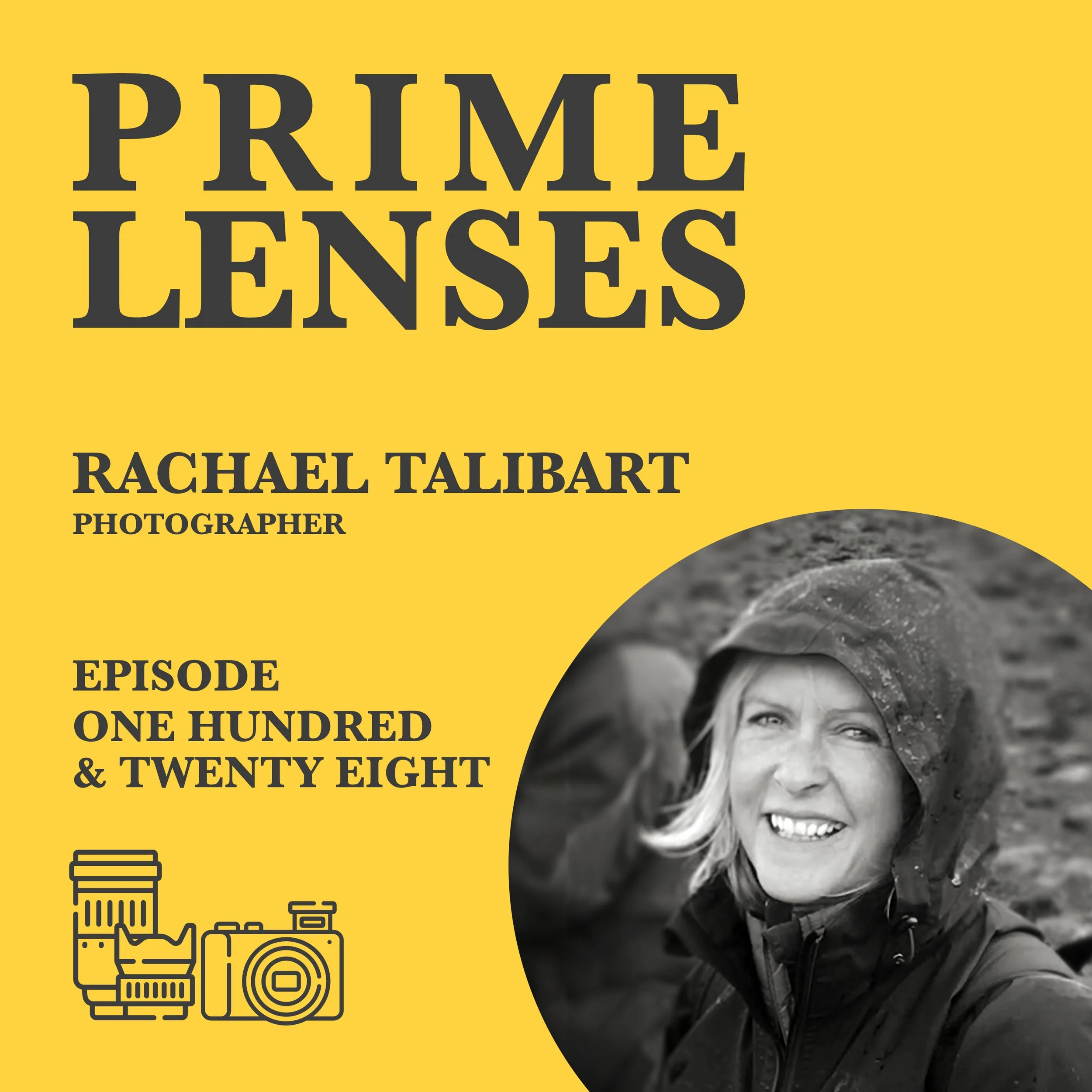


Rachael Talibart is a photographer of coast and sea based in the UK.
Support the show on Patreon.
Episode Transcript:
Episode 128: Rachael Talibart
Iain:
When I’m kind of finding folks for the show, it’s a joke that Alice, my wife, makes all the time. She’s like, aren’t you going to run out of people at some point? And your work, I think, was an example of the kind of thing I’m always looking for because it’s so different. And I’ve had landscape photographers on, I’ve had art photographers on, but I think one of the interesting things about your work is the way that you take something very dynamic and connected to the show.
And moving and turn it into these kind of amazing statuesque or landscape. You know, they look fixed in time. And so I was curious, actually, as a starting point, because I also like to find out about people’s origin stories when they’re starting.
Was that fixing in time? It’s a theme. It comes up on the show fairly often.
Was that fixing in time part of your attraction to photography over, say, painting or other forms of art?
Rachael:
Yes, very much so. First of all, thank you for inviting me on the show, Iain. And it’s really nice to meet you.
Yes, I think it probably was. I mean, like most photographers, or maybe not most, but most I know, I came to it quite gradually. But there was definitely a moment, I think, when I had an early camera, I was in my late teens, early 20s, when I did become enamored of the whole idea of just freezing a moment. And particularly in my early 20s, I did a round the world solo backpacking trip.
And I was traveling alone. And I actually like people. So it could be a little lonely at times. And actually, you know, when you see something amazing, your natural instinct as a human is to turn to your companion and say, whoa, isn’t that amazing? And I didn’t have a companion, but somehow taking a photograph of it felt it sort of ticked that box for me.
So it was this idea of capturing a moment and an emotion because it was always what prompted me to take the photo was feeling that wow or whoa or whatever it was you know in reaction to the things that I was discovering on my travels. That must have been an amazing trip. It was good fun actually yeah it was a big adventure. So where did you take in on your travels then? Well it’s not very adventurous really. I went.
Iain:
To the Antipodes mostly and just a little bit in Thailand on the way home. So it was mostly New Zealand and Australia. Yeah. Really cool. I love New Zealand. I went as similar thing. I was between going between jobs and I booked a trip and went to like did about five weeks. I did like New Zealand, saw some friends in Canada. I did a weird circuitous route. Not for as long as it sounds like. But yeah, it is kind of a cool thing to just be completely out of time.
Rachael:
Oh, it really is. And actually, New Zealand, I mean, this was in 1989. I’m imagining that it hasn’t changed that much, though. And in Auckland, I was staying with a friend, and she had a really old car. And she let me drive it, which was ever so nice of her. And then I realised that all the other cars I was seeing were really old, too. And it was like a time capsule, almost. It almost felt like you’d sort of 1989 had segued into the 1960s. And yeah, that was really.
Iain:
There’s a few places in the world I think that are still like that where when I went to New Zealand I was told like just go to this bar and someone who knows us will be there and then we’ll come and pick you up was in a kind of pre-smartphone pre-Google Maps era and I’ve had similar experiences in Ireland where it’s like go to this pub someone from the family will be there and you go well how do you know it’s like no I promise you they will and then you get there and sure enough they are and that’s just how it works out there and I was like I like that because there’s there’s so little of that now like We’re constantly connected to everything. It can be hard to put stuff down.
Rachael:
I think it’s community that we’re lacking, isn’t it? There is a real sense of community in places where you can say that. You can say, just go to the pub and there’ll be someone from the family there and they’ll give you a lift. Let’s not worry too much about the fact they’re giving you a lift from a pub. Sure, yeah.
Iain:
It was allowed. I remember years ago, Bill Hicks, the comedian, had this bit where he used to talk about when he grew up, you’d get stopped by the police and they’d be like have you been drinking and you’d go yes and go oh sorry hope I didn’t ruin your evening have a great night like they just it was a it was a different time they were just you know different rules applied I think some rules now are better than others for sure but I agree not all but but I do you touch on something interesting there with community because I think about that a lot and I’ve done stuff with the podcast I’m very lucky we’ve got lovely listeners who get in touch a lot and then we’ve tried to do stuff to bring us together as a group as well I think photography can be quite a lonely vacation in some ways. Do you find that or do you like that about it?
Rachael:
No, I’m really bad at being alone. I really am. I’m definitely not an introvert.
Yeah, so I used to, for about 10 years, I think, I used to have a photography companion, a friend, and she and I used to go away on trips together. And it was great because we, when we were on the beach or the cliff doing photography, we would scatter because we didn’t want to make the same photos, but it was someone to chat to in the, in the evening and to share the journeys with. I really, really valued that.
That no longer happens for various complicated reasons. Although I have recently earlier this year, traveled with a couple of, a couple of other friends who are into photography. And it was great to rediscover that. We just played Uno every evening. We didn’t get our phones out. We didn’t go and watch TV or gossip. We just played Uno every evening and it was so much fun. Uno’s a great game. Isn’t it? Well, I lived in London. We’re going to exchange formative year stories. It’s lovely. I lived with some French women that were friends of.
Iain:
Friends of friends were hooked on Uno and holy smokes french people playing Uno was serious they were they were very good and we rediscovered it when we’ve had kids and we play it quite a lot uh in the house and yeah it’s one of those games that is so easy to pick up and and and sort of brings people together and so it’s after tea if the kids are bickering it’s like right get out Uno get out Flip Seven Brilliant. Brilliant. Brilliant. Brilliant. Yeah. That should be the spinoff podcast about fun family card games. I like that. I think there’s an idea there. Yeah, there we go. That was a spinoff too. You’ll come back on that one. Okay. So when you rediscovered that, I guess, has that changed things? Because I imagine having that sort of contact and then not having it for a while and then rediscovering it. I was going to ask actually whether that comes back through workshops, but are you going to try and build it back into the practice then a little bit if you enjoyed it? Yeah. So I should have.
Rachael:
I’ve been doing workshops for a long time now I think 12 years now and I started to to feel that I was letting that dominate my work and I wasn’t happy because I don’t typically carry a camera when I’m leading a workshop because it’s about the clients you know they’re paying me to be there I don’t really see how they should be subsidizing my photo shoot so I typically don’t carry a camera so that’s great but it did me my to make photos were just getting smaller and smaller and smaller. So I took a six-month sabbatical from workshops for the first half of this year. Unfortunately, only lasted for three months because some unleashed dogs on a beach knocked me flying and broke my shoulder. Yes. So the sabbatical was a bit of a bust, but the first part of it included these two trips with my two friends.
And it showed me what I’d been missing. If I’d forgotten what I was missing, I realised and I really must, I’ve made a resolution to build more time in for trips like that going forward, even though I’m back to doing workshops.
Iain:
Yeah, I think it’s worth sort of talking about because a lot of people listening, like myself included, are tourists in photography is the term I use a lot, right? We’re doing it for fun.
Rachael:
And if you’re doing it for your job, it can be very easy to feel like, right, I’ve got to be doing the workshops, I’ve got to be doing it because you’re a small business owner and you’ve got to keep the lights on. But then equally, it can very quickly become a distraction. Yeah. And I think you owe it to your workshop clients to be fresh as well. So, you know, it’s quite intense, especially when you do the residential ones, you’re with the clients for a whole week. And, you know, you have to have to remain positive.
And dynamic for a whole week you’re always performing because you have all the meals together as a group you know in the evening they’re they’re relaxing but you’re not because you’re there in a professional capacity and then when you go to your room after dinner um you’re sort of planning the next day and trying to catch up on things so it’s it’s much more than a a day job you know it it swallows up your whole life while you’re doing a workshop and I actually really on the positive side I really enjoy that it’s almost like a little capsule and you kind of forget about the rest of the world for a week and there’s something really nice about that but then if you if you don’t balance those times with times when you’re there for yourself I think you risk becoming stale and ultimately a bad workshop leader so that’s how I convinced myself that I deserved a sabbatical I think completely reasonably how’s the shoulder yeah it’s not great no it’s not So I’m hoping not to have surgery, but we’ll see.
Iain:
One of the things we do touch on occasionally is kit and stuff. Are you a heavy bag of kit to be ready for everything or are you quite minimal?
Rachael:
No, I’m quite a heavy bag of kit because I love long lenses and they’re heavy. Yeah, so I’m actually facing, I’m going to Iceland with clients next month. I always spend September in Iceland and I’m actually probably not going to bring my gear at all.
So that’s quite radical to have it with me at all. But I don’t think I’ve just had physio today and she was pretty clear I shouldn’t be carrying a backpack. So I’ll just have to do as I’m told. Yeah. And just use all these people around you. Like here’s my water bowl. Here’s my thing. So yeah. Iceland annually sounds great though. We went last year. Whereabouts do you go in Iceland? Everywhere. Everywhere. I’ve got I’ve got this. Well, I’m I work with I have a friend there who’s an Icelandic guide and she’s she drives us around.
And takes us to amazing places. And honestly, she’s shown us places that I’ve never seen photographed on, you know, and shared on Instagram. And we’re all sworn to secrecy. So we’re not allowed ever to share where we’ve been, because she doesn’t want every bit of Iceland to become an Instagram spot. Yeah. No, I mean, these days, everything with everything with GPS and everything. Simon Baxter was a previous guest of the show. And I kind of, I know him a little bit.
Iain:
We used to live like one town apart and he would do the same thing. We went on a workshop once with him and he was like, you know, don’t post the location of these pictures, please. Because it’s the same everywhere.
Otherwise, everyone going to Iceland is going to get the picture of the abandoned plane on the… Yeah. That span. So they’re like, fine. Yeah, fine.
Go and get that if you want to and go and take a picture of some water shooting out the ground. But yes, you want some local knowledge for some stuff. How many years in a row have you been going to Iceland?
Rachael:
I’ve lost track. I think I will. That’s good. Yeah. I think this trip, I’ll, in terms of weeks spent in Iceland, I’ll hit 32 weeks, I think, of my life so far spent in Iceland. So yeah, I love it. If I could be Icelandic, I would, but they won’t let me. It is a weird, cool place. I have to say. Yeah, we were kind of not there long enough to get sick of the cinnamon rolls, you know? Yeah.
Yeah, there are some alternatives.
Iain:
Yeah. Yeah. We saw there was a great restaurant.
On our last day, we found a place in the center of town, which had a sign outside that said, come and experience what this person on TripAdvisor said was the worst pizza they’ve ever had. And so I went in and I ordered pizza. And the guy serving us was like, honestly, he said it works all the time.
It’s like people come in and try the pizza all the time because they’re just curious.
Rachael:
That’s really clever and that’s so Icelandic as well isn’t it.
Iain:
Yeah yeah very good like the t-shirts that say you know not just cold but also expensive.
Rachael:
Yes yeah They have a great sense of humour I’ve forgotten his name for a minute but there’s an Icelandic comedian I follow on Instagram who does all these videos of himself standing in fields with his kids and he’s just hilarious and it’s that absolute deadpan Icelandic humour. I just love it.
Iain:
Yeah. No, it was a very cool place to go. I have to go back. It’s funny because living in Scotland, there are, and I met Icelandic people when I was out there who were comparing the landscapes, and they are kind of in some places fairly similar, but theirs is just, we have, in Scotland, we have bits of the landscape that are a bit sparse and barren like that and a bit cool, but theirs is just like the entire place outside of the towns and the expanses. It’s so flat, and so it does look like a Martian or lunar landscape.
Rachael:
It’s completely amazing. It really is. And yeah, the people are fantastic.
They’ve got this wonderful can-do attitude. You know, if you throw a problem at a British person, they might sort of suck their teeth and go, oh, I don’t know. And if you throw a problem at an Icelandic person, they say, yep, we can do that. And then they figure out how to do it, which I just love. I love that. So refreshing.
Iain:
On the subject of problem solving, it’s possibly a nice segue onto, I’m interested in the problem of photographing waves and weather. Because I love photographing a good sky, but you can’t predict those either. But yours, your photos, especially the seascapes that you photograph, and I am interested also at the connection to mythology, if you want to weave that in as well. Where did that come from? Because it’s not an easy thing to photograph. Like you say, it needs long lenses, it’s weather-dependent.
It’s like you took everything that would make your job harder and went, yeah, I’m going to do that.
Rachael:
I know. Completely bonkers, right? Yeah, I love the challenge of it. But the obsession with the sea, if anyone’s heard of me before, they’ll know all of this already.
It goes back to my childhood and a lot of my childhood was spent at sea. It taught me to be afraid of the sea, actually. I’m afraid of the sea.
Probably we should all be, sensibly. It’s just like we should be afraid of, I don’t know, tarantulas. It can hurt you. But there’s something also incredibly exciting about it. It’s that little frisson of fear that goes with it is part of it, I think. And there’s nothing so invigorating as a proper stormy sea. It’s just amazing. It takes your breath away. It just makes you feel really tiny, but in like a So that’s always fascinated me. And yeah, so that you just if you want to photograph the sea, you have just and you like storms, you’ve just got to be happy with getting very wet, and very cold and very uncomfortable. And fortunately, that’s never been a problem for me. So, you know, it’s about as unglamorous as it can get. And I’m, I’m really quite cool with that.
No one’s ever accused me of being glamorous, so it works.
Iain:
I will say you have on your About page on your website, you have a photo of you and you do look like you’re out in the world and having the time of your life. Yes. Rather than, you know, it’s not the editing process that I think speaks to your soul.
Rachael:
You’re absolutely right. And, you know, you mentioned the sort of mythology and all of that. That’s the other connection in for me, because in another life, I’ve had two other lives before photography.
And in one of them, I was an English literature major and postgraduate and particularly interested in mythology and particularly if it crosses into the maritime. And I even did a whole course on the Iliad and The Odyssey. And I’ve just always found that really interesting. Those great stories, you know, and myths. Myths are how cultures, as ancient cultures explained natural phenomena. You know, there’ll be a myth to explain why this one rock has constantly got water running down it in Greece. And it’s, you know, it’s now imagined as sort of ossified form of a woman who was grieving because her children were killed by a goddess. And, you know, myths are like that. And so there’s something incredibly epic and timeless about them and a direct connection with them.
The phenomena of the natural world. And if I had to, I think you told me you’d had Joel Meyerowitz on the show. Yes. Well, he has seen my work. I’ve met him. And he said, you’re not a landscape photographer. You photograph phenomena. And he’s right, actually. Oh, yeah. That’s what makes me excited. I want to photograph phenomena. Yes. And that makes all the sense in the world. He is a walking poetry machine, that man as well.
Iain:
Yeah, this is lovely. I love Joel. I’d listen to him, read a phone book. But I think the interesting thing you’re sort of touching on there then is there is a scale to what you’re trying to capture. And I guess it’s the kind of thing that you’ve only experienced because you also lived on the water and were so close to it through your life. And like you say, you have a respect for it. So that’s taught you to capture it. Because what you capture often is powerful. Yeah. Not just beautiful.
Rachael:
Yeah, and sometimes it’s not even beautiful at all. Sometimes it is just powerful. But I think that’s… So there are techniques that I use that are kind of obvious when you say them, but I see most people are not using them. And one of them is to lie down on the beach to get as low as you possibly can, because then the wave seems bigger. But you’re basically making yourself even smaller in relation to this.
Which may be sounds kind of slightly crazy but it works and so I think I’m very happy to be totally insignificant and unimportant on that beach to make myself as small as possible and high to go hunker down low and just be overwhelmed by the storm and working with long lenses is amazing how it makes me feel so quite apart from me Allowing me to get visually closer to the wave and also the compression effect that allows it all to feel much more enveloping. But actually physically for me, if I’ve spent long enough watching a storm through a long lens, I start to feel as if I’m not an observer from the shore. I start to feel as if I’m actually in the storm, part of the storm. And that’s a really visceral feeling after a while that I kind of changed.
It’s like the flow state, you know.
Iain:
I love that. I can picture a sort of windswept Rachel now on a beach, you know, like the sort of surrounded like a solitary figure, like just working your way down there. Are you setting aside like entire days for this sort of like people like Joel, for example, walk the streets every day and have done for a long time.
And that’s kind of the street photography thing. And it’s talked about a lot. I don’t know, actually, with landscape and with the kind of work you’re doing, how often like are you presumably visiting the same?
Same sorts of places all the time to get a sense for like how different conditions work. Is it basically the same kind of practice but just with a different subject?
Rachael:
It’s similar but there are logistical limitations. I live an hour and a half from the coast so I can’t go to the beach every day. If I lived on a beach there is no question that I would go onto that beach every single day.
But I can’t do that. That’s why these trips that I have to do with friends otherwise I’ve got no one to play Uno with That’s why they’re so important because on those trips, all day, every day is spent on the beach. And that is just the best way to work without a shadow of a doubt. And I could be very happy, and I’ve done it many times, to go away for a week and literally just stay on one beach. I don’t need to be charging in my car all over the place, ticking off the famous viewpoints.
I find I am more productive and more satisfied if I’m happy to do a lot of repetition basically.
Iain:
I feel like that’s the thing I’ve learned in the last few years is that the importance of going back and doing you know going back to the same places or whatever we lived before we moved back up to Scotland we lived near Saltburn and we used to go to Saltburn Beach pretty much every weekend and that became a really satisfying place to go back to time and time again and keep photographing and keep finding different, even though you’re effectively just going back to the same place and even the same section of beach in a lot of cases. But the images I’ve got are so varied because the light’s so different, the weather is different. One time there were dolphins. Oh, wow. It was one time in about six or seven years that they were really close in feeding and the beach was full of people in the middle of winter, but they were just amazed that they could see, you know, because you don’t see pods of dolphins off of coast of the northeast very often so yeah it was a real that was a real moment but yeah so I can I can relate to some of what you’re saying there about this it’s more there’s more value in going to the thing nearby semi-regularly and are you planning a lot of this sort of stuff ahead of time like thinking about where sunlight’s coming from things or are you letting this sort of come to you quite organically because you’ve discovered photography you’ve discovered this passion are you just sort of feeling your way through it um it depends so if it’s somewhere that um I can.
Rachael:
Go to often. Then I very happy to just learn through experience. But if it is a trip where I am going somewhere for the first time, then I absolutely happy to also do a bit of research beforehand.
But I have to promise myself, even then I have to promise myself that I’ll be back. Because if I go, if I go somewhere for the first time and I’m also thinking I’ll never be here again, that really messes my head. I think I’m probably going to make pretty safe standard photos because I’m never going to go back. Whereas if I promise myself I’ll be back, I’m much happier to spend time on funny little details I’ve spotted on the beach, even though, you know, that’s a shell that might have shown up on any beach. If the light’s hitting it beautifully and I want to photograph it, I’ll do it. I won’t think, no, you’re ignoring that mighty.
Iain:
He sees that and you’ll never see it again. So reassuring myself that I’ll go back is necessary, actually. I like that. I think we could all adopt that, even if it’s not certain. You could say that to yourself just to give yourself the space because it’s so easy to get into your own head and then that just destroys any chance of making great work. Absolutely right. And I think the famous viewpoint,.
Rachael:
The big vistas I’m not saying they’re easy to do they take a lot of skill and you’ve got to get great light because otherwise your picture won’t stand out because everyone else has done it but the problem is you’ve seen them they’re in your head and you know if you’re only going to that place once there’s a very high chance you’ll end up just making those photos and they’re not very personal they’ll never be personal right and I think for me photography gets interesting when the photographer pours their soul into it, not when it’s just about the thing in front of them.
Iain:
That’s really interesting because I was going to ask, you mentioned like previous lives. I talk about it on the show of like, you know, have people had proper jobs or are they, you know, are they doing this full time and have they always been a photographer? And some people are lucky enough to have always done it. Was there a period in the middle there where your images started to feel personal to you and that was the catalyst for becoming a photographer?
Rachael:
Or did you leave academia and just always that was the direction? No so I mean my first career wasn’t academia either so I had a many years in the legal profession then I had 15 years in the legal profession and I had 15 years of academia and then then photography and there was a sort of pivotal moment which was exactly as you’ve described I was a very keen enthusiast photographer for a long long time before I went pro but I was also doing doing a master’s at that time at the end of the master’s degree I had to decide whether to do a PhD and I had fully intended on doing the PhD when I started the master’s and I had been told that my dissertation could form the basis of a thesis so I was sort of invited to do a PhD but photography was something I was enjoying more and more and more and I think there was a big turning point moment for me that I’ve talked about before where I I realized that I could make photographs that weren’t documenting what I saw. Well, they didn’t lie about what I saw. My photography has to be a moment that happened in the world. That matters to me. I think that’s photography’s great strength. So I wouldn’t want to get rid of that. But that I was capturing that moment in a way that expressed how I felt about that moment. And that sounds a bit woo-woo and a bit, you know, emotional.
But I think in the end, that’s probably what most photographers are trying to do. And I had probably never done it, not seriously, until that moment. And I looked at the picture on the back of the camera and it felt like it said more than just look at this view. So yes, that was a turning point.
Iain:
Do you have supportive, interested folks around? Like I’ve joked about on the podcast before, sometimes I show my photos to Alice and she likes a big, here’s where we were picture. And I like a sort of cropped in detail of something that spoke to me. And so there’s that kind of conflict, I would say, in a healthy way, in the things I make for our family and stuff.
But did you have supportive, creative people around you who were looking at it and going, yes, keep going? Or were you the only photography lover in your group?
Rachael:
Well, I had to pay for a mentor because actually I did lack. I still think I don’t have a community actually who could give me that sort of peer feedback. I’m very busy creating it for my clients, but I don’t think I have it myself. But at that time, I paid to be mentored by a photographer called Jonathan Critchley. And for about two years, 18 months, he was a mentor.
Was that critical voice I sent in photos. He commented positively or well, always positively, but sometimes they weren’t hits, the photos, as you’d expect. And he was honest about it. And I think that is something that we all crave and we all need to grow. Absolutely. I was talking to a friend at the weekend who were talking about taking photos and the time when you’re looking through the viewfinder and you think you press the button and you feel like you’re going to be a good person.
Iain:
I’ve got this. I’m the new brisson. This is amazing. And then you get home and look at what you made and it’s all, you know, your horizons are all a bit wonky-donky. It’s not quite. And it’s just whatever you were feeling. And that doesn’t, I shouldn’t not enjoy the feeling in the moment. I should enjoy the feeling of the doing. Sometimes it’s not always there. So I think you do need a little bit of space as well from your work over time, I find. Oh, that’s hugely important to me. Definitely. And it’s something I encourage my.
Rachael:
And I now mentor other photographers. So I’m sort of doing what Jonathan did for others. It’s something I really encourage. You know, don’t fill your card, go home, upload them immediately, start editing, because you will be disappointed in the photographs. I know this about myself. If I go off to the beach for a day, come back, upload the pictures, start looking at them, I will be crushed. And that is because being on the beach is fantastic.
It’s a really great experience I’m in my happy place Maybe I’ve found flow It’s been an amazing time And when I get back I’m still on that emotional high So I need that to fade away Before I look at the pictures Because they’ll never measure up To that sort of three-dimensional Multisensory experience That I actually had When I was on the beach Yeah, so for me What you just said is bang on You need to give your work space and then come to it.
Iain:
What I love about these conversations is that you’ve just articulated something I have felt for years, though, and never really fully understood why. Right. Like the leaving a gap felt good and I didn’t know why.
And then you’re absolutely right. It’s competing with the moment. Yeah, it’s competing with that. Yeah, you felt great all day.
And so nothing will likely you’d have to be very lucky for it to hit.
Rachael:
Oh, that’s so good. And you probably you. That’s amazing. Good. Hey, that’s fantastic. Yeah, so I’m going to tell you about William Wordsworth. So he actually gives this advice. He said that great art, when he was talking about poetry, but it applies to all art, he said is created through strong emotion, recollected in tranquility. Yes. There you are. He nailed it. Yes, he did. It turns out there was a lot of sitting around and looking at clowns.
Iain:
And it actually, yeah, he distilled it. That’s really, really good. Yes. So you mentioned earlier as well, I did know a little bit, I’d read a little bit about your legal background and then, you know, bustling into work with backpacks full of stuff after weekends away and then switching. The other thing I want to ask you about was obviously there’s a period when you switch over from film to digital. And it sounds like to some people, some people kind of switch and never go back. Or some people, it’s there’s a, they’ve never moved back.
Away from film for lots of different reasons. Do you ever wistfully feel like going back to using the I mean, digital cameras are so capable now, and the resolution is insane, and the shutter speeds are insane, which I imagine opens up opportunities for you to kind of pick between like micro moments in a way that you really never could with film. So I’m assuming that you’re digital till I die, but you know, I may uncover like a, you’ve got a secret medium format love or something.
Rachael:
Yes, so when I was a hobbyist and through all those years of doing other careers, I used film. I went digital in 2008, 2009, and I wasn’t happy about it at all because what happened was, this was before I was professional, my husband bought me a digital camera for Christmas without asking me. I think he felt this was an amazing gift and I was very polite about it, but I was secretly thinking, oh my God.
This isn’t real photography. No, I was such a film snob then. But I eventually started to use it. And the rest is history. I am fully digital now. I would say, there’s a caveat to this, but overall, I would say that it would be incredibly difficult for me to have captured my wave series of photographs called Sirens if I were a filmmaker.
Because that really does knock it back. You know, I would maybe take two or three frames per wave, not 20. And anyway, the camera I was using for sirens could only do, I think, per second, it could do eight. I mean, it’s nothing. It’s old gear, digital, but old gear. I still love it, though. So yeah, I’m not, I’m not, I don’t need 20 frames a second. In fact, I’d be horrified if I was getting 20 frames a second because it’s far too much to go through afterwards.
To find the perfect moment. But still, imagine if I was trying to change film every 36 exposures, I’d have to find a way to get off the beach and then go back. I’d probably miss the best waves. And, you know, I’ve got to, I can have two big memory cards and fill them both before I have to go and change and open anything in the camera. And just overall, digital has made that easier.
The big caveat is that people on Instagram occasionally send me amusing things and somebody sent me a photograph that was from 1920 something that was of a siren a clopotic wave waves that crash into each other and twist and make amazing shapes and with the far shatter in the 1920s so there you go if you’re really really serious I guess you can work with any gear and still get amazing photos. Will I never do film? Absolutely not. I mean, there’s a very good chance that I will dabble in film. I still have my film SLR sitting up there. It’s a bit tacky now, you know, they go a bit weird if you don’t handle them. It still works. And I might well experiment with film some more. I’m certainly interested in alternative processes.
So never say never, but for now, I’m very happy with digital.
Iain:
I think I am. I’ve been choosing more film again recently because I’m enjoying the process and the developing it myself and scanning myself and seeing what happened and just, you know, understanding image making in a different way. But I’m never putting down my digital M. It’s just I take it. I take it everywhere. I take every photo.
You know, I like using the thing so much. So I think as much as film is kind of fun.
Rachael:
Also, holy moly, it’s expensive now. I know. It’s awful. But you know what? I think there is a growing thirst, or maybe I just have clients like this. There is a growing thirst for a more analogue approach again. And you can buy these cameras where you, it’s pinhole, I think, you take the photo and then there’s little holes, you put the chemicals in, you shake it up, you develop the picture inside the camera.
I know a photographer is leading workshops where the clients do that. There’s also a toy camera that you can get from a completely evil online business that begins with an A that I will never touch. That prints, you take the picture and it prints it on receipt paper.
Yes. Yeah. There’s a thirst for this.
People want that. Yeah. So I definitely think that the whole Polaroid type approach is having a resurgence.
Iain:
I do shoot a lot of Polaroids I have them on my desk I will wave them at you now and it’s funny because it ties to moments so last week I took my eldest son to go and see the new Spider-Man movie because I grew up a big Spider-Man fan I’ve seen it too It was great.
Rachael:
I loved it.
Iain:
So good Isn’t Tom Holland brilliant? He’s brilliant. I think that was the best one yet. It’s a little bit less jokey. But it’s funny when it needs to be and it has serious heart when it needs to. I think, actually, I think it ties to what we’ve been talking about in a way because I think it had a long gestation period. And I think that’s helped because having a person I’m going to put an impression on someone I’ve never met and probably never will meet. But Tom Holland seems like a good dude.
And he seems like he doesn’t want to do it unless there’s a good reason to do it. And he’s working with proper filmmakers. He’s working with people like Christopher Nolan. He’s hanging out with people like Matt Damon. I think he knows his own mind and he knows when something’s worth doing and he knows when it isn’t. And so without spoiling Spider-Man for anyone listening who hasn’t seen it yet, but you should because it is the best one. And I did turn to my son at the end because he’s resisted Spider-Man up until this point because my love of Spider-Man is so great. I think it’s off-putting to my kids. And I grew up absolutely adoring that character.
Because I discovered it a very difficult part of my life and so he’s bonded to me on a cellular level Spider-Man and so when I turned to him at the end and said I’ve got great news for you that was fantastic but I’ve got bad news for you and that that’s the best one and so now any others he goes back and watches will not be quite as good yes it’s it’s so good it’s so well made have you seen just on a promise I’ll stop talking about Spider-Man but Into the Spider-Verse is also very very good and it’s an animated well it’s it can It’s different. It’s so different and it’s so wildly presented and it’s so unusual for something so mainstream to be presented in such an interesting way. I encourage everyone. It’s on iPlayer at the moment.
Oh, okay. If you’re in the UK and you’ve got iPlayer, all the Spider-Mans are there to watch. Yeah, it’s very good.
All right. That’s a good tip. Yeah. Actually, there’s an interesting thing there.
So film, I like to talk to photographers about kind of other art forms of influence, like film and graphic design and things like that. And to me, there felt like a traditional, a tradition based in painting alongside the tradition of kind of classical writing as well that was maybe influencing your work. Is that where some of the desire to present things in these very large landscapes as well as some of the smaller details? Is that where some of that comes from or am I just reading that in?
Rachael:
Oh, absolutely. I’m a massive movie fan. So I love the movies. And I think that’s probably the bigger influence, actually. Epic movies are a big influence. And I grew up with parents who love the movies. My mother was completely obsessed with the movies. And we watched everything. I mean, back in the day when she was a teenager, they used to have what they call continuous programs.
So they play the same movie just back to back all day. And she would sit through it all day. The one film back to back. Yeah, she was. I mean, she was the biggest movie fan ever. So I was raised loving films. And I have now passed my daughter now works in Hollywood in the movie industry. So I’ve clearly passed, passed that on to her. Yeah, epic movies. I love all movies, by the way. I don’t only watch epic movies.
But the cinematography in an epic movie is definitely a massive influence for me. And I’m always encouraging my clients. And it amazes me how few of my clients are into films. I don’t get that. But anyway, I’m always encouraging them. Like, if you want to understand lighting, go and watch The Third Man. You know, The Third Man, film noir, lighting, the use of bold beams of light across the face of a protagonist.
And hopefully the scene in the sort of culvert, if you like, the tunnel with the light and how that’s, yeah, brilliant. So composition, lighting, decisive moment, you can learn all of those things from the movies.
Iain:
Are you a kind of classic, I’m guessing you’re a lifelong lover of film, not just like a classic, so it’s like your Hitchcock’s all the way up to like Christopher Nolan’s and things like that. Christopher Nolan is amazing. His Batman trilogy. I don’t think anyone should touch Batman ever again now because it will never be as good as that. I have my complaints, I would say, about the last one. Only because I think they put so much in it. It’s just, it’s so packed with stuff. Yes. But it’s hard to kill your darlings. And I think I will give him, you know, you give great artists a pass. Because art’s not perfect. Zack Snyder gets a lot of shtick for his movies, not always being amazing.
But he did say something I once I really liked, which was that he felt the responsibility of making things was to make something that wasn’t smooth and didn’t challenge you. He was saying movies should be prickly and look interesting. And then you pick them up and they like prick your finger or something. They should be they should challenge you. And I like that. Me too. But I think that’s not just movies. That’s all art. And actually, so I mentor a group. I do these photo project groups with a colleague.
Rachael:
And we’re doing one too at the moment, running concurrently. And I create a WhatsApp where they can share their photos with their other group members. So we’re creating them a peer community as well. And in one of the groups, he shared two versions of the same photograph on Sunday, I think it was. And I said, I have a clear preference, but I’m not going to say what it is, because if I say it first, then the clients won’t be able to be honest about what they…
But I knew what would happen. That most of the group would go for the safe one. That obeyed the rules. That had one clear subject. Et cetera, et cetera. But the other one was my choice. Because it was prickly. And it just the prickly word that you used from Zach. Well, did Zack Snyder actually say prickly? Or did you? Is it your word? I know. I think that might be me. But he said something along those lines. Yeah.
I don’t want to credit him with your word you see Iain’s word prickly is perfect for it the first one was much was prickly and it was brilliant and it made me stop and and investigate whereas the second version was I could understand it instantly it was too easy it was too safe so I’m totally with you I think it applies to all art I think process is part of that too in that it’s why people.
Iain:
There’s lots of reasons people hate AI. But the thing that comes up a lot is that it feels odd that no one touched it to make it. And that people dislike that. That it can be a perfectly reasonable product. It can be absolutely fine. But it’s the fact that it wasn’t someone using a tool that generated something. It was just the fact that there’s no person in the chain somehow other than someone writing a prompt.
Or speaking something. And that just feels weird. It feels off to people.
And I think that’s the same. I’d much rather see something that’s flawed and contains quote unquote mistakes or takes a convention and subverts it. You know?
Rachael:
Yeah. And I think there are so many photographers out there who exemplify that, that they don’t mind making mistakes. In fact, it’s an important part of their style.
I often mention Ragnar Axelsson. I don’t think the mistakes are mistakes. He’s got one of his most famous photograph with the horizon is, you know, 45 degrees, the seas pouring off the edge of the world, you know, he’s got the main subject is on the left bottom corner looking out of the frame. No, it’s noisy as heck. And it is utter genius. Yeah, and, you know, you like street photography.
I’ve referenced that a few times. Street photography actually has a convention for things to be grungy and blown highlights and elbows sticking out of the frame and everything’s at a slant. You know extraneous elements in the background that are distracting and yet somehow a story is told. And I just think we I think landscape photography suffers a little bit from the ideal of perfection. And it shouldn’t be an idea. It shouldn’t be an ideal. It shouldn’t be something we look for.
And I much prefer work that doesn’t.
Iain:
I’ve been allowing myself recently to shoot just JPEGs on my camera and just let myself. It sparked a memory when you said about the blown out highlights because I’m playing with, I have an M11 and the traditional thing about a lot of my friends like the M10 series more because they preferred the sensor. The sensor had a tendency to blow out a little bit.
Same with the original Leica Q. And they like that in some of the older sensors. Now I’m here to tell you that if you use your aperture or if you manually set it correctly or if you use your aperture compensation correctly and just set it to JPEGs only on Vivid, you can do a lot of that stuff. You don’t have to go out and buy the old thing and then you get the benefit of the newer thing that might not break as often on the few modern conveniences like batteries that last a bit better and you charge it over USB. But you get a similar feel and because I’m shooting just the JPEG, I’m doing that to kind of constrain myself in everything.
A bit like we were saying earlier the job is then unload a memory card the files are 60 megapixels so they’re massive and then dealing with all this stuff it was partly motivated as well by living through a time when memory is about as expensive as it ever been so I’m looking I’m looking at my hard drives filling up and thinking I can take some load out of this yeah I could do this simpler but I like that constraint for myself and I was going to ask you about projects you’re working on.
Rachael:
And how you approach kind of putting together bodies of work like sirens for example do you have the idea or do you find do you discover the idea through experimentation the second one for sure I never get ideas in isolation the only time I get ideas is when I’m working on photography so um yeah the more time I’m out there with the camera the better chance I’ll come up with a new idea so it’s usually triggered by a photo I’ve taken so sirens I knew I wanted to photograph the sea I didn’t really know how it took me ages to figure out how it just felt like I was producing before that idea that I was making very pedestrian formulaic work you know I was making work of in this one location of stormy seas that just looked like everybody else’s work that I’d seen before it took many weeks months of going there every week and before I actually took a photo that’s said to me, ah, this is different. It wasn’t a great photo. I’ve never, you know, it’s only seen as part of the story of how I got to the work that I like. It’s not on my website. It’s not a great photo, but it was different. And it gave me the idea. So absolutely, Picasso said, I think inspiration exists, but it has to find you working.
Iain:
Yes, and I completely agree. To some extent, it’s the same when I’m making the show. You find things, you find the way you want it to sound through listening back and editing episodes. And then just like you picking up the camera and then going out again, the next conversation I have with someone is then how I then put that into practice.
Rachael:
Yeah, that makes absolute sense to me. But that is also going back and not that I want this to be about AI, because I get very climate changey about it. And you don’t want me to go there. But AI lacks that process. So, you know, that there’s no the human typing in the prompts getting that they’re not going through what the Japanese would call it the dough. I pronounced that badly. It’s the acquisition of the skill, the hard graft.
That goes into doing it yourself engenders creativity if you just type it in and the ai does that bit then there’s you’re never going to build yourself towards something truly truly meaningful.
Iain:
That’s what I think anyway my eldest is just about to start secondary he’s 12 and I was talking to him and a couple of his mates when they were over and I was like making them a sandwich or something they were talking about school work and we somehow using computers and stuff came up and I was saying about the exercise you’re given by a teacher it’s not about producing the essay it’s about you having to go through the process of thinking about it and so and so it’s learning and repetition and which is one of my favorite themes on the podcast it comes up a lot and that process of doing like you say going doing the rounds and going through it I couldn’t anything anything you do whether it’s photographs or making podcasts or whatever you can’t do it from day one as well it’s It’s not possible. There are some people who pick it up really, really fast and they start to go very, very quickly and that’s great and they can do that, but there’s still a minimum amount of time that’s required for getting up to speed on a skill or something like that. And it prompted one of my son’s friends to go, so does that mean I don’t have to do the essay if it’s not really about the essay? I was like, no, but good for thinking about it. Good for having that thought. He sounds quite clever. Yeah, so I’ve got a movie quote for you that I.
Rachael:
Here. The acquisition of skill is like field stripping a weapon. Repetition, repetition, repetition. Name the film.
Iain:
No, I was worried you were going to ask that. I feel like I know it.
Rachael:
You do, but it’s not fair. It’s Avatar.
Iain:
Yes. Yes. Unobtainium.
Rachael:
Yes. I love that film.
Iain:
Oh, it’s great. It gets, Avatar gets a real hard rap because he chose a terrible typeface for the subtitles. But I think it’s, it’s one of those ones where we’ll look back on it from, I think, in a long time hence. And, you know, it’s up there. Like it’s, they’re so popular for a reason. They speak to people. I think those stories.
Rachael:
Well, the first film I adore, I can take or leave for sequels. I’ve seen them, but I can take or leave them. But the first film’s basically Dances with Wolves in Space, right? That is what it is. And Dances with Wolves was fantastic, of course. But for us, I know I’ve got children, they’re now adults. But when the first Avatar came out, our daughter was quite little. And I can remember we went to see it at the IMAX and she couldn’t sit down. She literally couldn’t sit down. She was so excited by it.
And so I probably love the film partly because of that experience as well.
Iain:
No, we saw it at IMAX as well. And I remember it was, it blew us all the way. And then we organized a work trip to make sure we somehow, we sort of wanted people to see it. We just felt like this was a moment. It was, it was one of those cultural moments where everyone went to see it, like a Star Wars or a Lord of the Rings or.
Harry, Harry Potter. Just look at that. Yep.
Yeah. Yeah, yeah, yeah. Or, or Bond or something like that. But I think it’s, they’re rare. Like they, they’re, they’re really valuable.
And important things and they stand out and I think that there’s an important part of this it’s not just that we love films there’s a crossover like the photo book of behind the scenes photos taken on the set of Dune which was done by some members like I don’t think it was Villeneuve who took the photos but he’s got a friend who does it and there’s people on the cast who love their film photography and things like that and I think that that photo book if you’ve not seen it because you have a few behind you highly recommend okay it’s very very good It’s beautifully presented for one thing. It’s lovely cloth bound. But it also just the images are lots of black and white grainy film photos and because it’s on a film set. And actually similarly Zack Snyder who we mentioned earlier big again one of his early shots of Ben Affleck when he was Batman was taken using a monochrome on the set and just this really moody black and white photo and it just looks so cool. Excellent.
I remember I’d never seen anything like it so yeah but the Dune book’s really really good it was Martin Ellard who’s a former guest and friend of the show who recommended it to me and so I like to that one if you’re filmy oh yeah film inclined is really worth picking up it’s very good excellent I’m gonna get that yeah no do well one thing we haven’t touched on and I know I shouldn’t mention this because you can’t pick up a bag full of cameras at the moment and shouldn’t but what are you leaving behind when you go on your trip and what are you normally trucking around with.
Rachael:
Yeah, so, well, I’m, I have been dragged kicking and screaming into the mirrorless world. But I resisted for a long time. So I’ve got two Z8s. And I have got a 100 to 400. And that’s probably my most used lens 24 to 120, which is great little walk around lens and the wide angled lens. And I don’t know why I take it. Because I never use it. It’s ridiculous. I should just leave it at home except it would sulk, which, It’s not good. But I know you said to me that the core of the show was to have three important lenses. So I did actually think about that. And one of them is a prime lens, even better. Because I’m a 35 guy, you see. I’m another 35. Well, it takes me right back to origin. So the very first lens that occurred to me, I didn’t even have to think about it, was this little Sigma 50mm macro.
So back in the sort of earlier part of this century, when I was having my middle life, doing my academic stuff, and also raising a family, I was massively into photographing insects. And for many years, macro lens never left the camera. And I started off with this, which was really cheap. And at the time, I was using a camera with an APS-C sensor, so this was long enough.
And I think macro photography and the many years that I put into mastering macro absolutely informs everything I do now. There’s no better way to learn composition. And also photographing bees in flight, that’s exactly the same skills, exactly the same skills as I needed for sirens. It’s fast shutter, focus, decisive moment, you know, all of that.
So, yeah, that was my first one. And I’ve kept it, even though I have no use for it now because sentimental value. So there you go. Oh, lovely. Yeah. And then Sirens was every single photo except for the ones taken in 2023. But almost all of the photos were made with one lens. And at that time, I used Canon 5DSR. I still have two. And they live in Portugal because I have a home in Portugal, in Nazaré.
So they’re there. And I had a 70 to 200 millimeter f2.8 zoom lens. Every single one of sirens was taken with that lens, which usually surprises people because they think that the way should have been.
Should have been further away than that. But it was fine. It was safe.
And then the last one and why that’s relevant to what you asked me is the lens I should have bought When I bought my Nikon gear, I bought the 100-400, which is a great lens. But now I wish I’d got the 180-600, which is a brilliant lens. And Nikon loaned it to me twice. And I went to Antarctica in 2024, I think. It’s my second trip there. And I used only that lens for the whole trip. And it was fantastic.
And it’s incredibly cheap. And I’m not affiliated to any camera brand, by the way. So I’ve declined ambassadorships because I think it’s important that my clients know that I am genuinely giving them good advice about gear, not just because there’s money in it for me. So I have declined camera ambassadorships and all others except for photo speed. It’s less, it’s like 1,700 quid or something.
It’s sharp. It gives you such versatility. I can’t believe a lens that goes from 180 to 600 is so sharp throughout its range. The only problem is it’s really heavy. So even if I had it, I wouldn’t be able to take it to Iceland this time. But there you go. Those are my three lenses. I thought I’d better do that bit. It’s funny. When I had the idea for the show and it was like, this is the hook. And then over time,.
Iain:
They’ve become nice conversations, so I don’t like to shoehorn it in. But I did want to mention at the end, because I knew you’d done a bit of prep. So thank you, because listeners do miss it on occasion. I think you’ve got a really interesting selection as well. It’s nice to… You’re right that some of the Zooms, historically, we’ve been a bit sniffy about the performance of a Zoom lens. And it’s funny, you’re in good company, because this week, Digital Camera World published a thing about Steve McCurry talking about his 24-90, which is basically the only lens he uses now just for everything and he’s not alone on the I know a lot of the Leica folks and uh a few of them who like the sl system have gone it’s the 24 to 90s a bit because and they were all snobby about it because it’s a variable aperture right it’s 2.8 to 4.5 yeah and so they were all a little bit like oh I can’t possibly and then they see the photos it makes and they go oh wow yeah it’s yeah there’s magic on the front of your camera when you’ve got that one absolutely yeah so I mean the gear in the gear in the end isn’t why we’re.
Rachael:
In it. I mean, it’s why some people are in it, but it’s not why most photographers are in it. And, you know, I’m always being asked on Instagram, what gear do you use? And I always say, well, I’ve got DSLRs by Canon, I’ve got mirrorless by Nikon, and I’ve got APS-C by mirrorless by Fuji, and a whole range of lenses, and I could equally have taken these photographs using Sony or Olympus or Pentax.
Iain:
So, or probably not Leica, actually, because I’m not sure it does lenses long enough for me. But, yeah. For what you’re doing, you might end up with a Sigma lens on the end of it, I think, anyway, or someone else in that alliance. I’ve got a joke for you, Iain. How do you know someone uses a Hasselblad? I don’t know. They’ll tell you. That should not tickle me as much as it does. I really like that.
Oh, that’s very good. I tell you what, it’s not because often as a, as the Leica shooter in the room, quite often, I get poked fun at being like the, you know, the, the dentist camera, but no, that’s, that’s nice. I haven’t heard. I’ll get in trouble for that one. I like that. That’s staying in. I’ll get in trouble. Lots of my clients use Hasselblad. Well, it’s one of those ones, isn’t it? Where people assume they need medium format for landscapes and things. Actually, when When we moved to Scotland, Alice joked, she was like, do you need a different camera for photographing in the Highlands? Because I do photograph, you look at my Instagram, I photograph a lot of trees. It’s just what’s around me. I live in a wood. But you don’t, especially with the newer, like modern sensors, modern lenses, medium format is not even as big as medium format. I shot with that new, well, it’s not new anymore, but you know, the medium format, the Fuji. Yeah, GFX. Yeah, GFX 100 RF. Yeah, there we go.
It’s lovely. It’s really, really nice. It’s a little bit slow, but the images are beautiful and the colour’s great and it’s a great camera to use. But I don’t… It’s funny, you kind of get the number of pixels is beguiling. And you end up zooming in because it’s fun. But then when you actually settle into using it, I can’t really say hand on heart that stuff I’ve printed from it versus stuff that I’ve printed from even a 24 megapixel camera looked radically different. And I think that’s kind of speaking to what you’re saying about how it’s going to be.
Rachael:
I’ll pick up the thing that I want to take with me. Absolutely right. There’s actually Sean Tucker. So I’m actually friends with Simon Baxter and Sean Tucker. I know Simon better. And Sean Tucker sent me a link, which I probably will never find again now, but I watched it and it was a YouTube video where people had made, taken the same photograph with a 12 megapixel DSLR.
And with the GFX 100 megapixel Fuji medium format camera. And they’d taken the same picture and they’d then printed it at A1 size and they’d taken it around to industry professionals and they said, which one is from which camera? And no one could tell. You know, you do have to know when you’re being sold stuff. For me, my other pet peeve is when people look up lenses from like 10 years ago and go, oh, that’s not a good one.
Iain:
An old lens. I was like, do me a favour. Come on. Does it make nice pictures?
Rachael:
Exactly. Yeah. But I have a lot of clients who use the GFX. It is a lovely camera and it brings them joy. And in the end, that’s what matters. You use the camera, you enjoy using.
Iain:
Using the camera that speaks to you is far, far, far more important than just about anything else. Julia Coddington was on the show a little while ago. She makes photos, a lot of them very close up street photos of people, which I find she’s using a really wide lens. So she is right up in people’s faces and the photos are incredible. And she often shoots those with a Fuji X10, which is a 12 megapixel point and shoot from 15 years ago. Yeah. And they’re great, stunning images. So yeah, the gear, I don’t like to look at stuff made by my stepdad with his Leica CL instead of my M because it makes me a bit sad at how much I’ve spent on my M. It’s slightly embarrassing.
Okay. His images are great. He’s got an APS-C sensor in it. It’s really nice. It’s got the same colors. It’s got, you know, it’s smaller and lighter. I think sometimes I’m doing it wrong. No. I mean, they are beautiful in the hand, the Leica cameras. They are. That is a big part of it. Yeah, absolutely. That is a big part of it. And who needs autofocus? I don’t. There you go. Some of the time. Some of the time. This was lovely. Rachel, thank you so much. Yeah, I really, really enjoyed it.
I’m glad because I love meeting people also where there’s like obviously photography was an overlap but the love of movies thing is a wonderful overlap as well it’s really really nice I’m assuming you’ve seen The Odyssey I haven’t yet so we are well we’re at the stage in our kind of parenting where one’s 12 and one’s 8 so we’re getting to the point where we can go out more easily and do stuff but like last week for Spider-Man we had to divide where me and the eldest went to Spider-Man Alice and my youngest went to see Toy Story 5 everyone had a great time everyone’s needs were met but it was um it we’re not quite at the point where we can kind of like guilt-free and also all our family aren’t around here so yeah getting out from movie night to see The Odyssey is hard I think we’re going to end up watching it on tv rather than on a big screen which is a shame because I’d love to see that 70 millimeter print yeah um but I love to go.
Rachael:
I assume you’ve seen it yes yes um is it amazing no it’s not amazing I I thoroughly enjoyed it I could have been a very critical audience because I’ve studied The Odyssey at university right yes um but I actually really like his interpretation of it and how he has brought it to date also really great to see cinema so full that’s really nice because I think there is something we lose.
Iain:
There’s not it’s like never going to see work printed on a wall you know it’s it it’s nice to be in a room with other people and like you know we go full circle right back to you at the beginning saying about being able to turn to the person next to you yeah and say wow isn’t that something there’s we do lack that connection I think it’s it is so important if you can even just have a passing experience with someone else um Alice always makes fun of me for doing this because we’ve lived here for three years I don’t know some people around me as well as I know people I’ve had conversations with on the podcast. Making these connections too far away. But it is important. And I think we need more excuses to hang out together and discuss points of view and share in experiencing stuff. Yeah, I agree. Absolutely. For people who don’t know your work and are listening and want to go and find it, where can they find a bit more Rachel? My website, which is RachaelTalibart.com. They just have to spell it right.
Rachael:
But there’s no one else with my name in the world, apparently, so you’ll find me. And my Instagram is also at my name. So those are probably the two obvious places to go.
Iain:
Perfect. Well, there’s a link to those in the show notes so people listening can just tap on a screen.
Rachael:
Perfect.
Iain:
Brilliant. Well, thank you, Rachel. Thank you so much.
Rachael:
Thank you, Iain. It’s been fun.