
Episode 130 - Jocelyn Bain Hogg
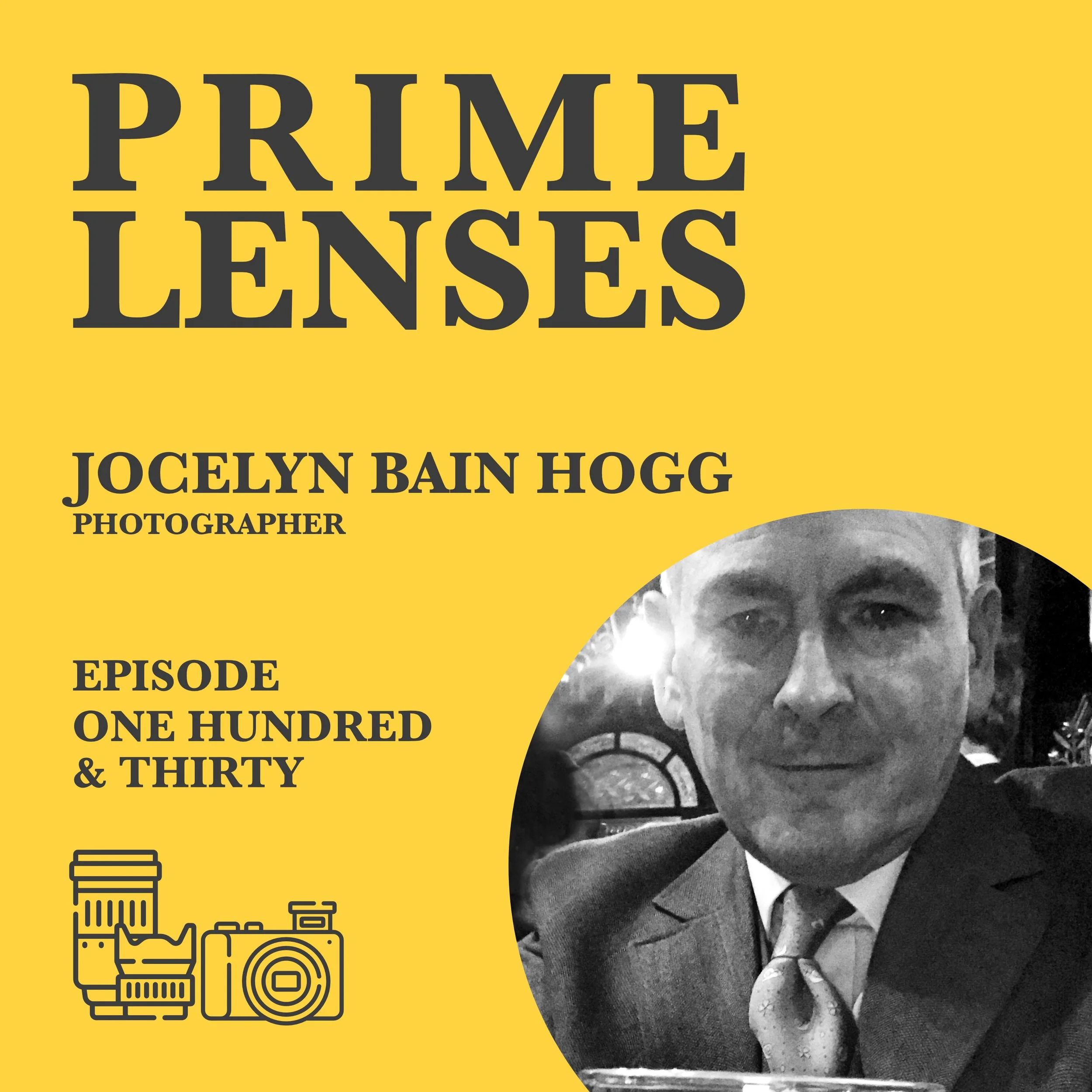


Sometimes when someone's really good at something we talk about them being a proper gangster and my guest today, Jocelyn Bain Hogg, is not only a proper gangster in a photographic sense, but spent a lot of time photographing gangsters. Starting in 1997 he spent years embedded with organised crime gangs in and around London resulting in two books one called The Family and one called The Firm. He has also documented celebrity and fashion for publications all over the world. He's a fascinating photographer speak to with tons of great stories, a perspective on the work and just as a heads up, there’s a little bit of adult language and discussion of recreational substances in this episode.
Support the show on Patreon.
Episode Transcript:
Jocelyn:
It's about them. It's not about me. It's about them. I'm not an artist. I'm a photographer. So for me, it's the subject that matters. I want to dignify and respect them. No matter who they are, they've got to speak. Whether they're a superhero or a gangster. It'll matter. "I'm not sure what I'm saying." The number one Paul Lowe and I were talking about this before he passed away sadly. Are there any right-wing photographers in our documentary? And we can only think of Lennie Rufenstein. Right. But I don't think there are because you see so much of the darker, harder, harsher side of life. It's hard to... You can't possibly, you know, compute. You generally are a lefty because you have to be. Yeah. Just because all this inequality is right in front of you all the time. Yeah. Famine, pestilence and plague. Yeah. Although I must admit, I did get a nice compliment from Philip Jones Griffiths once who said, you do sterling work on the home front. Which I've always kind of thought, yeah, that's good. That's me. Yeah. I'll do the social tropes of today's world. So crime, celebrity, rock and roll. Leave that to me. Yeah, yeah, yeah. You can do the wars. Yeah. I'm too tall anyway. So you can't necessarily blend in. No, I'm six foot four. No. I'm six foot three now. I think I've shrunk but like Martin Parr he had to be very present because he can't hide so he stands there with his flash gun Bosh! Henri Cartier-Bresson called us pickpockets I think Martin Parr and I are actually armed robbers
Iain:
so it's like a blam! Thank you so much for letting me come and chat to you it's wonderful when I stopped in at the gallery they were very excited I was coming down as well and I said I was coming to see you
Jocelyn:
I think they had a shock when I mean a load of characters did turn up from The Firm at the show every time you think you get out they reel you back in it's like you can't not
Iain:
There's a saying about that. You're most well known for The Firm and the family work, for better or worse. And it's incredible work. I've been very lucky to see it on the wall and see it printed, which is not, you know, a lot of the times your interaction with these things is in books. So seeing it in a space and being in a room with other people who've come to see it as well. And I think it's been very popular at the gallery. It seems to have done well, yeah. Not that anything's sold, then who would want one of those on the wall? I don't know. That's the interesting thing, because you spent so many years there.
Jocelyn:
And it came about through a bit of a chance encounter. Total chance, yes. Was it a very organic project? Entirely. I mean, you know, these stories happen. It's like you meet someone in a lift and they give you a commercial job that pays for your brown house. Right. Which is the story that some photographers have told in New York. In my case, my long-term partner had proposed to her. She looked at me and said, our time is done. So that was it. I was broken hearted. We'd been living together. She met someone else, gone. Yeah. And I phoned up. every magazine I could think of because I needed to get out of the house and to be busy. And in those days, this is 97, it was a much more fertile world of photography. And I was established enough to be able to get work. So I called up Elle Magazine and my friend Jenny, who was the pictorist, said, well, you might not want to do this. It's pretty crap. But, you know, we're photographing a journalist or you're going to be photographing a journalist dressed as a gangster meeting these two likely lads because of Lock, Stock and Two Smoking Barrels, which had just come out. And Lock, Stock and Two Smoking Barrels had made a huge splash, as everyone knows. So I turn up and it's Dave Courtney and Freddie Foreman, otherwise known as Brown Bread Fred. And I didn't know who they were. You know, I have no idea. I have no knowledge of crime at all apart from Robin Hood, you know. So forget it. And Zoe was like very nervous, the journalist. She split and I carried on. I didn't want to go home because broken hearted. So ended up in the St. Moritz in Soho with Freddie Foreman, drinking whiskeys and talking about fathers and sons. Because I'm adopted and I just met my birth father just before this. Right. Who was an actor. And Freddie Foreman's son, Jamie Foreman, is an actor. So we literally bonded about fathers and sons. Wow. Next thing I know, I'm home, far too many whiskeys later. And I, you know, these things happen. I picked up the phone and called my friend in Japan, Tatsuya Mizuno, who's a great journalist. And we'd been talking about doing something a bit more interesting. Because, you know, he'd come over to London and we'd do these features for Japanese airlines, and trendy Portobello and all this bollocks so I said look do you fancy coming over and doing a story on you know the british underworld oh yeah that sounds like a good idea british man yeah we could do that and he called up his friends at Japanese GQ next thing I know he's on a flight over here we've got 17 pages for gq wow so of course I call up fred again say um is it okay if I take some more pictures and bring a friend who's a japanese juz yeah all right and that's how it all started wow so Dave Courtney of course tried to take the underworld and we did this story for about three weeks this is again 97 when you could do that and I wasn't known as a kind of documentary photographer then I was mostly doing fashion but also um it was gq which wasn't what you'd expect the Sunday Times is the kind of place yeah stories like that but Japanese GQ gave us 17 pages Tatsuya went back to Japan and I stayed on so next thing I know Dave Courtney is going to for a busman's holiday with a load of villains because he's announcing his retirement and becoming a celebrity. And I went with. And that's when I met everyone. And I stayed. And I think they just got used to me. And at first, when Tatsuya and I turned up to this pub in Mile End, and it was kind of a really weird night. It was a gathering of the clans, literally, all these men in suits, black suits. And it's like, who the fuck are they? Who's that Yakuza? Who's that poor? And it's like, well, And we're talking to Freddie Foreman and Joe Pyle, who were the big bosses. So we must have been okay. And I think they kind of accepted that. And it was, I mean, the one thing about doing this kind of work is you can never dissemble. I can't, I can't, okay, I can put on a Cockney accent because I got acting blood, but I wouldn't. And I am who I am. I've got a double-barren name. I went to a boarding school. I can't hide that, nor do I intend to. I've got to be me. And I think being authentic is 90% of any good photography. So from day one, I wasn't going to pretend anything. But what I would do was go back the next time with pictures. So my bathroom darkroom, and I would print up, you know, five by sevens. As a matter of course, it's what I did anyway. So I'd learnt from David Heaston at Newport when I was a student that you do work prints are the ones that you think might be good. So you print those up to kind of build up the story, if you like. So I'd give them to the villains next time I was out. And that was good currency. And also it meant they knew what I was doing. So they could see from day one that I wasn't going to do a whitewash. And it got to a point when, you know, with Day Courtney and people would point guns at me. So I'll put the gun down. I'm not photographing you pointing a gun at me. Just don't do it. Yeah. So kind of rather foolishly emboldened of me. But it worked. And Dave said to me one day, the reason you're eardust is because we like you. Implication being, oh, if I didn't. Yes. Oh, yeah. But again, I'm not a criminologist. This was never about what they do. This isn't a sensation. It's a fine line I mean, I've walked a tight rep for 25 years now with The Firm, trying to document it as honestly as I possibly can. And trying not to be complicit. I mean, I won't photograph them doing anything illegal because apart from the fact they're not going to do it in front of me, that doesn't help. I mean, you look at those pictures and you know who these guys are. You don't have to see them. You know, they're the organised crime world. They're not the little scrotes who go robbing corner shops, you know? Yeah. So it's a, It's a curious thing. I mean, I think in a way, my first project was on my boarding school that I hated. Single parent family and art scholarship. So you can imagine how well I got on. And I photographed it. And that was another private world. So I think looking at The Firm and looking at the stuff I've done at school, it's a line. It's something I've always been interested in, in sides of society that you don't necessarily see. It isn't necessarily about crime. It's about people and who they are and what motivates them. to do what they do. And the pictures should speak. I don't want extended captions. I've had a show in France at Vise-Pourri-Mare, the big festival. And all these French journalists are like, but what do they do? Who are they? What do they do? Look at the pictures. You can see what they look at the pictures. So it's kind of been a bit of a journey. In some ways, I rue the day I ever started doing it, but at the same time, I'm rather proud of it. And I'm still here to tell the tale. Just. I'm very disappointed that you didn't put an org chart into the, you know, it sounds like that's exactly what those guys wanted. Well, the other thing was they think it's their book. So there's nothing I can do about it. And Courtney wanted to take the negatives and I wouldn't let him, I refused. Right. Because he wanted his own version of it. And that would have meant mayhem. Yeah. So the minute I said that to one of the others, it's like, he's not having that. It all got really difficult. But they do see it as their own book. Right. So the guys that turned up, they have to be the central attention. Right. They're a different breed to the rest of us, which, you know, is kind of funny. So at the launch, the exhibitions, my old school friends, my model friends and photographer friends and the phone. So it's like, okay. I've got a meeting of minds. I was going to say, yeah. So the pub afterwards was quite surreal.
Iain:
Do you think that part of, you've mentioned, cause you were adopted and single parent, single parent family and that the interest in, as you've learned more about yourself and your own origin, but your family is kind of fragmented a little bit. Do you think that makes you, I'm wondering as you speak, whether that makes you more of an observer of people in general and interests you in social dynamics and that that helped?
Jocelyn:
Wouldn't be at all surprised. I mean, I think I was badly bullied at Lansing. It was not a good place. Until I was 16 when the girls turned up and because I was brought up by four women, I got on with the girls. They were my friends. And then it changed. But I think it left me with a kind of, not so much insecurity, but a kind of fear. which I hid behind the camera for. And I would use that camera to kind of explore my own personality as much as anybody else's, but also to give me a bit of courage. Like I said, it's a passport or a key to a door, if you like, the camera. And you're talking to people with a black box where your head should be. So it's kind of surreal to do that. And over years, I was just thinking today, I mean, I'm 64 in December. That's 50 years of a camera. That's a hell of a long time. And I'm scanning my life's work at the moment. And there is a line. It's really curious. And this is something that we talk about in photography, having a voice. Each photographer has their own, which is bonkers because it's a two-dimensional thing. There is no voice, but the voice. And as I look at the stuff I shot when I was a schoolboy, age 15, 14, 16, to now, I can see it's me, which is really strange. And I don't think I'd ever really had the time because again, as a working photographer back in the day, not now, you didn't stop. I mean, when I was saying fashion, we'd sort of pile into the car, model, makeup artist, hairdresser, you know, quite a lot of spliff, I seem to remember. And we'd drive to somewhere and do some pictures. Then next weekend, we'd do exactly the same thing again, because you'd build up your portfolio that way. And, you know, you end up working with friends. And it was kind of like a process. And then it was put away. And then the next, and now I'm looking through all this stuff. I'm finally admitted to fashion for 10 years, which is kind of a leap. You know The Firm I never told anybody after The Firm because it's like, oh dear, no, can't do that. But now what the hell? So it's kind of interesting. And again, seeing the same, you know, I was growing then and getting confidence then throughout. So yeah, I think you've got a point there. And being adopted makes you singular. And I think being a photographer, not single or lonely, but singular. And I have a feeling that is what most photographers have to be if you're going to get good work. You know, you, it's, it's a self-examination. It's a selfish profession And as I said It's like We are cats We're nosy and curious And you can't hurt us So God forbid Anybody gets involved with you Because it's not easy
Iain:
Yeah The amount of photographers I speak to as well Who are like But what's over there
Jocelyn:
I want to see
Iain:
And it's like Well this is the thing We thought you might want To photograph
Jocelyn:
No no
Iain:
I want to do
Jocelyn:
It's Captain Kirk Boldly going Yes
Iain:
Which I guess is why Those people Because the people You're describing Who are the heads Of those organisations Do not sound massively Dissimilar to the people
Jocelyn:
start businesses or make things in a way exactly it's the same motivation well I think it was some of the you know the city boys who brought us into brexit are probably much worse than any gangster I've ever met so given what they did to us at least the gangsters are honest about it well that's right at least they kill you yeah yeah so you know but it must have been interesting for them to be depicted at all because is it yeah so that's also timing so um and this is luck this is where photography I mean I think it's always a bit it's alchemical so you've got this thing I remember when I was very young and I went to see this guy in the local camera shop near me. I was 14 or 15. And I had my dad's RoliFlex, which is my first and favourite camera. And I don't know how to use it. And he was explaining to me, well, 500 means a 500th of a second. And my 14-year-old brain is going, oh my God, that means there's 499 500s and I press one, oh my God. So that sort of weirdness of photography and that, you know, pressing the button at an exact moment of your is pretty strange. And that I think started the whole process off, you know, that love of the unexpected. I guess you were developing your own, using a bathroom darkroom. Funny enough, a bathroom darkroom has been the sort of recurring feature of my life. My poor mum, we had a downstairs toilet in Hove and that was my bathroom darkroom. First one. I was like cramped in there. I could only make like little six by four prints, but I learned how to print because again, it's part of the joy. And I think that's a lost craft. It's now, it's silly money. But I mean, I was printing here. I mean, for 30 years, you've just been to my bathroom. I do apologise. But you know, it's no longer a darkroom, but it's certainly got the legacy of that. And back in the day, you know, we made a living. It wasn't easy. It was never, ever easy to be a photographer. You had to really want to do it. And so my way was to process the film and charge what Metro charged to anybody who was foolish enough to commission me. Right. So that way I can make a living. And I'd make prints. And again, Metro, right, they charge 50 quid. I'll charge 50 quid. So, and that's, It's a survival mechanism, really. It's funny. I mean, I haven't printed since, God, when was it? 2011, I think, is the last time I was in the diagram. Wow. But, you know, there's no cause. I mean, when digital came along, and I miss it in a way, and that time of listening to John Peel, and printing at night, and on Radio 4, and, you know, it's private space. Yeah. Although there was a moment in here, because back in the day, you know, we wouldn't go clubbing. We didn't have any money. So we'd pile back here. So after the pub, everybody'd come back here, and we'd to sort of drink too much or smoke too much or do whatever. And I had a visitor's book. I've always had a visitor's book in this place. I've been here since 1985. And somebody put in it, I promise never to use my bathroom as a darkroom again. Sign here. I was looking at it and thinking, shit. Because you had to limbo under the enlarger. Men had to limbo. Women were okay because you'd sit down. But it was like, oh dear. The enlarger was on the toilet. And half the time I hadn't taken it down because, you know, I was working. So we'd come back after the pub. I mean, yeah. I will write the book one day. But life's, that is what photography is about. It's that sort of intensity, I think, that you really, it is vocational, there's no question. I mean, I wouldn't recommend it to, if I was lucky enough to have kids, which I don't, I'd want them to be bankers and lawyers and anything but photographers. Because it's just tough. And also you're putting your life on the line in a way. I mean, you're really there living through experiences that mostly belong to others, because your job is to reflect them.
Iain:
It's about them. I'm not an artist. I'm a photographer. So for me, it's the subject that matters. I want to dignify and respect them. No matter who they are, they've got to speak. Whether they're a supermodel or a gangster. It doesn't matter. You mentioned something you touched on there about the move to digital. I'm interested. What aspect of the making process, when I talk to people, they often have a favourite part of the process. Is it what you're doing? Now, because when we were talking before we started, it seems like you're really enjoying going through the back catalogue and finding things maybe you didn't see.
Jocelyn:
Well, exactly. And this is digital again, because back in the day, oh, God help us, we'd shoot slide. You have two cameras. One with black and white, one with colour slide. And this is the UK. When it's dark at four in the afternoon in January, and you're on 400 ASA and a prayer, and getting the exposure right was never great fun. I mean, I'm no technician. I'll say that now. You know, it's more instinct for me and feeling. So, you know, doing fashion shoots in January for spring-summer collections with models who are blue with colour slides, you know, it was a nightmare. So, digital comes along and suddenly that's gone. I remember the first time I really used it was a project on youth across Europe post-financial crisis. I was rather proud of this. It's the best thing I've done, I think, sea change. And I was the voter director of it and I commissioned 13 photographers across Europe to document European youth. Wow. Because I'd done the British part. Part of which was in Zante, the tail end of doing a club 1830s holiday brochure. I stayed for a week because I'd been asked to do this thing on British Youth. And I was in this nightclub in Zante with a digital camera. And for the first time ever, I didn't need a flash. And it's one of my favourite pictures. It's there on my portfolio on the Seventh Foundation. And it's like a Jericho. It's like this mountain of kids partying. You know, I couldn't have done that but for a digital camera. Something like a thousand days a day. I don't remember actually what it was because I never do. And a Nikon, Nikon D3900, I think it was. Nothing special. But, you know, the camera's a camera. And it was brilliant because suddenly I could do everything I needed to do without a flash. Wow. You know, because before, that decision doing The Firm, obviously black and white because big red men, bald-headed at night, not a good look. black and white. Also, I could do it myself. And my first big project, you know, I printed it in the darkroom. But also that working out how you photograph at night. So I got pretty good at using a for obvious reasons. Because I'm in London and everything's dark. So, you know, you know how to use a flash. But the ring flash was my secret weapon. And that became a trademark really for The Firm. Because again, everything's at light. But I like portraits. So for me, when you knit a story together, the portrait is a wonderful punctuation mark. And in a book, it stops. It stops you in your tracks. You look at that face and that face tells you a bit more. Then you move on. So how was I going to do that? And the ring flash, thanks to the mighty Leica R8, had a flash meter in it, which meant I could use it. I mean, all this seems redundant now, but that was how it worked. And I still have those R8s. I mean, there's a project I'm working on that I've been doing since 1997. It was my get out of gangsterdom clause on real women and real beauty, which I still use the Leica R8 for. And the ring flash. Nothing's changed. It has to be consistent. It goes to show, doesn't it? I just like hearing that there's R's still in the world. I love my favourite. Mine too. They kept going wrong though. I had this thing with Leica, bless them. Kodak sponsored my second book because they'd seen The Firm and they were wonderful. And Leica helped me out doing the second book, Idolised or Vilified, about the nature of fame. And so I bought these two spankingly new R8s back in the day when I had money and they went wrong every week. Nobby Clark, the guy at Leica, bless him. I had such a hissy fit throwing them, sending them back to Milton Keynes and the normal one would come. I mean, in the end, generation two of the R8 was perfect. Nothing went wrong. Right. But the teething troubles, holy crap. I think there was a winder that I've still got at Leica because it just never worked. So, I mean, bless them, Leica are wonderful cameras and I've used them all my life. But they do, they did have teething problems in the early days. You know, electronics is not Leica's photo. They're mechanical, beautiful beasts. And the R6, the M6, I mean, it's just, it's unspeakable. I know some photographers who don't like it. I was thinking I'm much more of a reflex photographer. I like to look through the lens. That's just who I am. But I was scanning on something. Okay, M6, M6, M6, M6. Because somehow you forget you're using it. It's just there. If I have a famous picture, it's a man in a bubble from Glastonbury. The Guardian asked me which my favourite picture was last year. It's this one. And I remember, again, being stoned, lying on the floor. 1992, Glastonbury. And they're blowing, it's for the Face magazine, and they're blowing bubbles through this big Viyella, I don't know, contraption with a washing up bowl. And I saw this bubble being blown by this naked man. And a bloke in the background is walking through the bubble. And, you know, it's a Leica. I can see it through the viewfinder. Press the shutter, bop. But I think I got it. And I did. So naked man with the Viyella dripping thing, covering his willy perfectly. I've seen the picture. And the bubble, you know, that's the Leica. And the 35mm F2 Summicron, which soon after got nicked. Oh, no. Yeah, that was my favourite camera and my favourite lens. And I stupidly got, I don't know, money's always been tight being a photographer. So I think I got the Contax f/2, Zeiss f/2, which is nice. But, you know, that Summicron was something else. Oh, well. Yeah. Easy come, easy go. A friend of mine, Ali,
Iain:
the show a couple of times while she's a photographer talks about things being very Zeiss-y because my favourite is that one the F2-8 Zeiss 35 because it's it's sort of very Zeiss especially in black and white very Zeiss sharp in the middle but the edge is a very dream it's sort of antique bokeh. Well this is like that again recently I did my last book was on the local pub Vince Powell's wonderful character around here he slightly illegally started the biggest and best pub we've ever had.
Jocelyn:
I had in Label Grove, the KPH. And it was all life. It's like, one of the reasons I love London so much is it's all life. You don't give a shit what colour someone is or what race they are, religion. Everyone rubs along. And the pub is the temple. So Vince started the KPH and it was a music pub and it was wonderful. Great parts of Harvey's too. Anyway, I digress. So I kind of went in there. Vince asked me if I'd do some pictures because it was being closed. The developer wanted to turn it into a luxury apartment and, you know, as ever. And so I did a kind of little book project, which the Irish Tourist Board of all things sponsored. And we raised money to save the pub. It failed. The pub went. But I ended up photographing for a year the life of a local boozer, which, again, fits my canon perfectly. So if I've done, you know, crime, celebrity culture, rock and roll, that was booze. Yeah. One of our social mores yet again. And I had a like a, I'm not very good with the brand names. I think it was an MP40, was it? One of the early digital ones? Oh, the 2014. 2016. Yeah, yeah. Yeah, 2016. And of course it's dark. And I had an Octolux, much to my amazement. I don't know where I got it from, but I had one. And I couldn't focus it because it didn't have focus peaking. So by then I'd learned that the digital thing for me is the dark. If I can work in the dark, that's what I can't do with film. So that's what I love digital for. So in the end, sorry Laika, I sold the camera and the lens and got a Sony A7 7 and that's when the Noxilux came into its own because the focus peaking, boring camera, no personality whatsoever and I don't understand it. It's always on auto because I really don't understand it, you know, but the focus peaking meant that everything's sharp. Yes. And that Noxilux, it was the early one. I mean, I had it for years and in the end it went and I got a 7 Artisan Chinese copy which is like those Zeiss lenses and it's gorgeous. It's actually better, sorry Leica, better than the Noxilux. I mean, what a joy. Yeah. And actually, that's the camera. If I do anything these days, because I'm pretty crap now with my health, it's with the a7 and the little seven artisans F150.
Iain:
Oh, lovely.
Jocelyn:
Because it looks so gorgeous. It's got a feel. And it's not even that you think that. I mean, if I have favorite lenses, the first one is obviously the roller flex. Yeah. My dad's camera, the 2.8 F, which I inherited when he, you know, I didn't know him. He died when he was a baby, my adopted dad. So that camera was the thing I used at school. And I still use it. And it's not often I look at the lens and go, wow, that's great. Because you don't. I'm a photographer. But actually, it's interesting scanning. So when I'm scanning negatives, which I've got an Epson scanner out there, my feeling is that when I was printing in the darkroom, again, being a photographer, never had any money, my enlarging lens was, it was okay. It wasn't bad. I think it was a Nikon. But it wasn't, you know, it certainly wasn't one of those rodent stock 500 quid lenses. And the prints up to 1216 look beautiful. So my feeling is the same with the scan. So if I'm going to use an Epson, I'll scan the best I can. And if anybody wants to pay me a small fortune, fine, take the negative away and do a Limicon. But actually, for general purposes, it's perfect. And that's interesting because the one on the wall is from the Epson, and that is the Roliflex. And the quality of just the softness of the, I don't know what it is. It's kind of like a creaminess, but also tonally amazing. And the Roliflex, Seamus Murphy and I were talking about, the other day, which we never do. We're photographers, we never talk about cameras. But he's got a RinoFlex as well, and we're just waxing lyrical about its vibe. And again, there's no alternative, there's no digital version. It has to be film. But that 2.8, oh my God, it's extraordinary. And the 500th of a second. So there you go, favourite lenses. I think you're speaking to something that's important, which is that the gear never matters, and it shouldn't be the deciding factor.
Iain:
However, there is nothing wrong with finding joy in the thing that you're using. I used to do a lot. Before I got my M, I basically lived with a GR3 Ricoh. I took it everywhere. Incredible camera. I loved it. And what I really loved was that... The film version was even better. I used to use that all the time. Yeah. Well, 28. Because you can just take it everywhere. You can do it. It's practically silent shutter. But the thing that was also a little added bonus for me with the GR was if you set that thing to about 1200 ISO, it has a noise to it. that is the most pleasing digital noise I've ever seen. And especially in black and white, it's just lovely. Yeah, it's really nice. I have photos of my boys when they were very little, especially during the pandemic. I would wear it across my body just around the house all the time and get these lovely little close-up pictures and slice of life type stuff. And there is just, it's more meaningful, obviously, that the boys are in it and there's like family life and whatever. But there is this nice added little extra this texture that you can enjoy that maybe no one else would even notice.
Jocelyn:
Well, this is the thing. I mean, I remember again, I think my career has been defined by bouts of poverty, you know, because back during The Family, the second book of villains, the film became more expensive and Jessup's was the best place to go to get it back in 2007 to 2011 when that book came out. And I remember using Jessup's own black and white film because I just couldn't afford Tri-X at the time.
Iain:
Yeah.
Jocelyn:
It was a week of poverty, you know, as often happened. And I processed it myself. And the grain was like golf balls, but it had a real quality to it. It looked good. It goes to show. It's never the kind of, you know, you use what you can. Yes. And okay, I've had moments when I have money and I've been able to buy Noxilux. And then there's been moments of absolute, you know, oh God, how am I going to get through this month? And that is photographers. That's who we are, in this country anyway. I defy anyone to say any difference. I mean, my mentor, the late, very great Christy Berkins, you know,
Iain:
I think Magnum owed him, I don't know how much money, but a huge amount of money from all the assignments that he'd done and never got. So Chris was always in a precarious state. So that made me feel a little bit better. Chris isn't the same, but it's me, that's all right. Yeah. Who else has kind of, you know, supported and influenced you, would you say, like the biggest? Because you've got a lot of them who are surrounded by photo books, which is wonderful. Like Bruce Gilden's in the background, a load of Magnum staff. I know Bruce quite well. Yeah. Oh dear, yes. He did a gangster shoot with the villains I knew. French Faux called me up saying, would you help?
Jocelyn:
Bruce. Wow. To do a shoot. Because I didn't know who I was. And I thought, well, okay, I'm interested to meet the guy. He's kind of curious. And we spent two days together, Bruce doing London gangsters in French fashion. Huh. Poor Bruce. And, you know, he's very intense. If you've not met Bruce, he's, yeah, he's intense. So a full day of working these guys who are not models really hard. And I had one I'm saying on my sofa, Bernie from the Valleys, who I will say is a friend. And it's seven o'clock at night and Bernie's hungry. He's going to feed me. It's like, whoa, okay. And I sort of tentatively said to Bruce, look, Bruce, I'm sorry, but we're going to have to go because these guys are getting hungry. Fuck off, shut up, don't stop interrupting me. I yelled at him. And of course that was it. To a man, they all stood up and left. Next day, only three of the gangsters turned up because, you know, Bruce, despite the fact he's from Brooklyn, he's not, he doesn't understand Londoners. He tried to, but he didn't. We've been great friends as a result of this actually. But there's Bruce kind of directing these villains. I ended up modelling because there's already two of us in the morning so I'm in one of his shots lying on the floor being stood on by Bernie. And then I'm very naughty of me. I took him to the roughest pub in Labgrove and I left him there. And I sent Dave Courtney to pick him up. Courtney, all the clothes got nicked and Bruce was left stranded I think in Epping Forest. That's a little photography tale to kind of titillate you there. But no, Bruce, yeah, he's been a great support, actually, over the years. And we're very different. We're nothing like each other. But we get on. I think that's the commonality of some photographers. But I mean, ones I respect. I mean, funny enough, I'm lucky to be in Seven. I think we like each other, which is more than goodness. Yeah, for most agencies. But I mean, I speak to Maggie Stieber quite a bit in Miami, and she's become a great friend. Wonderful. photographer you know she defined haiti way back when I mean what a great photographer and a lovely person so gary knight as well you know it's just extraordinary that film he made on the stringer you know lots of attacks on that one but what integrity you know this is something people forget seven at the time and this is 25 years ago so when I did The Firm I was at visa bully mars showing that and seven started exactly the same time right so I kind of knew them all chris anderson long greenfield jim nachtweiler that, you know, these are some of the greats, no question. And when Gary started the Seven Network, I think it was 2007, he asked me if I'd join. And suddenly it was like Seamus Murphy, myself, Stefano DiLuigi, another great friend, you know, and Maciej Nabdalek in Poland. We're all equals. There's no sense of anyone being better than the other. There's no sort of gender nonsense. We just respect each other and get on. And I think that makes me feel good. That's comfortable. And I'm so glad I didn't join another Royal The Famous agency. It wouldn't have me anyway. You know, Groucho Marx syndrome. Because I think I would have just had a horrible time. Yeah. But now I'm doing stuff with Seven later today. I'm doing a podcast about The Firm with Lou Proud from the gallery. And Seven's not so much an agency and that's a foundation. But I'm really proud of the way it's gone. I'm proud to be part of something that actually seems to matter. Well, we are looking at getting young photographers to reflect what they see in this world now. Exactly as I tried to do when I was young. And I think if we don't do that, then we're failing. So as an older photographer now, that's what I keep telling young photographers, get out there and photograph it. Don't photograph your bedroom, go and photograph a food bag. Look at the state of the nation. It's not brain surgery, but also this idea that how did you do The Firm? Just talk to people. It's your personality. It's who you are. And don't dissemble, don't lie. And generally speaking, people quite like being photographed. Not always. And yes, there will be that who are you? What are you working for? I don't want to go on the internet thing. But generally speaking, people haven't changed that much. I think Bill Brown, who's a friend of the show, talks about photography being kind of the last art form where you had to be there as well. And I think that kind of like... That's a challenge for young photographers because, I mean, I remember my last thing I did was at the LCC. I headed a course, Documentary Photography and Photojournalism, undergraduates. And I can guarantee you I would cull the course by 50 on the first day, when I'd send them out to photograph a stranger on the streets working, half of them didn't come back because they were too scared. Which is kind of sad, but maybe it's a generational thing. Or maybe I was just doing what was done to me. First thing, David Herr made us do that at Newport. And my first day, some bloke screamed at me, you're a have, I'm a have not, fuck off. I was 18 and this lanky, stupid piss from public school. So I know how they feel. But somehow that was, I had the camera, I was hiding behind it. So I was okay. Words don't hurt me. So, but it is a different time now, I think. But if ever there was a need for photojournalism and documentary, it is now. I mean, God almighty, if I hear any more nonsense about fake news or AI. Come on, prove the point that it is real news and it's not AI. Get on with it. And find a way to get the work seen. I mean, this is not new. When I was growing up, it wasn't, okay, we had the Independent in the 80s. and the correspondent, but they were all short-lived and it was very hard to get work out there. It generally wasn't around. So it's not new. It's not different. The difference is getting paid. Do weddings. Get paid for that and use the money for your own point of view. That's how we did it.
Iain:
I had a guest recently, Irene Yee, who talked about she does climbing photography and images are amazing. Yeah, yeah. And so again, consequently finding the work, getting the work, it's competitive, getting paid for it is hard. And she has a job she does basically during the week. And actually what that's helped her do, and it's the power of these kinds of conversations, is that it's not like a step down or admitting defeat to take on something else. It's I'm doing this. And it actually gives her the headspace that then when she's doing something else, that she can do a bit more easily. That's when the ideas come. It's like, you know, when you're driving. And then she can apply that to the project at the weekend or whatever. Absolutely right. I think, again, I mean,
Jocelyn:
Not many people know this, but Elliot Erwitt, the great Elliot, made his money from being America's leading glass photographer. Pilkington Glass. He was a commercial photographer. And his joy was the stuff we know. But by and large, he made a very good living and bought a brownstone, not from selling prints of dogs jumping in the air, but of doing glass the best way anyone could. So, proves the point, doesn't it? And I love that. It's a great story because that's true. And why not? I've done commercial work. I'd rather do advertising. I won't get paid by people I don't like and take money from people I do like. Hell. But if it means I can kind of buy a new lens or, you know, get the one out of hock the way it does it, I'll do it. Yeah. It's better off in your pocket. Well, quite. But I think that's the other thing. I've done seven books, all of which are things that I've been interested in. Yeah. And that's, you know, that's kind of unusual for my generation. There aren't many, Seamus and I probably are the two, have always followed our own paths. And I think that's important. because this is how you get the point across. It's difficult because let's face it, when someone discovers you on Instagram, you're swimming with the fishes. I live in hope that it's not over yet. Thank you. Get me out of there. But it needs to be seen. I think we need to show how the world is to a new generation who don't know. And prove the point that photography isn't too scary. Well, maybe a bit scary. But it is an important medium to show the world how the world is. Especially now with all these Orifying controls on our freedom of speech. Yeah. You know, I mean, look at Trump today. I mean, he sacked what was the editor of Stars and Stripe, the journalist and the publisher for demurring and actually daring to say what was really happening. Yeah. And this is something that's becoming more and more prevalent. And I think we have to worry and get on with it and do stuff. But also, I am optimistic in the sense that it's also never been easier to publish. Absolutely right. Right. And get something out in the world.
Iain:
Irrespective then of whether people ignore it or look the other way because it's uncomfortable which we see a lot of but that's the human condition. That's always been the case. I mean photography is curious isn't it? I mean Henri Cartier-Bresson said we were pickpockets. I think we're armed robbers. You know because it's not a nice thing to do and this is interesting in our climate in the post-COVID world especially with a new generation who don't like to offend. Yes. I've noticed I listen to a lot of music and it's a new thing. When I was growing up I was inspired in my teenage
Jocelyn:
I had my sharp radio cassette recorder that scurried through the school corridors in my dressing gown, hiding in the shadows, to the school darkroom where I'd listen to John Peel or put a cassette on as I printed, or tried to print. I wasn't very good at that. But I listened to, I think it was Van de Graaff Generator and Peter Hamill and Jethro Tull, Iain Anderson. And I think it was NME who called Peter Hamill a fly on the windshield of rock. Okay. But Hamill was, and both of them actually, Tull and Van de Graaff, were completely, They did something nobody else did. And then it got better because along comes XTC, Magazine, The Associates, all these great bands that suddenly were doing something nobody else was doing. And that was inspiration. I think that's what started me off. But if they can do it, why can't I? We live in a world now where I noticed, I mean, Phoebe Bridges has just come out with an album finally after three years. And you realize how original she is. But how many soundalikes there are? It's like, why does everyone want to sound like her when they could do their own thing?
Iain:
They do. They want to be Phoebe Bridges. And the great Taylor Swift. Endless admiration for her. Because what a great woman. But again, why does someone want to sound like her when they can do their own thing? And I think photography is like that. You want to find your own voice. And that's important because that's the message that you put out there. As honestly as you possibly can. You mentioned earlier actually seeing your own voice in those earlier pieces. Weird, isn't it? It's funny, isn't it? Can you describe what you think?
Jocelyn:
your approach is? Yeah, I think it's about energy and about feeling. E. Cummings, great poet, said, since feeling is first, he who pays attention to the syntax of things will never wholly kiss you, never be a fool while spring is in the world. And I've always thought that's kind of a good tenet for photography, because you've got to feel it. Now, I work on energy. That's just me. And you, as I say, you don't judge the book by its cover. You are there responding to who you are photographing. But it's a feeling. and I can't explain it. It's a sort of, I don't know what it is, alchemy, something. Yeah. Psychic thing, I don't know. But it's that instinct. And I had it when I was very young. Wasn't trained in it. Went to Newport and all the bad habits were knocked out of me and I went back to them. Thank you very much, David. So the bad habits have been my saving grace, I think. And breaking the rules, you know, because that's what you do. The photographers are not supposed to follow rules. You have a template, you have an idea of how you're going to put things together, but then you break it. And that's what makes you, gives you your voice. I can't explain it. I mean, I'll send you the PDF of my friend, the art director who did The Firm. Bless him. He said, get a portfolio. You haven't got one. Get it together. Because, you know, I don't give a shit. I just do the work. So he put all my projects together in a PDF, which is quite alarming. So all the stuff from school right the way through to the pub. So, oh my God, no fashion, but everything else but. And that's the other thing, you know, we were busy. You just worked So I was saying this before we recorded you know the fashion stuff I'm now scanning at the moment Off we'd go you know every weekend model, makeup artist stylist get in the car few spliffs off we'd go to a location shoot pictures come back do the same thing again next week Hundreds of pictures that I don't remember that I'm finding It's like whoa did I do that? Funny enough I wrote to one of the models Angie she's there on the wall in New York and she was my favourite model back then and I've never seen the wrong today and kind of dank heat where kids would literally get a spanner, lap off the lever from the fire hydrant and suddenly you were wet. Angie got picked up by these two huge Latino bodybuilders and chucks in the fire hydrant and you know we lost touch and it's hard to believe that and I was scanning that the other day for this workshop I was doing about how you do a street story because it occurred to me I've done one okay years ago but I've done one so I scan them all and there she is That's the beauty of photography. So Angie and all her incredible beauty and glory, there she is. From 1990, just shining from the pictures. And it's rather wonderful. So I found her and I've just reached out to her. So I'm hoping she's going to get back to me. I'd love to keep in touch. She's a therapist now. So interesting how these people's lives change. But we're great friends. You know, life gets in the way, doesn't it? And then you move on and something else happens, something else happens. That's the other thing about photography is making friends. And I'm lucky to have kept quite a few of mine from those days when we bonded usually over horrible frocks yeah dear the frills it's coming back now so I'm hoping to one day I can get a show of the fashion stuff because it's quite strange but that's the other thing it doesn't matter whether it's gangsters or the nature of fame I mean zelda cheetle the amazing zelda who's a great curator um in 2022 did a portfolio of black and white my best of black and whites which was at the Leica gallery and she put some of the fashion in with a documentary
Iain:
And it's definitely me. You know it's my style. It's kind of weird. I like that. I also like what you're touching on there about my mate Dan talks about this. When civilians, when we have jobs in the normal, in the real world, in offices, you have those people you've worked with that you stay in touch with. And I think what's nice about and powerful and useful about these conversations is you realise that it's kind of the same. Always. Whether you work for yourself, whether you go into an office. It's the network. and the connections, isn't it? And it's how you, because that supports you, because there's many good late nights you'll have looking at work when you're feeling really good about stuff. You have many long dark nights of the soul when it doesn't feel good. So much so, yeah. I mean, that's the other thing. I think as photographers, we, it's not so much, and this is going to sound really strange, it's not really the pictures. It's the being there. That's what I remember. I'm like, ooh, did I do that? Scandlies and eggs and slides.
Jocelyn:
Thank God New York was sunny. Especially if your year was a 35 on the top. I know, a 35 F2. That's definitely a favourite lens. Sadly, long gone. Somebody nicked it. Backstage was a fashion show. A couple of years later, Bubble Man was the last picture I took with it. And then I put it down. My girlfriend was actually in this fashion show. And somebody just walked off with it. What can you do? Too pocketable, those Leica lenses. That's the problem. Too small. M6 and a 35mm F2. I think I probably never would have bought another one because it was a 35mm F2. It was just such a favourite toy. And two of my favourite pictures, Bubble Man and Angie on the wall there in the fire hydrant. Yeah, amazing. She had the greatest laugh. I mean, she came over here for a casting and she sort of, this is the Gina Frittini, who's a lovely designer, whose frocks were just frilly. Sarah Ferguson and Princess Diana championed them back in 1986. And Gina and I got on, so she got me to do the pictures. And there's Angie saying, oh, my portfolio was blown away in the hurricane. and in Jamaica in a broad Jamaican accent and that was it she couldn't stop laughing I couldn't stop laughing and we were friends for life and I booked her for the next shoot you know Gina got a bit of a shock but but um okay we'll go with it yeah bless her so the racism that was around then is coming back sadly you know yeah I'm next race so my dad was Maori so believe me I'm I know I think work's a good thing yeah yeah it's it's a bizarre place we find ourselves in now because I think
Iain:
growing up in the 90s and so I felt optimistic. I grew up on a diet of things can only get better, a new government coming in, a steady diet of Star Trek in the media, which is like imagining a future where humans haven't destroyed themselves and therefore we can do so. And so to then to be now and to be sort of facing a lot of the challenges which I felt like we'd overcome. Three old white men destroying the world. Well, yeah. How do you sort of slot in photography now and do you feel optimistic about the future?
Jocelyn:
photography and the power it can have? It's a very good question. I think, let's be realistic. I mean, the money side of it is, and this is why I've been talking a lot about my struggles over the years. I mean, it's never been easy, but now if you're going to do this, how do you do it and get the work out? A, work that's valid, that makes a political and social point, which is the undercurrent of everything I've done. There's always a kind of politics to it. There's always, you know, going to a boarding school, maybe a lifelong socialist, for Christ's sake. You know, the headmaster said, been trained to be managers of men and my best mate and I looked at each other and went straight to the pub. It's been like that ever since. But this idea that you need to make points and show things as they are is crucial and it is going. And I think it's going because university education is changing. I know because I was in it. And they're more interested in bums on seats than teaching photography because anyone can get a degree. They want, I mean, my course, I think it started out with 25 students, which was was too many. And I'd cull them on the first day. Then the dean left and got a new one. 60 people. Now you can't physically teach 60 people to be photographers. Half of them didn't want to be photographers anyway. They were just there to get a degree. And that is a crisis because the education system has changed. I don't think you can really teach photography properly. Unless you do it the way David did as a kind of vocational course. But the education is difficult. I mean, when I showed my stuff just before I fell ill, The Firm to the whole photography cohort at the LCC. About half the students walked out. And I'm like, what are they doing? Why are they walking out? One of mine said, well, you know, they don't like that picture of the girl, you know, flinching while Mickey Gult is pointing to machine guns in her head. Yeah. Because they think it supports violence against women. And so it's actually the opposite. It's saying, don't do this. It's a sort of cautionary tale. This is real life. And it's not, I'm not supporting it. This is documentary. But that understanding has changed. I was really shocked. Because, you know, I'm the least sort of sexist person I've ever met. Four women brought me up, for Christ's sake. But, you know, this idea that someone can misinterpret documentary and think that it's supportive of something as vile as that is beyond me. But that is what's happening. I think that's got to change. When it does, and it will, because people are people. I mean, photography, you know, Kodak said back in 1898, I think it was, you know, You press the button, we do the rest. What's changed? Now you press the button and do it yourself, but everything is at your fingertips. This is amazing. And funny enough, Jez, the designer who did The Firm and I were talking 25 years ago, about the only way photography is going to change is when your eyes become lenses. Look what they've invented. Yeah. I mean, hang on. It's not going away. It's still, one of the things I loved about photography then and still do, is it's the most democratic, dare I say socialist art form there is anyone can do it okay varying degrees of being good and being shit but anyone can do it and that's a wonderful thing and as you say there's more publishing out there than ever before so get it out there um I hope you know again back to the LCC but Gary Knight my my friend and the seven great photographer he did the external assessing after I'd left and was in shock that not one student on the documentary photography and photojournalism course undergraduates in had done anything that wasn't about their bedrooms or their personal lives. Nothing about food banks or about the state of the nation or about Brexit or anything that's a real issue. Funny enough, a young Norwegian photographer did the book on Brexit, not a Brit. I mean, come on. This is stuff that matters. And it's stuff that matters to a next generation. You know, I marched, well, mind you, I'm a 70s, 80s kid, so we had CND. Nothing's changed.
Iain:
We were still paranoid about the bomb. I mean, everything that the girl wrote a song about, I'm not going to have babies because the world's going to blow up. They're still going. So, you know, what the hell? Yeah. No, it is funny how if you're a student of history, you do see the common themes of people and the way that they, you know, it goes back as far as Seneca. And, you know, we see the same themes countlessly of kind of greed. History has a way of repeating itself. It has to because nobody listens. Yes. Quite Adrian Mitchell. Yeah. But I mean, that's It's true, isn't it? And here we are again, looking at 1930s. Yeah. I mean, the idea that, you know, my grandfather, my father, all my, whether it's blood or birth, you know, they all fought in World War II against the Nazis. Yeah. You know, that's, they'd be rolling in their graves right now thinking what we're doing. Yeah, I did saw something on social media, it made me laugh, which was someone said, they said, well, you know, what was an opinion that was popular when you were a kid that wished would come back and someone would put underneath that Nazis are bad? Yeah, thank you. Just a little bit. I thought we'd established that one. But it's funny. My dad was much older. He was born in 1920. He was 60 when I was born. And he would, I remember, because he was in the Air Force during World War II, navigator and stuff. And so he would always... Well, it's entirely possible. But he would always, I remember vividly, my parents separated, but we'd be in his car and we'd drive and be away for a weekend and something would come on Radio 4 or something like that. And he would make sure that we sat in the car and listened to the end of the documentary about it because he was like, this can never happen again. And he'd been to Belsen and he'd seen shortly after the break. He wasn't, you know, the first wave, but we're talking weeks and he'd seen what happened. And again, it's like you were saying about, you know, we see evidence in the world online and people can publish very, very easily. But that also that traceability is a problem, isn't it? Well, again, a shocking thought that, I mean, George Roger, one of my favourite photographers of all time, one of my heroes, was the first person to Bergen-Belsen.
Jocelyn:
And he famously said, I had to stop because I was composing pictures according to the shape of the dead.
Iain:
Oh, yeah.
Jocelyn:
And thank God he did because we saw what the Nazis had done. And now, of course, people are saying that's not true. It's all fake news. I mean, bugger off. Yeah, yeah. The other one, Margaret Book-White. I think it was Buchenwald, wasn't it? But again, same thing. And those photographers were there with the first wave liberating these poor people. It beggars belief. And here we are again. And photography was instrumental in shaping the truth of what had happened in people's minds. And that's what I want to see come back. Not some nonsense about, it's scary. It's fake news. No, it's not fake news. I mean, Trump, when he came into power in 2016, first thing he did was point to the press call. You're not filming my celebration. You're all fake news. Of course, they had done. News is
Iain:
news and move on you know yeah but it didn't matter the damage was done yeah and here we are yeah you know I just hope that there are young photographers who can listen to this and get out there and do something positive show me a food bank I'd love to you know I'd love to see what it looks like yeah so you think I mean when you were finding projects yeah it sounds like all of it was coming you start to establish your network you're working with the news and I mean my first project was actually not The Firm it was idols and believers which became my second book on the nature of fame ah right
Jocelyn:
And I was standing in the mall. This is just around about the same time. I think scene magazine gave me another break. So around about the same time, Sarah left me. And this time it was standing in the mall waiting for Princess Diana's funeral cortege to go by. 1997. That was my year. And I was there with a new assistant and a hip flask of rather nice glenfinish. Anyway, as I'm walking, watching people, I'm thinking, these people think they know this woman. They actually believe that they know Diana. And it was really, it was a really moving moment. Because when the cortege came past, silence, all you heard, and this is the mouth, and it was packed, was the clip-clop of the horse's hooves, which of course you can't photograph. But that struck me that this is kind of an idea about the nature of fame. Not fame, because that's boring, but the nature of fame. What does it actually mean to be a fan and to be famous? I think I said my father, my birth father, I'd only just met him, and he was an actor. So he was in that when he'd opened up Burns in front of Bern's. So I'm a dance man. So that was the sort of first thing. And that's what I started doing. And that's a very different project to The Firm. So I will be doing, I remember going to see Bern in the Valleys of Wales for The Firm. And his kids were in a little kind of beauty pageant down the road. So I went and photographed that. And the Welsh heaps are the world's strongest man in Aberdeer, which again, tied in with Idle's Believers. So all of those things. I mean, again, for me, it was never doing stuff that anybody else was doing. back to that thing. I remember when I did The Firm and explained to this publisher as I was seeing a project on the Nature of Fame, why are you doing such rubbish? You should do war. Oh God. You know, well, leave that to Paolo Pellegrin. He's better at it than me and he's my friend. Let Paolo do it. So there's always been that thing. And in a way, that's why Seamus Murphy and I are so close because he follows his wonderful book on Ireland, the Republic. Brilliant. And his latest one, Strange Love, America and Russia. but put together. So which is the superpower? Which one's which? Brilliant. And those ideas intrigue me because they're powerful. And they also send the right message out there of making people challenge what they're looking at. It's what we want to do. But I think that's the other thing. There's not many photographers, and this is what we don't understand, Shay and I, I mean, humour. It's a great way of putting a message across. And it doesn't get used a lot in photography. I don't know why. Elliot's Herbert, obviously. But generally speaking, there's not a lot of humorists out there.
Iain:
And if they are, it's that street photography where there's a sign that reads something and somebody doing something in the other corner. Yeah. If you have to photograph a sign, then are you really a photographer? It's not humour. It's funny because there's a lot, seeing the gangster photos, the family and the film photos, there's a lot of laughter. Oh yeah. In those pictures, like their colleagues. Oh yeah. Do you think that rawness and laughter was attractive to some of the people you worked with then in the Hollywood-y stuff as well? Because they were seeing... Well, maybe. I think, again,
Jocelyn:
The Americans didn't ever get The Firm. What, you have gangsters in Britain? Yeah, Robin Hood. They never quite got it. So I never had any traction at all in The Firm, ever, in America, ever. I mean, the family, I think, the New York Times did a blog, but that was it. Even that was kind of lost. Wow. Yeah, well, they've got their own gangsters. True. They don't really bother with ours. I mean, big, fat, bald blokes in suits isn't really the American way. So, sorry, guys. But yeah, So I think Islands of Believers was a challenge, a different way of working. So I went to Hollywood for the first time in 2003 and bless them the Sunday Times gave me a letter. So which meant I could get a tourist, a travel rate at, I think it was the Days Inn on Hollywood Boulevard for like $30 a night. Because in those days it was quite cheap. The rate of exchange was great, like $2 a pound. So I stayed there for six weeks and I blitzed all these different things. coffee shop started talking to the locals there was a free newspaper outside I think the first thing I photographed was a hustler party where porn stars were promoting um their sex toys with their names on it so you know this is like okay right that's that's fame that's dodgy and it went from there and then then the next thing I I with my english accent which I brushed up a bit more for hollywood I'd call up um I called the office of the walk of fame stars And I remember photographing the Osmonds getting their Walk of Fame star And one of my better pictures where this woman had never left Ireland Lovely woman, 40th birthday And her husband had sent her to Hollywood to see Donny Osmond, who was her hero And of course she met him And she couldn't speak She's like And there's Donny with a broken neck because he hurt his neck skiing I mean, these things happen And you couldn't invent it I can't even explain it, it's bonkers But this sort of thing is what I look for. And I don't know. I think you attract it. I have a feeling if you're in the right place at the right time. And that's something you learn. It's almost osmosis. But as a photographer, you're kind of, after lots of practice, and this is the other thing, you don't just become a photographer. You practice. David Heaston used to say this to us. Do you honestly think a concert violinist is born a concert violinist? No, they practice. Why should it be any different if you're a photographer? And he's absolutely right. So the more you do, the better you get. And after a while, it becomes second nature. And I've been doing it 50 years. Oh, God. So, you know, I got quite good at it. But that knowing where to be. Yes. And then also just technically using different. So you never do one picture. You do three. So I would also do a vertical, a landscape and a close up of everything I did. So that when it came to putting it together, I had choices. Yeah. Because again, you don't want, if it's narrative and my thing is narrative, it's not single images. It's always about stories. I want them to flow. I don't want people to read it as a story, picture story. So long shot, close up, middle distance, person at work, relationship, all these different tropes that you then throw into the pot, which sounds really complex because it isn't. It's a language like anything else and you learn it. So Idles of Believers and The Firm. I was looking back at these thinking how critical they are because they are. And then the third one of the trilogy was Pleasure Island. Pleasure Island, which is two seasons in Ibiza. That's the rock and roll. because Ibiza rocks had just started and I was asked to go there this is I'm not going to go into details but 2006 wasn't my best year and it was all bit shit so Jez the art director from The Firm said do you want to do this thing it may not happen but we're going to do we're going to try and do something branded for Sony who are sponsoring Ibiza rocks and you know do you want to go and photograph some bands in Ibiza yes please six weeks in Ibiza for the first year six weeks for the second sounds dreadful oh terrible terrible you know the Kaiser Chiefs Kasabian Fratelli's Captain, Long Lost Great Band. And literally photographing rock and roll, but also, and Manumission. Oh my God. Manumission with no drugs, never good. But just bonkers, that whole, you know, Chris Seal Perkins did The Pleasure Principle, which is one of my favourite books of all time. And Chris was my, you know, one of my heroes. So I kind of referred to Chris's book on how we try so hard to have fun. I did my take on it, which was purely rock and roll. Dance, Pleasure Island. So those are the three critical ones. After that, I grew up and stopped being quite so critical. But you don't set out to be critical, but then you look at the picture and think, okay, yeah, there's one in Pleasure Island of a bloke asleep on the pavement because he's so pissed. Englishman, you know, that's what we call him, because he was. But I guess having seen that swath of kind of human life and have been exposed, photography seems, you've said it before, it was a
Iain:
passport for you. And now that you're reflecting on a body of work and you've maybe got a couple of extra projects that you might want to put a bow on at some point. Strangely, there's three still out there that haven't been published. And is that the goal? I'd love to see them out there, but I don't know. The school stuff, which again, when my mum passed away in 2013, she'd kept all these negatives. I'd been to see David Heaston, age 17, when I was at school. And he was in Magnum. I knocked on doors. I thought you did. David looked at my box of
Jocelyn:
the prints silently flick flick flick put them in a box show them to girlfriend go and learn boy so you know got home in bits threw all my negatives at my mum chuck them it's rubbish I've got to start again uh please throw them away mum thank you and she didn't she put them in the garage so when she died I found the shoe box which said negs on it in red felt pen and a kind of turquoise ring binder file of all those pictures from school. Some of them I still had, but the majority I hadn't seen before. So that's when I started scanning them. And it's actually interesting because certainly not a fully formed photographer, but it said so much about being a teenager at the time when Thatcher had just come to power, when all of us didn't agree with that. We were, you know, we were fairly lefty at my boarding school. And the girls had just arrived. It's a sort of document of private school. life, which is never going to be seen again. And I was a schoolboy, so I was with them, which is kind of weird. I'd love to see that too late today because I think that the point of this was that as a schoolboy learning photography, I'd go to WH Smiths in Brighton and there weren't many books, not like now. There were very few photography books. So one of them was Mary Ellen Marks Falkland Road, which is just incredible. And I'd look at that in awe, apart from that just in colour, and I didn't know what that was. that was, you know, it was just amazing. And then there was Mark Rebu's Visions of China. And then there was Iain Berry's The English. And then there was Christy Or Perkins, The Teds, all late 70s. And it's like, oh, wait a minute, I can do it here. So The Teds is British. And The English, I mean, what a great book. And I'm proud to say I've got to know Iain Berry and what a lovely man he is. But that sort of understanding of your own place, you don't have to go far away. And this is unusual because most photographers do. We don't like photographing on doorsteps. I did. Not least because my mum had dementia and ended up in a nursing home, so I couldn't go far. I was planning to live in LA, and I couldn't. So I stayed here, and it's the making of me. Because looking after mum, but also looking at my own world in the doorstep. Another project, Tired of London, Tired of Life, yet to be seen. Years of just wandering around, not street photography. as such, more like little poems of London life, which, you know, I'd love to see out there too. So you never know. But at the end of the day, it's not about the pictures, it's about the being there. So what I am going to do is, I think it's time I wrote this stuff down. I've got two titles, because Michael Powell, my great hero of all heroes, Michael Powell, the film director, he got forgotten about. And then in later life, got rediscovered by Scorsese. So The Red Shoes being one of the greatest films ever made by a Brit, by the way. And Powell wrote these two books in his later life. A Life in Movies and Million Dollar Movie. I think mine's going to be Isn't That a Girl's Name? And then Poor and Notorious. That's the two. So Poor and Notorious is from The Firm onwards and the early stuff, the fashion and the school stuff is Isn't That a Girl's Name? So we'll see. That's wonderful. Could be fun, couldn't it? Sir, thank you so much. My pleasure. I hope it entertains people and gives them a bit of inspiration because we need inspiration. It's the other thing. We do. Not many photographers seem to realise that. You've got to inspire the next Next Generation.