
Episode 115 - Lydia Winters
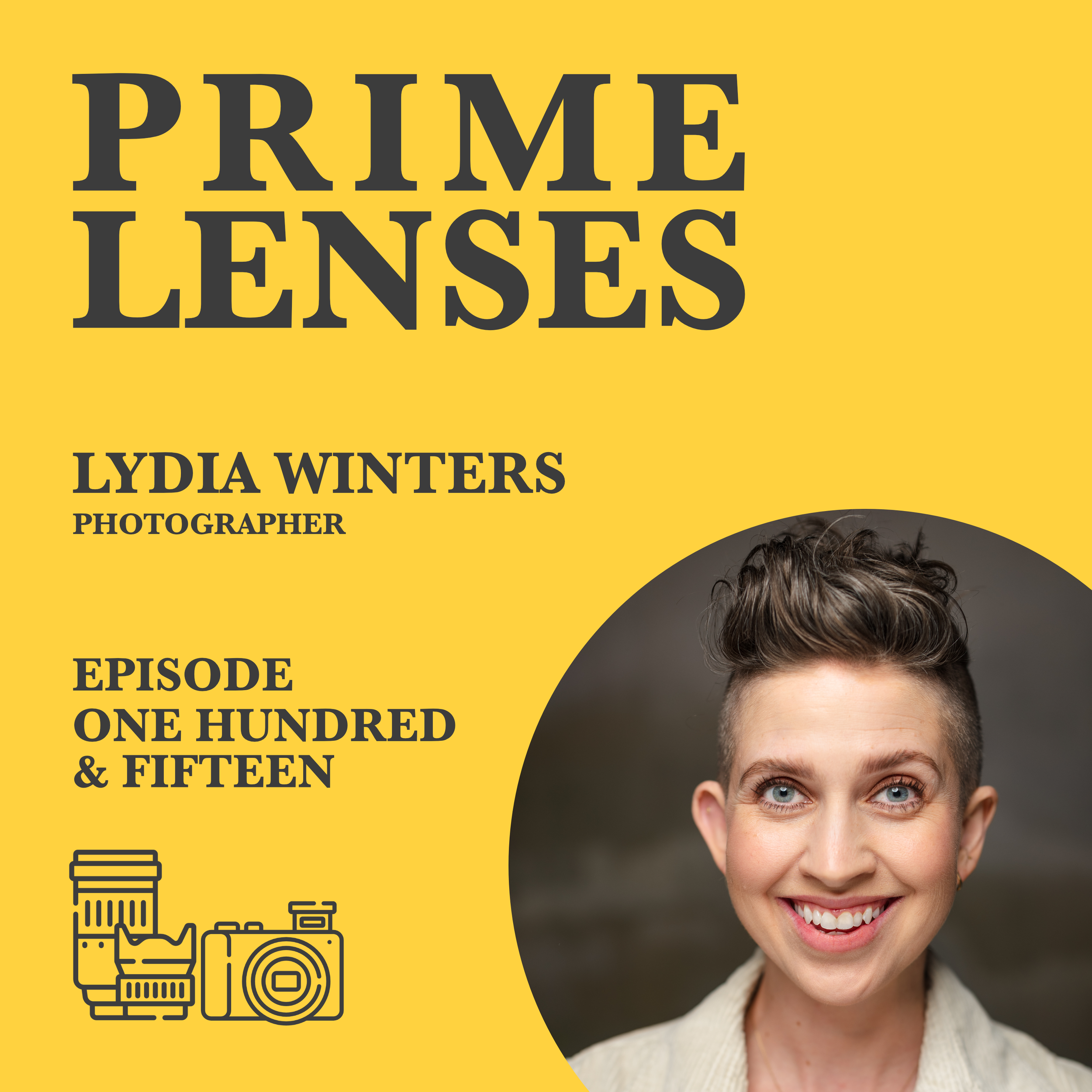


Lydia Winters is a former game developer turned photographer/ story teller for hire. She and I have worked on Minecraft in the past but never got to work together. All that changes now as we go deep into our nerdy love for cameras and just a little bit of fun with watches.
Sign up to the Prime Lenses newsletter for a mid-week treat.
Support the show on Patreon.
Episode Transcript:
Iain:
Hello, welcome to Prime Lenses. I'm Iain. This week on the show, I'm joined by Lydia Winters. Lydia and I know each other sort of through video games in the past. We both worked on projects for Mojang Studios, although we never actually properly crossed paths. And it was a mutual friend on the Minecraft Dungeons project that I was working on who said, do you know Lydia? You should talk to Lydia. So Lydia and I have been chatting back and forth for ages and finally got the chance to sit down recently to talk about all things cameras and maybe a little bit watches. She is a really experienced photographer having cut her teeth in wedding photography and these days likes to photograph things more than people. It was lovely to get to sit down with her for an hour. I think you'll really enjoy this conversation. Here's Lydia. He is wonderful. Shout out to Mance and all the lovely people at Mojang making stuff. But yeah, it's very, very cool. No, it's funny to think that we both worked like we were there at the same time working on the same sorts of things but we just we didn't overlap I think I saw you roaming the halls a couple of times yeah but we never had an excuse to kind of work together on
Lydia Winters:
stuff yeah it is kind of wild I mean I think whenever you're working on something as big and as multifaceted as Minecraft it's like there's so many cool people and especially like hobbies that overlap that you don't even know about until post this is the post of us knowing about something
Iain:
yes yeah no it's great but it's nice to have the excuse to actually get together because i think if it was just a games thing we wouldn't have an excuse to talk but we have we have cameras in common and also i will say I'm becoming a watch person which is a dangerous route to go down i um
Lydia Winters:
I tell everyone don't do it don't do it no you're not wrong actually true it's not true but it's also true yes like beware it's more of a beware which is the same with cameras and it's the same with games like they can all take your energy and money and time and but a lot of fun too so yes
Iain:
well I'm wearing a watch today that is dangerous to wear on the podcast because i can sometimes hear it in the recordings but i will show you because you'll appreciate this so this is this
Lydia Winters:
is a little Timex but it's Snoopy and the gang and they're in space awesome oh my goodness i love it I love the ones that Timex have done with the characters. Any of the character watches, like especially like that where everybody's moving around is such a great execution of like a watch being fun, which is my main thing. It's like they're fun. There's a lot to do with them. And I love hearing the story of how people got them, why you choose to wear something on your wrist every day. It's like very interesting to me.
Iain:
Well, and I think it's a kind of it's part of the reason the show exists is to talk to people about the things that they choose.
Lydia Winters:
Exactly. It's very important. I mean, because it tells you so much about someone, like whether it's what lens you're using, what camera you're using, how long you've been using it, what you're shooting. And the same with a watch, I think, is like the amount of times someone has just taken off their watch and they hand it directly to me when I say, like, mention it. especially people who are more like a one watch person. This was handed down. This is like something they wear every single day. And they're just like, here's the story. And even over dinner, I don't think you'd get to like that deep level of someone's life story as you do in this case.
Iain:
When I was thinking about talking to you and preparing for this conversation, one thing I didn't realize, so I know about you from your Minecraft stuff and the photography and watches and things. I had no idea you'd started out in education. which I think is really interesting and that now you're kind of storyteller for hire. So I wanted to kind of get a little bit of your background and set that up for listeners. And then I think that will be a good jumping off point into the things you make.
Lydia Winters:
Okay. My story is kind of funny because yes, my degree is in elementary education. So I actually taught fourth graders for one year. I used that degree for one year and then I realized that I was wishing my whole, I was actually, I graduated early. So I was 21 teaching, which I just think about those parents and how they were like, you're a child. And I realized they were not wrong. I was so young teaching, but I wished every day I was kind of like, I kind of wish this day to be over. And the main thing was because I really was getting into photography and I loved it. So I was second shooting for a wedding photographer and I just like photography was so creative and fun. And even though I was a great teacher and I could see myself doing it for a long time, I also realized that I was wishing like I wished my whole 21st year of life away. And I just kept wanting like when I go home, I get the camera and I go out and I shoot and I love it. And so it really was the first time I made like a big life change decision of like, this is kind of going very far away from my plan, my life plan. And I mean, the thing is, I still used my education degree so much over the course of, I mean, if you can talk in front of a fourth grader, they're judgy little things, you know, a nine year old man, they will, they will really, if you can, if you can speak in front of them, then like anyone else is kind of a treat. You're like, okay, this is fine. I think the only thing harder might be like middle schoolers. But it really, for me, it just, I felt like I wanted to do something more creative. And I like was taking photos of my kids in class sometimes on field trips. And I just loved it so much. And it made me realize like photography was what I wanted to pursue more. And then I was a wedding photographer and a portrait photographer for a while, which like is very deeply hidden in my background of like 2008. I shot like maybe 15 weddings, like over the course of a couple of years, mostly friends and for very little money. But then I'm like, you get what you pay for in that case, which sometimes was free. You know, but it was it was fun. And I just loved photography, like since I was a kid and my mom got me into it. And she always said, you know, that I have such an eye for photography. And then over time, I realized that that just means like I love stories. And I love telling stories visually, creatively through Minecraft, which I also worked on and will come to later. And so for me, photography has always been the creative outlet that I come back to. Like every time it's photography. I even think I'm deep in the watch world now. And, you know, my partner Boo and I have a podcast about watches. And we, you know, have to ask ourselves these hypotheticals. What if watches or photography? Like it's so easy for me. It's always photography. Like it will always be photography. That's like my true love and my most like perfect creative form of expression, I think.
Iain:
I agree. And I think there is something special about photography because it's the art form you have to be there for as well. You can't.
Lydia Winters:
Exactly.
Iain:
Anything else is a picture or a painting or a drawing and they're not less valid. But there is something special about having to have been there in that moment to capture, isn't it?
Lydia Winters:
Yeah, it really is. It's that moment in time. And for a while, I moved more towards video, which I also love. And I was making Minecraft YouTube videos in 2010, which is how I got into the Minecraft world. And I also love that visual medium. But there's just photography is the thing I love most because I just like that moment when you click and you're like, I got it. Like that feeling is and then you see it later and you can relive exactly what it felt like to be in that singular moment. So I really love that, even though I appreciate video and how much more you can tell. I'm like the challenge of just this one frame is so cool.
Iain:
It's also a very quick way of telling a story, I think, as well, like a video. I mean, to use a game example, the Double Fine documentaries that Tim Schafer and the crew over there made are incredible insights into the thing that you and I used to work on. But they require 20 hours of viewing. That's a big commitment, whereas a photograph in a moment can tell you what happened and can tell you how people felt about it and communicate that very quickly.
Lydia Winters:
Yeah, and like remind you of a place in time. I mean, in 2010, I did a self-portrait project, and I was really like very lost in my life. I had quit teaching, and I wasn't sure what I wanted to do. And I was, yeah, just, you know, couldn't really figure out who I wanted to be. And I think about those photos. And at the time, my mom kept saying, you look so sad. Like, are you OK? And I was like, Mom, I'm just like, this is my artistic expression. But actually, I was very sad. But it was like a good outlet to like show, you know, to be creative and take photos and especially photos of myself to now when I go back and look at them, I I know this full story around them of like what my life was like. and okay I'm in the middle of like am I gonna get divorced and I'm very young and like got married early and how am I dealing with this whole life around me that I had built up and starting to decide to change things and so I'm really happy that I captured those moments because I think otherwise I would have a different view of it but when I can look at some of those self-portraits, I can really see how I felt in that exact moment. And I don't think I even, I didn't have the ability to vocalize that at that point, which I think is so unique with photography. It's so dark, so quick. No, it's amazing. Do you know what? You have a similar sounding story in
Iain:
broad strokes to another previous guest, Amy Elizabeth, and she teaches self-portraiture now. And she got divorced from a long-term relationship with her partner and her life was tied up in her husband was a pastor.
Lydia Winters:
So her whole life was being part of that. Mine was too. So I will definitely, okay, now I have a new friend because my ex-husband was a youth minister. And it was just a lot of life wrapped up together and changes. And when I think of like those self-portraits, they really capture that moment. And I think self-portraiture is something I need to get back to. I do it a little bit in my photography now, but I do love that aspect of like needing to like show yourself deeply. And when I look at the old photos, when I was kind of looking through photography to think about, you know, talking to you, I was like, oh, yeah, I did all those. And they really, some of them really capture exactly how sort of trapped and concerned and worried I was for like what is going to happen and where am I going to go from here.
Iain:
How do you find going back and looking at those? You were saying, mentioning about going back and looking. I think that's one of the challenges people face as well is we make so much work. Do you have a way that you think about going back or a practice?
Lydia Winters:
No, I wish I did. I think the amount of just images can be overwhelming. This is something I feel a lot and I am very bad at editing. I need space from the photographs, which isn't always that fun for my friends or family who like want the image immediately. So shout out to my sister, Mindy, who will definitely listen to this. And like, but for me, there's something about, I don't know, this like rawness of taking the photo in the moment. even if it's like good and happy times and it's like I need a bit of distance from it and then I see it in a new way and I really I also like then it makes me enjoy it more because especially I have two nephews they're two of my favorite subjects to photograph especially because I'm only with them maybe every let's say six months and so I get to you know kind of capture like where they are in their in their world but then I like get home and I miss them and like I need I have to like distance myself for a little while and then I come back to it and I get to relive the experience but with distance and then it feels nicer unless maybe like the bittersweet has gone away into only sweet or something which is really like part of this ritual I think of of photography so I don't go back as much as I should but also my partner Vu who is like my biggest photography inspiration and was my photography mentor at the time we met I would not have said that but now I feel very calm it's very very true but he's so good at just like sometimes looking back he'll get in these moods of like looking back and like sending old photos so sometimes I try to do that now and like I think it's such a nice expression of love to send a photograph to someone from a few years ago that maybe they never saw and I actually think in I mean maybe this is like my self-justification But I'll say I think there's like something special about that versus like here's the photos from the event yesterday. There's this like distance that you're like, what? I didn't even know this existed. This is so beautiful. But I mean, the duality of this is that I completely always complained to Vu like, I never saw that photo. Where did it come from? It's so cool. So I don't know. But I like this. I like being able to look back at them and especially send it to someone either as a physical image, which I print with my little Canon Selphy and send images or just a quick like high text. And you're like, this is so cool to get to send this image as like one image versus here's like the whole trip or here's the whole time we were together.
Iain:
Yeah, for sure. And I think you're absolutely right about sending stuff because it's a lovely way to say, I'm thinking of you. I miss you. I've used diary apps for a long time and I can go back and see what happened on this day in history, which is lovely.
Lydia Winters:
That's so cool.
Iain:
And then you send it to someone and you go, remember we did this? And it's exactly as you say, it's that powerful prompt to just remind you that, you know, you did this together and something happened between us and you're just tugging on that thread. And even if you don't pick up the phone, heaven knows we're all bad at that. But just a way to say, thinking of you and this was a thing we did, this was a moment we had together. It's so powerful.
Lydia Winters:
Yeah. I love that, the tugging on the thread. I think that's a perfect way to put it. And when you have the image, you can be transported back to that place in time and you don't need more than just like sending the photo to suddenly open up this reminder of where all of you were in that moment, which is so beautiful. I mean, which is why I love, again, photography. Photographies. It's amazing.
Iain:
Yeah. So when you were first picking up that camera then, that little one you were rushing home to shoot with, what were you shooting with back then? Was it film? Was it digital?
Lydia Winters:
oh I've shot everything almost everything I would say I am like uh I would what I used to say I was like a camera Cinderella where I was like does the glass slipper fit I don't know no not this one so I've shot with like really I mean when I was doing wedding photography it was Nikon and Canon I shot film in high school whether it was like disposable or you know my mom's old Minolta like kind of running the gamut and then I've shot Fuji uh Olympus like like a Hasselblad kind of just all over the place and you know a lot of film getting back into film cameras got me more into photography when I was in Sweden and doing like film photography projects Vu is fully back into film and I'm like no don't suck me in I'm in digital land so like I think it's I just I love all of it actually I would say and I've had so many different um like a Mamiya just all different cameras and a Contax and at any given point there are like a lot of cameras at our house that you could just walk around and pick up some that have had like a roll of film shot and some that have had you know hundreds of rolls of film um I think it's to me it's like okay I don't think the gear defines your photography but I think that loving your gear does and I just go through different points in time where I love different gear and then when I get inspired by that I kind of just like it makes me want to shoot more and so to me it's like whatever camera whether that's like a Ricoh because it's new and fun and it's I'm not shooting on my iPhone anymore or like I know you're deep in like the the Instax Polaroid i have like a i mean I've shot Instax images in Nepal in Kosovo where i was just like okay i just only shoot Instax i was looking through this pile of Instax photos so it to me it's just kind of like time dependent and interest dependent but like always the medium of photography and then the decision around like what camera and equipment is
Iain:
like depending on what I'm sort of in love with at the moment. I really like that because I have a
Lydia Winters:
self-imposed limit and so. I know I know I'm very impressed by this it's a great idea one I cannot abide by but it's a beautiful sentiment. I it might be an idea I mean the thing that so recently
Iain:
Fujifilm loaned me their GFX and that was really fun to just have a different thing to shoot with for a bit but it did two things it was it was interesting to pick up something different and autofocus. Did you know autofocus exists? It turns out there's this thing called autofocus,
Lydia Winters:
it's amazing. It can still miss though. Yes, especially with medium format. It's slower. The autofocus is a bit slower in that case. It's about as fast as I need it to be. Well, I'm actually just moving back to manual focus. I go in and out of manual focus too, because I love with my nephews, I like to shoot on the cues because I just can, I mean, I've been a Q shooter since 2015 which is you know so I'm always like really early like I'm not jumping on this you know especially in the watch world like everyone started getting like a Q3s and it was like whoa look at this new camera and I was like excuse me I've actually had I've had one since 2015 and then everyone realizes oh 28 millimeters is different a very different shooting than you're used to it's something that I had to like go back and forth with on the queue but I love the autofocus for that reason of just being like present in the moment with my nephews in a different way but then uh alternatively I also think manual focus can give you that presence versus just clicking a million times so it's like this you know again it's always the finding the balance of like how to be part of the moment but also yeah not letting the camera and settings kind of overtake you which I've definitely been I am not the technical photographer in our house like loving the technical side I really just love shooting and like seeing what I can capture
Iain:
well you since you brought it up we should talk about that 28 mil lens because it's one of your three. Yes. Prime lenses traditionalists will be pleased that we have three lenses. We're going to do it, guys. We're going to sometimes. It doesn't always come up. I know. I was like, I've been
Lydia Winters:
listening to a lot of episodes and I'm not hearing these three lenses. But I was like, of course,
Iain:
as a good student, I was like, here's my homework. Thank you. I appreciate you. And listeners do sometimes come on into my DMs and kind of elbow me in the ribs and go, come on. Oh, my gosh. I love
Lydia Winters:
it i actually changed one of my lenses though so now I'm gonna like trip you up yeah i as i was looking back i was like hmm i think i should make a make a make a switch on one of them so it's not the 28 the cue is the cue is like okay i i kind of classify my photography now because i realized i didn't love i didn't love wedding and portrait photography because i liked capturing like the moments that were happening or this like more lifestyle but especially in 2008-9 that was just starting to come in to practice a bit more in photography but you still you need like the formal portraits at the wedding and you need you know like you need all of these shots and what I realized over the years is the way I love photography is mostly when it's no pressure and experimental which is not a wedding that that's like the opposite of a wedding where it's like must get need to have make sure you know it's someone's huge moment in their life and like so I I still follow a lot of wedding photographers I am happy with the images that I shot for people but it made me realize like that wasn't the place that I could experiment or be creative the way that I wanted to and with getting the cue the first Leica cue so I got it in 2015 and it was so weird to me because I was always I mean a self-proclaimed 50 millimeter shooter like I shoot 50 I don't need any other lens I don't want any other lens and I'm sure it was woo because it was definitely not me that just suddenly dreamed up that I would get this Leica cue but I was like okay this this seems fun and cool and the images immediately I was like the color the imagery it's just like it's a Leica it's so beautiful and at I struggled for a long time with 28 millimeters it's so wide and it's like unnaturally wide and you just feel like sometimes oh okay the closer I get the more wild but over time I came to like very much love that and it's a way I really see see myself in the photo too I think Greg Williams talks about it a lot he's been a cue shooter for a long time and I really like you know he's he's taking photos of like amazingly beautiful stars so like okay everyone looks good in every photo but it's like this being part of the photo so I really started loving with my nephews it's like me putting the the binky in the mouth and you kind of I like to get to see my hand in there suddenly like especially when they were born which was my oldest nephew is seven and my youngest is five it's like that sort of changed my experience with the cue even though I love shooting it for these quick things suddenly with the two of them it was like oh it's me playing with them it's like me because I was there with them and I just took the camera and I snapped it and that has made me yeah just fall in love with 28 as a as a focal length because it's just so different and once I leaned into that instead of away from it I was like this is this is really great and I I believe some of my best photos I've ever taken are on the queue on one of the queues. I have too many. Let's not just start going into the queues, but there's like a lot of queues. I've had all four of them and still many are here at my house.
Iain:
That's the best way of feeling guilty. Like they're saying it out loud, like guilty kind of still many are here and I will be taking no further questions.
Lydia Winters:
I will. Yeah, exactly. I was like, uh, yes, that, that, thank you. And no more about that. But I mean, I also have trouble selling them because I love, you know, the Q2 is still like, oh, but that's the one I was shooting when the nephews were baby. You know, there's like this. Yeah. You know how it is.
Iain:
I do. It's a whole thing. And I like talking about Greg on the show a lot. I think he is often in his photos in exactly the way that you're talking about.
Lydia Winters:
Yes, exactly.
Iain:
either a hand or something like that. But also, even when he's not visible, he's present because people know him and they know who he is and you can see their reaction. They don't react. They wouldn't react like that if it was you or me, you know, or any photographer at an event. No. They react like that because it's him and they trust him.
Lydia Winters:
Yeah. And that close, that immediate closeness. And I think for me, because in weddings, I was trying to distance my, you know, you try to hide and you you you I'm capturing this moment of these two I the best thing I can do is like okay they like me and they trust me but I'm not in the moment with them as soon as it was like family and my nephews um you know even like when when my dad was going through cancer treatment he's doing great now but it's like just these like moments of like being in I'm in the room it's not like you know I'm I'm here with them it's like my parents you know my mom's giving him a hug right after and I can just like it's me there versus um before kind of yeah hiding a little further back and being a little more distant suddenly it's like no it's because I'm playing with the nephews and they look over and give me like this goofy face not the like fake smile and that's the one I'm I'm going for or like them thinking I'm like wildly hilarious, hopefully. Which you definitely are. That's what I'm trying to capture so that I can be like, evidence, I'm the best aunt in the world. Like that's my main goal in life.
Iain:
My son's aunts are quite competitive in that way as well. One in particular, shout out to Samantha, Aunty Sam. You are the best. I just don't want to incur her wrath. But if we can stay on the cues for just a second, because there's an interesting thing here. So I shot for a long time with the Recog, the GR3. and I would go to events and like talk to wedding photographers and I would wax lyrical about how the GR3 was incredible but I wished it was 35mm because 35mm is my favourite focal length and then they brought out a 40mm and when I got the 40mm and swapped it from the 28mm what I realised was that 28mm I had actually learned to use it and was so used to 28mm now and I kind of maybe regretted the decision and wasn't quite sure you alluded there to trying all the cues what did you feel
Lydia Winters:
when you tried the 43 versus the 28 well this is the thing so I'm smiling really big and kind of laughing as I hear your story because um yours was a less expensive lesson mine was very expensive because I I immediately was like as soon as I heard I mean I think I got probably the first 43 and in Sweden I was like I I had like the second it was announced I was like I must have that this my perfect there's no other cue that's perfect again this sort of cinderella just this one or no like no it's goldilocks actually just right like i i you know this one is perfect and so the 43 i was like sure oh this is it but then i immediately was like i wish it was 28 like i i just always you know i see i and I've taken beautiful photos with the with the 43 and like many many photos but I realized that even because I thought it would be a lot better for like watch photography um not I'm usually shooting with my SL3 for like my more um fully posed styles but with the like a Q3 I started doing this like cool watches even cooler people series and the thing is I thought 28 might be like a little too wide but over time I realized it's really great because you just get this extra perspective because I wanted less of just here's the wrist but more of here's what the person is wearing and you get like a feeling of who they are not with their face so it's not a full portrait but it's like a wrist portrait if you will and I yeah I quickly realized like I love the 28 so that's why that is a lens I never would have expected would be a top lens for me ever ever actually but the open you can open up so wide as
Iain:
well I think that makes it so versatile that that's the trick is that you can you can make these almost cinematic wide images exactly but they're at f1.7 I I love shooting wide open that
Lydia Winters:
is my you know it's just something I really love it's something I've loved from the beginning I actually remember I mean this is kind of embarrassing and funny but um in when I was shooting wedding photography I went and shot I went to a workshop with Susan Stripling who's just a truly incredible wedding photographer I was lucky enough later to second shoot with her and just stunning images and storytelling and and her use of light and everything um but when I was at her workshop I knew so little that I didn't understand like I was like but how do you make how do you make it look so like out of focus in the back like I didn't even know the word bokeh I was like I should not have been shooting anything at that I was like I just don't like how and she was just like here put on uh take my Nikon lens and just shoot a couple photos like wide open and I was like oh this and so then I mean it's just so magical I think especially because and I know there's like you know a lot of debate about this but I think when we have more when we have phones especially I think it's really nice when you have wide open images just give you a different perspective like you said it gives a more cinematic it really isolates the subject and like some people think that that's a crutch in photography but honestly I just think shoot whatever you want however you want so for me I'm like if I'm if I'm buying a Noctilux it's gonna be wide open like it's just gonna keep it set to that forever as much as possible and like that's me and even with my watch photography it's like not everything is perfectly in focus and that's because it's not a it's not a strict product shot like I'm not trying to shoot a product shot I'm trying to shoot a a feeling and a portrait and something that makes you think the watch looks even better and cooler than you ever thought it could which is the same as like shooting a portrait of a person it's like a huge like how are they the hero it's not the you know the headshot that I'm going to try to you know this is exactly who I am it's like the best version of yourself so for me wide open is is the way is the way I just love shooting it's the differentiator in a lot of ways
Iain:
and I think I my favorite lens only only goes down to 2.8 it's actually still fairly fast you can
Lydia Winters:
still do quite a lot with it yeah exactly that's the thing but I'm in my very much f8 and be there
Iain:
phase of my life right now so I'm just cranking it all the way the other way and then at some point I'll open I'll go back and you know swing back and forth but that but that's the fun thing again
Lydia Winters:
photography is like different time periods are are different ways that you shoot and what you want to do and like having the choice I think is what makes it great and again it's kind of like what I said with the the camera you have or the lens you have it's like whatever inspires you to shoot so if it's like okay that's the thing I'm not like wide open is the best like although Vu and I do say like stop down for what a lot because of I think Peter Carvey said a version of that that's definitely not exactly that. But, you know, so we always joke about that a lot. And
Iain:
that's very much us. I was once, I've told this story before on the podcast, so apologies to listeners, but I was once walked out of the old New York Leica store, because it became clear that I wasn't going to buy a Summilux when I was like, well, you know, something more than an eyelash has to be in focus. And they just went, well, it's lovely to see. And arm around the shoulder. Thanks so much for coming.
Lydia Winters:
And I'm like, look at that eyelash.
Iain:
It's so beautiful.
Lydia Winters:
Just that one. Yeah.
Iain:
No, it's fair.
Lydia Winters:
But that's the thing is like I love that both can exist. And there's space for all different types of photography and storytelling and expression. And I think the worst thing I can go photography, watches, games, all of the thing is like this feeling that there's only one way of experiencing something. And like you're not doing it correct or you don't know how or that. And so for me and in my watch photography from the beginning, I started showing my behind the scenes just as a quick snapshot with my iPhone because I'm like, I would like more people to love photography. I would like more people to love watches. And if you have one watch or if you shoot a photo and if it's on your phone, that's also OK. You know, like, who am I to decide how someone's creative process or expression gets made? And so instead, for me, I just think like more diversity is more stories, more creativity. Just overall, it makes everything more interesting and better and not the same viewpoint over and over. So I'm very happy if sometimes I'll see something shot at F11 and sometimes I'll see something shot at 1.2. And like both of those can exist because why can't they? And neither one has to be superior because of only aperture. There can be other things like lighting. And, you know, so I'm not saying that those two are equal, but it's just more of like both can coexist and neither has to be right. Like art doesn't have to be right or wrong.
Iain:
Yes, which actually is an interesting way in. So that's interesting because I think as you're speaking there, what I'm realizing maybe for the first time is that my creative practice is very much tied up in the tool I'm using. And I let that guide how I make. But it sounds from what you're saying that your practice is much more led by the idea than the thing. Not that I'm, you know, totally, but I'm limited by the tool I then choose to use. And then I make the thing I want to make. But yeah, is your creative practice much more big picture idea based?
Lydia Winters:
Yeah, I definitely think so. And that's what I really started loving about watch photography, which started first as like flower portraits in 2020. And then I started sort of seeing a style of photography that I had been like hoping to develop over many, many years. But it's like this is the thing about a photography style is it's just like not something you can just have. It's something you continue to learn and work towards. And then when you suddenly see it, it's because of all the many, many years. I'm like, OK, it's because of 15 years of taking photos. And that's what I didn't know 15 years ago when I was like, where's my style? How do I find it? And it's like, well, OK, I didn't know yet even myself or my own voice or my outlook or perspective. So how could I have had a perfect voice in my photography? I was emulating so many other creatives that I saw, which is always a part of the process. But then their distinction, trying to be just like that, does not give me the difference that I'm looking for. And so with flowers, I started realizing, oh, I really love thinking of a flower as a portrait that I'm taking. And guess what? This person, this flower doesn't talk like a person. They don't move. I can move around them and they don't blink. And I was like, wow, I really love this. Maybe I like objects or flowers instead of portraits of people. And if I approach it this way, and at the beginning that was all subconscious, it's not something that I thought about. It's just like, oh, this is really cool. And then over time I'm like, oh, I'm taking portraits of a watch. Like I'm thinking of a set and building these little worlds and then taking an image of a watch that hopefully captures like a mood, a color, a texture, a feeling that makes the watch look better, but also gives you a great surrounding. And it's like that's also what you would do with a portrait of a person. And so, wait, now I'm like, where did we begin on this? Now, see, this is where when you're just quiet and just let me go, I'm like, oh.
Iain:
This is good. This is what I want.
Lydia Winters:
He got me. for me it was really now i know where we were the tool the tool versus the idea i yeah i think I'm much more idea first and then i typically have a tool around or like luckily again because Vu loves photography it's like there's there's cool lights everywhere and there's like everything i mean we had a whole podcast studio set up for the day that i one day said we should start a podcast and he was like let's go I have everything he's like a gear guy so like I am very it's very perfect to me to have a gear guy who lives with me and who is like willing and able to be like okay yeah I think you could use this or here's some extra stuff but when I was shooting watch photos or when I still am I really just think of the idea or I see something that inspires me in nature a lot and at first when I started I was emulating kind of the look and style of the watch photographers in the community which was much more like you know a little moodier and like you know I started buying watches that were really colorful and so I was like okay let's like lean in colors flowers fun and that to me was is always more important than the gear that said i was shooting with really nice gear so i think it's it's like a privileged position to be like it's not about the gear sure while knowing that I'm i was shooting with like and has a blood so it's like not fair it's not a completely fair I've done a venn diagram drawing
Iain:
for people in the past which is the perfect circle overlap of people who tell you the gear doesn't matter and also shoot regularly with cameras that cost over a thousand dollars like just yes yes
Lydia Winters:
Yeah, exactly. So I also get that. But at the same time, I've seen people be very creative with point and shoots that, you know, of all different prices and even ones before they were like very in fashion. So it's like there it's more of that I do believe that to be true and I have done it myself. It's not that in this moment I am. So I think that's kind of the. A good a good distinction for sure, because I definitely agree.
Iain:
Well, there is a while you're mentioning flower photography, Harold Feinstein, the street photographer, later in life photographed plants in a very unusual way.
Lydia Winters:
Yeah.
Iain:
He did it using a flatbed.
Lydia Winters:
Whoa. Okay. That's so cool.
Iain:
He did these amazing pictures of plants. Nobody knew how he was doing it. And then eventually it came out that he was flatbed scanning them effectively. And just.
Lydia Winters:
So cool.
Iain:
It's very, very cool. There's a great documentary about him actually called Last Stop Coney Island. Well worth a watch.
Lydia Winters:
Yeah. It's funny because when I was getting in, like whenever you're in these like niche groups in, you know this watches games photography it's like I was getting into flower photography so then I was like looking at other flower photographers and I remember reading someone said you know you can take uh you take water and a spray bottle and you kind of um you add like a little silicone and then it's fine for the plants but it like makes it look like it just rained and I was like I am absolutely not doing that I'll just wait till it really rains like you know fast forward a little bit and I'm making like these extreme setups for my watches and I was like okay this is the best yeah I was like yeah okay I I think the some water droplets on the flowers I definitely could have it would have been fine so it's like all these different points in your photography I think that you sort of always change your yeah you change your mind or your style or you thought something was like I would never do that and then you're like oh actually that would be really great to try
Iain:
no i completely agree what's the point of having a mind if you can't change it occasionally yeah exactly so on the subject of styles changing and minds changing you mentioned as well that you've changed your mind on one of your lenses which of the two you had the Noctilux in there and you also
Lydia Winters:
had a 75 apo which one yeah i had the i I'll keep the Noctilux just because it's new and I'm like definitely always a new a new keeper but I I realized that I think if I think of like defining lenses then I have to do actually the Hasselblad uh 120 millimeter macro because that was really what got me into deeper into my watch photography and also shooting that is how I ended up like you know kind of started to talk to the Hasselblad team and becoming a Hasselblad heroine so I was Like if I think of defining moments in my photography and like my style too, even though now I shoot with a 75, that lens is probably the one that kind of started a lot of what I'm doing now. So that's what I changed for.
Iain:
That's a very special lens though, isn't it? Because it's that focal length on that size of sensor means obviously you're going to do incredible macro things with it. But I assume you love to point that at people and things as well.
Lydia Winters:
I did some. Yeah, I shot some of the nephews. Again, not as fun as the cue because I would be so much further from them. So that's what I realized. Like when I look back, even though the portraits I took of them are beautiful, it was more like a portrait of them playing by themselves, which over time I realized I would much rather be playing with like I want the hand in the sand with that. You know, I want to be as close as possible. But just a beautiful lens. And I really loved shooting with Hasselblad. It was like a dream setup that I never would have had if I didn't have a full time job that wasn't photography. So I would like, you know, like, I think that's also an important part to mention is that when I was a photographer, I did not have this gear as like creative being my full time work. It was that instead I had a full-time job that enabled me to have hobby gear that I would really have loved back then but would absolutely never have spent the money on. And it was 2020. So it was like, ah, we're not traveling. We're not spending money anymore. Why not? Let's go for it.
Iain:
We all developed a few expensive hobbies in 2020.
Lydia Winters:
Exactly. Yeah.
Iain:
Do you think the fact that you were forced to use more straightforward equipment made you a better photographer?
Lydia Winters:
What do you mean by straightforward equipment, I guess?
Iain:
Well, so, I mean, obviously it's hard to buy a bad camera these days.
Lydia Winters:
Yes.
Iain:
But because people don't have access all the time to like a 1.2 Noctilux lens, or maybe they don't have access to the fastest read rate or the highest resolution sensor. I wonder whether there's something to be said for starting out with something fairly standard. And then once you get access, you're ready.
Lydia Winters:
Yeah, I do. I do think like I wouldn't if I had if someone had been like, here's a Hasselblad, digital Hasselblad for me years ago, I would have had no. I mean, like I said, I didn't even know how you get bokeh. It would have been very wasted on my photography. So I think, you know, it's definitely something that you can use after you've learned enough. And I don't think I fully, you know, exploited all of the technical features. I actually felt for me like 100 megapixels is such a headache to deal. It's like it's too it's too much for, you know, for like the type of photography that I was doing. And that was one of the things where I was like, I'm not shooting professionally, even though I would occasionally do some professional shoots but it's like that also became a barrier for me and just like this is too this is just too much for the type of photography that I want to do it's um slow and expensive and it's beautiful but it's like is this what I need and then versatility really wins over so then you know I had had a like SL and going back to the SL3 I was like, it's just everything's easier in terms of like the type of photography that I'm doing, because I never have been the studio shooter, which is really or like I'm taking my watches out and shooting them like in nature on the go, which always, you know, natural light mainly. So like that becomes like I was actually using the gear in opposition to what its best purpose is, which I think is not the best idea.
Iain:
Marcus Brownlee was talking about it recently on YouTube. He's got an X2D2. And he's like, yeah, this is my everyday carry. Just like, what are you talking about? It's your everyday carry. But it's because he, as a human being, loves red Dragon 8K video cameras. So for him, it's all about the most image quality. And to some extent, if he can't get that, what's the point even carrying it?
Lydia Winters:
I also love that that name makes it sound like a Star Wars, you know, that. It does.
Iain:
I mean making sure i got it right because I'm not I'm not a Hasselblad shooter yet
Lydia Winters:
yeah i mean for me it was yeah i was shooting kind of against what it was especially at the time because when i was shooting Hasselblad in 2020 it was really before they were fully into they've now marketed it much more towards like an everyday carry which i i I'm not sure i i agree with either for like the majority of people um but for me it just became like I just missed Leica again because it's just a it's just gear that I've always loved consistently and like have gone back to over time in many different forms and formats and I just think the color of a Leica is something so special and I really am not someone who I don't really like editing images I want to get as much correct in camera make it look as beautiful as possible and just like punch it up a tiny bit and and just do the most basic edit and so for me I really felt like Leica allows me to do that it's like the least the least editing possible so I do the the part
Iain:
that I find the most fun which is the shooting I'm going to say something now that Vu is going to love which is have you heard the good news about film I know because that takes a lot of those things
Lydia Winters:
It does. I know. I know. We actually we were just last week on a on a birthday trip for me and Vu brought only film cameras. And it's just so fun. So I'm not saying I will be like I still will shoot film because I do. I do love that. And I was looking at some old I was shooting on the Hasselblad 501 CM. And so that actually was what I really loved was the medium format film photography. And I was taking like I was looking and friends, baby photo, baby portraits on on the Hasselblad. And it's just like the look and the color of the film is like just perfect. So I'm definitely not I'm not saying it won't happen soon. And Vu is just like, and the photos he took, especially like he's been buying, he bought like a waterproof Canon from the 2000s or something. And it's like this weird, cool camera. And like all the photos looked so fun. And it's like, yeah. So I was immediately like, okay, I'll start shooting with these. But again, there's a lot of film cameras at our house. So you can at any point, anyone can just be like, I'm a film shooter now. Let's go. And I have done that at certain points, like on vacation, where I'm like, I need to get away from this digital life. Because I mean, for you two probably being in gaming for so long, it's just like screens and it's just a nonstop digital existence, including in the work where many times you don't even see like a physical outcome of what you're doing. And so this like drive towards analog is so strong. I mean, it's why I wear a watch and like watches. It's much easier not to like to use something digital, but I want the analog expression of it. And so for me, many like quite a few times on vacation, I would bring like a Fuji Tiara, which is just such a fun point and shoot, like just a tiny pocketable. And those are some photos where I'm like, these were really like I shot better landscape photos on that, which I'm very much not a landscape photographer and think I'm very not good at it. Like, it's not a strength of mine. I was like, oh, there's a couple bangers in there. And that's because I just was willing to just like take one and be like, OK, I like this scene. This scene looks cool to me. And I think that's the thing with like film or even just a point and shoot is just this film, especially because you're like, let's just take this one shot or just like maybe twice. And I love that you don't then edit 15. So I try to do that now with my digital photography. So even on the so I got the new like a M-E V1 and the Noctilux and I turned off the back screen. I'm really trying to shoot only, you know, shoot it as close to digital as possible. So I'm not like just constantly looking and did that work and just like, hey, some are not going to turn out exactly the way I want. And like, that's fine, because then I'm still then I'm at least moving towards the manual focus. you know a little bit more film like a little less digital but I don't have to develop film although I do have a film developer at home now called Vu and I can just drop off film in my kitchen but I'm not sure how long I'll get away with that so I don't think if I'm shooting tons of rolls of film that it will keep being that I can just drop it off to my developer.
Iain:
Well, I've just recently started developing film again, and it's really not that hard. So, you know, like, on the other hand, if he's anything like me, when you've got someone in your life who you're sharing your life with, you love the excuse to do something for them. And then go, look, did I do well? Did I do a good job? So I think you're just handing him an excuse to do something for you that he also probably loves. I think it's probably fine.
Lydia Winters:
Yeah, exactly. I know. Exactly. That's the thing. He he last night he was like, hey, I have this film role that I don't I remember getting it developed, but I don't know where it is. And I was like, oh, I have this box of film. Maybe it's in there. And immediately it's like finding these photos from Vietnam, like almost 10 years ago that he took and just didn't have the he wasn't digitizing anything back then. So it's like all of a sudden, like all these new images, but they're older. So again, it's like that retrospective of something where like when you first get it developed immediately, because I when I was shooting film, I was like, I'm going to take it to the one hour. I'm going to develop it. And I was like, this is I might as well shoot digital if I'm trying so hard to as quickly as possible. But I have these like romantic ideas of just like taking rolls and rolls of film and then like waiting to develop them and do like a year, like see them later. haven't done that yet but it's like the dream and boo's like ordering he's ordered a bunch of old film from 1987 which is my birth year and he's like I'm gonna take do a project and see if any of them come out this year before i turn 40 and then that will be you know his so it's like there is a lot of fun to be had with film so i definitely it will it will suck me back in for sure um but
Iain:
for right now I'm like no fair the thing I've never done is print from a negative and so I haven't either yeah so I shot some friends I shot their baby that was just born recently and the thing on the subject of romantic notions I want to make a print from one of the negatives because it's a one-of-a-kind just like their little baby is so that's my plan there is to learn so there's a dark room near here that I've been going to and they're going to teach me that's awesome there's a lot of
Lydia Winters:
discussion if there will be a dark room in our house which I think probably I think it will definitely happen sooner rather than later and Vua's like once you see the magic of that moment then you will be all in on film and I'm like no get out of here try that nocti try that nocti on film Lydia yeah I know exactly what but yeah yeah film is gorgeous this is see this is about this is kind of the same as when you talk to like watch people photography people you're just immediately like this is all bad for my my wallet but at least photography is good for your creativity so that's that's why I I think that that's a it's different it's a different spend actually in the way I feel about it towards it.
Iain:
Yeah. But I think as we kind of like come to a close on it, I guess what I love about your story and the way that you talk about this creative act is that you're surrounding yourself with brushes and then you can paint whatever you want to paint. And I wondered whether that was a conscious choice for you that you just know you need tools and then you'll be ready when you need to make the thing.
Lydia Winters:
Yeah. I mean, I like I think that's a way more poetic way than like hoarder of items and gear. So, yeah, I just am a painter with many brushes. No, I do. I do also. I agree with it. It's like this. At any point, I feel like it's kind of sometimes with my books or like I love having I have many watercolors and every kind of like, you know, drawers of pens and pencils. And like anytime I want something, it is nice if you just like have that inspiration and you can just go do it. And so a lot of times with my watch photography, it's like flowers that I have or that I see or the leaves change, you know, and so it's like I need a forcing mechanism actually for me. So it is that if I have the tools around and I don't have to do this whole like, OK, I need to go get this thing and this thing that immediately becomes like a stopper for me in my creative process because I'm like, oh, let's go do it now. So I'm not like planning weeks in advance. Like I sketch something out and then I'm like, OK, if I go to the florist, then I can get the thing. And it's like but sometimes that as soon as that momentum, like you really hit a couple blockers when it's just a creative process, creative idea for yourself, it becomes harder to like push through that because you don't actually need to. You can just be like, OK, I'll do that later. And I also have like, you know, drawings of ideas of shots that I'm like, OK, maybe I'll get to at some point when I have the perfect color nail polish or the, you know, so it's like this back catalog. But I do like to have the items that I need for the most part so that I can shoot right away. And that's why I said before, it's very lucky to have Vu, who loves gear. And just, you know, at any point I can be like, hey, do we happen to have this type of tripod? And he's like, yes, give me one second. You know, like everything is around. So that is a it's a very it's a very nice position to be in to have a lot of creative freedom and also being that we live out in the countryside. It's like we're close to nature and I can see the different season seasons changing and things where I'm like, OK, I know that this is about to bloom or this is about, you know, this the moss is really cool or whatever is around, too. So I think about that a lot. And like as I look around me, it's like finding those inspiration sources that hopefully then turn into a photograph. So after I was recently at a big watch event and then I was very humbled by some very nice compliments to my photography, which is always the biggest one is like when someone says, I always know it's your photo. Like to me, it was like that. That's like the dream. Like that's like the thing that I couldn't have even imagined before. I was like, I don't even care if you like it or not. But if you know it's mine, like that's so, so special and such a nice feeling. So now I have gotten quite reinvigorated again with like, especially my watch specific photography. And so I've been thinking about all of these ideas that I have had for quite a while. And it's like, OK, just start shooting them because there's an old video. And I don't know why I can't think of his name right now. But he talks about this idea of brain crack. And it's where an idea just keeps getting bigger in your head. And you think about all this celebration and all of this like applause that you will get for this idea. But if you just do the idea and it kind of sucks, then you do the idea again. You're like three times ahead of the person who's thinking of all the applause. And honestly, that's been a thing that like I mean, I think it was probably from 2010. like it's a very old video but it really reminds me of that like just get it out and like okay think of the shot and make it and there can be some projects that are ongoing and slow and thoughtful but I wouldn't have the skills in photography the images that I have if I just kept thinking about it and I'm definitely a person who's like okay I'll think about it and then as you post more I think that becomes creativity can become even more um difficult and so i it's time again to just get into that like whatever i like I'm gonna shoot and i have like these little props that i bought a while ago for a shoot that just like i haven't done yet because I've I've allowed it to um percolate for too long and now it needs to just come out as whatever it is um and that's where i always like my mom always says like no one saw the other option and she said that since I was young or no one heard the other version or saw the other thing and I think if if you can think of that in your creativity is like no one saw the one in my mind they got to see the one that I put out and then that's that's going to be great they're not comparing it to something else oh it's you versus
Iain:
you I love that that's a lovely note to end on isn't it that's really good thank you so much for having me. Oh, it's an absolute pleasure. I think for people listening who are inspired and interested in seeing your silicon doused watches and flowers and all sorts of cool stuff, where can they find a
Lydia Winters:
bit more Lydia? Yes. So I have an Instagram called Lydia's Watches and it's where I have a lot of watch photography. And then I also have Lydia Winters on Instagram and then I'm going to start posting more of just normal life and lots of cool Noctilux shots of Vu, probably.
Iain:
This has been an absolute joy. Let's do this again sometime. Yes. It would be really good to talk to you again.
Lydia Winters:
Thank you.
Iain:
A massive thank you to Lydia for being on the show. That was really fun. I hope you enjoyed it. And if you're new, don't forget that you can like and subscribe to the show wherever you get your podcasts. That's YouTube, Music, Amazon Music, Apple, Spotify, all those lovely places. I suppose, given that Lydia lives in Stockholm, I really should have led with Spotify there. But anyway, there we go. And if you'd like to support the show, you can on Patreon.com and also by buying merch, pick up a pin badge, a bag. We even have umbrellas, which on the day that I'm recording this outro in Scotland, let me tell you, you need a Pro-Am Lenses umbrella. Anyway, links to all of those things are in the show notes. Have a wonderful week. Get out shooting and we'll see you next time. Bye for now.
More about this show:
A camera is just a tool but spend enough time with photographers and you’ll see them go misty eyed when they talk about their first camera or a small fast prime that they had in their youth. Prime Lenses is a series of interviews with photographers talking about their photography by way of three lenses that mean a lot to them. These can be interchangeable, attached to a camera, integrated into a gadget, I’m interested in the sometimes complex relationship we have with the tools we choose, why they can mean so much and how they make us feel.