
Traces with Justin Sorensen
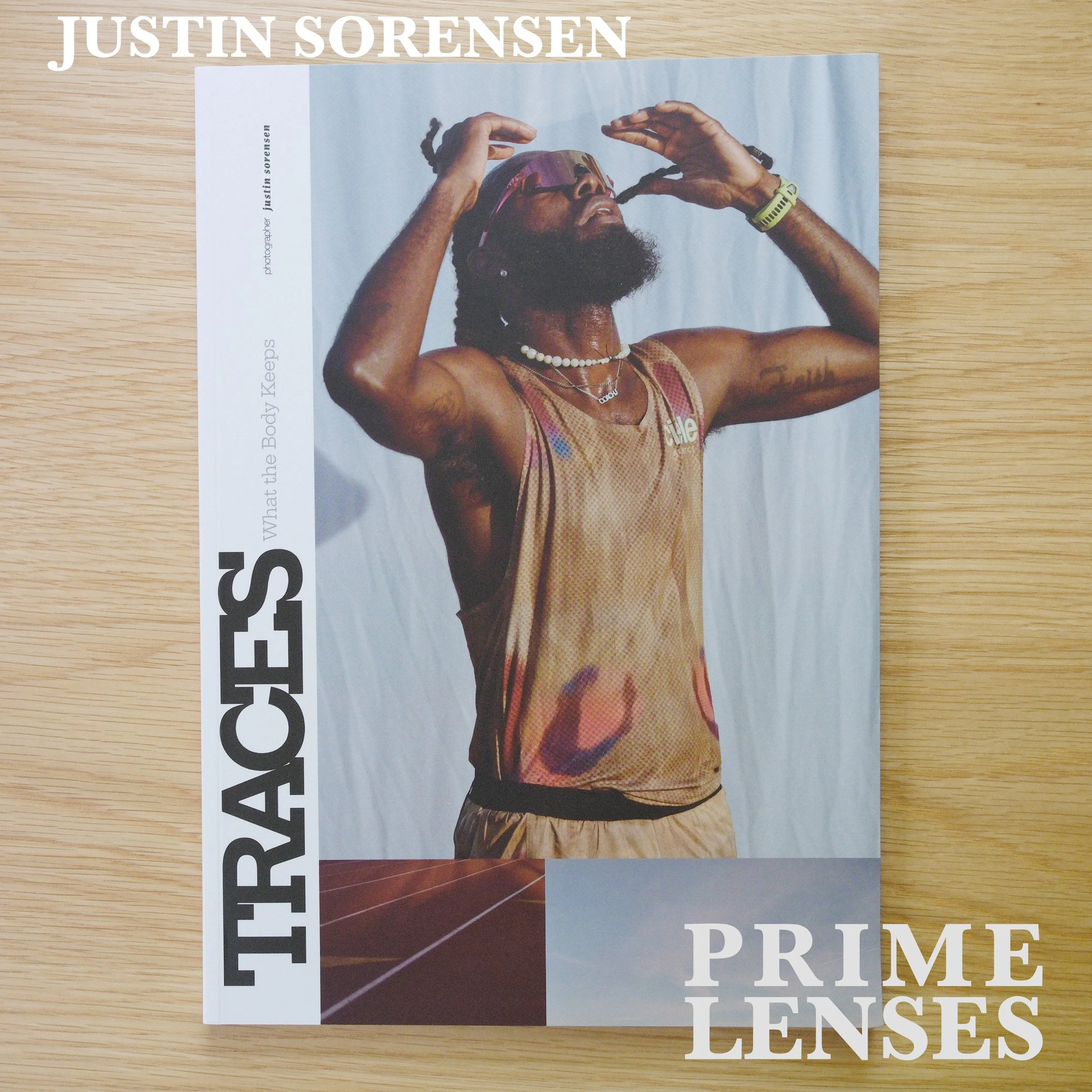


Justin Sorensen is a sports photographer based in New York. He has a book out about the effect of sports on the human body. I wanted to speak to him about how he came to make the book and what’s next. You can pick up a copy of the book here.
Sign up to the Prime Lenses newsletter for a mid-week treat.
Support the show on Patreon.
Episode Transcript:
Justin Sorensen:
How you doing sir? It's good to see you. Yeah, it's great to see you too. Yeah, I'm doing well. Busy right now. Just had like a really long day yesterday. Job down in Philadelphia. It was all day plus editing and so I'm feeling a little burnt out this morning but that's okay.
Iain:
Quick turnaround was it? You had to go straight
Justin Sorensen:
into the edit yeah yeah in Philadelphia um because there was no time to get back and do it so it was like yeah um but yeah it was a 3 30 in the morning start and got home at like 10
Iain:
gosh yeah especially for a sunday that's kind of rude yeah yeah yeah yes but you know thankful for the work so oh gosh yeah yeah well i sympathize because i mean my sunday was quiet but my saturday let me just ping you a picture in Instagram chat um which will make for terrible radio but my saturday was my youngest son taking part in a Tang Soo Do contest about an hour from where we live so it was a 6 a.m start and it was a 7 a.m leave the house and with two kids that was a lot but he had a great time and I got that photo which I was really pleased with it might be one of my favorite pictures of the year so far so all's well all's well in the end sporting sporting
Justin Sorensen:
photography you see a connection with a conversation with you yeah absolutely it's all it's all coming
Iain:
into focus now very good I love an intentional or unintentional pun about focus so but we were speaking recently because we hadn't spoken in a while and you mentioned you've got a book out
Justin Sorensen:
it is out yeah um i released it in january yeah um yeah it was a it was a project that i shot over uh last summer and fall uh for about uh four months um and then and then i spent a little bit of time figuring out like what i wanted to do with it how i wanted to present it and i was like yeah, this is a great opportunity to make a book. So let's make a book. And so I made a book over the last two months of the year, printed it and released it, you know, self published. But yeah, it's been, it's been, it's been great. I mean, you know, it's just a, it's a really nice way to kind of bundle things together, see them and then make something real. You know, I think that that was for me, that's what I needed to do in that moment. It was like, I need to make something that I can touch. And that just kind of puts a stamp on this little time period that we're going through here in New York with running culture and just what that means to me and the community at large, I think.
Iain:
I love when people take it upon themselves to do it. It's very much in the tradition of your Meyerowitz's and people like that who legitimized their art form by just going and making it. And I think that's a really important thing to do. Did you know when you started it that it was going to end up in print? Because when we've spoken before, you like to kind of make your things physical.
Justin Sorensen:
Yeah. I think it always comes down to bandwidth a little bit. I think that it's like how much time do we have to set aside to do these projects? Because this is my full-time job. And this obviously is a personal project that is related to my full-time job. of photography, but, um, you know, nobody's, nobody's paying me to produce it. So it's like, how much time do we have? And, you know, how much effort do I want to put into it? And, um, so you never really know, you know, it's like the project may, you may shoot it and it may take years to, uh, produce, or you may find a spare two months and be able to put it together, which is kind of what I did, what happened to me a little bit. Um, so my, since I work in, in sports and in running mostly. Um, it's very, um, a lot of my work is, uh, kind of ebbs and flows with the marathon seasons that exist. Um, so, you know, we go through a big wave, uh, for the New York marathon in the fall. Um, and then after about mid November, it kind of tends to taper off a little bit. Um, and so I found myself in that time period, uh, you know, mid November through December, and I was kind of twiddling my thumbs a little bit and I was like, all right, let's make this, let's let's just like dig into this work rather than like you know kind of relax for a month like that would be crazy so of course um so yeah i so i just went all in and you know i have a i have a background and I've made books before um for other projects and um you know i have a pretty strong understanding of you know how to uh how to kind of build like an identity through graphic design and um so yeah i just launched into it and went for it you know build it uh that's you know the age that we live in that's the beautiful thing right it's like you can you can produce something like that on your own now and have a you know you know find a studio to print it and it's great it just takes time and a little bit of money but you know not too bad but I think the the the other thing is
Iain:
that it's not necessarily something you get to do a lot and yet it's part of the it's part of the skill set you need to have because sooner or later this will come up and you do need to know I think as a photographer how the images work on paper how they work in print how different stocks behave and things like that when I think to in previous lives working with designers on branding work you know the one of the most exciting days we got when we were designing the color palettes and things like that is the day when the big prints come in on different types of paper so you see right so in our case we were working with like an aubergine color and an orange color and you see how that pigment works on different paper types so you're making sure you're not creating a nightmare for yourself in the future where it looks wildly different and things like that and it sounds it always feels to me like that's a muscle that in a digital screen-based age we don't work enough that we don't know how to prepare files for print was that is is the excitement of doing something completely different and completely new is that part of the attraction
Justin Sorensen:
for doing this for you yeah i mean i wish more was printed and i wish there was more of an opportunity for not only me to see the prints printed but for other people to see the prints printed right because i think that that experience is so different um and yeah i mean you're you're 100 correct that like colors don't don't translate from the digital screen to the print world like they translate but not it's not one-to-one it's different um and so but i it comes down to editing style for a lot of people and i i always kind of edit my photos even in the digital world as if they were a little bit more hopefully coming from the analog world um so for me it's it it tends to i don't know it seems i don't have a really hard time transferring my my images into print um there's some things you have to pay attention to depending on like what kind of substrate it's it's going on to but like um for the most part my editing style translates really well to print my digital digital editing style um so that's um that makes it a little bit easier um a little bit less of a risk uh you know um there was there was you know i mean there was some with this project in particular like there was there was a bit of risk with it um as far as like you know is everything gonna like kind of hit how I want it to. And, you know, I think that by and large, like I was very happy with how it came out. Like the place that I printed it at, I had never used before, but they did a fantastic job. And I'm just, it's, it's, like I said, it's just such a good, it's just such a good thing to do as photographer right like i think that it's just really good to lay out images uh tell a story that's a little bit longer a little bit more like focused um you learn about yourself you learn about the project more um and yeah no it's just like all in all i mean it's just like something we need to do and just need to set time aside to do it yeah and the print company you were working
Iain:
with was it somewhere you could go in and kind of see some stuff because I'm guessing this is kind
Justin Sorensen:
digital print not light or anything like that yes digital print no it was uh no it was online and there was you know proofs proofs came back you know i i got a couple printed proofs back but um you know it wasn't i didn't see the entire book printed before they went into it was kind of there's a leap of faith there um and i was fine with taking that you know it's like this is not in the end this is not like a make or break uh book where I'm you know agreeing to print you know a thousand copies even right like it's a small run and um so it is what it is and it was it was what it was was a fantastic test run into into using this uh using this particular company and kind of this process and just kind of like understanding like how viable is it to you know maybe hopefully do something like this you know be great if you could kind of do something once a year right? I think that it's, it's just, it's so helpful on so many different levels with the work. You know, this kind of, this book ends up being a bit of a, like, almost like a business card that for me to use with, with like, all my commercial work that I do as well. So it's just nice to have and, you know, differentiate a little bit from every other, a lot of other photographers that are only like passing along images on a screen. It's like, here, take a look at this, hold this, right? There's weight to it, not digital weight. So yeah, it's good.
Iain:
It also, I think legitimizes, it's a funny thing. It's a bit like recording video at 24 frames a second because you've seen movies, it sort of tricks your brain into giving it, lending it legitimacy. I feel like if something's physical because we grew up at a time when if someone had deemed your work good enough a book and to be printed on some pages. I think it also kind of lends, like you say, handing it over to someone. Because one of the questions I was going to ask you was exactly that, was post-pandemic, are you finding now that you get to meet people in person more before you work with them? Because the chemistry and the working with people is quite important if you're working with art directors and creatives on a set or on street casting or something like that. So I wondered whether if you're meeting in person, it is just nicer to hand over something rather than an iPad.
Justin Sorensen:
Yeah, it is. There is more meeting in person, especially in New York, just because so many people are here. And so whenever I have that opportunity, I'm always pushing for it with folks. It's just, it's a good way for both parties to kind of help to identify if this is going to be a good relationship. because in the end that's really like what matters uh with all my clients that i work with um you know i interview them as much as they interview me and yeah you know it's cliche as it is it's just like it's a team and we have to kind of be aligned in a lot of different things to make it work um and so yeah it's that that connection is is vitally important to me like um yeah i i just think that um the work needs for the work to be um for the work to be the level that i want it to be there needs to be that relationship that exists below the surface of whatever it is we're making um uh so yeah no critical um and um I'm thankful that yeah i get to meet a lot of people in in person and and build that relationship so i am too because i think there was a period during the
Iain:
pandemic where I think we all thought we'd never go out again. And I'm glad that that's not the case. I'm glad that, I mean, I do this like this out of necessity a lot of the time, but when I can, I go and bother someone and turn up on their front doorstep. And actually it's funny, a recent guest, Nina Davidson talked about printing the way that she, this just might be useful kind of way of thinking about printing more stuff for you in your career, but she makes her printed material on a family basis, but does it for her in-laws. So she knows she has to do it because that's the Christmas present. So I don't know whether there's a way in your business that you can make it like even if it's a zine that you send out every year to pass clients or something like that, that turns it into something that you know you have to do. I don't want to fill up your free time with making a zine. However, it seems like you were going to do that yourself anyway, potentially.
Justin Sorensen:
It's true. I mean, yeah, I, I have a hard time not being busy. And I do really love making things, right? Like, I think that there's just, it's just a different process. And it feels good to, like, produce something with our hands. I mean, you know, I'm in the field taking photos and, you know, I'm not behind a screen all the time, which is important to me. Like, I just so I mean, I think actively, like, you know, making photos like we are. I am making something then. It's just that the result tends to live on a screen. Right. But, yeah, the physical act of putting a book together and then being able to hold it, it just hits. It just hits a little bit different, you know.
Iain:
So we've teased the audience up until this point. We haven't even talked about what's in it. We've gone straight to making things. Can you describe the project and kind of where it came from?
Justin Sorensen:
Yeah. So the book is called Traces. So I work with athletes a lot, and I'm very interested in endurance sports, but kind of more particular, more specific than endurance. what I'm really interested in is kind of these ideas of repetition, these ideas of residue, things that are left after the effort, how the body breaks down through repetition, and what can be kind of achieved through those processes kind of in my eyes. And so what I did for this particular project is I was working with 15 athletes here in New York. They were all training for various marathons over last fall, over the summer. And then the marathons were happening in the fall. I kind of the particular kind of subsect of athletes that I reached out to or actually I put out a blind call and athletes came back to me. saying they were interested in the project but there was um some constraints that I'd put on that that idea and i was looking for sub elite athletes which um are what i kind of defined with like various marathon times it was women that were looking to run a marathon below 250 and men that were looking to run the marathon below 230 um which are not quite on like olympic qualifying time range but like pretty darn close and very serious athletes um however these athletes all have full-time jobs uh family is um you know they have other lives besides runners they're not professionals um but they kind of exist in this like middle ground um and those particular people are really really interesting to me because they really just do it for the love of the sport um and they have they have such a profound relationship to kind of what they're chasing how they're going about chasing that it's just it's inspiring so those are the people that and and then in New York because it's a huge city there happens to be quite a few of those people so it's possible to do a project like this in one city in most cities there wouldn't really be that many people. So you'd have to move around. So that made it doable in a short, short window of time. You know, I was able to shoot this over about four months. And what it what it entailed is I would go and spend mornings and evenings at the track in parks with these individual people. And I would basically just kind of be along for the workout. And the goal with with the project, again, kind of taking it back to this idea of Traces was about seeing that transformation that happens in the body and in the mind to the point where it becomes less about running and it becomes more about just like the invisible aspects of what come out from the act of running. People hit a point in an effort, in a workout where they become entirely present in that experience. And that kind of fleeting moment is what I was attempting to capture with everybody that I was working with. Yeah, so that's kind of the crux, the short and quick of what we did with everybody.
Iain:
But I think it's also a really beautiful and thoughtful way to approach a sport, because I think a lot of people don't capture things like sport with that kind of care and understanding. You know, I think it also comes from the fact that you are a runner and you understand what you're seeing and you can relate to what they're going through and have seen some of those. I mean, I ran a lot when I was younger. So when I looked at the images and looked up, like, you know, I've seen your photos. One of the reasons I love your photos is that I can relate to that feeling of especially when it's like it's running in the rain and it's in the streets and you're in a group and stuff, you know, takes me right back to those triathlons and cross country training that I did. And so it's it is a really you, you know, I've told you this before. It's not, but you have a gift for this. I think you really see it in a way because you're part of that culture and you understand it. So I think they're very fortunate to have someone with a bit of an understanding. It's not just a sports photographer standing a long way away with a long lens. You know, you're capturing the whole of the thing, which I think is really beautiful.
Justin Sorensen:
Yeah, I mean, it's. There's a quiet, right, that exists in the process of it all. And I think sports can be, they can be about, like, that pinnacle moment, like that yes. And they can be about kind of an explosion of energy at times, right? And I think that there's, and they can be about, like, the finish line, and they can be about, you know, those moments. But for me, that's not really what I'm interested in, because those don't really tell the story of just kind of like the insides of the athlete. They tell the story of like what happened. Right. And I'm much less interested in the documentation of sports and just far more interested in how sports change us, change our like chemical makeup. I think that there's like some really, really powerful transformations that can happen through it. And yeah, so I'm I'm constantly looking to like go inside of those moments and get as close to those moments as I possibly can. because I think that that's like then beginning to point to just it's beginning to reveal a little bit more about the inner workings of people right and it's far more personal and it's I think for me it's just like those images are far more inspirational as well when shared with others because they just I don't know they they uh hopefully they kind of like almost let us dream a little bit more about like dream maybe I don't know if dream is the right word it might actually be a little bit more of just like let us kind of uh see ourselves in in more just in it in a in a softer way I don't know it's like hard it's it definitely I struggle with words to explain it but I think it's like a feeling it's just kind of um hopefully something that kind of like gets us closer to ourselves um there is a bit of like understanding about how to um break away from everything that we've kind of um taken in uh and get a little bit more get a little bit closer to our truer self and I think that sports and this repetition is a way to
Iain:
kind of approach that yeah I love that repetition and improving and learning through repetition is one of my big things for the show like I think it's a hugely important thing I guess that leads on to something nice which would probably be a nice note to end on which is when you're doing this as well presumably you're able to explore areas of your photography and ideas that you can't necessarily explore on a job with someone was this kind of a real freeing exercise for you
Justin Sorensen:
creatively as well yeah um it actually led to a lot of changes with my like commercial work as well which is kind of interesting so like I used this project I I'd say over the last year I have been intentionally slowing down everything that I do around sports photography which goes contrary to like what nearly everyone else or the majority would do where it's like, I want, I need to go faster. I need the fastest camera. I need to take as many, you know, I need to hit the shutter as much as I possibly can. Like I was like, no, no, no, that's not for me. Like, I don't, I don't want to do that. So I'm going to, I'm going to continue to slow down. And this project was an opportunity to like really slow down with like, in particular, like the gear that I was using, um, you know, everything was shot on medium format which is not traditionally a sports specific system and so i shot this whole thing on medium format and you know i was i was running i was you know i was running and shooting a lot of this um there was a lot of movement happening on my side as well as the other other side of the camera and so it was an opportunity to test and be like okay um what's the viability for this how well is it going to translate um and i walked away from it being like oh yeah that that is me like that's my style like love it or hate it like that's me right like um the images are not perfect there's imperfection in everything and and that's really important to me that there is imperfection in the images because that just feels like life like i i i don't know technically perfect um i think you know it can be great right but when i look at that i have a hard time believing that it actually happened you know because it it there's an uncanny quality to a perfect image where it's like okay but like it's leaving no room for uh kind of me putting myself into that image it's like okay it's done like that's it and i and for me like i don't want my images to look like that i need them to have be a little bit gritty and a little bit rough and to hopefully allow whomever is looking at these images to kind of finish the story put themselves in it and so during this project like working with with um i was using a GFX um camera for Fuji I just really loved it it felt like me and um after I made this project I I had been thinking about it but I ended up selling like all of my sports photography camera like I used to shoot some Canon and no longer all of my work is now created on medium format cameras and um I use I use like a for a couple other a couple other projects as well I've been shooting more M at the track this year. And, you know, there's obviously, like, you have to be very intentional when you start using those systems. But it's more my style. So, yeah, I mean, there was a lot of revelations that came from this project that really helped push my own voice forward. you know and i think that that's kind of like as you as I've progressed through the business and kind of what I've learned is that that's just so important you know to have an opinion and with like have a voice have a perspective and i you know we're continuously trying to refine what that perspective is and this is just that next step for me in the process i think oh that's so exciting
Iain:
I can't wait to see kind of where this goes now. Like if you've had a kind of change like that, I think that intentionality as someone who enjoys your work sounds great because it means that you're giving yourself the space to really go in and look at it. And it's years and years ago, I did a thing with a MotoGP photographer where I went to the track with him and he let me use one of his Canon 1Ds. And I'd never used a camera that good or that fast before. So the bikes would come around the corner. I was like, but just like shots. I took about 4,000 photos that weekend, most of which were almost identical to each other. It was, you know, very bad. But I loved it. It was an incredible experience. But he would just have people come around the corner and go bang because he was just he knew what he wanted. He knew what he was going for and he could just get it. And I feel like you're giving yourself permission to like stop, think about what you're doing and really kind of get the frame that you want. And that's what, you know, that's, that's incredibly exciting to hear that you're kind of moving in that direction.
Justin Sorensen:
Definitely. Yeah, no, I, I, yeah, I think that, yeah, it just, it just comes from, it just comes from time. And I think, you know, identifying, you know, who we are as, you know, who, what do we want to say, you know, and, and then just being like, okay, this is, this is what I do, at least right now, that will change, right. But there's a lot of noise. And there's a lot of, well, I should be doing this, and I should be doing this, and the images should look like this. And, and I think, you know, it can be very hard to like, break free of that. But once you kind of hit that point, and once you hit that point, then it's very freeing in its own way. Yeah, I mean, you know, I've had many creative careers up until this. And I'm really thankful that, like, I didn't begin this path with photography until the point that I did in my career. because there were many years of kind of just feeling like, okay, this is the work I should be doing because I see this person doing it, and this will help me to get to here. And we have to try different things, and we have to kind of imitate for a while. And then there hits a point where you're just kind of like, no. Then you can break free and do your own thing, right? And that moment is exciting for sure. Yeah, it feels good. Yeah.
Iain:
Oh, wonderful. Well, do you know what? It's funny. We're talking today in a Pelican case on the floor next to me about, I want to say about two months ago, I contacted Fuji because they brought out a little printer that when you print Instax prints, you can use their app and you can scan it and it plays a little sound clip. And I thought audio podcast, sound clip thing. There's product market fit there. So I asked him if I could borrow one. And today, the Pelican case next to me, a GFX100R II or whatever it is, you know, the medium format fixed lens has arrived instead. So, you know, so I have I'm going to be medium format pilled over the next 15 days and see see what I think of of that. But quite excited to play with it, to be honest.
Justin Sorensen:
Yeah, that camera looks very cool. I have not gotten to play around with that, but it's so small. It's really light. A medium format.
Iain:
Yeah. I was struck immediately on picking it up, just how light it is. It's insane.
Justin Sorensen:
Yeah. You're going to love it. I think, yeah, I'll be curious to hear what you think. Yeah, the images, they take on a new level of depth. I'll say that, right? Like, it's just, there starts to be a, especially if you're, like, really, really intentional with the light, it's just there's a lot of depth in those files. So, yeah, have fun.
Iain:
Yeah, I know. I fear I might be a goner. I might be going to Alice to make a case for like, can you lend me a few thousand pounds? Well, this is brilliant. I love having the excuse to catch up with you. For people listening, where can they nab a copy of Traces? Have you still got copies left?
Justin Sorensen:
Yeah, there's a few copies left. They're available on my website, which is justinsorensenphotography.com. Or you can check out my Instagram and there's a link. through there which is justinsorenson underscore uh but yeah yeah both of those places well i will
Iain:
link to all of those in the show notes and people should hit you up um and the unfair advantage i have is that i will be able to grab a copy before they can ha but yeah well this is lovely mate thank you so much for taking some time it was good to see your face really good to see your face as
Justin Sorensen:
well thank you for having me i can't believe um i was like two or three something like that and and where it's come and how how far you've come i mean i think it's incredible
[Music]:
the network that you're building so congrats thank you i love doing it it's it's really good fun all right mate well have an amazing rest of day thank you for for chatting i really enjoyed that thank you appreciate it
More about this show:
A camera is just a tool but spend enough time with photographers and you’ll see them go misty eyed when they talk about their first camera or a small fast prime that they had in their youth. Prime Lenses is a series of interviews with photographers talking about their photography by way of three lenses that mean a lot to them. These can be interchangeable, attached to a camera, integrated into a gadget, I’m interested in the sometimes complex relationship we have with the tools we choose, why they can mean so much and how they make us feel.