Episode 104 - Nina Davidson
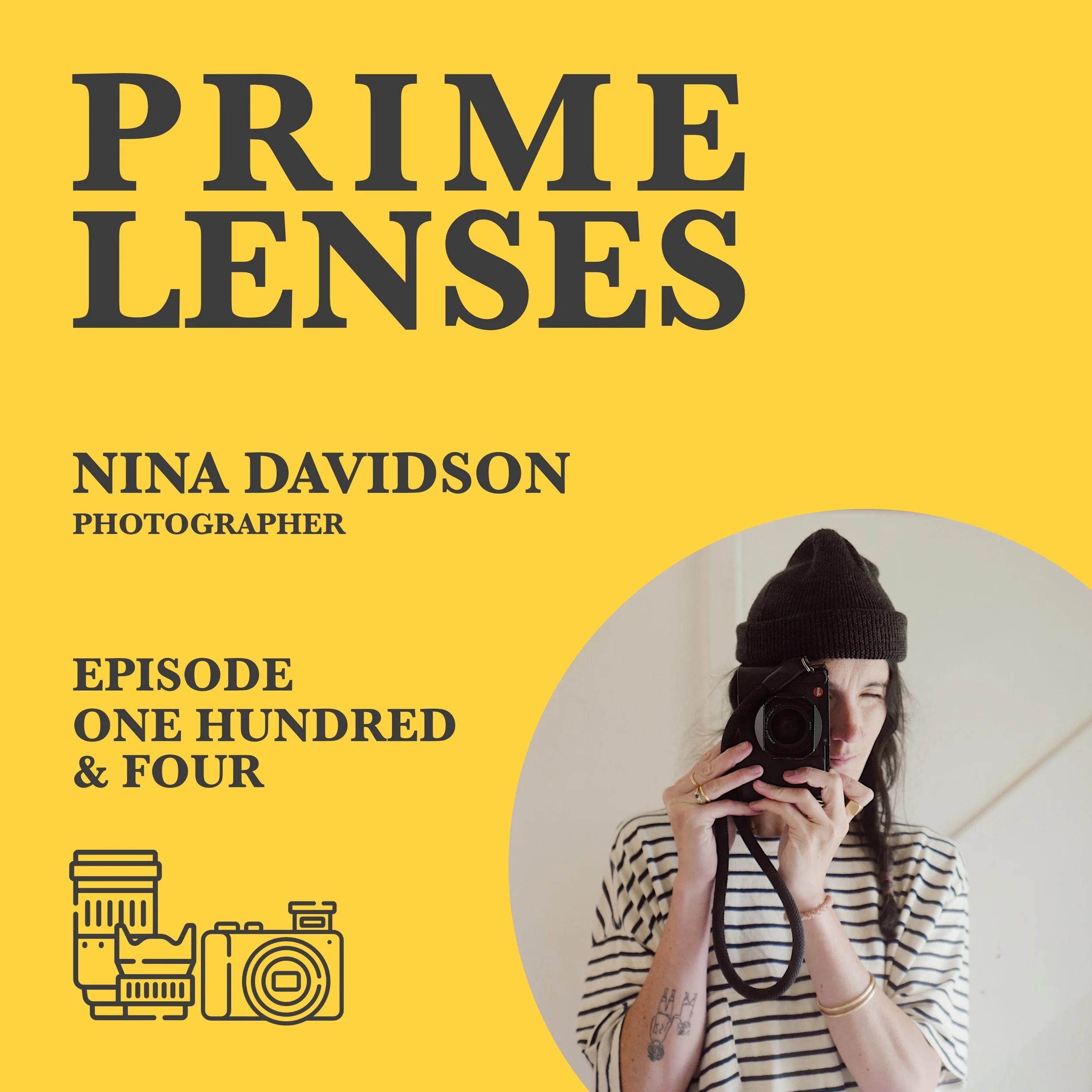


Nina Davidson is a photographer from France now based in Scotland with her husband and gorgeous family. Having previously run a bistro in Edinburgh she’s now a full time photographer specialising in fashion and family. She makes beautiful and real feeling images that have gained her an audience online and caught the attention of brands like Leica for whom she was part of a recent campaign. She was good enough to host this recording of Prime Lenses on location and it’s richer for it.
Sign up to the Prime Lenses newsletter for a mid-week treat.
Support the show on Patreon.
Episode Transcript:
Iain:
Hello, welcome to Prime Lenses. I'm Iain. This week on the show, I'm joined by Nina Davidson, or I should say, actually, I joined her. Earlier this year, I was doing a bit of a road trip down south for family stuff and thought I would try and link in with some episode recording at the same time because being on the road gives things a different feel. They sound a bit different and as you'll hear in this episode there is the lovely sound of being in a room with a wood burning fire, the occasional pop in the background. Nina was a wonderful host and very graciously let me come and record with her one evening as I journeyed south. She is fun to listen to, her images are beautiful, I really enjoy the way that she captures family life and the way that she lives with her kids. It's very real, but it's also beautiful imagery. It doesn't feel staged or over the top and yet is of just the highest quality. You may have seen her work as part of a Leica campaign around the Leica Q recently. She's worked with them in the past. I wasn't aware of her work until that campaign, but fell in love with it almost instantly. So I was really excited when she said, yes, come on down and we'll record an episode. So, on location, fire in the background, and our episode begins with Nina's husband Michael making sure that everyone has got a beverage before we start. oh visitors hello oh you're the best aren't you Hey, no, no, I'm fine. I'm fine. Yes. I did offer him one. Yeah, no, I'm good. Thank you very much. That's what you need. Someone who's looking after you. Yes, it's good.
Nina Davidson:
Good husband.
Iain:
Yes, yes. I feel similarly fortunate and also feel like it's my job to do the same sorts of things for Alice. So he seems good. He immediately met me outside and was very happy and was just like, yes, come on. Because it must be quite bizarre to sort of not be a media person. You've had this kind of recently start, I guess.
Nina Davidson:
Yeah, I mean, we're very secluded here, so also we're happy to have just people come over. It's kind of always a bit chaotic, but that's the way we like it.
Iain:
Yes, well, you know, animals, little people running around. It's life, isn't it? It's what you want.
Nina Davidson:
Exactly.
Iain:
I think that's good. And I think it's good for our work, isn't it? Because for me anyway, I find photography means more now I have kids. Not just looking at other people's images and you start to think about what's important and you start to think about capturing moments that are important. And yeah, I think if I didn't have them, I'd be poorer for it. And my work would.
Nina Davidson:
Yeah. It's funny. where I was in Paris at the weekend and we were talking with a friend who takes photographs of her children as well. And we were saying, what are we going to take photos of in, you know, like 20 years time when they'll be out of the coop? And I mean, I'm sure we have evolved by then and find ways, but it's definitely the forefront of our inspiration, or mine anyways, since having children. It's really what drives me and, you know, brought me to, I guess, where I am today, working as a photographer. So I'm grateful for that, for sure.
Iain:
So when you picked up a camera first off, when you started, was it just you're interested in image making or you're going somewhere and you want to document it and you start to like it? Do you have a background in other visual arts? How did you arrive at photography?
Nina Davidson:
I think I was born in a family that loved photography. My grandpa, who was a GP, had a darkroom in his house, loads of cameras. My mum is a photographer. Right. Also very different. She does documentary photography, long-term, small community. so very very different aesthetically but also you know in the day to day working of photography so I mean as far as I can remember she took photos of us all the time as children and at that time it was film obviously and I spent you know hours waiting at the lab for her to drop films pick up films and looking at photographs having boxes and boxes of photographs in the house and cameras. And I think very young I was with a camera probably just using hers or my grandpa's. And but more as a mimicking, you know, doing what they were doing, not having real interest. And then I did ballet for a very long time.
Iain:
Yeah.
Nina Davidson:
and when I stopped that in my late teens I went back to studying and I did art and picked up a camera because I was my main subject and the subject was a body I think for my final test of high school and I didn't know how to draw I didn't know how to paint but that was easier you know from being a dancer I knew the body and the movement and I thought I could with photography do that so that's kind of how it started again and then I think I got my first digital camera about then and then did I don't know photography whilst traveling and yeah but yeah I think I always had a camera all the time an old Nikon from my grandpa with a few lenses and then I had a digital Nikon for a while and then I came to Scotland and I had children I think I had my first daughter and then I started to be more consistent because it was the fact of documenting her for my family back in France and I was not going home so it was a real exercise of sharing that with them and I think that's when I started Instagram and it was a way of me like posting a photo and sharing with everybody that was interested without personalizing emails or messaging or anything and then when I had my second daughter I was back home one time I arrived at the airport and my mom picked me up and I said oh I had bought a better camera but I was being very frustrated with it and I didn't find the quality was better than my phone so I didn't ended up using it a lot and my mom said what you should get is a leica queue and that would be perfect for you and I was like oh it's so expensive I can't afford it and and she and then we phoned the local film camera shop in bordeaux where I'm from and it was six o'clock at the airport and they said oh we just got one in and so we drove straight there and that's how I bought my first Leica and since having that one it kind of changed my vision absolutely and I realized at that time also I never worked out that my previous camera had a zoom so I had it for like two years and I didn't even know so having the Leica Q with a fixed lens it was compact it It was easy to work out. Constantly, it looks like an old camera that I liked. And, yeah, it just kind of fitted in nicely. Yeah. And then the visual difference from my phone to that was great. Yes.
Iain:
Yeah. Quite a step up.
Nina Davidson:
Yeah. And then so I never took, I think, any photo with my phone again since.
Iain:
Yeah. No, I'm with you. I'm an emputer, but it's the same principle. It's small. I know how it works. I can find everything very quickly. It's just about the pictures. If it did video, I would never touch it anyway. Just, yeah, those images. Good on mum to point you in that direction as well.
Nina Davidson:
Well, she had one. So I think that was, she had been a leiker. My uncle, who's also a doctor and had leikers, he lent her one and then he had a few he had a m6 and like he had all the you know yeah classic like us and I think she started with a leica x2 and then got onto the queue yeah and since she expanded her range but she thought you know as like I was often with my children it was fairly portable didn't need to mess up with different lenses and that was so yeah definitely thanks
Iain:
mom for that yeah I'm a big fan of a fixed lens I mean my camera I listeners know I never really take my 35 off the front of mine and so being able to swap lenses is useful but most of the time for me it's 35 mil and that's just how I live and if it had a fixed 35 I kind of wouldn't you know it could be an x100 or you know it could be I used to use a gr3 a lot which was a 28 similar to the q yeah love that thing especially during the pandemic because having something small with family around you and everything is happening within the confines of your home effectively and you're all there all the time the things I would get and and being able to get very close focus on something on like toys left in places and you find you know you see you start to see life happening it's like the human version of you know in films where people leave places and nature encroaches it was sort of like that in our homes that just life started to encroach play and you just found lego being built around the stairs or playmobile at the bottom of it and you would just catch it and so I used to run around the house even just working from home just with a camera slung across my shoulder just in case and I imagine for you looking at your work that's kind of a
Nina Davidson:
similar mode of operation for you just always on yeah yeah I think yeah it's always lying near my hand yeah or on me yeah uh cap off you know like on yeah and yeah I think that's how I like it and I think a lot of people say you know how can you be present with your children if you always have a camera between and them, but it's the opposite for me. I find that makes me be with them more than being distracted by other things. I try to notice what they do, what's interesting they do that I want to keep or fix in time.
Iain:
I have a diary app that I use on my phone that I put pictures in every day, almost a lot of the time. And then every day I can go back and look at what happened on this day in the past. that's been a really powerful practice for me in the last I must have been doing it for at least 10 years in fact 11 because I saw something today that was 11 years old and it was a photo that I'd made of a packet of wine gums that I'd bought and it just said something like bad day bought myself overpriced wine gums to compensate I don't remember what the bad day was I just remember I apparently bought wine gums and they were lovely. But it's, yeah, it's that kind of thing for me is just to have somewhere to put it. Yeah. Are you a big printer? Are you a big, yeah, okay.
Nina Davidson:
So, yeah, I think, yeah, I print books. Ah, okay. So I have, I think, done that for the past, at least for the past seven years, I think. And that's my Christmas present for my family. I do a yearbook for my family and Michael's family. and it's a good way for me to have to do it but we make one for ourselves and then I do one for the trip we take yeah so we do long trips with the girls me and the girls um and so that's been really nice and I don't know if you saw we've got like little square magnets on our fridge and like the whole side of the fridge is covered as well so the girls pick what they want to be printed and we print that um I don't know like twice a year or something um but I don't know I think there's something keeping the photos digital that is uneasy to me yes um I mean I love doing films but it's impractical nowadays I think but printing books is a good way like I wouldn't have lots of prints of my children in my house I think that's a bit odd yes like especially you know when someone comes and like you've got I mean I'm sure lots of people do that but yeah books is a nice thing
Iain:
it's also how do you choose like I don't know about you and Michael but like Alice and I don't always agree on which is a good picture oh he doesn't get a say oh okay that's what I'm doing wrong
Nina Davidson:
I do all the choosing like he's just yeah
Iain:
yeah See, for me, Alice loves a picture of a place. Yeah. So that you can see everywhere that we were. Whereas I take photos of people. Yeah. I want that kind of separation and sort of capturing the moment with them. And Alice goes, yes, but I know what they look like. I want to see where we were. And so this is kind of in between. Yeah. I have to strike tricky balance, you see. But yeah, yeah.
Nina Davidson:
No, I choose.
Iain:
Yes. No, that's good. Maybe I should just, you know, make myself. I'm going to, maybe I can divide up into departments. I could be head of photography for the, like give myself a title now that I'm podcasting full time. I'm resident artist. That's what I'll be. Creative director for the home. There we go.
Nina Davidson:
Good.
Iain:
This is getting out of control. I've only left the house seven hours ago and already I'm on a power trip.
Nina Davidson:
You're already taking titles. Yeah, exactly.
Iain:
I'm on my own. Yeah. So you've been documenting your own family. how does the work around the house inform commercial work that you're doing and your your practice as a as a photographer with other people I think it's evolved very gradually over
Nina Davidson:
the past I'd say 10 years um so my instagram is what started it I think just some brands liking I guess my images and thinking that I could make content for them. Oh yeah I guess it started with brands sending me things and hoping that I would put it on my children. Okay. Taking photos of them and then giving them the images. Yeah. For free. Yeah. And then slowly that grew into it being done more often and me framing it a little bit more. But I also didn't want it to look too commercial. So I think what they like was a childhood vibe and natural look that I had. So I really needed to stay like that. And I think for a while that was a hard thing to, when you're like, okay, now I have an agenda because I'm getting paid to take this photo. I need to deliver, but I also need to take the photos I normally take. And it's how do you find this balance? But then you do. And you find, I mean, I say that, but even after 10 years, you know, I've got imposter syndrome sometimes. But I guess you find confidence and the fact that people still ask you and are willing to pay, then you're like, okay, I'm doing something right. And then you start taking photos of other kids in a more kind of proper set. And yeah. But I think it's funny because I think I've got two sides of like me documenting my family that I love doing that's like my passion project but also my editorial photography and more commercial photography and sometime is with my own children or myself even and sometime I'm on a big production with a big team and it's remote from my family and the two are intertwined and and that's I think that's for the past two years that's been like how do I navigate that like how do I make a boundary between my family and my photography and my documenting them and also like what pays the bills and yeah and I think you know the Leica coming to me for that campaign which was a big deal was not for my commercial work it was for my artist's work more driven by my passion of you know the childhood and that kind of innocence of them that I find so refreshing but I think my photography with them has developed also from my more commercial work and you know the techniques I've learned and the influence by other photographers and videists that I work with and assistants that I work with and artistic directors all of this is somehow fueling my like all of it is like yeah yeah intertwined and I think for a while I was like no I need to define I need to define what's home what's not home but then a lot of it is both and
Iain:
that's fine yeah I like hearing that you're working with teams or groups of people as well because I think some some photographers I talk to it can be a very solitary existence yeah it's they're doing the work they are out in the field they are coming back they are choosing the images that you know so for me that feels like a healthy track for you to be on because we both know that there's a time when there won't be as many little people to photograph and there won't be as many of these small moments and so you've kind of got to be ready I guess for a for a change in time does that factor
Nina Davidson:
in to the way you're thinking about the work as well a little bit I think so I think that was a big yeah I think so it definitely is on my mind you know for the sustainability of my work just because they're growing and they're not always willing and like you say it can be lonely because I do a lot of remote shoots which I think is the way a lot of brands go nowadays they send you a package but you have all the hats of doing the styling and the makeup and the hair and the artistic direction and location scouting and you know the all the production and also the photography and the post-production and at the end of it it's really economical for them because they have one fee yeah um so I get that's interesting for them but it's a lot to take on and it's really time consuming when I do bigger production shoots and all I need to concentrate is taking the photographs it's intense because it's really long days and I do the editing and a little color grading after but I don't do the big retouching or anything but it's great to work as a team I love it yeah I'm I'm torn because I'm a team of one
Iain:
which means I can move very quickly and be places and then be out and sort of like doing audio only as a gift because it makes your kit very light to travel with easy to start easy to put up and take down but you do miss that interplay and and the ideas I was listening to someone recently talking about working with their photography assistant and they were they were saying how great it was that someone knows how they work and so is ready with the lens that they might want in a minute or has spotted the light changing in the distance and they might want that as an establishing shot and so they're ready they're going all right you know look over there quick here's the here's the 35 or whatever swap over so oh they've got it ready and it's it's things like that that let you then focus on what you do yeah really well and I think that's yeah it's a challenging one to juggle I think in my case I'll just my son interviewed me recently on the podcast I think I just have to wait for him to get a bit older and then I can he's yeah the general consensus is he's he's better than me how old is he he's 11 so lewis is 11 uh ben is seven nearly eight uh and so yeah they're lewis he um listeners will know but it's fun he it was new year's eve and he came upstairs I was still in the shower or just out the shower and he knocked on the door and he said dad can I interview you about the podcast and I went okay sure yeah I was like let me put some trousers on but yes and so I came downstairs to find him ready with a list of questions already laid out and everything good questions too as it turned out and wearing a tie he put a tie on and everything he was he was ready to talk to me and yeah it's it's one of the most popular things we've ever done I recorded it just for a laugh like this and then put it out and it was great I just put it out on New Year's Day just for fun and we've had tons of it it's lovely So yeah, so working as a team sometimes, you know, it's really, really nice. How for you has things changed? Because I discovered you largely through the Leica campaign. Unfortunately, I've been made fun of for being like a Leica and Polaroid podcast. It's more Leica these days than Polaroid. But Leica folks know each other and they say, hey, this person here. And they tend to say yes. So that presumably brought your work to a completely new audience or a bunch of folks maybe who didn't know. Has that been a bit of a kind of, I don't want to say culture shock, but like it's a different vibe. That's a more photography audience rather than a maybe documentary or a lifestyle audience. Has it been jarring or have they been similar?
Nina Davidson:
It's definitely brought up my male audience up. Okay, yeah, yeah. I think from the campaign, more photography focused for sure. But I think I've always had a lot of questions about what camera I use, how do I edit, what's my process. So I won the Scottish Portrait Award in 2003, I think. well I've won the Albert Watson Prize so he's been in touch with me we've been communicating since and I mean he's a great mentor to have so I don't know I've done that I've done another shoot for it was a film also for Jami Fon which had a Leica lens at the time. Yeah. And that was in 22, just as Stella was born. It was three weeks after they came to film the campaign. So also that was photography focused and more about, you know, like, well, photography, as much as you can with a phone, but, you know, more that than, you know, motherhood or childhood focused or clothes even, like fashion. I get both. Yeah. But I like that it's not just about the children also. I think it's something, you know, like the children being that my main photography subject, I'm still about photography and not solely about fashion. Like I don't really, like I'm not a big consumerism person. Like I think that's like a bit difficult for me. But the expression they have, the attitude they have, the light with them, You know, like their movement, all of that is way more inspiring for me than what they wear. Yeah. But I get that they need to wear something. Sure. You know.
Iain:
Yeah.
Nina Davidson:
Yeah, I don't know. I think I definitely got a lot of people asking me to do a course after I've done my tips on the Leica thing. I mean, I think they were quite basic. But then I had a lot of messages saying, I'm a photographer. professionally I don't know how to take photos of my family how do you do it and I don't really know what to say because you already have the kit, you already have the family just take photos just do it and it'll become natural but I think a lot of people put that barriers I was talking about the exact separation between work and family and then it's hard to be that person with your family. Yeah. As like I started the other way around. So it's kind of easier probably.
Iain:
How are you in front of a camera? Because I really, I take lots of photos, but I really struggle in front of a camera.
Nina Davidson:
I don't know. I think I'm okay if I do it on my own. Right. Like if I do self-portrait, I'm fine, but I would definitely like be awkward and other people took my photo. Yeah. But I do, like, there's a brand that asks me to take myself often. Right. And I'd go in the hill on my own with my tripod and my camera and my little app that I use for Trigger. Yeah. And I do it, and I don't mind it, and I don't mind the photo, but just because I'm, like, me and the sheep.
Iain:
Yes.
Nina Davidson:
You know?
Iain:
Yeah. No, I've dabbled in self-portrait to try and develop more comfort because I feel like if I can get more comfortable in front of the lens, then that will help me put other people at ease. Because I've done, and I think it's a very male thing. Certainly, like you, I studied art a bit at school. And I did a lot of landscape painting and drawing. And now I photograph a lot of trees because I'm surrounded by trees. And I think the thing is, the common theme is that those things will never say no. or will never object to a photograph. And my art teacher used to say this thing about it. It was very common in male students that she had, that she noticed that they would draw buildings or they would draw landscapes. And it was just things, ideally with lines, you know, ideally with some straight lines and things. And actually, you know, I aspire to do more people, portraiture, that kind of stuff. But I feel like if I don't understand how to be in front of a camera, I can't necessarily, I just think it will help me to kind of put someone at ease and understand what framing I'm looking for. Because maybe that's what those people speaking to you are talking about, is that they know how to make a picture of whatever they normally make a picture of. But maybe there's just, or maybe if they admire your work and their pictures don't come out. It makes you a student again, doesn't it, when you're trying to do something new?
Nina Davidson:
I think because I didn't study it, just instinctively, I do it. And I don't really try to follow any rules or look like somebody else. I would love to be one of those people that say, oh, I'm so inspired by such and such, and I know this work, and this is kind of what I don't. What inspires me is what's right in front of me and often at the last minute. And that's why it's important to have my camera right there. Yeah. Light, set, you know, ready to go. And most of the time, because I know my camera really well, I manage to have exactly what I want. But that's just with practice. It's just because it's daily, constantly. And I think if you don't have that, if you are like grabbing the camera now and then and taking one photo, two photos, and then like, oh, that's not what I saw. And it's disappointing, obviously.
Iain:
Yeah.
Nina Davidson:
But my camera is very old. And, you know, it's definitely like not the best. And well, it's a very good camera, but it's, you know, the first of their series. And it's got like no tons of pixels and it's lacking in a lot of functions, I'm sure. But because I know how to work it really quickly and I don't know how to look at the button. I know how not to look at the button and can do the settings. Then it's easier.
Iain:
Yeah. And I think that's the secret. I mean, it comes up a lot on the show because I think it's important that good work comes through iteration cycles. and practice and repetition. I think you have to start, you know, projects and work have a beginning and a middle and an end. And I feel like going around in that cycle as many times as you can, ideally with the same kit, is where the mastery comes from. It's where the comfort, because then you become the person where you press the button and you don't even look at the back because you know you got it. And that for me extends then to things like film. Like I've just got a film camera and I'm testing it at the moment to see whether it's got an autofocus problem or not because I just don't I don't have that trust or that faith yet that everything's calibrated and working as it should so until I get more and that's the it's slowing down those cycles for me in a way that's really unfamiliar yeah you know that makes it hard but that's probably a good thing for me to work through because once I've got that faith in that medium that's then another medium I can extend and
Nina Davidson:
reach into you know yeah I know when I did the leica campaign they gave me the latest leica q3 which I never used before um and I'm always worried that it's not gonna come out the way I want it to come out and I think when I did you know the other similar things with different cameras and my own I'm always reluctant to jump in I just got um because I got funding from the scottish border scans um creative um body to get um anyways I got a new camera like a bigger one yeah and a newer one although it's not the latest but I was on my last shoot I forced myself to take that one with me and I was like I need to make it work and you know but I was really yeah anxious that I was gonna be able to carry on my style through this new camera whether it's you know more defined or the capture it's got different color grading because I do very little retouching on my photos like barely any um so it's and I don't want to make any more than what I'm doing so I don't want to have to do a lot of post-production to have the color that I'm liking so it's important to get the right one so I had a long discussion at the Leica store about which model was more similar to the one I had and I was really happy but it is different because like you say I had to stop I had to pause go in the menu change my settings and it slows everything right down and it's fine if I'm on a remote shoot and I'm on my own and I've got all the time that I want but if I'm with a client with a big team I can't be messing around with my settings and looking like I don't know what I'm doing so it's definitely something come with just practicing practicing and something that I want to practice more that Albert Watson told me I should is light like artificial light obviously I don't do a lot of that and I'm getting in it but I think like with a different camera it's very hard it's very hard and it's just like he says just practice you need to practice doing lots of it in various scenarios. But it's really tricky. I find it hard.
Iain:
Yeah. I think digital's maybe more prone to change as well somehow in a funny way. A friend of mine, Dan, recently has shot more film because he got annoyed with the variability that he was seeing in digital files and that when he shot with certain types of film, somehow it was more consistent and he needed to do less retouching and futzing afterwards. Whereas, you know, unless you're really specific and dial everything in and shoot everything in manual on a digital camera, which sometimes doesn't help, you know, like you're giving up on stuff like automatic ISO and stuff, which makes life a lot easier. Like I'm an aperture priority person.
Nina Davidson:
I'm a manual person.
Iain:
Right, so you're all manual. So you're getting more consistency anyway, probably across.
Nina Davidson:
Yeah. Well, I'm a manual on the cameras. I know really well. So, you know, like going into that new camera, I was trying. But like your friend, I was finding it being very inconsistent. So I went back. But being a Leica as well, I think there is similarity between all the models. So that helped. But I mean, I love film. I would shoot film if I could, like only. But it's not always. I mean, it's not possible in a commercial. Well, it's possible sometimes. Some clients ask for films. Yeah, that's nice. Yeah.
Iain:
Yeah. It can be impractical if you need a rapid turnaround. Yeah. And if, you know, you've got rapid deadlines and stuff like that. It's possible, but like me, you know, you live fairly remotely. Yeah. Getting that film somewhere to get it processed and checked. Yeah.
Nina Davidson:
I mean, that's the next thing I want to learn to develop myself.
Iain:
Yeah. Have you ever done that?
Nina Davidson:
No.
Iain:
No. It's really good.
Nina Davidson:
Yeah.
Iain:
It's really... I've only done it a couple of times, And I'm about, so in Inverness, we've got the biggest darkroom in Scotland. It's a place called Wasps. And it's an old college that they bought and turned into spaces for artists to rent and a cafe and stuff like that. Wasps, I think, as an organization has existed for about 40 years. And they basically do this. They find buildings, turn them into affordable spaces for creative folks to rent out. It's fantastic. And the one in Inverness used to be a college. And Matt, shout out to Matt, runs the photographic bit of the darkroom. Because he used to teach there. He used to teach photography. So I've been up there recently, just met up with him. I'm going to join and he's going to give me a refresher on developing my own film, which is why I've got my film camera with me. So I can get a couple of rolls ready and then go and do it. But they've also got loads of enlargers. And they've got all the stuff there to do a fully analogue process. and get that all sorted. So yeah, there's a couple of places that's in Glasgow and Edinburgh as well that are quite good dark rooms as well. So yeah, I think...
Nina Davidson:
Somebody gave me a kit.
Iain:
Oh, wow, brilliant.
Nina Davidson:
Yeah, and I have my grandparents as well back in France. Oh, wonderful. So it's just, I just need to do it. But yeah, I think it's when clients say shoot film, it gives you, you know, like they trust you. Yes. And it's like, okay, now I need to deliver. I remember the first time it was for an American brand. And they're like, we want you to shoot the whole campaign black and white, which they've never done before. Wow. And then do a medium format portrait of the four girls. And I was like, okay. And she showed me the photo she thought that I've taken before. And I was like, yeah, okay. I know how I did that. And I did it. And I got, you know, the light meter out. Things I never do for my own photo. And I was like, I did the film. And it was a really quick turnaround. And I sent them to Edinburgh to have them developed. And they came back so wrong. Like, absolutely, like, completely unusable. Right. And I was like, no, they've put their trust in me. And now I failed. So I did it again. Yeah. And they were fine. Yeah. So I don't know what I've done. Huh.
Iain:
Weird.
Nina Davidson:
Yeah. And I think that's why I want to develop as well, because I want to understand how it works, you know, like the whole thing. Like I don't want to have any process that is not me doing it. And I think like, you know, you take the photo, you put your files through Lightroom and you color grade it. Like the whole process is yours. So I think with film, like handing that over is somehow a bit strange. But yeah, anyways.
Iain:
There's a really good book, a Magnum photography book that's contact sheets from lots of different photographers.
Nina Davidson:
Oh, I love that. And with their notes on it.
Iain:
Yeah, so and basically there's, oftentimes they've written, the photographers themselves have written stuff or the person who did a lot of the darkroom work has talked about it. And there's a bit that always stands out to me, which is of Muhammad Ali's fist, the photograph of that. a lot of them are Leica photos as well which is kind of fun but talking about the process then in the darkroom that they they went back on and Magnum put out a video I think on Instagram recently talking about the photographer wanted to revisit that picture because they never felt like it had been printed now they'd seen lots of different prints of it over the years and lots of different variation they'd never seen it quite the way they wanted it they wanted the background dropped away more they wanted a little more contrast in the fist and you know the knuckle the skin on the knuckles and stuff and it's just amazing to look at stuff like that and see people mark things up and then the process of it's because I think again we naively assume that film is just film and it isn't it's the dodging and the burning and the chemicals involved and all that stuff that I've yet to learn is the process that informed the digital tools so it's almost going right back to the source yeah you know if I was doing this properly like some of my listeners I'd also be developing color at home but I think I need to walk before I can run it's just that's a That's a lot of chemicals and a lot of temperature management.
Nina Davidson:
Yeah. I mean, I think that if you just send a roll of film to be developed, I don't think any of those fine details are being done, but you can... I mean, yeah, that's another job.
Iain:
Yeah.
Nina Davidson:
But fascinating, for sure.
Iain:
And another challenge for this modern period of kind of fewer people involved in the process, because, again, historically, you might have had someone who would do some of that for you and you'd talk to them about what you wanted and then it would
Nina Davidson:
come back and there'd be different versions of it you know yeah definitely I find like there's a lab I used back where I'm from in France and I find they were accessible to have discussion but I find certain lab being very defensive right you know and be like no this is just like the way we do it And I'm like, well, but it's my image. And if I say like, you know, like I find this was, you know, not exactly like that. And I know my, like, I know my camera. I know the way I've done it. It shouldn't have come out that way. Yeah. And they're like, well, nothing to do with us. Right. And I think that's annoying. Yes. Yes. But I found this new little lab was really open. and it's like I think I was shooting color I had a gold and it came out like absolutely too contrasty and I was like you know the black and white were great but those ones like oh next time we'll do it better and they did and I was like this is fantastic it's great it's good to
Iain:
have a good relationship like that trusting yeah the thing that appeals to me about developing my own stuff especially in black and white I'm taking an approach to it a bit like video you know when you film in a very um in like a raw format in a camera like a log format so it's very neutral and very flat and then you can tweak it from there I like the idea I don't know whether I'm just being romantic and whether I'll actually be able to achieve it but I like the idea of developing in a slightly more neutral fashion such that the negative is a stage and the process not the end point you know and I just try and scan the negative and then whatever comes out comes out because I've been revisiting some old family negatives so my dad's old negatives are pictures of me and as a baby on holiday with mum and dad somewhere and it's really funny because you I've been trying to use my camera I was talking to my stepdad about this on the way here and trying to use my camera to scan the negatives but because the photos aren't all in focus because it was an old manual camera in the 70s I don't know whether I'm sometimes like fighting with a negative you don't know if it's your camera yeah and so I assume I've made the mistake and then I look at it and I go I get a loop out or something I go no wait the picture's not in focus that's the problem but I do like the idea of having this this kind of by design more neutral product that then I can take in different directions it's quite appealing but as you say it's another job for us to learn
Nina Davidson:
I mean photography is such an open box
Iain:
do you have a kind of part of photography that you've never touched that you want to that you kind of like that's film sounds like one of those things
Nina Davidson:
yeah I mean definitely developing films is something I've never done that I'd like to do I think just refining what I'm doing and I think it's always evolving I know my camera that I use mostly at the moment won't last forever and that's really sad I don't know I guess if I start developing myself then I think shooting only film would be
Iain:
you know
Nina Davidson:
a dream but I'm also I think because there is that pressure of it being my job then I find excuses for having things easier you know like just sometimes I shoot with well I shoot with my Leica M6 with a rangefinder so or manual not even autofocus and I get my favorite photos from that but when I think okay I'm gonna get a more professional camera I never think to take a digital m because I'm like I need autofocus and I need to be able to get those but I do get them with the m6 right so you know I'm like but I do get them so I don't know why I'm thinking that I should I wouldn't be able to yeah and so I think it's like trusting what I'm doing more than like you know the easy side of things and sometimes just my instinct also and like not finding that you know I don't know anything about photography and I've not studied photography and why do people want to pay me to take photographs but yeah I think in the creative industry all over that's a very hard thing to achieve like trusting in your yeah worth yes and pricing your worth and you know knowing your value and that I don't know there is you know and also like times of year where it's like oh it's quiet like I should pitch to a lot of people and reduce my fees and then you're like but no because you know whether I do it for 200 pound or 1500 pound I still do the same work like it's still the same process it's still the same person behind the camera it's still the same involvement of my part and so yeah I think but I think in any creative industry that's the case
Iain:
yes definitely is um I've I've even had it uh starting this and I'm not even really getting paid yet so so I still have the I think that the money is sometimes just this thing like well it
Nina Davidson:
just validates you doesn't it but they also put pressure yes yes that's true I got um it's funny
Iain:
because I left my job last year to do this and I've worked on video game projects worth millions for other people and like tech projects and all sorts and the day I found out that I'd got a grant for a thousand pounds I felt like a king yes it's like I'm gonna have cheese on toast for lunch let's go you know you just because it does it just because it means more because it was someone taking a punt on you yeah rather than the capability you represent you know it's quite a nice feeling but yeah it creeped there are days when I struggle I'm just like what's the point people gonna like this and it's like you kind of have to remember you've got a skill set and you've got a
Nina Davidson:
value and yeah I think being remote like we live here also you know a lot of my work I do in the middle of nowhere like I don't apart from social media I don't really know the rich side has you know like I don't really see like how people use it or what they say about it's like I very rarely speak to my clients face to face um so there's also that it's like it's a lot of me and my camera and you know my desk in the middle of my living room with my family around me and And then out of the blue, I reach out and say, you'll be the perfect person for our next global campaign. And I'm like, what?
Iain:
Yeah.
Nina Davidson:
And, you know, I'm taking a call with people from Germany and the UK and I'm in Greece with my kids, like, and on holiday. And it's like, it's surreal. Yes. And also like a dream.
Iain:
Yes.
Nina Davidson:
But also, like, are you sure? Are you sure you're, like, the right Nina Davidson here? It was a great project to be on, for sure. Yes. And I think when they gave me the brief, I was like, absolutely, it has to be me. Like, this is definitely what I do. I can see, like, why they chose me.
Iain:
Yeah.
Nina Davidson:
But then also, like, oh, I hope I'll do good photographs.
Iain:
and you know yeah you've got to use the thing the way it wants to be used and that is true for people with a craft as well there's no point there's no point asking me to make video I don't know how right then and so me to take photos of cars right yeah you know with the best will in the world we don't we don't know but yeah we don't know what we're looking for and so you know so so yeah I don't know it's it's a funny it's a funny thing that happens when commerce and creativity meet like that it can be it can be a challenge for sure I think that's I
Nina Davidson:
mean reading the comments of the youtube video that was released it was a lot of the comments where you know we forgot it was a commercial and you know people were enjoying the filmmaking and And that's down to the producer. So I worked with him before once. And I was like, when I reached out, I was like, I know someone that might be good for the campaign. So I've put him forward. Simon. And it was just the right match. I mean, from the brief to why they were choosing me, to Simon that I knew before, he's came here before. So it was just the right thing to do. But he made a great job in making a commercial, dans le commercial.
Iain:
I think that's, I certainly enjoy that more. I think the practical reality of the world is that we need things. Like, you know, people need to make things. They're going to sell them. You're going to see ads. You may as well see something that also has something in it that you enjoy, you know? you may as well like it whilst whilst you're being advertised to no one's you know I mean guinness turns up in star trek now seriously like the idea that like in the 23rd century scott is going up and ordering a guinness and like and he says it by name like it's that's that's pretty hardcore product placement that is you know um so you know it's not that like it's I'm comfortable with making that trade I think yeah but I'm the son of a salesman so maybe that's why
Nina Davidson:
my dad was an advertiser
Iain:
right okay there you go
Nina Davidson:
I kind of dipped in it also
Iain:
yeah was he easy to sell too just out of interest because my dad was just a sucker for marketing
Nina Davidson:
yeah
Iain:
I think he spent so much time around it he believed his own messaging so he found it very easy to believe other people's
Nina Davidson:
I don't know I think he was quite critical but he was not in the commercial side he was in the creative side so he's good at having ideas you know again like pricing what's not here is like the difficult thing so I get a lot of chat with him on you know this work this type of work and how to place myself and how to develop you know how to branch out and it's a good other side of it I think it's interesting but also I mean obviously my mom is also a photographer and she does very different things yeah um she is also a good person to talk to because she's a leica user also yeah and she has been exhibited and won awards and right travel to loads of places so it's also interesting
Iain:
yeah having that support network around must be wonderful because a lot of folks I speak to who creative jobs don't come from creative families and in some cases have had to push quite hard to make the case yeah I was chatting to Bobby Anwar before the end of the year there and he had to really convince his folks that it was okay for him to go into a creative industry and stuff but it
Nina Davidson:
sounds like you wouldn't have had to push against any of that no no I mean I've been out of my family's house from young anyways and I think I'm quite you know resourceful so I've never kind of depended on them anyways financially so I think then you do what you want
Iain:
they've got that confidence
Nina Davidson:
my little brother is a videoist as well so he's a filmmaker and so we are far also and we've got two with serious jobs and two with creative jobs so I mean my dad has an advertiser has been employed all of his life with the same company so there's that kind of both of like the security of the job but also the creative side
Iain:
yeah nice very lucky to have that kind of
Nina Davidson:
support yeah
Iain:
not really good so what's next for Nina Davidson then
Nina Davidson:
I don't know more work this year you know working with my new camera and learning to develop film
Iain:
yes looking forward to seeing that do you know Tiffany Ruber no she is a film photographer em shooter she's based in london now although from her instagram it looks like she's everywhere all the time um but she uh also french would be a good oh yeah she has recently been doing tintypes and kind of getting into very analog yeah super analog stuff so yeah and I'll also shout out another because tiffany's been on the show another previous guest uh nitrate fox who does wet plate if you know her she's so cool uh her stuff's great so yeah but if you wanted an introduction to tiffany I could put you in touch because she's good because she travels so much she's brave just traveling with film now that's the bit for me that I was excited driving down here because I didn't need to worry and scans on film and things like that and hoping that you know because if you get small airports are always fairly friendly really if you just have your bag ready or whatever yeah but the big ones
Nina Davidson:
can be a bit hardcore yeah I think I've only had issue once going through most times it's been fine but yeah that can be a bit difficult I guess yeah it's I it's just an extra thing to worry about
Iain:
instant film I think which is what I've used a lot of in the past I think is hit harder by an x-ray it really messes up like polaroid for example I've had and I had a guy at shippel once argue up and down with me that like it would be absolutely fine and I went it really won't be fine it will ruin and everything came out pink and you just had to just I just had to lean I mean if it's exposed it's okay yeah so it is better in that sense if you've exposed the image already doesn't matter but for um unexposed stuff just came out pink because it's just blasted yeah with you know especially this the sort of um the 3d scanners they have now that just they just bombard them with x-rays and it's game over it's just ruins it you just have to lean into an aesthetic at that point you just have to drive everywhere yes I'm going to minorca later in the year I'm not sure I'm going to drive there train yeah yeah there we go I'll leave a week early it'll be boat yes ships I think the general thing for me is either buy the film when you get there or
Nina Davidson:
yeah
Iain:
which is the other thing you can do
Nina Davidson:
but you need to bring it back
Iain:
yes
Nina Davidson:
or you can have it developed there I guess
Iain:
I could I suppose yeah I'll have to ask the guys at the Royal Society where they develop their film I don't know actually because they live on Menorca so they must they must get it done somewhere somewhere there must be someone who does it but yeah oh brilliant well Nina this was lovely thank you so much for making some time. I don't know how long we've talked for, but it's lovely. It's probably about right. Probably about an episode. It feels like about an episode in length.
Nina Davidson:
I think we've been all over the place. We have.
Iain:
It's good. See, this is what I like to do. It's not too, you know, not too structured. And you've talked about some lenses, so we've ticked that box for people. I did get a message recently from a listener who was like, I'd quite like you to make sure you don't lose sight of the lens thing. But it's like we've talked about, you know, 28mm, that amazing Sumo Lux lenses. Yeah. Yeah.
Nina Davidson:
It's, yeah.
Iain:
it's beautiful it's a good lunch it really is it is good well for people who don't know you where can they find a bit more Nina Davidson
Nina Davidson:
on well on Instagram under my name
Iain:
and
Nina Davidson:
on my website and that's it
Iain:
yeah brilliant Nina thank you so much
Nina Davidson:
no problem
Iain:
a really big thank you to Nina and Michael for hosting me I think that's a lovely episode I really enjoyed that conversation and it is the first of two that I recorded on the road while I was traveling south next week you'll be joined by Joe Cornish if you enjoyed that and you're new here, don't forget that you can like and subscribe to the show wherever you get your podcasts. So that's Apple Podcasts, Spotify, YouTube Music, Amazon Music, all those lovely places. Please do feel inclined to subscribe, hit us up with a review, leave comments, all of that will help other people to find the show. I love to chat to everyone so my DMs are open, you can drop me an email. It's great to hear from you. And you can support the show as well. You can go to patreon.com slash prime lenses or you can go to the store that we have on primelensespodcast.com and pick up an umbrella or a cup or a badge or stuff like that. All of it helps to make this go and is massively appreciated. Right, well, pick up a camera, get outside, photograph your life and let's do this again next week. See you soon. Bye.
More about this show:
A camera is just a tool but spend enough time with photographers and you’ll see them go misty eyed when they talk about their first camera or a small fast prime that they had in their youth. Prime Lenses is a series of interviews with photographers talking about their photography by way of three lenses that mean a lot to them. These can be interchangeable, attached to a camera, integrated into a gadget, I’m interested in the sometimes complex relationship we have with the tools we choose, why they can mean so much and how they make us feel.