Episode 103 - Omar Z Robles
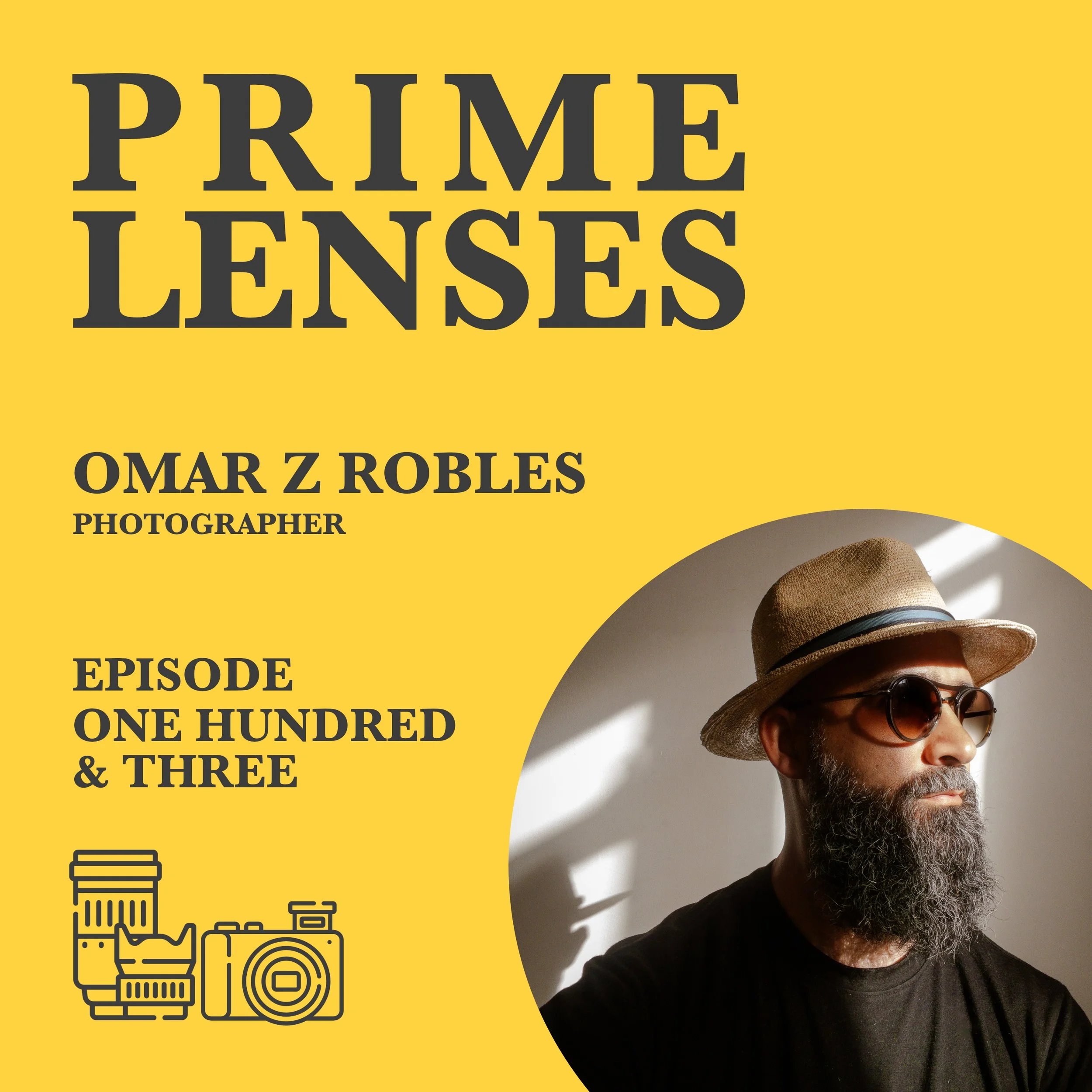


Omar Z Robles is a Puerto Rican photographer now based in New York City. He has incorporated his background in the performing arts into his photography making beautiful work capturing the incredible physicality of dancers on the streets of NYC. I love his images and I’m not alone, he’s gained quite a following online where he also calls out BS on various photographic trends that he sees as getting in the way of what photography should be.
Sign up to the Prime Lenses newsletter for a mid-week treat.
Support the show on Patreon.
Episode Transcript:
Iain
Hello, welcome to Prime Lenses. I'm Iain. This week, my guest is Omar Zed Robles, a Puerto Rican photographer now based in New York. Omar's incorporated his background in performing arts into his photography, making beautiful work, capturing the incredible physicality of dancers on the streets of New York City. I love his images and I'm not alone. He's where he also uses his platform to call out BS on various photographic trends that he sees as getting in the way of what photography should really be about. I love this chat. I hope you won't have to call BS on photography podcasts. Please welcome Omar. I had my seven-year-old come downstairs with one and a half minutes to go and I was like dude
Omar Z Robles
We talked about this I have one and a half minutes that reminds me remember that video the pandemic of this guy in the middle of a new cast and then the little boy comes in the backdrop. He's talking about some war or something
Iain
Like that. Yeah, he had his suit on. He was on the BBC News and everything. It was amazing. That will happen to me one day. It just hasn't yet. But it's coming for me for sure. Should we just dive right in? Yeah, cool. It is absolutely lovely to see you. I am really excited to talk to you about a bunch stuff because I think what's lovely, I like to speak to guests who are opinionated. And I think, you know, you have a perspective, you have a point of view and you share that point of view as well, which is really nice. It's just also really helpful that you're also a fantastic photographer as well. So for a starting point, what I like to do often with folks is start, let's go back to the beginning. At the moment, it seems like you're running around with really cool cameras. And you mentioned before we started properly that you know you like using good things so you're you're now you know you've arrived at a point but what started you with photography in the first place was it directly to photography was it other forms of visual art like how did you on board um I always I always
Omar Z Robles
Liked photography since I was a kid um I was always very like um you know like visually oriented You know, like I remember being a kid and like being at like at the doctor's office with my mom and just browsing through the magazines. And it was really just like the ads that really caught my eye. You know, even watching TV now that I remember, it's like my family would make fun of me because I would watch the commercials oftentimes. It was like sometimes the kids will go out during the commercial break and I would actually like stay during the commercial break and really look at what was going on. So I've always been fascinated by media and communication in many different ways. I don't know if, I mean, you might know this because, you know, you probably did your research. Before, you know, diving into photography, I actually was a mime for, you know, about 10 years or so professionally. So anyway, long story short is that art and visual communication has always been part of, like, my language in many ways. But when I picked up photography as a thing, and just to backtrack a little bit, I always liked cameras, but I hated people using them as a tourist thing. And for that reason, I was always kind of like, had this aversion of, I'm not going to buy a camera until I actually know how to use it. And when I was living in Poland, I was performing there. I had a girlfriend and she had like photography class and she needed to do like an assignment. And I ended up making the assignment for her. And even then, you know, like I wasn't really, you know, I didn't really know what I was doing. But it was a kind of like, you know, high end, not even high end, but like a prosumer kind of like point and shoot camera. And I just went out and did the assignment for her just because I love making photos, but not professionally. And long story short, when I came back to Puerto Rico after studying in France and living in Poland performing, I came back to Puerto Rico and my family and a girlfriend that I had at the time, they all got on my case. You got to go back to college. You got to study something real and blah, blah, blah. And I was like, well, thanks for the vote of confidence, but sure, why not? So I ended up looking up and I only had like maybe a year worth of credits to finish my career. Because I had already started like studies on like graphic design and communication. So I was like, all right, fuck it. You know, I just do this for one year to get them off my case. There I took a photography class and the professor was freely, you know, taken by my work. And he even offered to put me up for an internship with Nat Geo and a bunch of things. And I was like, wow, this is amazing. But at the time, I was still focusing in theater. And I kind of said, thanks. But I'm a mime. This is just a side thing that I'm doing for my family of my case. But I really ended up liking it a lot. And my brother, he's also a journalist. And he also did photography. So I kind of took photography also because of him in that sense. And, and he was working for a magazine back then and they were looking for, for photographers. And I submitted my, you know, whatever I had as a portfolio that was very minimal back then, but they liked it. And they started hiring me to do like, first I started doing like, like events, like social events. And from there, they put me to do some editorial portraits. And then from that, I did political events, political manifestations, like protests and stuff like that. And then at the end, they had me doing fashion spreads. Mind you, this was in my first tier, and I was using a Rebel, a Canon Rebel with the kit lens. And I was photographing fashion spreads. I was like, wow. I mean, I think I didn't see the, I can't find the word, but the importance, I guess, of that. Until later, I was like, wow, I was doing this in my very first year of photography. That was kind of crazy. Also very responsible. But yeah, I mean, I was doing it. And I learned on the job. So basically, that's really how I started. And then, you know, to just keep moving forward a little bit. From there, I kept performing and I kept doing photography a little bit on the side and then moved to Chicago. And I started doing photography a little bit more professionally, first as a headshot photographer, because I already had like theater connections. And from there, that's when I started doing street photography. And I started doing street photography because one of the things that I noticed is that I was going out with my camera every day, but I was very afraid of photographing people if it was not for like an assignment. And I said, you know what, I need to like get over that fear. And I just, you know, like head on start doing street photography. And in a way, or not in a way, it really was to get myself over that fear. So I started going out every day with my camera and I started a blog. And someone from the Chicago Tribune, the Chicago Tribune has a Spanish publication or had a Spanish publication called OI back then. And someone like the editor saw the publication and he liked it. And then one day they reached out to me and then they said, like, we've liked what you've been doing, you know, what you've been writing and the work that you've been posting. So we'd like you to come and do some assignment for us. So I started working with them and I started doing photojournalism with them. Again, with them, I started doing first some events and then they had me doing covering a few editorial stories. We did one very interesting with a journalist called Jeff Kelly Lowenstein, whose brother is John Lowenstein, who's an amazing photographer. And they sent me to, like, Illinois. I mean, Illinois is Chicago is in Illinois, but, like, some, like, small towns. We were doing stories about migrant workers, basically. So it was, I don't remember if it was Michigan or somewhere else, but it was like around the area we drove. And we were doing stories about migrant workers and very relatable to what's happening today. But that's a longer story, but it was very interesting. And then with them, I ended up doing sports. And thank goodness they switched me from sports to arts and entertainment and like concerts like that because I know nothing about sports. So they would send me to do like soccer games and they were like, shoot the center, shoot the center. I was like, what, are you talking about the physical position or like a specific? Just give me a number and a teacher and I'll follow that. I mean, I know action, but I don't know like, you know, like the sport, you know, the thing about the sport. So they had me very little time doing that. And I ended up doing more like entertainment, like concerts and other stuff. So yeah, I mean, and then long story, you know, to like move along, I ended up from there moving to New York. And in New York, a little bit before moving to New York, I started latching onto the Instagram community in Chicago, which was like a new thing. And I really liked the community aspect back then, which was very present. And people were doing like photo walks together and getting to, oh, I want something that, again, I found very interesting was how this community was unifying people from all sorts of walks, including professional photographers, like career photographers. So I ended up through that meeting two important photographers. One is Scott Strasanti, and he was working for the Chicago Tribune back then. This guy has, I think he was one, I don't want to misquote it, but I think he's won like a Pulitzer if I'm not mistaken he's won several awards for like several things that he's done he's covered like I don't know how many Super Bowls um you know MLB the guy is like a pro and and I met him through this community and he was like super chill and like like taught me a bunch of stuff and he was like a like you know like a career person just being like just hanging out with the rest of us you know um and it was very interesting and then I the name of this other the other person but he was I think the the photo editor for playboy at some point so again someone like from a huge corporation you know like a huge photography you know like um yeah you know job and and you know like they're hanging out with the rest of us there's also a guy named jason peterson who is uh jason m peterson who maybe you follow him on Instagram. I mean, he's pretty big on Instagram, but he's also a huge PR person. And just being able to hang out with this, I mean, the guy has done stuff for JC or Kanye West, the guy has done stuff for everyone. And just being able to up-chop with this amazing, for me it was surreal to be able to have access to this just through this community um so by that point then I moved to new york and what I did basically was like try to connect with the instagram community here um and basically just kept on that route right um which opened up the doors for me to get in touch with different um again access right access to to yeah one a community to an audience and three eventually as as the story progressed then actually access to media and have other um outlets see my work and I know I'm getting ahead of myself so let me just stop there because I have a tendency to get ahead of myself
Iain
No this is tremendous I love I love episodes where I don't have to talk very much this is brilliant Also, the thing that I think is interesting, and this is a through line because I spend a lot of my time talking to working photographers. There's a pattern for me that emerges from people who've worked in scenarios a bit like the ones that you came up through. So because you were a working photographer and with publications and you can't always choose what you go and photograph, then I think you do two things happen when you do that because you get to see lots of different things. you work out what you're good at you also work out like you were saying about with sports the stuff you're definitely not good at like it makes all the sense in the world to me now if you say I started in headshots and then I worked in the traditional performing arts and theater and stuff that then anyone looking at your profile today and looking at your portfolio sees dancers and performers and you know really interesting conceptual stuff and it's like that makes sense because you've been steeped in that stuff but what's nice is you've you've acquired the skills along the way it sounds like you met the right people at the right times as well I mean I would
Omar Z Robles
Say so one of the things that I can say on that topic as well is you know you have to put yourself out there you have to you know nothing happens nothing is waiting for you like there's no one no one's going to save you. You know, no one's waiting for there to save you. Like, you have to just go out there and put yourself in the situation. So everything that I can tell you in that sense is like, I just, you know, take a chance. You know, again, there's people that I was talking to you about. They would come sometimes. Some of them would come to the Instameets. Some of them wouldn't, but I saw them. For example, Scott. Scott didn't really hang out. Scott's recently, as far as I remember, he didn't go to the instant meets but I started following him with scott was a very interesting thing because I I actually met scott there was like a chicago has like I forgot the name but it was it's basically the the homologous to the icp here but um but in chicago it's a little bit small but um but there was like a talk he was doing a talk there and I went to the talk and I met him and he was like very interesting very funny and very you know like uh just insightful and I met him there but for me again was like this mammoth you know like this huge person that I was just like all right you know it's like he's there I'm here I'm not gonna like cross that line right but um but at the moment again this is me making efforts to connect with people um I decided to do a series um called I thought I forgot the name of the series um and you will see that throughout my career I'm very serious driven like I I like I put myself this goal I'm gonna do this and I'm just going to follow that um sometimes it's by coincidence or sometimes it's like not coincidence but sometimes I start before I know it and then I realize okay I've been doing this let me just keep doing it and sometimes it's just like all right I'm going to do this and follow this path right and in this case um you know you remember the ones at that point was very kind of like a thing the brainizer method yeah so so that was the thing back then and I was like right I'm going to try to do a series about this and I'm going to do a series um making portraits of instagrammers um so I started reaching out to instagrammers that I found that were influential or back then the term influencer was not a thing it was like influential or just like people that I found interesting or that that had like you know visibility um and scott was one of the people and I was like I'm just gonna reach out because I saw he was posting um his stuff on on he was very I think he still is but he was very much like a again an interesting thing about him this is a guy that has access to all the cameras in the world but his for his personal work he uses an iphone um so he was just like doing everything with the hipstomatic app and all this stuff um so I reached out to him and he said yes and you know like so I I and the same thing with everyone else that I mentioned it's like I just I just reach out and say like let's see what happens they might say yes I might say no but I'll try it another for example another thing that that happened while I was in chicago that kind of I think merged well what I was what I ended up doing afterwards was like uh parkour there was like a group of um kids you know practicing parkour in in um grant grant park I think it's called I forgot now uh by by the bean um millennium park millennium park well one of those um uh they were just there you know like um I didn't know them and but I just approached and said hey guys do you mind if I like hang out and make a few photos and they're like oh we don't mind um but I guess they were used to having people there coming but I actually stayed for like almost two hours just photographing them and then and then had a little bit of a chat and he's like oh yeah we're here every Saturday and Sunday you know um well okay sure so next Saturday I go back and they're like whoa you're back I was like yeah I told you I was gonna like like be with you guys for a while and he's like oh really and then I kept going every Saturday to the point that I mean these were kids and I was like way older than them but at some point you know like I remember we were like going to some spots and then they met some new guys and he's like oh this is somewhere our photographer I was like I guess I'm for the photographer like no so I integrated myself into that community and again you know like all this to say that yeah you put yourself in the situations and you make up and um by the force of just like just working you know um
Iain
Yes yeah you make the work and then you start and it's it makes sense as well you you sort of touched on it a little bit there with your personal projects and things like that are they it doesn't sound like that's a conscious thing that you sat down and you went I'm going to carve up 30% of my work is going to be commercial work 30% but it's just sort of happening that you're going you're inspired by things and going out into the world and trying them out and then presumably
Omar Z Robles
Does that end up informing then the paid work yeah yeah in many ways you know um so back then I was doing more like client stuff um then then came you know then when I came to New York and I started you know like getting deeper and deeper into the songwriting community I was still doing a little bit of headshots um but that but at that point I started developing an audience little by little and um and that moment that that's kind of when like the little by little like the influencer you know things started happening um and because I was already like like pretty deeply ingrained within the community I was meeting people at instagram I was meeting people you know in different outlets they started paying attention to my work and that's when you know like I think if I'm not mistaken the first the first brand that reached out to me was gap um and out of the blue I got an email from gap and they said like oh we want to do like a campaign with you and I'm like oh sure that's cool and it was based off of the work that I was doing um and then you know I kept working that way and then you know same thing with with other brands for example when it came to like working with photography brands that was more me reaching out to the brands and like the first brand that I worked with um was fuji um and it took me at least two years of pestering them going to you know every single like back then there was photo plus I don't know if you remember but going to Photo Plus and going to different local events and just like, you know, reaching out to them, saying hello, you know, engaging with them. And eventually they just, I guess I wore the map off.
Iain
Amazing. Well, you're a safe pair of hands. Like I think it's clear enough that like they could put something in your hands and do something with you and something would come out of it. I think the danger with this culture that we've built around popularity more than craft. And game respects game. If someone can make a living and they're not making what I consider to be the highest form of the art, who cares? They're making a living. They're doing absolutely no shade whatsoever. But looking at your work and it's clear that you've got an opinion. You can see the through line. When you talk about parkour, you're like, yes, it makes sense that you've cut your teeth practicing people moving in interesting ways and then of course you can capture someone now doing standing on your head like it would take me hours to try and get close to what you do because I've just not got that kind of training and I've not learned all the things that you've learned through Saturday afternoons down in the park and things like you're coming away without meaning to even probably you're just learning this stuff and getting good at it so you've got a skill set so it makes sense to me that eventually what a terrible situation to find yourself in that someone's worn you down and they're skilled and they can do things for you
Omar Z Robles
What a nightmare I'd hate about that but you know that just to say that again like you you kind of create the opportunities for yourself in that sense you know it's like I I yeah you know I'm a kid from I'm 45 I'm barely a kid anymore but back then I was a kid you know um that got into the city arrived into the city you know from puerto rico not knowing many people not having any contacts and I just kind of pushed my way through it. You know, pushed, I guess, politely, but I just like made my way, you know. Yeah, I agree with you that I think they definitely, and I think this was early on still in the influencer marketing era that it was just about numbers. Because my account wasn't that huge at that point. I had some numbers, but it wasn't huge, huge. But, you know, I think they saw what they saw, you know, and they were kind enough to start working with me. And it was like initially it was very... And then, you know, and then from there I kept moving on with other brands and so on and so forth. But, you know, again, that to say that, yeah, I mean, but I think you touched on something very interesting and it's that, you know, like the fact that I've always been out there and you must be out there all the time creating work, you know, and then and then you will find what you're good at right by by doing that and then you develop those skills and even you know even this whole thing with like talking to people and like networking and all that stuff that's also a skill
Iain
Your early years photographing sound similar to my first couple of years doing this right like as a as a young kid of 44 when I started doing this I'm like you know I'm just gonna go and do this thing and then opportunities present themselves because you're available and you you know you can have faith in yourself and think that you're good at the crop but it's like I go back and listen to the early episodes they are not where we've arrived at now and I'm sure it will continue to develop but it's it's getting the repetitions in and it's it's turning up and doing it again and I find you need to have a bit of space between when you've done something as well and when you kind of maybe go back again does it percolate in your head it sounds like your process is fairly organic
Omar Z Robles
Rather than a kind of yeah it's very organic um you know like I said before like I don't I don't I don't set myself to say most of the time I'm going to do this unless for example it's like a very curious thing that like I want to do something as an exploration but otherwise most of the time has been I I just I'm always out there I'm always doing something never not doing something so So through that, then I find what works, what doesn't work. And then, like I said, a lot of the work that I have that has become serious in my street photography work is just stuff that I was gravitating towards because I was seeing something specific. And then it took a life of its own. And then at some point I'm like, oh, wait, I have like a lot of this stuff. Let me look. And then I look through my archives. I'm like, oh, snap. Like I have a lot of this. So now it becomes like a, it kind of becomes like a, like an obsession of like, let me go get more. And let me try to like one of myself in a certain way, you know, like make it better each time.
Iain
Yeah. Now that's nice. And that actually will be a nice way into maybe one of your lenses, because I'm guessing that when you're doing some of your street work, it's the 43 on that Q3 or the 35. Is one of those kind of worth kind of jumping onto there? I'm a big 35. cards on the table 35 is the one true focal length and I love the 35 and I I use a zeiss 35 2.8 that I adore I love the rendering on it and everything but I am frightened to use the 35 apo that you have because I fear that I would fall in love with that and then I'd have a problem it
Omar Z Robles
Is a really good update honestly when I got it I was like wow I don't I don't think I've ever seen a thing like this before um just yeah the level of detail you get through it is just and and when you're doing it like using it wide open it really like comes out like that sharpness that you're like wow like how can you do that at f2 um so it's really good and also what I like about that lens is that it's the closed focus one so you can like get really close in and and and do some interesting stuff um so the thing with like focal lengths it's um it's interesting because it's not something that I started thinking about it was kind of by default of what I had um I mean I I gave for certain things yeah when I was doing headshots then you know I learned okay you know like 85 is the sweet spot more or less um um I think one of the first lenses that I bought was like a 50 like a nifty 50 sort of thing and then also like I think when I was doing when I was doing more journalism then I got like a 24 to 70 and like uh like a 70 to 200 and I was doing a lot of work with um and then when I was out doing street photography that's when like in the beginning I didn't put a lot of thought into it I would just I I think I started with the mark 5d mark ii and I will go out usually with the 24 to 70 and sometimes with the 50 but I wasn't really putting a lot of attention of like what am I looking for it I was just like out there um I think yeah um then at some point I got the x100 s the very like that's the second one yeah um and and actually at that point I think yeah I had sold is that the first one that I got I think that's the first one no maybe no I'm lying I think I first got the xt1 um and then I got the x100 s and just by the sheer simplicity of that camera that is technique 35 um I really enjoyed it and and I thought because sometimes I would go and this is when I learned a little bit about about focal lengths in new york specifically was the sheer difference of space you have between people when I was in chicago versus when I was here when I came here because back back there I was using more like a 50 um and even sometimes an 85 for street photography like the the space between people is a is it's like it's huge you you know it's it's it's a large you know large streets large sidewalks um and there's not that many people oftentimes so there's a being like a big gap when you see something happening you know and you're not there right um whereas here I think that's when I first started noticing oh snap the 50 is not gonna work for me and I remember I actually started to go out with like a 17 to 17 to 40 I think it's like a it has like an f yeah or 17 to 40 if I if I remember correctly just because it's like, yeah, people are on top of me. By the time a 50 won't work here, it's like I don't have any distance. So that's when I started to see, okay, there's something here, at least just related to the action and where I stand on all the stuff that I need to change. And then again, I ended up picking on the X100S when I sold all my Canon stuff and got the Fuji stuff and started with the x100s going out every day and just by the simplicity of just like the small body um you know kind of rangefinder ish um and having that that experience the x1 the 35 became a little bit of a default um and then and I was then using a lot of uh work with that uh but then and interestingly enough um the what they have as their 50 which is the 35 I hate it I hated that focal distance for some reason it just didn't work for me I just felt like it wasn't it didn't have like enough compression um and just never really liked it but when I started when I went back to full frame ish was when when I started doing film photography that I got on six and and then just kind of about what I could afford at the moment I got like a 50 f yeah I think it was like a like a Voigtlander 50 1.5 and oh yeah really busy because it wasn't what I could afford but I ended up falling in love for the focal distance at that point and I started working a lot with that one um and then and then basically you know to to go back to or to jump forward to the 43 um so yeah they were jumping back and forth but it doesn't matter um so I did a lot of work with the 50 was kind of what I could afford at the moment with the with the Leica M6 um then um then Leica got wind of my work and they and I shout to them and I had a conversation with them and they ended up wanting to work with me um and and basically I ended up getting a M10D oh and a 50 a 28 and a 75 um and that's the first time that I worked with a 28 and I actually started really liking it um when the q2 came out I started working with that camera and I really liked it and again it was kind of like the same simplicity of the x100 but with the 28 millimeter and I was always a fan of like WinoRand and Klein, which are known for using the 28. So I was really falling into the aesthetic, but honestly it was because the 28 was what the Q2 offered and I worked with it and it was fine. And I like getting close to people and all that stuff. But fast forward then at some point, I remember all the work that I was doing with the X100. I was like, I'm missing a 35. So I ended up getting a 35. I think that was like a first, like I got a Summicron, like a regular Summicron. I started doing a little work with that, with that combo, with the M10 and the 35, eventually the M11 and the 35. And long story short, then I got the Q3. This is like a silly thing, but I got the 35 Apple. Yeah. And I really liked it. um and then like a few months later the key 343 comes out and I like oh man like I have like an apple addiction now I really want to try that one because it's like and I was kind of like doubtful of the of the focal length because I was like yeah you know it might end up being too close um but it ended up working just perfectly and I'll tell you why because there's two things it's close enough to the 35 to give me enough context within the frame yeah um and I don't and I don't feel that I'm like so cramped with people but most importantly and the reason why I like it the most is because I can switch to to macro and and get some really close-up portraits that are really nice um so whenever I was traveling I was going to like for example mexico and paris and I traveled a little bit through Europe um I started doing those portraits and and just having the flexibility of just having one body with that camera that allows me to do both street and portraits because with a 28 it was kind of difficult to do portraits yeah and right now at this tender age of 45 um that's I you know it does it's not an age thing I think for a while now I just don't like I remember in in the beginning when I was doing street photography before I was doing the I was using the 35 with the x100 you know I was bringing like three or four lenses at times um and and and like I just don't like to do any of that anymore like to be have like one one camera and that's it you know like one camera body and in this case you know like the the the cue um and because it's weather sealed then you know it's like it's it's basically become my daily driver and you know what an
Iain
Incredible daily driver it's a really fantastic camera like you I feel like my photography took a turn when I got a gr3 and it was a fixed focal length that meant that I just I can I took it everywhere with me all of the time through the pandemic I'd have it like across my body because we've got two kids so I'd be running around capturing life and just doing and so you're without meaning to you're getting your reps in and you're using the same thing every time so you just learn what it's good at and what it's bad at and you just you're forced and I would always say to people that I loved the GR3, but the 28mm, I was like, I wish they did a 35. And I would wax lyrical with everyone who would do it. And then they brought out the 40. And my wife made fun of me, because she was like, well, you have to buy it now, because they've done the thing that you always said they should do. And if you don't buy it, then they won't do it again. And so I had to go and I got a 40. And I really liked it. And I sort of ended up missing 28, to be honest. But kind of like mid to wide sort of focal length but I've landed on 35 with the m because it's I I I adore it and the lens I've got is so small and it just it makes it just a really tiny compact thing to work with and but then you always know what you're dealing with which I think is what it is is the key thing is like pick something and stick with it for a bit because that's when things get better for me like exponentially better yeah yeah I think like at the end of the day it doesn't
Omar Z Robles
Really matter um I think it's that it's just like you pick something I mean and there's other people that like variety you know if you look at phil pellman he feel like I know he he has like a like an assortment and he likes to switch him up and whatnot and he is actually a very big proponent of like from what I've seen from some of like I don't know if it was like a like a workshop uh something that I saw online of him talking and saying like oh no you like it's good to have several um with you and you know each person has their own perspective and and he likes that there's another photographer that I I always forget his name is like I think he's romanian um also like a photographer but it's like ollie something ovidu or something like I forgot his name but he I I believe he also like carries like um several lenses sometimes for different cameras but for me it's just like you know I when you see me on the street like also I've even tried this recently I tried to like I was like you know what I want to experiment a little bit and like change gears and go tele and go like really tight and do something like a little bit more abstract or whatnot but I I couldn't because the way I work is so reactive to my environment that like a tele doesn't allow me to do that like you need to like the time to like focus and and and really frame and all the stuff and yeah I mean I I work way too to to frazzle and fast to you know like to to be able to do that so that's why the wider end works better for me um but but yeah I mean at the end of the day and and I think again that's why the 43 it's kind of like a sweet spot because it allows me to be loose enough um but then it allows me to like you know not crop in but like you know focus a little bit if I want to do something like a portrait um but yeah I mean and I I don't know if I want to say that I miss the 28 um sometimes I'm like the 28 would have been good it's in certain circumstances and now that the rico because I I I thought well maybe the rico gr for monochrome then I can have that at like back like a like a 28 in my pocket yeah um but I'm also done buying gear at this point I'm also on point like chasing gear I'm like yeah I don't want to I don't want to buy something else right now I listeners know I
Iain
Famously have a one camera rule so I'm keeping myself as honest as possible I did allow myself at the end of last year to get a film body as well as a digital body um but my my little leica cm is a kind of halfway between sort of an m and a compact for film and then I've got my m for everything and I think the only thing I'll say about that like the lens thing we were up where we live in scotland we've got mountains and things nearby and we were up in the mountains in the snow and for those kind of forgetting um I guess atmosphere weather and landscape and things but in such a big open space I feel I feel like I always need like a 35 and at least a 90 in the bag because because you're switching the landscape is so broad that in order in order to make an image that is anything you sort of need a little bit of compression and a little bit of kind of closing that. And when you're on the top of a mountain, 50 doesn't do it. It's still what you're looking at and thinking is a beautiful lock in the distance is still a postage stamp in the middle of a 50 mil frame or a 35 mil frame. So you need to kind of jump in. But then you're changing lenses at the top of a mountain. So I was saying to Alice at the weekend, what I really need is another digital body. And she rolled her eyes at that in a way that suggested that divorce would follow. So I'm not sure I'm getting another body anytime soon it is a good thing that your wife knows about gear I
Omar Z Robles
Guess um in a certain way but um when I was I don't do landscape a whole lot um there was a moment when I when I was like going back and forth to puerto rico a lot more than I do now and then sometimes yeah and I wasn't doing street specifically at that time so I guess my rage with things that my reach of interest was wider than yeah like like a 70 to 200 like I carried like a huge back right with me everywhere I went and I had like 70 to 200 and I had the 24 to 70 and I have like several primes and and I was doing like like sunsets and stuff like that back then um but once I like honed in into street photography then then yeah I mean I don't need anything else because yeah yeah I mean I don't I don't care for landscape honestly um and um I'm like yeah like my interest has become so much granular into like people or just like things people do yes that um that then yeah um when I'm traveling then that's what I do you're right that
Iain
It is nice that alice understands gear and that it's also good to hear from someone around the same vintage as me that you're done with gear because I I feel similarly to you that it would take something significant to make me want to really change like I'd want to either take pictures of different things and therefore require a different tool or something like that you know that's the kind of thing that would make me change like I make a lot of landscape photos but I think it's just because of where I live I think if I lived in a city I would do more people or something I mean, I think I'm too much of a coward for street photography, but maybe, I don't know. But is that part of your thing, you think, that your environment is influencing the images you want to make? Because you seem to have quite an organic approach to this sort of stuff.
Omar Z Robles
I would say yes and no in the sense of, like I said before, I'm never not doing something. So I always try to keep myself creatively doing something, whether it's photography or music or something. um yeah and I guess yeah new york's now I'm I'm very much settled onto the fact that I love street photography and I love photographing people uh but for example sometimes I go to places when I go to puerto rico for example over there it's very hard to do street photography it's almost I want to say it's impossible it is very hard um but I would keep myself busy trying to do something you know I would try to keep myself either would fall back into the dance series or then just try to do stuff like, okay, I can't see people, but I see remnants of people. So, you know, like photograph trash, photograph, you know, things that have been left behind, photographs, you know, signs of life, you know. So in that sense, yeah, I mean, your environment can influence what you're working on by force, again, of the fact that, I mean, I don't know that I will ever go back to landscapes. But, I mean, because, you know, at the end of the day, photography is about expression and communication. And if you're someone who communicates, then you're going to find something to say. Because sometimes it's not even about what you have to say. about the fact that you want to participate in the conversation for lack of better words you know it's like maybe you'll have anything interesting to say but you just want to be a participant
Iain
Yeah yeah yeah so on the subject of participation because that's a nice way on to your uh occasional video series as well where you call out maybe trends and things like that a listener to the show tom uh klein commented on one of your ones recently about film photography and about what you want to say. And I saw in the comments, because we follow each other, he was saying about how, well, film just makes every photo better. And if it doesn't work, then you just shoot it black and white and then that definitely will make it better. Which I thought was quite fun. Yeah, yeah, we've all tried that. I went on a workshop once and a photographer, who's a former guest of the show, Simon Baxter, said the thing he was taught was, if it's shite, make it black and white. Because then it's art and then you're okay. but how do you think about that kind of participation and kind of being part of something because I feel that like with with fragmentation of there's so many platforms now there's so many places there's so many things vying for attention have you just landed on because you've come up through instagram and made a lot of connections to it and same for me the show would be practically impossible if I couldn't just message someone you know without things like the internet I'd have to be at the BBC in the 80s or something like that to meet people and then have the excuse but do you you've landed on that one do you think about platforms and fragmentation things like that are you just like I found my people and there's probably enough of us it's never going away
Omar Z Robles
Yes I've kind of landed on Instagram um which is kind of a pity in a certain way because well there's two things right on Instagram has become like this you know mom again a mama that I don't know what the right word is. But this behemoth, you know, like it's kind of too big to fail at this point. And so are the other companies. But I think they capture most of our generation. And also by the way of communication, right? Because, you know, and I hate that I miss the TikTok and Snapchat, you know, bandwagons in many ways. But at the same time, I don't because, you know, the video formula that is required to the TikTok, at least when it comes to like photography, it's so much less about photography. And it's more about the showmanship and other stuff that I just I just can't, you know, I don't have the bandwidth personally. I mean, I have the bandwidth, you know, time wise, maybe, but I just don't have the bandwidth personally, you know, emotionally. So you just have to like do videos all the time, like be shurning out videos like so much. So, and otherwise there's no other, you know, there's a few like competitors that have tried to take on Instagram as far as like a photo centric kind of thing, but they haven't really been able to, you know, like, I don't want to name specifics, but they really, they haven't, you know. So, and some of them with very good intention, But then right now, the thing is that, yeah, I mean, Instagram obviously had the big advantage of being in their like Palo Alto bubble, I guess, at some point, the San Francisco bubble, where I guess in the beginning they have like, because, you know, Instagram was not profitable for the longest time. And even when Facebook bought them, you know, for I think it was one billion or something like that at the time, they were still not profitable. But they were the first at it and kind of really, you know, made a splash. But after that, you know, like every other competitor that I've tried, you know, you need money to get things going. And I worked actually, not worked, but I contributed to like a couple of competitors. was one that was called Momentage briefly. And, you know, they had some funding, but realistically, the amount of funding that it really takes to push something, it's a lot. And I think they had like 2.5, something like that funding, but that's not enough. You know, like when you have staff, when you have like to keep the lights on and all that stuff, you know. So, and I'm just throwing a number. I don't know if it was like 2.5. I don't know what I suddenly get sued for saying something. No, sure. But it wasn't a lot. But you need a big number. And then Instagram had that, I guess from the beginning. I don't know how much they had, but they had to keep the lights on for quite a while where they were not being profitable. And then again, that to say that a lot of the competitors that have tried to follow, especially over the last few years, they've had to find some kind of like revenue model to keep the lights on. And then, you know, the subscription model, which is a popular thing. But I think I'm pretty sure people are already into subscription fatigue, you know, like. Yes. That at some point it's like, oh, does I really need another subscription to just like get my work things? Like, ugh. So I, you know, and at the end of the day, you know, like, yeah, sadly, I don't think there's like the right eyes to catch like a massive audience are there in those, you know, you know, in those new platforms. So Instagram was what is
Iain
That? I think the other thing, though, is like, you've got your social graph is there. And so you can't pick that up and take it with you. You're stuck there because all the people who know you are there. And I think the lesson that people tried to learn from TikTok that was, look, there's an opportunity to bring out a more another platform is like that's true but TikTok was completely different to Instagram and Instagram was completely different to what came before that and so you can't just replicate the thing that already exists because people will go like well what's the point it's you know you've got to do something completely different which isn't I mean Instagram is not really photo centric anymore and throughout all of this of course Flickr still exists and you know I like Flickr I still use it but I use it for something different it's mostly an off-site backup and it's you know there's a few things it's not but I did used to have conversations there like I used to come in and check my flicker mail every day you know just like email so all of these the mistake we make is thinking I think sometimes that these things are eternal and inevitable but some something will come along but it it can't be the same as instagram because there's already instagram and I think that's that's the challenge isn't it it's like how do you build another
Omar Z Robles
Platform when that exists well I mean and the thing also is that instagram was never a photocentric platform itself like they they could care less about photography really it was just like a it was like a social network from the beginning photography actually was there just as a way of communicating something and actually like instagram initially one their thing initially they wanted to be like another I think it was four square it was called back then it was like it's more about sharing locations than sharing um photography it was those filters instead that like wasn't photographers it was like everyday people that were like into photography like were you know
Iain
Like kind of finding themselves well amara this has been brilliant you have been a delight to talk to and exactly sometimes I kind of hope you know I'm going to get to talk to person I hope you won't have to call bs on photography podcast anytime soon for people listening where can we find a bit more omar online if they don't know um I'm basically you know platforms as uh at omar z
Omar Z Robles
Robles um mainly on instagram and twitter is more when I do like my nft communication stuff um basically that's like the platform where most of this nft selling and trading communications happen so so you probably will see me either on instagram or twitter um and uh yeah that's basically it and then on my website and I have like um it's like omar zero less.com and there's also omarzrobles.xyz where you can also like purchase my book yeah yeah oh fantastic see we didn't even get onto the book next time you got a book you'll have to come back on we can talk about we can talk books I love talking to people who make books and print things tape paper is just amazing yeah oh brilliant man well thank you so much for doing that I really really appreciate talking to you. It was great. We'll have to do this again. Yeah. All right, man. Take care.
Iain
A very big thank you to Omar for being on the show. I really enjoyed that chat and I hope you did too. Go and look at his images if you haven't already. They are fantastic. And it does make me once again want to pick up a Leica Q. Any variant would do. I think at some point I'm going to have to succumb to the temptation of that camera and just get one and then I'll know and then I'll know and just we'll all know we can all go on this journey together but every time I talk to someone who uses that thing, oh blimey howdy, honestly, it's crazy. Anyway, if you enjoyed that whilst you're looking up cameras that you might impulse buy at some point in the future, don't forget you can like and subscribe to the podcast wherever you get them so that's amazon music youtube music spotify apple podcasts whatever your poison please do hit us up with a review if you feel inclined and some stars that'll help other people to find the show tell a friend share it hit me up on my dms tell me if you like it and if you didn't like it who knows and finally you can support the show directly through patreon and also through the merch store there are links to all of those things in the show notes. Right, I think that'll do. Have a wonderful rest of the week, whatever you're up to, and we'll see you next time. Bye-bye.
More about this show:
A camera is just a tool but spend enough time with photographers and you’ll see them go misty eyed when they talk about their first camera or a small fast prime that they had in their youth. Prime Lenses is a series of interviews with photographers talking about their photography by way of three lenses that mean a lot to them. These can be interchangeable, attached to a camera, integrated into a gadget, I’m interested in the sometimes complex relationship we have with the tools we choose, why they can mean so much and how they make us feel.