
Episode 107 - Reggie Ballesteros
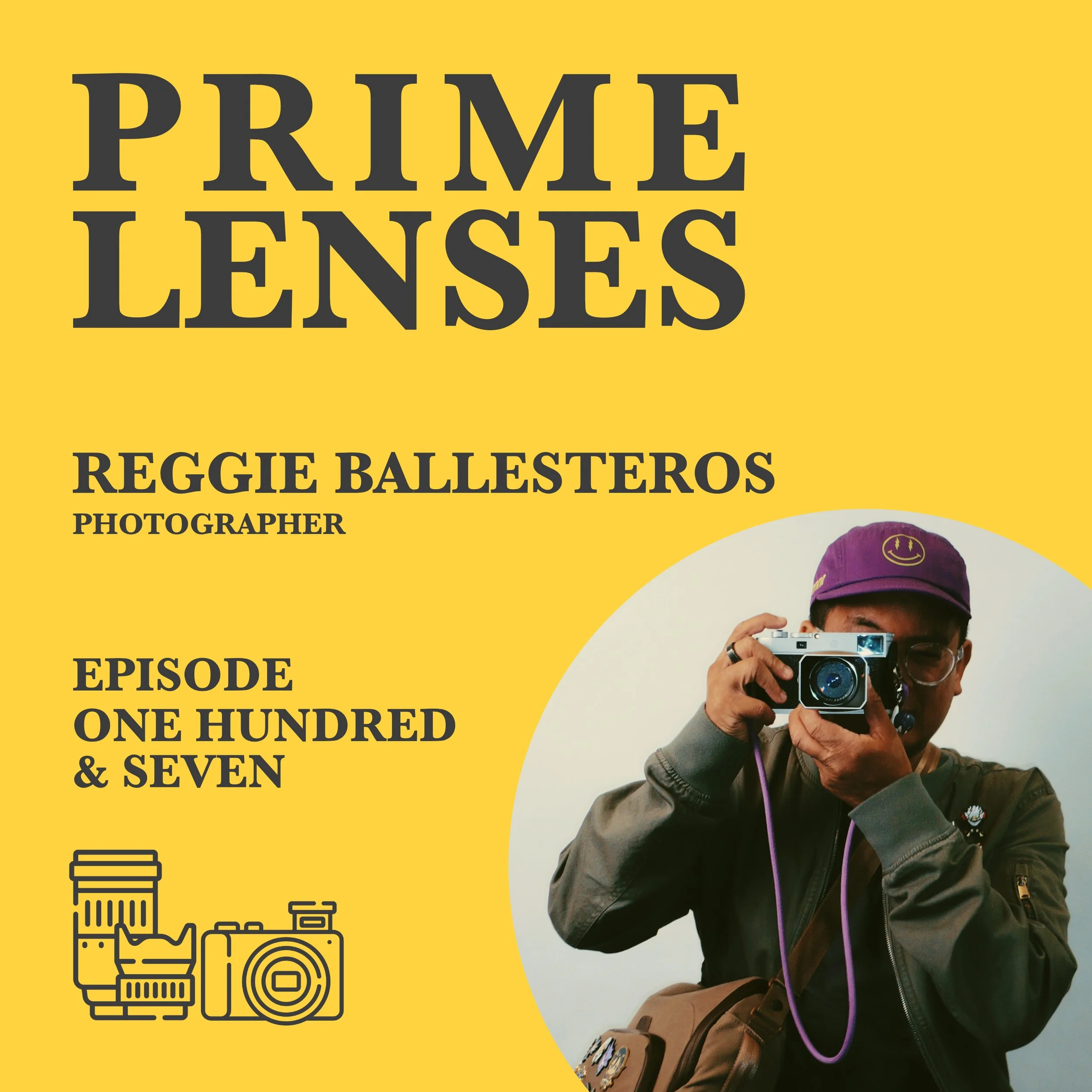


Reggie Ballesteros is an American photographer who inspires thousands with his wonderful photography videos on YouTube. He makes beautiful images in his spare time having worked professionally as a photographer and now brings that educational and creative vision to his work at Google. He’s partnered with brands, shot many a wedding, and has loved the GRIII so he was a perfect Prime Lenses guest.
Sign up to the Prime Lenses newsletter for a mid-week treat.
Support the show on Patreon.
Episode Transcript:
Iain:
Hello, welcome to Prime Lenses. I'm Iain. This week on the show, my guest is Reggie Ballesteros. He is a Filipino-American photographer who, like me, has a background in engineering and, like me, has historically loved the Ricoh GR3 camera and, like me, now shoots with a Leica M. Although, unlike me, not exclusively. Something we discuss on the show. He's a brilliant creative mind. He makes lovely videos online. In particular, there's lovely references in them. They're really kind of meticulously and beautifully produced. And then add to that, that in conversation, he was just lovely company. So I really hope you enjoy as much as I did this conversation with Reggie. it's really rad to see you I'm very excited to talk to you I want to hear all about how far through the million people you are I want to talk about computational photography I want to talk about how identity feeds into the images we choose to make because I think that's a not often enough talked about topic but we can probably start with the most important question how's the purple soft release shutter working out for you it's going well yeah everyone that's
Reggie Ballesteros:
the funniest thing it's like I am not a gatekeeper at all like ever but that's the one thing I have not shared where I get it because it's kind of like a special order thing and I don't want to it's just more complicated so I've been actually trying to work with another brand to collaborate on like an actual like cnc mill purple shot release but that's still in the works but uh that has been my like kind of like gear claim to fame is like everything's got purple and it's just it's my favorite color so I just try to put it on everything similar to how I guess like automotive enthusiasts when they buy their car they they even trick it out to even like the bolts for their engine stuff is a specific color like you could buy anything in a specific color so I I take that approach with my gear. Like I know there's this whole approach of having stealth gear or it doesn't matter how it looks like. But for me, I want to be able to personalize it and show some of my flair and identity through the stuff that I'm carrying. Even like my, my bag that I carry every day has a bunch of like little pins on it. This is the camera bag that I carry. So it sparks conversation. It looks a little different. And I think purple is not really the color that a lot of people have on their photography subjects. It's just like red. yeah you know brass color gold so yeah yeah no it's good my favorite color is orange as is borne
Iain:
out by the fact that I have two orange beverage holders on my desk and I'm wearing an orange jumper it's one of my my orange podcasting jumper is my favorite jumper um because it's quiet when you're recording because it's made of wool so I can move around I once I once early on recorded with someone wearing kind of like a sort of puffy gilet type thing because I live in scotland and cold and all I could hear when I was editing the thing back was this rustle every time I moved and it was just and so you you know the things you learn in two years of doing this right totally thank you for being on I love talking to people who have a kind of educational slant on their photography as well and I so I'd be interested to learn kind of what put you down that path because your background in engineering and then moving into photography I love people who've come from other disciplines because I have this kind of grand theory of being applying yourself to something and I don't think engineering and arts are actually that as different as people think they are of course yeah yeah so talk me through a bit your journey
Reggie Ballesteros:
sure um it's specifically with going down the educational path so I I formally trained or you know I got a degree in mechanical engineering that's probably how I was in during my college years is actually when I started getting into photography itself. The cutesy little story about photography is that I actually wasn't interested at all in photography, but my girlfriend at the time was. She's now my wife. And we went to schools that were like totally different parts of California. So she was going to school in the Bay Area. I was all the way in Southern California in San Diego. So we were long distance dating. And then the first summer that we came back from college, she wanted to take this film photography course. I was like, I don't really want to take the course but if I have an excuse to hang out with my girlfriend at the time you know my parents don't have quite I'm taking this class in a community college you know it's an easy excuse to go see her every day it was film photography and I fell in love with it the first time they put the like enlarged paper in in and you could see the whole photo come about I was like I'm sold like um so then I went down the whole digital route you know my wife is still very much curious The only camera that I currently have right now that she'll even hold is my 907X because it's just a totally different experience. Everything else is like too quick, too digital camera-y. She doesn't really like them. But, you know, going through school, I started collecting different digital cameras and things like that. And then after we got married, I kind of went down the wedding photography stint just because it was the world of photography that I was familiar with while we were getting ready for our wedding. And for me, it was also kind of like one of the more straight, it's not easy, but more straightforward paths to monetizing photography. It gave me an excuse to buy a lot of gear, expense it, and also it put me on a path to be able to quit my engineering job and be a stay-at-home dad so that I could be at home five days a week with the kids and then on the weekends shoot. So that's kind of how that went down. But during that process, I had two mentors that really helped me go down the wedding photography path to be able to photograph at weddings and then also just to learn the craft outside of just photography because it's a lot of business. It's a lot of networking, a lot of being able to just understand the pure chaos of weddings that everybody's there. No one is an actual model. Everyone expects art. How do you make that happen? There's a lot of pressure. So because I had those two mentors and I had kids at the time, I was like, how do I try to mentor others without really having the time that they were able to put into me and invest into me? So that's how I went down the path of education, specifically on YouTube. And I think the angle that I initially take was I switched over to the Fujifilm system from Nikon DSLR. And I wanted to document how I was going to use this new mirrorless system on a crop sensor, something I was not familiar with, and implement it into my photography business. How specific settings and things I was learning about autofocus, SE cards, editing, all this stuff, I wanted to document and share with that so that people who were interested in photographing weddings or learning Fujifilm cameras and going professionally could implement that. So it was my way to be able to give back without having to like physically mentor the individual people. And I think the interesting way that engineering impacts this is that with engineering, you have a very specifically mechanical engineering. You have a very unique job of not only doing like the design work and all this stuff, but you also have to work with, you know, stakeholders, people who are trying to buy the equipment, people who are telling you what they need, but don't really know the engineering systems. And you have to figure out this shared vocabulary. And I got really good at being able to simplify very complex things. Back then I was working on high pressure air compressors for Navy ships, and then also like gas transmission pipelines and all the valving and stuff like that. So they're very complex things that would bore anyone, right? But being able to have that skill set to take complex systems and just talk to a person who knows nothing about it and get get what you a shared goal done that helped me to be able to really form all the like easy to digest tutorials and language for people to understand very complex things about photography and I think that is what has connected with me a lot of people is because I know a lot about the technical things but I also can share it in a way where it doesn't feel as overwhelming it's a little bit more approachable right um and still honoring and respect it but it's never disrespecting the craft to where I'm like watering it down to not you know to like overlook something that is is intentional so um yeah it's it's it's been a long journey and now I'm in the world of um computational photography And part of the reason why I got hired for this role was because of my educational work. So when you're working with engineers who are trying to code up some cool computational photography algorithm, they don't always know the photography side of things. And it's important for me to be able to understand all the technical things that they're trying to utilize and also all the technical photography concepts that I think are important and find a middle ground and have that conversation where I can keep up with all the the really cool things that they're doing but also help them understand the really cool things that I want to be implemented aesthetically or artistically and just like general image quality and have those live together to be a ship product it's it's a crazy crazy position to be in but it's it's something that I wake up every day like, wow, this is actually what I get to do for work. So it's pretty cool. That's a super cool thing. I'm grinning like a loon because it seems like our origin
Iain:
stories are very similar in the sense that I worked in engineering firms in gas sensing for a long time. Putting atmosphere monitoring stuff onto nuclear submarines and down big holes in Japan and things like that. So like, and you're right, like it on the face of it doesn't seem very interesting we once got approached to build a system that would monitor the gas in a kiln when you're firing bricks because the gases that are present when they're firing the bricks determine the color that the brick goes and things like that so it's like all of these things can be interesting enough if you're kind of like just presented with the problem right and like being the glue and the in-between I'm also a stay-at-home dad which is like hooray stay stay at home it should be more common than it is or it could be if you want exactly it's really good um I took parental leave when my second son was born you can split parental leave in the UK and I took a month of the shared parental leave that we had and it was really weird because it was only I mean my youngest is only eight so it's not that long ago and yet at the time my boss when I said I wanted to do it said well if you think it's the right thing to do you should do it which is not a ringing kind of positive yes you should do this and he had kids right I was like okay and then the head of people and culture or whatever said, no one's ever done this, Iain, it will be you. I was like, great. I'm feeling very supported in being present for my family. That's wonderful that you're all backing us. Thank you. It feels like you're the kind of the translation layer a little bit, because on the one hand, you've got stakeholders, I'm guessing like senior stakeholders within a place like Google who are like, we just need some things for the camera to do because people buy phones because of cameras so the camera system is a disproportionately visible and important part of the product every year and they're on this cycle they can't get off right it's got to you know got to have new things every year you know whether it's tap to snap or whatever the kind of thing is you but you've also got this balance of if you want to attract the likes of you brandon ruffin andre wagner like people who are you're putting photographers front and center in the development of this thing and in the use of this thing it also kind of has to feel like a camera but without being intimidating so I guess for you as a photographer because uh Ben Fratnalli who's been on the show a couple of times he and I talk about being an atomic bomb of information and enthusiasm when it comes to photography if someone near you even hints that they might be interested at a party you're like oh my gosh let me tell you all these things so how do you balance
Reggie Ballesteros:
that do you find it hard to balance that kind of enthusiasm it it is a little bit I think it's part of it is the responsibility of if we're fortunate enough to be in that room like you know like brandon and I are are in a position where we can advocate for the photography side of this because the there's the ai side there's the technological side where you just want to show you know oh my my product can do this cool thing but how does it fit yeah and unfortunately it's always a interesting conversation because we're not the only players there's sure it's a worldwide product. But I think where we have the special responsibility is being able to be excited about it, but also make sure that we can share it in a way where they can feel excited about it and not be overwhelmed and kind of piecemeal as it goes. Because I think with product development, the V1 is just the V1 and we can later grow it into something bigger. But if we don't get that buy off in the beginning of what this idea could look like, it could go down a different path. So it's an interesting thing. And I think there are wins and losses in terms of what we would like something to look like. But I think that's where I also have the fortunate position to do that within my own work or within my own educational platform to share the things that I'm passionate about. So it's nice to have a little bit of separation as well.
Iain:
Presumably also it's a bit reassuring because you've got, you know, there's another one, right? Like they're not going to stop tomorrow. They've been on the Pixel train now for long enough that you can be fairly confident that if something doesn't go the way you think is quite right next year, well, actually it'll release. People will use it. You'll see what happens. And then also, I guess, because it's software, right? There is also the potential to kind of tweak after the fact. You don't, you know, this isn't just one and done. You're not on the same cadence as like an Apple where they're on this very strict annual cadence for things. And yes, there are updates throughout, but basically what they ship, that's kind of it.
Reggie Ballesteros:
Yeah, totally. Software is just an interesting thing also coming from the mechanical engineering side of things. It was an interesting world to go from one to the other and see how all those things work.
Iain:
Yeah. Yeah, it sounds like beautiful chaos. Yes. But yeah, well, do say hello to Brandon Forrest. For sure. He's a terribly lovely human being. Yes. And if you see Dieter Bone, say hi. He's never met me, but it would just be funny. So on your own stuff then, away from Google, because they get too much credit, how are you approaching your own, your personal projects now? Do you have, you know, has your, because I'm guessing you're kind of, you're a fairly busy person. Like you've got a lot of things going on. You've got a big social following. You've got the family time, obviously, which is important. How are you juggling kind of the project now? Beginning of the year as we record this, you're kind of thinking, I guess, about things you want to do this year and the direction you want to go. Is there still too much or have you been doing this long enough now that you can have a plan?
Reggie Ballesteros:
Yeah, I think with the content side of things, which I probably won't dive into as much. I think for me, that's a little bit more on kind of the autopilot kind of thing. I'm trying not to create too many deep diving concepts, new concepts, because I think right now I'm focusing more on just teaching people novel ways to teach them composition and lighting. And then on the YouTube side, it's a lot of Fujifilm heavy things. So I'm working on a film simulation recipe. It's going to drop later this month that a lot of people have been asking for. So I'm working on that. But I think the biggest thing that I'm trying to do is keep those more on like a structured cadence. So like, you know, one or two posts on Instagram a month, unless I have a sponsor. And then YouTube is just really one video a month. And now I'm starting to try to understand. And it sounds a little like pretentious a little bit, but I feel like I've figured out the social media game. I don't need to try to invest as much time to like reinvent it. I know what works for me and I'll kind of adjust with the algorithm. But what I haven't done for a long time is discover like what is the artwork that I want to create for myself. No longer with clients and something that's not specifically for the educational goal. Like maybe I can use it as a piece to educate on like, hey, this photo, I can share you this concept. But I'm at a point where I'm like, what do I want to create for myself? And what that's looked like recently has been just me going on walks around my neighborhood or going on my commute to to drop off the kids and going somewhere close by and just seeing what is there. And they're just they're not I'm not going to like where, you know, the San Francisco Bay Bridge is. I'm not trying to go to some crazy looking place that anyone can make a photo. If you just like kind of point it, you're going to make a good photo. The lighting is good. But I'm trying to find photos in just the spaces that I call home or the spaces that I would just walk by every day, like a tree that's just always there when I go on a walk in a break between meetings and trying to approach at it differently. Every single day it looks different. One day there's a crazy amount of fog in the morning. I'm like, I'm going to go out and it's going to look like the most desolate, spookiest tree versus in the springtime and actually sprout leaves. It's going to look totally different. And I think the beauty of just being able to walk through the same space and it's never actually the same space because the light, the environment is changing. Even there's a few, a lot of cool cars, like project cars in my neighborhood that people are working on. And sometimes the car will just be parked the other way and the light hits it totally differently in the same time of day. So I'm just trying to create more work about like me and how I see things, especially I'm very introverted. So especially as somebody who finds a lot of comfort in being alone, where I can let my thoughts breathe and trying to, I think where I'm headed is creating a body of work that kind of reflects what that is. And also that someone else who maybe isn't as comfortable being alone, it looks different to them. Maybe it looks spooky, whereas I think it looks comforting. know something that looks extremely boring in terms of like just a door can have a lot of cool abstract shapes and color blocking that I saw during that time so that's kind of where I'm working toward right now but it's I think it's it's nice because I have the complete freedom to do whatever I want with it because it is for me and I it's been a long time that I made work just for me because I think the alternate large part of my work is documenting my family which is yes it's for me but at the same time it's a little bit more straightforward there's not a lot there's not as much interpretation that I do other than composing cool things and catching moments but it's been a long time since I made just like I don't know how to say it like art I guess like for me it's also interesting too because I've always described myself as a photographer as more like a scientist and not an artist and I think that taking a photo is like a little data point in a larger experiment of how I create theories on life interacting with people uh understanding like visual psychology of what makes people excited about seeing a photo like even just like trying to learn about how to execute this type of photo every single photo I take is just it's not just like oh this one wasn't good it's like I learned something about it so that I can make a better one um I've had that mindset for such a long time like I'm I'm a scientist like I'm just coming up with my theories um so it's it's a little bit daunting and also refreshing to try to just
Iain:
make art when you're saving like capturing these sorts of images and like cataloging them and stuff do you ever I do this thing with um day one the journal but you could do it with like photos or anything that gives you reminders basically and I go back and check or not check but I go and see every day what I did on this day in the past and it's really funny sometimes how I see I'm making the same sorts of images but slightly differently and it's the same places you know that but like you say they look different because of the different light yeah I I need to start doing
Reggie Ballesteros:
something like because right now it's it's just um Lightroom catalog with with by the date and if I start noticing I take the same photo of a certain thing I'll create a little uh collection of like the same stuff so they can all be grouped together but I I don't think I don't have any way of like categorizing just that one thing and yeah I think that's an interesting way to approach it especially if I end up exporting and putting on my phone I can put it on like day one or uh maybe they have desktop thing. But I like to collect the same photo of the same thing like all the time. Like and some people like why would you repeat a photo? It's like you really aren't repeating a photo. Even if you take it with the same composition, the light will be slightly different. The camera may be rendering it differently. You may be using a different lens. You may just feel different that day. And you could tell in the photo that it's you remember that that day versus the other day. I think it's also for me something that helps me just recalibrate my eye and my brain to go back to somewhere that I know I can take the photo and just do it. It's like you get a quick win right there and then you can move on. There's all this thing about reinventing the wheel or making something new. There's this whole idea on the internet like, oh, we've seen that before. I'm like, who cares? You didn't see it from me. You didn't see it from someone else. You didn't see it from a stranger to the environment. I think there's room enough for everyone to make the same photo, even share the same photo and talk about photography.
Iain:
Yeah, well, fairly soon there's going to be nearly 10 billion of us on the planet. We can't all be... A bunch of us are going to have the same idea around the same time
Reggie Ballesteros:
all throughout our lives.
Iain:
And I think this is where we all have to get comfortable with the idea of we're making stuff for us and for ever smaller audiences potentially because there's so much to choose from. Like when I was growing up in the UK, initially there were four TV channels and that was it. And so it was like four, we didn't really have cable and things like that. So there was four TV channels and there were some radio stations. But so basically everyone was kind of experiencing the same media. So like growing up, there was a comedy duo called Morecambe and Wise. And at Christmas, something like 50 million people or something would watch the Morecambe and Wise Christmas special because it was on right that was just what it was and now you can be like hey have you seen this series or have you seen that series or you need it on hbo or it's paramount plus or peacock or whatever and it's just it's just impossible you know you can't get your hopes up though those streaming platforms and stuff and it's the same with youtube and the same with everyone so I think make it for yourself first and then if some people like it then brilliant right yeah yeah yeah I've
Reggie Ballesteros:
shared with people before they're like oh you know you like making work just for the internet is like not not a fun thing or it's like for me like the stuff that I'm posting is probably one percent of the photos that I take if not less yeah uh in terms of like content in terms of youtube there's a lot of stuff that no one will ever see maybe I they're like a really meaningful photo to me doesn't mean you will you will see it all the photos that are like favorited on my camera roll they're just like like digging with my phone or something like that or if I made them with a camera it's not something that I would share with other people and I think what you're saying is like people will find it I think that's where photography and art is in conversation with the community because when you put it out there they're entitled to interpret it however they want and if they like it and you like that interaction then you can make more of those like one good example of photos I've been making recently is I've been doing these in-camera double exposures with my Fujifilm and Ricoh cameras of it's like a car corner or a truck corner like with a headlight or a taillight and I'll I'll layer a nearby flower within like the light or within the texture of the car body or anything like that and a lot of people like them like they're not like the most I don't consider them artful it's more of just like something quirky and creative that I can do on the spot and it's fun to put that little photo composition together it's like me if you actually watch me make it it's pretty funny because it's like I'll go to get to this car I'll frame it and then I walk all the way like two blocks down to this flower that I remember it's there and then I mess it up and then I have to go back and I have to go back so it's like if you actually watch me like what is this guy doing like I'm hoping one day like if the car owner sees you're like I'm this is what I'm making I make these little silly pictures but I don't think they're gonna care too much but in terms of for me a lot of people like really like that and I'll teach them I'll share them how I do it but I think in general people just like looking at it because it's it's it's an interesting pairing uh between two like pretty unrelated things one's like very organic the other one's like a man-made vehicle which I always say it's funny it's like when you think about cars it's like really just sitting in a chair that's just like propel it when you think about it that way it's a kind of a funny device um and just pairing those together in different colors so I think in in general you you never really know what's going to resonate with you because the photos that I think are like this could be really good like I I feel really personal about those ones generally they don't do as well um there's like a specific type of like surface level easy to understand composition that generally works good on the internet maybe a photo they like would do way better like blown up on a wall and people come to see it that may get a different thing but the internet is just a very small sect and you will you will connect with certain people on there and I think it's okay to just embrace those people who are there showing up it's like I love at first I used to be a little bit like how come my audience can't understand this or they don't see this about me or that I've just accepted them for who they are they're they're at a specific level and I've they like specific type of photos and they want recipes and things like that so if I get a new camera and they don't understand why because I got a m11p and there's a very specific reason why I got it if they don't understand why it's fine that that camera is going to be for me and to make my work I still have those other cameras if you want me to make something that's where the a Fujifilm camera based on a recipe and all this jazz. So it's an interesting thing to be in this intersection, like someone that's on the internet, someone that's making educational content, someone where you post a photo, they assume you will give them the blueprint to make the photo. And I used to get upset about this. Like there's so much years that I've done, you know, but now it's like, okay, I can share as much information. I can share you all the settings and everything, but it doesn't mean you will be able to make it. So I hope you take the initiative to learn how to make it the way that I made it.
Iain:
Yeah. And make your version of it, which I think is one of my favorite things to talk about on the show, right? Is that you have to make the thing you want to make. You know, here I am making an audio podcast in a video first world and then try to promote that thing. But it's because I believe in the medium is why I'm grumpy at Netflix right now for launching air quotes podcasts. Like, oh, I know they're not podcasts.
Reggie Ballesteros:
cheap tv and there's like video on spotify now too I guess right and it but it's all of it and
Iain:
everyone making a video podcast and I realized that the the counter argument to what I'm about to say is well your thing sounds like radio and so I do understand that but every video podcast ends up looking the same and so the video becomes pointless because everybody wants to be diary of a ceo and wants to be moodily lit in front of a overly compressed microphone isolated to death so that There's no suggestion that they were humans in a room. And so you just lose the point of the picture. The picture's just there. And I understand, like, you know, I want the world to know I've spoken to Reggie, just like I want the world to know I've spoken to all the other guests, right? Like, it's cool. But there must be another way I can do it that's a bit more interesting and stands out a little bit. And maybe it's cars with flowers. I don't know. But it's whatever your version of it is. So I think it's important. You touched on there. There's two, are you a GR3 shooter? Am I remembering that?
Reggie Ballesteros:
GR3X.
Iain:
Yeah, yeah. Love that thing. The 3X was the one I picked up. My wife made fun of me because I always used to use the 28mm. And my preferred focal length is 35. And when they brought out a 40, she was like, well, you've got to buy it because you kept complaining that they hadn't made it. But how are you, I abandoned all of the cameras when I picked up an M. So how are you looking at things like the GR and the X is next T that you shoot with as well?
Reggie Ballesteros:
I have XE five.
Iain:
Oh, actually. Okay. So how are you thinking about them in relation to your M? Cause there's a technical difference, obviously with sensor size, but it's not, you know, it's not all sensor size.
Reggie Ballesteros:
I think in the beginning when I, when I was getting used to the range finder and everything, I was just forcing myself to carry only the M to force me to figure it out. And it took me about a week or so. And now I'm definitely, calibrated to the range finder I've got my processing down of how I want to edit things so I'm now just finding some of the limitations creative limitations because there's a lot of creative limitation in the sense that it helps you focus in on the process of making a photo like I think so many people have probably talked about that on your podcast I won't say that too much like you know you don't get to see the output you have manual focus the one limitation that has I've hit a wall with is the close focusing just because of the rangefinder limitation. And I'm actually a very close focus centric photographer. I at least want to try what that composition looks like. So there was a photo walk that I did where I actually carried my XE5 with a 35 millimeter, which is a 50 equivalent. And I had my M11P with a 50 millimeter lens on it. And if there was a composition that I couldn't get close enough to, I just used the XE5. And I felt like it was a nice pairing because I was looking at all the compositions generally with the m so that it was detached from the output but if I couldn't get close enough to a thing I could just use my xe5 for it and I felt like it was a nice pairing because the way that I was processing the photos there they generally have the same look to them so I could mix between them and I even shared it to my audience like which one is which they couldn't tell they guessed a couple of them but not all of them um so I think that exercise showed that like it it can make my work look cohesive um and I think some other times too like with the gr it's I have a gr3x so it's a 40 millimeter equivalent um I think down the road I probably will pick up like a 28 for uh for the the m11 just to like I think 28 and 40 pairs well together yeah 40 and a 50 is a little bit too close for me other than carrying it around for the multiple exposures. But I've even played around with just knowing the process of having to make multiple exposures very close in location proximity. Now with the M11, I've actually been able to figure out how to do that too where it's just, I'm just merging it in post. But the concept of pre-planning and understanding how to layer the compositions, I'm using the little rangefinder patches where I can localize where the point of interest is. So I can make the headlight just the same size as the rangefinder patch and go to the flower and make it just the same size. And it works. So I figured that out based on the skills that the Fuji and Ricoh taught me. I think it is getting to the point where there are some days where I'm like, I don't know which camera to bring, but I think generally if I'm going for a walk just on my own, I'm taking the M11 just because that's been my beat. I'll go around the neighborhood a couple of times adjust that camera just to start building that body of work um but when I bring two cameras I'm trying to complement it a little bit with focal length so the xc5 generally has always had an 18 which is a 28 millimeter equivalent um so that I have both at my disposal and I'm learning that like with the rangefinder I probably I I will try it but I don't know if I will like it because I shoot 28 very close all the time it might not be close enough for me so I'm just very curious about that and I think that probably is why the q3 could be successful because it has macro capability I never thought about that aspect of like experiential wise it doesn't have the same experience but it does have the close focus contrast to to a rangefinder system so yeah that was that was the first thing I noticed pretty quickly so I can't get as close as I normally
Iain:
would want to yeah yeah it's the same thing uh becca fasachi who's been on when she tried an m and she made a video about it she rented one she was like why like what do you do for close focus and I said well you put a 90 on and you stand back like that's yes that's what I did actually
Reggie Ballesteros:
what I'm considering getting is a 90 uh because I recently discovered um this photographer's work his name is franco fontana he's an italian photographer who does a lot of uh similar kind of like abstract work where it's just like he'll he'll take a building corner and then have it layered against like grass and sky and it just looks like color blocking oh and he from what I've seen his work is mostly sometimes up to like 300 millimeters telephoto just to compress all the shapes together um so that is one of my you know in my my scientist world hypothesis is just trying to explore more of like telephoto, like a 90 on the M and see if that's something that I may explore creating like this new body of work of just like things that we don't notice, but we can,
Iain:
we can force a little bit of perspective. Well, the Voigtlander 92.8, uh, I have.
Reggie Ballesteros:
That's what I'm looking at. Oh, it's tremendous. How is it? How is it? Yeah. Is it small? That was what I was looking at. It's very small. I mean, all of the lenses with the M system are small.
Iain:
It's one of the things that I love about the M, right? But that 90 is really, really good. It's so clean. It's an Apo. The images out of it are gorgeous in color and black and white. I shoot on my M11 with it. It was amazing. I was very lucky when I first picked up an M. I picked kind of almost at random two lenses, or three really, that turned out to be absolute bangers. and it was the 90 Voigtlander, the 35 Zeiss 2.8, that's my favorite lens, EBS, and the 50 Zeiss Sonar, that's a 1.5, I think, that I foolishly sold and that a recent guest, Hamish, told me that we now couldn't be friends because I'd sold that lens. But that one's beautiful, that 1.5, it's really, really good. But they all suffer from that minimum focus distance of 70 centimeters, you know you're so you're kind of you're quite far away from your subject and the the modern lenses that leica make for example that have a bit of close focus in them so like the new even that crazy 35 they've just launched that goes down to 50 which is just oh gosh that lens that's I've never wanted a noctilux before and I look at that and it's like especially if you're a 35 guy
Reggie Ballesteros:
like it's yes and also the rendering all a bunch of noctilux using friends are saying oh it's not
Iain:
dreamy enough it's not soft enough I'm like no and that's a problem for me because I don't look for looked for a bit more sort of sharpness in the middle and I was looking at the sample images by camera k and I was just like oh no I'm a goner like this is I'm gonna sell a kidney um but that 90 is is rad and if you're if you're tempted by a 28 there is a leica 28 that's often overlooked the elmer it 28 2.8 um that it that lens is the smallest lens they make for an m uh it comes with like a wonderful hood that just screws on and just locks in place every time it's great it's handling is fantastic the rendering on it oh my word is just stunning um and it makes your m feel like a giant gr3 is the best as I can describe it because it goes down to 2.8 and it just the color on it and just oh my gosh that lens is amazing you take photos with that and show them to friends
Reggie Ballesteros:
and they go wow it just has a look you know I'll check those out thank you appreciate the bracket Yeah, especially because I've been looking at that 90, 2.8 many times. And I was just like, the fact that you're telling me this here, this is the universe, saying like, yeah. Oh, yeah.
Iain:
No, do, do, do, do. Yeah, it's worth it. I picked up a used copy, as I do with almost everything I buy. And, yeah, we're just so good. But I am afraid of the new 35 Nocti. I'm going to be in London on Monday. And I'm going to go to the store and I'm going to say hi to David. I'm going to ask if they have one and they probably will. And then, yeah, it's a quick route to divorce or something potentially. It's bad times, but it's wonderful. But yeah. So you're happy with it. It sounds like you're transitioning quite nicely and you're enjoying using the thing. Oh, yes. Yeah. Yeah. You know, I mean, were you kind of red-pilled by Brandon in the run-up to this?
Reggie Ballesteros:
Yeah. For like three years, he's been saying, just like, you just got to go. And then slowly I got like a Q3 and I was like, ah, just, I compared the Q3 experiments. it was it was not it was not a direct contrast enough to like a mirrorless fujifilm so I think I always just compared how you know how is the evf like how's how's like even with the the tilt screen like oh it covers some of the bottom and the top when you when you have press so I couldn't see some of the composition like I just kept comparing the things to what I was used to um I think the m is just different enough that I can't even have the option to compare it and I think the thing that the only roadblock that I've hit that I like probably want some type of solution is the close focus everything else I've just adjusted how I approach it to how the camera needs for me and I think that in itself has always for me just helped me grow a lot like with fujifilm everyone asked me like oh what's your jpeg film simulation recipe like back then I was shooting all raw I was like I will never do this guys like I'm a photographer why would I do a jpeg thing and then I finally I did it. I tried it. And I made like literally one of the most popular recipes that everyone uses. And I even I even used that film simulation recipe to shoot work for BMW. Like it works for for even like brand campaigns. And then when I picked up the GR3 and the GR3X, I was still shooting manual all the time. But with that button combination of that camera, it just works better in aperture priority. It just does. So I started figuring out my system for using aperture priority, and then I flowed that back to Fujifilm, and I generally just shoot aperture priority most of the time unless I'm shooting flash. And with the M, I'm recalibrating a lot of my approach to exposure. I think, yeah, really exposure and just composition and just visualizing a frame more with curiosity than testing if it works or not. Because with mirrorless, you can literally put up the camera, and you're like no I don't that's not what I thought it would look like so you just don't take it there's a lot of photos that I take on the end that I'm just taking out of pure curiosity of what it might look like um sometimes I'm previewing it but I'm not like actively deleting them so they're just there and I think that's a type of approach that I took with film uh I shoot a Fujifilm Classy W that's my point and shoot camera and a lot of people say oh you're more intentional with film Like for me, I'm more curious with film.
Iain:
Right.
Reggie Ballesteros:
Like I've never seen that color combination. Let's see what it looks like on film. And it's not because I'm being intentional. I'm just really curious about what we'll render. And I find I'm having that type of motivation with an M system is you can't see it anymore. What you're going to get. So I think that in itself is enough disconnect from the output that I can really focus on the process of making the photo of like why I'm interested in a certain thing. Maybe if it just really doesn't work, I can come back to the same place and bring a Fuji camera that has closer focus or whatever and try it again. But it's helping me discover a lot of things and relationships between textures and patterns and subjects that I wouldn't think before. I think the one thing I'm still on my list to really figure out is zone focusing. I have never played around too much with zone focusing. And even I know the GR has its snap focus. But I still didn't really like the implementation that much. You really have to shoot at like f16 to like get a good range, or at least for me to figure it out. So maybe one day I'll explore that on the M. But for right now, I've been just, you know, doing just like critical focus with the M. But yeah, it's a fun camera. And I think it's also, as much as people don't want to hear this, is I've had a really positive experience getting one and people learning that I got one. That people are talking to me about it, people that normally didn't talk to me. And it's a very positive thing. I feel like once I got it, I had a Q3 for a while. Nobody breached out asking about it. But once I got an M, they're like, hey, if you need help with the M or if you need help understanding what lenses you might want to try, this and that. And it's been just overwhelmingly positive. Of course, every brand has their haters, like a haters are pretty pretty vocal but I feel like the thing that's not seen is like this I don't know it's like you get you get part of a community if you're if you're a good person and just a positive force in the community once they learn about that it it opens up more friendships and doors than not I think it's because maybe it's a shared trauma of having to go out and buy something so expensive that we're all bonded right but um yeah it's been cool to to meet new people I mean I'm talking to you right now yeah a lot of that is prompted with like your curiosity of like how I'm liking the system so far and even just like being around projects with brent I've done a lot of uh behind the scenes video work for when he did the m11d I was the bts videographer for that so just being around those communities those creative communities for in support of like a projects and just other like if I've I've when I went to new york recently I've finally met uh jason roman stock easy yeah um was able to go to his studio and just like being around this community is you know once you're around people doing the thing it makes you want to like do the thing too so I don't know it's it's infectious for sure to to to put it simply
Iain:
it's really unlike any photo community I've ever come across as well and I think the thing I the thing that's amazed me I've been teased but you know I was a lyca shooter before I started the podcast so when I started I was going to initially be contacting people who are m shooters as well because you know you're curious and you know and what I've learned after all of the you know the the slight teasing from listeners at times of being a lycra and polaroid podcast and it's just a thing that happens but lycra folks especially tend to say yes and they're excited and they're enthusiastic about the thing they've done and maybe it's all a shared madness but like the tools are great you know on the day that I'm speaking to you is also the day that I recorded with alan shallow this morning and oh wow just wonderful to have to sit down with alan and talk about iris and talk about things doing all these people are so passionate about photography and he said something about getting his first m because he he bought it and he said it sat on the table for a week because he wasn't even sure he should open it he thought maybe he should take it back because it was such a big deal and he's sort of just sitting in his kitchen looking at it and the thing is he he got it because he said um if he got this and couldn't do it well he couldn't blame the gear no there was nowhere else there was nowhere else to hide and alan is I think also a generational talent at street photography just it's it's just incredible like his work's brilliant he's got a great eye um I didn't want to embarrass him on when I was talking to him earlier so I can say this now you see so I can get it out but it's obvious and and there's so many great photographers who've shot with these things I don't care what you use as long as you find the tool that speaks to you and motivates you to pick the thing up and use it and make great images um but I have found that leica folks are so welcoming and they're so shared they share things so openly and you know I'd when I met brandon and gadgin last year for example and then I went to pitch Matthew Bitton about being on the show and I got halfway through my spiel and he went oh yeah Brandon mentioned it yeah let's do it I was like what I've met Brandon in person once for five minutes and he's doing he's helping me get gigs it's incredible like what a wonderful community of people to be a part of totally yeah and I think that that's another part of it too is that
Reggie Ballesteros:
Gadget was one of my first YouTube creator friends like I've never met him there was a couple times you were supposed to be in the same city at the same time and it just just never works out so But that's on my bucket list to actually meet Gadget in person because we've had so many conversations. He was a big... Around the same time we both started making YouTube content, we're both Fujifilm reviewers and content creators. But seeing them both move that direction, it just made me a little bit curious. I actually was a Fujifilm ambassador also and a Ricoh ambassador for a little stint. And you get to understand a little bit of how those brands approach things. And just hearing about how, I mean, the goal for me is not to be some kind of ambassador, but hearing how the type of support they get from the brand to do the projects that they're doing that I've heard from Brandon and Gadget. It's just something you want to be around or be a part of, as opposed to, I don't know. It doesn't feel as transactional, I think, because a lot of other things that I've worked in in the industry, it's very transactional. The moment you're not useful, you're just done. But I appreciate the types of projects that they're supporting, the type of photographers that they bring to the spotlight. And I'm just, for me, part of it too is Henri Cartier-Bresson was like the original photographer that I was inspired by. It was always one of my goals to just get a Leica M at some point. I think I was a little bit naive the first time I went on B&H. I said, I'm going to buy an M for my wife for our wedding gift. And I was like, oh, I can't afford that. So we got an X100S. That was the camera that I got. So I shelved that idea for a long time until now, you know, like 16 years later. I'm finally at a point where I could get one without having to put anyone in any financial stress or whatever. It just worked out. yeah I'm just yeah I'm just excited it again it is just it is just gear but I think the choice in which the gear that we create is something it means something to that specific it doesn't mean that everyone else has to do it but I think the photographer itself makes that choice and if they have difficulty and they continue using a specific type of gear that means something so if you like the first time I ever actually picked up the camera and and put it to my eye was in uh what month was that november so me and brandon were sitting in a meeting room and his camera was there I had my Fuji there I just like picked it up and just tried it I didn't know how to operate the camera and I was like this is odd because like people look to me like I'm an expert in like would you film cameras and rico cameras I pick up a camera they expect me to know the whole manual already like that's the type of aura that I have and I picked up that camera I was like hey uh how do you change iso like I didn't know how his camera was set up nor did I know how the meter work like I was expecting like a like a slr light meter with like the tick marks it was just like down 0.3 I'm like what is that like I didn't know how to focus it so like I think that type of like totally like fish out of water experience it's like you know you could be scared by it's like hey this is not what I'm used to but for me I was like this is what I want to try to figure out and it took me just like a week or so to figure it out but that that process isn't was an uncomfortable growing process is I just surrendered to learning how to how to do this and I figured it out to the point where like now I'm at a point now where I can see something and I can make a picture and it doesn't come out like I didn't know what I was doing like it was what I intended and I've figured out to close that loop and it's obviously a much longer loop than with Fujifilm with Fujifilm I just shoot it's there it's done yeah I have a different relationship I have different need for that type of shooting sure but with with an m if you if you want to learn that type of process it opens up a different a different route to get to where you're going and it could make a totally different picture not because of specifically the quality but because of the route
Iain:
that you have to take yes a recent guest lucas talked about image quality and quality images and that they're not quite the same thing in the way that people think they are and I think I would guess that if we spoke again six months to a year from now that you would have closed more of that loop and even more fast like an m is an incredibly fast tool yes once you're using it like oh my word like it's quick um in a way that autofocus and things like you start to realize actually you don't need some of these things because you're just good at focusing it and it's like oh it's great but that's maybe a good way on to something that might be a good note to end on which is around how you you mentioned when you were sort of sending me stuff about your background and things like that about incorporating identity into images that you're making and into the kind of style so you're not you're not just taking pictures of things close up with with things transposed over the top of them because it's a trend or it's a fad or whatever it it always strikes me from looking at the stuff that you make and that you post that you've got a plan and that you're trying stuff out and that you know you don't you don't feel the need to overshare why or what it is which I appreciate I think that's really good. I don't like answers from artists. I like people to put things out and ask questions. But it was just really interesting that you mentioned specifically identity in there. So I wondered if you could talk a bit about that.
Reggie Ballesteros:
Sure. I think first and foremost, like me being a public figure as a Filipino American, a child of immigrants is just an important part for me to be able to represent and show, you know, other people who either look like me or have a similar type of story. To just be in the position that I am, like someone that has had a business, someone that was an ambassador for in the previously. So I think that's a lot of something that I'm getting more comfortable just sharing who I am and like me physically. But I think another aspect of that is like the type of work that I create is a reflection of specifically the type of season of life that I'm in. When I go out, the work that I'm making is not really intentional photo walks, like go out and make this photo. But it's like this is the pocket of time that I have. I can't go somewhere. I have a meeting here, and I can just go around here, and this is what I'm going to do. Or I'm dropping my kids off to school. This is the areas that I'm close by. And they tend to be either near home or near where I'm going to be for work. And that type of thing informs the location and the subject matter. And generally, I'm trying to do things without people. And I think that's also because of my identity as an introvert, someone who just as much as like me shooting weddings for 10 years, it was a draining thing every time I did it. And me being able to just focus on textures and light and shape is something that is more peaceful to me. And I think it's also informed by my previous work as an engineer and having to do a lot of geometry, design and things like that, making sure everything like fits correctly, that that's also informed by that too. I think down the road, you know, I landed on the 50s specifically for the M because I want, you know, one day to start going down more of a portraiture route with some type of work to kind of highlight Filipino Americans within, specifically within like the creative industry or creative types of practices and see where that goes. but I'm I'm gonna have a little imposter syndrome trying to go down the route of that project for a while yeah so I think maybe me manifesting it here is I can go down that route if there are Filipino American creatives that whether you make you make something you cook something you make music you dance like whatever if you're listening to this I want to reach out to me to make some work to document your process your space I think that's something that I've I've wanted to go down and just understanding that at the core of just photography in general that me as who I am informs exactly what I photograph and I think that's something that I talked a little bit about before it's like oh people taking photos the same thing but it's not the same person taking that photo and that that's there that needs to just be shouted out from the rooftops that it's it matters because you took it like I took it and I think we just need to share a little bit more about who we are and make those connections and maybe someone else can connect about why they made a typical the same maybe they made the same exact photo for a different reason and that's a cool thing to connect on or they made it differently um I think in general just being who I am that the where I came from and then where I am right now it just informs the work like a thousand percent um and I think in general everyone's work is informed for that specific reason too it's just it's not always just reflected on and I think for me in this season of life I'm no longer in that wedding photography business I'm not my kids are a little bit older have time to yeah to to be able to like take a walk without thinking I gotta go change the diaper or whatnot like that that's
Iain:
where I'm at right now my two are starting to make their own breakfast which I am not entirely ready for like I think there's a good chance when they leave home I'll be the sad old man who fries an extra egg every morning and doesn't eat it but it's like just because he misses the kids you know yeah yeah yeah but no it's nice it is getting your evenings back it's why we're talking in the evening right it's like my two are off to bed and kind of largely doing their own thing and they
Reggie Ballesteros:
they do this thing how old are yours uh I always forget six and eight okay so mine are 11 and eight
Iain:
so sort of similar-ish kind of like and my two are in this they they kind of negotiate now when
Reggie Ballesteros:
it comes to bedtime so they're like well can we stay up and can I got too much of that I got too much of that yeah for my youngest he he's not he's not a negotiator he's he's even more that's just a
Iain:
light way to put it yeah the youngest the youngest one is always chaos but the the youngest one was like you know can I stay up and read I'm like okay dude here's the deal you're eight now like the deal is you can if you want to but you're still getting up at 7 30 so I would encourage you to go to sleep but you're kind of staying here and it's sort of your funeral if you want to stay up all
Reggie Ballesteros:
night reading comics yeah yeah at least he's reading can relate can relate yeah I feel like I could
Iain:
talk to you all day this is lovely and you are you are just the kind of photographer I hoped you would be you know in conversation you're just like it's really nice to kind of sit down and spend some time with you for people who don't know reggie where can they find a little bit more reggie
Reggie Ballesteros:
uh any anywhere on socials with uh reggie b photo um that's where you can find me so instagram mainly is where I post a lot of stuff and then I have a youtube channel um as well mainly toward like gear related things and that sorts uh youtube.com slash reggie b photo also but yeah that's pretty much where I'm at. I'm also a VSCO educator in residence right now. So what that means is they're supporting me to create and experiment a lot of different type of educational platforms and formats and whatnot. So it's been cool to work directly with a brand specifically just on education. Not really, you know, every here and there I'll promote their tools and whatnot but that's not the goal for this partnership. So being able to actually partner with a brand specifically to just like teach the people, elevate the people and, and gather them together is a refreshing thing when everything is pushing product or pushing services or software and whatnot. Um, yeah, that that's where I'm at. So hopefully people can connect and yeah, it was, it was great having this conversation. We have so much like shared, shared lived experience. I think. Yeah.
Iain:
Yeah. I think the Venn diagram overlap is really, I mean,
Reggie Ballesteros:
The fact that you told me about gas sensors, I was like, wow, we're like really in the same world.
Iain:
Oh, mate. Carbon dioxide monitoring systems and stuff on submarines. I could talk about the stuff on submarines. I think I can talk about it because they talk about it publicly. So it's not like a secret.
Reggie Ballesteros:
You know, like militaries can be really careful. I was never on the submarine project because that needed whatever, security, secret clearance or whatever it was called. Yeah, yeah.
Iain:
Well, there's so many layers of secret. There's like secret and top secret. Exactly. Yeah. And it's it's but it's a funny thing, because I think if you work in life preservation stuff, there's a generally agreed principle that they're going to share information because everyone wants everyone to stay alive. Like if you're going to I went on a nuclear submarine once and it I came off the thing stinking like a badger. It was awful. But everyone you met was super nice. And it's because you don't want to put lunatics underwater for three months at a time. Like that's a bad, like you don't want to load of alphas running around underwater for three months. That's probably not going to end well. And so you just like, well, I want to keep these people safe. And whatever your feeling was about where things go, it's like if you're going to put yourself in harm's way, I think the least we could do was try and keep them alive. And it was interesting work. I made interesting things. It was cool. But yeah, anyway, I will let you get on with your life. But Reggie, this was wonderful. Thank you so much, sir.
Reggie Ballesteros:
Appreciate you. It was great to chat about all this. Yeah.
Iain:
You have to come back. I will. I will we'll revisit yes revisit the end alright mate have a good one awesome see you man well once again a really big thank you to Reggie for being on the show wasn't that good have to have an excuse to have him back on the show at some point I really enjoyed that sometimes sometimes it just feels like no effort at all and the time flies by and that was definitely one of those I hope you enjoyed it. And if you did, don't forget that you can like and subscribe to the show wherever you get your podcasts. That's Apple Podcasts, Spotify, YouTube Music, Amazon Music, all those lovely places. Please hit us up with a review, leave some stars, let me know what you think of the show, email, DMs, all of that stuff is open. And if you'd like to support the show directly, you can do via patreon.com and also via the Prime Lenses merch store, which is on primelensespodcast.com. Links to all of those things are in the show notes. Please do let me know what you think and tell a friend. Well, I think that will probably do it for now. Have an amazing rest of the week, whatever you're doing, and we'll see you here next time. Bye for now.
More about this show:
A camera is just a tool but spend enough time with photographers and you’ll see them go misty eyed when they talk about their first camera or a small fast prime that they had in their youth. Prime Lenses is a series of interviews with photographers talking about their photography by way of three lenses that mean a lot to them. These can be interchangeable, attached to a camera, integrated into a gadget, I’m interested in the sometimes complex relationship we have with the tools we choose, why they can mean so much and how they make us feel.