
Episode 118 - Tammie Joske
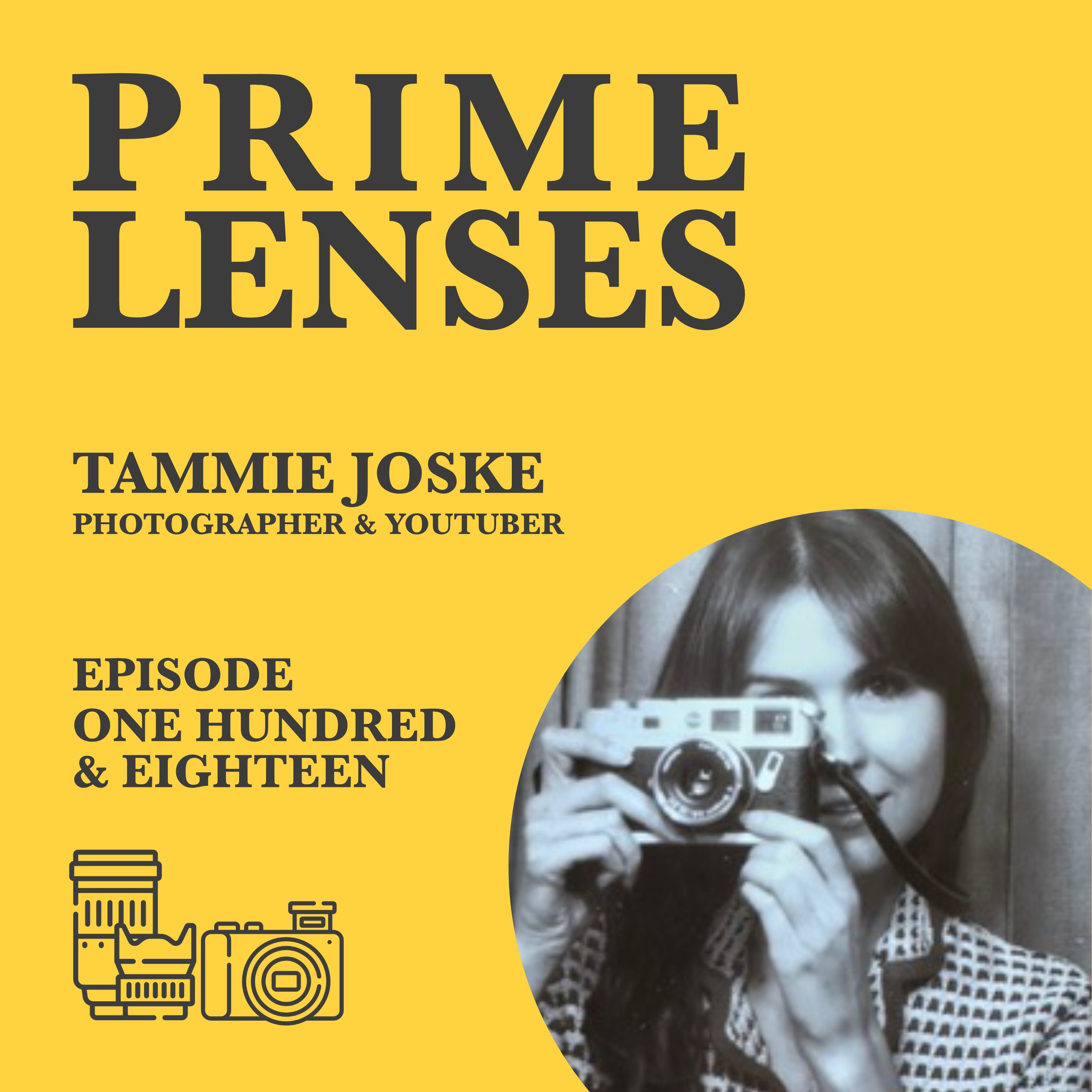


Tammie Joske is a photographer turned creator who has recently decided to go it alone and make videos about street and film photography. A friend of the show recommended I get in touch with her because like me she shoots the C Biogon 35 f2.8 on her M camera. That would ordinarily be enough, but the fact that Tammie is such fun to watch online meant that I knew we’d have a great conversation. I hope you enjoy it as much as we did.
Sign up to the Prime Lenses newsletter for a mid-week treat.
Support the show on Patreon.
Episode Transcript:
Iain:
Thank you. shout out to Tom who's a listener to the show who suggested I get in touch with you because he's like Tammie is local to me he's you know he's in Sydney and um he's like she shoots the Biogon i was like all right so um so yeah everything everything is connected but yeah i used to have a proper job and now I do this as well. So like you, I am definitely still finding my feet in this whole thing.
Tammie Joske:
So cool. Shout out Tom. I'm not sure I've met Tom, but he has a keen eye to spot the Biogon because I don't think I've even mentioned it in my videos, but it's visible, I guess. I'm always walking around with camera on my neck. I love that lens. It's great.
Iain:
It's so good, isn't it? And it's one of those ones, I've talked about it so much on the show now that when it's mentioned on the internet, I am summoned. People like go, oh, Iain should talk to this person. And it's just, you know, so you're in the list now. You're in this family of sea Biogon people. Lover. It's such a fun one. Yeah. I'm actually, I'm talking to Zyce about making an episode about it. So watch this space.
Tammie Joske:
Oh, yeah, look forward to it.
Iain:
Yeah, it'd be really good. What actually, that's probably a good jumping off point because I think, you know, running around shooting with a rangefinder, shooting on film a great deal as you do. What got you towards the Leica kind of like you had, it was like Street photography, like what started you off in photography and why street?
Tammie Joske:
Yeah. So I think going back, if we start kind of at the beginning of my career in photography, I started out in weddings. And I think weddings are like the best training ground for every photographer. Like you have to learn pretty much every single photography skill in a really like dense period of time. So you've got to be a really good people person. You've got to be able to work with whatever you've got, even if the dress is not that pretty or the bride's getting ready in a really dark hotel room. And then you've got to deal with sometimes difficult family members. And then you've got to make sure you don't miss any moments because there's not a second chance. And then you've got to shoot the reception, which is like fun vibes and you've got to use a flash there. So that's kind of where – that is where I started. And I think naturally weddings kind of have like – I guess it depends what style of photography you are, but I think there's a lot of crossover and style between Street photography and wedding photography in that you're documenting significant events. So I think that would technically be where it started for me, although I didn't know it at the time. And at the time, I was also just really interested in the medium of film photography. My dad was actually a part-time wedding photographer as well. So I grew up around film cameras and I stole his Yashica mat, twin lens reflex. And so around that time when I was getting to shooting weddings and just becoming a photographer, I was also just like playing with film. And that was kind of an era where film photography hadn't taken off really yet. And so it was like hard to find a lab and it was hard to find film. And so I kind of just set it aside for a little while and then I pursued commercial photography and eventually kind of retired from weddings after about 40 or 50 so weddings. kind of got jaded to be honest. Um, but I, I always knew that weddings had, um, an expiry date for me. Um, I loved, I loved it at the time, but yeah, I just knew that I wanted to do like bigger things like commercial work and editorial work. So, um, I started out just like doing some kind of photojournalism, which again, I think like all of these things are just stepping stones to like eventually pursuing Street photography. So in way of photojournalism, I was basically, there was a magazine called Dumbo Feather, which sadly doesn't exist anymore. But they would call me and say, we interviewed this really interesting person. They live in Byron Bay. Can you drive to their property and kind of shadow them for a day and shoot some portraits? And so that was kind of like my editorial era. photojournalism era whatever you want to call it and then doing kind of small businesses and things like that as well and then eventually I ended up finding this job description at Canva to be the Canva's brand photographer and literally what they had described what they were looking for it was as though someone had sat down and was like hey describe yourself as a photographer like what's your style and then describe your like dream job scenario and that's I was like this is crazy this is like meant to be but I was not living in Sydney I was in my hometown which is the Gold Coast and I thought there's just such slim chances that I'm going to get this job they're going to want someone local but I saw that they were open to like interstate and overseas applicants I was like I'm just gonna send it oh we'll see and then yeah long story short like literally within I think it was like six weeks I was like you're moving to Sydney like yeah suitcase just moved down here with a suitcase um and so now it has been like seven years since that and um I spent over six years at Canva as a commercial photographer so um anyway all that to say amongst and in between all of that and like the madness of working at a tech company and shooting some amazing projects and traveling with Canva and it was like an incredible experience to really get my reps in there in the studio as well because I was very inexperienced in studio up to that point I'd only worked in like natural light and natural light scenarios and I really had a hunger for learning studio photography and studio lighting as well and I really just got thrown in the deep end there didn't have anyone above or below me. I was the only photographer in the brand team. And so I just had to work it out on my own. And with obviously the help of some amazing lighting technicians and assistants who were there to hold my hand through it just on shoot days. So I kind of unlocked that goal for myself there, like to work in studio. But in between all that, and we will get back to the studio stuff later because it's got to do with one of my lens choices today. In between all of that, I would say my first exposure to Street photography, to answer your question, was actually Joe Greer. I think I'd been following him like from day one of Instagram basically when he was like taking photos with his iPhone of like the Oregon landscapes and I was really interested in like Pacific Northwest back then as well and I like went over to Pacific Northwest which actually has something to do with one of my other lens choices later on all of this subtle foreshadowing um but yeah so I was following him way back then and then I guess I just watched his style develop over time when he went to New York and um and he was shooting film and I was like this is amazing so I think that was the kind of first exposure to what what Street photography truly was I think I I used to have my own idea of what Street photography was, which was more so streetscapes. I think it still counts as Street photography. I know that Street photography is a spectrum. But, yeah, like I was really interested in whenever I travelled, I found it really interesting to photograph the street. And then I saw Joe Greer doing it in a really different way. to me, a new way to me, now I understand is not new. And I've gone in and like studied all the greats. But yeah, I found it really, I just felt really inspired when I was walking the streets and seeing new street corners and people just like living their life. So, and that was before, you know just seeing Joe Greer do it um so yeah that's that's kind of how I've ended up here and um I eventually bought a Leica M6 actually very recently and um have been documenting that journey of learning to be a better street photographer um and I've been documenting it on YouTube because I think I'm, I still don't really like to call myself a street photographer. I feel like I'm just still finding my way in the genre.
Iain:
I recently have embraced YouTube in a way that like I never thought I would. And I think it's inevitable sometimes for some of us. It's quite a useful tool for community building and showing your work and that sort of thing. And I think for what you're doing and I think your videos are really natural if people are listening and haven't watched them obviously listen to this first but then go and watch some of the videos because I think you're you're really fun to hang out with on the street and you don't pretend you're you're not bringing a kind of I'm the street wizard let me tell you about all the things that you know it's very natural like watching you the video you posted yesterday that you working with a 21 millimeter and just all the way through you're like this will either be the greatest work I've made or it's going to suck and I'm going to crash and burn and the weather happens and it's all you know it's it's the reality of being on the street that you don't get I think you you've probably it sounds like you've been really lucky finding Street photography contemporary photographers initially and then going back because you get to see a bit more of the reality of making it whereas if you pick up a book by like you know like a Joel Meyerowitz or you know even someone like Vivian Maier who's like work wasn't known when you're alive you look at it you go well how on earth am I'm going to do this. Just how? You've got no idea. Yeah. Whereas at least if you can learn from someone who's showing they're working.
Tammie Joske:
Yeah. Yeah, you're exactly right. And, like, I think even sometimes when I do look at Vivian Maier's work, because she's one of my favourites too, by the way, everything is just, like, you know how right now everything that's from another time is beautiful. Like, everything that's, like, retro or vintage is beautiful. And it's really easy to fall in the trap of thinking like, oh, everyone's got their heads stuck in their phones. Like everything is so new and modern and ugly. But I have to remind myself that one day it's not going to be new and modern and people are going to look at it. And hopefully people are going to look at my work and be like, oh, wow, what a beautiful period of time that that was, a simpler time.
Iain:
No, for sure. And also you're back and look at some of those older works, like people have got their heads in newspapers. Yeah. Or they're just like, you know, like the things it's very easy for us to kind of become bored, I suppose, with what's in front of us all of the time. I found some photos recently of when my first job in London 20 years ago and the office is, you know, yes, we were making websites, right? We were doing techie things, making websites, but it's beige PC boxes as far as you can see. All the monitors are like massive CRTs and everyone's got one. It's not like you walk into an office now where people have got multiple flat panels and these tiny supercomputers that fold down flat and we put them in our bags. It's a completely different look and feel for an office. And we thought it was contemporary and cool. We were like, yeah, this place is edgy. Look, I've got a 17-inch CRT monitor on my desk. Like, yeah, and a computer with big, loud fans. It's nuts.
Tammie Joske:
Well, yeah, I'm just trying to imagine what computers are going to look like in 10 years time, even like compared to what we've got now. Yeah.
Iain:
Yeah, it's mad. And the same with cameras. On Friday, actually, by the time this goes out, it will have gone out. I was, Sony invited me down to London to play with the A7R VI. That thing, holy smokes. Now you talk about like I shoot with an M like you, but I shoot with a digital M. And that is, you know, a frame, a second kind of experience, manual focus, all the rest of it. This is 30 frames a second, digital capture, 67 megapixel, full uncompressed raw, and one second of pre-capture. So if you missed it, you can press the button late. Don't worry, you probably got it. Like, it's things like that. You're just like, what is going on?
Tammie Joske:
That's a game changer for wedding photographers. You can't miss the kiss. You've got no excuse.
Iain:
No, exactly. And wildlife as well. I spoke to Hannah Raeom, who's a wildlife photographer in the US, and she was on the video testing it out. And she's like, this is incredible for animals and wildlife because you don't know what they're going to do. They're unpredictable. So, yeah, imagine where that's going to go, like another 10 years from now or whatever. Who knows, right?
Tammie Joske:
Yeah, I don't know. I think this is one of the reasons why I love film cameras so much is there's only so far that film photography could go. Like I guess let me put it this way. I look at the Leica M6 that I recently bought with the Carl Zeiss Biagon, which was first lens that I bought for it, and like there's no outdoing or outdating the Leica M6. Like, this is a camera that I'm very likely going to keep for the rest of my life and hand down, hopefully, to my children and grandchildren. Because there's no, like, technology in it, if that makes sense. Like, there's no, there's nothing that needs to be updated. and whereas with digital cameras it's just like the only thing that really gets better is like the megapixels or some AI feature or like what you're describing, which doesn't really attract me anymore. Like I don't really have any desire to buy a new digital camera unless it's for like my commercial work, in which case at the moment I'm just renting because I don't, it doesn't like digital cameras don't inspire me to go out and shoot with them. And there's something about the Leica camera. And I think maybe I'd probably feel differently about a Leica digital because it's got that range binder experience and some of the Leica digital cameras that I've just tested out in the store or friends' cameras, I have really enjoyed them. But, yeah, the game changer for me with buying the Leica I actually started going out and using it. Whereas with the digital, I just kind of felt like, I think I just associated too much with work. And that's the other reason why I picked up film because film felt like a hobby and digital is my work. So I've got that separation.
Iain:
How's that transition working out now that you're kind of six months out from Canva and you're doing, you're using it more. Does it feel like work?
Tammie Joske:
um I don't think it fully feels like work yet like I think editing the videos and making the videos and all the kind of pre-production post-production that goes along with that definitely feels like work although I'm having a lot of fun doing it and I feel like um I'm doing what I'm meant to be doing in this like new kind of chapter of my life
Iain:
I feel similarly and it's I was talking to a friend at the weekend and he was like how is it now you've left full-time and I find I don't know if you find this too I'm working more yes I'm kind of always doing something and you can't switch it off like I'll just be like lying in bed at night be like oh that's a great YouTube title idea oh that's all right and then I'll have to like tell Siri to like set it as a reminder so that I don't get up and like I'm trying to like sleep but then my
Tammie Joske:
brain's just going crazy I think it's just common with anyone who's starting a new business or just owns a business um because what you're doing and what I'm doing are businesses they're just not like in the traditional sense I guess but it's it's really hard to switch off but at least it's yours right it's mine yeah and I yeah and I have I have fun doing it and I have confidence
Iain:
that it's gonna work out well it's going well so far I mean and and that's a nice jumping off point subject of great things we could talk about the c Biogon briefly and just what did you pick it up because like many of us when you pick up an m body it's such a big investment but you go well i also can't i can't justify or even attempt to invest in like a glass because that's also insane i picked it up because my 35 to 8 on previous cameras was kind of my go-to and it was often a Zeiss lens so that kind of drew me towards that one was it a similar thing yeah exactly that like okay I'm
Tammie Joske:
dropping all this money on an m6 which i bought secondhand um but still secondhand is like still it's a lot it's an investment for sure but i will say there if anyone is making a decision about whether to buy a Leica or not and i know what that feels like because you're tossing it up for so long and I think the first time that I actually discovered Leica cameras um and specifically Leica film cameras I thought why would anyone spend that much money on a film camera that's insane like I just didn't see the value in it and now I'm like oh I get it now um but yeah if anyone's trying to make that decision I think there's a lot of like thinking and ruminating on whether to buy it or not and trying to convince yourself to buy it or not buy it. But once I bought it, I have not once ever regretted or thought about the amount of money that I spent on it. Like I don't miss that money at all because I love this camera so much. So I'll just say that. But yes, the money definitely came into it. I was like, okay, if I'm going to buy the M6, I got the M6 TTL as well, which is like a slightly more expensive, slightly rarer model. And yeah, I was like, okay, so what lens do I get? And I kind of, I looked into it a little bit. It's probably a little bit more than a little bit. But I saw like Voigtländer and I knew that Voigtländer or Carl Zeiss was probably one of the options. And I actually can't even specifically remember what made me decide on Carl Zeiss. I do remember tossing up though between whether I wanted to get a 28mm or 35mm lens. And I ended up choosing 35 because I felt like maybe it would be more versatile given that I probably wouldn't buy another lens for a while. So, although I have shot with a 28mm on the street before, because before I got the Leica M6, I was just using a Canon EF, not to be confused with the EF lenses. It's a Canon EF camera body, which is an SLR. And I used that with a 28mm. And I really love that focal length. But again, I was like, well, if I get 28, maybe it's a little less practical for like if I want to shoot some portraits. So that's kind of how I landed on the Carl Zeiss Biogon. I think I saw some, yeah, I definitely would have seen some positive reviews on YouTube because I did a lot of YouTube research. There's plenty of videos out there on the internet about reasons why to buy a Leica M6 or why not to buy one. and then all the lenses that go with it. So that's kind of how I landed on it. And I think I just, to be honest, maybe I just trusted the Zeiss name more than the Voigtländer name because I'd heard more about Zeiss. And I once had eyeglasses that were made with Zeiss glass. So I was like, it's got to be good. So that's how I landed on the Biogon.
Iain:
And it's a gem, I think is the other nice thing, It's one of those lenses where you kind of, exactly like you, I picked it for price over all things, really. And then you get it and you're suddenly like, oh, wait a minute, especially in black and white. I don't know how you find it, black and white rendering the film, but it's magic.
Tammie Joske:
It's beautiful. And I didn't think, I only recently started kind of rotating black and white film into my camera because I just love color. I love like composing images with colour as well. Like when I see connections of colour, like someone's wearing an orange shirt and they're walking past an orange building or something. I love shooting that type of stuff. And so I was like, I'm going to try and go black and white, classic. I'd seen some images, yeah, by a few like modern street photographers who were using black and white and I was like, oh, that's really cool. So I tried it for a St. Patrick's Day parade. And then after that, I was like, oh, I actually really like black and white now. So, yeah, I'm rotating it in. Sometimes it's a bummer if I have black and white in and I see a photo, like I see an image that's like, oh, that'd be great in color. I'm like, oh, well, I'm going to live with it. Yeah. Yeah.
Iain:
Them's the breaks. There's a book I talk about too much on the show, but I'll mention it because every episode could be someone's first. But it's a Joel Meyerowitz book. called A Question of Colour. And in that, in the, I think it was in the late 60s, maybe early 70s, he was trying to choose between colour and black and white for most of his work and couldn't decide. And so at one point, he finally had enough money to have two bodies. And so he would have one body with colour, one body with black and white, and he would shoot. Do you know the book?
Tammie Joske:
I don't know the book, but I do have one of his books. It's just like kind of a handbook. It's How I Make Photographs. And I think he mentions it in that book as well. And I have noticed that Joe Greer does the same thing. The black and white and the colour going at the same time.
Iain:
It's quite a good experiment to do, yeah. It's just harder with film because you can't, like with colour, we can cheat and we can actually, we can process the same image with digital story, we can just cheat. Whereas, you know, you're having to kind of do the both.
Tammie Joske:
Yeah.
Iain:
You'd have to do both side by side. Yeah.
Tammie Joske:
There's also like, I've never done this before, but you can change color film to black and white. You can't change black and white to color though.
Iain:
Well, not without a load of filters and a load of hassle. Again, like 10 years from now, let's see what software is doing for us.
Tammie Joske:
But then it kind of takes away the magic of film. It does. I think it's, yeah, you know, it's kind of like I took up film to kind of get away from that, you know, side of photography. Yeah. But I still colour grade my film, like I still tweak it a bit because otherwise you're just leaving it up to the lab to kind of figure out your colour of your skin.
Iain:
Have you ever wanted to develop your own colour?
Tammie Joske:
Yeah, I think, yeah, it does cross my mind pretty often, but then I tell myself just one thing at a time because I'm currently on a steep learning curve of making videos because I hadn't made videos since like high school. I loved making videos in high school and then I just pursued photography. But yeah, it does, even though I was really into it in high school, like it was such a long time ago. And so it does feel like I'm starting a new skill from scratch. So I'm just telling myself just one thing at a time, Just master one thing at a time, Street photography and vlogging is enough for now.
Iain:
Yeah, definitely. And I think it's, you're right. Were you, so like high school Tammie, were you running around with like a phone camera and iMovie-ing it? Or what were you using?
Tammie Joske:
Well, I am a millennial. So we didn't have, iPhones were only just coming out. So not many kids at school had them yet. Only like maybe two or three kids had the early iPhones. So we were using camcorders and we were using Adobe Premiere. Premiere? Yeah. And yeah, so we just had a class called Film and TV. And we had assignments where we made short films. And I remember like staying back late after school in the editing lab. to get our assignments done but I loved it I loved directing and even like even before um high school like I was directing my own I was writing and directing my own like short films and like I would make my mom be the DOP and I would like direct and star in these like mini movies and cast my um school friends you know like just wild I was very eccentric child which you might be able to pick up on in some of my YouTube videos I can be a little bit eccentric sometimes well I think it's
Iain:
it's personality comes through right there's like with the best one in the world not everyone is suited to being in front of a camera because they're not uh predisposed to doing things that are interesting enough to watch and I think you have to be you are clearly interested in people and that I think is you are an interesting person as well which is why you're worth watching which is why you know even when you've got some help like recording you and stuff like you're just I feel like you're just being you. I don't think there's a Tammie. There will be a bit of Tammie character on the camera, just like there's Iain, the podcast, Iain, and then there's really, but it's like the Venn diagram overlap is pretty significant. I imagine it's the same for you.
Tammie Joske:
Yeah. I think something that's really funny about the way the channel has kind of, I think relatively speaking, it's taken off pretty quickly. It's by no means a huge channel yet, but I think it's a lot of the videos resonate with a lot of people because like you said, I'm not pretending to know it all. I think there's enough people on the internet doing that. But I think it's really funny because I really lean into my kind of like goofy side and the side of me that like, like I just own my mistakes. Like, I'm like, I don't really know what I'm doing here. But it's kind of also had a little bit of an opposite effect where I think most of my audience thinks that I'm a lot less experienced in the general area of photography than what I am, which is funny. But it's fine. It's fine that people think that because I think it's fun for them to watch someone go on a journey from like zero to something. So that it's not that, I mean, I'm not faking it. There's a video on my channel about my career journey and like talks about Kimber and stuff. But it's just funny that that video is like one of my lower performing ones. So go figure.
Iain:
People don't want the history. They want to see you on the street with a 21 millimeter Taipok. See how you're getting on with it.
Tammie Joske:
Yeah.
Iain:
So when are we going to get part two of that one, by the way?
Tammie Joske:
Oh, part two of the Taipok. Unfortunately, that's just a part one series. But I am working on another video at the moment, which is a little bit different. I have heard a few YouTubers say that sometimes you've just got to make something that's for you and not for the algorithm. And I think this next video is a little bit of one of those. Because I went back to my hometown and hung out for a day with like my childhood or teen best mate. And we go on a little bit of a photo road trip. So it's maybe less of a tactical, algorithmic, like catchy YouTube title and thumbnail kind of video. I'm more of a like, come spend a day with me and my friend. then there's a lot of personality in this one so um it'll be interesting to see if that resonates in the same way um but it's it's nice that it's the change of scenery as well because I've done a lot
Iain:
of videos in Sydney now we miss Sydney and so it's nice to see it in the videos but it would be cool to see another thing i think make the thing you want to make fundamentally because that's the that's the thing that only you can make like you said earlier the internet is full of people making stuff and you've got to make the thing that only you can make that's what people want and it's easy for us to say it here right now there's like ignore the numbers because like who cares there's so many people so much content being created all of the time to the point where we've had to call it content like we can't call it you know like what it is which is like actually a fairly beautiful expression of art and creativity and personality and this is all just because there's just this fire hose firing it at the internet at all times and YouTube is catching it all and so I think yeah amazing to just make stuff that's that's only you and because your photographic style is very only you which I wanted to actually ask about like are you feeling you're finding your way with Street photography and with film again do you feel like you've established a style for yourself that is you because your commercial work will by necessity have always had to be a little bit different like Sometimes you've got to tailor it. It's like sometimes however you like to approach something is not going to take the pack shot properly. Or the thing has to be on show. There's a certain amount you have to do. Is that ingrained or are you finding it now that you're kind of doing this full time?
Tammie Joske:
I think it's a little bit of both. I think, well, I would hope that you can still kind of tell in the photos that I take on the street. And much of my commercial work where I'm photographing people, which is mostly what I did, I would hope that there's an overlap and a recognisable kind of style that it's one of my images. Because, yeah, a lot of my work at Canva, sometimes I was taking kind of like static images of maybe like Canva print packaging. would be that that was a very, very small part of my role. The main campaigns that I would shoot was they would always hero their community, so Canva users. And so we would recruit, I'm sorry, not recruit, cast real talent, real Canva users, bring them into the studio. And it was all about like bringing their true personality out the camera and so a lot of my uh work is like character portraits in a way um I don't know if character portraits right word for it because they're being themselves um but I got a lot of reps in doing that because before that kind of became a real signature stamp in Canva's brand identity it actually began with photographing um staff and i like said when i first came in i was like oh could is there a way that we could like elevate our like staff headshots and i eventually started to like i i began kind of correcting people like we're not doing headshots were doing portraits so i say they're staff portraits um and they ended up what started as kind of like a small project or even like an experiment where the brand team was creating this um internal employee handbook called the culture the culture book um and that was a digital book that was given to new employees. And as part of that handbook, they wanted like just cute, fun photos taken in studio of what they're called Canva Naughts. The staff, they call them affectionately Canva Naughts. And so that was the initial project. And then the portraits ended up being really popular and they got used a lot. COVID happened. And that was the thing that just got used over and over and over again because we couldn't do photo shoots involving people for a long time. And then when we came back to work and like working in office together, they were like, we need to update, we need to refresh this. So we did a refresh and the portraits just absolutely took off where every staff member really wanted a photo. The head of HR was like, this is a really nice experience for people because I turned it into not only just sit down and get your photo taken, I turned it into this like enjoyable experience where people came into the studio and felt like a celebrity for 15 minutes. And I would like put fun music on and we would dance and like it was super fun. But then those people who had that fun experience would go back to the office and be like, oh, it was actually really fun. Usually I find getting my photo taken really painful, that she made it like it's super fun and these are like my favorite photos ever taken of me so then HR was like this is such a nice experience we need to give this to everyone but I was only one person and during COVID Canva had experienced like extreme hyper growth where they hired like I I want to say it was like over a thousand or close like two thousand people in like a few years maybe two years or something it was crazy so like because i joined when there was like four or five hundred people and then they'd hired like thousands and then they're like we want everyone to get their portrait and i was like okay let's do the math like yeah i would not stop like if we do that um but anyway I ended up photographing um like it was 515 different portrait sessions in 12 months wow so yeah I would have like blocks of four days where I'd photograph maybe like 28 to 30 people a day but it wasn't just come in sit down on a stool and get your headshot taken it was like an experience for every single person so it was very taxing energy wise and then the post-production was very taxing as well but um that was training ground for me I think in becoming a people person but I would even say like weddings was a training ground as well to like being a people person being able to connect with people and like because you think about it Canva's like mostly software engineers and not to profile too much but most a lot of software engineers are very um introverted and so I had to and and I don't have much in common with most software engineers although I have a couple of dear friends now who are software engineers from Canberra um but I've got to connect with usually a stranger maybe I've met them or seen them around the office but usually a stranger connect with them within like the first five minutes and try and find some something in common with them and make them feel at ease um and so I think that that kind of became my superpower and then that kind of became an anchor in Canva's like brand image as well as like hero heroing both the Canva Noughts the staff and the community and then so that's where I really got my reps in in the studio as well and to segue onto what lens I was using for those 515 portrait sessions and what made me fall in love with this lens it's the Canon 85mm USM 1.2 I believe I wrote it down I did 1.2 um super beautiful like I found it hard I was tossing up between like 80 the 85 or the 50 for this but because 50 was my favorite when I was shooting weddings but then when I got into the studio and with these portraits I just found that 85 was just so flattering with everyone the only drawback I think with that lens was having to stand pretty far away from people sometimes and yell over music. And whereas with a closer focal length, it felt more personal and sometimes I could get more intimate expressions. So sometimes I did switch the lenses around. But predominantly that 85 kind of became the, it became like the signature look of the portraits as well. So then we were able to create kind of a standardized brief when Canva expanded globally because, fun fact, Canva is an Australian company. It was founded in Sydney. A lot of people don't know that. So when they opened an office in London and they wanted to give staff portraits to people in London, I was able to standardise a brief and say, hey, shoot a 85mm and this is the lighting set up just so everything kind of looks the same. So that would be my second lens today. We're kind of going backwards.
Iain:
Very good. Some episodes, people don't need me. It's brilliant. I just sit back.
Tammie Joske:
I feel like I'm waffling a lot.
Iain:
No, it's wonderful. It's great.
Tammie Joske:
I'm going on little side quests here. But yeah, that one definitely makes sense.
Iain:
The side quests are the important thing. This is the thing. This is the thing about the show is that I say it's like Jaws. It's not really about the shark. The thing that's interesting is the lenses are a way that then someone ends up going, oh, yeah, and I used this and I did that. And then we standardized it over here. And it's like this is how people, yeah, this is how we get to the good stuff.
Tammie Joske:
Yeah. And I think I'm just trying to remember how we got to that. But, like, I guess, yeah, finding my style, I think. Yeah, photographing people. And maybe I think maybe I've honed more of a sensitivity to people's, like, feelings or, like, their moods as well. just like being around that many people and meeting that many people and having to kind of sense what mood someone's in when they walk in and to sense, okay, is this going to be someone who I need to take a more quiet approach with? Or is this someone who's like ready to party? Because like someone could be completely opposite the next person. Like the first person could come in, they're like, put disco music on, let's go, super outgoing personality. and then the next person might come in and just be really, really nervous and like, I just don't like the way I look in front of the camera. Yeah, and sometimes you just got to take a bit of a quiet approach or it could be someone in the C-suite who's very serious and intimidating. So, yeah, I think that grew my sensitivity to reading a room as well, which I think is very important on the street.
Iain:
Yeah, you can kind of ask, I guess, do you go out looking for moods or colors or like because I know some some street photographers will set themselves little challenges challenges or you've got projects in the back of your mind yeah yeah what are you often looking for is it personality is it color is it shape it's a really good question because I feel
Tammie Joske:
like everything I photograph is just kind of based on instinct like I don't really I think on On YouTube, I guess, the recent episode, I did have the challenge of shooting without being able to actually see the entire frame, given that the Leica M6 only goes to 28mm in frame lines. So besides that, I actually, I think most of what I photograph is just whatever I'm drawn to. And I have noticed trends in what I am drawn to when I look at my work. I'm like, hmm, I photograph a lot of kids. And I think maybe it's just because there's such like a rawness to kids where they don't really care so much about what people think about what they're doing. They're just being themselves. There's less of a, what's the word? For lack of a better word, there's less of a veil, I guess, in front of kids. They don't have that filter. So I think that's something that I'm usually drawn to. I think naturally I am drawn to colour but I don't really set myself a challenge of like I'm going to look for this specific colour today. And I'm always looking for layers in a frame. I think layers make the difference between a boring photo and an interesting photo. And I'm very much my own worst critic. Like I got the photos back from that Topoch video and I was like sorely disappointed. I was like, that's a boring photo. That's a boring photo. I don't like that photo. Like, there's nothing interesting about this. But it's because I literally, I think, a couple of hours before was flicking through a Gary Winogrand book. And so I'm, like, comparing my, like, couple of hours of shooting on one given day to, like, an entire lifetime of work, the best work. And so I just have to remember it's like, okay, that's two roles of film. Like, even, I'm sure, even the best, the greats, I'm sure, got, like, zero hits sometimes. that's the fun of the the vlog experience is like i can't really i mean i could fake it but I'm not I'm I'm like well yeah this is this is what i got on the day and i have to tell the truth so
Iain:
but it also you're doing the thing that joe did for you yeah as well for other people you know you're like the next Tammie or whoever is that is watching your videos or we'll find them and then hopefully we'll sit in front of some grey-haired idiot in the highlands and go, yeah, it was Tammie's videos that really inspired me, you know, like 10 years from now when I'm doing the podcast and I'm even greyer. Hopefully that's a thing that happens, right?
Tammie Joske:
Oh, that's so kind of you to say. That would be amazing. Yeah, I think it will. Yeah, thank you.
Iain:
Yeah, it'd be great. So you've made that video. We've done your 85, we've done your 35. Is the third lens, I don't think you've foreshadowed your third lens.
Tammie Joske:
I actually did. Or have you? A little bit.
Iain:
Oh, you did? Okay, right.
Tammie Joske:
A little bit. So when you asked what kind of stirred more, like, what was the catalyst for, like, Street photography, my interest in Street photography, and I mentioned Joe Greer and I mentioned the Pacific Northwest. And I mentioned that when I was traveling that I kind of became interested in photographing the streets because I was seeing new places and new cities. So back then, this was 2015, I went to, I did a little Pacific Northwest trip on my own. Because I had, this was like really early Instagram where most people were just making cool images of mountains with their iPhone. And I was like, what is this magical place? Oh, it's like the Seattle area, the Pacific Northwest. I really want to go. So I ended up doing a solo trip to the Pacific Northwest. I started in San Francisco. I know that's technically not Pacific Northwest, but that's where I started. And then I went up to Portland and Seattle and Vancouver. And during that time, that was when I was a wedding photographer and I was using Canon 5D Mark 3s, which are heavy beasts of a camera, but still such a good camera. I think those cameras still slap. I think like, yeah, I still have them. And, but because that's such a big chunky camera, mirrorless hadn't, I think mirrorless was kind of just coming out around that time. Most people were still using SLRs. Because it was such a chunky camera and I wanted to take it around with me everywhere. I was like, I need a small versatile lens. And I ended up landing on Canon. I know the listeners won't be able to see this, but I can show you. But it's a Canon pancake lens and it's 40 millimeters, which is also.
Iain:
I was going to say, is that the 40? Oh, yeah.
Tammie Joske:
And it's like amazing. Like it's not even expensive. I think I paid like, at the time, I think I paid like 280 or something for it, brand new. And it also is like macro. So even though it's 40 millimeters, you can get as close as 0.3 meters, 300 centimeters. And because it's so light and such a low profile lens, It was just really easy to slap on the 5D Mark III and chuck it in my handbag. And a great focal length for portraits and streetscapes alike. I will say that they were streetscapes and for mountainscapes. And so it's super sharp as well. Like I've had people look at the images or like test out this lens and be like, how is this so clear for such a cheap lens? So, yeah, don't sleep on the Canon 40mm pancake.
Iain:
And is it an F2, that one? 2.8,
Tammie Joske:
I believe.
Iain:
2.8, which is a magic number. You know, like 2.8, small, yeah.
Tammie Joske:
I love it, and I wish I could use it more because I don't really shoot with the 5D Mark III's anymore. yeah i would need an adapter to use this on like an r5 or something um but yeah i still own it it's got a special place in my heart i love it you're absolutely right with those Canon 5ds as
Iain:
well I've mentioned it before on the show but like they're one of the best deals in photography because they are big but they are really really capable setup and they are cheap as chips now and you could get those lenses used for listeners the 280 was like aussie dollars yeah slightly different to us one but you can just to confuse things further you can probably pick up a used one of those for about 100 pounds in the uk so like just over 100 us dollars right so they're great
Tammie Joske:
yeah and a Canon Canon 5d mark 3s got probably going for pretty cheap as well um yeah i actually picked up my two five days yesterday um for the first time in a long time and there's like one of them is just like scratched up it's so beaten up but it still works like perfectly I'm like this is like and I'm almost like i i kind of love that it's all scratched and beaten up because it's like it's been used it's been used really well actually i think the scratches because i i fell down a a hiking trail in the Pacific Northwest with that camera. Did some damage to my tailbone on that trip. But, yeah, I'm like it holds a memory. So I kind of like even though they're technically an outdated camera now, I can't really part with them yet. And I think there may be a time where they swing back around and they might go up in value because they are a really reliable workhorse. So we'll see.
Iain:
yeah yeah and just just wait for ali o'keefe to make another video about them or someone like i always tease ali because she's making videos and like can you just can there be a way that we can subscribe to a newsletter for a fee and get a heads up before you push the price up of whatever she's done it to the 5d she'll do it to another lumix or something you know like it's just I'm watching the video I'm like oh yeah I'd like one of those and then i hit it feels like mpb have just got there already. I go on and they're already ramped up in price.
Tammie Joske:
Yeah.
Iain:
On the subject of wearing out, my M, again, listeners won't be able to see, but the paint is starting to come off quite nicely on mine. So it's brassing rather beautifully. Are you finding yours is all rubbing off in quite nice ways now because you're walking around with it on the street the whole time?
Tammie Joske:
Not so much. I think I'm still a little bit precious with mine.
Iain:
Oh, okay.
Tammie Joske:
Yeah, but I actually have a silver. So I don't think the wear shows as much on the silver as it does with the black. I purchased it with some existing scratches on it.
Iain:
Yeah.
Tammie Joske:
Yeah, I don't think I've actually made any dents on it yet.
Iain:
Mine's an M11, so it's aluminium, but bits of it are brass. So the brass bits are going brown. And then I think the aluminium bits are starting to go a bit silvery on the edges. It's character. Because I quite often just wear it. Yeah, yeah. It's just going to be a weird mismatch of colours. Yeah. But I do love it. And that one's mine. You know, like, that's how you know.
Tammie Joske:
Yeah. So true. Well, yeah, there is, like, a one significant, yeah, like, scratch on the top that mine came with. And it is a way of me being able to tell that it's mine, I guess. Even though it's not my scratch. Yeah. Yeah.
Iain:
Yeah. But I think it does sound like you're going to have it forever. And then that will join the arsenal. Are there any other white whale cameras? Because the M is like a white whale camera, isn't it, for a lot of people? Yeah. Is this your kind of – are you feeling like this is the end point?
Tammie Joske:
Possibly in way of 35mm. Right. But, you know, there's so many lenses that I want now. Now I'm in the ecosystem.
Iain:
Yeah.
Tammie Joske:
So, like, I can't wait until I can finally buy some, like, Leica glass at the moment. And I think what it's going to be for me is the first one will probably be the 28 Elmerit. I think that that's a pretty reasonable. Do you have it?
Iain:
I do. It's astonishing.
Tammie Joske:
Okay. Yeah. I feel like that's a good, like, entry point because it's on the lower end in terms of pricing in lack of words.
Iain:
Which is why I also have it.
Tammie Joske:
But it's like, it still stops. Like, it's still an amazing lens. I've only tested it out once in the store. And obviously, I tested it out on a digital camera because I was in the store. But I can't wait to try it on a film camera. But that's the next one for me, I think. um and then in terms of actual cameras um i would love like another m maybe not an m6 maybe an mp um and then um there's like a lot of really cool medium format cameras that I'd love as well i love medium format so I've only um i love my Fuji GW690, which is affectionately named the Texas Leica because it's just like a massive rangefinder. I love that camera. It's like it's almost like looking at a digital photo sometimes because of the – it's like a lot of megapixels, even though I know it's not megapixels, but yeah. Yeah,
Iain:
clarity that's there is astonishing. It's insane,
Tammie Joske:
yeah. I mean, you only get eight photos, which is a bummer. But I love using that camera. Yeah, like a Mamiya 7 would be amazing. There's so many. And there's so many like little point of shoot cameras that would be really fun. But I kind of steer away from anything that's like electronic because I'm scared of things just failing and having to get them fixed. So like as much as like a Contax T3 sounds fun, I'm kind of like, it's probably going to. Or like even a G2 would be cool. But I'm like, I don't want the hassle. I actually don't need it. How often would I use it? Because I love my M6 so much anyway. So that's how I sleep at night.
Iain:
Yeah, you're right. And also, like, no, it is. And I try and limit myself to the one because lenses is enough. Thanks very much. And like, I'll use this opportunity as a reminder to people listening as well. For God's sake, take batteries out of your cameras. Like if they've got batteries in them now, just take it out. Because if you don't use it enough, that battery is there to ruin your camera for the next time you want to use it.
Tammie Joske:
Yeah, that's so true. I always take my batteries out. So gold star for me.
Iain:
As I talk to you, I need to check. After this, I need to check my Canon MC on the shelf and just be sure that I've definitely done it. I took it out of the flash. I know I've taken the batteries out of the flash, but yeah.
Tammie Joske:
Well, see, that's what happened to me. I learned the hard way. I had batteries rot inside of the flash. Thankfully, it was just a flash, not a flash.
Iain:
not a camera i love this this was really really great to talk to you and i love especially you just took all the pressure off me partway through then you were just you you were presenting it was brilliant uh and really lovely to hear your your story for people listening who don't know you already where can they find you where can they find the YouTube channel how do they get more Tammie
Tammie Joske:
so on Instagram my handle is Tam Joske which is T-A-M-J-O-S-K-E on YouTube I am Tammie T-A-M-M-I-E Joskey J-O-S-K-E so just my first and last name hopefully you've either got really good memory or Iain will put it in the show notes hopefully
Iain:
it'll be in the show notes yeah not with you but with some guests where I'm not entirely sure how to pronounce their names if they don't make videos and I've just met them online I sometimes this is also the thing I do to just double check that I'm saying their name correctly um your case was fairly straightforward like but some I had uh this weekend's episode just gone was with uh Joanie Joutra oh wow who I had to practice how to say her name because it's the word the spelling I was like oh no um but yeah so you get to the end you're like thank you I there was a there was practice If you could hear me recording the intro and going, my guest today is Joanie... No, you have to kind of like run at it because you don't want to be the terrible English speaker who like didn't at least try to get the pronunciation correct. So, yeah, you can just have to get it early on. But, yeah, it's fun. It's fun games, fun and games. But, yeah, right. Well, Tammie, thank you so much for doing this. I really enjoyed it. It was a really good conversation.
Tammie Joske:
Oh, thank you. It was a pleasure. Yeah, it's a pleasure to meet you and I'm always happy to nerd out on gear and lenses.